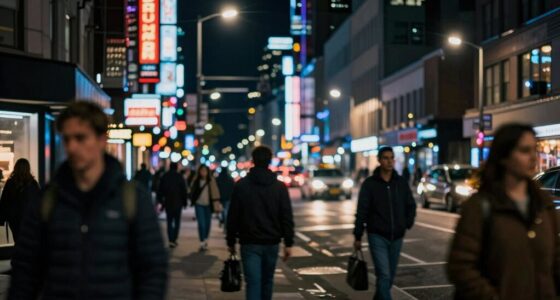

Starvis is a sensor technology that enhances night video quality by increasing light sensitivity and reducing noise through advanced back-illuminated pixel structures. It captures more photons, especially in low-light conditions, making videos clearer and brighter even in darkness. This technology’s improvements, like larger pixels and microstructures, mean your camera can better detect details and objects at night. Keep exploring, and you’ll discover how these innovations can dramatically improve your night footage.

Get business pricing on garage and car supplies
- Business-only prices and quantity discounts
- Tax-exempt purchasing
- Multiple users, one account, clear invoices
Key Takeaways
- STARVIS is a sensor technology that enhances low-light sensitivity, enabling clearer, brighter night videos.
- It uses back-illuminated (BSI) pixel architecture to maximize photon absorption and reduce light loss.
- Larger pixels and microstructures improve NIR light capture, critical for night vision and distant object detection.
- Advanced signal processing and HDR capabilities ensure detailed, noise-free images in challenging lighting conditions.
- Your night video quality heavily relies on STARVIS’s ability to optimize light collection and reduce noise for clearer footage.
Night vision security camera with STARVIS sensor
As an affiliate, we earn on qualifying purchases.
As an affiliate, we earn on qualifying purchases.
The Core Idea Behind STARVIS Technology

Have you ever wondered how security cameras capture clear images in near-total darkness? The core idea behind STARVIS technology is its super-high sensitivity, which allows it to detect even the faintest light. It uses an advanced back-illuminated structure with increased photodiode depth, improving light conversion efficiency. This enables the camera to produce noise-less electrical signals from minimal light sources, like streetlights or moonlight. STARVIS can achieve a minimum sensitivity of 2,000 mV/μm² under low-light conditions, delivering high-quality images in visible and near-infrared spectra. Its design ensures it captures details that the human eye might miss. In short, STARVIS’s core concept is light absorption and conversion, making your night videos sharper, clearer, and more reliable even in the darkest environments. Additionally, advanced sensor technology and structural modifications further pushes the limits of low-light performance. Moreover, the sensor’s high sensitivity is crucial for applications requiring detailed imaging in challenging lighting conditions.
Low-light video recording camera
As an affiliate, we earn on qualifying purchases.
As an affiliate, we earn on qualifying purchases.
How Back-Illuminated Pixels Enhance Light Capture
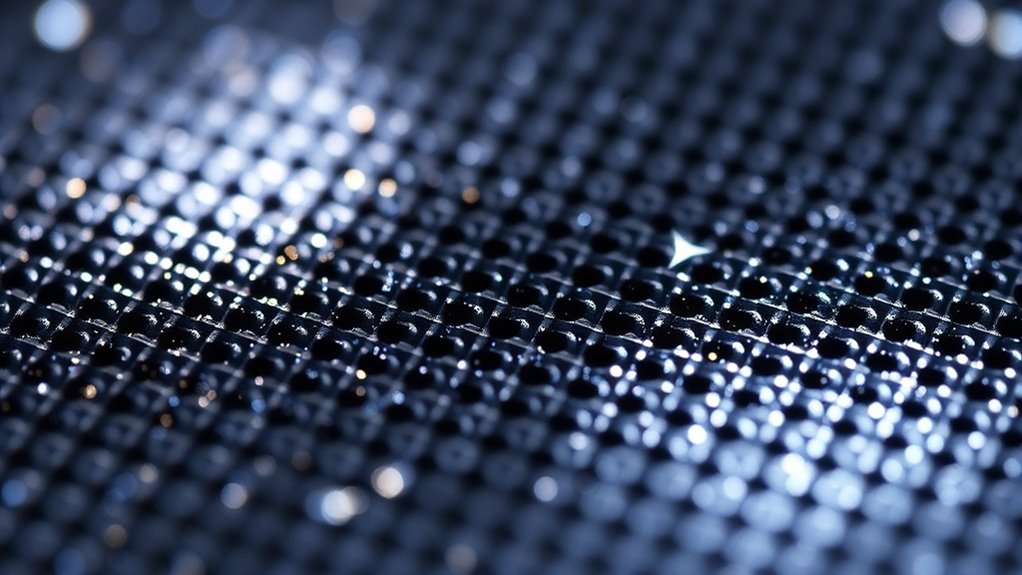
Ever wondered how back-illuminated pixels improve light capture in night cameras? They place the photodiode in front of metal wiring, increasing the effective light-sensitive area compared to front-illuminated designs. This boosts photon detection probability from around 60% to over 90%, markedly enhancing low-light sensitivity. Stacked or BSI configurations move circuitry beneath the pixel layer, increasing active area by roughly 30%, capturing more light. Larger pixels, like 11 µm BSI versions, can gather 2.8–3 times more photons than smaller older pixels, improving scene detail in darkness. These sensors also have higher quantum efficiency across visible, UV, and IR wavelengths because photons reach the photodiode without passing through metal layers. Manufacturing complexities have historically posed challenges, but advances in BSI technology have helped overcome some of these issues. Overall, back-illuminated pixels enable night videos with higher signal, less noise, and clearer motion.
CCTV camera with back-illuminated pixels
As an affiliate, we earn on qualifying purchases.
As an affiliate, we earn on qualifying purchases.
Improvements in STARVIS 2 for Night Imaging
With STARVIS 2, you’ll notice a significant boost in NIR sensitivity, capturing clearer details even in low-light conditions. Its wider dynamic range and HDR capabilities help balance bright highlights and shadows, making night scenes more legible. Plus, larger pixel areas and improved signal chains reduce noise, delivering sharper, more reliable footage after dark. This advanced sensor design also enables better near-infrared performance, ensuring superior night vision capabilities in various surveillance scenarios. Additionally, these innovations enhance the signal processing techniques, which contribute to more accurate and consistent image quality across diverse lighting environments, simplifying the process of home security and surveillance monitoring during nighttime hours. Furthermore, these innovations also support natural image reproduction, making it easier to identify objects and individuals in challenging lighting situations. Enhanced sensor technology plays a crucial role in achieving these improvements, providing clearer and more detailed night-time images.
Enhanced NIR Sensitivity
Enhanced NIR sensitivity in STARVIS 2 cameras results from significant advancements in pixel and sensor design that increase the absorption of longer-wavelength near-infrared light. Deeper photodiode wells and textured surfaces refocus NIR photons into the silicon, reducing reflection losses and boosting capture efficiency. The back-illuminated (BSI) architecture removes wiring-layer occlusion, allowing more NIR to reach the photodiodes. Larger pixel apertures and increased pixel pitch (up to ~2.0 µm) expand photon collection, improving sensitivity. Refinements in microlens and stacked sensor designs direct more NIR into the silicon while lowering read noise. These innovations deliver up to 2.5× NIR sensitivity gains over STARVIS 1, enabling clearer images in low-light or IR-lit conditions, reducing illumination power needs, and enhancing night-time identification accuracy. Advances in sensor architecture also contribute to improved overall image quality and noise reduction in low-light environments.
Increased Dynamic Range
STARVIS 2 sensors deliver a significant boost in dynamic range, enabling clearer night images by capturing both shadows and highlights more effectively. Thanks to a back-illuminated pixel structure, these sensors gather more light before saturation, while deeper photodiode wells and advanced inter-pixel walls extend full-well capacity. On-chip lens improvements concentrate light, boosting pixel exposure and native dynamic range. With pixel-level design changes, STARVIS 2 achieves AD 12‑bit wide dynamic range, over 8 dB more than previous versions. Super High Conversion Gain (SHCG) amplifies low-light signals, further enhancing contrast. This results in sharper details in dark areas and better highlight preservation. Overall, increased dynamic range improves your night-video clarity, especially in scenes with bright lights or deep shadows. Additionally, the improved sensor architecture allows for more efficient light collection, further enhancing low-light performance and contributing to image quality improvements, supported by advanced light gathering techniques.
Night vision surveillance camera
As an affiliate, we earn on qualifying purchases.
As an affiliate, we earn on qualifying purchases.
The Role of Microstructures and Pixel Design

Microstructures and pixel design play a crucial role in maximizing the camera sensor’s performance by shaping how light is captured and processed. The back-illuminated structure positions photodiodes on top of wiring layers, reducing light loss and increasing sensitivity over 4.6 times compared to front-illuminated sensors. This design forms the foundation for STARVIS and STARVIS 2 technology. Enhanced photodiode depth and innovative wall structures improve light absorption, especially in low-light conditions. Irregular surfaces on photodiodes refract incident light, boosting near-infrared sensitivity by about 2.5 times. The vertical configuration expands saturation capacity, supporting wider dynamic range and HDR. These microstructural features enable your night videos to be clearer, brighter, and more detailed, even in challenging lighting environments. Additionally, back-illuminated CMOS sensors are known for their higher sensitivity and lower noise, which further enhances image quality in difficult lighting scenarios. Understanding sensor microstructures can help optimize camera performance in various applications. The integration of microstructures also contributes to the sensor’s ability to process complex visual information more efficiently, leading to improved overall image fidelity. Moreover, advancements in pixel architecture continue to push the boundaries of low-light performance and image clarity. Exploring sensor design innovations reveals how these microstructural improvements are instrumental in achieving superior night vision. A better grasp of light absorption strategies can further inspire innovations in sensor technology for even improved performance.
Comparing STARVIS to Traditional Sensors
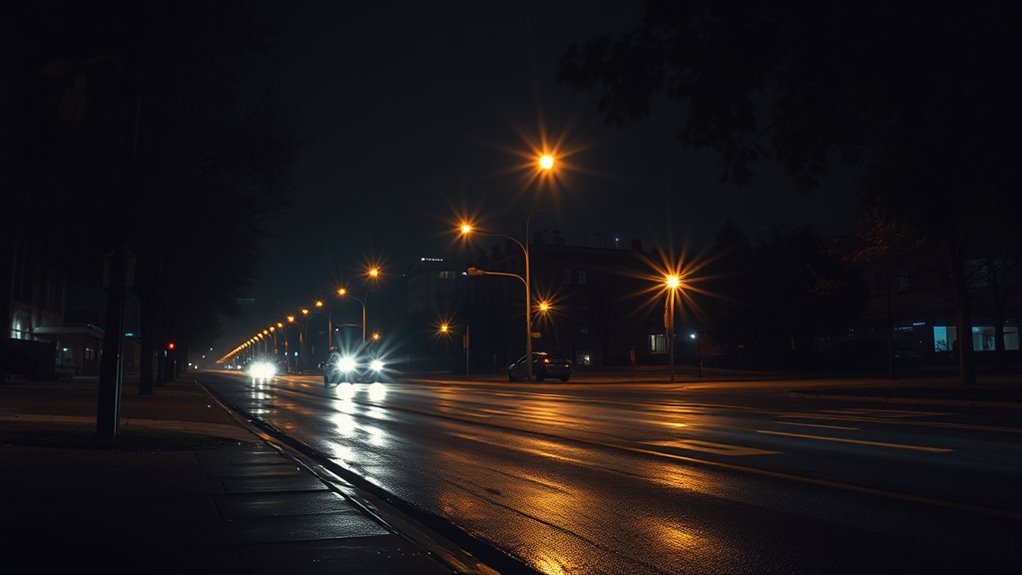
Compared to traditional sensors, STARVIS technology offers significant advantages in low-light performance by utilizing back-illuminated pixel architecture that minimizes light loss. This design positions photodiodes above wiring layers, boosting sensitivity to near-infrared and visible light. With a sensitivity threshold of around 4, STARVIS delivers clearer, brighter images in darkness, outperforming sensors like Pregius first-generation, which rely on global shutter and have higher sensitivity thresholds. Unlike Exmor’s front-illuminated structure, STARVIS excels in extreme low-light and NIR regions, providing twice the definition of older Sony sensors. It also allows for higher resolutions in smaller sensors, making it ideal for security and dashcam applications. Its backside-illuminated design significantly enhances light sensitivity. Additionally, understanding sensor architecture helps us appreciate how these technological differences impact real-world image quality, especially in low-light environments, where enhanced light sensitivity plays a crucial role. Moreover, thermal behavior of these sensors influences their ability to maintain consistent image quality during extended recordings in challenging conditions, which is essential for reliable surveillance.
Benefits of Higher NIR Sensitivity

Higher NIR sensitivity markedly enhances image quality and night vision performance, making your recordings clearer and more detailed in low-light conditions. This improvement allows you to see farther and with greater clarity, even in challenging environments. With higher NIR sensitivity, you benefit from:
- Sharper, brighter images thanks to up to 3x quantum efficiency improvements.
- Better detection of distant objects in night vision applications.
- Enhanced detail capture, including iris recognition in low light.
- Reduced power consumption, thanks to less reliance on additional lighting and shorter exposure times.
- Increased sensitivity in the 800-1000 nm range, which is crucial for outdoor NIR applications. These advantages mean your security footage, surveillance, or night photography becomes more reliable and detailed, even in near-dark conditions. The higher sensitivity guarantees you don’t miss critical details, providing peace of mind and better overall image quality.
Why Dynamic Range Matters in Low Light
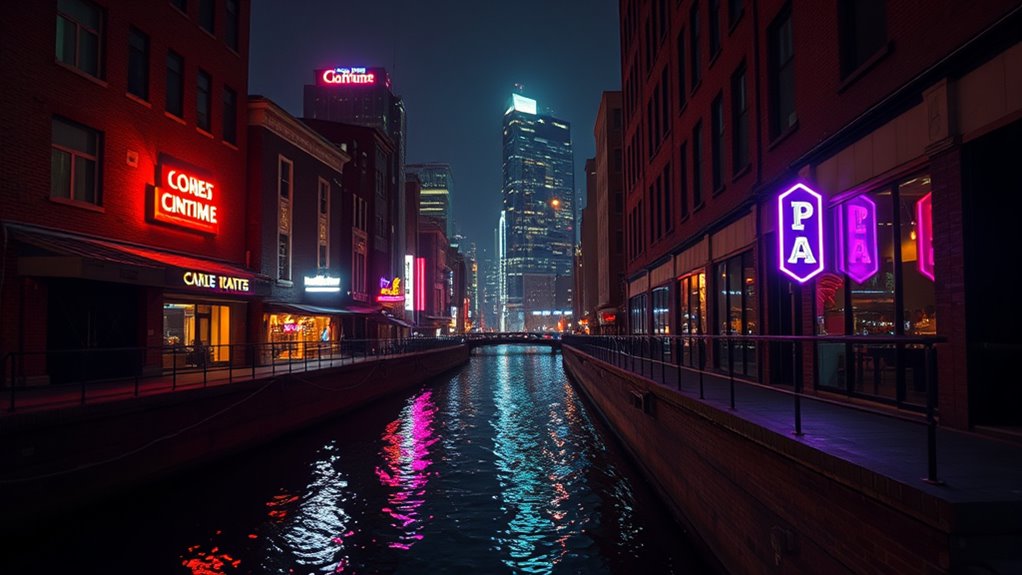
While increasing NIR sensitivity improves night vision clarity, capturing high-quality low-light images also depends on how well your camera manages contrast between bright and dark areas. Dynamic range measures this ability, indicating how many stops of luminance your camera can record without clipping highlights or losing shadow detail. A wider dynamic range preserves scene details, like dim streetlights and dark alleyways, in a single shot. It also enhances post-processing capabilities, allowing better exposure recovery and color grading. Lower shadow noise extends usable detail in dark regions, reducing reliance on artificial lighting. Sensors with larger pixels, lower read noise, and higher full-well capacity typically offer better low-light dynamic range. These factors collectively improve your footage’s clarity and realism in challenging lighting conditions. Additionally, sensor architecture plays a crucial role in expanding usable dynamic range and overall image quality in low-light environments, enabling more accurate and high-quality images.
Real-World Impact on Night Surveillance and Dash Cams
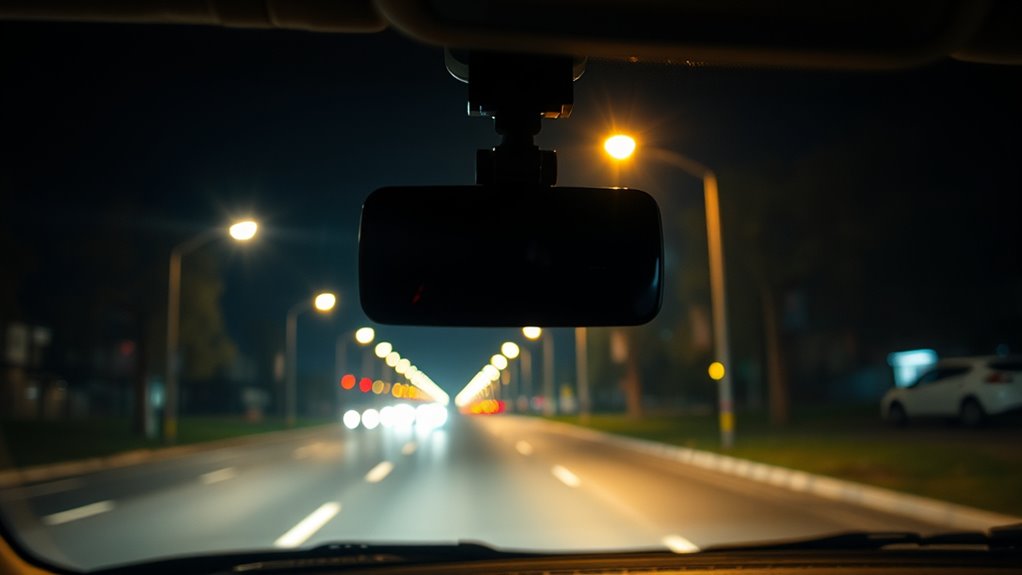
Thanks to advancements in STARVIS sensor technology, night surveillance and dash cams now deliver markedly clearer and more detailed footage in low-light conditions. This means you get better evidence for investigations and enhanced safety. Here’s how it helps:
- Legible license plates on poorly lit roads, boosting legal and insurance claims.
- Color retention allows you to distinguish vehicle paint and clothing hues, aiding identification.
- Reduced noise improves the visibility of small details like reflective signs and character plates.
- Less flare and reflections when recording through glass, capturing clearer interior or window footage. Enhanced light sensitivity of STARVIS sensors significantly improves low-light performance, producing sharper images during nighttime recordings.
STARVIS’s back-illuminated sensor design significantly enhances light sensitivity, leading to better night image quality. These improvements mean your recordings are more reliable, detailed, and useful, especially when lighting conditions are less than ideal. Proper sensor sensitivity and low-light performance directly impact the quality and usefulness of night surveillance and dash cam footage. Additionally, the increased light sensitivity helps prevent overexposure and maintains clarity in challenging lighting situations.
Limitations and Factors Affecting Night Video Quality

Your night video quality depends heavily on sensor and optics quality, system tuning, and processing choices. Poor sensor design or optics can introduce noise, reduce detail, or cause distortions, especially in low-light conditions. Understanding how these factors interact helps you optimize your setup for clearer, more reliable night footage. Additionally, sensor technology advancements continue to improve low-light performance, making it easier to capture high-quality footage in challenging conditions.
Sensor and Optics Quality
The quality of night video heavily depends on the sensor’s ability to detect and process low-light signals, which is influenced by factors like sensor sensitivity, pixel design, and optics quality. You should consider:
- Sensor sensitivity improvements like back-illuminated pixels, larger pixel sizes, and enhanced NIR response boost light collection and reduce noise. Enhanced sensitivity allows sensors to perform better in extremely low-light conditions, making color night vision possible where IR struggles. Additionally, advancements in sensor architecture contribute to more efficient light capture and signal processing, further improving low-light performance.
- Readout noise reduction circuits and higher ADC bit depth improve the clarity of faint details.
- Optics with wider apertures (lower f-number) and high transmission coatings gather more light, enhancing exposure.
- Optical aberrations and autofocus reliability impact sharpness and contrast in low-light conditions, affecting overall image quality.
These factors set the foundation for clearer, more detailed night videos.
System Tuning and Processing
System tuning and processing play a crucial role in determining night video quality, but they come with inherent limitations. Noise reduction techniques like Super High Conversion Gain amplify signals after photon conversion, reducing graininess and improving image clarity, especially in low-light environments. However, increasing gain also amplifies electrical noise, risking grainy or distorted images if overdone. STARVIS technology applies early amplification to keep noise low and minimizes graininess in dark footage. Advanced image algorithms, such as X-VISION 2.0 and HDR, optimize brightness, sharpness, and exposure, but processing delays can occur during sudden lighting changes. Additionally, the back-illuminated design and larger pixels enhance light collection, yet infrared LEDs may cause glare, and wide-angle lenses limit distant detail. All these factors influence your night video quality, balancing sensitivity with processing constraints. The STARVIS sensor’s high sensitivity enables it to perform effectively in darkness, significantly improving low-light imaging capabilities.
Tips for Choosing the Right Camera for Night Use

Choosing the right camera for night use hinges on understanding key features like sensor size, ISO capability, and image stabilization. Larger sensors, like full-frame ones, excel in low light because they capture more light and handle noise better. Consider these tips:
Selecting a camera with a large sensor, high ISO, and good stabilization enhances night shooting quality.
- Sensor Size: Full-frame sensors, such as Sony A7S III or Canon EOS R6, provide superior low-light performance compared to Micro Four Thirds or APS-C sensors. Full-frame sensors also tend to produce images with better dynamic range, which is crucial for capturing the subtle details in night scenes.
- ISO Range: Cameras like the Sony A7S III reach ISO levels up to 409,600, reducing noise in dark conditions.
- Image Stabilization: Look for models with 5-axis IBIS, like Sony A7S III or Canon EOS R6, to stabilize handheld shots.
- Lens Compatibility: Use fast, wide-angle lenses (f/1.4 or f/1.8) to maximize light intake for night scenes.
Matching these features ensures clearer, brighter night videos.
Frequently Asked Questions
Does STARVIS Technology Improve Color Accuracy in Complete Darkness?
No, STARVIS technology doesn’t improve color accuracy in complete darkness because it relies on visible or near-infrared light. In total darkness, without NIR illumination, the sensor can’t capture true colors. While STARVIS is highly sensitive in low light, it still needs some light—visible or NIR—to produce accurate colors. Without any light, you’ll get monochrome images, regardless of the sensor’s capabilities.
How Does Sensor Size Influence STARVIS Night Performance?
Sensor size directly impacts your night video quality by capturing more light, which improves low-light sensitivity and reduces noise. Larger sensors, like those in STARVIS 2, have bigger pixels that gather more photons, resulting in clearer, brighter images in darkness. This increased light intake allows your camera to effectively distinguish details even in near-total darkness, ensuring your night recordings are sharper, more detailed, and less grainy.
Can STARVIS Sensors Function Effectively Without Infrared Illumination?
Sure, you can see some scenes with STARVIS sensors without infrared illumination, but their effectiveness depends on ambient light levels. In total darkness, they produce dark, noisy images, not clear color videos. However, with moderate moonlight or distant streetlights, they can deliver decent monochrome or low-light images. You’ll notice better results with some external light sources, but without IR, peak performance is limited in pitch-black conditions.
What Are Common Limitations of Starvis-Based Cameras at Night?
You’ll find that STARVIS-based cameras struggle in complete darkness without infrared illumination, since their high NIR sensitivity isn’t enough to capture clear images in total blackness. They also face limitations with fast-moving objects, which can cause motion blur or color shifts, and harsh outdoor lighting conditions, like backlighting, that lead to blown-out highlights. Additionally, noise can increase in extremely dark environments, reducing overall image quality.
How Do Firmware Updates Affect the Night Imaging Capabilities of STARVIS Sensors?
Firmware updates notably enhance your STARVIS sensor’s night imaging by improving noise reduction, adjusting gain controls, and optimizing HDR processing. They can introduce advanced denoising algorithms, better NIR sensitivity, and smarter exposure management, making night videos clearer and more detailed. However, updates may also cause temporary performance issues or increased latency. Overall, staying current with firmware ensures your camera leverages the latest low-light innovations, maximizing night vision quality.
Conclusion
Understanding STARVIS is like opening a secret door to better night vision. With its advanced pixel design and microstructures, your night videos come alive in darkness. But remember, no technology is perfect—factors like sensor quality and lighting affect results. So, when choosing a camera, know what you’re getting into. With the right gear, you’ll turn night into day, revealing the unseen like a flashlight in the shadows.
Fall Picks
fall essentials
As an affiliate, we earn on qualifying purchases.