
On a rainy night, you should run tests focusing on camera stability, adjusting your setup with a tripod or a steady surface to prevent shaky footage. Check how reflections and glare affect your shots, and experiment with angles or lens filters to minimize unwanted glare. Test auto-exposure and manual focus to guarantee clarity in changing light and moisture conditions. Considering environmental factors helps optimize your footage—so if you keep exploring, you’ll discover more tips to perfect your rainy-night filming.

Get business pricing on garage and car supplies
- Business-only prices and quantity discounts
- Tax-exempt purchasing
- Multiple users, one account, clear invoices
Key Takeaways
- Stabilize your camera securely to prevent shake and ensure clear, sharp footage amidst movement.
- Test different angles and camera positions to minimize reflections and glare from wet surfaces.
- Adjust auto-exposure settings to handle fluctuating light from headlights and streetlights effectively.
- Use manual focus or clean the lens regularly to maintain sharpness in rainy conditions.
- Conduct multiple trial runs under varying light and weather conditions to optimize overall footage quality.

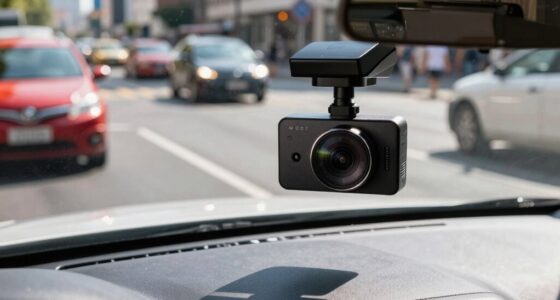
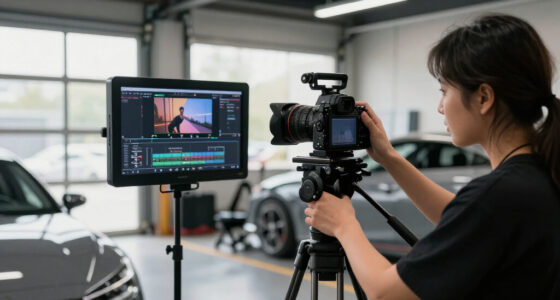
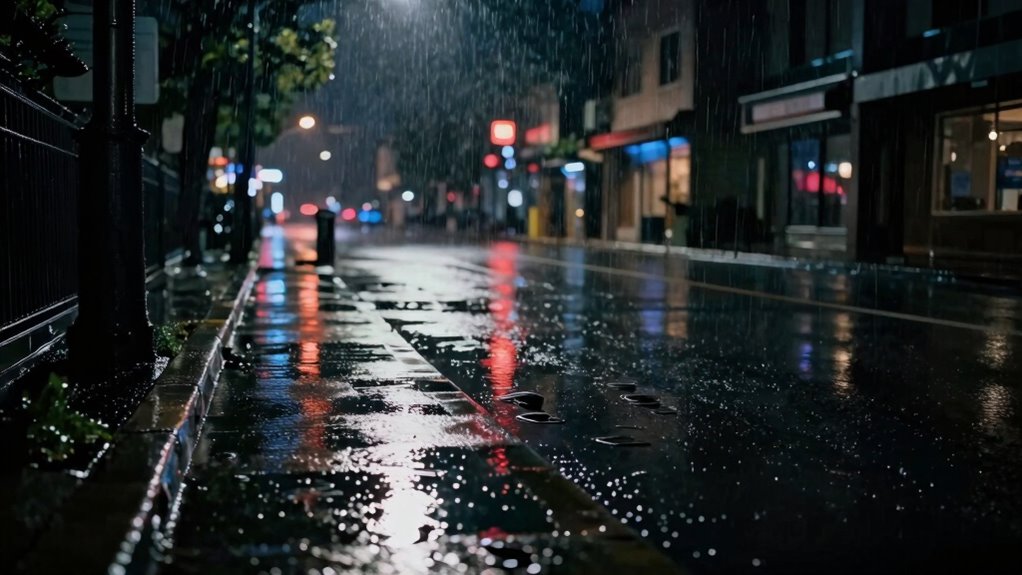
On a rainy night, testing footage can reveal how well your camera performs under challenging conditions. Rain creates a complex environment, evaluating your camera’s ability to handle adverse weather, especially regarding stability and image clarity. As you set up your camera, pay close attention to its stability. A shaky shot not only ruins the footage but also makes it harder to identify important details. To guarantee steady footage, use a tripod or stabilize your camera against a solid surface. This becomes even more critical in low-light conditions, where any movement can be amplified, causing blurry or jittery images. Once the camera is stable, focus on how it handles the reflections caused by rain and wet surfaces. Light reflection can be a double-edged sword; it may brighten your shot, but it can also produce glare or unwanted reflections that obscure your view. Watch how the camera’s lens captures these reflections. Some cameras handle reflections better than others, especially in high-contrast scenes. If reflections dominate your footage, consider adjusting the angle or using lens filters to minimize glare. Additionally, check if the camera’s auto-exposure is adjusting correctly in response to changing light conditions, such as passing car headlights or streetlights reflecting off wet pavement. Proper exposure ensures your footage isn’t washed out or too dark, maintaining clarity and detail. Pay attention to how the camera’s sensor responds to the reflections and whether it causes any overexposure or flaring, which could distort your footage. Also, observe the impact of rain on image sharpness. Heavy rain can introduce motion blur or reduce contrast, especially if water droplets land on the lens. Keep the lens clean and clear during the test to prevent water spots from impairing the shot. Check whether your camera’s autofocus can accurately lock onto subjects despite the rain and reflections, as moisture can confuse focus mechanisms. If your camera struggles, manual focus might be a better option for sharper results. It’s also helpful to consider the influence of environmental factors on camera performance, as rain, light, and movement all interact to affect your footage quality. Understanding how different weather conditions impact your camera’s operation can help you better prepare for real-world scenarios. Remember, the goal is to simulate real-world conditions as much as possible. Run the test multiple times, adjusting angles, lighting, and stabilization methods to see what produces the clearest footage. By doing so, you’ll learn how your camera reacts to rain, light reflections, and movement, giving you the knowledge needed to capture high-quality footage in challenging weather. This proactive approach guarantees you’re prepared for actual rainy-night shoots, avoiding surprises and ensuring your footage remains crisp, stable, and well-exposed even in tough conditions. Paying close attention to the camera’s response to environmental factors like wet surfaces and reflections helps ensure your footage remains crisp and clear, and understanding how your camera handles adverse weather conditions can significantly improve your shooting experience.
As an affiliate, we earn on qualifying purchases.
Frequently Asked Questions
What Equipment Is Best for Rainy Night Footage Testing?
For rainy night footage testing, use a camera with good stability features like a tripod or gimbal to prevent shaky shots. Choose a lens with excellent clarity and wide aperture to capture clear images despite low light. Consider waterproof or weather-sealed equipment to protect against moisture. Using these tools guarantees your footage remains sharp and stable, even in challenging rainy conditions, helping you get the best results possible.
How Do Weather Conditions Affect Footage Quality?
You’ll notice that rain can reduce footage clarity by up to 50%, causing weather-induced artifacts and atmospheric distortions. These conditions blur images, introduce glare, and create unwanted reflections, making your footage look less sharp and more chaotic. Heavy rain and fog scatter light, which diminishes contrast and detail. To combat this, use weather-resistant equipment and adjust your camera settings to minimize these distortions for clearer, more professional shots.
Can Footage Tests Improve Night-Time Security Camera Performance?
Yes, footage tests can greatly improve your night-time security camera performance. By checking infrared sensitivity, you guarantee your camera captures clear images in low light. Testing lens clarity helps identify smudges or dirt that may obscure visibility. Running these tests regularly allows you to fine-tune your equipment, ensuring reliable footage during rainy nights or other challenging conditions, ultimately enhancing your security and peace of mind.
What Safety Precautions Should I Take During Outdoor Tests?
During outdoor tests, you should prioritize safety by wearing weather-appropriate gear and staying alert. To prevent issues like lens fogging and maintain mobile stabilization, keep your equipment dry and avoid sudden movements. Use waterproof covers and handle devices carefully to reduce risks. Stay visible with reflective gear and avoid risky areas. Always test in daylight when possible, and be cautious of slippery surfaces to guarantee your safety.
How Do Reflections Impact the Footage Captured at Night?
Reflections can considerably impact your night footage through reflection distortion and light scattering. Reflection distortion occurs when light bounces unpredictably, creating ghostly images or blurs, while light scattering diffuses light, reducing clarity. To minimize these effects, position your camera to avoid direct reflections and use polarizing filters. Adjusting angles and employing lens hoods also help, ensuring sharper, more accurate footage even in challenging rainy conditions.
As an affiliate, we earn on qualifying purchases.
Conclusion
As you wrap up your footage test on a rainy night, remember that every drop adds a new layer of challenge and clarity. Your camera’s resilience and your skill will determine if you capture the perfect shot or get lost in the storm’s chaos. Think of this test as the ultimate battleground—only the sharpest, most prepared will succeed. Stay vigilant, adapt quickly, and you’ll record moments more powerful than a thunderclap, unforgettable in their raw intensity.
As an affiliate, we earn on qualifying purchases.
As an affiliate, we earn on qualifying purchases.
Fall Picks
fall essentials
As an affiliate, we earn on qualifying purchases.