
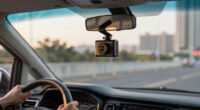
When you’re driving in the city, you’ll need a vehicle that responds quickly to sudden stops and starts due to complex traffic. In contrast, highway driving demands stability and strong performance, especially at higher speeds. You’ll often find that urban environments require constant navigation adjustments, while highways allow for longer, uninterrupted stretches. Understanding these differences in your vehicle’s requirements can enhance your driving experience. There’s much more to unpack about these two unique driving environments.
Get ready for Prime Big Deal Days — try Prime free
Exclusive member deals on October 6–7, plus fast free delivery. Cancel anytime.
As an affiliate, we earn on qualifying purchases.
Key Takeaways
- Highway drivers need evidence of vehicle performance stability and safety features for high-speed travel, while city drivers prioritize responsiveness and quick acceleration.
- City driving requires real-time traffic data to navigate complex intersections, contrasting with highway drivers who seek efficient, direct routes.
- Accident statistics highlight that city drivers face frequent minor accidents, whereas highway drivers are at risk for severe incidents due to higher speeds.
- Environmental factors, such as road surface quality, significantly influence vehicle handling and safety in both driving environments.
- Awareness of driver behavior and anticipation of changes is crucial for safety in urban environments, while highway drivers focus on maintaining safe distances.
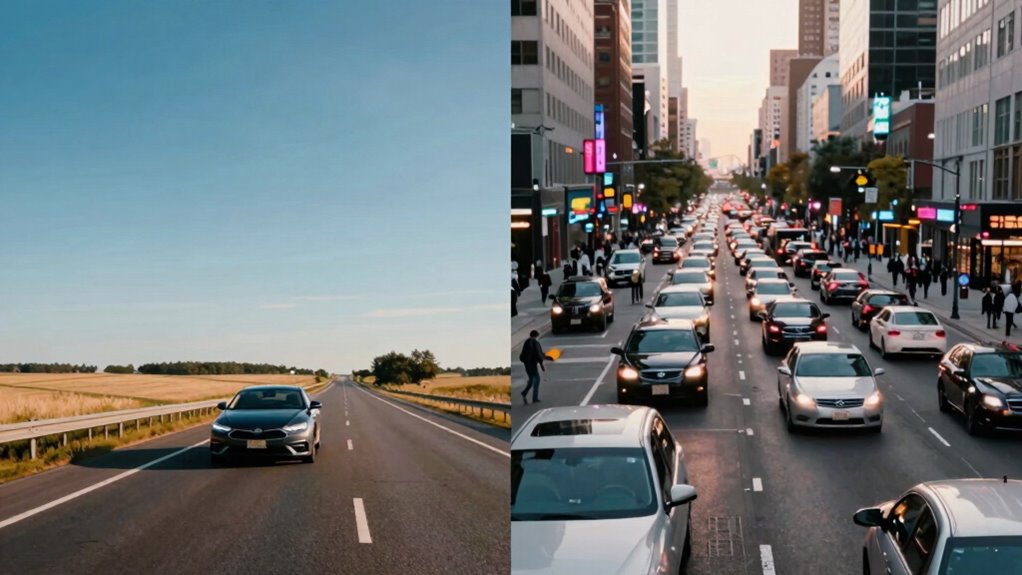
When you hit the road, whether on a bustling city street or a wide-open highway, your driving needs can vary considerably. In urban environments, you’re often maneuvering through complex traffic patterns, where your speed perception shifts as you deal with frequent stops, pedestrians, and cyclists. You have to be highly attuned to driver behavior around you, as city driving can be unpredictable. The constant acceleration and deceleration mean you need a vehicle that can handle quick changes in speed while remaining responsive to your commands.
On the other hand, when you’re cruising down the highway, the dynamics change notably. Here, road conditions play a significant role in your driving experience. You might find yourself traveling at higher speeds, where your vehicle’s performance and stability become paramount. High-speed driving requires a different mindset, as you have to maintain awareness of distant vehicles and any potential obstacles. Understanding how various environmental factors, like weather conditions or road construction, can impact your journey is essential for safety. Vehicle stability is especially critical in these conditions, as it helps prevent accidents caused by sudden maneuvers or loss of control. Additionally, being aware of road surface quality can significantly influence driving safety and vehicle handling at high speeds. A better understanding of environmental factors can help you anticipate and react to changes that might affect your safety.
Cruising down the highway demands heightened awareness of speed, road conditions, and distant vehicles for a safe journey.
Navigation tools also differ between city and highway driving. In urban areas, real-time traffic updates can help you avoid congestion and find the quickest route. You might rely on GPS systems to adjust your path on the fly, especially when dealing with changing traffic patterns. Conversely, on the highway, your navigation needs are more straightforward. You often prioritize the fastest route with fewer turns, focusing on long stretches without interruption. Additionally, understanding traffic management strategies can enhance your ability to plan routes efficiently and safely in both environments.
Accident statistics reveal distinct risks associated with both driving environments. City driving sees a higher frequency of minor accidents, often due to the sheer number of vehicles and pedestrians. In contrast, highway accidents tend to be more severe, often resulting in higher speeds and fewer safety nets. Understanding these statistics helps you make informed decisions about your driving habits and vehicle choices.
Ultimately, your driving needs are shaped by the environment you’re in. Whether you’re weaving through city streets or gliding along the highway, being aware of speed perception, traffic patterns, road conditions, and driver behavior is fundamental. Additionally, vehicle safety features can greatly enhance your safety depending on your environment. By adapting to these factors and using the right navigation tools, you enhance your safety and overall driving experience. Whether you’re in a bustling city or a serene highway, staying informed and responsive is key to a successful journey.
vehicle stability and safety features for highway driving
As an affiliate, we earn on qualifying purchases.
As an affiliate, we earn on qualifying purchases.
Frequently Asked Questions
How Do Weather Conditions Affect Highway and City Driving?
Weather conditions greatly affect your driving experience. On highways, rain or snow can reduce traction and lead to longer stopping distances, so weather preparedness is essential. In cities, you face visibility challenges from heavy rain or fog, making it harder to spot pedestrians and traffic signals. Always check the weather before heading out, and adjust your driving style accordingly to stay safe, whether you’re on a busy street or a wide-open highway.
What Are Common Distractions for Highway Vs City Drivers?
You might think distractions are similar for all drivers, but they vary considerably. On highways, texting habits can lead to deadly consequences due to high speeds. Music volume might drown out important sounds, while navigation aids can be a focus point. In cities, passenger interactions often distract you more, as conversations and quick decisions require your attention. Recognizing these differences can help you stay safer on the road, no matter where you’re driving.
How Does Vehicle Type Influence Driving Behavior in Different Environments?
Vehicle type considerably influences your driving behavior in different environments. For instance, a sports car might enhance your confidence, impacting driver psychology and encouraging faster speeds. In urban areas, compact vehicles improve maneuverability and fuel efficiency, helping you navigate traffic flow. On highways, larger vehicles offer better road visibility but may alter crash dynamics. Ultimately, understanding how vehicle performance affects your driving can lead to safer choices in various driving conditions.
What Safety Features Are Most Beneficial for Highway Versus City Driving?
For highway driving, adaptive cruise control and collision warning keep you safe at high speeds, while emergency braking can prevent serious accidents. In city driving, lane assist and blind spot monitoring help you navigate tight spaces, and parking sensors make maneuvering easier. Each feature plays a crucial role in enhancing your driving experience, ensuring you stay alert, focused, and secure whether you’re cruising down the highway or weaving through city streets.
How Do Driving Laws Differ Between Highways and City Streets?
Driving laws differ markedly between highways and city streets. On highways, you’ll find higher speed limits and fewer traffic signals, while city streets have lower speed limits, more traffic signals, and numerous pedestrian crossings. Lane changes are often simpler on highways, but merging rules are essential for safety. Road signs also vary; you’ll see more warnings in cities. Accident rates are typically higher in urban areas, leading to stricter enforcement policies for city driving.
urban driving responsive acceleration vehicle
As an affiliate, we earn on qualifying purchases.
As an affiliate, we earn on qualifying purchases.
Conclusion
In the end, whether you’re cruising down the highway or steering through city streets, your evidence needs shift like the gears of a car. Highway drivers seek broad, long-range insights to anticipate distant dangers, while city drivers focus on immediate, nuanced details to dodge obstacles. Understanding these differences helps tailor information, ensuring every driver feels confident behind the wheel. Just like a well-tuned engine, knowing what you need fuels a smoother journey, no matter the road you take.
GPS navigation system for city traffic
As an affiliate, we earn on qualifying purchases.
As an affiliate, we earn on qualifying purchases.
highway driving safety accessories
As an affiliate, we earn on qualifying purchases.
As an affiliate, we earn on qualifying purchases.
Fall Picks
fall essentials
As an affiliate, we earn on qualifying purchases.