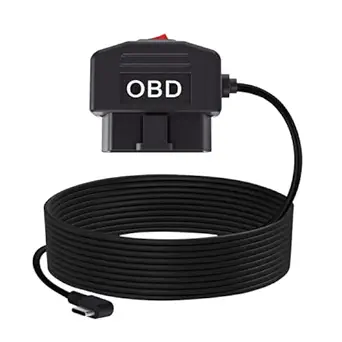
Finding the best OBD power cable for rideshare vehicles involves balancing reliability, ease of installation, and protection features. The top pick, the Garmin Constant Power Cable, stands out for its seamless compatibility with Garmin dash cams and stable power delivery. Other strong contenders include hardwire kits with low voltage protection, ideal for 24/7 surveillance, and compact adapters that suit smaller vehicles or limited space. The main challenge lies in choosing a cable that offers reliable power without risking vehicle electrical issues or draining the battery. Keep reading for a detailed breakdown of the top options and what makes each unique.

Get business pricing on garage and car supplies
- Business-only prices and quantity discounts
- Tax-exempt purchasing
- Multiple users, one account, clear invoices
Key Takeaways
- Most top-rated cables feature low voltage protection to prevent battery drain during long parking periods.
- Compatibility with dash cam models and vehicle electrical systems is a key differentiator among options.
- Hardwire kits with switches and low voltage cutoff are preferred for continuous surveillance and safety.
- Cable length varies widely; choosing the right length depends on vehicle size and installation preferences.
- Premium options tend to offer additional features like dual USB ports and advanced voltage monitoring.




More Details on Our Top Picks
Garmin Constant Power Cable for Garmin Dash Cam, OBD-II Port
This Garmin cable stands out for users who want a straightforward, plug-and-play solution specifically for Garmin dash cams. It offers continuous power even when the vehicle is parked, which is essential for parking surveillance but limits flexibility to Garmin models that support OBD-II connections. Compared with more versatile options like the OBD Dash Cam Power Cable USB-C with Acc Detection, this cable is simpler but lacks additional safety features or multi-device support. Its compact size makes it unobtrusive, but its compatibility is restricted to Garmin-specific models, making it less suitable for multi-device setups or non-Garmin dash cams. If you primarily use a Garmin dash cam and need a reliable, no-fuss power source, this pick delivers.
Pros:- Provides continuous power to Garmin dash cams, ideal for parking mode
- Easy to connect via the OBD-II port with no additional setup
- Compact, lightweight design minimizes interior clutter
Cons:- Limited to Garmin dash cam models compatible with OBD-II connection
- Lacks additional safety or monitoring features like voltage display
Best for: Garmin dash cam owners who prioritize simplicity and dedicated power connection
Not ideal for: Users with non-Garmin dash cams or those seeking multi-device compatibility, as this cable is model-specific and limited in features
- Product Type:GPS or Navigation System
- Dimensions:2.756″ L x 1.142″ W x 5.512″ H
- Country of Origin:Taiwan
- Package Weight:0.19 lbs
Bottom line: This cable is perfect for Garmin dash cam owners seeking a simple, reliable power connection for parking surveillance.
OBD Dash Cam Power Cable USB-C with Acc Detection, Plug and Play Hardwire Kit for Dash Camera, 4-Level Low Voltage Protection, LED Voltmeter, 12V-24V to 5V, 11.5ft
This USB-C power cable excels for drivers who need a robust, multi-safety feature setup. Its plug-and-play design makes installation straightforward, and the integrated LED voltmeter offers real-time battery status, a step up from the Garmin model’s basic power delivery. Unlike the OBD2 Power Cable for Dash Camera, OBD2 to USB-C Adapter, which focuses primarily on parking mode, this model supports both parking and continuous recording with multiple safety protections like low voltage cutoff and over-current safeguards. Its 12V-24V compatibility broadens use across cars, trucks, and buses, but the safety features and monitoring come at a higher price point, and it’s limited to vehicles with compatible OBD-II ports. This pick is ideal for those who want added peace of mind and versatility.
Pros:- Supports parking mode and continuous recording with safety protections
- Built-in LED voltmeter provides real-time battery info
- Supports a wide range of vehicle types (cars, trucks, buses)
Cons:- Higher price compared to basic power cables
- Limited to vehicles with compatible OBD-II ports and voltage systems
Best for: Drivers with a variety of vehicle types who need safety features and real-time monitoring
Not ideal for: Owners of incompatible vehicle systems or those seeking a low-cost, minimalist solution, as safety features increase complexity and cost
- Product Type:Onboard Camera
- Compatibility:Car, Truck, Bus
- Connectivity:USB-C
- Video Resolution:2160p
Bottom line: This cable suits drivers who prioritize safety, versatility, and real-time vehicle monitoring in their dash cam setup.
OBD Power Cable for Dash Camera, OBD2 to USB-C Adapter Hardwire Kit with Low Voltage Protection (11.6V/23.4V), Dual Mode Parking & ACC
This hardwire kit is well-suited for drivers who need flexible parking and driving modes with reliable power. Its dual-mode capability allows seamless switching between parking surveillance and active driving, similar to the OBD2 Power Cable for Dash Camera, Type-C USB. The low voltage protection safeguards your vehicle’s battery, but some vehicles may cut power when turned off, requiring driving to reactivate, which could be inconvenient. The installation is straightforward, but compatibility depends on specific pin configurations, so some users might face challenges with certain vehicle models. Overall, this kit offers a good balance of features for long-term parking and active recording, especially for those who want control over power modes.
Pros:- Supports dual parking and ACC modes for versatile operation
- Includes low voltage protection to prevent battery drain
- Easy to install with plug-and-play design
Cons:- Some vehicles may cut power when off, requiring driving to reactivate
- Compatibility limited to certain pin configurations (A5-B5)
Best for: Rideshare drivers who need flexible parking and driving modes with simple setup
Not ideal for: Owners of vehicles that cut power when off or with incompatible pin layouts, as this could interrupt recording or require additional adjustments
- Connector Type:USB Type C
- Maximum Current:3 Amps
- Special Features:Dual Mode (Parking and ACC)
- Connectivity Technology:USB
Bottom line: Ideal for drivers needing flexible parking and active recording modes with simple installation, but check vehicle compatibility first.
OBD2 Dash Cam Power Cable with USB-C, Hardwire Kit, 24/7 Parking Mode, Low Voltage Protection
This cable is tailored for drivers who want a hassle-free, continuous parking surveillance solution. Its support for 24/7 parking mode, combined with low-voltage protection, makes it suitable for long-term monitoring without draining the vehicle battery excessively. Compared to the Garmin Constant Power Cable, this offers more flexibility and supports daily and 24/7 modes, but it requires a dash cam with USB-C input and specific pin configuration. The physical switch for parking mode adds manual control, a feature absent in many basic cables. However, some vehicles may cut power when off, requiring the driver to drive to reactivate recording. This cable is best suited for tech-savvy users comfortable with ensuring compatibility.
Pros:- Supports daily and 24/7 parking modes with a physical switch
- Built-in low-voltage protection prevents battery drain
- Simple plug-and-play installation with no tools needed
Cons:- Requires dash cam with USB-C input and specific pin config
- Some vehicles may cut power when off, needing driving to reactivate
Best for: Drivers seeking reliable, long-term parking surveillance with manual mode control
Not ideal for: Owners of incompatible dash cams or vehicles that cut power when off, as this limits continuous operation without manual intervention
- Compatibility:Dash cams with USB-C input
- Cable Length:3.5 meters
- Protection Features:Over-current, short-circuit
- Modes:Daily and 24/7 Surveillance
Bottom line: This cable is excellent for long-term parking surveillance if your dash cam and vehicle are compatible and you prefer manual control.
OBD2 Power Cable for Dash Camera, USB-C Adapter Hardwire Kit with Low Voltage Protection (11.6V Auto-Cutoff), 24 Hours Surveillance, 3.5m/11.5ft
This cable offers a straightforward, versatile option for drivers who want to keep their dash cams, GPS, or radar detectors powered continuously. Its compatibility with a broad range of vehicles—like Jeep Cherokee, Chevy, Toyota—makes it a flexible choice. The low voltage protection prevents battery drain over extended parking periods, and the 11.6V auto-cutoff ensures safe operation. Compared to the Garmin cable, it supports more vehicle types but lacks manual mode switching or additional safety features. Its plug-and-play design simplifies installation, but proper connection is critical to avoid power interruptions, especially since some vehicles may shut off power when the engine is off. This cable suits drivers who prioritize ease and compatibility for long-term surveillance.
Pros:- Supports 24-hour surveillance with low voltage protection
- Compatible with multiple vehicle models and devices
- Plug-and-play installation simplifies setup
Cons:- No manual switch for mode control
- Power may cut off if vehicle system shuts down when off
Best for: Long-term parking surveillance across various vehicle makes with minimal installation fuss
Not ideal for: Drivers with vehicles that shut off power when off or those needing manual parking mode toggling, as it lacks a switch
- Compatibility:Vehicles with OBD/OBD2 interface
- Cable Length:11.5 ft
- Voltage Range:12V-36V
- Auto-Cutoff Voltage:11.6V
Bottom line: Great for drivers wanting reliable, long-term surveillance across different vehicles without complicated setup.
3M 9.8ft Car OBDII Vehicle ECU Emergency Power Supply Cable
This long, 9.8-foot cable excels at providing versatile power options for OBD II devices, especially when you need to connect diagnostic tools or HUDs without relying solely on the vehicle’s OBD port. Compared with shorter cables like the OBD2 to USB-C Power Cable, it offers greater reach, making it ideal for drivers who want to position devices away from tight spaces. However, its length can be cumbersome in confined areas, and it requires careful handling to avoid shorts. Its compatibility with all 12V power sources makes it a reliable choice for rideshare drivers who frequently use jump starters or external batteries. Durability and flexibility are its strengths, but the length may be a disadvantage for those seeking a more streamlined setup.
Pros:- Provides extended reach for versatile device placement
- Compatible with various 12V sources like jump starters
- Durable, flexible construction for reliable use
Cons:- Long length can be cumbersome in tight vehicle compartments
- Requires careful handling to prevent short circuits
Best for: Rideshare drivers who need flexible, extended power access for multiple devices or diagnostic tools.
Not ideal for: Drivers with limited space who prefer a compact, simplified wiring setup to reduce clutter.
- Cable Length:9.8 ft (3 meters)
- Connector Type:OBD II 16-pin male, Cigarette Lighter
- Voltage:12V DC
- Compatibility:All OBD II diagnostic tools, memory savers, HUDs
- Material:High-quality, sturdy, flexible
Bottom line: This cable is perfect for rideshare drivers needing flexible positioning but may be less suitable for tight-space setups.
Garmin Dash Cam Constant Power Cable with OBD-II Adapter and Dual USB Ports
This cable makes a strong case for drivers who need continuous dash cam operation along with multiple device charging, thanks to its dual USB ports and parking mode features. Unlike the OBD2 Power Cable for Dash Camera, it offers a plug-and-play design with built-in vibration detection and low-voltage cut-off, delivering a reliable power supply that supports 24/7 recording. However, it’s not compatible with all vehicle models, such as some Ford and Ram trucks, and it lacks true parking mode that senses vehicle power status dynamically. Its focus on dash cam power makes it less suitable for users seeking multi-device versatility beyond recording, but for dash cam reliability, it’s a solid choice.
Pros:- Ensures reliable 24/7 power for dash cams
- Dual USB ports for simultaneous device charging
- Easy installation with standard OBD interface
Cons:- Limited compatibility with some vehicle models
- No true parking mode; relies on parking monitoring features
Best for: Rideshare drivers who prioritize continuous dash cam operation and need to charge multiple devices simultaneously.
Not ideal for: Drivers with vehicles incompatible with this model, especially certain Ford and Ram trucks, or those needing extensive device connectivity beyond USB charging.
- Output Voltage:5V
- Output Current:3A
- USB Ports:2
- Cable Length:Not specified
- Protection Features:Voltage detection, low-voltage cut-off
Bottom line: Ideal for drivers seeking dependable dash cam power with optional device charging but check vehicle compatibility first.
OBD2 Power Cable for Dash Camera, Type-C USB, Hardwire Charger, 12-36V to 5V/3A, Low Voltage Protection
This cable offers a solid power solution for dash cameras and GPS devices, with a wide voltage range from 12V to 36V, which makes it suitable for trucks and SUVs. Its dual modes—ACC and surveillance—enable flexible operation, and the low voltage protection feature adds safety by preventing battery drain. Compared with the OBD2 to USB-C Power Cable, it provides a more comprehensive voltage range, making it suitable for a broader range of vehicles. However, it might face compatibility issues with dash cams that require different signal pins, and high vibration environments could cause false triggers. It’s a great pick for tech-savvy drivers who want reliable, multi-mode power.
Pros:- Wide input voltage range for various vehicle types
- Low voltage protection prevents battery drain
- Dual operational modes for flexible use
Cons:- Potential compatibility issues with some dash cams
- Vibration may cause false triggers in high-motion environments
Best for: Rideshare drivers with larger vehicles or trucks needing stable, wide-range power for dash cameras and GPS units.
Not ideal for: Drivers with small sedans or those who prefer plug-and-play simplicity over multi-mode configurations.
- Input Voltage:12.8V-36V
- Output Voltage:5V
- Output Current:3A
- Modes:ACC mode, Surveillance mode
- Protection Features:Low voltage protection
Bottom line: Great for larger vehicles requiring stable, versatile power with safety protections, but may need careful installation in vibration-prone settings.
CERRXIAN 3.3FT OBDII Female to USB A Male Cable, OBD2 to USB Power Connection Cable
This compact 3.3-foot cable is suited for powering small devices like GPS units via the vehicle’s USB port, making it a straightforward option for drivers with limited space or those who need only a short connection. Compared to longer cables like the 3M OBDII Power Supply, it’s less flexible but more manageable in confined areas. Its durable construction ensures reliable connectivity, but it’s limited to 5V power, restricting its use to low-power devices. For drivers seeking a simple, reliable connection for indoor or dash-mounted GPS devices, this cable fits well—though it’s not suitable for high-power applications or extended runs.
Pros:- Compact and easy to route in tight spaces
- Durable materials for reliable connections
- Simple plug-and-play setup
Cons:- Limited to 5V output; not suitable for high-power devices
- Short length restricts flexibility for larger vehicle setups
Best for: Rideshare drivers who need a short, dependable connection for small devices like GPS or mobile hotspots within the vehicle.
Not ideal for: Those requiring longer cables or power for high-consumption devices, as this is mainly designed for brief, low-power connections.
- Connector Type:USB Type A
- Cable Length:3.3 ft (1 meter)
- Maximum Voltage:5V
- Material:Plastic and metal
Bottom line: Best for short-distance indoor power needs, especially for small devices like GPS units, but not for extended or high-power applications.
OBD2 to USB-C Power Cable for Gas Vehicles, 11.5ft/3.5m, Low Voltage Protection, Hardwire Kit with Switch
This professional-grade cable provides a discreet power source for dash cams in gasoline vehicles from 2010 to 2023. Its 11.5-foot length offers ample routing options and a clean, hidden installation with OEM-matched wiring, similar to the OBD2 Power Cable for Dash Camera. Compared to shorter cables, it facilitates stealth mounting, which is crucial for rideshare drivers wanting a less conspicuous setup. Its low voltage protection and built-in switch prevent battery drain and overheat issues. The main limitation is its incompatibility with electric or hybrid vehicles, and it requires confirming vehicle compatibility beforehand. This cable is ideal for drivers who prioritize a stealth, professional installation in gasoline cars.
Pros:- Long, 11.5-foot cable for flexible routing
- OEM-matched wiring for stealth installation
- Low voltage cut-off and safety features
Cons:- Not compatible with EVs and hybrids
- Requires vehicle-specific confirmation before purchase
Best for: Rideshare drivers operating gasoline-powered vehicles seeking a stealthy, reliable power source for dash cameras.
Not ideal for: Electric or hybrid vehicle owners or those who prefer quick, plug-and-play setups without OEM wiring integration.
- Connector Type:OBD2
- Cable Type:USB-C
- Length:11.5 ft / 3.5 meters
- Protection Features:Low voltage cut-off, overheat-proof
- Vehicle Compatibility:Gasoline vehicles 2010-2023
Bottom line: This cable is ideal for discreet, professional installations in gasoline vehicles, but not suitable for EV or hybrid owners.
OBD2 OBD Power Cable for Dash Camera, OBD to Type-C USB OBDII Adapter Hardwire Charger Cable 24 Hours Surveillance and Acc Two Mode with Switch Button and Low Voltage Protection, 12-36V to 5V/3A
This OBD2 power cable distinguishes itself with a dual-mode design that offers both 24-hour surveillance and automatic switching based on your needs, making it highly adaptable compared to simpler hardwire kits like the Upgraded OBD2 OBD Power Cable. Its low voltage protection ensures your vehicle’s battery remains safe, preventing accidental drain—a feature not always present on basic models. The plug-and-play setup simplifies installation, especially for rideshare drivers who prefer quick, non-intrusive solutions. However, compatibility depends on your dash cam’s pin configuration, which can be a stumbling block if your device uses different signal pins. Additionally, in ‘O’ mode, it requires the vehicle to be vibrate-free for 20 minutes to shut off properly, possibly complicating use in rough conditions. This pick is ideal for rideshare drivers needing a reliable, flexible power source that balances ease of use with vehicle safety, but it may not suit those with dash cams requiring different signal pin configurations or in highly vibrational environments.
Pros:- Supports dual operation modes for flexible use.
- Automatic low voltage protection safeguards your vehicle battery.
- Universal compatibility with various OBD and dash cam devices.
- Easy one-button operation simplifies switching between modes.
Cons:- Limited to dash cams within an 8V-36V voltage range, restricting some models.
- Requires confirmation of pin signal compatibility, adding setup complexity.
- Does not support data communication—only power delivery.
Best for: Rideshare drivers who need a reliable, dual-mode power cable compatible with most dash cams, prioritizing safety and ease of installation.
Not ideal for: Drivers with dash cams that have incompatible pin configurations or those operating in very vibrational environments where the shutdown timing could be problematic.
- Input Voltage Range (ACC mode):13V-36V
- Input Voltage Range (Surveillance mode):11.6V-36V
- Output:5V/3A
- Extension cable length:none specified
- Interface:Type-C USB
- Compatibility:OBD and OBD2 ports, 16-pin
Bottom line: This cable is best suited for rideshare drivers seeking a flexible, safe, and straightforward power solution for their dash cams.
Upgraded OBD2 OBD Power Cable for Dash Camera, Type-C USB OBDII Adapter Hardwire Charger, 24-Hour Surveillance with Two Modes and Switch Button
This upgraded model is tailored for drivers who want a continuous power supply, supporting 24-hour parking monitoring and offering automatic low voltage cut-off to protect the vehicle’s battery—a step above basic hardwire options like the OBD Dash Cam Power Cable USB-C with Acc Detection. Its dual modes—ACC and surveillance—allow seamless switching, making it ideal for rideshare drivers needing both active recording and parking protection. The 3.5-meter cable offers ample length for flexible installation, and the one-button operation simplifies control. However, it’s constrained by a voltage compatibility range of 8V-36V, which could exclude some dash cams or vehicles with atypical power needs. Additionally, confirming signal pin compatibility is necessary, as not all dash cams use the same pin configuration. Its primary limitation is that it only supplies power—no data communication or advanced integration. This product is perfect for drivers seeking a secure, easy-to-use, all-in-one power solution for extended surveillance, but less suitable if your device requires data transfer or has unique voltage demands.
Pros:- Supports both parking surveillance and active driving modes.
- Automatic low voltage protection prevents battery drain.
- Extended 3.5-meter cable for flexible installation.
- One-button operation for easy switching.
Cons:- Limited to dash cams within an 8V-36V voltage range.
- Requires verification of signal pin configuration for compatibility.
- Only supplies power, no data communication features.
Best for: Rideshare drivers needing dependable, continuous 24/7 power for dash cams with minimal installation fuss.
Not ideal for: Drivers with dash cams outside the 8V-36V voltage range or those requiring data communication capabilities beyond simple power delivery.
- Input (ACC mode):13V-36V
- Input (Surveillance mode):11.6V-36V
- Output:5V/3A
- Extension length:3.5 meters (11.5 ft)
- Interface:Type-C USB
- Compatibility:OBD and OBD2 ports (16-pin)
Bottom line: This cable is best for rideshare drivers who prioritize constant, protected surveillance with straightforward operation and installation.

How We Picked
The products in this roundup were selected based on their performance, durability, ease of installation, and safety features. We prioritized cables with proven low voltage protection, compatibility with popular dash cam brands, and positive user feedback. The ranking also considers build quality, cable length options, and additional features like switches or USB ports. Our goal was to identify options that balance value and reliability, catering specifically to rideshare drivers who need constant, dependable power for their dash cams and surveillance systems.Factors to Consider When Choosing Best OBD Power Cable For Rideshare Vehicles
Choosing the best OBD power cable for rideshare vehicles requires attention to several key factors. Not only should the cable deliver consistent power, but it also needs to protect your vehicle’s electrical system and battery life. Compatibility with your dash cam and vehicle model is essential, as is the cable’s length and flexibility for clean installation. Additional features like low voltage cutoff, switches, and multiple USB ports can enhance functionality but may add cost or complexity. Understanding these factors helps ensure you select a cable that meets your specific surveillance and power needs without unnecessary compromises.Compatibility and Vehicle Type
Ensuring the cable is compatible with your vehicle’s OBD-II port and dash cam model is fundamental. Some cables are designed for specific brands like Garmin or generic use, so verify compatibility before purchasing. Larger vehicles or trucks may require longer cables or higher current ratings, while smaller cars benefit from compact designs. A mismatch can result in power issues or installation difficulties, so matching the cable’s specifications with your vehicle and dash cam is worth the extra step.
Protection Features and Safety
Low voltage protection and automatic cutoff are critical for preventing battery drain and protecting your vehicle’s electrical system. If your dash cam runs constantly, a cable with these features prevents your battery from becoming depleted, especially during extended parking periods. Look for cables with switch options or surge protection, which add an extra layer of safety and convenience. Skipping these features risks interrupted surveillance or, worse, vehicle electrical issues.
Cable Length and Flexibility
The right length depends on your vehicle size and installation preferences. Longer cables provide flexibility for hidden or clean wiring, but excessively long cables can add clutter or signal degradation. Conversely, too short cables may require awkward routing or multiple extensions. Prioritize cables with good flexibility and clear routing options to avoid strain or damage during installation. Consider if you need extra length for behind-the-dashboard or under-carpet routing for a cleaner look.
Additional Features and Future Proofing
Features like dual USB ports, switches, and voltage monitoring can be valuable, especially if you plan to expand your surveillance system or use multiple devices. While these features add cost, they can improve convenience and system reliability. However, avoid overly complex setups if you prefer simple, plug-and-play solutions. Evaluate whether these extras align with your current needs or if they provide necessary flexibility for future upgrades.
Build Quality and Ease of Installation
Durability matters, especially for dash cam cables exposed to vibration, heat, and movement. A well-made cable with reinforced connectors reduces the risk of failure. Easy-to-install designs with clear instructions save time and frustration, especially for DIY setups. Be cautious of cheap cables that may look similar but lack robust materials, which can lead to early failure or unreliable power delivery.
Frequently Asked Questions
Can I use a standard USB power cable for my dash cam in a rideshare vehicle?
Using a standard USB power cable might work temporarily, but it’s not ideal for 24/7 surveillance in a rideshare setting. USB cables are typically not designed for continuous connection to the vehicle’s power system and lack protective features like low voltage cutoff. Over time, this can lead to power instability or drain your vehicle’s battery. Investing in a purpose-built OBD power cable ensures more reliable power, protection, and peace of mind for ongoing surveillance needs.
How long should my OBD power cable be for a typical ride-share vehicle?
The ideal length depends on your vehicle’s size and how discreet you want the wiring to be. For most sedans, a cable between 10 and 12 feet offers enough slack for hidden routing behind panels or under carpets. Larger vehicles like SUVs may benefit from longer cables, around 15 feet, to reach the dashboard area comfortably. Avoid excessively long cables that can cause clutter or signal loss; instead, choose a length that balances flexibility and clean installation.
Are there any risks to using a low-quality OBD power cable?
Yes, low-quality cables can pose several risks, including electrical shorts, unreliable power delivery, or damage to your vehicle’s system. Cheap materials and poor manufacturing standards may lead to frequent disconnections, voltage spikes, or even void your vehicle warranty. Additionally, inferior cables often lack protective features like low voltage cutoff, increasing the risk of battery drain. To avoid these issues, stick to reputable brands with positive user reviews and proven safety features.
What’s the advantage of a hardwire kit over a simple plug-and-play cable?
A hardwire kit provides a more permanent, discreet connection to your vehicle’s electrical system, often with added safety features like switches and low voltage protection. This setup is ideal for continuous surveillance or dash cam operation, allowing your device to run even when the vehicle is off. While installation is more involved, it results in a cleaner look and more reliable power. Plug-and-play cables are easier to set up but may not offer the same level of durability or safety for prolonged use.
Should I prioritize a cable with USB-C or USB-A connections?
Choosing between USB-C and USB-A depends on your dash cam model and future-proofing plans. USB-C offers faster charging, more robust connections, and is becoming standard in newer devices, making it a good investment if your dash cam supports it. USB-A cables are more common and tend to be less expensive, but they might become outdated as newer devices move to USB-C. Consider your current equipment and whether you plan to upgrade in the near future to decide which port type makes the most sense.
Conclusion
For most rideshare drivers, the Garmin Constant Power Cable stands out as the best overall choice due to its reliable power delivery and compatibility. Those seeking the best value might prefer a cable with low voltage protection and straightforward installation, like the OBD2 to USB-C Hardwire Kit. If you prioritize premium features such as dual USB ports and advanced safety, investing in a high-end model like the Upgraded OBD2 OBD Power Cable makes sense. Beginners or DIY enthusiasts should focus on simple, easy-to-install options, while drivers with larger vehicles or specific surveillance needs should look for longer, more robust cables designed for continuous operation.Fall Picks
fall essentials
As an affiliate, we earn on qualifying purchases.