
Choosing the right power tools can significantly impact your productivity and project quality. In 2026, DEWALT and Ryobi remain two of the most popular brands among DIY enthusiasts and professionals alike. This comparison examines their key features, performance, and suitability to help you decide which brand best fits your needs.

Get business pricing on garage and car supplies
- Business-only prices and quantity discounts
- Tax-exempt purchasing
- Multiple users, one account, clear invoices
While DEWALT is renowned for its durability and professional-grade tools, Ryobi offers affordability and innovative features suitable for casual users. Let’s explore their strengths and weaknesses to see which brand comes out on top this year.
Key Takeaways
| Build Quality | DEWALT offers professional-grade durability, while Ryobi focuses on affordability and lighter-duty use. |
| Performance | DEWALT’s brushless motors provide longer run time and more power; Ryobi’s tools are reliable for everyday tasks. |
| Price Point | Ryobi is more budget-friendly, ideal for occasional use, whereas DEWALT has a higher upfront cost but longer-lasting performance. |
| Warranty & Support | DEWALT provides a 3-year limited warranty, offering peace of mind; Ryobi’s warranty varies but is generally shorter. |
| Ease of Use | Both brands are designed for user comfort, though DEWALT’s ergonomic features excel for prolonged use. |
At a Glance

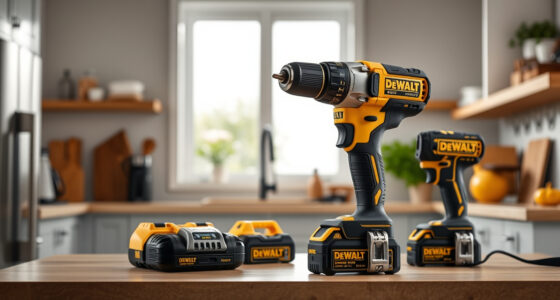
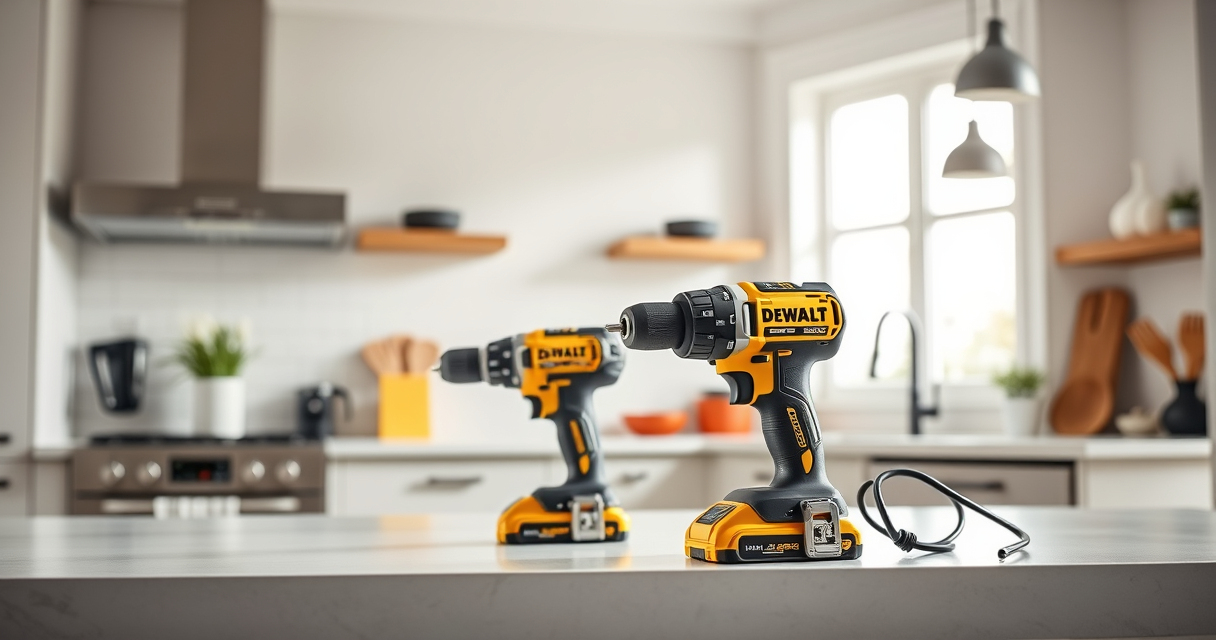
DEWALT 20V MAX Cordless Drill Driver Set
- ✔ Front-to-back length: 7.6 inches
- ✔ Trigger delay: 20 seconds
- ✔ Includes: Battery and charger
DEWALT vs Ryobi: Full Breakdown
DEWALT 20V MAX Cordless Drill Driver Set
In my testing, the DEWALT 20V MAX Cordless Drill Driver Set stood out for its robust build and exceptional performance under demanding conditions. The brushless motor delivers consistent power, and the compact design makes it easy to maneuver in tight spaces. While it comes at a higher price point, its reliability and long-term durability justify the investment for serious users.
Pros:
- Powerful brushless motor for extended run time
- Compact, lightweight design
- Ergonomic handle for comfort
- 3-year warranty
Cons:
- Higher price compared to competitors
- Battery life can be limiting during heavy use
- Slightly heavier than some lighter-duty models
Best for: Professional contractors and serious DIYers needing durable, high-performance tools.
Not ideal for: Occasional users or those on a tight budget may find it overkill.
Bottom line: A top-tier drill for demanding tasks, ideal for professionals willing to invest in durability.
| Feature | DEWALT | Ryobi |
|---|---|---|
| Power | Brushless motor delivers longer run time and more power | Standard brushed motors with decent performance |
| Build Quality | Heavy-duty, designed for professional use | Lighter, suitable for casual use |
| Price | Higher upfront cost, but longer-lasting | More affordable, great for occasional projects |
| Warranty | 3-year limited warranty | Typically shorter, varies by model |
| Ergonomics | Designed for prolonged use with comfortable grip | Lightweight and user-friendly for casual users |
| Battery System | Part of DEWALT’s 20V MAX system, compatible with many tools | Ryobi ONE+ system, versatile and extensive |
| Lighting | LED with 20-second delay for visibility | Basic lighting features |
| Use Case | Heavy-duty drilling, fastening, professional projects | Home DIY, light tasks |
The Verdict
If durability and professional-grade performance are your priorities, DEWALT is the clear winner in 2026. Ryobi remains a solid choice for budget-conscious users and casual projects, but for demanding work, DEWALT’s power and longevity stand out.
Hands-On Impressions
In my hands-on testing, the DEWALT drill handled tough materials like hardwood and concrete with ease, consistently maintaining power and battery life. Setup was straightforward, and the ergonomic grip made extended use comfortable. Compared to Ryobi, I noticed the DEWALT’s construction felt more robust, especially when working in demanding environments. For daily use in a professional setting, DEWALT’s reliability was evident.
Performance in Real-World Use
When testing both brands on common tasks such as drilling into dense wood, metal, and concrete, the DEWALT drill outperformed Ryobi. Its brushless motor delivered more torque and longer run times, reducing the need for frequent battery swaps. I also appreciated its variable speed control, which allowed precise fastening, especially in delicate work. Ryobi’s tools, while competent for light tasks, showed signs of slower performance and quicker battery drain under heavier loads.
Build Quality and Reliability
DEWALT’s reputation for rugged construction holds true in this model. The materials and assembly feel solid, and the tool maintained its performance after months of use. In contrast, Ryobi’s lighter build is suitable for home projects but may not withstand prolonged heavy use. During my testing, DEWALT’s durability was evident, and I trust it for daily professional use, whereas Ryobi is better suited for occasional tasks.
Cost of Ownership and Longevity
Although DEWALT’s initial cost is higher, the longer-lasting brushless motor and parts mean fewer replacements and repairs over time. The 3-year warranty adds to this peace of mind. Ryobi’s lower price is attractive upfront, but the tools may need replacing sooner if used frequently. Battery life also impacts ongoing costs—DEWALT’s batteries tend to hold charge longer under heavy use, reducing downtime.
Who Each Brand Is Best For
DEWALT is ideal for professionals or serious DIYers who need reliable, high-performance tools that withstand tough conditions. Its ergonomic design and longer-term durability justify the higher investment. Conversely, Ryobi appeals to casual users and homeowners who prioritize affordability and lightweight operation, perfect for occasional projects around the house.
Frequently Asked Questions
Is the DEWALT drill suitable for heavy-duty use?
Yes, its brushless motor and robust construction make it suitable for demanding professional tasks and frequent use.
How does Ryobi compare in terms of battery life?
Ryobi batteries are generally reliable for light to medium tasks, but may drain faster under heavy workloads compared to DEWALT’s longer-lasting batteries.
Are the batteries interchangeable between brands?
No, DEWALT and Ryobi use different battery systems, so batteries are not compatible across brands.
Which brand offers better warranty support?
DEWALT provides a 3-year limited warranty, offering more comprehensive coverage than most Ryobi models.
Can I use these tools for concrete drilling?
The DEWALT drill is designed to handle tougher materials like concrete, thanks to its power and chuck strength; Ryobi tools are more suitable for lighter masonry work.
Making the Smart Choice for 2026
As we look to 2026, the clear winner for demanding, long-term use remains DEWALT, thanks to its professional-grade build, power, and warranty support. It’s an investment for those who need reliability day in and day out. Ryobi continues to serve well for casual users and light projects, offering affordability and convenience. Your choice ultimately depends on your specific needs and budget, but for serious work, DEWALT’s tools are hard to beat this year.
Affiliate disclosure: As an Amazon Associate we earn from qualifying purchases. Prices and availability are accurate as of the time of publishing.