Portable jump starters have quietly replaced the old roadside ritual of flagging down a stranger for jumper cables — but the gap between a great unit and a frustrating one comes down to peak amps, battery capacity, and safety engineering. My top pick, the Trekure 8000A 26800mAh, wins on raw capability and doubles as a serious power bank, while the NOCO Boost GB40 remains the safest, most beginner-friendly choice thanks to its spark-proof clamps and reverse-polarity protection. Budget shoppers get real value from the S ZEVZO ET03, which punches above its price for gas engines up to 8.0L. The main tradeoff you’ll face: do you want a lightweight lithium unit you can store in a glovebox, or a heavier model with a built-in air compressor that handles tires too? Read on for the full breakdown of all 15 models.
Complete the kit


Key Takeaways
- Peak amp ratings are only part of the story — the Trekure 8000A and OXILAM 6000A handle big diesel engines, but the NOCO GB40’s 1000A output starts most passenger cars more safely thanks to superior error-proofing.
- Built-in air compressors (found on the M1, YaberAuto, and the 4500A combo unit) add real convenience but add bulk, slower recharges, and higher prices — they only make sense if you actually expect flat tires, not just dead batteries.
- The NOCO lineup (GB20, GB40, GB50) costs more per amp than budget rivals, but its UltraSafe clamp design makes it the clear choice for anyone nervous about hooking up terminals wrong.
- Budget 5000A-class starters from S ZEVZO, Trekure, and generic brands deliver impressive specs, but quality control and included accessories (storage cases, quality cables) vary widely at this price.
- The Clore Jump-N-Carry JNC660 is the only lead-acid option in this roundup — it’s heavier and less versatile, but shop-grade cranking power makes it the pick for frequent, professional use.
| Car Battery Jump Starter with Air Compressor 4500A |  | Best All-in-One Emergency Kit | Peak Current: 4500A | Battery Type: Lithium Polymer | Battery Capacity: 7200 mAh | VIEW LATEST PRICE | See Our Full Breakdown |
| M1 7000A Car Battery Jump Starter with Air Compressor |  | Best for Large Engines | Peak Current: 7000A | Supported Engines: 9.0L Gas / 8.0L Diesel | Air Compressor: 150 PSI with pressure detection | VIEW LATEST PRICE | See Our Full Breakdown |
| NOCO Boost GB40 12V 1000A UltraSafe Portable Lithium Jump Starter | 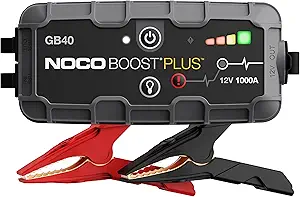 | Best Brand Trust and Safety | Peak Amps: 1000A | Engine Compatibility: Gasoline up to 6.0L, Diesel up to 3.0L | Weight: 2.5 lbs | VIEW LATEST PRICE | See Our Full Breakdown |
| S ZEVZO ET03 Car Jump Starter 4000A |  | Best Value for Power | Peak Current: 4000A | Battery Type: Lithium Ion | Battery Capacity: 20,000 mAh | VIEW LATEST PRICE | See Our Full Breakdown |
| Jump Starter Battery Jumper Starter Portable 5000A |  | Best Standby Lifespan | Peak Current: 5000A | Voltage: 12V | Battery Type: Ternary Lithium | VIEW LATEST PRICE | See Our Full Breakdown |
| Trekure Car Battery Jump Starter 8000A 26800mAh Portable Power Bank & Battery Jumper | 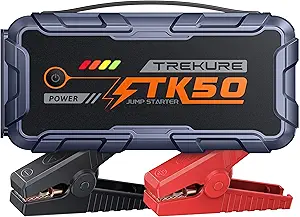 | Best for Big Engines | Peak Current: 8000A | Battery Capacity: 26800mAh | Battery Type: Lithium Polymer | VIEW LATEST PRICE | See Our Full Breakdown |
| NOCO Boost GB20 500A UltraSafe Jump Starter, 12V Lithium Battery Booster |  | Best Premium Safety Pick for Small Engines | Peak Amps: 500A | Engine Capacity: Gas engines up to 4.0L | Battery Type: Lithium-ion | VIEW LATEST PRICE | See Our Full Breakdown |
| Trekure Car Battery Jumper Starter Portable 5000A with Flashlight and Power Bank |  | Best Budget All-Rounder | Peak Current: 5000A | Battery Capacity: 7200mAh | Battery Type: Lithium Polymer | VIEW LATEST PRICE | See Our Full Breakdown |
| Jump Starter Car Jump Starter Auto Battery Booster Pack 5000A Peak 12V with USB-C Quick Charge |  | Best Spare for the Glovebox | Peak Current: 5000A | Voltage: 12V | Engine Compatibility: Up to 7.0L gas / 5.5L diesel | VIEW LATEST PRICE | See Our Full Breakdown |
| YaberAuto 5000A Car Jump Starter with Air Compressor |  | Best Emergency All-in-One | Peak Current: 5000A | Battery Capacity: 7200mAh | Battery Type: Lithium Polymer | VIEW LATEST PRICE | See Our Full Breakdown |
| Scatach 3000A Car Battery Jump Starter | 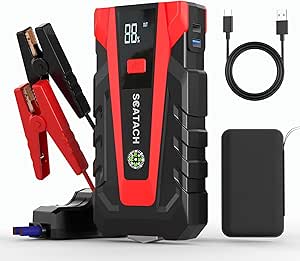 | Best Multi-Jump Value | Peak Current: 3000A | Voltage: 12V | Engine Compatibility: Up to 9.0L Gasoline / 7.0L Diesel | VIEW LATEST PRICE | See Our Full Breakdown |
| NOCO Boost GB50 1500A UltraSafe Jump Starter |  | Best Rugged Compact Pick | Peak Amps: 1500A | Battery Type: Lithium | Voltage: 12V | VIEW LATEST PRICE | See Our Full Breakdown |
| OXILAM Jump Starter 6000A | 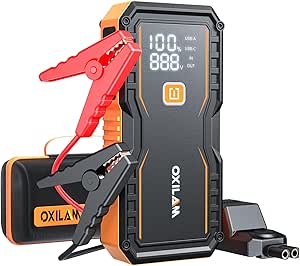 | Best for Big Diesel Engines | Battery Type: Lithium Ion | Voltage: 12V | Peak Output Current: 6000A | VIEW LATEST PRICE | See Our Full Breakdown |
| Clore Automotive Jump-N-Carry JNC660 1700 Peak Amp Jump Starter |  | Best Professional Workhorse | Peak Amperage: 1700A | Battery Type: Lead-Acid, AGM | Battery Capacity: 22 Ah | VIEW LATEST PRICE | See Our Full Breakdown |
| LOKITHOR J400 Portable Jump Starter |  | Best for Motorcycles and Small Engines | Peak Output Current: 2000A | Battery Type: Lithium Polymer | Battery Capacity: 6,400mAh | VIEW LATEST PRICE | See Our Full Breakdown |
| portable jump starter | Battery Type | Weight | Voltage | Peak Current |
|---|---|---|---|---|
| Car Battery Jump Starter with | Lithium Polymer | 1200 g | 12V | 4500A |
| M1 7000A Car Battery Jump Star | — | 554 g | — | 7000A |
| NOCO Boost GB40 12V 1000A Ultr | — | 2.5 lbs | — | — |
| S ZEVZO ET03 Car Jump Starter | Lithium Ion | 1.4 lbs | 12V | 4000A |
| Jump Starter Battery Jumper St | Ternary Lithium | 1.9 lbs | 12V | 5000A |
| Trekure Car Battery Jump Start | Lithium Polymer | 0.64 kg | 12V | 8000A |
| NOCO Boost GB20 500A UltraSafe | Lithium-ion | 2.4 lbs | — | — |
| Trekure Car Battery Jumper Sta | Lithium Polymer | 0.42 kg | 12V | 5000A |
| Jump Starter Car Jump Starter | Lithium | — | 12V | 5000A |
| YaberAuto 5000A Car Jump Start | Lithium Polymer | 0.7 kg | 12V | 5000A |
| Scatach 3000A Car Battery Jump | — | — | 12V | 3000A |
| NOCO Boost GB50 1500A UltraSaf | Lithium | 2.7 lbs | 12V | — |
| OXILAM Jump Starter 6000A | Lithium Ion | — | 12V | — |
| Clore Automotive Jump-N-Carry | Lead-Acid, AGM | 18 lbs | 12V | — |
| LOKITHOR J400 Portable Jump St | Lithium Polymer | 450 g | 12V | — |
More Details on Our Top Picks
Car Battery Jump Starter with Air Compressor 4500A
This model earns its place by treating a dead battery as just one part of a roadside emergency. Beyond the 4500A boost, it packs a 150 PSI air compressor, an SOS-capable flashlight, and USB-C power bank charging into a single case — a combination that means one trunk-sized tool covers flat tires, dead phones, and dead batteries alike. Compared with the NOCO Boost GB40, which is purely a jump starter and charger, this option trades brand polish for sheer versatility. The tradeoff is real, though: at 1200 grams, it’s the heaviest compact pick here, and the compressor only works on 12V vehicle tires, not truck or industrial applications. It also demands a recharge every 2–3 months in storage, which forgetful owners will pay for later.
Pros:- Combines jump starter, air compressor, flashlight, and power bank in one unit
- 4500A peak current handles most passenger vehicles and boats
- Fireproof battery construction and built-in safety protections
- Wide operating range from -4°F to 140°F
Cons:- Heaviest compact option in this lineup at 1200 grams
- Needs recharging every 2–3 months even when unused
- 12V-only limitation rules out larger commercial batteries
Best for: Road-trippers and daily commuters who want one device to handle dead batteries, low tires, and phone charging without buying separate tools
Not ideal for: Buyers who only need occasional jump starts and dislike maintenance — the weight and recharge schedule make it overkill for a glovebox backup
- Peak Current:4500A
- Battery Type:Lithium Polymer
- Battery Capacity:7200 mAh
- Air Compressor:150 PSI
- Weight:1200 g
- Operating Temperature:-4°F to 140°F
- Voltage:12V
- Additional Features:LED flashlight, SOS signal, USB-C charging
Our verdict“Buy this if you want a single trunk tool for tires, batteries, and emergencies; skip it if you just want occasional jump-start insurance.”
M1 7000A Car Battery Jump Starter with Air Compressor
Peak amperage is where the M1 separates itself: 7000A with support for engines up to 9.0L gas and 8.0L diesel puts it ahead of the S ZEVZO ET03 (8.0L/7.0L) and makes it the pick here for full-size trucks and diesel workhorses. Unlike the generic 4500A combo unit, the M1 adds automatic tire pressure detection to its compressor, so you set a target and walk away rather than babysitting a gauge. At 554 grams, it’s also surprisingly light for its output — lighter than the NOCO GB40 despite nearly seven times the claimed amps. The catches: the manufacturer limits continuous inflation to prevent overheating, and with no published battery capacity, you can’t independently verify how many jumps you’ll actually get per charge.
Pros:- Highest peak current in this batch at 7000A
- Handles up to 9.0L gas and 8.0L diesel engines
- Compressor with automatic tire pressure detection
- Lightweight at 554 grams despite the output
Cons:- Inflation can’t run continuously without overheating
- No manufacturer-listed battery capacity makes real-world endurance unclear
Best for: Diesel truck owners and operators of large-displacement engines who need guaranteed starting power, not just headline numbers
Not ideal for: Small-car owners — the extra amperage is wasted money, and a lighter, cheaper unit like the GB40 covers compact engines fine
- Peak Current:7000A
- Supported Engines:9.0L Gas / 8.0L Diesel
- Air Compressor:150 PSI with pressure detection
- Weight:554 g
- Temperature Range:-4°F to 140°F
- USB Output:5V/1A, 9V/2A, 12V/1.5A
- Lighting Modes:Strobe, Flash, SOS
Our verdict“This is the engine-size insurance policy for truck and diesel owners, provided you accept the vague capacity specs and inflation limits.”
NOCO Boost GB40 12V 1000A UltraSafe Portable Lithium Jump Starter
The GB40 isn’t the strongest here — its 1000A output is dwarfed by the 5000A-class units — but it wins on trustworthy engineering and safety. NOCO’s UltraSafe system is spark-proof with reverse polarity protection, and the IP65 water- and dust-resistant housing is something none of the generic competitors can claim, which matters if the unit lives in a truck bed or gets used in rain. Compared with the budget 5000A model, the GB40’s modest specs are also more likely to be honest, from an established brand with a real warranty. The tradeoffs are clear: engines cap at 6.0L gas / 3.0L diesel, it weighs 2.5 pounds despite the lower output, and a full recharge takes three hours. You’re paying for reliability, not raw power.
Pros:- Spark-proof UltraSafe technology with reverse polarity protection
- IP65-rated water and dust resistance
- Reputable brand with 1-year warranty and established support
- Built-in power bank with 7-mode LED light including SOS
Cons:- Engine limits of 6.0L gas / 3.0L diesel exclude larger vehicles
- Heavy at 2.5 lbs for its modest 1000A output
- 3-hour full recharge time
Best for: Buyers who prioritize proven safety features, build quality, and a known brand over maximum amperage claims
Not ideal for: Owners of big trucks, diesels, or V8s — the engine caps rule it out, and cheaper options outperform it on paper
- Peak Amps:1000A
- Engine Compatibility:Gasoline up to 6.0L, Diesel up to 3.0L
- Weight:2.5 lbs
- Charging Time:3 hours
- LED Light:100 lumens, 7 modes
- Housing Rating:IP65
- Warranty:1 year
Our verdict“The safest bet for passenger-car owners who value a proven, protected design over inflated peak-amp numbers.”
S ZEVZO ET03 Car Jump Starter 4000A
The ET03 hits a sweet spot between price and capability that the pricier NOCO GB40 can’t match. With 4000A and coverage up to 8.0L gas / 7.0L diesel, it out-jumps the NOCO by a wide margin while typically costing less, and its 20,000mAh capacity doubles as a serious power bank with dual USB ports. The LCD display is a practical touch the GB40 lacks — you see remaining charge at a glance instead of guessing before a winter morning. Against the 4500A compressor combo unit, the ET03 gives up the tire inflator but comes in lighter (1.4 lbs) and slimmer for glovebox storage. Real limitations: it’s rated for 50 jump starts per charge, which is plenty for most but finite, and it needs a top-up charge after long storage.
Pros:- 4000A handles up to 8.0L gas and 7.0L diesel engines
- 20,000mAh capacity with dual USB charging ports
- LCD display shows remaining charge clearly
- Multi-layer safety protection including reverse polarity and short circuit
Cons:- Capped at 50 jump starts per full charge
- 1.4 lbs is noticeable for pocket or purse carry
- Needs recharging after extended storage before use
Best for: Value-focused owners of trucks, vans, or SUVs who want big-engine capability and a genuine power bank without paying premium prices
Not ideal for: Drivers who also need tire inflation — the YaberAuto and 4500A compressor models cover that job in one device
- Peak Current:4000A
- Battery Type:Lithium Ion
- Battery Capacity:20,000 mAh
- Engine Support:Up to 8.0L gas / 7.0L diesel
- Weight:1.4 lbs
- Dimensions:1.5″D x 3.4″W x 7.5″H
- Voltage:12V
Our verdict“The best power-per-dollar pick for anyone running larger engines who doesn’t need an air compressor.”
Jump Starter Battery Jumper Starter Portable 5000A
What makes this 5000A unit distinct in a crowded field of similar-sounding jump boxes is its 24-month standby time — the longest in this batch. For someone who wants to toss a jump starter in the trunk and forget about it, that beats the 4500A combo model’s 2–3 month recharge requirement by a full year and a half, and it’s a practical advantage no other pick here matches. It claims up to 40 jump starts per charge and includes insulated gloves, a small but thoughtful safety extra the NOCO GB40 and S ZEVZO ET03 omit. The downsides are typical of generic brands: no verified third-party testing of that 5000A claim, a 1.9-lb weight that’s heavier than the M1 despite less capability, and 12V-only support. It’s a solid budget workhorse, not a refined tool.
Pros:- 24-month standby time beats every other pick here
- Up to 40 jump starts per full charge
- Insulated gloves included for safer clamp handling
- Fast-charge USB-A plus USB-C ports for devices
Cons:- Unverified brand with no published capacity or warranty details
- Heavier than some stronger competitors at 1.9 lbs
- 12V-only support limits larger applications
Best for: Set-and-forget owners who want emergency power stashed in a vehicle for years without maintenance charging
Not ideal for: Buyers who want verified specs and brand accountability — an unbranded 5000A claim carries more risk than NOCO’s conservative ratings
- Peak Current:5000A
- Voltage:12V
- Battery Type:Ternary Lithium
- Standby Time:24 months
- Jump Starts Per Charge:Up to 40
- Weight:1.9 lbs
- Ports:2 USB-A (1 fast-charge), USB-C
Our verdict“A sensible budget choice for forgetful drivers who value long standby over brand-name assurance.”
Trekure Car Battery Jump Starter 8000A 26800mAh Portable Power Bank & Battery Jumper
Among the budget-priced entries in this roundup, the Trekure 8000A stands out for raw cranking power paired with an unusually large 26800mAh battery. Where the NOCO Boost GB20 taps out at 4.0L gas engines, this unit claims to handle all gasoline and up to 12L diesel engines — territory normally reserved for pro-grade boxes like the Clore Jump-N-Carry JNC660, minus the bulk. That huge capacity also means it doubles as a genuinely useful power bank for phones and tablets on a road trip, not just an emergency brick.
The tradeoff is polish. Compared with the GB20’s IP65 housing and spark-proof clamps, Trekure leans on generic safety protections, and the sparse instructions put more responsibility on the user to connect clamps correctly. For anyone comfortable with basic jump-starting, though, the power-per-dollar here is hard to beat.
Pros:- 8000A peak current covers gas engines and up to 12L diesels
- 26800mAh battery makes it a serious phone-and-tablet power bank
- At 0.64 kg it’s far lighter than lead-acid units like the JNC660
- Built-in LED with emergency light modes
Cons:- Thin, vague instructions leave safety largely to the user
- Budget-brand safety protections are less proven than NOCO’s UltraSafe design
- Capacity claims may not translate to real-world performance on the largest vehicles
Best for: Truck and large-diesel owners who need maximum cranking power and a big power bank without paying premium-brand prices
Not ideal for: First-time users or anyone who wants foolproof, clearly documented safety systems — the vague instructions demand more confidence than the NOCO alternatives
- Peak Current:8000A
- Battery Capacity:26800mAh
- Battery Type:Lithium Polymer
- Voltage:12V
- Engine Compatibility:All gas engines, up to 12L diesel
- Weight:0.64 kg
Our verdict“Buy this if you drive a big truck or diesel and want maximum starting power on a budget — skip it if you want beginner-proof safeguards.”
NOCO Boost GB20 500A UltraSafe Jump Starter, 12V Lithium Battery Booster
The NOCO Boost GB20 is the refinement play in this lineup. Its 500A peak output only covers gas engines up to 4.0L — a fraction of what the Trekure 8000A or the 5000A generics claim — but NOCO’s UltraSafe architecture (spark-proof clamps, reverse polarity protection) is the most trustworthy safety design at this price, and the IP65 weather-sealed housing survives glovebox and trunk abuse that cheaper units can’t. Up to 20 jump starts per charge means it holds its charge reliably between emergencies.
What you give up is reach and value. For roughly similar money, the S ZEVZO ET03 offers 4000A and an LCD display — but with none of NOCO’s build quality or weather sealing. This model makes the most sense for small-car owners who prioritize never having to think about safety mechanics.
Pros:- Spark-proof clamps and reverse polarity protection make misuse nearly impossible
- IP65-rated housing tolerates dust, rain, and trunk storage
- Up to 20 jump starts on a single charge
- Doubles as a USB-C power bank with a 100-lumen, 7-mode flashlight
Cons:- 500A peak limits it to 4.0L gas engines
- Premium price per amp compared with 5000A budget rivals
- 3-hour recharge time with no fast-charge option
Best for: Small-car and motorcycle owners who want a sealed, foolproof unit they can stash for years and forget about
Not ideal for: Anyone with a truck, SUV, or diesel — the 4.0L gas ceiling rules out most larger vehicles
- Peak Amps:500A
- Engine Capacity:Gas engines up to 4.0L
- Battery Type:Lithium-ion
- Housing Rating:IP65
- Weight:2.4 lbs
- Charging Time:3 hours
- Light Output:100 lumens, 7 modes
- Warranty:1 year
Our verdict“The safest, best-built choice here — but only if your engine is 4.0L or smaller.”
Trekure Car Battery Jumper Starter Portable 5000A with Flashlight and Power Bank
This Trekure 5000A hits the sweet spot between price and capability. It claims support for engines up to 10L gas and 8L diesel — matching the heavier OXILAM 6000A‘s coverage for less money — while tipping the scale at just 0.42 kg, making it one of the lightest full-capability units in the roundup. The standout party trick is the magnetic LED light: stick it to the fender while you work under the hood, something the standard flashlights on the NOCO GB20 or generic 5000A boxes can’t do.
The compromises are typical of the budget tier. The 7200mAh battery is modest compared with its bigger Trekure sibling’s 26800mAh, so power-bank duty is limited to a phone top-up or two. Long-term battery longevity is also undocumented, and the layered safety features take a read-through to understand. For the price, most buyers will accept those unknowns.
Pros:- 5000A handles engines up to 10L gas / 8L diesel
- Magnetic LED light attaches to the car for hands-free roadside work
- Featherweight at 0.42 kg — lighter than nearly everything else here
- Works across cars, trucks, boats, motorcycles, and mowers
Cons:- 7200mAh battery offers limited power-bank runtime
- No published data on battery lifespan or charge retention
- Safety-feature interface is less intuitive than NOCO’s error-proof design
Best for: Budget-minded commuters and weekend road-trippers who want full-size starting power in a sub-kilogram package
Not ideal for: Buyers who want proven longevity or need serious power-bank capacity for camping and device-heavy trips
- Peak Current:5000A
- Battery Capacity:7200mAh
- Battery Type:Lithium Polymer
- Voltage:12V
- Engine Compatibility:Up to 10L gas / 8L diesel
- Weight:0.42 kg
- Compatible Vehicles:Car, truck, SUV, motorcycle, boat, lawnmower, pickup
Our verdict“The value pick of the lineup — big claimed power and a clever magnetic light for budget money, if you accept the unknowns.”
Jump Starter Car Jump Starter Auto Battery Booster Pack 5000A Peak 12V with USB-C Quick Charge
This generic-but-capable 5000A jump box plays the affordable-backup role. Its engine coverage — up to 7.0L gas and 5.5L diesel — sits a step below the Trekure 5000A’s 10L/8L claims but comfortably above the NOCO GB20’s 4.0L ceiling, which covers most sedans, crossovers, and half-ton trucks. The USB-C quick charge input is the practical differentiator here: unlike rivals that trickle-charge over micro-USB, this one tops up from a modern phone charger or car port without hunting for a legacy cable.
The ownership burden is maintenance. The unit needs regular recharging to keep the lithium cells healthy, and it demands a full initial charge out of the box before first use — an extra step the NOCO’s set-and-forget design spares you. Owners who forget to top it up every couple of months may find it flat when needed most.
Pros:- 5000A starts engines up to 7.0L gas / 5.5L diesel
- USB-C quick-charge input matches modern cables and chargers
- Spark-proof and reverse-polarity protections included
- Lighting, strobe, and SOS modes for roadside visibility
Cons:- Requires periodic recharging or the battery degrades
- No fast charger included — needs a 5V/2A adapter or better
- Must be fully charged before first use
Best for: Daily drivers who want a cheap, compact second unit for the glovebox or to gift to a new driver
Not ideal for: Set-and-forget buyers — if you won’t recharge it every few months, choose a NOCO with better charge retention
- Peak Current:5000A
- Voltage:12V
- Engine Compatibility:Up to 7.0L gas / 5.5L diesel
- Battery Type:Lithium
- USB Outputs:5V/3A and 5V/2.4A
- Lighting Modes:Lighting, Strobe, SOS
Our verdict“A sensible budget backup for common vehicles, as long as you’re willing to maintain its charge schedule.”
YaberAuto 5000A Car Jump Starter with Air Compressor
The YaberAuto 5000A earns its spot by solving two dead-roadside problems at once. Beyond jump-starting most vehicles, its built-in 150 PSI air compressor at 35L/min inflates a passenger tire in minutes — a combination the M1 7000A and the 4500A compressor combo unit also offer, but the YaberAuto packages it into a slimmer 0.7 kg frame with four lighting modes including a red warning light for visibility during night-side stops. For road-trippers and parents, one brick replacing both a jump box and a tire inflator is real trunk-space savings.
The tradeoffs are duty-cycle limits: the compressor can’t run longer than 10 minutes continuously, so it’s for top-ups and emergencies, not inflating a trailer’s worth of tires. Its 7200mAh battery also matches the lighter Trekure 5000A, so heavy inflation sessions will drain the reserve you’d want kept for a jump start. Still, as a single grab-and-go emergency kit, it’s the most complete package in this batch.
Pros:- 9-in-1 design combines jump starter, 150 PSI compressor, power bank, and lighting
- 35L/min airflow inflates a car tire quickly
- Red warning and SOS modes improve safety during night breakdowns
- Covers most vehicles with 5000A peak output
Cons:- Compressor limited to 10 minutes of continuous use
- 7200mAh battery must be split between jumping and inflation duty
- Requires recharging after long storage periods
Best for: Road-trip families and rideshare drivers who want jump-starting and tire inflation in one trunk-friendly device
Not ideal for: Anyone who needs sustained inflation for multiple tires or off-road setups — the 10-minute duty cycle won’t keep up
- Peak Current:5000A
- Battery Capacity:7200mAh
- Battery Type:Lithium Polymer
- Voltage:12V
- Inflation Pressure:150 PSI
- Inflation Flow Rate:35L/min
- Weight:0.7 kg
- Lighting Modes:Flashlight, white strobe, red warning, SOS
Our verdict“The best single-device emergency kit here for drivers whose biggest roadside fears are a dead battery or a soft tire.”
Scatach 3000A Car Battery Jump Starter
Scatach’s real selling point is endurance: up to 50 jump starts per charge, which dwarfs the NOCO Boost GB50’s 30-jump ceiling. For anyone who maintains a small fleet — a household with several aging cars, or a hobbyist with a motorcycle and a boat — that reserve capacity means fewer anxious top-ups between uses. The 3000A peak current comfortably covers engines up to 9.0L gas and 7.0L diesel, putting it in the same performance bracket as the OXILAM for most passenger vehicles. It gives up refinement in exchange: there’s no IP rating like the GB50 offers, and the enclosure is bulkier than a pocket-size unit. Compared with the LOKITHOR J400, you trade a digital display for more raw starting reserve, a trade that makes sense if jumps-per-charge matters more than readouts.
Pros:- Up to 50 jump starts per charge, best-in-batch endurance
- 3000A peak current handles up to 9.0L gas and 7.0L diesel engines
- Full safety suite including spark-proof clamps and reverse polarity protection
- Doubles as a power bank and includes a storage case
Cons:- 12V-only with no water or dust resistance rating
- Too large for convenient pocket or purse carry
- Needs periodic recharging to stay ready after repeated use
Best for: Multi-vehicle households and small fleets that need many jumps per charge without babysitting the battery
Not ideal for: Anyone wanting weather-sealed ruggedness or a glovebox-sized unit — it lacks an IP rating and is too bulky for pocket carry
- Peak Current:3000A
- Voltage:12V
- Engine Compatibility:Up to 9.0L Gasoline / 7.0L Diesel
- Jump Starts per Charge:Up to 50
- Safety Features:Spark-proof, reverse polarity, low/high-temperature, over-load protection
- Lighting:LED flashlight with 3 modes
- Included Accessories:Smart jump cable, USB-C charging cable, manual, storage case
Our verdict“Buy this if you jump-start vehicles often enough that jump count per charge matters more than portability or weather sealing.”
NOCO Boost GB50 1500A UltraSafe Jump Starter
Where the Scatach wins on jump count, the GB50 wins on survivability. Its IP65 water and dust resistance is rare in this price class and makes it the better choice for boats, motorcycles, and work trucks that live outdoors. NOCO’s UltraSafe error-proof clamps are the most forgiving design here for anyone nervous about hooking up terminals wrong. The compromises are real, though: at 1500A peak, it’s the weakest performer in this batch, limited to 4.5L diesel engines, and the 30 jumps per charge falls well short of the Scatach. It also needs a leisurely five hours to recharge. Compared with the smaller GB40 and GB20 elsewhere in this roundup, the GB50 is the sweet spot — enough grunt for most cars with genuine weatherproofing.
Pros:- IP65 water and dust resistance, uncommon at this price
- Error-proof spark-proof clamps make it safe for nervous first-timers
- Featherweight at 2.7 lbs with a 200-lumen, 7-mode LED
- USB-C power bank functionality in a pocketable footprint
Cons:- Only 30 jump starts per charge and a slow 5-hour recharge
- Lowest peak output in this batch at 1500A
- Pricier per amp than value rivals like the Scatach
Best for: Boat owners, motorcyclists, and outdoor users who need a jump starter that shrugs off rain and dust
Not ideal for: Diesel truck owners — the 4.5L diesel ceiling rules out most heavy pickups
- Peak Amps:1500A
- Battery Type:Lithium
- Voltage:12V
- Engine Compatibility:Gas up to 7.0L, Diesel up to 4.5L
- Weight:2.7 lbs
- Water/Dust Resistance:IP65
- Lighting:200-lumen LED with 7 modes
Our verdict“This is the pick for people whose vehicles live outside in the weather, not for those chasing maximum cranking power.”
OXILAM Jump Starter 6000A
With a claimed 6000A peak current and a 12L diesel rating, the OXILAM sits near the top of this batch for raw starting muscle — it out-muscles the Scatach 3000A by a wide margin and even beats the heavier-duty Trekure 8000A units on claimed diesel displacement. That makes it the lithium option of choice for big diesel pickups and equipment where the NOCO GB50 simply taps out. Two cautions temper the enthusiasm. First, the listed 3.36-ounce weight is almost certainly a spec-sheet error, but it signals sloppy documentation from a newer brand with limited user review history — trust is thinner here than with NOCO or Clore. Second, the unit reportedly needs over 50% charge before it will jump at all, so you’ll need to keep it topped up rather than letting it sit for months.
Pros:- 6000A claimed peak handles up to 12L diesel engines
- LED display, power bank mode, and USB-C output included
- Compact, waterproof housing despite the high output rating
Cons:- Requires over 50% charge before jump-starting works
- Limited detailed user reviews make claims hard to verify
- Inconsistent published specs (weight listed at 3.36 oz) suggest documentation quality issues
Best for: Owners of large diesel trucks and equipment who want maximum claimed cranking power in a lithium unit
Not ideal for: Buyers who prioritize proven reliability — thin review history and inconsistent spec data make this a riskier bet than NOCO or Clore
- Battery Type:Lithium Ion
- Voltage:12V
- Peak Output Current:6000A
- Engine Compatibility:All gas engines, diesel up to 12L
- Dimensions:8.7″D x 4.7″W x 3.5″H
- Features:LED display, LED light, power bank, USB & Type-C output
- Housing:Waterproof, compact casing
Our verdict“Maximum muscle for big diesels, but buy it accepting that the brand’s claims are less proven than established rivals.”
Clore Automotive Jump-N-Carry JNC660 1700 Peak Amp Jump Starter
The JNC660 is the old-school answer to every lithium pack in this roundup. Its 22Ah lead-acid AGM battery delivers sustained cranking power that lithium units like the OXILAM or Scatach can’t match over repeated, back-to-back jumps — which is exactly why shops, tow operators, and fleet yards still run these. The built-in voltmeter and 12V DC outlet add diagnostic and accessory capability no compact lithium pack offers, and the long, heavy-gauge cables reach engine bays easily. The cost is obvious: at 18 pounds and roughly 16 inches wide, this is a garage or truck-bed tool, not a glovebox gadget. It also lacks USB power bank features and the LED emergency lighting that every lithium option here includes. Buy it for durability and duty cycles, not versatility.
Pros:- 22Ah AGM battery sustains repeated professional-grade jump starts
- Built-in voltmeter for battery diagnostics plus a 12V accessory outlet
- Long, heavy-duty cables handle trucks, RVs, and farm equipment
- Proven durability with decades of shop use behind the design
Cons:- Heavy and bulky at 18 pounds — no portability advantage
- No USB power bank, LED flashlight, or modern convenience features
- Requires careful handling and regular charging to keep the lead-acid battery healthy
Best for: Mechanics, fleet operators, and anyone doing repeated jump starts daily who needs sustained cranking power
Not ideal for: Daily drivers wanting glovebox portability — at 18 pounds and dinner-plate sized, it stays home
- Peak Amperage:1700A
- Battery Type:Lead-Acid, AGM
- Battery Capacity:22 Ah
- Voltage:12V
- Weight:18 lbs
- Dimensions:5.1″D x 14.1″W x 16.3″H
- Compatible Vehicles:Cars, trucks, vans, RVs, buses, tractors, watercraft, ATVs, mowers
Our verdict“The right tool for daily commercial use; the wrong one for an emergency pack that lives in a glovebox.”
LOKITHOR J400 Portable Jump Starter
The LOKITHOR J400 makes this list on balance rather than brute force. Its 2000A peak and 8.0L gas / 6.0L diesel rating cover the vast majority of passenger vehicles, and at 450 grams it’s a genuine under-seat or tank-bag companion — something neither the Clore JNC660 (18 pounds) nor really the Scatach can claim. The smart digital display showing exact charge state is a practical edge over the NOCO GB50’s indicator-light approach, since you always know whether the pack is genuinely ready. The tradeoff is capacity: a 6,400mAh battery means fewer heavy-duty jumps than larger rivals, and it’s firmly out of its depth on big diesel trucks or commercial 24V systems. For riders and small-vehicle owners, that compromise is the right one.
Pros:- Genuinely portable at 450 grams with a slim 1.69″ profile
- Smart digital display shows exact remaining charge
- Covers an impressively wide range of vehicle types from ATVs to RVs
- 300-lumen flashlight with SOS mode for genuine roadside emergencies
Cons:- 6,400mAh battery limits repeated or heavy-duty use
- 12V-only and unsuitable for larger commercial vehicles
- Fewer extras than bigger rivals like integrated air compressors
Best for: Motorcyclists, snowmobilers, and small-engine owners who want true pocketable insurance
Not ideal for: Heavy diesel truck owners and anyone needing frequent high-drain jumps — the 6,400mAh capacity won’t keep up
- Peak Output Current:2000A
- Battery Type:Lithium Polymer
- Battery Capacity:6,400mAh
- Voltage:12V
- Engine Compatibility:Up to 8.0L gas / 6.0L diesel
- Weight:450 g
- Dimensions:3.39″D x 6.89″W x 1.69″H
- Features:Smart digital display, 300-lumen LED with SOS, fast USB charging
Our verdict“The lightweight choice for riders and small-vehicle owners who’d rather carry real insurance than maximum cranking power.”
How We Picked
I ranked these 15 portable jump starters against four buyer-focused criteria. Starting performance came first: peak amps matter, but engine-size ratings (gas liters and diesel liters) are a more honest predictor of whether a unit will actually crank your vehicle in cold weather. Safety engineering was next — reverse-polarity protection, spark-proof clamps, and short-circuit safeguards separate a starter you can hand to a nervous first-timer from one that demands careful attention. Versatility and usability covered everything from USB power-bank output and built-in flashlights to display quality and included air compressors. Finally, value for money weighed what each unit costs against what it realistically replaces.
The ranking logic favors units that do their core job reliably over ones that stack on gimmicks. That’s why the safety-first NOCO models rank highly despite lower amp numbers, and why the shop-grade Clore JNC660 earns a niche spot even though it fails every portability test. Models with inflated peak-amp marketing but thinner safety features and mixed accessory bundles landed lower, regardless of how impressive the box claims looked.
| portable jump starter | Battery Type |
|---|---|
| Car Battery Jump Starter with | Lithium Polymer |
| M1 7000A Car Battery Jump Star | — |
| NOCO Boost GB40 12V 1000A Ultr | — |
| S ZEVZO ET03 Car Jump Starter | Lithium Ion |
| Jump Starter Battery Jumper St | Ternary Lithium |
| Trekure Car Battery Jump Start | Lithium Polymer |
| NOCO Boost GB20 500A UltraSafe | Lithium-ion |
| Trekure Car Battery Jumper Sta | Lithium Polymer |
| Jump Starter Car Jump Starter | Lithium |
| YaberAuto 5000A Car Jump Start | Lithium Polymer |
| Scatach 3000A Car Battery Jump | — |
| NOCO Boost GB50 1500A UltraSaf | Lithium |
| OXILAM Jump Starter 6000A | Lithium Ion |
| Clore Automotive Jump-N-Carry | Lead-Acid, AGM |
| LOKITHOR J400 Portable Jump St | Lithium Polymer |
Factors to Consider When Choosing Portable Jump Starters
Before you commit to any of the 15 models above, it helps to understand what actually drives performance and satisfaction with portable jump starters. These are the factors that separate a purchase you’ll forget about until it saves your morning from one that ends up dead in a drawer.
Peak Amps vs. Cranking Amps: Reading the Numbers Honestly
Every box screams a big peak amp number, but peak amps only describe a momentary burst, not the sustained current that actually turns over an engine. A 5000A label on a budget unit does not mean it outperforms a NOCO GB50’s 1500A in real conditions — internal battery quality, cable gauge, and clamp construction all determine whether current actually reaches your starter motor. A more reliable shortcut is the manufacturer’s engine-size rating: if a unit claims 8.0L gas and 6.0L diesel, it has headroom for almost any passenger vehicle. Match the rating to your actual engine, then add a buffer for cold weather, which can cut effective output by a third. Overbuying amps you’ll never use mostly buys weight and cost, not performance.
Safety Features Are Not Optional
The scariest failure mode in this category isn’t a starter that won’t crank — it’s one that sparks, shorts, or feeds current backward into your vehicle’s electronics. Look specifically for reverse-polarity protection, spark-proof clamps, and automatic shutoff; premium brands like NOCO build an error-detection layer that refuses to send power until you’ve connected correctly. Cheaper units often list protection features on the box but implement them with thin internal components that fail under load. This is the single biggest place where paying more genuinely buys something real. If multiple people in your household will use the starter — especially teens or partners who’ve never jumped a car — safety engineering should outrank raw amp figures in your decision.
Battery Chemistry and Shelf Life
Most modern starters use lithium-ion, but capacity and chemistry quality determine how long the unit sits in your trunk and still works when needed. A starter that holds 80% charge after six months of storage is worth far more than one that drains itself in eight weeks, because a dead jump starter is worse than no jump starter — it creates false confidence. Check the standby time specification and set a reminder to top off the unit every two or three months. Lead-acid units like the Clore JNC660 trade portability for tolerance of deep discharge and extreme temperatures, which is why shops still use them. For glovebox storage in hot climates, lithium units with quality cells handle heat better, but avoid leaving any starter in direct summer sun for months.
Do You Really Need an Air Compressor Combo?
The combo units in this roundup (the M1, YaberAuto, and 4500A all-in-one) tempt buyers with a two-tools-in-one pitch, and for some drivers it’s genuinely smart — rural commuters, trailer owners, and anyone who’s waited on a roadside tire service. But combo units cost more, weigh more, and compromise on both functions: the compressors are slower than a dedicated inflator, and the jump starter function competes for the same battery. If a slow leak is a recurring problem for you, buy the combo. If tires are a maybe and batteries are the real worry, a dedicated jump starter plus a separate $40 inflator usually performs better and lasts longer. The combo only wins when glovebox or trunk space is the scarce resource.
Capacity, Ports, and Emergency Power Bank Duty
Higher mAh capacity like the Trekure’s 26800mAh lets a starter deliver multiple jumps per charge and recharge phones several times, which matters if you drive remote routes or face extended power outages. But capacity also means weight, cost, and longer recharge times. Check for USB-C input — units still using only micro-USB charge painfully slowly and the cables are becoming obsolete. A bright LED flashlight with SOS mode sounds like a checkbox feature until you’re connecting clamps in the dark on a shoulder at night, at which point it becomes the feature you’re most grateful for. Match capacity to realistic emergency scenarios, not worst-case fantasies.
Temperature Tolerance and Storage Reality
Jump starters live in the harshest environment you own: a car interior that swings from 130°F in summer parking lots to below zero in January. Lithium cells lose capacity in extreme cold, so a unit rated for -4°F operation may still struggle to deliver full amps on the coldest morning of the year — keep it in the cabin rather than the trunk if winters are brutal where you live. Quality brands publish operating temperature ranges; suspiciously cheap units often omit them. Heat is the long-term killer, degrading cells silently over a few summers. Whatever you buy, plan to replace any lithium jump starter after four to five years, because even a well-maintained unit loses the cranking punch it had new.
Frequently Asked Questions
Can a 1000A jump starter like the NOCO GB40 really start a V8 truck?
In most conditions, yes — the GB40 is rated for gasoline engines up to 6.0L, which covers the majority of V8 pickups and SUVs. The catch is cold weather: below about 20°F, a weak battery demands more sustained current, and a 1000A unit may crank slowly or need a second attempt after letting the starter’s protection circuit warm the battery. If you regularly start a large gas engine in freezing climates, stepping up to the GB50’s 1500A or a 4000A-class unit like the S ZEVZO ET03 buys real margin. The honest rule is that amp ratings describe best-case output, and your worst-case morning is the one that matters. For diesel engines, which need roughly double the current of a comparable gas engine, don’t push a small unit at all.
Are the combo units with air compressors actually reliable, or do they fail at both jobs?
The better combos — the M1 and YaberAuto in this roundup — are legitimately good at jumping and acceptable at inflating, and that’s a fair trade for someone who wants one device in the trunk. The compromises are real, though: the compressors top out around 150 PSI and run slowly on large truck tires, and using the compressor heavily drains the same battery you’re counting on for a jump. The cheapest combo units are where the failure pattern shows up, with compressors that overheat and shut off after a few minutes. My suggestion is to buy a combo only if flat or low tires are a realistic recurring issue for you; otherwise a dedicated starter plus a standalone inflator performs better on both fronts for similar total money.
How often do I need to recharge a portable jump starter I’m not using?
Plan on topping it off every two to three months, even if it’s never been used. Quality lithium units self-discharge slowly — a NOCO or Trekure might hold usable charge for six months or more — but the internal protection circuits draw a small trickle constantly, and cold trunk storage accelerates loss. The most common horror story in this category isn’t a product defect; it’s someone reaching for a starter that sat uncharged for a year and finding it dead at the worst moment. Check the unit’s charge display when you do your oil-change-interval tire pressure check, and you’ll never be caught out. Also recharge promptly after every use, since a jump can drain 20–40% of the battery in one go.
Is it worth paying NOCO prices when budget brands advertise triple the amps?
It depends entirely on who’s using it and how. NOCO’s premium buys the most refined safety system in the category — spark-proof clamps, error detection that won’t energize the cables until connections are correct, and consistent build quality — which is genuinely valuable if the user is inexperienced or anxious. A budget 5000A unit will usually start the same car for half the price, but you’re accepting more variance in cell quality, cable gauge, and how well the protection features actually work under stress. If you’re comfortable connecting clamps correctly and checking polarity yourself, the budget route delivers better raw value. If this is going in a family member’s car or you want zero-possibility-of-mistake operation, the NOCO premium is money well spent.
Why does a lead-acid unit like the Clore JNC660 still exist when lithium is lighter?
Because it solves a different problem. Lead-acid delivers long, sustained cranking current rather than a lithium burst, which matters when you’re starting genuinely stubborn engines — badly discharged batteries, cold-soaked diesels, or vehicles that need thirty seconds of cranking attempts. Shops and fleet operators also value that the JNC660 tolerates rough treatment, deep discharge, and temperature extremes that degrade lithium cells, and its 46-inch cables reach battery terminals without the unit resting on hot engine parts. The tradeoff is weight, no power-bank features, and periodic recharging from a wall outlet. For a homeowner starting one car a few times a year, it’s the wrong tool. For someone jump-starting vehicles weekly, it will outlast two or three lithium units.
Conclusion
After comparing all 15 models, the right choice comes down to matching the unit to your engine, your climate, and who will actually use it. For best overall, the Trekure 8000A 26800mAh delivers the widest capability range — massive cranking power, genuine power-bank capacity, and enough headroom for cold mornings with almost any consumer engine. The best value pick is the S ZEVZO ET03, which covers 8.0L gas and 7.0L diesel engines at a price that undercuts premium brands by half. For best premium, the NOCO Boost GB50 pairs 1500A output with the category’s most trusted safety engineering and build quality. Beginners should start with the NOCO Boost GB40 — its foolproof clamps make a first jump-start nearly mistake-proof, and if your needs are minimal, the GB20 covers motorcycles and small cars for less.
For specific needs: choose the M1 or YaberAuto if you want a jump starter and tire inflator in one trunk-friendly device; pick the Clore JNC660 for shop-grade, weekly jump-starting duty; and grab the compact LOKITHOR J400 or GB20 if glovebox portability is the priority. Whatever you choose, mark your calendar to recharge it every couple of months — the best jump starter is the charged one.