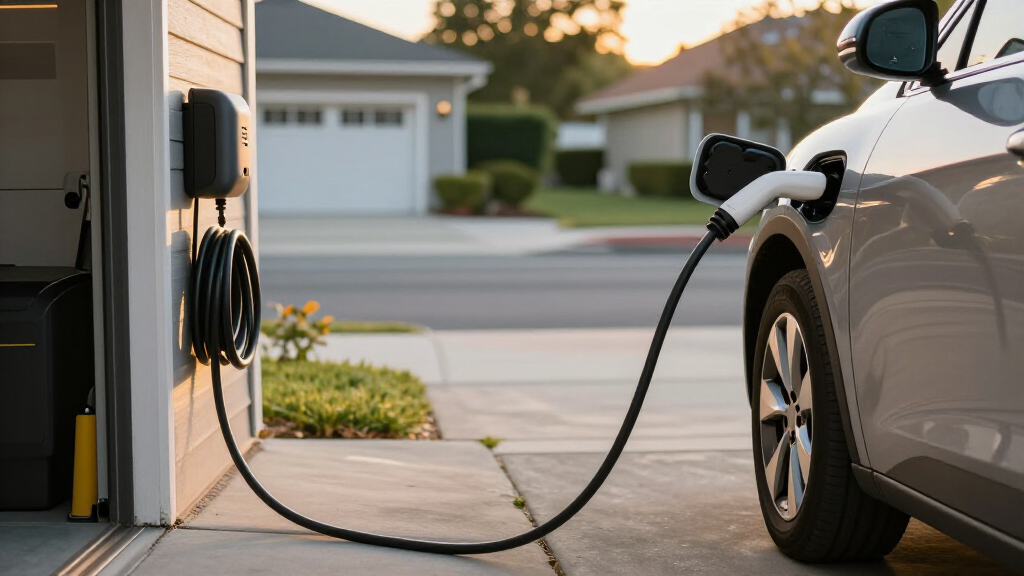

The best electric vehicle chargers balance charging speed, installation needs, cable reach, and portability. My best overall pick is the ChargePoint HomeFlex Level 2 Charger for its established smart-charging focus and choice of plug-in or hardwired configurations. The ELEGRP 40A Portable Charger stands out for drivers who want a high-current unit they can move, while the Toptoo 16A Level 1+2 Charger suits people who value outlet flexibility over speed. The main tradeoff is between faster Level 2 charging, which may call for a suitable 240V circuit, and portable or 120V options that are easier to use but slower. Read on for the full comparison, ranking logic, and guidance on matching a charger to your home and driving habits.

Get business pricing on garage and car supplies
- Business-only prices and quantity discounts
- Tax-exempt purchasing
- Multiple users, one account, clear invoices
Complete the kit


Key Takeaways
ChargePoint HomeFlex leads for versatility: the lineup includes both a plug-in version and a higher-amperage hardwired version, so buyers can match the installation to their electrical setup.
Portable 40A models prioritize speed and flexibility: ELEGRP and EVDANCE offer 25-foot cables and 240V charging, but their higher current is useful only when the outlet and vehicle support it.
Several 16A portable options fill a different role: Toptoo, VEVOR, bokman, and Raylix trade charging speed for the ability to work across outlet types or travel with the car.
Hardwired chargers suit dedicated parking: EVIQO 48A, IYILO 48A, and ChargePoint 50A models can support higher output, while installation requires a compatible circuit and qualified electrical work.
J1772 is the common connector across this selection: drivers with a different vehicle inlet should check adapter compatibility before choosing any model in this roundup.
| ChargePoint HomeFlex Level 2 EV Charger with J1772 Connector and NEMA 14-50 Plug |  | Best Overall | Output voltage: 240 V | Connector: J1772 | Plug type: NEMA 14-50 | VIEW LATEST PRICE | See Our Full Breakdown |
| Toptoo Level 1+2 Portable EV Charger, 16A 3.5 kW, J1772, 110–240V |  | Best for Beginners | Connector: J1772 | Voltage: 110–240 V | Current: 16 A | VIEW LATEST PRICE | See Our Full Breakdown |
| ELEGRP Level 2 Portable EV Charger, 40A, 240V, J1772, 25 ft Cable |  | Best for Adjustable High-Power Charging | Charging level: Level 2 | Maximum current: 40 A | Current settings: 16 A, 20 A, 24 A, 32 A, 40 A | VIEW LATEST PRICE | See Our Full Breakdown |
| VEVOR 16 Amp Level 1 and Level 2 Portable EV Charger with 25 ft Cable |  | Best for Outlet Flexibility | Charging levels: Level 1 and Level 2 | Current: 16 A | Voltage: 120 V–240 V | VIEW LATEST PRICE | See Our Full Breakdown |
| EVDANCE Level 2 Portable EV Charger, 40A, 240V, 25 ft Cable |  | Best Display-Equipped Portable Charger | Charging level: Level 2 | Voltage: 240 V | Maximum current: 40 A | VIEW LATEST PRICE | See Our Full Breakdown |
| bokman Portable Level 1 and Level 2 EV Charger, 16A, 20 ft, NEMA 6-20P with 5-15 Adapter |  | Best for Adjustable Outlet Flexibility | Charging levels: Level 1 and Level 2 | Maximum current: 16A | Adjustable current: 6A, 8A, 10A, 12A, or 16A | VIEW LATEST PRICE | See Our Full Breakdown |
| EVIQO Level 2 J1772 EV Charger, 48A, Hardwired 240V |  | Best for High-Output Hardwired Charging | Connector: J1772 | Maximum charging current: 48A on a dedicated 60A circuit; up to 50A with a dedicated 70A circuit | Power supply: 240V, hardwired | VIEW LATEST PRICE | See Our Full Breakdown |
| AIMILER Level 2 EV Charger, 32A, 25 ft Cable, Wi-Fi App, NEMA 14-50 Plug, J1772 Connector |  | Best Plug-In Smart Level 2 | Output voltage: 240V | Maximum current: 32A | Connector: J1772 | VIEW LATEST PRICE | See Our Full Breakdown |
| Toptoo Portable Level 1+2 EV Charger, 16A, 3.5 kW, 110–240V, J1772 |  | Best for Simple Portable Charging | Connector type: J1772 | Compatible vehicles: J1772-compatible electric cars | Input voltage: 120V | VIEW LATEST PRICE | See Our Full Breakdown |
| EVDANCE Level 1 and Level 2 Portable EV Charger, 25 ft Cable, J1772, 12A/120V and 16A/240V |  | Best for Long-Reach Portable Charging | Connector: J1772 | Charging levels: Level 1 and Level 2 | Current: 12A at 120V; 16A at 240V | VIEW LATEST PRICE | See Our Full Breakdown |
| IYILO Level 2 EV Charger, 48A, 11.5 kW, 240V, J1772 |  | Best for High-Power Hardwired Charging | Charging level: Level 2 | Maximum current: 48A | Maximum power: 11.5 kW | VIEW LATEST PRICE | See Our Full Breakdown |
| EVIQO Level 2 EV Charger, J1772, 40A, NEMA 14-50 |  | Best Plug-In Smart Charger | Connector: J1772 | Maximum amperage: 40A | Voltage: 240V | VIEW LATEST PRICE | See Our Full Breakdown |
| Lectron Level 1 Portable EV Charger, 120V, 15A, 16 ft Cord, J1772 Connector |  | Best for Standard-Outlet Charging | Charging level: Level 1 | Input voltage: 120V | Current: 15A | VIEW LATEST PRICE | See Our Full Breakdown |
| Raylix Portable Level 1 and Level 2 J1772 EV Charger, 16A, NEMA 5-15 and 6-20 Plugs |  | Best Dual-Voltage Portable Charger | Connector: SAE J1772 | Level 1 charging: 120V, up to 12A, 1.44 kW | Level 2 charging: 240V, 16A, 3.68 kW | VIEW LATEST PRICE | See Our Full Breakdown |
| ChargePoint HomeFlex Level 2 Smart EV Charger, J1772, Hardwired, 50A | 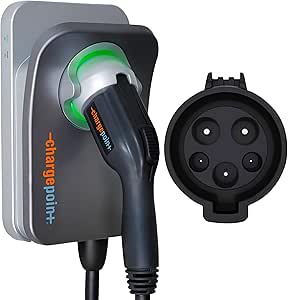 | Best Premium Smart Charger | Connector: J1772 | Installation: Hardwired | Adjustable output: 16–50A | VIEW LATEST PRICE | See Our Full Breakdown |
| electric vehicle charger | Connector | Cable length | Warranty |
|---|---|---|---|
| ChargePoint HomeFlex Level 2 E | J1772 | 23 ft | 3-year parts warranty |
| Toptoo Level 1+2 Portable EV C | J1772 | — | — |
| ELEGRP Level 2 Portable EV Cha | — | 25 ft | 2 years |
| VEVOR 16 Amp Level 1 and Level | SAE J1772 | 25 ft | — |
| EVDANCE Level 2 Portable EV Ch | J1772 | 25 ft | — |
| bokman Portable Level 1 and Le | J1772 | 20 ft | — |
| EVIQO Level 2 J1772 EV Charger | J1772 | 25 ft | 3 years |
| AIMILER Level 2 EV Charger | J1772 | 25 ft | — |
| Toptoo Portable Level 1+2 EV C | — | — | 1 year |
| EVDANCE Level 1 and Level 2 Po | J1772 | 25 ft | 1 year |
| IYILO Level 2 EV Charger | SAE J1772 | 25 ft | 3 years |
| EVIQO Level 2 EV Charger | J1772 | 25 ft | 3 years |
| Lectron Level 1 Portable EV Ch | J1772 | — | 2 years |
| Raylix Portable Level 1 and Le | SAE J1772 | — | 2 years |
| ChargePoint HomeFlex Level 2 S | J1772 | 23 ft | 3 years |
More Details on Our Top Picks
ChargePoint HomeFlex Level 2 EV Charger with J1772 Connector and NEMA 14-50 Plug
The ChargePoint HomeFlex is my strongest all-around pick for drivers who want a capable home Level 2 charger backed by a well-established charging app. Its 23-foot cold-resistant cable and indoor/outdoor suitability make everyday placement easier, while the app adds charging controls and useful session information. It can deliver up to 45 miles of range per hour, depending on the vehicle, though actual charging speed varies by car and circuit.
Compared with the portable ELEGRP 40A, HomeFlex trades a longer cable and selectable current settings for ChargePoint app integration and a three-year parts warranty. It is less flexible than a charger that can run from a standard household outlet: installation requires a suitable 240V outlet and a 40A or 50A circuit. Tesla drivers also need an adapter.
Pros:- ChargePoint app provides charging controls and session information
- 23-foot cable is cold-resistant and offers useful reach
- Suitable for indoor or outdoor installation
- UL listed with a three-year parts warranty
Cons:- Requires a suitable 240V outlet and 40A or 50A circuit
- Tesla vehicles need a separate adapter
- Less flexible for travel than portable options such as the ELEGRP
Best for: J1772 EV owners who want a dependable home Level 2 setup, app-based controls, and a cable suited to garage or outdoor use.
Not ideal for: Drivers who need Level 1 charging, have no suitable 240V circuit, or want a charger that connects to a Tesla without an adapter.
- Output voltage:240 V
- Connector:J1772
- Plug type:NEMA 14-50
- Cable length:23 ft
- Ports:1
- Weight:13.8 lb
- Certification:UL listed
- Warranty:3-year parts warranty
Our verdict“Choose HomeFlex for a feature-rich, app-connected home charger if you already have the required 240V circuit.”
Toptoo Level 1+2 Portable EV Charger, 16A 3.5 kW, J1772, 110–240V
The Toptoo 16A is a practical entry point for J1772 drivers who want one portable charger for compatible household and 240V outlets. Its 110–240V input gives it more charging-location flexibility than the dedicated 240V ELEGRP 40A, while the adjustable current helps match charging to the outlet’s capacity. The included US outlet adapter and straightforward 1.8-inch LCD make charging status, voltage, power, and temperature visible without relying on an app.
The tradeoff is speed: at up to 3.5 kW and 16A, it is a slower choice than the 40A ELEGRP or ChargePoint HomeFlex when those higher-powered setups are available. Scheduled charging and protections against overvoltage, overheating, and overload add useful controls, but they do not make an unsuitable outlet safe. Buyers must match current to properly rated wiring and receptacles.
Pros:- Supports 110–240V input for use with suitable outlets
- Adjustable current and scheduled charging add practical control
- LCD shows charging status, voltage, power, and temperature
- Includes a US standard outlet adapter and multiple electrical protections
Cons:- Maximum 3.5 kW output is slower than the 40A ELEGRP and ChargePoint HomeFlex
- Current must stay within the outlet and wiring rating
- J1772 connector may require an adapter for vehicles with other charging ports
Best for: New J1772 EV or plug-in hybrid owners who need a portable charger for varied 110–240V locations and value a clear on-device display.
Not ideal for: Drivers who need faster daily charging than 16A can provide or who cannot confirm that their outlet and wiring are rated for the selected current.
- Connector:J1772
- Voltage:110–240 V
- Current:16 A
- Maximum power:3.5 kW
- Display:1.8-inch LCD
- Power plug:Type B, 3-pin (North American)
- Power source:AC
- Included components:Power plug, cable, control box, US standard plug adapter
Our verdict“Pick the Toptoo if you want a portable, display-equipped charger for suitable 110–240V outlets and can accept a 16A charging limit.”
ELEGRP Level 2 Portable EV Charger, 40A, 240V, J1772, 25 ft Cable
The ELEGRP 40A suits drivers who want portable Level 2 charging with more control over output than a fixed-current setup. Five settings, from 16A to 40A, let owners match charging to their circuit, and the 1–12-hour delay can shift a session to a preferred time. Its 25-foot cable gives it more reach than the ChargePoint HomeFlex’s 23-foot lead, which can help when the outlet is not beside the vehicle.
At up to 9.6 kW, it is built for much faster charging than the 16A Toptoo, but it needs a compatible 240V NEMA 14-50 outlet. The IP67 rating and ETL certification make it a stronger fit for outdoor exposure than a basic portable unit, though it still cannot solve an incompatible electrical setup. Tesla drivers must buy a NACS adapter separately, and the two-year warranty is shorter than HomeFlex’s three-year parts coverage.
Pros:- Up to 40A and 9.6 kW for faster charging than 16A portable models
- Five current settings help match output to the circuit
- 25-foot cable and 1–12-hour delay provide useful placement and scheduling flexibility
- IP67 rating, ETL certification, and two-year warranty
Cons:- Requires a compatible 240V NEMA 14-50 outlet
- Tesla use requires a separately purchased NACS adapter
- Two-year warranty is shorter than the ChargePoint HomeFlex parts warranty
Best for: J1772 EV owners with a NEMA 14-50 outlet who want high-output portable charging, a long cable, and the ability to reduce current when needed.
Not ideal for: Drivers without a compatible 240V NEMA 14-50 outlet, or Tesla owners who want an adapter included.
- Charging level:Level 2
- Maximum current:40 A
- Current settings:16 A, 20 A, 24 A, 32 A, 40 A
- Maximum output:9.6 kW
- Voltage:240 V
- Plug type:NEMA 14-50
- Cable length:25 ft
- Ingress protection:IP67
- Warranty:2 years
Our verdict“Choose ELEGRP if you have a NEMA 14-50 outlet and want a powerful portable charger with adjustable current and a long cable.”
VEVOR 16 Amp Level 1 and Level 2 Portable EV Charger with 25 ft Cable
The VEVOR 16A stands out for including both a NEMA 6-20P plug and a NEMA 5-15 adapter, giving J1772 drivers a choice between suitable 120V and 240V outlets. That makes it a more adaptable travel or backup option than the 240V-only ELEGRP 40A, especially for owners who value broad outlet compatibility over maximum charging speed. Its 25-foot cable can also reach across a garage or driveway, and the carrying bag supports portable use.
The compromise is a 16A limit, which makes it far slower than the 40A ELEGRP or EVDANCE on a compatible 240V setup. The IP66-rated control box and electrical-fault and overheating protections add reassurance, but buyers still need an outlet suitable for the included plug or adapter. The J1772 connector is another compatibility limit for vehicles with different charging ports.
Pros:- Supports Level 1 and Level 2 charging from 120V–240V power
- Includes NEMA 6-20P plug, NEMA 5-15 adapter, and carrying bag
- 25-foot cable offers useful reach around garages and driveways
- IP66-rated control box with electrical-fault and overheating protections
Cons:- 16A maximum output is slower than the 40A ELEGRP and EVDANCE
- Requires an appropriately rated outlet for either plug configuration
- J1772 connector may require an adapter for vehicles with other charging ports
Best for: J1772 EV and plug-in hybrid owners who want a portable backup charger that can work with suitable 120V or 240V outlets.
Not ideal for: Drivers focused on the fastest home charging or those without access to properly rated outlets compatible with its plugs.
- Charging levels:Level 1 and Level 2
- Current:16 A
- Voltage:120 V–240 V
- Connector:SAE J1772
- Plug:NEMA 6-20P
- Adapter:NEMA 5-15
- Cable length:25 ft
- Weight:6.8 lb
Our verdict“Pick VEVOR if outlet flexibility and a portable backup matter more than the faster charging available from a 40A Level 2 model.”
EVDANCE Level 2 Portable EV Charger, 40A, 240V, 25 ft Cable
The EVDANCE 40A is a strong fit for drivers who want a portable 240V charger with the output of the ELEGRP and more charging information at a glance. Its 2.4-inch TFT display, adjustable current from 10A to 40A, and 1–12-hour delay start give owners a clear way to monitor and tailor sessions. A 25-foot cable is longer than the ChargePoint HomeFlex’s 23-foot lead, while weather-resistant construction and built-in protections support use in more than a sheltered garage.
Like the ELEGRP, it can deliver up to 9.6 kW and needs a NEMA 14-50 outlet for plug-in use. EVDANCE offers a lower minimum current setting, but the provided details do not list an IP rating or certification, unlike ELEGRP’s IP67 rating and ETL certification. Tesla drivers also need to supply a separate J1772 adapter, and the unit is heavier than the VEVOR 16A portable option.
Pros:- Up to 40A and 9.6 kW for high-output Level 2 charging
- Six current settings, including a 10A setting, allow output adjustment
- 2.4-inch TFT display and delay start provide useful session controls
- 25-foot cable, weather-resistant construction, and built-in electrical protections
Cons:- Requires a NEMA 14-50 outlet for plug-in use
- Tesla vehicles need a separate J1772 adapter
- Product details do not specify an IP rating or certification, unlike the ELEGRP
Best for: J1772 EV owners with a NEMA 14-50 outlet who want adjustable high-power charging, a large display, and a long cable.
Not ideal for: Drivers who need Level 1 charging, want a Tesla adapter included, or prioritize a documented IP rating and certification.
- Charging level:Level 2
- Voltage:240 V
- Maximum current:40 A
- Maximum power:9.6 kW
- Current settings:10 A, 16 A, 20 A, 24 A, 32 A, 40 A
- Connector:J1772
- Plug:NEMA 14-50
- Cable length:25 ft
- Display:2.4-inch TFT
Our verdict“Choose EVDANCE if you want a portable 40A charger with a large display and adjustable output, and already have a NEMA 14-50 outlet.”
bokman Portable Level 1 and Level 2 EV Charger, 16A, 20 ft, NEMA 6-20P with 5-15 Adapter
The bokman’s main advantage is its two-outlet setup: use the included NEMA 5-15 adapter for Level 1 charging, or connect its NEMA 6-20 plug to a suitable outlet for Level 2. Its adjustable current and 1–12-hour delay timer offer more control than the simpler Toptoo portable charger, while the 20-foot cable gives useful reach without making this a high-output home unit. The LED display and IP65, ETL-certified construction add practical reassurance for portable use. The tradeoff is its 16A maximum, which limits charging speed compared with the 32A AIMILER or hardwired 48A EVIQO. Level 2 also depends on having the right 6-20 outlet; the adapter does not make an ordinary household outlet charge at Level 2 speeds.
Pros:- Supports Level 1 and Level 2 charging, with a NEMA 5-15 adapter included.
- Current settings from 6A to 16A and a 1–12-hour delay timer allow charging to suit the outlet and schedule.
- 20-foot cable and LED display are useful for varied parking layouts and checking charging status.
- ETL certification and an IP65 enclosure support portable use in exposed conditions.
Cons:- The 16A maximum is slower than higher-output options such as the 32A AIMILER.
- Level 2 charging requires a suitable NEMA 6-20 outlet.
- Tesla and other NACS vehicles need a separate J1772 adapter.
Best for: J1772 drivers who want one portable charger for household-outlet charging and a compatible NEMA 6-20 outlet, with adjustable current and a delay timer.
Not ideal for: Drivers who need faster Level 2 charging, lack a NEMA 6-20 outlet, or own a Tesla or other NACS vehicle without a separate J1772 adapter.
- Charging levels:Level 1 and Level 2
- Maximum current:16A
- Adjustable current:6A, 8A, 10A, 12A, or 16A
- Cable length:20 ft
- Plugs:NEMA 6-20P with NEMA 5-15 adapter
- Connector:J1772
- Delay timer:1–12 hours
- Ingress protection:IP65
- Certification:ETL
Our verdict“Choose the bokman if outlet flexibility and adjustable, modest-speed charging matter more than the higher output of the AIMILER or EVIQO.”
EVIQO Level 2 J1772 EV Charger, 48A, Hardwired 240V
For drivers prioritizing charging output over portability, this hardwired 48A EVIQO is the standout in this group. On a dedicated 60A circuit, it can deliver substantially more current than the plug-in 32A AIMILER or the portable 16A bokman, which suits households that want a permanent home charging station. Its 25-foot J1772 cable, app scheduling, and energy tracking add reach and control, and the listed Tesla adapter broadens compatibility. The weatherproof IP66/NEMA 4 housing supports indoor or outdoor installation. That performance comes with real prerequisites: a licensed electrician must install it, the electrical panel must support the circuit, and app features require 2.4 GHz Wi-Fi. Unlike a portable charger, it cannot simply travel with the driver or move between outlets.
Pros:- Up to 48A on a dedicated 60A, 240V circuit provides more output than the plug-in AIMILER and portable 16A models.
- 25-foot cable gives extra reach from the installation point to the vehicle.
- App supports charging schedules, controls, and energy tracking over 2.4 GHz Wi-Fi.
- IP66/NEMA 4 housing and listed certifications support indoor or outdoor installation.
Cons:- Requires professional hardwired installation and a compatible electrical panel.
- App features depend on a 2.4 GHz Wi-Fi connection.
- A fixed installation is less useful for drivers who need a portable charger.
Best for: J1772 EV or plug-in-hybrid owners with a suitable electrical panel who want a permanent, high-output home charger and app-based schedules.
Not ideal for: Renters, frequent travelers, or households that cannot support the required dedicated circuit and professional hardwired installation.
- Connector:J1772
- Maximum charging current:48A on a dedicated 60A circuit; up to 50A with a dedicated 70A circuit
- Power supply:240V, hardwired
- Recommended circuit:Dedicated 60A circuit
- Cable length:25 ft
- Wi-Fi:2.4 GHz
- Weather protection:IP66 / NEMA 4
- Certifications:UL, ETL, FCC, Energy Star
- Warranty:3 years
Our verdict“Pick this EVIQO if your home can support a dedicated circuit and you want higher output and a permanent installation rather than plug-in flexibility.”
AIMILER Level 2 EV Charger, 32A, 25 ft Cable, Wi-Fi App, NEMA 14-50 Plug, J1772 Connector
The AIMILER suits buyers who want smart features without a hardwired installation. Its NEMA 14-50 plug and up-to-32A output make it a more capable plug-in Level 2 option than the 16A bokman and EVDANCE portable chargers, while the screen and Wi-Fi app add charging status, schedules, and history. The 25-foot cable can help when the outlet is not close to the vehicle, and adjustable current gives owners some flexibility to match a compatible electrical setup. Its J1772 connector serves North American EVs and plug-in hybrids, but Tesla and other NACS vehicles need a separate adapter. Compared with the hardwired EVIQO, AIMILER trades maximum output and outdoor-use reassurance for a plug-in format. The supplied details also caution against direct sunlight or rainy-day exposure, so placement matters.
Pros:- Up to 32A Level 2 charging offers more output than the 16A bokman and EVDANCE portable models.
- NEMA 14-50 plug avoids the hardwired installation required by the 48A EVIQO.
- Wi-Fi app and screen provide charging status, scheduling, and history.
- 25-foot cable offers useful reach from outlet to vehicle.
Cons:- Requires a suitable NEMA 14-50 outlet for its intended Level 2 use.
- Tesla and other NACS vehicles need a separate J1772 adapter.
- Product guidance advises against direct sunlight or rainy-day exposure.
Best for: J1772 drivers with a suitable NEMA 14-50 outlet who want app scheduling and a long cable without a hardwired charger.
Not ideal for: Drivers seeking a weather-exposed installation, owners without a NEMA 14-50 outlet, or NACS vehicle owners who do not have a separate adapter.
- Output voltage:240V
- Maximum current:32A
- Connector:J1772
- Plug:NEMA 14-50
- Cable length:25 ft
- Charging modes:Plug-and-charge or app start
- Connectivity:2.4 GHz Wi-Fi
- Certifications:ETL, FCC
- Built-in protection:CCID-20 anti-leakage detection
Our verdict“Choose the AIMILER for app-enabled, plug-in Level 2 charging at a suitable indoor or sheltered NEMA 14-50 location.”
Toptoo Portable Level 1+2 EV Charger, 16A, 3.5 kW, 110–240V, J1772
The Toptoo is a straightforward choice for J1772 drivers who value portability and basic charging controls more than app connectivity or a long list of outlet details. Its LCD, adjustable current, and scheduled charging give more information and control than a bare-bones cord, while included household-outlet adapter and corded design suit home or travel use. The 16A, 3.5 kW output places it in the same modest-output category as the bokman and EVDANCE, well below the 32A AIMILER. Unlike those two models, the supplied description does not specify a cable length or a full set of plug types, so buyers should check that the included connections match their intended outlet before relying on it for Level 2 charging. Its one-year warranty is also shorter than the hardwired EVIQO’s stated coverage.
Pros:- Portable corded design and included US-standard plug adapter support use at home or while traveling.
- LCD display shows charging metrics at a glance.
- Adjustable current and scheduled charging provide useful control for a basic portable unit.
- Built-in overvoltage, overheating, and overload protections are specified.
Cons:- 16A and 3.5 kW output are below the 32A AIMILER and 48A EVIQO.
- The supplied product details do not specify cable length or clearly list all outlet types.
- One-year warranty is shorter than the three-year coverage listed for the hardwired EVIQO.
Best for: J1772 drivers seeking a portable charger with an LCD, adjustable current, and scheduled charging for compatible household or travel outlets.
Not ideal for: Drivers who need documented outlet compatibility, faster charging than 16A, app-based controls, or a longer stated warranty.
- Connector type:J1772
- Compatible vehicles:J1772-compatible electric cars
- Input voltage:120V
- Output voltage:240V
- Amperage:16A
- Wattage:3,500W
- Included components:Power plug, cable, control box, US-standard plug adapter
- Warranty:1 year
Our verdict“Pick the Toptoo if portability and simple display-based controls matter more than higher output, app features, or fully specified outlet options.”
EVDANCE Level 1 and Level 2 Portable EV Charger, 25 ft Cable, J1772, 12A/120V and 16A/240V
The EVDANCE’s 25-foot cable is its clearest advantage over the 20-foot bokman, particularly when a vehicle cannot park close to the outlet. It supports Level 1 at 12A from compatible 120V outlets and Level 2 at 16A from compatible 240V outlets, making it a portable option for drivers who may use both types of connection. The included carry bag and LED status display also favor travel and basic troubleshooting. Its output remains modest: the 16A Level 2 ceiling is lower than the 32A AIMILER, and this model has no listed Wi-Fi app or delay timer like the bokman. Outlet compatibility is specific, with some adapters sold separately, so buyers should confirm their connection before purchase. Tesla drivers also need a separate J1772 adapter.
Pros:- 25-foot cable reaches farther than the bokman’s 20-foot cable.
- Supports Level 1 at 12A and Level 2 at 16A with compatible outlets.
- Carry bag and LED display suit portable use and quick status checks.
- Works with many J1772 electric vehicles and plug-in hybrids.
Cons:- 16A maximum Level 2 current is lower than the 32A AIMILER.
- Some outlet adapters are sold separately, and compatibility is limited to specified outlet types.
- Tesla vehicles require a separately sold J1772 adapter.
Best for: J1772 drivers who need a portable Level 1/Level 2 charger with extra cable reach and a carry bag, and who can match it to compatible outlets.
Not ideal for: Drivers who want faster Level 2 charging, app scheduling, broad outlet adaptability, or a charger ready for Tesla without an extra adapter.
- Connector:J1772
- Charging levels:Level 1 and Level 2
- Current:12A at 120V; 16A at 240V
- Maximum power:3.84 kW
- Cable length:25 ft
- Compatible outlets:NEMA 5-15/5-20 at 120V; NEMA 6-20 at 240V
- Weight:7 lb
- Warranty:1 year
Our verdict“Choose the EVDANCE if cable reach and portability are more useful to you than the AIMILER’s higher output or the bokman’s included outlet adapter and timer.”
IYILO Level 2 EV Charger, 48A, 11.5 kW, 240V, J1772
The IYILO is a strong fit for buyers who want up to 48A and 11.5 kW from a permanently installed J1772 charger. Its adjustable 6–48A output can match the vehicle and electrical setup, while app scheduling and energy tracking add useful control. Compared with the ChargePoint HomeFlex 50A, it offers power sharing between two chargers, which may help households charging two EVs; HomeFlex has a slightly higher maximum current and a longer cold-resistant cable. I also value the IYILO’s connector temperature monitoring and automatic cutoff as added safeguards. The tradeoff is a firm installation commitment: it requires hardwiring, a 60A breaker, and a licensed electrician. Its Wi-Fi is 2.4 GHz only, and Tesla drivers need a separate NACS adapter.
Pros:- Adjustable output from 6A to 48A supports varied charging needs.
- App scheduling and energy tracking help manage charging sessions.
- Power sharing supports a two-charger household setup.
- Connector temperature monitoring can stop charging if overheating is detected.
Cons:- Hardwired installation requires a 60A breaker and licensed electrician.
- Wi-Fi supports 2.4 GHz only.
- Tesla NACS adapter is not included.
Best for: Households with a J1772 EV, a suitable electrical panel, and a licensed electrician who want high output, scheduled charging, or power sharing between two units.
Not ideal for: Renters, buyers who need a plug-in installation, or Tesla owners who do not want to source a separate NACS adapter.
- Charging level:Level 2
- Maximum current:48A
- Maximum power:11.5 kW
- Voltage:240V
- Connector:SAE J1772
- Cable length:25 ft
- Installation:Hardwired; 60A breaker and licensed electrician required
- Warranty:3 years
Our verdict“Choose the IYILO if you want high-output hardwired charging with power sharing and can accommodate its electrical installation requirements.”
EVIQO Level 2 EV Charger, J1772, 40A, NEMA 14-50
The EVIQO makes sense for drivers who want 40A Level 2 charging without committing to a hardwired unit, provided a dedicated NEMA 14-50 outlet and 50A circuit are already available. Its 25-foot cable and app scheduling bring everyday convenience, while the IP66/NEMA 4 housing suits indoor or outdoor placement. Compared with the hardwired IYILO 48A, the EVIQO is easier to connect to a compatible outlet but tops out at a lower current and cannot share power between chargers. That lower output is still a capable home-charging option for many vehicles. The main constraint is the outlet requirement: this is not a standard-wall-outlet charger, and app features need 2.4 GHz Wi-Fi. Tesla drivers also need a J1772 adapter.
Pros:- 40A output provides Level 2 charging through a compatible 240V outlet.
- 25-foot J1772 cable offers flexibility for parking positions.
- App supports remote controls, schedules, and energy tracking.
- IP66/NEMA 4 weather protection supports indoor or outdoor use.
Cons:- Requires a NEMA 14-50 outlet on a dedicated 50A circuit.
- Wi-Fi features require a 2.4 GHz network.
- Tesla vehicles require a separate J1772 adapter.
Best for: J1772 EV or plug-in hybrid owners who already have a dedicated NEMA 14-50 outlet and want app scheduling with a plug-in setup.
Not ideal for: Drivers without a 50A-circuit NEMA 14-50 outlet, or Tesla owners who need an included vehicle adapter.
- Connector:J1772
- Maximum amperage:40A
- Voltage:240V
- Outlet:NEMA 14-50
- Cable length:25 ft
- Wi-Fi:2.4 GHz
- Weather protection:IP66/NEMA 4
- Warranty:3 years
Our verdict“Pick the EVIQO if you have the required outlet and want app-enabled Level 2 charging without choosing a hardwired charger.”
Lectron Level 1 Portable EV Charger, 120V, 15A, 16 ft Cord, J1772 Connector
The Lectron suits drivers who need a straightforward charger for a standard 120V outlet, whether as a home fallback or a portable option for places without Level 2 equipment. Its 15A, 1.65 kW output is more capable than a lower-current Level 1 unit, and the 16-foot cord plus IP65 protection add practical flexibility. It is far slower than the Raylix portable Level 1/Level 2 charger, which can reach 3.68 kW when connected to a suitable 240V source. The Lectron’s advantage is simplicity: it uses a common NEMA 5-15 outlet and avoids the need for a 240V connection. That convenience comes with a clear limit—long charging sessions may be necessary, and it is only compatible with J1772 vehicles.
Pros:- Plugs into a standard 120V NEMA 5-15 outlet.
- 15A, 1.65 kW output is useful for Level 1 charging.
- Portable design includes a 16-foot cord.
- IP65 protection and electrical safeguards add durability and protection.
Cons:- Level 1 charging is much slower than Level 2 options such as the Raylix.
- J1772 connector limits direct compatibility with vehicles using other ports.
- 16-foot cord may restrict placement in some parking setups.
Best for: J1772 EV owners who have access to a standard 120V outlet and need occasional, overnight, or backup charging rather than rapid replenishment.
Not ideal for: Drivers who rely on fast daily charging or need a charger compatible with a non-J1772 vehicle without an adapter.
- Charging level:Level 1
- Input voltage:120V
- Current:15A
- Power:1.65 kW
- Connector:J1772
- Plug type:NEMA 5-15
- Cord length:16 ft
- Warranty:2 years
Our verdict“Choose the Lectron if outlet availability and portability matter more than the faster charging of a 240V Level 2 unit.”
Raylix Portable Level 1 and Level 2 J1772 EV Charger, 16A, NEMA 5-15 and 6-20 Plugs
The Raylix earns its place for drivers who want one portable charger for 120V and 240V outlets. With NEMA 5-15 and 6-20 plugs, it can provide up to 12A on Level 1 or 16A on Level 2, giving it a useful speed boost over the single-voltage Lectron 120V charger when a compatible 240V outlet is available. Its current settings, delay timer, and color display make charging information easier to manage without relying solely on an app. This flexibility is not the same as the higher-output fixed chargers: its 3.68 kW Level 2 ceiling is modest, and the NEMA 5-15 connection limits it to 12A. J1772 compatibility may also require an adapter for vehicles with other charging ports.
Pros:- Supports Level 1 and Level 2 charging with included NEMA 5-15 and 6-20 connections.
- Adjustable current settings accommodate different outlet conditions.
- TFT display shows charging information at the unit.
- Delay timer and overheating, overvoltage, and overcurrent protections are included.
Cons:- Level 2 output is limited to 16A and 3.68 kW.
- NEMA 5-15 use is limited to 12A.
- J1772 connector may require an adapter for other vehicle ports.
Best for: J1772 drivers who travel between locations with standard 120V and NEMA 6-20 outlets and want adjustable charging in a portable unit.
Not ideal for: Drivers seeking high-output home charging or those whose vehicle uses a different connector and who do not want to use an adapter.
- Connector:SAE J1772
- Level 1 charging:120V, up to 12A, 1.44 kW
- Level 2 charging:240V, 16A, 3.68 kW
- Plugs:NEMA 5-15 and NEMA 6-20
- Current settings:8A, 10A, 12A, 16A
- Delay timer:1–12 hours
- Display:TFT color display
- Warranty:2 years
Our verdict“Choose the Raylix if outlet flexibility and portable Level 1/Level 2 use matter more than the higher output of a dedicated home charger.”
ChargePoint HomeFlex Level 2 Smart EV Charger, J1772, Hardwired, 50A
The ChargePoint HomeFlex is the premium hardwired pick for drivers who want adjustable output up to 50A and app-based charging information in an indoor or outdoor installation. Its 23-foot cold-resistant cable is a practical advantage for garages or exposed parking areas where cable flexibility matters. Compared with the IYILO 48A, HomeFlex offers a slightly higher maximum current, while the IYILO provides power sharing between two chargers. The choice is less about a large speed gap than about which feature better fits the household. HomeFlex’s hardwired design calls for an electrician and a suitable electrical circuit, so it is less convenient to relocate than the plug-in EVIQO 40A. Tesla vehicles need an adapter, and some app features and troubleshooting rely on Wi-Fi.
Pros:- Adjustable 16–50A output accommodates different charging needs and electrical setups.
- 23-foot cold-resistant cable supports outdoor and colder-climate installations.
- Wi-Fi app offers charging controls and session information.
- UL-certified and Energy Star qualified.
Cons:- Hardwired installation requires an electrician and suitable circuit capacity.
- Some app features and troubleshooting depend on Wi-Fi.
- Tesla vehicles require a separate adapter.
Best for: J1772 EV owners planning a permanent indoor or outdoor installation who want a smart charger with adjustable output and a cold-resistant cable.
Not ideal for: Renters, buyers who need a plug-in unit, or households that value two-charger power sharing more than the HomeFlex’s 50A maximum.
- Connector:J1772
- Installation:Hardwired
- Adjustable output:16–50A
- Voltage:240V
- Cable length:23 ft
- Installation location:Indoor or outdoor
- Certification:UL-certified, Energy Star
- Warranty:3 years
Our verdict“Choose the HomeFlex for a permanent smart-charging setup with 50A capability and a cold-resistant cable, rather than for portability or power sharing.”
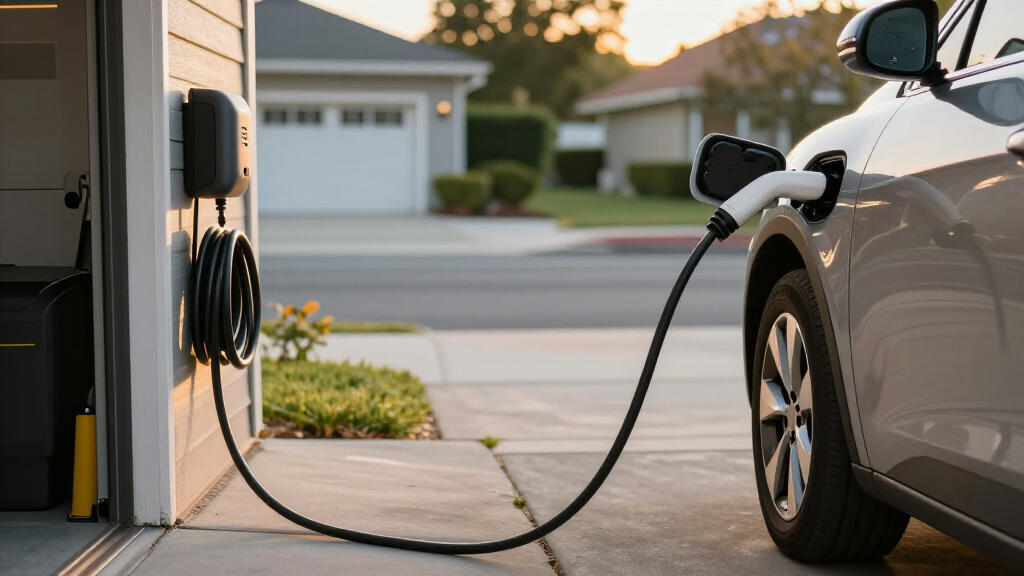
How We Picked
I ranked these chargers by how well their stated capabilities address common home and travel needs: charging output, supported voltage and plug types, cable length, installation demands, and practical flexibility. I gave weight to clear distinctions that affect daily ownership, such as plug-in versus hardwired installation, 120V support, portable use, and smart-app features. A higher amperage rating mattered only when it brought a meaningful benefit without obscuring the circuit and installation requirements.
The order reflects fit across a broad range of buyers, not raw output alone. ChargePoint HomeFlex ranks first because the lineup offers distinct installation paths and smart functionality; portable 40A units follow for drivers with suitable 240V power who need a movable charger. Lower-current portable units rank well for adaptability, but not as replacements for faster dedicated home charging. I also considered tradeoffs: a longer cable adds reach but can be heavier to manage, while hardwiring can support a dedicated installation but limits portability.
| electric vehicle charger | Connector |
|---|---|
| ChargePoint HomeFlex Level 2 E | J1772 |
| Toptoo Level 1+2 Portable EV C | J1772 |
| ELEGRP Level 2 Portable EV Cha | — |
| VEVOR 16 Amp Level 1 and Level | SAE J1772 |
| EVDANCE Level 2 Portable EV Ch | J1772 |
| bokman Portable Level 1 and Le | J1772 |
| EVIQO Level 2 J1772 EV Charger | J1772 |
| AIMILER Level 2 EV Charger | J1772 |
| Toptoo Portable Level 1+2 EV C | — |
| EVDANCE Level 1 and Level 2 Po | J1772 |
| IYILO Level 2 EV Charger | SAE J1772 |
| EVIQO Level 2 EV Charger | J1772 |
| Lectron Level 1 Portable EV Ch | J1772 |
| Raylix Portable Level 1 and Le | SAE J1772 |
| ChargePoint HomeFlex Level 2 S | J1772 |
Factors to Consider When Choosing Best Electric Vehicle Chargers
Before choosing a model, I would match the charger to the car, electrical supply, parking arrangement, and charging routine. A headline amperage number alone does not tell you whether a charger will work with your outlet or deliver that rate to your vehicle.
Match the Charger to Your Vehicle and Its Charging Limit
Check the vehicle’s AC charging limit and inlet before comparing charger output. A charger rated above the car’s onboard limit will not make the car charge faster, though it may leave room for a future vehicle. Most models here use J1772, so a vehicle with another inlet may need a compatible adapter; confirm the automaker’s guidance rather than assuming every adapter supports every use. Also separate AC home charging from DC fast charging: a Level 2 unit supplies AC power, and the car’s onboard equipment sets the final rate. Paying for a higher-current unit makes most sense when both the vehicle and home circuit can use its capacity.
Check the Circuit Before Buying a High-Amperage Charger
A 240V outlet does not automatically mean it can safely support any charger’s maximum output. The circuit rating, breaker, wiring, outlet condition, and charger settings all affect the usable charging current. Continuous EV charging typically requires circuit capacity beyond the charger’s operating current, so have an electrician verify the setup before relying on a high-amperage plug-in model. Hardwired units may be a better fit for a permanent installation, while plug-in units can be easier to remove or relocate when the circuit is appropriate. Avoid choosing by amperage alone; an incompatible outlet can turn a fast charger into an installation project.
Choose Portable or Fixed Charging Around Your Parking Routine
Portable chargers are useful when you need to charge at more than one location or want a unit that can travel in the car. Their adapters and included plugs can broaden outlet options, but they do not make an unsuitable or poorly maintained outlet safe. A fixed home charger is usually more convenient for daily charging from one parking spot and can keep the cable ready to use. Think about where the unit will live, whether it will be exposed to weather, and how often you would realistically pack it away. The common mistake is paying for portability that stays unused while accepting a slower or less convenient home setup.
Measure Cable Reach and Plan the Cable Route
Measure from the intended charger mounting point to the vehicle’s charge port with the car parked in its usual position. Include the path around walls, posts, garage doors, and other obstacles; a cable’s listed length does not equal usable reach if it must cross a walkway or bend around equipment. A longer lead can make parking easier across different vehicle layouts, but it can also take more space to coil and store. Keep the cable clear of trip paths, sharp edges, and areas where a vehicle tire could crush it. If two parking positions need charging, compare the cable route and mounting location before buying a second unit.
Decide Whether App Controls Solve a Real Problem
Smart features can help schedule charging, monitor sessions, or coordinate charging with household routines, but they depend on a reliable connection and a useful app. If the vehicle already handles charging schedules well, an app-enabled charger may add little to everyday use. A simpler unit can be preferable when you want to plug in without managing another account or network connection. Check which controls remain available if Wi-Fi is unavailable, and distinguish basic charging operation from optional connected features. Pay more for smart functions when you expect to use them, not merely because the feature list is longer.
Look Beyond Output at Installation and Daily Handling
Compare how the charger mounts, where its cable rests, and whether its plug or hardwired connection suits the location. A hardwired installation can create a tidy permanent setup, but it is less convenient to move and may involve electrical work. Plug-in designs can offer easier removal, though the receptacle must be correctly installed and suited to repeated charging use. Portable units also need practical storage and a secure way to keep connectors clean between sessions. Before purchase, check the manual for installation requirements, operating conditions, and any maintenance or inspection guidance.
Frequently Asked Questions
Can I use a 48A or 50A charger on a typical 240V outlet?
Not automatically. The outlet, wiring, breaker, and charger configuration must all support the intended current, and many common 240V receptacles are not designed for a charger operating at 48A or 50A. Those higher-output units often call for a hardwired circuit sized by an electrician. Ask a qualified electrician to inspect the circuit and confirm the safe continuous charging rate before installation. If the available circuit is smaller, a lower-current charger may be the more practical choice.
Will a J1772 charger work with my vehicle if it has a different charge port?
It may, but compatibility depends on the vehicle and a suitable adapter. Check the automaker’s instructions for the connector type and charging modes supported by your car, and verify that the adapter is approved for the charger’s intended use. An adapter does not increase the vehicle’s charging limit or make an incompatible circuit suitable. Confirm both the physical fit and the electrical rating before buying. If you rely on public charging as well, keep the adapter requirements for those stations separate from home charging needs.
Is a portable Level 1+2 charger a good substitute for a fixed home unit?
It can work well if your charging needs are modest, you have suitable outlets, or you regularly charge away from home. The tradeoff is that portable models in this selection generally offer less output than dedicated high-current Level 2 installations, so recovery after long drives can take longer. Outlet access also varies by location, and an adapter does not guarantee that the outlet or circuit is appropriate. For predictable daily charging at one parking spot, a fixed unit can be easier to use. Choose portable charging for flexibility, not on the assumption that it delivers the same speed everywhere.
Should I choose plug-in or hardwired installation?
A plug-in charger can be easier to remove or relocate and may simplify replacement, provided the receptacle and circuit are rated for the charger. Hardwiring creates a permanent connection and can suit a dedicated parking space or higher-output setup, but it calls for professional installation and is less portable. Compare the charger’s rated current with the circuit capacity rather than assuming either connection type is inherently faster. Also account for the location of the electrical panel and the cost and complexity of running a circuit. An electrician can help identify which approach fits your home safely.
Do I need a smart charger if my car already supports charging schedules?
Not necessarily. If your vehicle can schedule charging reliably and you only need a charger to supply power, app controls may be redundant. A smart charger can still be useful if you want charger-side session information, remote controls, or features that suit your household’s routine. Check whether those functions require Wi-Fi and whether basic charging continues when the connection drops. Consider how you will use the features day to day before paying for them. For a simple plug-in routine, dependable compatibility and a suitable circuit may matter more.
Conclusion
For the broadest mix of home-charging flexibility and connected features, I would start with the ChargePoint HomeFlex; the plug-in and hardwired versions suit different installation plans. The Toptoo 16A Level 1+2 is my value-minded pick for buyers who prioritize outlet flexibility and portability over faster charging. For a premium, permanent high-output setup, compare the EVIQO 48A, IYILO 48A, and ChargePoint 50A hardwired options against your vehicle and circuit, with ChargePoint the clearest choice when smart functions matter. Beginners who want a portable unit with more than one voltage option can start with the Toptoo or bokman, after checking outlet suitability. Drivers who need portable 240V charging should focus on the ELEGRP or EVDANCE 40A, while those with only a 120V outlet can look to the Lectron Level 1 for a simpler, slower setup.
Columbus Day / Indigenous Peoples' Day Picks
long weekend sales
As an affiliate, we earn on qualifying purchases.