
The best electric truck chargers balance charging speed with the electrical capacity and installation your home can support. My best overall pick is the Grizzl-E Ultimate 80A for buyers with a suitable hardwired circuit who want high charging output and a metal enclosure. The Autel MaxiCharger 80A is another high-output option, while the ChargePoint HomeFlex 50A suits drivers who want a lower-amp hardwired setup. The main tradeoff is that higher amperage may call for more costly electrical work, while plug-in and portable units offer flexibility but less output. Read on for the full comparison and guidance on choosing a charger that fits your truck, panel, and parking setup.

Get business pricing on garage and car supplies
- Business-only prices and quantity discounts
- Tax-exempt purchasing
- Multiple users, one account, clear invoices
Complete the kit


Key Takeaways
- The two 80A hardwired chargers lead on potential output: Grizzl-E Ultimate and Autel MaxiCharger are the standout choices for homes that can support a high-capacity circuit.
- A truck’s onboard AC charging limit matters as much as charger amperage: buying an 80A unit will not make a truck accept more power than its onboard charger allows.
- Plug-in models trade installation flexibility for lower output: the 32A, 40A, and 24A options can fit existing outlets, but outlet type and circuit capacity must match the charger.
- The 50A hardwired choices occupy a practical middle ground: ChargePoint HomeFlex and Autel Home offer more output than the portable picks without targeting the 80A end of the lineup.
- Portability is a distinct use case, not a universal advantage: EVDANCE’s 24A unit is aimed at compatible 10-30 outlets, while the 40A plug-in models use NEMA 14-50 connections.


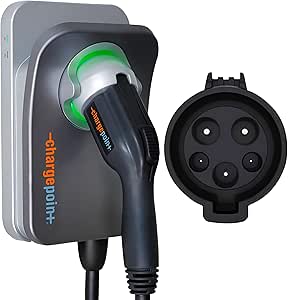


| electric truck charger | Cable length | Maximum current | Voltage | Connector |
|---|---|---|---|---|
| Level 2 Electric Vehicle | 25 ft | 32A; adjustable from 16A to 32A | 240V | J1772 |
| Grizzl-E Ultimate Level 2 Fast | — | 80A | 240V | J1772; NACS optional |
| Autel MaxiCharger Level 2 80A | 25 ft | 80A | — | SAE J1772 |
| ChargePoint HomeFlex Level 2 E | 23 ft | 50A; adjustable from 16A to 50A | 240V AC | J1772 |
| Autel Home EV Charger up to 50 | 25 ft | 50A | — | — |
| EVIQO Level 2 J1772 EV Charger | 25 feet | — | 240V | J1772 |
| EVDANCE Portable Level 2 EV Ch | 25 feet total (21.9 feet charger-to-car; 3.1 feet control-to-outlet) | — | 240V | J1772 |
| Grizzl-E Avalanche Edition Lev | 24 feet | 40A | 240V | — |
More Details on Our Top Picks
Level 2 Electric Vehicle (EV) Charger with WiFi App, 32A, 25 ft Cable, ETL Certified, NEMA 14-50 Plug, J1772 Connector, Portable Home Charging Station
For truck owners who want Level 2 charging without committing to hardwired installation, this 32A NEMA 14-50 charger is the most flexible fit in this group. Its current adjustment from 16A to 32A can suit different circuit limits, while the 25-foot cable gives more reach around a garage or driveway than the ChargePoint HomeFlex’s 23-foot lead. Wi-Fi scheduling and remote reset add useful control, though they do not make it as powerful as the 50A HomeFlex or the 80A Autel MaxiCharger. The J1772 connector works with most North American EVs, but Tesla drivers need a separate adapter. Its plug-in format is convenient, yet buyers should verify their outlet and circuit are suitable; the included RV adapter is not for EV charging.
Pros:- Adjustable 16A–32A output can accommodate different circuit limits.
- 25-foot cable offers useful reach for garages and driveways.
- Wi-Fi app supports scheduling, cost tracking, and remote reset.
- IP66 protection and stated ETL certification support outdoor use.
Cons:- Maximum 32A output is below the 50A and 80A hardwired options in this roundup.
- Tesla vehicles require a separate J1772-to-Tesla adapter.
- The included RV adapter is not intended for EV charging.
Best for: Truck owners with a compatible NEMA 14-50 outlet who want portable Level 2 charging, app scheduling, and a long cable without hardwiring.
Not ideal for: Drivers seeking the fastest available home charging, hardwired high-amperage capacity, or a Tesla-ready connector without buying an adapter.
- Maximum current:32A; adjustable from 16A to 32A
- Voltage:240V
- Connector:J1772
- Plug:NEMA 14-50
- Cable length:25 ft
- Ports:1
- Protection and certifications:IP66; ETL, FCC, UL2231, UL991, UL2251, UL1998, and UL2594 listed in product data
Our verdict“Choose this plug-in model if your truck can charge at up to 32A and you value portability more than the higher output of a hardwired unit.”
Grizzl-E Ultimate Level 2 Fastest 80A / 19.2 kW EV Charger, UL Certified, Metal Case, Indoor/Outdoor Hardwired, Classic Black, J1772
The Grizzl-E Ultimate is the power-focused choice here: its 80A, 19.2 kW maximum output is well above the 50A ChargePoint HomeFlex and Autel Home charger. That headroom can benefit a compatible electric truck and electrical setup, but it is not a plug-in upgrade: this unit is hardwired, so installation calls for planning and professional electrical work. Adjustable amperage helps match the charger to the available circuit, while the metal Type 4 enclosure is suited to indoor or outdoor mounting. Wi-Fi app features add scheduling and monitoring, though the product data does not specify a cable length or warranty detail beyond three years. Buyers who cannot support high-amperage charging may get a simpler fit from the 32A plug-in charger instead.
Pros:- Up to 80A and 19.2 kW output exceeds the 50A options in this batch.
- Adjustable amperage settings help match output to the installed circuit.
- UL-certified metal Type 4 enclosure is described for indoor and outdoor use.
- Wi-Fi app supports monitoring, scheduling, and load balancing.
Cons:- Hardwired installation removes plug-in portability and requires electrical work.
- Full output depends on a compatible electrical circuit and vehicle acceptance rate.
- Product data does not provide a cable length.
Best for: Electric truck owners with a compatible high-capacity electrical service who want an 80A hardwired charger and indoor/outdoor installation.
Not ideal for: Renters, buyers who need a plug-in unit, or households whose electrical service cannot support the planned circuit and installation.
- Maximum current:80A
- Maximum power:19.2 kW
- Voltage:240V
- Installation:Hardwired
- Connector:J1772; NACS optional
- Ports:1
- Enclosure:UL Type 4 metal enclosure
- Warranty:3 years
Our verdict“Pick the Grizzl-E Ultimate when your electrical setup and truck can make use of 80A charging and you are comfortable with a permanent installation.”
Autel MaxiCharger Level 2 80A Hardwired EV Charger
Like the Grizzl-E Ultimate, the Autel MaxiCharger reaches 80A and 19.2 kW, but its clearest advantage is a more fully specified smart-control package and a five-year warranty. The app supports schedules, remote control, current adjustment, energy monitoring, and station management, giving owners more ways to manage a dedicated home charging setup than the basic comparison points listed for the Grizzl-E. A 25-foot J1772 cable is useful when a truck’s charge port sits far from the wall; the 32A plug-in charger is easier to relocate, but cannot match this output. The main catch is electrical capacity: Autel recommends a 100A circuit for full power, alongside hardwired professional installation. Tesla drivers also need to supply their own NACS adapter.
Pros:- Up to 80A and 19.2 kW matches the highest output in this group.
- 25-foot J1772 cable provides reach for varied parking layouts.
- App includes scheduling, remote control, current adjustment, and energy monitoring.
- Five-year warranty is longer than the stated three-year warranties on the Grizzl-E Ultimate and ChargePoint HomeFlex.
Cons:- Full 80A output calls for a recommended 100A circuit.
- Hardwired installation is recommended for a professional electrician.
- Tesla vehicles need a NACS adapter that is not included.
Best for: Electric truck owners planning a permanent, high-output installation who want detailed app controls, a 25-foot cable, and a longer stated warranty.
Not ideal for: Households without capacity for a recommended 100A circuit, buyers seeking plug-in portability, or Tesla owners who do not want to source an adapter.
- Maximum current:80A
- Maximum output:19.2 kW
- Recommended circuit for full output:100A
- Installation:Hardwired
- Connector:SAE J1772
- Cable length:25 ft
- Connectivity:Wi-Fi and Wi-SUN
- Certifications and warranty:CSA and UL; 5 years
Our verdict“Choose the Autel MaxiCharger over the Grizzl-E Ultimate if you want comparable 80A output with extensive app tools, a 25-foot cable, and a five-year warranty.”
ChargePoint HomeFlex Level 2 EV Charger, J1772, Hardwired, 50A
The ChargePoint HomeFlex lands between the 32A plug-in option and the 80A hardwired chargers: its adjustable 16A–50A output gives truck owners more capacity than the portable unit without requiring an 80A-class setup. Its 23-foot cable is slightly shorter than the 25-foot leads on the Autel models, but still offers practical reach for many home parking layouts. The app adds charger controls and charging information, with some functions requiring Wi-Fi. Compared with Autel’s 50A Home charger, the HomeFlex lists UL certification and Energy Star compliance, while the Autel offers a longer cable and additional Bluetooth and Ethernet connectivity. Hardwiring is the tradeoff; buyers who need to move the charger between outlets should look at the plug-in 32A model.
Pros:- Adjustable output from 16A to 50A supports a range of circuit setups.
- 23-foot cable and indoor/outdoor installation suit many home parking arrangements.
- UL-certified and Energy Star compliant according to product data.
- ChargePoint app provides charger controls and charging information.
Cons:- Hardwired installation requires an electrician.
- Some app functions require Wi-Fi.
- Tesla vehicles need a separate adapter.
Best for: Truck owners seeking adjustable charging up to 50A, app-based control, and a hardwired indoor or outdoor station without targeting 80A output.
Not ideal for: Drivers who need a portable plug-in charger, a cable longer than 23 feet, or app functions that work without Wi-Fi.
- Maximum current:50A; adjustable from 16A to 50A
- Voltage:240V AC
- Installation:Hardwired; electrician required
- Connector:J1772
- Cable length:23 ft
- Connectivity:Wi-Fi and ChargePoint mobile app
- Certifications:UL-certified; Energy Star
- Warranty:3 years
Our verdict“Choose the HomeFlex if you want adjustable 50A charging and app controls but do not need the 80A capacity of the Autel or Grizzl-E high-output units.”
Autel Home EV Charger up to 50A, J1772 Hardwired Level 2 Charger, 25ft Cable
For a hardwired 50A setup, the Autel Home charger stands out for its NEMA 4X rating and 25-foot cable. That longer lead gives it an advantage over the ChargePoint HomeFlex’s 23-foot cable when a truck parks farther from the mounting point, while both sit below the 80A Autel MaxiCharger in maximum output. The Bluetooth, Wi-Fi, and Ethernet options also give owners several ways to connect for app control and updates. Its stated 12 kW output is a strong match for many home-charging needs, but actual charging speed depends on the truck and circuit. Installation is hardwired and calls for a professional electrician, so it is less flexible than the 32A plug-in pick. Product data does not specify a warranty or connector cable type.
Pros:- Up to 50A and 12 kW provides more output than the 32A plug-in charger.
- 25-foot cable reaches farther than the ChargePoint HomeFlex’s 23-foot cable.
- NEMA 4X rating supports indoor and outdoor installation.
- Bluetooth, Wi-Fi, and Ethernet connectivity support app control and updates.
Cons:- Hardwired installation requires a professional electrician.
- Maximum output is below the 80A Autel MaxiCharger and Grizzl-E Ultimate.
- Product data does not specify a warranty or connector type.
Best for: Truck owners who want a 50A hardwired charger with a long cable, outdoor-rated enclosure, and several connectivity options.
Not ideal for: Renters, buyers who need plug-in portability, or owners seeking the 80A output of the Autel MaxiCharger or Grizzl-E Ultimate.
- Maximum current:50A
- Maximum power:12 kW
- Installation:Hardwired
- Cable length:25 ft
- Connectivity:Bluetooth, Wi-Fi, and Ethernet
- Weight:18.21 lb
- Dimensions:16.3 × 12.3 × 9.25 in
Our verdict“Pick this Autel over the ChargePoint HomeFlex if you want 50A charging with a longer cable and NEMA 4X protection, rather than 80A capacity.”
EVIQO Level 2 J1772 EV Charger, 40A, NEMA 14-50, 240V, 25 ft Cable
I’d choose the EVIQO for a truck owner who wants 40A Level 2 charging with app scheduling but prefers a plug-in installation. Its 25-foot cable gives more reach than the Grizzl-E Avalanche’s 24-foot lead, which can help when a truck’s charge port sits far from the outlet. The app adds energy tracking and off-peak scheduling, while the IP66/NEMA 4 enclosure supports indoor or outdoor placement. Compared with the more basic EVDANCE portable charger, this model adds Wi-Fi controls and a higher 40A maximum; the tradeoff is that it needs a dedicated 50A circuit and NEMA 14-50 outlet. App features also depend on 2.4 GHz Wi-Fi, so it’s less appealing if you want a charger with no network setup.
Pros:- 40A charging capability with a plug-in NEMA 14-50 connection.
- 25-foot cable offers flexible reach around larger vehicles and parking spaces.
- App supports charging controls, energy tracking, and off-peak scheduling.
- IP66/NEMA 4 weather protection, UL and ETL certification, and a 3-year warranty.
Cons:- Requires a dedicated 50A circuit and compatible NEMA 14-50 outlet.
- App connectivity requires 2.4 GHz Wi-Fi.
- J1772 connection means Tesla vehicles need an adapter.
Best for: J1772 truck and plug-in hybrid owners with a dedicated 50A circuit who want app scheduling, energy tracking, and a long cable.
Not ideal for: Buyers with only a NEMA 10-30 dryer outlet, no suitable 50A circuit, or no reliable 2.4 GHz Wi-Fi for app features.
- Connector:J1772
- Maximum amperage:40A
- Voltage:240V
- Outlet and circuit:NEMA 14-50; dedicated 50A circuit
- Cable length:25 feet
- Wi-Fi:2.4 GHz
- Weather protection:IP66 / NEMA 4
- Certifications:UL, ETL, FCC, Energy Star
- Warranty:3 years
Our verdict“Choose the EVIQO if you have the right 50A outlet and want app-managed 40A charging with extra cable reach.”
EVDANCE Portable Level 2 EV Charger (24A, NEMA 10-30 Plug, 25ft Cable)
The EVDANCE is the practical pick for truck owners whose garage already has a NEMA 10-30 dryer outlet and who want faster charging without installing a NEMA 14-50 circuit. It delivers up to 24A, below the 40A EVIQO and Grizzl-E Avalanche, so it’s better matched to overnight charging than to buyers chasing the highest home charging rate. Its adjustable current can help match the available circuit, and the display shows voltage, current, and power at a glance. The 25-foot total cable helps with parking flexibility, though only 21.9 feet runs from charger to vehicle. Unlike the EVIQO, it lacks app scheduling, and its outlet connection needs protection from moisture when idle; the included cap must be fitted.
Pros:- Uses a NEMA 10-30 outlet, which may avoid a new electrical installation.
- Adjustable 10A–24A current and a display for real-time charging information.
- IP66-rated housing and a 25-foot total cable length support varied parking setups.
- Six listed safety protections cover faults including leakage, overcurrent, and overheating.
Cons:- 24A maximum output is lower than the 40A EVIQO and Grizzl-E Avalanche.
- Requires a NEMA 10-30 outlet; other outlet types are not directly supported.
- The plug/socket interface needs its cap fitted when idle to help prevent moisture damage.
Best for: J1772 truck owners with an existing NEMA 10-30 dryer outlet who want portable Level 2 charging and adjustable current.
Not ideal for: Drivers seeking 40A charging, app-based scheduling, direct Tesla compatibility, or an outlet connection that can be left exposed outdoors.
- Connector:J1772
- Plug type:NEMA 10-30P
- Amperage:Adjustable 10A–24A
- Voltage:240V
- Cable length:25 feet total (21.9 feet charger-to-car; 3.1 feet control-to-outlet)
- Operating temperature:-22°F to 122°F
- Weather protection:IP66
- Safety protection:Six layers, including lightning, leakage, overcurrent, overvoltage, overheat, and overcharge protection
Our verdict“Pick the EVDANCE if your existing dryer outlet is NEMA 10-30 and you value adjustable, portable charging over higher amperage or app controls.”
Grizzl-E Avalanche Edition Level 2 EV Charger, 40A, NEMA 14-50 Plug
For a truck parked outside or in a hard-working garage, I’d favor the Grizzl-E Avalanche for its IP67 water resistance, fire-resistant construction, and broad electrical protections. It matches the EVIQO’s 40A maximum and offers four current settings, from 16A to 40A, so the output can be reduced when the available circuit calls for it. Its 24-foot cable is slightly shorter than the EVIQO’s 25-foot lead, and it lacks that model’s Wi-Fi app scheduling. In return, the Grizzl-E includes built-in GFCI and recovery features, including power-outage recovery. Maximum output still requires a 50A circuit, and the NEMA 14-50 plug limits it to homes with a compatible outlet; it isn’t the right fit for an existing NEMA 10-30 dryer socket like the EVDANCE uses.
Pros:- IP67 water resistance and fire-resistant construction suit demanding indoor or outdoor locations.
- Four current settings from 16A to 40A allow output to be matched to the circuit.
- Built-in GFCI and multiple fault protections add electrical safeguards.
- Self-monitoring and power-outage recovery features support resumed charging.
Cons:- 40A operation requires a 50A circuit and compatible NEMA 14-50 outlet.
- No Wi-Fi app controls or scheduling like the EVIQO provides.
- The 24-foot cable is shorter than the EVIQO’s 25-foot cable.
Best for: Truck owners who need a sturdy indoor/outdoor charger, adjustable current, and built-in electrical protection with a NEMA 14-50 outlet.
Not ideal for: Buyers who need app scheduling, have only a NEMA 10-30 outlet, or want a smaller, lighter charging unit.
- Charging level:Level 2
- Voltage:240V
- Maximum current:40A
- Adjustable current:16A, 24A, 32A, or 40A
- Maximum charging power:10 kW
- Plug type:NEMA 14-50
- Cable length:24 feet
- Weather protection:IP67
- Certifications:UL tested and certified; Energy Star certified
Our verdict“Choose the Grizzl-E Avalanche for rugged, adjustable 40A charging and added protection, provided you have a NEMA 14-50 outlet.”
How We Picked
I ranked these chargers around the needs that shape an electric truck home-charging decision: available charging output, electrical compatibility, installation demands, cable reach, and indoor or outdoor placement. Amperage alone does not determine real charging speed; the truck’s onboard AC limit and the home circuit both set the ceiling. I also separated hardwired chargers from plug-in and portable choices because they serve different home setups and are not interchangeable without checking the electrical details.
The high-output Grizzl-E Ultimate and Autel MaxiCharger lead for buyers who have the capacity and installation budget to use an 80A-class unit. The 50A hardwired models follow as more moderate permanent installations, while 40A and 32A plug-in units rank for buyers prioritizing an existing compatible outlet or simpler setup. The 24A portable charger and the 40A Grizzl-E Avalanche serve narrower outlet-based needs. I treated certification, enclosure, cable length, and connector type as practical fit factors, not substitutes for checking vehicle compatibility and a qualified electrician’s assessment.
| electric truck charger | Connector | Installation |
|---|---|---|
| Level 2 Electric Vehicle | J1772 | — |
| Grizzl-E Ultimate Level 2 Fast | J1772; NACS optional | Hardwired |
| Autel MaxiCharger Level 2 80A | SAE J1772 | Hardwired |
| ChargePoint HomeFlex Level 2 E | J1772 | Hardwired; electrician required |
| Autel Home EV Charger up to 50 | — | Hardwired |
| EVIQO Level 2 J1772 EV Charger | J1772 | — |
| EVDANCE Portable Level 2 EV Ch | J1772 | — |
| Grizzl-E Avalanche Edition Lev | — | — |
Factors to Consider When Choosing Best Electric Truck Chargers
Before choosing a charger, I would match the vehicle, panel, and parking location rather than shop by the largest amperage number. These decisions can affect charging time, installation work, and whether a charger can be used safely with the circuit already in place.
Match Charger Output to the Truck and Circuit
Start with the truck’s maximum AC charging rate, then compare it with the charger’s output and the circuit that will supply it. A charger rated above the truck’s onboard limit will not make the vehicle charge faster on AC power, though it may suit a future vehicle. Circuit capacity also limits usable output, and continuous charging loads are treated differently from short bursts by electrical codes. Do not assume an existing outlet can support the maximum rating printed on a charger. Ask an electrician to confirm the circuit, breaker, wiring, and local requirements before buying a high-amperage unit. Paying for more output makes sense only when both the vehicle and the home installation can use it.
Choose Hardwired or Plug-In Based on the Installation
Hardwired chargers usually make more sense for a permanent installation, particularly when a dedicated high-capacity circuit is being added. Plug-in models can be easier to move or replace, but the outlet must match the charger exactly and be properly installed for the intended continuous load. A NEMA 14-50 plug is not interchangeable with a NEMA 10-30 outlet, even if an adapter appears to fit. Avoid relying on extension cords or improvised adapters to bridge a mismatch. The right choice depends on the home’s existing wiring, local code, and whether you value portability enough to accept a lower-output setup. Get the installation quote before selecting a charger so the equipment and electrical work are planned together.
Plan for Overnight Charging and Daily Driving
Estimate how much range you need to replace on a typical night instead of assuming the fastest charger is necessary. A lower-output unit may refill a truck adequately during a long overnight parking window, while frequent long drives or short charging windows can make greater output more useful. Compare the charger’s available power with the truck’s actual AC limit; either can be the bottleneck. Also account for cold weather, battery conditioning, and charging losses, which can make real charging times differ from simple estimates. A practical way to decide is to calculate the energy your usual daily drive uses and check whether the planned overnight session can replenish it. If it can, higher amperage may add installation cost without changing your routine.
Measure Cable Reach and Mounting Location
Measure from the intended mounting point to the truck’s charge port with the vehicle parked in its usual position. A 25-foot cable can be convenient, but the distance and port location may still require a different mounting spot or parking orientation. Keep the cable route clear of walkways, doorways, and places where tires can run over it. For outdoor installations, check the charger’s stated suitability for the location and follow its mounting and electrical instructions. A portable unit adds flexibility for travel or changing parking arrangements, but only where a compatible, properly wired outlet is available. Planning the cable path before purchase can prevent awkward daily handling and reduce trip hazards.
Treat Smart Features as Convenience, Not Extra Charging Power
Wi-Fi and app controls can help with scheduling, tracking sessions, or adjusting charging, but they do not raise the truck’s charging limit. Consider whether you will use those controls and whether the charger’s connectivity will work reliably where it is mounted. If your utility offers time-of-use rates, scheduled charging may help you shift sessions to lower-cost periods, subject to the utility’s rules. Check how charging can be controlled if the home network is unavailable, since basic operation should not depend on a strong signal. Smart features are most useful when they solve a specific scheduling or monitoring need. If you mainly plug in overnight and charge on a fixed routine, electrical fit and cable handling may matter more.
Check Connector and Vehicle Compatibility Before Ordering
Confirm the truck’s AC charging connector and the charger connector before purchase; the products in this roundup use J1772 connectors. Some vehicles may need a manufacturer-approved adapter, and compatibility should be checked against the truck’s manual rather than assumed from connector appearance. An adapter does not increase charging speed or correct an unsuitable circuit. Verify that the charger’s electrical rating and installation method are supported by the vehicle and home. If more than one vehicle will use the charger, compare both vehicles’ connector needs and charging limits. This check can prevent a return or a setup that works for one vehicle but not the other.
Frequently Asked Questions
Will an 80A charger charge my electric truck faster than a 50A charger?
Only if the truck’s onboard AC charger can accept more power than the 50A unit can provide, and the home circuit supports the 80A charger’s requirements. If the truck has a lower AC charging limit, it will not draw the extra available power. An 80A installation may also require substantial electrical work, so the extra output can come with added project cost and complexity. Check the vehicle manual and have an electrician review the panel and wiring before choosing. For many buyers, a properly sized charger that meets overnight needs is a better fit than the highest rating.
Can I plug a NEMA 14-50 charger into a 10-30 dryer outlet?
No, the outlet types and electrical configurations are different, and a plug that does not match should not be forced or adapted casually. The EVDANCE 24A unit in this roundup is specified for a NEMA 10-30 plug, while the EVIQO and Grizzl-E Avalanche use NEMA 14-50 plugs. A dryer outlet may also be shared, older, or not suitable for continuous EV charging at the desired load. Ask an electrician to identify the outlet and circuit capacity before selecting a charger. If the existing circuit is unsuitable, compare the cost of a proper new circuit with a lower-output charging plan.
Do I need an 80A charger if I drive a large electric truck?
Not automatically. Vehicle size and battery capacity do not by themselves determine how quickly a truck can accept AC power at home; the onboard charger sets that limit. Your daily mileage and the time the truck sits plugged in also matter. If an overnight session replaces your usual driving energy, a lower-amperage option may be sufficient. An 80A unit is most useful when the truck supports the output, the home can supply it, and your schedule benefits from faster AC charging. Check all three before paying for a high-capacity installation.
Is a portable Level 2 charger a good primary home charger?
It can be, if its plug matches a properly installed outlet and its output meets your routine charging needs. Portable designs are useful when the charger may need to travel or when a plug-in connection suits the parking area. They can provide less output than the 50A and 80A hardwired choices here, so buyers with short charging windows should check expected charging time carefully. A portable charger still needs a suitable dedicated circuit; portability does not make an ordinary outlet safe for EV charging. For a fixed outdoor installation or high-output use, a hardwired unit may be the more fitting choice.
Should I buy a smart charger if my truck already has scheduled charging?
Not necessarily. If the truck reliably handles charging schedules and you do not need charger-side session data or controls, a smart charger may add little to your routine. Charger scheduling can be useful when you want controls independent of the vehicle or need to manage charging across multiple cars, but app features depend on connectivity and software support. Compare the charger’s documented controls with the functions available in your truck and utility account. Do not trade away a better electrical fit or cable reach just to get an app feature you may rarely use.
Conclusion
For most buyers who can support a high-capacity hardwired installation, I would choose the Grizzl-E Ultimate 80A as the best overall; the Autel MaxiCharger 80A is the other premium high-output pick. For a more moderate permanent setup, the ChargePoint HomeFlex 50A is my best middle-ground recommendation, while the Autel Home 50A suits buyers comparing a similar hardwired output. The 32A Wi-Fi plug-in charger is a beginner-friendly option when its NEMA 14-50 connection and output match the home and truck. For buyers who value a familiar 40A plug-in format, I would compare the EVIQO and Grizzl-E Avalanche; the EVDANCE 24A is the specific pick for a compatible 10-30 outlet and portable use. My final choice would depend on the electrician’s circuit assessment and the truck’s AC charging limit, not the charger’s maximum amperage alone.