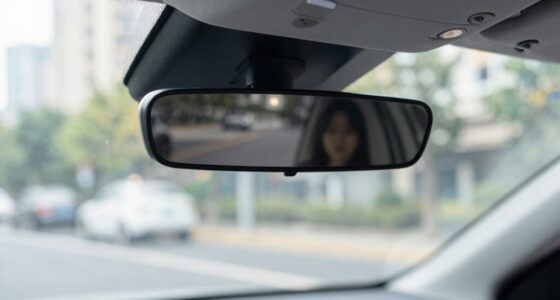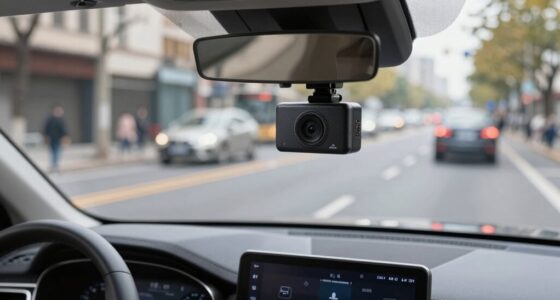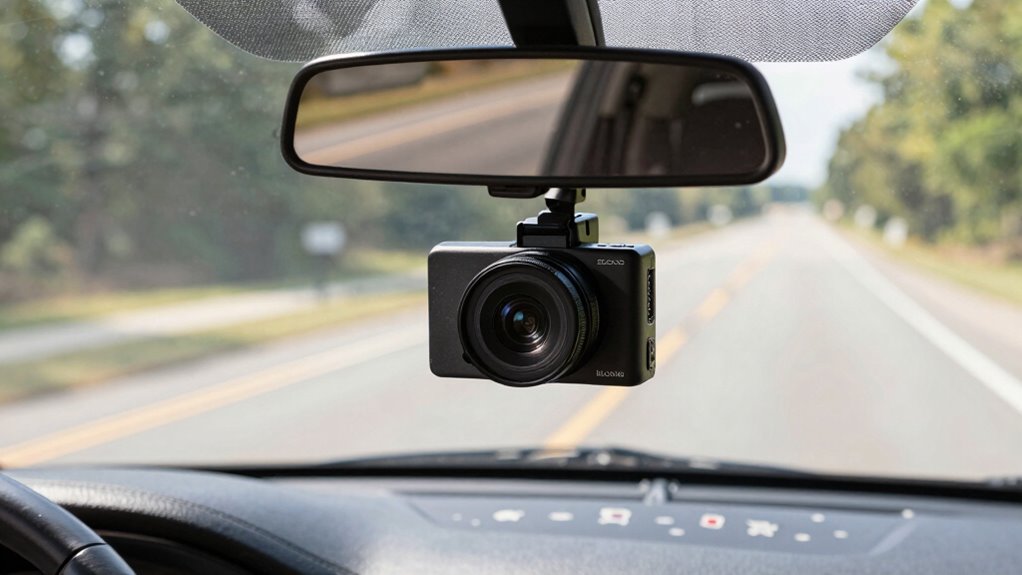

In Illinois, you must mount your dash cam discreetly on the lower corner of the windshield or behind the rearview mirror, making sure it’s small—no larger than five square inches or five inches in height and depth. Illinois requires two-party consent for audio recordings, so you should get all passengers’ permission or disable audio entirely to avoid legal issues. To guarantee your footage is admissible, keep it unaltered and securely stored, and stay aware of privacy laws to avoid penalties. More details will help you stay compliant.
Key Takeaways
- Mount dash cams behind the rearview mirror or in the lower windshield corner without obstructing visibility.
- Illinois requires all parties’ consent for audio recording; video-only cameras avoid privacy issues.
- Footage must be preserved intact with timestamps and a clear chain of custody for legal admissibility.
- Collecting biometric data or recording private conversations requires compliance with privacy laws like BIPA.
- Disable audio unless all occupants consent; ensure dash cam use complies with mounting, recording, and privacy regulations.
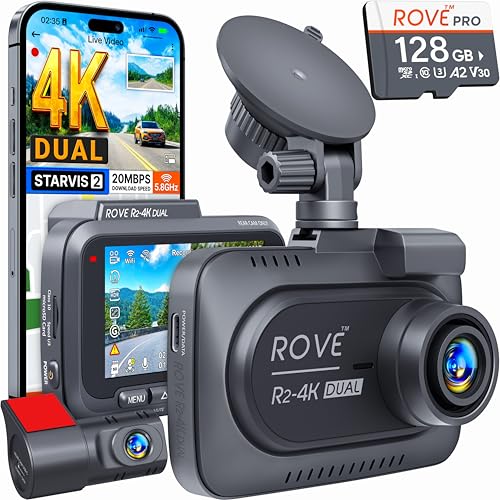
ROVE R2-4K DUAL Dash Cam Front and Rear, STARVIS 2 Sensor, FREE 128GB Card Included, 5G WiFi – up to 20MB/s Fastest Download Speed with App, 4K 2160P/FHD Dash Camera for Cars, 3" IPS, 24H Parking Mode
4K FRONT + 1080P REAR RECORDING – ROVE R2-4K DUAL dash cam offers dual-channel recording capabilities, capturing footage…
As an affiliate, we earn on qualifying purchases.
As an affiliate, we earn on qualifying purchases.
Optimal Mounting Locations and Size Restrictions

To guarantee your dash cam complies with Illinois laws, you should mount it on the driver’s side of the dashboard or in the lower corner of the windshield. Make certain it doesn’t cause an unreasonable obstruction of your view. You can mount directly to the windshield if your view remains clear, but the lower corner is preferred for compliance. Use low-profile designs to avoid material obstruction and maintain visibility. The maximum size allowed on the driver’s side is five square inches, including the mount and camera. The dash cam must be smaller than five inches in height or depth, preventing it from blocking more than five square inches of your windshield. Always position your device to avoid obstructing your view of the roadway or highway. Proper mounting helps ensure your dash cam remains within legal limits and avoids potential legal complications. Additionally, considering vehicle safety standards can help you select a device that meets all regulatory requirements. Proper installation techniques can also enhance the durability and effectiveness of your dash cam, ensuring consistent performance over time. Incorporating essential oils for safety and alertness into your vehicle environment can promote better focus while driving and help maintain alertness during long trips. Furthermore, being aware of dash cam privacy regulations can help you avoid inadvertent violations and protect your personal information. Moreover, ensuring your dash cam’s filtering and protection features are up to date can prevent damage from dust and debris, maintaining clear footage.

Cobra Discreet Dash Cam (SC120) – QHD 1440P Video Resolution, Built-in WiFi, Night Vision, Continuous Recording, Compact Design, 16 GB SD Card Included
High Quality Video – Whether on a scenic drive or in a car accident, QHD 1440P resolution provides…
As an affiliate, we earn on qualifying purchases.
As an affiliate, we earn on qualifying purchases.
Illinois Laws on Audio Recording and Consent Requirements
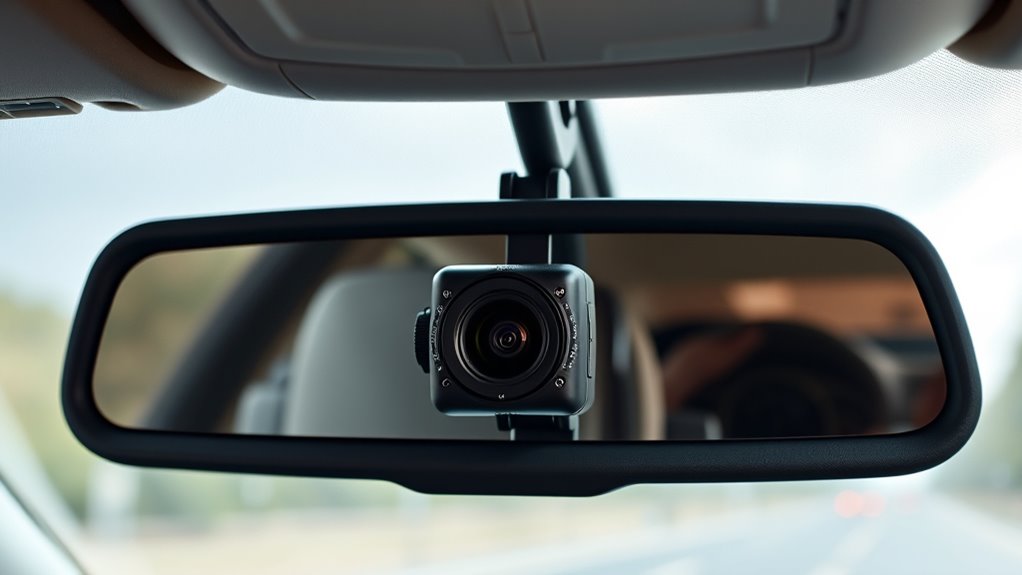
In Illinois, audio recording laws require all parties involved in a private conversation to give their consent before any recording takes place, making the state a two-party consent jurisdiction. This means you must get permission from everyone in the vehicle before activating your dash cam’s audio feature. Violating this law risks legal trouble under wiretapping and eavesdropping statutes, with recordings potentially deemed inadmissible in court. Exceptions exist when there’s no reasonable expectation of privacy, such as during police interactions in public spaces, where recording police officers is permitted. To stay compliant, always obtain consent from passengers before recording audio, or disable the audio function entirely. Furthermore, video-only dash cams are a safer choice, reducing legal risks and privacy concerns. Understanding privacy laws and respecting others’ rights can help avoid inadvertent violations and legal complications, especially regarding spirituality-related recordings that may have personal or sensitive content. Being aware of audio recording restrictions can further protect you from unintentional legal violations, especially since some jurisdictions have strict laws governing recordings in various settings. Additionally, staying informed about digital privacy rights can help you navigate the evolving legal landscape surrounding surveillance and recordings.
ROVE R2-4K DUAL Dash Cam Front and Rear, STARVIS 2 Sensor, FREE 128GB Card Included, 5G WiFi – up to 20MB/s Fastest Download Speed with App, 4K 2160P/FHD Dash Camera for Cars, 3" IPS, 24H Parking Mode
4K FRONT + 1080P REAR RECORDING – ROVE R2-4K DUAL dash cam offers dual-channel recording capabilities, capturing footage…
As an affiliate, we earn on qualifying purchases.
As an affiliate, we earn on qualifying purchases.
Ensuring Dash Cam Footage Is Legally Admissible
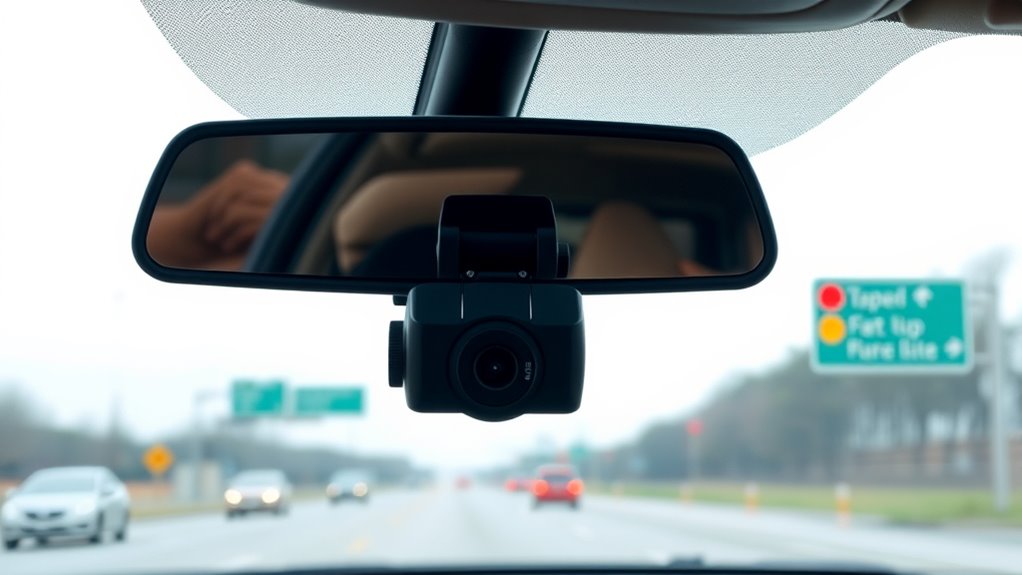
To guarantee your dash cam footage is legally admissible, you need to focus on proper authentication and preservation methods. You should be prepared to demonstrate device ownership, show continuous recordings with accurate timestamps, and preserve original files without alterations. These steps help verify evidence integrity and strengthen your case in court. Ensuring proper documentation of the footage’s origin and chain of custody is also crucial to prevent challenges to the evidence’s authenticity.
Legal Authentication Methods
Ensuring dash cam footage is legally admissible requires robust authentication methods that establish the integrity and authenticity of the evidence. You should maintain a clear chain of custody by documenting who handled the storage media, when, and how it was transferred, including details of extraction methods like device model and hash values. Preserve the original storage device securely and log all access to prevent tampering. Use forensic imaging to create exact copies and record cryptographic hashes to verify integrity. Preserve embedded metadata, such as timestamps and GPS data, and compare file system artifacts with device logs. Obtain expert forensic analysis and witness testimony to confirm the footage’s authenticity and proper handling. These steps ensure your dash cam evidence withstands legal scrutiny and remains admissible in court. Implementing proper procedures can significantly reduce the risk of evidence being challenged or excluded. Additionally, understanding digital evidence and its handling is vital for maintaining the credibility of your footage in legal settings. To further strengthen your case, familiarize yourself with video authentication techniques, which can help verify that footage has not been altered. Employing cryptographic verification methods can help detect any unauthorized modifications to the footage, and incorporating metadata preservation ensures all contextual information remains intact throughout the investigative process.
Proper Preservation Techniques
How can you make sure dash cam footage remains legally admissible? First, send a preservation letter immediately after an incident to the relevant agency, requesting they retain the footage. This prevents accidental deletion due to storage limits. Use a clear chain of custody, documenting every transfer and handling to prove integrity. Avoid any alteration or tampering; footage must remain unaltered from recording to presentation. Store evidence securely, following agency procedures, and confirm the dash cam was functioning properly at the time.
| Preservation Step | Key Details |
|---|---|
| Preservation Letter | Request footage within 10 days |
| Chain of Custody | Document handling and transfers |
| Avoiding Alteration | No editing or deletion without approval |
| Storage Security | Use secure, authorized locations |

XYGCACO 4 Channel 360° Dash Cam Front Rear Inside and Left Right, 4K+1080P*3 FHD Car Camera, 5GHz WiFi and App Control, 24H Parking Mode, 8 IR Lamps Night Vision, Includes 64GB SD Card, Black
【𝟑𝟔𝟎° 𝐀𝐥𝐥 𝐒𝐢𝐝𝐞𝐬 𝐃𝐚𝐬𝐡 𝐂𝐚𝐦 𝟒 𝐂𝐡𝐚𝐧𝐧𝐞𝐥】 Our 4-channel dash cam features a 3" IPS screen that synchronizes…
As an affiliate, we earn on qualifying purchases.
As an affiliate, we earn on qualifying purchases.
Privacy Considerations for Interior and In-Cabin Recordings
Because Illinois law treats in-cabin audio recordings as private conversations, you must obtain consent from all vehicle occupants before capturing any sound. Recording audio without everyone’s permission violates the Illinois Eavesdropping Act and makes the recordings illegal. Video-only recordings are exempt from consent rules, but enabling audio without approval risks privacy violations and legal trouble. When recording inside the vehicle, you should always get explicit consent from passengers, especially if you plan to retain or share the footage. It’s best to disable the audio feature entirely unless you have clear permission. Respecting privacy expectations is essential; recordings of private conversations may be inadmissible in court and could lead to legal consequences. Ethical use and proper consent help protect everyone’s rights and keep you compliant with Illinois laws. Failing to obtain consent can also result in civil lawsuits or criminal charges if privacy rights are violated. Additionally, understanding privacy laws related to recordings is crucial for lawful dash cam use. Being aware of privacy rights helps ensure your recordings do not violate any legal standards and protects you from potential liabilities.
Practical Steps for Compliant Dash Cam Installation
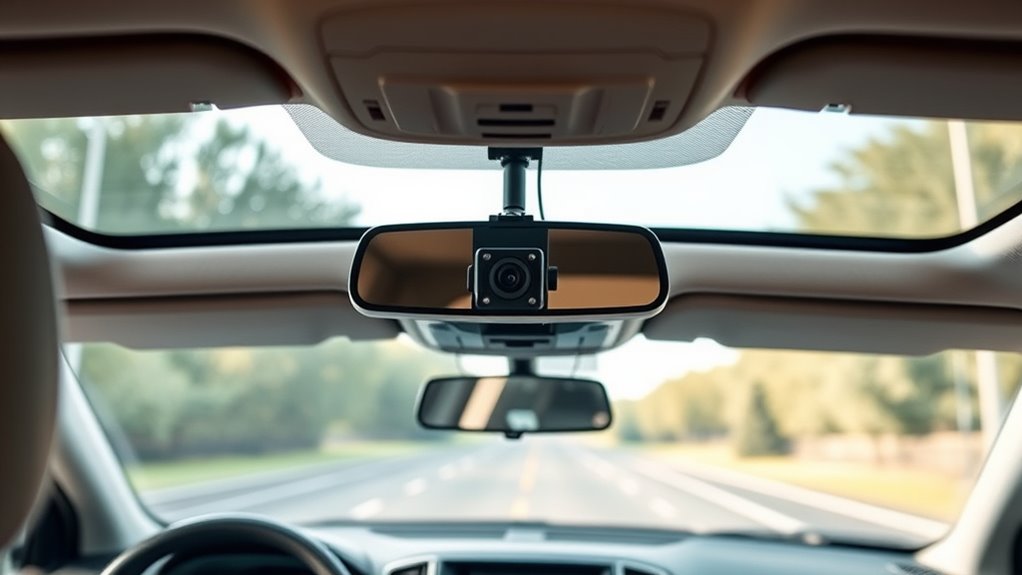
To stay compliant with Illinois dash cam laws, proper installation is key. Start by mounting your device on the driver’s side windshield in the bottom corner, ensuring it doesn’t obstruct your view or traffic signals. Keep the video screen size at or below five inches and ensure the total camera and mount size don’t exceed five inches. Alternatively, install the dash cam on the dashboard using a low-profile mount behind or slightly above the rearview mirror, avoiding airbag areas. When mounting on the dashboard, position it on the driver’s side to meet legal requirements. Route cables out of sight, securing wires to prevent interference with airbags and keeping them hidden below the wiper sweep area if possible. Always confirm the camera’s placement doesn’t obstruct your view or violate size restrictions. Understanding legal requirements can help ensure your dash cam setup remains compliant with state laws. Additionally, familiarizing yourself with privacy considerations can prevent potential legal issues related to recording. Being aware of video recording laws is also essential to avoid infringing on others’ rights while capturing footage. Properly labeling your recordings and being aware of recording restrictions can further help you stay within legal boundaries. Recognizing the importance of wave and wind conditions can also influence placement, ensuring clear footage under various weather circumstances.
Legal Risks and Penalties for Violations of Recording Laws
Violating Illinois recording laws can lead to serious criminal and civil consequences. Unauthorized audio recording of private conversations is a Class 4 felony, risking 1–3 years in prison and fines up to $25,000. Repeat offenses escalate to higher felony classes with harsher penalties. Beyond state charges, federal laws under the Wiretap Act may also apply, especially when unauthorized recording practices are involved in the recordings. Civil liabilities include damages for emotional harm, pecuniary loss, and injunctions to stop dissemination. Evidence obtained unlawfully can be excluded from court, weakening cases. Law enforcement interactions are also risky, especially when capturing private conversations. Illinois law explicitly prohibits secret recording of private communications without consent, emphasizing the importance of lawful practices. Understanding recording laws is essential to avoid inadvertent violations that could lead to legal trouble. Additionally, the privacy rights of individuals are protected under Illinois law, further underscoring the necessity of lawful recording. Being aware of the legal recording requirements can help prevent unintentional violations that might result in criminal charges. The table below summarizes potential risks:
| Violation Type | Penalties | Civil Consequences |
|---|---|---|
| Unauthorized audio recording | Imprisonment, fines | Damages, injunctions |
| Repeat offenses | Longer prison terms, higher fines | Increased liability |
| Federal violations | Federal charges | Civil damages, penalties |
Managing Data Privacy and Sharing in Illinois

Managing data privacy and sharing in Illinois requires strict adherence to the Biometric Information Privacy Act (BIPA), which regulates how private entities collect, store, and disclose biometric data like facial geometry scans. You must inform individuals in writing before collecting biometric data, detailing the purpose and retention period. Employers and technology providers like Samsara are responsible for providing clear notices to drivers and customers, respectively. Obtain written consent from drivers or their authorized representatives before capturing biometric data, and ensure policies on data retention and destruction are publicly available. Disclosing biometric data without driver consent is limited to legal requirements or authorized transactions. Internally, data sharing should be restricted to personnel with a business need, and vendors must comply with BIPA standards to avoid legal risks. Additionally, understanding appliance maintenance plans can help ensure any connected devices used for data collection are properly managed and maintained to prevent security vulnerabilities. Being aware of data security protocols is also essential to protect sensitive biometric information from unauthorized access. Implementing comprehensive privacy policies can further help organizations demonstrate compliance and build trust with individuals whose data is collected. Regular training on biometric data handling best practices can also enhance compliance efforts and reduce the risk of violations.
Best Practices for Safe and Legal Dash Cam Use
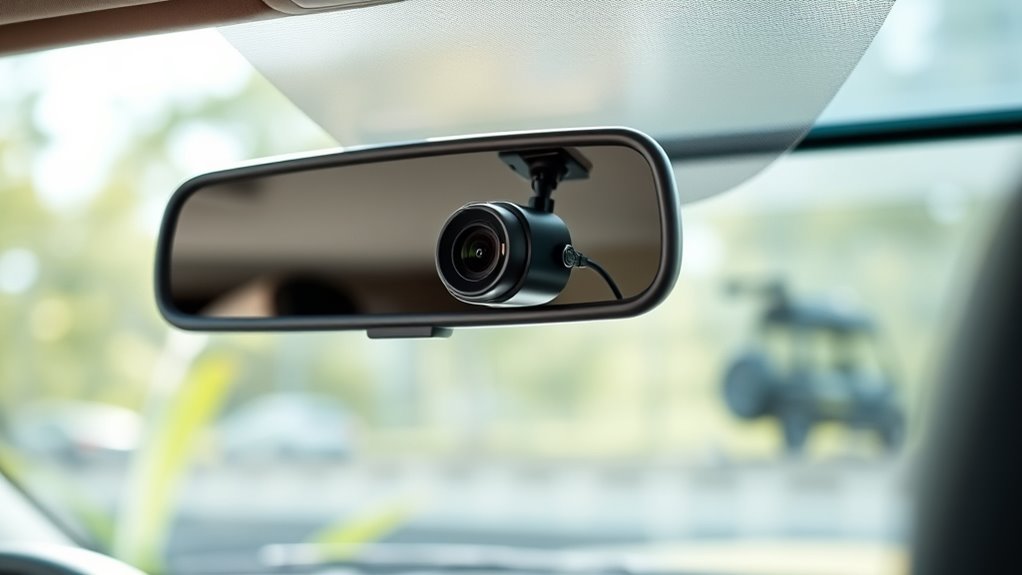
Using your dash cam responsibly involves following best practices that guarantee legal compliance and effective recording. Mount your dash cam in the bottom corner of your driver’s side windshield, behind the rearview mirror, and keep it under five square inches to avoid obstructing your view. Use high-definition wide-angle lenses and night vision to capture clear, all-encompassing footage. For audio, disable recordings unless all occupants consent, as Illinois requires two-party consent—audio during police stops is permitted. Confirm your recordings are relevant, unaltered, and properly timestamped to be admissible in court. Maintain a clear chain of custody and avoid blurry, obscured, or irrelevant footage. Finally, record police interactions openly and immediately save crucial footage, consulting legal advice before sharing or submitting evidence.
Frequently Asked Questions
Can I Record My Passengers’ Conversations Without Violating Illinois Law?
You can’t record your passengers’ conversations without violating Illinois law. The state requires all parties involved in a private conversation to consent before audio recording. This means you need explicit permission from everyone in the vehicle before turning on the audio feature. Failing to get consent can make your recordings inadmissible in court and could lead to legal trouble. To stay compliant, disable audio or obtain clear, verbal consent from all passengers first.
Are There Specific Brands or Models Recommended for Legal Compliance?
Think of choosing a dash cam as finding a trustworthy partner—you want reliability and compliance. For Illinois, opt for models with small, unobtrusive mounts under five inches, preferably dashboard or rearview mirror mounted. Select video-only cameras or ones with disable audio features to avoid legal pitfalls. Brands like BlackVue, Garmin, or Thinkware often meet these standards, ensuring your recordings are both legal and clear, like a well-composed photograph.
How Long Can I Legally Retain and Store Dash Cam Footage?
You can retain dash cam footage in Illinois as long as you need for legal or personal reasons, but no specific law limits the retention period. For evidence, keep the footage until any related claims or statutes of limitations (usually 2 years) expire. Be sure to preserve original files, include metadata, and consider privacy laws, especially if recordings contain private conversations or identifiable individuals.
Is It Legal to Record My Vehicle’s Interior for Security Without Consent?
You can record your vehicle’s interior for security without consent, as long as the footage captures only the outward view of public roads. However, if your dash cam records interior audio or inward video, you need everyone’s permission to stay within legal bounds. Think of your camera as a silent guardian—focused outward for safety, but respecting privacy when it turns inward. Always verify your setup complies to avoid legal trouble.
What Are the Penalties for Mounting a Camera That Obstructs My View?
If you mount a camera that obstructs your view too much, you risk a traffic violation classified as a misdemeanor. You could face a minimum fine of $250, with fines rising up to $2,500 for related offenses. You might also face jail time up to a year, license suspension, and civil penalties. To avoid these penalties, make certain your camera doesn’t block more than five square inches and is mounted behind the rearview mirror.
Conclusion
Staying within Illinois dash cam laws is like steering clear of rocky waters—you’ll avoid legal trouble and protect privacy. Make sure your device’s placement, audio recordings, and data sharing follow the rules, and you’ll navigate safely. Remember, “A stitch in time saves nine”—addressing legalities now prevents bigger issues later. Keep informed, install responsibly, and drive confidently knowing you’re doing right by the law and your privacy.