When it comes to insurance evidence, video quality isn’t everything. You need context, timing, and additional documentation to make your case strong. A high-resolution video means little if it’s taken from awkward angles that leave out key details. Accurate time-stamping is essential too, as inconsistencies can damage your credibility. To really bolster your claim, it’s wise to include photos and eyewitness accounts alongside your video. Stick around for more insights on fortifying your insurance evidence.
Key Takeaways
- Video quality alone cannot establish credibility without proper context and understanding of the events captured.
- Angles and timing in video footage significantly influence the interpretation and validity of the evidence presented.
- Accurate time-stamping is essential to align video evidence with other documentation, such as police reports and witness statements.
- Supplementary evidence, like photographs and expert testimonies, enhances the robustness of claims beyond just video footage.
- Maintaining video authenticity through metadata and digital forensics is crucial for establishing trustworthiness in insurance claims.
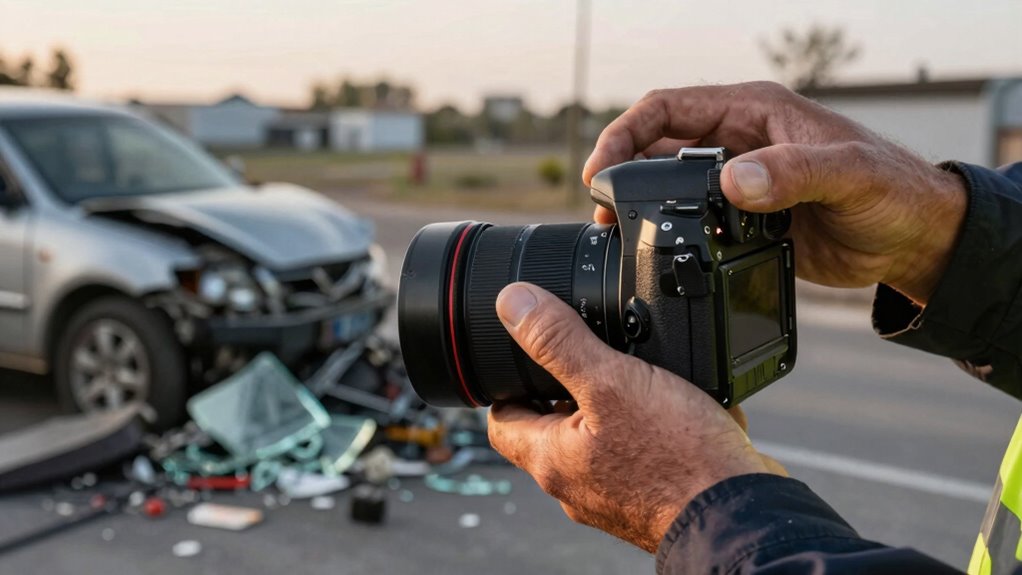
When it comes to insurance claims, the quality of video evidence can make or break your case. You might think that simply having high-resolution footage is enough, but that’s just the tip of the iceberg. Video analysis plays a vital role in evaluating the validity of your claim, and it goes beyond pixel count and clarity. Insurance companies and adjusters scrutinize videos for context, timing, and even the angles from which the footage was captured. If you don’t take these factors into consideration, your video evidence could lose credibility.
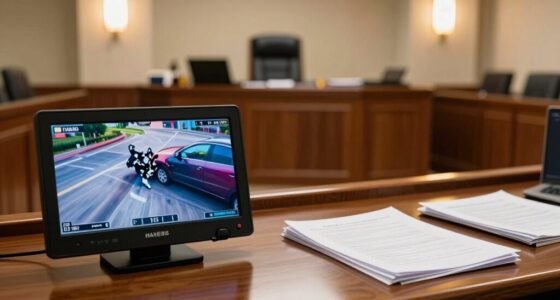
Imagine you’ve got a fantastic video showing an incident related to your claim, but it’s shot from a distance or at an awkward angle. While the quality might be high, the lack of context can raise questions. Was there something happening just off-camera? Did the video capture the entire event, or does it leave too much to interpretation? These factors are essential because they impact how your video evidence is perceived. If the adjuster can’t determine exactly what happened, your case could falter despite the footage’s apparent quality.
High-quality video can raise questions if shot from awkward angles, impacting how your evidence is perceived. Context matters.
Furthermore, the timing of the video is another significant aspect. If the footage is time-stamped inaccurately or if it’s not clear when the incident occurred, it could undermine your entire claim. You want to guarantee that the video evidence aligns seamlessly with other documentation, like police reports or witness statements. Inconsistencies can lead to doubt about the authenticity of your evidence, and that’s where the issue of evidence credibility comes into play. Ensuring the video authenticity is maintained is crucial for establishing trustworthiness. Additionally, understanding the role of video analysis can help you better prepare and present your evidence in a way that withstands scrutiny. Recognizing the importance of evidence context can also help you create a more compelling case, as context often determines how the footage is interpreted. It’s also helpful to be aware of how video metadata can provide additional proof of authenticity and timing. Moreover, being aware of how digital forensics techniques can further verify the integrity of your footage reinforces its credibility.
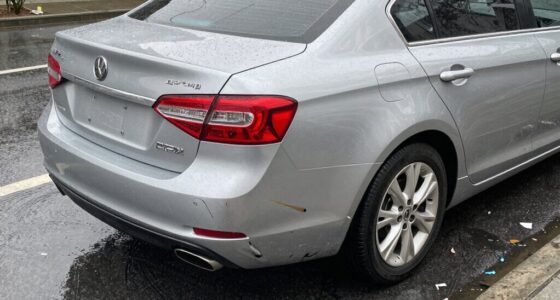
Also, don’t overlook the importance of supplementary evidence. Video evidence should work in tandem with other forms of documentation. Reflect on photographs, eyewitness accounts, or even expert testimonies. Each piece of evidence can reinforce your claim, creating a more robust narrative for the adjuster to evaluate. If you rely solely on video evidence, you risk having your case weakened if that evidence is challenged.
In short, while high-quality video evidence is valuable, it can’t stand alone. To build a strong case, you need to reflect on the broader context in which that evidence exists. Focus on video analysis, guaranteeing that your footage is not just clear but also relevant and corroborative. Only then can you bolster your claim effectively, paving the way for a more favorable outcome.

2.5K Front + 1080P Rear Dual Dash Cam, WDR Night Vision, 130° Wide Angle, Parking Monitor, G-Sensor, Loop Recording, Supercapacitor, 32GB Card Included, Supports 256GB Max
- Dual 2.5K and 1080P Recording: Capture front and rear with wide-angle lenses
- 130° Wide-Angle Lenses: Minimize blind spots and record more area
- WDR Night Vision Technology: Bright, clear footage in low-light conditions
As an affiliate, we earn on qualifying purchases.
As an affiliate, we earn on qualifying purchases.
Frequently Asked Questions
How Does Witness Testimony Impact Insurance Claims?
Witness testimony greatly impacts insurance claims by providing an additional layer of evidence. You’ll want to assess witness reliability, as a credible witness can strengthen your case. If their statements are consistent with other evidence, it boosts your claim’s validity. However, inconsistent statements might raise doubts, making it essential to gather reliable testimonies. Overall, solid witness accounts can sway decisions in your favor, enhancing your chances of a positive outcome.
What Role Does Documentation Play in Insurance Evidence?
Think of documentation as the backbone of your insurance claim—without it, everything can crumble. It plays an essential role by providing different types of evidence, like photos, reports, and receipts. These documents bolster the evidence’s credibility, making your case stronger. When you submit thorough documentation, you’re not just telling a story; you’re building a solid foundation. So, gather everything you can—your claim deserves the best support possible.
Are There Legal Requirements for Video Evidence?
Yes, there are legal requirements for video evidence. You need to guarantee video authenticity to meet legal standards in your jurisdiction. Different areas may have varying rules, so always check local laws. For your evidence to be reliable, it must be properly recorded, maintained, and presented. This often includes establishing a chain of custody and confirming the device used meets specific criteria. Don’t overlook these aspects; they’re vital for your case.
How Do Time Stamps Affect Video Evidence Validity?
Time stamps are essential for video evidence validity, as they guarantee time accuracy and help establish a timeline. If a video lacks proper metadata integrity, it can raise questions about its authenticity. You wouldn’t want your evidence to be seen as unreliable, right? Accurate time stamps support your claims and help paint a clearer picture of events. So, always make sure your video evidence is well-documented and properly timestamped for the best impact.
Can Audio Recordings Supplement Video Evidence?
Yes, audio recordings can definitely supplement video evidence. When you capture audio clarity alongside visuals, it enhances the overall context and helps clarify events. For instance, verbal exchanges can provide essential insights that video alone might miss. You’ll find that the contextual relevance of what’s said can reinforce the video’s narrative, making your evidence stronger and more compelling. Combining both elements gives a fuller picture of the situation at hand.

Yunir Video Camera Camcorder Digital Camera Recorder 1080P with 2.4 Inch Color Screen, 16MP 16X Zoom Anti Shake Camcorder Built in Battery (Black)
- HD Video Resolution: Supports 1080P recording
- High-Quality Photos: 16MP image capture
- Zoom Capability: 16x digital zoom
As an affiliate, we earn on qualifying purchases.
As an affiliate, we earn on qualifying purchases.
Conclusion
In the world of insurance, it’s easy to think that crystal-clear video is all you need, but that’s just part of the puzzle. Imagine you’ve got stunning footage, but it misses essential details or context. Coincidentally, a witness statement or even a timestamp can make all the difference in your claim. So, next time you’re gathering evidence, remember: it’s not just about what you see, but the whole story that helps you get the coverage you deserve.

Acid Gas Detector by Forensics | USA NIST Calibration & Certificate | Dust & Explosion Proof | USB Recharge | Sound, Light and Vibration Alarms | 0-10 ppm |
- Gas Detection Range: 0-10 ppm for acidic gases
- Sensor Type: Electrochemical cell sensor
- Calibration: Zero and span calibration included
As an affiliate, we earn on qualifying purchases.
As an affiliate, we earn on qualifying purchases.

Rhino HIT Kit +2 Utility Damage Investigation Kit with 18 Components for Buried Utility Documentation & Incident Reporting
- Official Rhino Product: Manufactured by Rhino for professional use
- 18-Component Field Kit: Includes posts, spikes, stands, ruler, and bag
- Standardize Damage Reports: Consistent photo documentation of utility damage
As an affiliate, we earn on qualifying purchases.
As an affiliate, we earn on qualifying purchases.