
If the other driver demands you delete dashcam footage, stand firm and explain your legal rights to retain the evidence. Do not delete or alter any recordings, as doing so can lead to legal trouble or accusations of tampering. Clearly communicate that the footage is protected and may be needed for legal or insurance purposes. Involve law enforcement if necessary and document all interactions. To protect yourself further, learn more about proper procedures for handling such situations.

Get business pricing on garage and car supplies
- Business-only prices and quantity discounts
- Tax-exempt purchasing
- Multiple users, one account, clear invoices
Key Takeaways
- Firmly decline to delete footage, citing legal rights and the importance of preserving evidence for potential legal proceedings.
- Clearly state that you will only share footage with authorized entities like law enforcement or legal counsel.
- Request police presence if the other driver attempts to coerce deletion or if you feel threatened.
- Document the demand, interactions, and any threats with photos, recordings, and detailed notes.
- Consult an attorney immediately to understand your rights and ensure proper evidence preservation and legal compliance.
As an affiliate, we earn on qualifying purchases.
Understand Your Legal Rights and Obligations
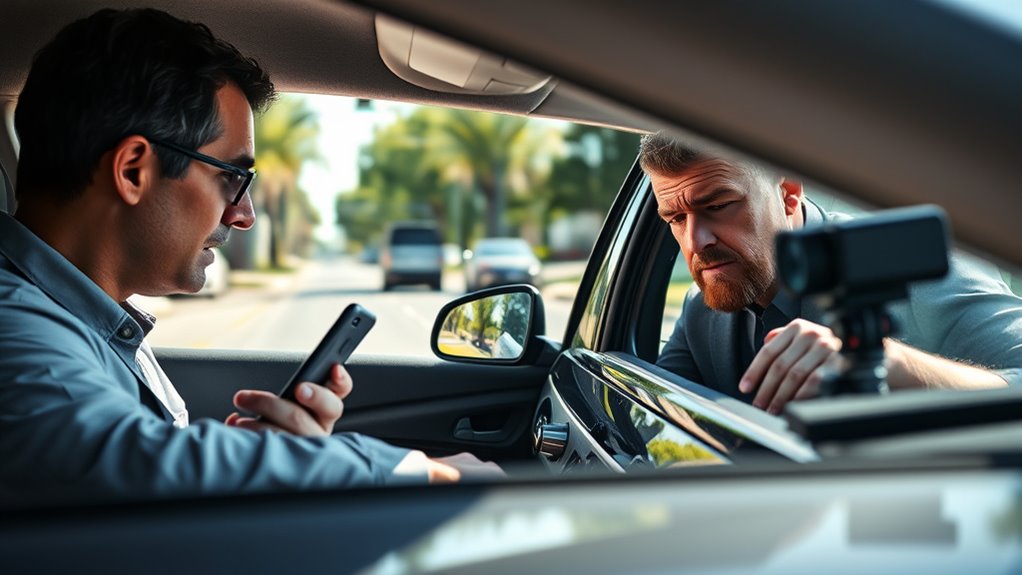
Understanding your legal rights and obligations after a traffic incident is essential, especially if the other driver demands you delete dashcam footage. Legally, you’re not required to voluntarily hand over the footage to the other driver or your insurance provider. Refusing to share it might raise suspicions or even lead to claim denial. However, if litigation occurs, relevant footage must be disclosed during discovery, and courts will evaluate its relevance, authenticity, and preservation. Insurance companies can request the footage through subpoenas, and failure to produce it can have serious consequences. Remember, ownership of the dashcam doesn’t give you absolute control—laws in your state may require you to preserve and produce footage if relevant, emphasizing your legal obligation to retain it until the matter resolves. Additionally, courts may consider the possibility of deleting or altering footage as evidence of misconduct, so it’s important to handle the footage responsibly. Properly preserving digital evidence is critical to ensure compliance with legal standards and avoid potential penalties, especially considering the importance of wave and wind conditions that can affect footage clarity and integrity. Being aware of your legal obligations regarding digital evidence can help you navigate the situation more effectively, and understanding the requirements for digital evidence preservation can further safeguard your rights. Recognizing the potential legal consequences of manipulating or destroying footage is vital to protect yourself from future liability.
secure digital evidence storage for dashcam
As an affiliate, we earn on qualifying purchases.
As an affiliate, we earn on qualifying purchases.
Do Not Delete or Alter the Footage

Deleting or altering dashcam footage after an incident can seriously undermine your case and lead to legal trouble. You must preserve the original footage exactly as recorded. You must preserve the original footage exactly as recorded. Doing so maintains its integrity and admissibility in court. Here are key steps to follow:
- Never delete or modify the footage, especially after a formal request or legal demand.
- Immediately make secure copies and store them in a safe location without edits.
- Inform your attorney promptly to initiate preservation protocols and avoid accidental overwriting.
- Proper storage methods help ensure the footage remains unaltered and legally defensible. Using secure, unalterable storage techniques is essential for maintaining the footage’s authenticity and integrity. Additionally, understanding evidence preservation best practices can prevent inadvertent spoliation. Employing chain of custody procedures ensures the footage remains trustworthy throughout legal proceedings. Implementing comprehensive documentation can further support your case by providing clear records of how the footage has been handled. It is also important to be aware of legal compliance requirements to prevent potential liabilities. Tampering with or deleting footage can be viewed as evidence spoliation or obstruction, damaging your credibility. Keeping unaltered, time-stamped footage ensures your case remains strong and legally compliant, supporting claims of fault or innocence.
As an affiliate, we earn on qualifying purchases.
Communicate Clearly With the Other Driver

When the other driver demands you delete footage, stay calm and clearly state your legal rights to keep the evidence. Emphasize that deleting the footage could harm your case and may be illegal in some jurisdictions. By communicating confidently, you protect your rights and help preserve vital evidence. Video footage offers a clear, indisputable view of accident details, which is essential for accurate claims and legal proceedings. Additionally, informing them about privacy laws and regulations can reinforce your position and clarify that you are within your rights to retain the footage. Understanding evidence preservation laws and best practices can also support your case and ensure your digital evidence remains intact. Recognizing the importance of digital evidence laws helps safeguard your rights and prevent unlawful deletion. Remember, support breakfast options like fresh and high-protein breakfast foods can keep you energized during stressful situations. Recognizing the importance of European cloud solutions in protecting digital evidence can further strengthen your stance.
Assert Legal Rights
Even if the other driver demands you delete your dash cam footage, you have the legal right to refuse. Your footage is your property, and deleting or altering it could lead to legal penalties or make it inadmissible in court. To assert your rights effectively:
- Clearly state that you control your footage and that it’s protected by law.
- Remind them that recordings in public spaces don’t require consent under Florida law.
- Assert that police generally need a warrant to seize your dash cam without your permission.
- Legal protections for recordings are designed to safeguard your rights and prevent unlawful data manipulation.
- Dash cam footage is generally considered evidence that you are entitled to retain and share according to your discretion.
- Understanding your rights regarding digital evidence can help you respond confidently and legally to such demands.
- Remember, asserting your rights with a firm tone and proper documentation can deter unlawful attempts to delete your footage.
- Maintaining awareness of your privacy rights can further reinforce your position and help you avoid unnecessary conflicts.
- Being informed about state laws related to recording can strengthen your ability to stand firm in these situations.
Emphasize Evidence Preservation
To guarantee your evidence remains intact, clearly communicate to the other driver that you will preserve all footage as legal evidence. State that deleting or tampering with footage could have legal consequences and that you’re preserving it for insurance and potential legal review. Offer to exchange contact and insurance information, but refuse to hand over or erase any recordings. If safety concerns arise, explain your intention to move to a safe location and secure the footage before further discussion. If a witness requests footage, clarify that it will only be shared with insurers, law enforcement, or legal counsel to maintain chain-of-custody. Remember to understand your rights regarding home charging and data protection to ensure your evidence stays protected. Additionally, familiarize yourself with smart home security features that can help you document incidents and preserve evidence more effectively. Keeping digital evidence, including footage from home security cameras, secure and unaltered is crucial for its admissibility in legal proceedings. Remain calm, firm, and transparent to ensure your evidence stays preserved and admissible.
law enforcement dashcam evidence bag
As an affiliate, we earn on qualifying purchases.
As an affiliate, we earn on qualifying purchases.
Involve Law Enforcement Appropriately

Reporting the incident to law enforcement is a crucial step if the other driver demands you delete footage. Your first priority is ensuring the scene is properly documented. Here are key actions to take:
Reporting the incident to law enforcement safeguards your rights and ensures proper documentation of the scene.
- Call the non-emergency police line if it’s safe, and describe the demand as potential evidence tampering.
- Clearly state that you won’t hand over your device voluntarily but provide details of your dash cam footage.
- Request police presence to secure all involved parties and footage, and note the other driver’s license plate, vehicle details, and exact wording of their demand.
- Remember that involving law enforcement can help navigate partner shutdowns and protect your rights effectively.
Avoid physical confrontation and prioritize safety. Involving law enforcement ensures that your rights are protected and that any illegal demands are properly addressed.
Document All Interactions and Requests

When an other driver demands you delete footage, it’s essential to document every interaction and request thoroughly. Note the exact wording of their demands, including any threats or intimidation, and record the date, time, and location of each encounter. Pay attention to their tone and demeanor, and if legal in your area, discreetly use your phone’s voice recorder to capture the exchange. Transcribe verbal interactions immediately for accuracy. Take photographs of their dash cam setup, visible footage timestamp, vehicle details, license plate, and any damage. Record weather conditions, nearby witnesses, and their statements. Save all digital communications like texts or emails, and photograph any notes presented. Creating a detailed, chronological log helps protect your rights and can be crucial if disputes escalate. Additionally, sending a preservation letter promptly to the dash cam owner can help ensure that relevant footage is not deleted or tampered with before legal proceedings commence. Understanding video footage rights and the regulatory environment surrounding dash cams can further strengthen your position if legal issues arise. Familiarizing yourself with your local laws on privacy and recording can also be beneficial in these situations. Keeping detailed records and understanding your legal protections are vital steps in safeguarding your interests. As part of your preparations, consider the importance of maintaining fire-starting kits and other safety gear, which can be invaluable in emergencies.
Seek Legal Advice Before Disclosing Any Footage

Before you share any dashcam footage, it’s essential to seek legal advice to understand the potential risks and benefits. Unauthorized disclosure can be exploited by insurance companies to assign fault or reduce payouts, and deleting or editing footage may harm your case. A lawyer can help you understand the rules for admissibility, such as maintaining an unbroken chain of custody and preserving native files with metadata. They’ll also advise on whether sharing footage might violate laws or court standards, risking exclusion or sanctions. Proper handling of digital evidence is crucial to ensure your footage remains admissible in court. Consider these key points: 1. Confirm if sharing footage is legally advisable in your jurisdiction. 2. Understand the risks of accidental spoliation or alteration. 3. Get guidance on protecting your rights and maintaining evidence integrity.
Use Proper Legal Channels to Obtain or Protect the Evidence

To effectively use legal channels to obtain or protect dashcam evidence, you must understand the proper procedures and limitations involved. Police need a valid reason, like a traffic stop or investigation, to access footage, and they must follow privacy laws concerning audio and video recordings. Formal requests should be made via written letter, email, or in person, and you should respond promptly. Evidence relevant to an investigation can be obtained through a warrant; withholding footage can be a criminal offense. You’re not obligated to volunteer footage immediately, as it’s considered personal property protected under the Fourth Amendment. Always retain original hardware, provide copies to authorities through secure means, and follow proper backup protocols to preserve your evidence effectively. Legal protections also help ensure your footage is admissible in court and that your rights are maintained throughout the process.
Frequently Asked Questions
Can I Delete Footage if I Believe It’s Irrelevant?
No, you shouldn’t delete footage even if you believe it’s irrelevant. Deleting or tampering with footage after a preservation duty can be considered spoliation, risking court sanctions, fines, or worse. Always consult your attorney before deleting anything, and document all preservation efforts. If you’re unsure about relevance, let a legal professional evaluate it, as even seemingly irrelevant footage might hold essential evidence or be deemed relevant later.
What Happens if I Accidentally Delete Dash Cam Footage?
If you accidentally delete dash cam footage, you’re walking on thin ice because it can be seen as evidence tampering. Even if unintentional, it might hurt your case or lead to legal trouble. To stay safe, act quickly: back up any remaining footage, notify your attorney, and avoid trying to recover or edit the files yourself. It’s better to be safe than sorry when it comes to preserving vital evidence.
Are There Penalties for Refusing to Delete Requested Footage?
Refusing to delete requested footage can lead to serious penalties, including legal consequences. Law enforcement or courts may view your refusal as obstruction, resulting in fines or even criminal charges. Additionally, if you’re involved in litigation, refusing to comply with subpoenas or court orders to preserve or produce footage can cause civil sanctions or judgments against you. Always follow legal obligations to preserve evidence and consult a lawyer if you’re unsure.
How Long Am I Legally Required to Keep Dash Cam Recordings?
You’re typically required to keep dash cam recordings for at least 30 to 90 days, depending on your jurisdiction. Some states or agencies mandate longer retention, especially for critical incidents or investigations, which can extend to two years or indefinite periods. Check local laws and your company’s policies, as retention periods vary. Keep footage until you’re certain it’s no longer needed for claims, legal, or investigative purposes.
Can I Share Footage With Third Parties Without Legal Risk?
You can share footage with third parties only if you have proper consent or if it’s legally justified, like sharing with law enforcement or your insurance company for claims. Avoid sharing publicly or with anyone without permission, especially if it includes faces or license plates, to prevent privacy violations or legal trouble. Always consider state laws about audio recordings and consult an attorney if you’re unsure, to avoid risking your legal standing.
Conclusion
Remember, your footage is your evidence, and deleting it can turn the tide of justice against you. Stand firm and know your rights—don’t let pressure or threats sweep away vital proof. Think of your footage as a lighthouse guiding you through legal storms. By staying informed and cautious, you protect yourself and guarantee that truth shines through, no matter how turbulent the situation. Trust in the process, and let integrity steer your actions.
Fall Picks
fall essentials
As an affiliate, we earn on qualifying purchases.