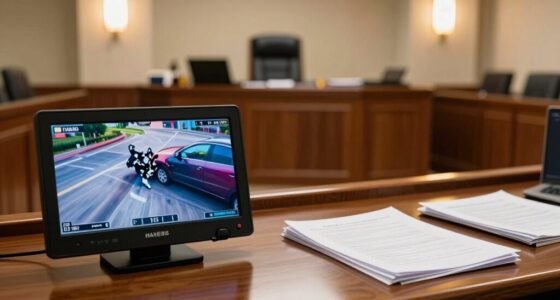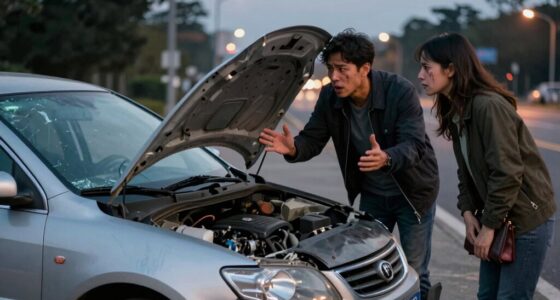
To find evidence in a parking lot hit-and-run, secure the scene quickly by capturing photos, collecting debris, and documenting skid marks and damages. Gather video footage from nearby cameras, including CCTV and smartphones, to trace the vehicle’s movements. Also, interview witnesses and record their statements. Finally, analyze vehicle damage and look for unique marks or paint transfer to identify the culprit. Continuing will reveal how all these steps seamlessly fit together to lead your investigation.
Key Takeaways
- Secure and document the scene with photos, debris, and tire marks immediately to preserve physical evidence.
- Collect witness statements detailing vehicle descriptions, directions, and incident timing for accurate reconstruction.
- Obtain and analyze surveillance footage from nearby cameras, ensuring proper chain-of-custody and timestamp verification.
- Identify suspect vehicle features through physical damage patterns, paint transfer analysis, and license plate reconstruction.
- Correlate physical evidence, witness accounts, and digital data to establish a precise timeline and support legal proceedings.
Securing and Preserving Critical Evidence Immediately

When you arrive at the scene of a hit-and-run, it’s essential to act quickly to secure and preserve evidence before it’s disturbed or lost. Take photos from multiple angles to capture vehicle damage, skid marks, tire tracks, road conditions, and weather. Gather physical debris like broken lights, paint, or glass fragments, and secure fluid leaks such as oil or coolant. Talk to witnesses, noting their descriptions of the vehicle, partial license plates, and driver appearances, along with contact details. Record the scene’s location and time using geotagging, and measure skid mark positions. Avoid moving the vehicle or evidence, and request police to secure the scene. Write down your observations and file a police report promptly to ensure critical evidence remains intact for investigation. Additionally, verifying the accident location and time using smartphone geotagging features can help establish the precise circumstances of the incident. Recognizing the importance of image quality in documenting the scene can make a significant difference in the clarity and usefulness of the evidence collected. Ensuring proper scene preservation techniques can prevent evidence contamination or loss. Being aware of evidence integrity is vital to maintain the authenticity of the collected data, which can be crucial in legal proceedings. Employing proper documentation methods can further strengthen the reliability of the evidence gathered at the scene. Incorporating secure digital storage ensures that digital evidence remains unaltered and protected from tampering.
Gathering and Analyzing Video and Digital Footprints

Gathering and analyzing video and digital footprints require prompt action to maximize evidence recovery. In parking lot incidents, multiple camera types—CCTV, doorbell, ATM, license-plate-reader, and traffic cameras—may capture valuable footage. Urban areas often have 7–10 cameras covering a single incident, increasing the likelihood of evidence. Canvassing nearby private systems, storefront security, residential doorbells, and municipal cameras broadens your reach. Since many private systems overwrite footage within 24–72 hours, act quickly to request preservation through police or documented civilian requests. When acquiring footage, create bit-for-bit copies with original timestamps and metadata, and document every transfer to maintain chain-of-custody. Cross-referencing multiple sources and verifying camera clock accuracy help confirm event timelines and vehicle movements, strengthening your case.
Examining Physical Traces and Vehicle Damage
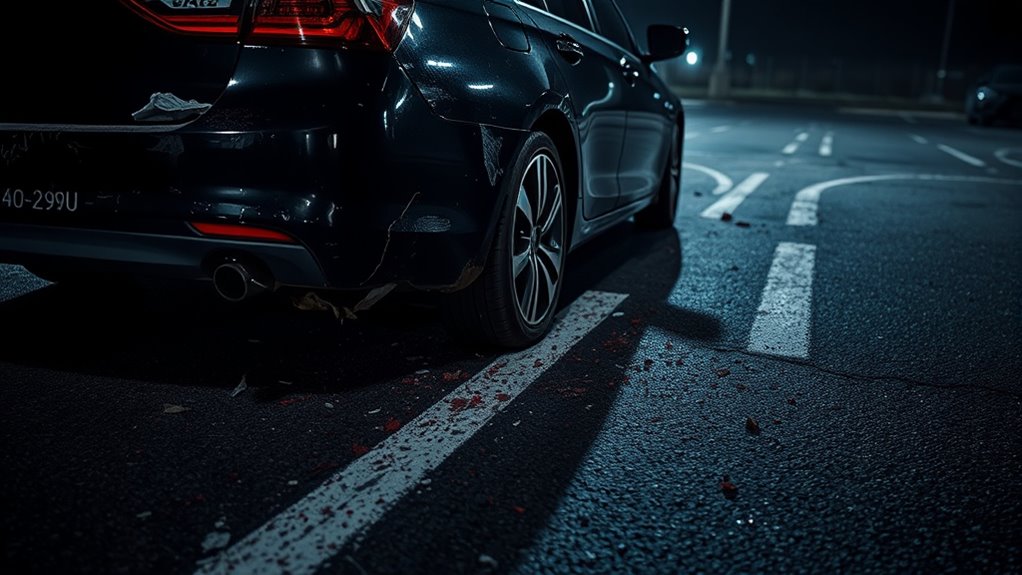
Examining physical traces and vehicle damage plays a essential role in reconstructing a hit-and-run incident. You should look for debris like broken headlight or taillight pieces with manufacturer markings, vehicle trim with part numbers, and plastic components from bumpers or mirrors. Mechanical parts bearing serial numbers can help identify the vehicle, while glass fragments with unique tinting or thickness patterns provide additional clues. Conduct paint transfer analysis by comparing chips to determine the make and model, using microscopic examination to identify vehicle-specific paint details. Damage pattern matching involves analyzing dents, scratches, and structural damage to understand collision dynamics, contact points, and impact direction. Document skid marks and tire tracks carefully, noting their position and characteristics to piece together the event sequence. This thorough examination helps establish essential links between the scene and the suspect vehicle.
Collecting Witness Accounts and Incident Reports
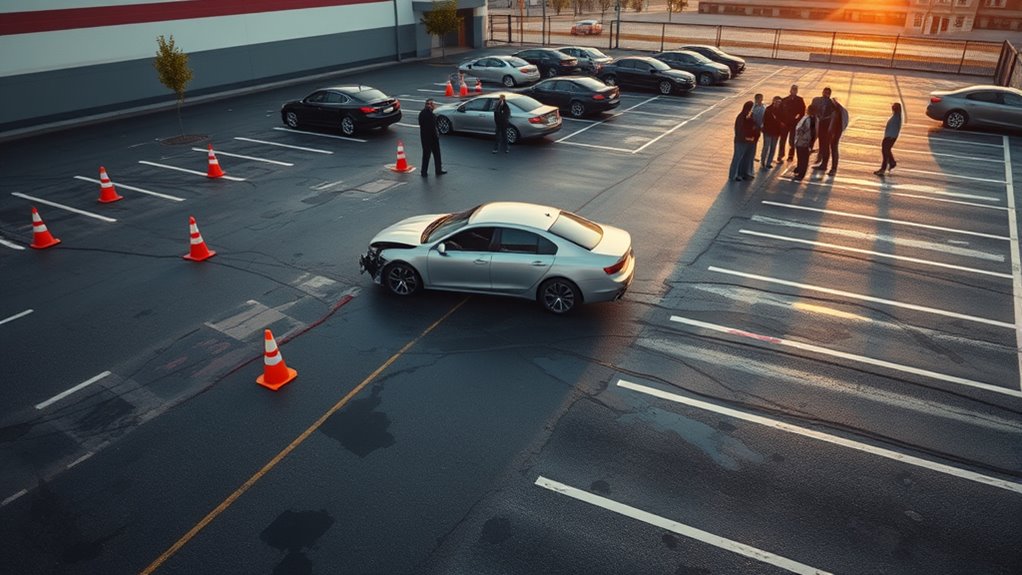
Collecting witness accounts and incident reports provides essential information that can clarify the circumstances of a hit-and-run. You should gather contact details like names, phone numbers, and addresses. Witness descriptions of the fleeing vehicle include make, model, color, license plate, and direction traveled. Observations about the driver’s gender, height, hair color, and clothing are also pivotal. To secure statements, request written or verbal accounts immediately, noting details about timing, positioning, and vehicle features. Encourage witnesses to report to police and preserve their contact info for follow-up. Understanding the legal obligations of witnesses and victims can motivate them to cooperate fully, as failing to report an accident involving property damage exceeding $250 can result in legal penalties. Additionally, being aware of witness rights can help ensure proper legal procedures are followed during the collection of statements. Use the table below to organize key information:
| Witness Name | Description of Vehicle | Driver’s Description |
|---|---|---|
| Jane Doe | Blue Toyota Camry, Plate XYZ123 | Female, 5’6″, Blonde hair |
| John Smith | Red Honda Civic, Plate ABC789 | Male, 6’0″, Brown hair |
| … | … | … |
Correlating Data to Build a Cohesive Timeline

To build an accurate timeline of the hit-and-run incident, you need to analyze various types of physical evidence and their relationships. Start by establishing the precise incident time through documentation of date, weather, lighting, traffic signals, and road conditions. Next, examine vehicle paths by analyzing skid marks, tire tracks, debris scatter, and paint transfers, which help sequence post-collision movements. Integrate surveillance footage by reviewing timestamps from parking lot cameras and nearby feeds, matching video sequences to physical evidence. Lastly, align police and DMV records to confirm investigation milestones, police arrival, and evidence collection, while also considering environmental factors like construction or traffic density. This extensive correlation creates a cohesive, accurate timeline of events, essential for building your case. Gathering and analyzing all relevant data is crucial to establish a comprehensive understanding of the incident and support your claim effectively.
Linking Evidence to Identify the Culprit Vehicle

You can link evidence to a suspect vehicle by cross-referencing multimedia sources like CCTV footage, dashcams, and license plate readers to narrow down candidates. Analyzing vehicle damage and debris helps confirm matches by examining paint, glass, and mechanical parts unique to specific vehicles. Additionally, reviewing digital trails and metadata preserves the integrity of evidence, ensuring you can reliably connect scene details to the right vehicle. Surveillance footage and forensic analysis are vital tools that can significantly increase the likelihood of identifying the responsible driver. Incorporating automotive forensics techniques further enhances your ability to match evidence with the correct vehicle, especially when considering support breakfast options that can keep investigators energized during long hours of analysis. Moreover, utilizing investigative databases can provide additional context and vehicle histories that support your identification efforts. Paying close attention to vehicle damage patterns can offer crucial clues that differentiate suspect vehicles from others in the area. Additionally, understanding vehicle identification techniques can help investigators distinguish between similar makes and models more effectively.
Cross-Referencing Multimedia Evidence
Cross-referencing multimedia evidence involves systematically comparing and aligning different sources to identify the vehicle involved in the incident. You start by synchronizing timestamps across videos, photos, and audio recordings to create a cohesive timeline. Next, map each camera’s field of view and use geolocation data or visual landmarks to triangulate the vehicle’s path. Compare multiple angles to confirm vehicle attributes like color, damage, or decals. Use audio cues, such as impact sounds or voices, to link recordings to the same event. Additionally, match unique vehicle features—like aftermarket lights or bumper stickers—across clips. By reconstructing partial license plates from low-quality footage and correlating damage details, you narrow down suspects. Cross-referencing these multimedia sources solidifies the vehicle’s identity and helps build a compelling case. Integrating geolocation data and vehicle event logs further enhances the accuracy of the identification process. Conducting a thorough analysis of multimedia evidence can uncover subtle details that aid in suspect identification. Incorporating insights from sound healing science can help analysts maintain focus and clarity during complex investigations. Additionally, understanding the importance of proper evidence handling ensures that the integrity of multimedia sources is preserved throughout the investigation.
Forensic Vehicle Damage Analysis
Analyzing vehicle damage provides direct physical evidence that links a suspect vehicle to the collision. You examine impact location, deformation patterns, and damage height to estimate the collision’s angle and severity. Comparing damage distribution across panels helps reconstruct impact sequences. Use the table below to understand damage analysis aspects:
| Structural Damage Pattern | Paint & Material Transfer |
|---|---|
| Impact point and deformation | Paint chip matching to OEM |
| Deformation direction and crease lines | Transfer patterns indicating movement |
| Displaced components and fracture types | Debris and polymer analysis |
| Multiple panel damage correlation | Cross-referencing with repair records |
This detailed analysis narrows down the vehicle’s make, model, and impact behavior, helping you identify the culprit with greater certainty. Damage assessment techniques are continually evolving with advancements in forensic technologies. Furthermore, understanding the horsepower of electric dirt bikes can assist in identifying vehicles involved if engine noise or performance characteristics are part of the evidence. Additionally, examining the damage repair history of suspect vehicles can provide supporting clues about prior accidents or repairs that match the collision evidence. Conducting a thorough scene investigation often reveals subtle clues like paint transfer or debris patterns that are crucial for a conclusive analysis. A comprehensive approach also considers ear wax odor or other subtle clues that might be present at the scene, aiding in building a complete case.
Digital Trails and Metadata
How can digital trails and metadata turn a simple photo or record into crucial evidence? You can leverage embedded timestamps and GPS data from smartphones to verify exactly when and where an incident occurred. Photos taken at the scene, with embedded location info, can pinpoint the vehicle’s position and match it to the crash time. Surveillance footage from nearby cameras captures license plates, vehicle details, and driver behavior, creating a clear sequence of events. Vehicle data recorders log speed, braking, and other actions just before impact, providing precise details for reconstruction. Call logs and app activity reveal distractions or reactions during the incident. When combined, these digital trails and metadata create a compelling, verifiable narrative that links the suspect vehicle directly to the hit-and-run.
Frequently Asked Questions
How Can Private Security Footage Be Legally Obtained for Investigation?
You can legally obtain private security footage by first identifying the owner or operator of the cameras, then making a written preservation request immediately after the incident. If they refuse, instruct your lawyer to issue a subpoena or court order to compel production. Collaborate with law enforcement for assistance, especially in criminal cases, and verify all requests are documented to support their admissibility in court.
What Forensic Techniques Are Used to Analyze Paint Transfer Evidence?
Did you know that paint transfer evidence can be linked with over 90% accuracy using forensic techniques? You’ll analyze surface morphology with stereo microscopy, comparing paint layers for color, texture, and sequence. You then examine chemical composition using FTIR, Raman spectroscopy, or SEM-EDS. Cross-section analysis reveals layer structure, while micro-mapping shows spatial distribution of components. Fracture testing attempts to physically fit paint flakes, providing conclusive evidence of contact.
How Reliable Are Witness Statements When Reconstructing the Incident Timeline?
Witness statements can be quite reliable if they are timely, detailed, and consistent. You’ll find that nearby, attentive witnesses with clear views tend to provide more accurate accounts. However, your memory can degrade quickly, especially under stress or trauma, and perceptions may be biased or impaired. Cross-referencing their testimony with physical evidence and surveillance footage helps verify details, making the timeline reconstruction more dependable.
What Are the Limitations of License Plate Reader Data in Hit-And-Run Cases?
You face limitations with license plate reader data in hit-and-run cases. Weather and lighting can reduce detection accuracy, while obstructions and misaligned plates cause misreads. Digital plates lack retro-reflectivity, making them harder to read. High error rates and misinterpretations complicate investigations, and partial or illegible plates require extra effort. Resource constraints limit data analysis, and privacy concerns restrict data access, all reducing the system’s overall effectiveness in identifying suspects swiftly.
How Long Does It Typically Take to Process and Analyze Digital Evidence?
Processing and analyzing digital evidence usually takes from a few hours to several months, depending on the case complexity. If the footage is clear and abundant, you might see results in a day or two. But if the evidence is scarce, needs enhancement, or involves cross-jurisdictional checks, it could stretch to weeks or even months. Factors like evidence quality, resource availability, and investigation scope profoundly influence the timeline.
Conclusion
By following this 3-step plan, you’ll uncover the truth behind even the sneakiest parking lot hit-and-run. With your sharp eye for evidence, you’ll piece together a puzzle so complex it could baffle detectives. Every clue, every witness, and every digit will lead you closer to catching the culprit. Before you know it, you’ll turn chaos into clarity, proving that with the right approach, no hit-and-run can stay hidden forever.