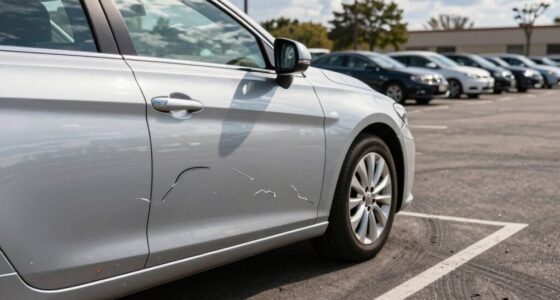

At first, rear-end collision cases seem simple because damage and witness statements usually point to the driver in the back. But as you look closer, details like sudden braking, driver distraction, or shared fault can complicate who’s really at fault. Evidence like photos, skid marks, or police reports often reveal subtle factors that change the story. If you want to understand how these details can shift the case, keep exploring the complexities behind these accidents.
Key Takeaways
- Initial appearances suggest clear fault, but detailed evidence often reveals complexity.
- Disputes over timing, braking, and speed can complicate liability.
- Witness testimonies and physical evidence may conflict, challenging straightforward conclusions.
- Subtle factors like driver distraction or impairment influence fault determination.
- Scientific analysis and investigative techniques uncover nuances that alter case outcomes.
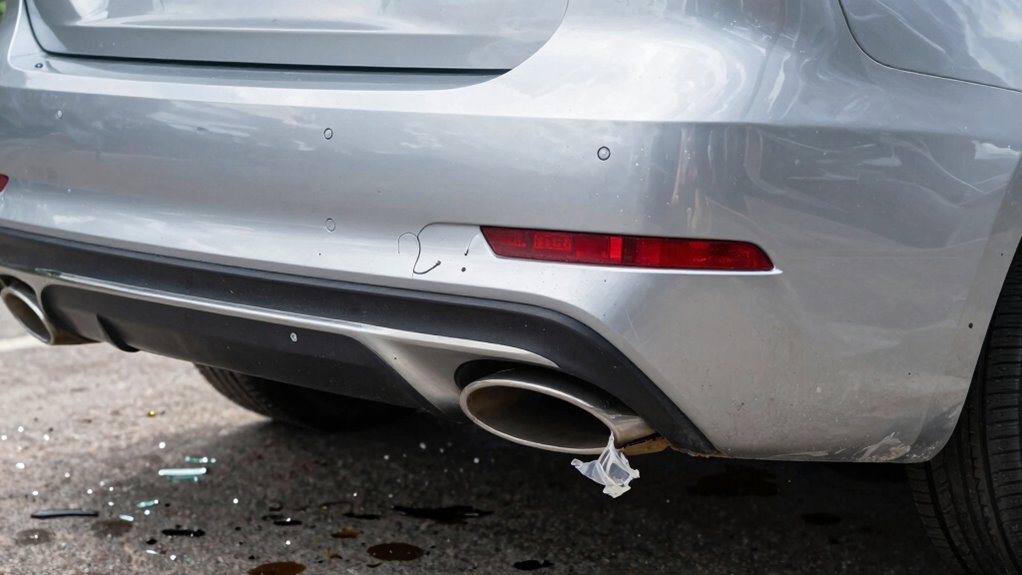
Rear-end collisions often appear straightforward at first glance, with obvious causes like a vehicle’s sudden stop or distracted driving. You might assume that the at-fault driver is clearly responsible, making the process of filing insurance claims seem simple. However, as you dig deeper, the situation quickly becomes more complicated. The initial impression of clarity often fades once you start uncovering the details that truly shape the case. Insurance companies, for example, look closely at the evidence, and sometimes, what seems like an obvious fault turns into a liability dispute. This is where the details matter most, and where things can get messy.
Liability disputes can emerge when the driver claiming innocence argues that they weren’t at fault, despite the visible damage or witness statements. Maybe the other driver claims you suddenly slammed on your brakes without warning, or perhaps there’s conflicting testimony about who was following too closely or speeding. These disagreements delay the resolution of insurance claims and often require detailed investigations. The insurance companies need to examine everything from skid marks and vehicle damage to traffic camera footage. It’s not enough to just say, “They hit me from behind,” because courts and insurers want concrete proof of fault. When details are ambiguous or disputed, the process becomes drawn out and complex. Gathering evidence such as photos and witness statements becomes crucial in establishing the sequence of events. Additionally, understanding the role of investigation techniques can be essential in clarifying complex cases, especially when physical evidence is inconclusive. Knowing how to interpret and leverage forensic methods can make a difference in the outcome.
Liability disputes often arise from conflicting witness statements and insufficient evidence, complicating insurance claims and resolution.
You also have to consider how subtle factors can influence liability. For instance, if you brake suddenly without sufficient reason or if the driver behind you was distracted or impaired, these can shift liability or at least complicate the claim process. Sometimes, both drivers share some degree of fault, which further muddies the waters. You might think you’re entitled to full coverage, but liability disputes could mean you’re partially responsible, affecting your insurance payout. Additionally, understanding the role of accident reconstruction can be crucial in resolving such disputes. Moreover, knowledge of laboratory testing techniques can help verify claims when vehicle damage or other evidence needs scientific analysis. These scientific methods can provide objective data that supports or refutes claims, reducing ambiguity.
In the end, what appears as an easy fix — a rear-end collision with clear blame — often turns into a maze of details that need sorting out. The nuances of each case can influence insurance claims and who is held liable. That’s why, even in what looks like a simple accident, you should gather as much evidence as possible. Photos, witness accounts, and police reports are invaluable when disputes arise. What initially seems black and white can quickly become a gray area, and understanding this is key to navigating the aftermath of rear-end collisions.
vehicle accident investigation kit
As an affiliate, we earn on qualifying purchases.
As an affiliate, we earn on qualifying purchases.
Frequently Asked Questions
How Do Insurance Companies Determine Fault in Rear-End Collisions?
Insurance companies determine fault in rear-end collisions through insurance claims and fault determination processes. They review evidence like police reports, witness statements, and vehicle damage to establish who caused the accident. Usually, the driver behind is at fault, but if the lead driver acted unexpectedly or negligently, fault can be contested. Your role involves providing accurate information and cooperating fully to guarantee an accurate fault determination.
What Are Common Hidden Injuries From Rear-End Accidents?
Oh, sure, you think a quick bump means only whiplash, right? Think again. Hidden damages from rear-end accidents often include concussion, herniated discs, or soft tissue injuries that don’t show up on X-rays. Injury types can be sneaky, hiding in muscles, ligaments, or nerves. These hidden injuries can cause long-term pain and complications, making these seemingly simple crashes much more complex and serious than they first appear.
How Does Weather Impact the Complexity of Rear-End Crash Cases?
Weather conditions and road visibility considerably impact rear-end crash cases, making them more complex. Poor weather, like rain or fog, reduces visibility and can obscure fault or cause driver error. This complicates liability, as you must prove whether weather was a contributing factor or driver negligence. You’ll need detailed evidence, such as weather reports and accident scene analysis, to navigate these cases effectively and establish fault.
Can Previous Driver Behavior Influence Legal Outcomes?
Yes, your previous driver behavior can influence legal outcomes. Courts often consider driver psychology, such as habits or reactions, to determine fault. Accident reconstruction experts analyze these behaviors to establish how the crash happened. If your past driving records or psychological tendencies suggest recklessness or distraction, it could sway the case against you. So, your driving history and mental state are vital factors in resolving rear-end collision disputes.
What Role Does Vehicle Maintenance Play in These Accidents?
Imagine your car as a well-oiled machine, where brake inspections and tire conditions are essential. If you neglect these, your brakes might falter when you need them most, or tires could lose grip on the road. Poor maintenance increases the risk of rear-end accidents, making this detail critical in legal cases. Proper upkeep ensures safety and can influence fault determination if a collision occurs unexpectedly.
As an affiliate, we earn on qualifying purchases.
Conclusion
At first glance, rear-end cases look straightforward—simple accidents with clear causes. But delve into the details, and everything gets complicated. Just like a calm lake hiding turbulent currents beneath, the surface can deceive you. What seems easy to resolve often reveals layers of nuance and hidden factors. So, next time you think a case is simple, remember: beneath the surface, the mess can be waiting to emerge, challenging your assumptions and demanding closer inspection.

ROVE R2-4K Dual Dash Cam Front and Rear, SRTARVIS 2 Sensor, Free 128GB Card
- 4K Front and 1080P Rear Recording: Dual-channel recording with wide angles
- Sony STARVIS 2 Sensor: Exceptional night vision and vivid colors
- Ultra Fast 5G WiFi: Download speeds up to 20MB/sec
As an affiliate, we earn on qualifying purchases.
As an affiliate, we earn on qualifying purchases.
rear-end collision evidence collection tools
As an affiliate, we earn on qualifying purchases.
As an affiliate, we earn on qualifying purchases.