
If an uninsured driver hits you, your dash cam is crucial for capturing the accident details and proving fault. First, immediately document the scene with photos and videos, including vehicle damage, skid marks, and surroundings. Then, secure the footage by creating backups and verifying its authenticity for legal use. Accurate, uncontested evidence helps expedite your claim and hold the other driver responsible. To uncover more essential steps, keep exploring how dashcam evidence can benefit you in this situation.

Get business pricing on garage and car supplies
- Business-only prices and quantity discounts
- Tax-exempt purchasing
- Multiple users, one account, clear invoices
Key Takeaways
- Immediately document the accident scene with photos, videos, and detailed notes, focusing on vehicle damage and traffic conditions.
- Secure and preserve dashcam footage by creating backups, verifying integrity, and maintaining a chain of custody.
- Capture clear evidence of the uninsured driver’s license plate, vehicle details, and any witness contacts for insurance and legal claims.
- Use forensic tools to analyze dashcam metadata and ensure the footage is authentic and tampering-free.
- Present the dashcam evidence to support your claim and establish fault, especially when the other driver lacks insurance.
As an affiliate, we earn on qualifying purchases.
Immediate Actions After the Collision
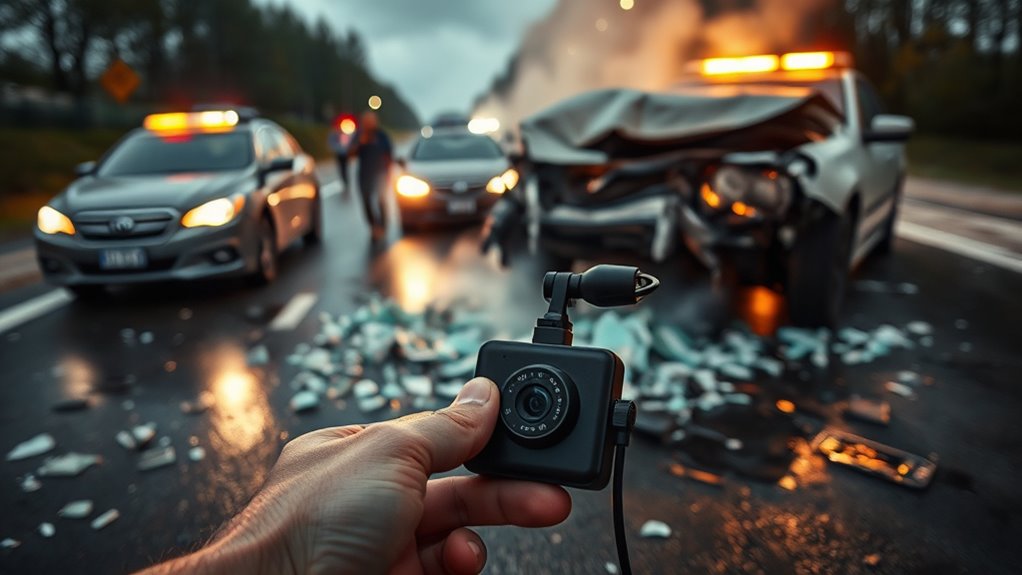
After a collision involving an uninsured driver, your first priority is ensuring safety and calling 911 immediately for police and medical help. Stay calm and move your vehicle out of traffic if it’s safe, preventing secondary accidents and giving first responders easier access. Check yourself for injuries and request EMS, even if symptoms seem minor—some injuries might show delayed signs. Capture scene evidence such as photos of skid marks, vehicle damage, and scene layout before moving anything. Record the other driver’s license plate, make/model, visible damage, and insurance info, along with witness contact details and their positions. Get the officer’s name, badge number, and incident report number. Avoid accepting cash or informal deals, as these can jeopardize insurance claims and recovery options. Taking photographs and collecting relevant documents is crucial for organizing your claim, especially when dealing with an uninsured driver. Understanding the importance of contrast ratio can help you better evaluate the quality of images and evidence captured during this process. Additionally, being aware of vetted sources for legal advice and insurance guidance can ensure you receive accurate information to support your claim. It’s also beneficial to familiarize yourself with the modern technology that can assist in documenting the scene more effectively. Remember that proper evidence collection is essential for successful insurance claims and legal proceedings, especially when the other driver lacks coverage. Properly documenting the scene using specialized imaging techniques can improve the clarity and usefulness of your evidence for legal and insurance purposes.
As an affiliate, we earn on qualifying purchases.
Securing and Preserving Your Dashcam Footage
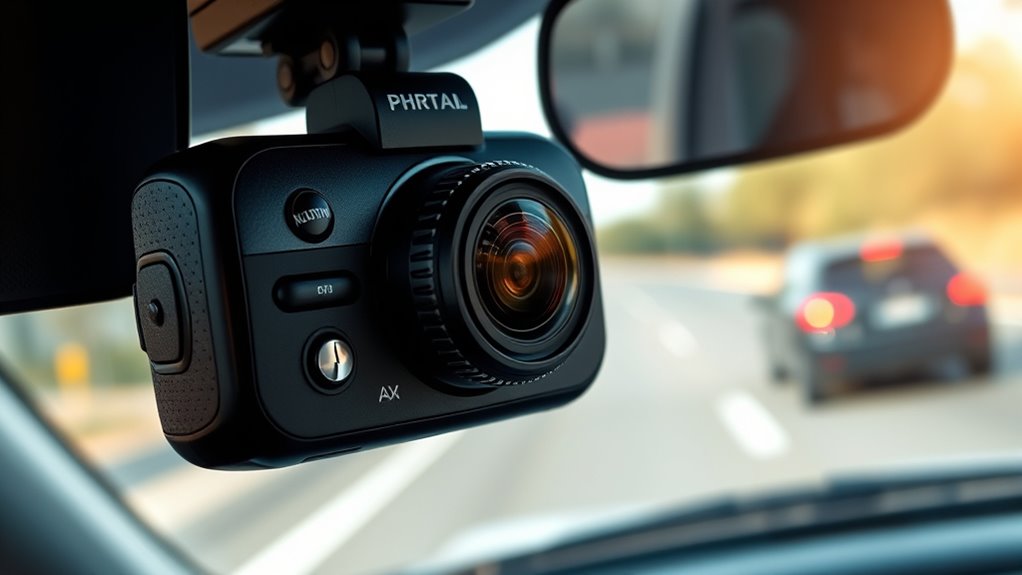
Securing and preserving your dashcam footage immediately after an incident is essential to guarantee the integrity and admissibility of the video evidence. First, remove the camera or memory card from your vehicle as soon as it’s safe, preventing the crash file from being overwritten. Create at least two independent backups—one on a local external drive and another in cloud storage—to guard against accidental deletion or media failure. Keep the original file format intact by avoiding re-encoding or editing, and verify that files play correctly across multiple devices while retaining timestamps and metadata. If your dashcam has an “incident save” feature, engage it and document that it activated during impact. Acting quickly preserves crucial crash footage before it’s overwritten. Additionally, familiarize yourself with the file integrity features of your dashcam to ensure the footage remains authentic and unaltered. Regularly check for firmware updates to improve security and recording reliability. These steps, along with understanding video authenticity, ensure your footage remains authentic and ready for legal review.
dash cam with GPS and night vision
As an affiliate, we earn on qualifying purchases.
As an affiliate, we earn on qualifying purchases.
Gathering Scene Documentation and Evidence

Documenting the scene thoroughly helps build a strong case and supports insurance and legal processes. Take wide-angle photos and videos from multiple vantage points to capture vehicle positions, road conditions, and environmental factors like weather and lighting. Close-up shots of vehicle damage, license plates, VINs, and insurance cards link vehicles to identities and coverage. Record short video walkthroughs showing traffic signs, skid marks, debris, and lane markings for causal analysis. Use timestamps and geolocation data, such as dashcam metadata or photo EXIF info, to verify timing and location. Photographs of injuries and property damage immediately and during follow-up to document severity and progression. Maintaining an organized digital record of all evidence can streamline claims processing and legal review. Accurate, detailed evidence ensures your claim’s strength and helps prevent disputes later on. Visual documentation supports insurance and legal claims by providing tangible proof of the incident. Additionally, creating a comprehensive incident report that summarizes all collected evidence can further strengthen your case when submitting claims or consulting legal assistance. Incorporating metadata analysis can also help confirm the authenticity and timing of your evidence, reducing the risk of disputes. Conducting a witness interview at the scene can provide valuable firsthand accounts that corroborate your documentation. To maximize the effectiveness of your documentation, consider using organized storage methods that facilitate quick retrieval and review when needed.
As an affiliate, we earn on qualifying purchases.
Verifying the Authenticity of Your Footage

Verifying the authenticity of your footage is essential to guarantee it hasn’t been altered or tampered with. Start by preserving the original video files in their native format immediately after the incident, keeping embedded metadata like timestamps, GPS data, and device IDs intact. Record hash values, such as SHA-256, to create a digital signature that confirms the file’s integrity over time. Check for consistency between visible date/time stamps and embedded metadata—discrepancies can reveal edits or clock issues. Use forensic tools to analyze file-system attributes and compare them with internal logs. When presenting footage, provide a chain-of-custody record to demonstrate proper handling. Employ forensic analysis, including frame-by-frame examinations and metadata inspections, to detect signs of tampering and ensure your footage remains trustworthy. Proper documentation of each step in the verification process is crucial for maintaining the evidence’s credibility in legal proceedings. Additionally, understanding digital evidence integrity helps establish the reliability of your footage in court.
Using Dashcam Evidence to Prove Fault and Liability

Dashcam footage provides an objective and detailed account of the collision, making it a powerful tool for proving fault and liability. It captures the exact sequence of events, such as the other driver cutting you off or running a red light, and confirms traffic law adherence through time-stamped videos. The footage also records pre-impact behaviors like speeding, texting, or swerving, revealing reckless driving patterns that led to the crash. Additionally, it clearly identifies the other driver, strengthening your case. This visual evidence demonstrates the other driver’s primary responsibility, protecting your right to compensation. It counters any denial or conflicting claims, providing objective proof of fault. Using dashcam footage expedites insurance claims, minimizes disputes, and ensures your account is backed by concrete, admissible evidence. Research shows that dashcam videos are less biased than eyewitness accounts and are often considered more reliable by insurance companies and courts. Moreover, the admissibility of evidence in legal proceedings increasingly favors objective recordings like dashcam footage over subjective accounts. Recognizing the value of visual proof can significantly influence the outcome of your claim, especially when determining fault in complex accidents. In addition, the quality of footage often makes a crucial difference in establishing clear and convincing evidence. Additionally, ensuring the legality of dashcam use aligns with state laws can be vital when presenting this evidence in legal or insurance processes. Properly preserving and storing the footage ensures that it remains accessible and uncontaminated throughout the claims process.
Demonstrating the Severity of the Impact

Visual indicators captured on video can powerfully demonstrate the severity of a collision. You might see vehicle deformation, like crumple zones compressing or airbags deploying, indicating high impact energy. Rapid deceleration or sudden velocity changes—such as a quick stop or whip-lash motion—provide objective proof of intense force. Multiple frames showing occupant movement, like a head striking a headrest or forward torso motion, document biomechanical loading linked to serious injury. The timing of airbag deployment confirms threshold impact force, supporting injury claims. Visible intrusion into occupant space or vehicle rotation, rollovers, or loss of control maneuvers reveal complex crash dynamics. Environmental factors like wet roads or obstacles further magnify impact severity, making your dashcam footage a critical tool in demonstrating the true force of the collision. Analyzing frame-by-frame footage can reveal precise collision moments, which is essential for establishing impact severity in legal claims. Additionally, impact force assessment can help determine the culpability and severity of injuries sustained during the crash, especially when considering vehicle deformation or other physical evidence. Moreover, understanding crash dynamics enhances the ability to interpret the evidence accurately, including the influence of vehicle safety features on crash outcomes. Recognizing collision biomechanics can also provide valuable insights into injury mechanisms and improve the effectiveness of safety measures.
Ensuring Legal Admissibility of Your Video Evidence

To guarantee your video evidence is admissible, you need to verify its authenticity by showing it comes from a reliable source with clear timestamps and location markers. You must also avoid any edits or manipulations that could cast doubt on its integrity. Following proper preservation and privacy procedures helps prevent legal issues and strengthens your case. Additionally, ensuring the footage remains unaltered and reliable is crucial for its acceptance in court. Incorporating evidence integrity techniques, such as digital signatures, further supports the authenticity of your video footage. Utilizing best garage door openers features like remote access can also help in securely managing your video files from various locations. Implementing video validation methods, such as checksum verification, can provide additional assurance of file integrity. Maintaining digital file security practices ensures that your evidence remains tamper-proof throughout the legal process, and adopting verification tools can assist in confirming the footage’s integrity over time.
Authenticity Verification Methods
Authenticity verification methods are vital to guarantee that video evidence from vehicle cameras is legally admissible in court. You should analyze complete file metadata, including device model, firmware, resolution, frame rate, and timestamps, to identify inconsistencies or tampering. Cross-referencing metadata with GPS logs and traffic cameras helps verify timing accuracy. Hashing original files with MD5, SHA-1, or SHA-256 ensures no alterations occurred; mismatched hashes indicate tampering. Frame-by-frame analysis detects subtle edits, missing frames, or splicing, confirming the integrity of the footage. Maintaining a clear chain of custody is imperative, documenting every handling step to demonstrate authenticity. Using forensic techniques like frequency analysis or noise pattern verification further solidifies the video’s credibility, ensuring it’s court-ready and trustworthy. Authenticating each step guarantees that opposing counsel cannot challenge the evidence’s validity, reinforcing its admissibility in legal proceedings.
Avoiding Legal Pitfalls
Ensuring your video evidence is legally admissible requires careful attention to relevance and clarity. Make sure your footage directly relates to the incident, showing the correct time and location, and clearly depicts key events like collisions or violations. Only include material facts that support your case, avoiding irrelevant segments that could be excluded. The video must also meet clarity standards—good lighting, focus, and proper camera positioning are essential for clear visuals. Timestamps and metadata help verify the sequence of events. Be mindful of audio privacy laws; in Georgia, only one-party consent applies, and public road recordings generally don’t include audio. Preserve the footage by backing it up immediately and avoiding edits. Properly authenticating your footage is crucial to establish its credibility and prevent it from being challenged in court. Additionally, understanding wave and wind considerations can help ensure your footage remains intact and uncorrupted during storage and transmission. Consulting an attorney before submission ensures compliance, minimizing legal pitfalls.
Leveraging Dashcam Footage for Insurance and Legal Claims

Leveraging dashcam footage can substantially strengthen your insurance and legal claims by providing clear, irrefutable evidence of an incident. Claims supported by video evidence resolve 50% faster and settle 35% sooner, reducing disputes and streamlining assessments. Dash cams make facts visible, helping to eliminate prolonged checks and arguments. In fact, footage exonerates in over half of insurance claims where available and increases claim success rates by up to 50%. It also exposes fraud, discouraging false claims and scams. Legally, dashcam videos offer irrefutable proof of fault, often leading to faster settlements and stronger personal injury cases. With 40% of dash cam owners capturing crashes, and 30% of U.S. drivers regularly using them, incorporating footage into your claim process can considerably improve your chances of a favorable outcome. Increased road safety awareness has driven the adoption of dash cams, further enhancing their role in incident documentation.
Frequently Asked Questions
Can Dashcam Footage Be Used in Court Without My Consent?
Yes, dashcam footage can be used in court without your consent if it meets admissibility standards. You don’t need to give permission for the footage to be admitted, but it must be relevant, authentic, and properly preserved. Keep the original files intact, document details, and avoid editing. If the footage is obtained lawfully and meets legal requirements, it can serve as strong evidence even without your explicit consent.
How Long Can I Store Dashcam Footage Before It Expires?
You can typically store dashcam footage for at least 30 days, which is the standard minimum. However, if it’s related to an incident or legal matter, you should keep it longer—California, for example, mandates 60 days for general recordings and up to 2 years for use-of-force cases. Always back up critical footage immediately and follow your state’s specific regulations to prevent it from expiring or being overwritten.
Are There Legal Restrictions on Recording Audio in Dashcam Videos?
You need to understand the legal restrictions on recording audio in dashcam videos. If you’re in an all-party consent state, you must get permission from everyone in the vehicle before recording audio; otherwise, your recordings could be inadmissible or legally risky. If you’re in a one-party state, your own consent may suffice, but recording without consent can still lead to legal trouble or evidence disputes. Always check your state’s laws and obtain explicit permission when possible.
What Are the Best Practices for Backing up Dashcam Footage Securely?
To back up dashcam footage securely, you should use high-endurance microSD cards and keep multiple copies, including off-vehicle backups like external drives or cloud storage. Verify backups immediately, encrypt files during transfer, and maintain detailed logs. Implement a rotation scheme for cards, store backups off-site, and restrict access with strong permissions. Regularly check backup integrity and update software to make certain your footage remains protected and accessible when needed.
How Can I Verify if My Dashcam Footage Has Been Tampered With?
Did you know that over 50% of digital forgeries go undetected without proper analysis? To verify if your dashcam footage has been tampered with, start by checking file metadata for inconsistencies like timestamp gaps or mismatched codecs. Use forensic tools to analyze noise patterns, frame consistency, and compression artifacts. Always preserve the original file and record cryptographic hashes to establish integrity and detect any alterations.
Conclusion
Remember, rapid reactions and reliable recordings can turn chaos into clarity. By backing up your footage, verifying its validity, and voicing its value, you’ll victoriously validate your vehicle’s vulnerability. Don’t delay—document, defend, and demonstrate the details. With diligent dashcam diligence, you’ll diminish doubts, defend your drive, and deliver decisive data. Stay sharp, stay savvy, and let your dashcam do the defending when the unthinkable unfolds behind the wheel.
Fall Picks
fall essentials
As an affiliate, we earn on qualifying purchases.