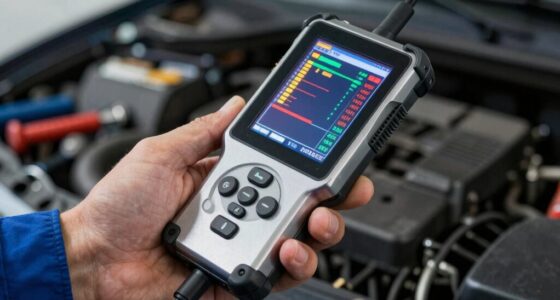

Using a code reader can give you a false sense of confidence because it only shows specific error codes without indicating how serious or urgent the issues are. It might make you believe the problem is simple to fix or not important, but these tools don’t reveal the full state of your vehicle. If you want to understand the real risks and limitations, keep exploring—there’s more to learn about safe vehicle diagnostics.

Get business pricing on garage and car supplies
- Business-only prices and quantity discounts
- Tax-exempt purchasing
- Multiple users, one account, clear invoices
Key Takeaways
- Code readers provide simplified error codes that can lead drivers to overestimate their vehicle’s overall health.
- The user-friendly interface may create a false sense of expertise, encouraging independent repairs.
- Clearing codes without professional inspection might hide underlying issues, fostering misplaced confidence.
- Drivers may rely solely on codes, ignoring other warning signs and delaying necessary professional diagnostics.
- The limited scope of code readers can cause drivers to underestimate vehicle complexity and overlook serious problems.
In today’s driving landscape, code readers have become essential tools that boost your confidence behind the wheel. They allow you to quickly identify issues with your vehicle, giving you a sense of control and understanding. However, this sense of empowerment can sometimes be misleading, creating false confidence that may lead you into trouble. The core issue lies in the diagnostic accuracy of these devices. While code readers can efficiently detect certain error codes, they don’t always tell the full story. A code might indicate a problem, but it doesn’t specify the severity or whether it’s an immediate concern or a harmless glitch. Relying solely on these readings can lead you to misinterpret the health of your vehicle, causing unnecessary worry or, worse, neglecting real issues that need urgent attention. The user experience of these tools also plays a significant role. Many code readers are designed to be user-friendly, which is a double-edged sword. Their simplicity might lead you to believe you fully understand your vehicle’s condition, but in reality, you’re only seeing a surface-level snapshot. This can foster a false sense of mastery, convincing you that you can troubleshoot or even fix problems without professional help. The problem escalates if you ignore the limitations of these devices. Because they can’t replace an exhaustive diagnostic process, you might overlook deeper issues that require specialized equipment and expertise. Instead, you might assume that clearing a code solves the problem, only for the warning to reappear later. When you depend on a code reader for quick fixes, you risk underestimating the complexity of vehicle maintenance. This false confidence can make you less cautious, leading to neglecting regular maintenance or ignoring warning signs that aren’t coded. It’s essential to remember that these tools are just aids, not complete solutions. They’re best used as initial indicators rather than definitive diagnostic tools. You should always corroborate their findings with professional advice or further inspection. Additionally, understanding the limitations of diagnostic tools is crucial to prevent overreliance and ensure safe vehicle operation. Recognizing that diagnostic tools provide surface-level information helps you maintain realistic expectations about their capabilities. While code readers are valuable for providing quick insights and enhancing your understanding, they shouldn’t replace your judgment or a mechanic’s expertise. Overconfidence in their ease of use and perceived diagnostic precision can cause you to overlook critical issues or delay necessary repairs. To truly ensure vehicle safety, it’s important to acknowledge that diagnostic tools are only part of the diagnostic process. Proper use, combined with professional diagnostics when needed, keeps your vehicle running smoothly and your driving experience secure. Additionally, being aware of accuracy limitations helps in making more informed decisions and avoiding unnecessary repairs.
As an affiliate, we earn on qualifying purchases.
Frequently Asked Questions
How Accurate Are Code Readers in Diagnosing Vehicle Issues?
Code readers generally offer good diagnostic accuracy for identifying specific issues, but they aren’t foolproof. You need to be cautious because user interpretation can lead to misdiagnosis. While the tool pinpoints potential problems, it doesn’t always tell you the root cause. Relying solely on a code reader might give you false confidence, so it’s best to combine its insights with professional inspection for accurate diagnosis and proper repairs.
Can Code Readers Replace Professional Mechanic Inspections?
Code readers can’t fully replace professional mechanic inspections because of their diagnostic limitations. While they provide quick insights into engine trouble codes, they don’t capture all underlying issues or interpret complex problems. Relying solely on user interpretation can lead to false confidence. For accurate diagnosis and safe repairs, it’s best to consult a professional mechanic who can perform thorough inspections beyond what code readers can offer.
Do All Vehicles Support Universal Code Readers?
Think of a universal code reader as a key that might not fit every lock. Vehicle compatibility varies, so not all cars support universal code readers perfectly. While these devices can be handy, code reader limitations mean they might miss deeper issues or specific manufacturer codes. Always remember, a code reader is a helpful tool but isn’t a substitute for professional diagnostics, especially with complex or unique vehicle systems.
How Often Should I Use a Code Reader for Maintenance?
You should use a code reader regularly for DIY diagnostics, especially when you notice changes in your vehicle’s performance. A good rule of thumb is to scan your car every few months or if the Check Engine light comes on. This helps you stay aware of potential issues and improves your user experience. Frequent checks prevent small problems from turning into costly repairs, keeping your vehicle running smoothly and confidently.
What Limitations Do Code Readers Have in Troubleshooting?
Code readers have limitations in troubleshooting because sensor limitations can prevent them from detecting all issues, especially with complex or newer systems. Software inaccuracies may lead to incorrect or incomplete diagnoses, causing you to miss underlying problems. Relying solely on code readers can give you false confidence, as they don’t always capture the full picture. For thorough troubleshooting, you should combine code reader data with manual inspections and professional assessments.
professional vehicle diagnostic scanner
As an affiliate, we earn on qualifying purchases.
As an affiliate, we earn on qualifying purchases.
Conclusion
You might think code readers boost your confidence, but they can be deceiving. Studies show that nearly 60% of drivers relying solely on these devices overlook underlying issues, giving a false sense of security. While quick diagnostics seem helpful, they can hide serious problems. So, don’t let technology fool you—trust your instincts and get professional inspections when in doubt. Remember, a false confidence today could lead to costly repairs tomorrow.
As an affiliate, we earn on qualifying purchases.
As an affiliate, we earn on qualifying purchases.
Halloween Picks
halloween
As an affiliate, we earn on qualifying purchases.