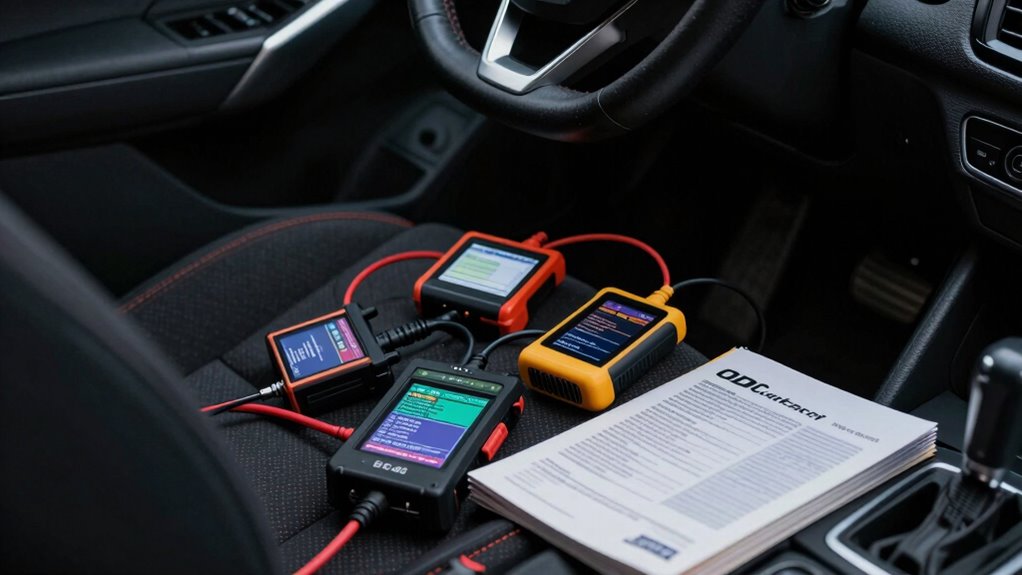
Many drivers make the mistake of clearing OBD2 trouble codes without understanding what they mean or fixing the underlying problem. This often masks issues, triggering repeated warnings or worsening damage over time. Rushing to clear codes without verifying sensor calibration or inspecting related components can lead to bigger repair costs later. If you want to avoid common pitfalls and get your vehicle truly fixed, there’s more to learn that can save you money and frustration.
Listen free for 30 days with Audible
Thousands of audiobooks and originals — cancel anytime.
As an affiliate, we earn on qualifying purchases.
Key Takeaways
- Clearing trouble codes without understanding their meaning can hide underlying issues and lead to recurring problems.
- Relying solely on OBD2 codes without verifying sensor calibration may result in inaccurate diagnostics.
- Ignoring the need for proper diagnostic procedures and thorough follow-up can cause missed root causes.
- Resetting warning lights prematurely prevents accurate assessment of whether repairs are effective.
- Skipping detailed inspection and proper calibration risks masking issues, leading to costly repairs later.
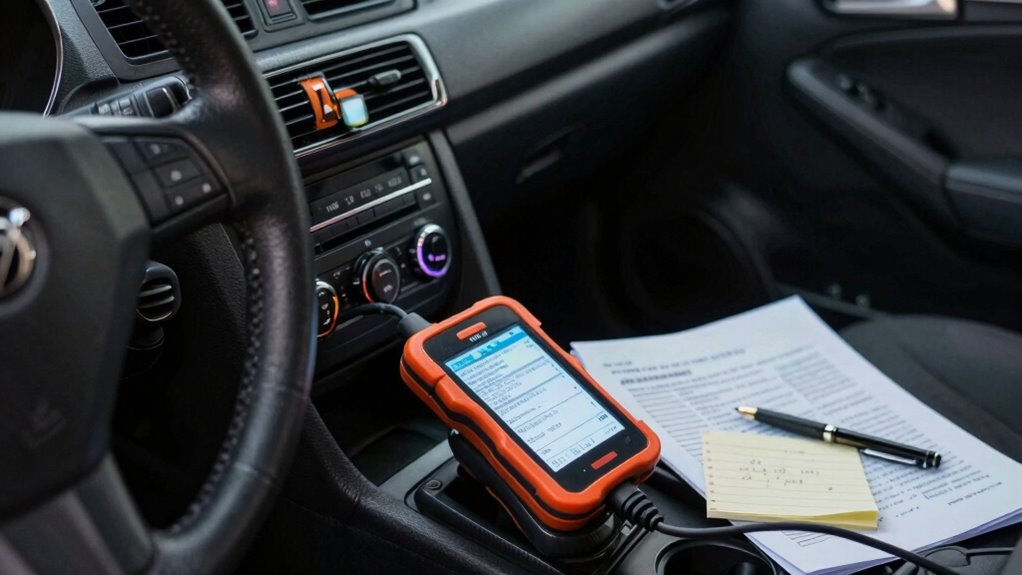
Using your OBD2 scanner might seem straightforward, but many drivers make common mistakes that can lead to misdiagnosis or overlooked issues. One of the biggest errors is jumping straight to clearing codes without understanding what they mean or guaranteeing the sensors are properly calibrated. When you see a warning light, it’s tempting to hit “clear” and hope the problem goes away. But if you don’t investigate the root cause first, you risk masking underlying issues that could worsen over time. Sensor calibration is vital here—many modern vehicles rely on precise sensor data to monitor engine performance and emissions. If sensors aren’t calibrated correctly, you might get inaccurate readings, which can mislead your diagnosis. Failing to verify sensor calibration before clearing codes could mean you’re solving the wrong problem or simply hiding symptoms temporarily. Additionally, understanding Sensor calibration is crucial for accurate diagnostics and effective repairs. Recognizing diagnostic procedures can help ensure you’re following the correct steps for your specific vehicle model, especially since different vehicles may require unique calibration protocols. It’s also important to note that some vehicles have built-in safeguards that prevent certain codes from being cleared immediately without proper procedures, which can prevent unnecessary damage.
Another mistake drivers often make is relying solely on the scanner’s code readout without digging deeper. The trouble codes provide a starting point, but they don’t tell the full story. For example, a code related to the oxygen sensor might trigger, but that sensor could just be reacting to a different issue, like a vacuum leak or faulty wiring. Instead of immediately clearing that code and assuming everything’s fine, you should take the time to understand what caused it in the first place. Proper diagnosis involves checking sensor calibration, inspecting wiring, and verifying that all related components are functioning correctly before resetting the system. Skipping these steps can lead to recurring problems that will eventually require more extensive repairs. Many drivers also overlook the importance of rechecking after clearing codes. Once you’ve addressed what you think is the issue—whether that’s replacing a sensor or fixing a leak—you should run another scan to confirm the problem has been resolved. If you clear codes prematurely, you might miss ongoing issues or new problems that arise once the vehicle is back on the road. This step ensures you’re not just temporarily hiding warning lights but actually fixing the root cause.
In short, before heading to a shop, make sure you understand the significance of sensor calibration and resist the urge to clear codes without proper investigation. Take the time to interpret what the scanner reports, verify sensor accuracy, and perform follow-up scans. These steps help you avoid unnecessary repairs, save money, and guarantee your vehicle’s issues are genuinely resolved. Skipping these precautions can lead to bigger problems down the line, so approach your OBD2 scans with patience and care to make the most of your diagnostic efforts. Proper diagnostic approach can also help you build confidence in understanding your vehicle’s health and prevent costly mistakes. Developing a comprehensive diagnostic process ensures you aren’t just reacting to symptoms but addressing the root causes with a thorough understanding.
OBD2 scanner with sensor calibration
As an affiliate, we earn on qualifying purchases.
As an affiliate, we earn on qualifying purchases.
Frequently Asked Questions
Can OBD2 Codes Reveal All Vehicle Issues?
OBD2 codes reveal many issues, but they don’t show everything. They mainly focus on sensor diagnostics and emission testing, helping you identify problems linked to engine performance and emissions. However, some mechanical issues or complex electrical faults might not trigger codes. So, while OBD2 codes are useful for initial diagnostics, you still need a professional inspection for a complete assessment of your vehicle’s condition.
How Often Should I Clear OBD2 Fault Codes?
You should clear OBD2 fault codes cautiously and sparingly, usually only after repairs or when diagnostics confirm the issue’s resolution. Frequent clearing can mask ongoing problems, risking diagnostic limitations and misinterpretation of codes. Remember, codes are clues, not conclusions. Clearing them too often may erase valuable data, making future diagnostics trickier. Trust your mechanic’s advice, and only clear codes when you’re confident the problem’s fixed and ready for reassessment.
Do All Cars Have Compatible OBD2 Ports?
Not all cars have compatible OBD2 ports, especially older models made before 1996 in the US or certain imports. You need to check your vehicle’s OBD2 compatibility first, as scanner limitations can affect diagnosis. If your car isn’t compatible, an OBD2 scanner won’t work, and you’ll need a different diagnostic tool or professional help. Always verify compatibility to avoid wasting money on incompatible devices.
Can I Use a Generic OBD2 Scanner for My Vehicle?
Yes, you can use a generic OBD2 scanner for your vehicle, but you should check vehicle compatibility first. Not all scanners work equally well with every make and model, so confirm yours supports your vehicle’s specific system. Keep in mind, scanner accuracy can vary; cheaper models might miss some codes or give false readings. Investing in a reputable scanner ensures you get reliable data, helping you diagnose issues effectively before visiting a shop.
Are There Risks in Ignoring OBD2 Warning Lights?
Ignoring dashboard warnings can be risky, as those signals often flag issues that, if left untreated, lead to costly repairs or breakdowns. You might think you’re saving time with maintenance delays, but neglecting warning lights increases the chance of engine damage or safety hazards. Stay alert to OBD2 alerts—they’re your car’s way of telling you something’s wrong. Addressing them promptly keeps your vehicle running smoothly and prevents bigger problems down the road.
vehicle diagnostic tool for troubleshooting codes
As an affiliate, we earn on qualifying purchases.
As an affiliate, we earn on qualifying purchases.
Conclusion
By ignoring common OBD2 mistakes, you risk turning a simple fix into a costly puzzle. Think of your vehicle as a delicate dance partner—ignoring warning signs only leads to missed steps and potential crashes down the road. Stay informed, read those codes carefully, and don’t rush to the shop without proper knowledge. With a little awareness, you’ll keep your car humming smoothly, transforming potential chaos into a symphony of reliability.
OBD2 code reader with reset function
As an affiliate, we earn on qualifying purchases.
As an affiliate, we earn on qualifying purchases.
automotive sensor calibration kit
As an affiliate, we earn on qualifying purchases.
As an affiliate, we earn on qualifying purchases.
College move-in / dorm season Picks
dorm essentials
As an affiliate, we earn on qualifying purchases.