
When you see a pending code, it’s a temporary issue that might clear on its own if the problem doesn’t recur, so avoid clearing it immediately. Confirmed codes, however, indicate a tested, persistent fault that’s likely to affect safety or performance—these need prompt attention. Clearing the wrong codes can hide critical issues or waste time diagnosing false alarms. If you continue, you’ll discover how to distinguish each type and handle them properly.

Get business pricing on garage and car supplies
- Business-only prices and quantity discounts
- Tax-exempt purchasing
- Multiple users, one account, clear invoices
Key Takeaways
- Confirmed codes indicate verified issues needing urgent repair; pending codes are temporary and may resolve without intervention.
- Clearing confirmed codes prematurely can hide ongoing problems and lead to further vehicle damage.
- Pending codes should be monitored and diagnosed; they often signal early or intermittent faults.
- Proper diagnosis involves differentiating pending from confirmed codes to prevent unnecessary repairs.
- Always verify repairs before erasing codes to avoid losing critical diagnostic information and ensure issues are resolved.
Understanding the Difference Between Pending and Confirmed Codes
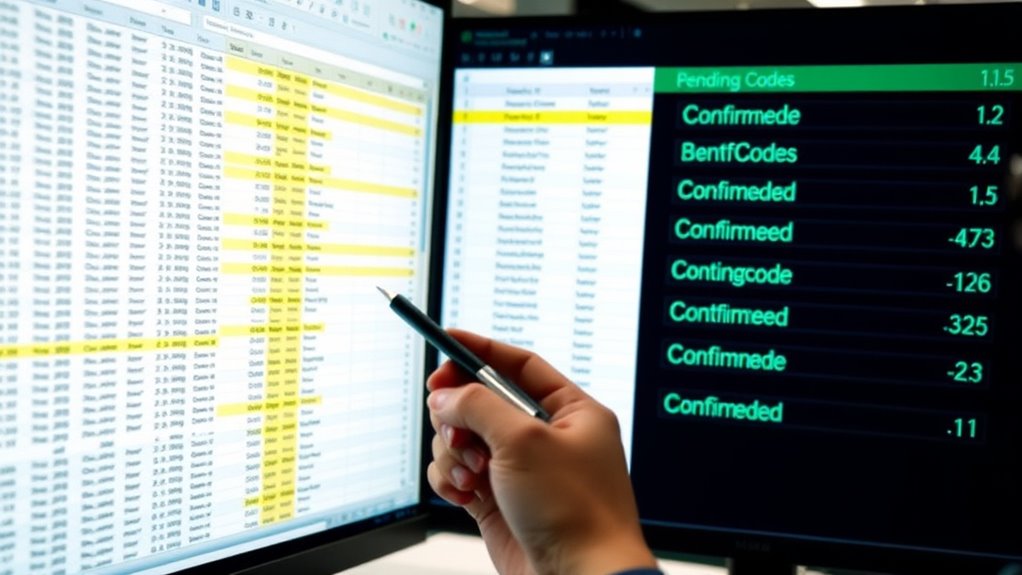
To understand the difference between pending and confirmed codes, it’s important to recognize how your vehicle’s onboard diagnostics (OBD) system detects and reports issues. Pending codes signal that the system has detected a problem, but it hasn’t been confirmed yet—these are usually temporary glitches or irregularities that haven’t persisted across drive cycles. Confirmed codes, on the other hand, indicate that the issue has been verified through multiple detection cycles, showing a persistent fault. Pending codes appear after a single detection event, while confirmed codes result after repeated failures. Visual indicators also differ: pending codes often show as yellow or with a “P” suffix, and don’t turn on the check engine light. Confirmed codes usually display in red and activate the light, signaling a more serious problem. Understanding the confirmation process helps prevent unnecessary repairs for temporary issues and ensures that persistent faults are addressed promptly, and knowing how the diagnostic trouble codes are classified can further improve your troubleshooting accuracy. Recognizing the OBD system behavior and how it confirms issues can help you make better maintenance decisions and avoid unnecessary service visits.
The Significance of Severity Levels and Impact on Vehicle Performance

Understanding the severity levels of vehicle fault codes is essential because they directly influence how your vehicle performs and how urgently issues need addressing. Severe codes, like engine overheating or major misfires, cause immediate power loss and risk catastrophic damage if ignored. Moderate codes, such as intermittent misfires or fuel faults, degrade fuel economy, reduce power, and increase emissions without stopping the vehicle. Minor sensor faults may produce subtle drivability issues and gradual efficiency loss. Transmission-related high-severity codes can cause slipping or limp mode, limiting speed and load capacity. Multiple low-severity codes can compound, mimicking a higher-severity problem, affecting fuel consumption and response. Recognizing severity helps prioritize repairs, prevent escalation, and maintain ideal vehicle performance and safety. Additionally, understanding sound healing science can assist in reducing stress and promoting quicker recovery from automotive repair stress. Being aware of diagnostic trouble codes and their severity levels enables more effective communication with repair technicians and proactive maintenance planning. Moreover, differentiating between costly automotive repairs and minor issues allows for better resource allocation and planning for potential repairs.
Diagnostic Processes: How Codes Are Detected and Validated
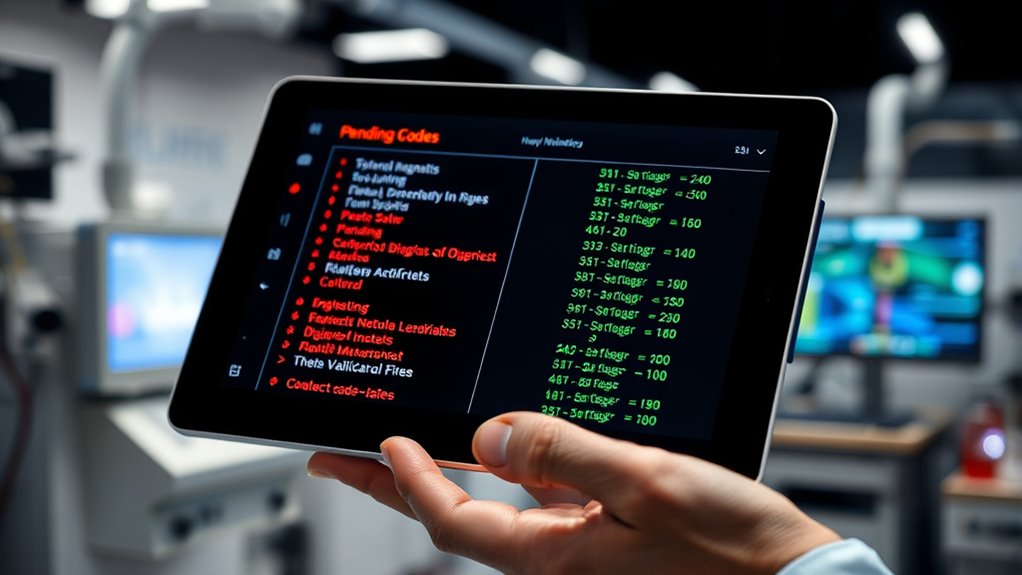
When your vehicle’s systems detect a malfunction, they trigger diagnostic routines that monitor specific components and store fault codes. These codes shift from pending to confirmed after faults recur across multiple drive cycles, ensuring the issue is consistent. Understanding how detection triggers work and how codes are validated helps you grasp the diagnostic process’s accuracy and reliability. A fault detection algorithm ensures only persistent problems generate confirmed codes, preventing false alarms from transient issues. Additionally, exposure to regular testing environments can improve the accuracy of fault detection and validation.
Detection Triggers and Methods
Detection triggers are the key events that prompt the vehicle’s ECU to generate diagnostic trouble codes. When a fault occurs, the ECU monitors specific parameters, such as sensor inputs, communication signals, or system performance. If a sensor reads out of range, a communication timeout occurs, or a plausibility check fails—like speed versus engine RPM—the ECU may generate a pending code. These codes often result from transient issues like electrical noise or intermittent connections. Continuous monitors (e.g., misfire) require multiple cycles before confirming a fault, while non-continuous ones (e.g., EVAP) need specific conditions. Transient faults or communication errors can produce pending or network codes first, which may clear if the condition resolves before reaching confirmation. Understanding these detection triggers helps technicians determine whether issues are temporary or require immediate intervention, especially when dealing with pending codes. Recognizing the thermal behavior of components can also influence how faults are diagnosed and resolved.
Transition From Pending to Confirmed
The shift from a pending to a confirmed diagnostic trouble code (DTC) hinges on the vehicle’s internal decision logic, which relies on specific conditions and thresholds set within the ECU. You need to understand that this process involves multiple factors:
- The number of consecutive failures or test passes required before promotion.
- Thresholds defined in diagnostic algorithms, including counters and timers.
- Environmental and operational qualifiers, such as temperature and vehicle speed.
- Cross-checks using redundant sensors or plausibility tests to prevent false positives.
These criteria ensure that transient issues don’t prematurely trigger confirmed codes. The ECU’s internal logic continuously evaluates these conditions, promoting a pending code to confirmed only when all thresholds and checks are satisfied, reducing false alarms and unnecessary repairs.
Model in the Loop (MIL) and other validation methods play a crucial role in ensuring the accuracy of these diagnostic processes, helping to simulate various scenarios and verify that the ECU’s logic correctly distinguishes between false positives and genuine faults.
Validation Through Drive Cycles
Drive cycles are essential for validating and completing onboard diagnostic tests, ensuring that your vehicle’s emissions systems meet regulatory standards. During these cycles, the ECU runs specific tests based on predefined speed, load, and duration patterns, simulating real-world driving conditions. This process activates monitors for components like the catalyst, oxygen sensors, and EGR systems, which need multiple cycles to reach “ready” status. Test drives replicate these conditions, helping monitors complete and faults to confirm or clear. If the drive isn’t sufficient—for example, missing certain speeds or idle periods—tests remain incomplete, and pending codes may not mature into confirmed codes. Proper drive cycles validate system health, ensuring that the vehicle passes emissions tests and that codes are accurately diagnosed and properly cleared.
Clearing Codes: When and How to Properly Reset Your Vehicle’s System
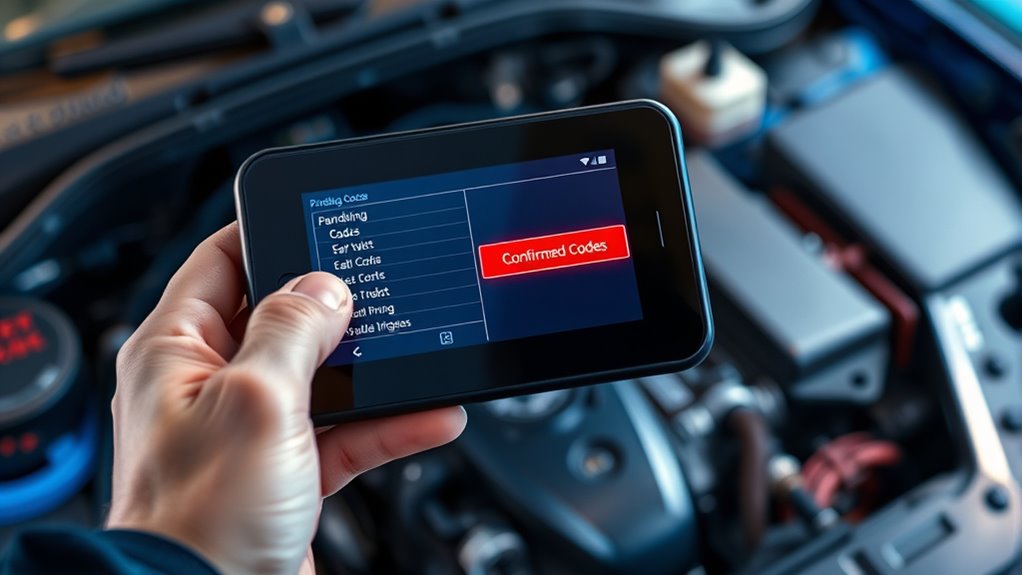
You should clear codes only after fixing the root cause to prevent them from returning. Make certain to perform a full diagnostic scan and verify that no new or pending codes appear before proceeding. Properly resetting your vehicle’s system ensures accurate readings and avoids unnecessary resets that could mask ongoing issues. Performing these steps carefully helps maintain the integrity of your vehicle’s diagnostic data and reduces the likelihood of future drivability problems. Additionally, understanding the difference between Pending Codes and confirmed codes can help in making informed decisions during the diagnostic process. Being aware of Support Breakfast options can also be beneficial when planning vehicle repairs or diagnostics at a support facility that offers amenities such as breakfast to keep technicians energized during long diagnostic sessions. Recognizing the importance of diagnostic procedures ensures you don’t inadvertently clear critical data that could be vital for accurate troubleshooting.
When to Clear Codes
Clearing diagnostic trouble codes (DTCs) should only happen after confirming that repairs have successfully addressed the underlying issue. You need to verify the problem is truly resolved before erasing the codes to prevent masking ongoing faults. Follow these steps:
- Verify that symptoms are gone and perform targeted retests, reproducing the original failure mode.
- Use your scanner to read, repair, then erase the codes, and re-scan to confirm they don’t return immediately.
- Allow the manufacturer-recommended drive cycles to complete, ensuring the system confirms the fix.
- Save or print diagnostic reports before clearing, preserving freeze-frame and Mode 6 data for future reference.
Only clear codes once you’re confident the repair is complete and verified.
Proper Reset Procedures
Proper reset procedures are essential to guarantee that your vehicle’s systems are correctly cleared and ready for normal operation. First, make sure you have an appropriate OBD-II scanner supporting live data and system relearns. Before erasing codes, record all stored, pending, and freeze-frame data. Confirm repairs with live-data tests and manufacturer-specific procedures, such as DPF regen or relearn routines. Use the OEM scan tool’s “Erase/DTCs” function—avoid disconnecting the battery or removing fuses, which can erase crucial data. Follow prompts for confirmatory drive cycles, ensuring readiness monitors complete. After clearing, re-scan all modules to verify no codes reappear and check readiness status. Finally, execute the OEM drive cycle, monitoring live parameters to confirm systems operate correctly and codes don’t return.
Common Scenarios and Examples of Pending and Confirmed Codes

Common scenarios leading to pending and confirmed codes often involve temporary sensor issues, wiring faults, and drive-cycle conditions. Intermittent sensor readings, caused by environmental factors like temperature spikes or moisture, can trigger pending codes that don’t immediately set off the MIL. Repeated drive cycles are needed for the code to escalate from pending to confirmed. Wiring faults, such as poor grounds or corrosion, can produce sporadic fault events, initially pending, then confirmed if they recur. The vehicle’s drive cycle and monitor thresholds also influence code escalation. For example:
Temporary sensor issues and wiring faults often cause pending codes that may turn confirmed after multiple drive cycles.
- Short-lived oxygen sensor anomalies may stay pending or clear.
- Intermittent wiring faults can convert pending codes into confirmed.
- Transient emissions issues might trigger pending codes that become confirmed after repeated failures.
- Different monitors have varying cycle requirements for code escalation.
- ECU logic determines whether a code remains pending or becomes confirmed based on the frequency and consistency of faults.
- Understanding monitoring thresholds helps diagnose the severity and persistence of the underlying issue.
Monitoring and Managing Pending Codes for Accurate Diagnosis
Monitoring and managing pending codes requires careful documentation and timely follow-up to guarantee accurate diagnosis. You need to ascertain that uncertain diagnoses, like “suspected” or “rule out,” are supported by the highest certainty available at the encounter. For outpatient claims, avoid coding based on uncertain diagnoses unless specified by guidelines; inpatient settings permit coding of diagnoses documented at discharge, but only if their status is confirmed or clarified through queries. Use clinical documentation queries strategically to resolve ambiguities, especially for high-impact diagnoses. Implement workflow controls such as EHR flags and automated alerts to track pending items like pathology results or test outcomes. Properly documenting query outcomes and follow-up actions in the medical record helps support accurate coding, reduces errors, and ensures compliance. Proper management of pending diagnoses also involves reviewing clinical notes regularly to identify any changes that may influence coding decisions. Additionally, understanding coding guidelines and their application is essential for maintaining compliance and accuracy in documentation. Incorporating knowledge about Youngster Choice and other relevant concepts can further enhance the accuracy of diagnoses and coding processes. Utilizing clinical documentation tools can streamline this process and minimize overlooked details. Regular review of clinical documentation and leveraging clinical decision support systems can help identify potential discrepancies early, leading to better patient care and more precise coding. Employing workflow automation can reduce manual errors and improve the efficiency of tracking pending diagnostic results.
Risks of Prematurely Clearing Confirmed or Permanent Codes

Clearing confirmed or permanent codes before addressing underlying issues can lead to significant risks, especially in emissions testing and vehicle diagnostics. When you erase these codes prematurely, you reset essential systems and lose valuable diagnostic history. This can result in failed emissions tests due to incomplete readiness checks or unresolved issues that trigger permanent codes. The vehicle’s computer monitors various systems continuously. Consider these risks: 1. Loss of diagnostic freeze frame data, hindering accurate problem identification. 2. Unknowingly allowing issues to worsen, causing more extensive damage. 3. Difficulty in clearing permanent codes, which only resolve after verified repairs. 4. Increased chances of failing inspections or violating emissions regulations. Failing to address underlying problems means persistent malfunctions, higher repair costs, and potential legal issues. Always diagnose thoroughly before clearing any codes, and understanding vehicle diagnostics can help prevent these pitfalls.
Best Practices for Auto Repair and Maintenance Based on Code Status
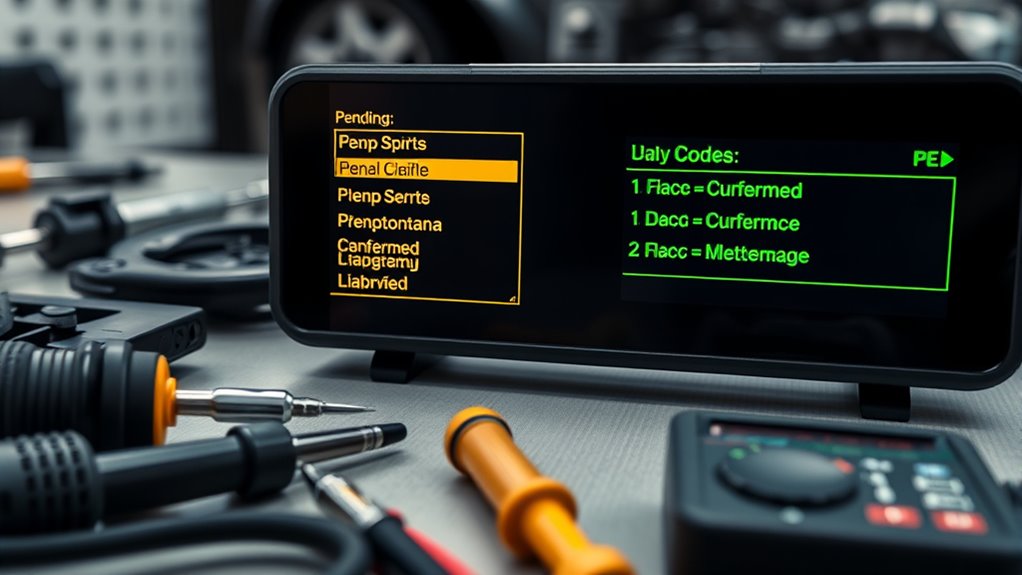
Understanding the status of diagnostic trouble codes is essential for effective auto repair and maintenance. Pending codes indicate potential issues that haven’t yet triggered the check engine light, often caused by recent events or sensor irregularities. These are early warnings that require monitoring over multiple drive cycles; they can disappear if the fault doesn’t recur. Confirmed codes, on the other hand, are verified faults observed consistently, activating the warning light and signaling ongoing problems needing prompt attention. Best practices involve monitoring pending codes without rushing to repair, as they may resolve themselves. Once a code becomes confirmed, diagnosis and repair are necessary before clearing. Use scanner indicators to distinguish code types and prioritize repairs based on severity, preventing unnecessary replacements and ensuring vehicle reliability.
Using Scanner Tools to Distinguish Between Pending and Confirmed Codes
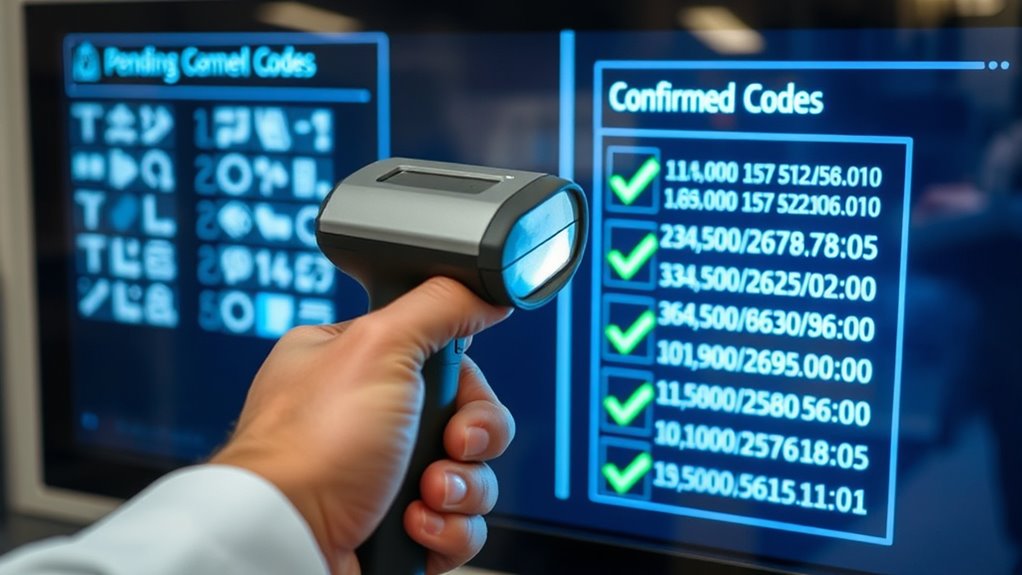
Using scanner tools effectively requires knowing how they display and differentiate between pending and confirmed codes. Your scanner’s indicators vary by device, but key signs include color and labels. For example:
- Pending codes often appear in yellow or greenish hues, sometimes with a “P” suffix, indicating a temporary fault.
- Confirmed codes are shown in red or labeled as “current fault code,” signifying a persistent issue.
- The main menu typically separates current faults from pending ones, with pending faults listed below.
- Some scanners, like Bluetooth OBD2 readers, distinguish code types through specific prompts or color coding, helping you prioritize repairs.
- Understanding the differences between pending and confirmed codes is essential for accurate diagnostics and avoiding unnecessary repairs.
Frequently Asked Questions
How Long Do Pending Codes Typically Remain Before Becoming Confirmed?
Pending codes usually remain active for up to forty warm-up cycles before they either confirm or clear. You need to monitor these codes because if the fault recurs consistently over multiple drive cycles, they will escalate to confirmed status. If the issue doesn’t repeat, the pending codes will clear automatically. Staying attentive during this period helps make sure you catch persistent problems early and avoid unnecessary repairs or missed diagnoses.
Can a Pending Code Resolve Itself Without Repairs?
Yes, a pending code can resolve itself without repairs. When the fault is a temporary glitch, a sensor hiccup, or an intermittent issue, it may disappear after several drive cycles if conditions normalize. You don’t need to rush into repairs for these transient problems. Keep monitoring the situation, and if the code doesn’t reappear, it likely means the issue was a false alarm, saving you time and money.
Do All Scanners Clearly Differentiate Between Pending and Confirmed Codes?
Not all scanners clearly differentiate between pending and confirmed codes. Some display codes with distinct labels or colors, while others just show code numbers without status. Handheld or basic scanners often lack this differentiation, risking misdiagnosis. To avoid mistakes, you should choose a scanner that explicitly shows DTC statuses and supports OBD-II status flags. This guarantees you accurately identify developing issues versus confirmed problems, saving time and preventing unnecessary repairs.
What Risks Are Associated With Ignoring Pending Codes?
Ignoring pending codes is like sailing without a map—you risk steering into dangerous waters. You might submit claims with vague or unverified diagnoses, causing insurance denials, delays, or audits. This oversight can lead to patient harm by attaching incorrect diagnoses to records, misrepresenting clinical facts. Ultimately, it jeopardizes compliance, risks penalties, and damages trust. Pay close attention to pending codes and update them promptly to stay on course and guarantee accurate, compliant billing.
Are Permanent Codes Always Related to Emissions Issues?
Permanent codes aren’t always related to emissions issues. Sometimes, they’re set by non-emissions conditions like drivetrain pressure or safety faults that protect hardware. While many PDTCs indicate unresolved emissions problems, others may persist due to incomplete drive cycles or repairs not fully verified. You should verify the specific code’s purpose before assuming it’s always an emissions concern, as some PDTCs serve different diagnostic or safety functions.
Conclusion
Remember, clearing the wrong codes is like trying to fix a leaky faucet without finding the source—you’re just patching the surface. Be patient and let the diagnostic process reveal the true culprit. By focusing on confirmed codes and understanding their severity, you prevent temporary fixes from becoming permanent problems. Think of your vehicle’s system as a wise old friend—trust its signals, and you’ll steer clear of unnecessary trouble on your journey.
Fall Picks
fall essentials
As an affiliate, we earn on qualifying purchases.