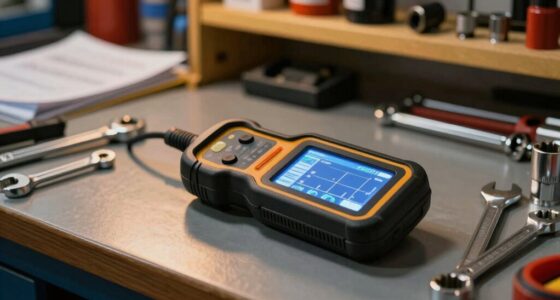
To use basic scan data without playing mechanic, start by connecting your scan tool to your vehicle’s OBD-II port and note down any trouble codes it displays. Look up these codes online or in your vehicle manual to understand what they mean. Check related warning lights and monitor real-time data like engine temperature or fuel efficiency. Recognizing patterns and understanding simple issues can help you make informed decisions, and if you keep exploring, you’ll get better at managing your vehicle’s health.
Listen free for 30 days with Audible
Thousands of audiobooks and originals — cancel anytime.
As an affiliate, we earn on qualifying purchases.
Key Takeaways
- Familiarize yourself with common codes and their meanings using online resources or vehicle manuals.
- Use scan tool explanations to connect codes to specific vehicle systems or issues.
- Prioritize simple fixes like checking the gas cap or sensors before considering complex repairs.
- Track and document recurring codes and symptoms to identify patterns and assess severity.
- Use live data streams to monitor engine parameters and catch potential problems early.

Are you wondering how to make the most of your basic scan data? You don’t need to be a mechanic to understand what your vehicle diagnostics are telling you. Modern scan tools provide valuable information about your car’s health, and with a little knowledge of data interpretation, you can identify potential issues before they become major problems. When you connect your scan tool to your vehicle, it pulls codes and data that reveal how different systems are functioning. Your job is to interpret this data accurately to decide whether a repair is necessary or if you can hold off for now.
Understanding vehicle diagnostics starts with recognizing what the scan data means. Each code or reading corresponds to a specific system or component in your vehicle. For example, an engine trouble code might point to a sensor malfunction or a misfire, while data on oxygen sensors can indicate exhaust system efficiency. Instead of getting overwhelmed, focus on the basics: note the codes and what areas they relate to. Your scan tool often provides an explanation, but it’s up to you to connect the dots. For instance, if multiple codes point to the fuel system, it might suggest a common issue like a clogged filter or a failing pump. Recognizing how vehicle diagnostics work can help you better understand what’s happening under the hood. Knowing how to interpret diagnostic data can also help you communicate more effectively with a mechanic if needed.
Data interpretation is key to making smart decisions about vehicle diagnostics. Once you have the codes, research their meanings using online resources or your vehicle’s manual. Sometimes, codes are simple to resolve, such as tightening a loose gas cap or replacing a sensor, while other times they might signal a more complex problem. Don’t jump to conclusions; use the information to prioritize repairs. If a warning light appears on your dash, check the related codes first to understand the severity. Not every code demands immediate repair—some are informational, and others are urgent.
You can also use basic scan data to track your vehicle’s performance over time. Keep a record of codes and symptoms, noting when they occur and disappear. This helps you see patterns and determine whether an issue is recurring or temporary. Additionally, some scan tools offer live data streams, showing real-time engine parameters. Monitoring these can give you insights into how your vehicle operates under different conditions, helping you catch problems early.
In essence, you don’t need to be a mechanic to leverage vehicle diagnostics effectively. By understanding data interpretation and paying attention to the codes, you gain a clearer picture of your vehicle’s health. This knowledge empowers you to make informed decisions, potentially saving money and avoiding breakdowns—all without playing mechanic. Instead, you become your own diagnostic assistant, capable of identifying issues before they escalate.
As an affiliate, we earn on qualifying purchases.
Frequently Asked Questions
Can I Interpret Scan Data Without Technical Training?
Yes, you can interpret scan data without technical training if you use user-friendly interfaces designed for non-experts. These tools simplify technical jargon, making it easier to understand key information. While some basic knowledge helps, most modern scan tools guide you through the process step-by-step. Focus on visual cues and clear instructions, and you’ll be able to interpret scan data effectively without becoming a mechanic or needing advanced technical skills.
What Tools Are Needed to Access Basic Scan Data?
Did you know that over 80% of diagnostic issues can be identified using basic scan data? To access this data, you’ll need diagnostic tools like an OBD-II scanner or code reader. These tools connect to your vehicle’s system and provide clear, easy-to-understand data. With them, you can interpret scan data effectively, even without technical training, making troubleshooting more accessible and efficient.
Is There a Cost Associated With Using Scan Data?
Using basic scan data usually doesn’t involve significant cost implications, as many tools offer free or low-cost access options. However, some advanced features or extensive data analysis might require a subscription or one-time fee. Be mindful of data privacy concerns; make certain you trust the source and understand how your data is being used. Always review terms and conditions to protect your information and avoid unexpected charges.
How Accurate Is Basic Scan Data for Diagnostics?
Basic scan data is generally quite accurate for diagnostics, thanks to good calibration accuracy. However, its data reliability depends on the scanner’s quality and proper use. You can trust the information for identifying common issues, but for complex problems, it’s wise to seek professional insights. Regular calibration checks guarantee the data remains accurate, helping you make informed decisions without needing extensive mechanic expertise.
Can Scan Data Be Used for Preventative Maintenance?
Yes, you can use scan data for preventative maintenance. By monitoring sensor calibration and regularly reviewing data trends, you catch issues early before they become costly. Guarantee data security by protecting the scan information from unauthorized access. This proactive approach helps you schedule maintenance efficiently, reduces downtime, and extends your vehicle’s lifespan, all without needing to be a mechanic.
As an affiliate, we earn on qualifying purchases.
Conclusion
So, there you have it—mastering basic scan data without relying on gameplay mechanics proves surprisingly straightforward. Who knew that understanding your data could be as simple as ignoring the usual tricks? It’s almost poetic—sometimes, the most advanced insights come from the least complicated approach. So, enjoy the irony; by stripping away the gimmicks, you might just discover a more genuine connection to your data, all without the distraction of playing mechanics.
As an affiliate, we earn on qualifying purchases.
As an affiliate, we earn on qualifying purchases.
NFL season / tailgating Picks
team gear
As an affiliate, we earn on qualifying purchases.