TL;DR

Get business pricing on garage and car supplies
- Business-only prices and quantity discounts
- Tax-exempt purchasing
- Multiple users, one account, clear invoices
Vehicle Data Global analysis says average car engine power output rose 28.9% over just over 20 years, while average engine capacity fell 7.8% from 2005 to 2025. Smaller turbocharged engines and hybrid assistance helped more cars reach power levels that were once unusual in engines of 1.5 litres or less. The analysis also says engine downsizing has slowed in recent years even as average power continued to rise.
Average car power output rose 28.9% over just over 20 years as engines became smaller, according to analysis by data technology company Vehicle Data Global (VDG). The figures describe a shift in new-car registrations, with turbocharging and hybrid systems helping smaller powertrains deliver output once associated with older performance models.
VDG’s analysis found that average engine capacity fell 7.8%, from 1,771cc in 2005 to 1,633cc in 2025. Over the same period, average power per litre rose 42.9% to 69.1kW per litre. Median engine capacity declined from 1,599cc to 1,498cc, while median power increased from about 107bhp to 138bhp.
The data also points to a wider change in how common higher-output small engines have become. VDG counted 8,500 registrations in 2005 for cars making at least 134bhp from engines of 1.5 litres or less. The figure reached 444,000 registrations last year, which VDG said represented 26.7% of all registrations, compared with 0.4% in 2005.
Examples cited by VDG include the Skoda Octavia 1.5 TSI e-TEC, rated at 150PS, and the Nissan Qashqai 1.3 DIG-T mild hybrid, which the analysis puts at about 156bhp. The Ford Puma 1.0 EcoBoost mild hybrid is listed at about 153bhp. These comparisons illustrate output, not equivalent performance: vehicle weight, gearing, torque delivery, emissions systems and the way power is measured also affect how a car drives.
More Power From Smaller Engines
The figures help explain why buyers can find family cars with power ratings comparable to older hot hatches without choosing a large-displacement engine. That matters for manufacturers responding to emissions rules and for consumers weighing power, fuel use, purchase price and maintenance. Engine capacity alone is no longer a reliable shorthand for a car’s output.
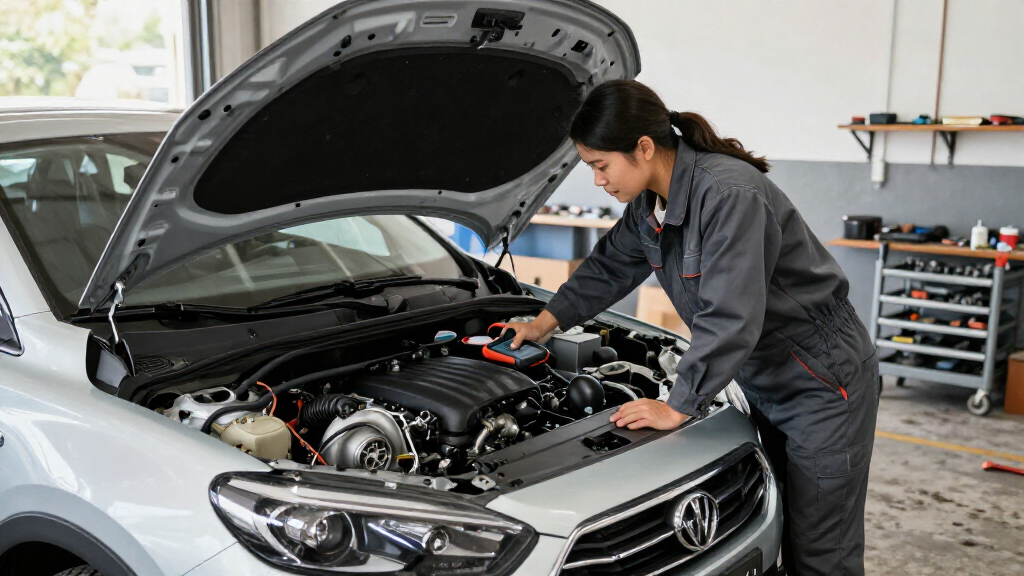
VDG attributes the change to turbocharging and hybrid assistance. A turbocharger pushes compressed air into the engine, allowing more power from a smaller combustion engine. Mild-hybrid systems can add electric assistance, though the reported power figures in VDG’s analysis include electric-motor contributions where applicable. They should not be read as a direct measure of combustion-engine output alone.
OBD2 scanner turbo boost pressure live data
As an affiliate, we earn on qualifying purchases.
As an affiliate, we earn on qualifying purchases.
How the Comparison Was Measured
VDG compared vehicle-registration and powertrain data across time, including a 2005-to-2025 view of engine capacity and output. Its headline finding is a 28.9% increase in power output over just over 20 years; the source material does not provide the underlying calculation or a more precise definition of the measure behind that headline. Other measures are specified separately: average capacity, median capacity, median power and power per litre.
The report uses older performance cars as familiar reference points. VDG says the current Octavia 1.5 TSI e-TEC has power equivalent to the Vauxhall Astra GSi and Renault Clio Williams of the 1990s. It compares the Qashqai’s output with an early-1970s Triumph TR6 PI and says the Puma’s approximately 153bhp exceeds the 132bhp Ford Escort RS Turbo figure cited for the 1980s. These are power-output comparisons, not claims that the cars have identical speed, handling or overall performance.
Small engines became more common during part of the period. VDG says 1.0-litre engines accounted for about 3.3% of registrations in 2005, rising to a peak of 18% in 2020 before falling to 14.5% last year. The reported average engine capacity changed little from 2019 to 2025, while average power increased from 105kW to 111kW.
“Nothing illustrates the engineering success of modern car makers better than our analysis of powertrain output increases from ever-shrinking engines over the past 20 years.”
— Ben Hermer, operations director of Vehicle Data Global
car engine oil for turbocharged engines full synthetic
As an affiliate, we earn on qualifying purchases.
As an affiliate, we earn on qualifying purchases.
Limits of the Power Comparisons
The source material does not include VDG’s full methodology, the complete vehicle dataset or details on how the 28.9% headline figure was calculated. It also does not specify whether the measure represents average power across all registered cars or another aggregation, so that headline should be read alongside the individual statistics, which are identified as averages or medians where stated.
Comparisons with older cars remain limited to the figures provided. The source does not adjust for vehicle mass, drivetrain, testing standards, torque or differences between engine-only and combined hybrid-system ratings. VDG explicitly says its hybrid figures include electric-motor contributions. The analysis also does not establish that smaller engines in every driving condition deliver lower fuel use or emissions; those outcomes depend on the vehicle and how it is driven.
OBD2 Bluetooth diagnostic scanner hybrid vehicle
As an affiliate, we earn on qualifying purchases.
As an affiliate, we earn on qualifying purchases.
Whether Downsizing Has Stalled
VDG’s data suggests the decline in average engine capacity has slowed: it reports a small change from about 1,645cc in 2019 to 1,633cc in 2025, while average power rose from 105kW to 111kW. Further registration data will show whether that pattern continues as manufacturers adjust powertrains to emissions requirements and customer demand.
The analysis does not forecast future engine sizes or power output. A clearer assessment would require further years of comparable data and the full methodology behind VDG’s calculations, including how hybrid-system ratings and registration totals are handled.
automotive turbocharger maintenance and inspection tools
As an affiliate, we earn on qualifying purchases.
As an affiliate, we earn on qualifying purchases.
Key Questions
What does VDG say changed in car engines?
VDG says average power output rose 28.9% over just over 20 years, while average engine capacity fell 7.8% from 2005 to 2025.
How are smaller engines producing more power?
VDG points to turbocharging and hybrid assistance. Turbochargers force compressed air into an engine, while electric motors can contribute power in hybrid vehicles.
Do the figures mean today’s family cars perform like older hot hatches?
No. The comparisons concern power ratings. They do not account for factors such as vehicle weight, handling, gearing or power delivery, all of which affect performance.
Do hybrid power figures include the electric motor?
Yes. VDG says its reported figures for hybrid vehicles include contributions from electric motors, rather than measuring the combustion engine alone.
Has average engine size continued to fall?
VDG says average capacity changed little between 2019 and 2025, while average power continued to increase. The analysis suggests downsizing may have slowed, but does not establish what will happen next.
Source: rss
Halloween Picks
halloween
As an affiliate, we earn on qualifying purchases.