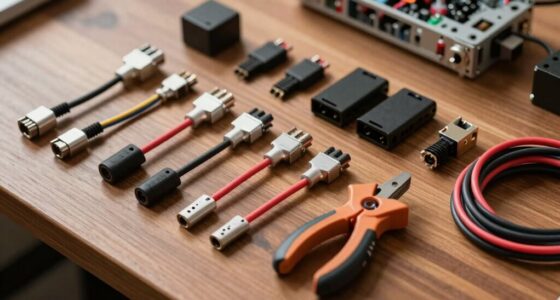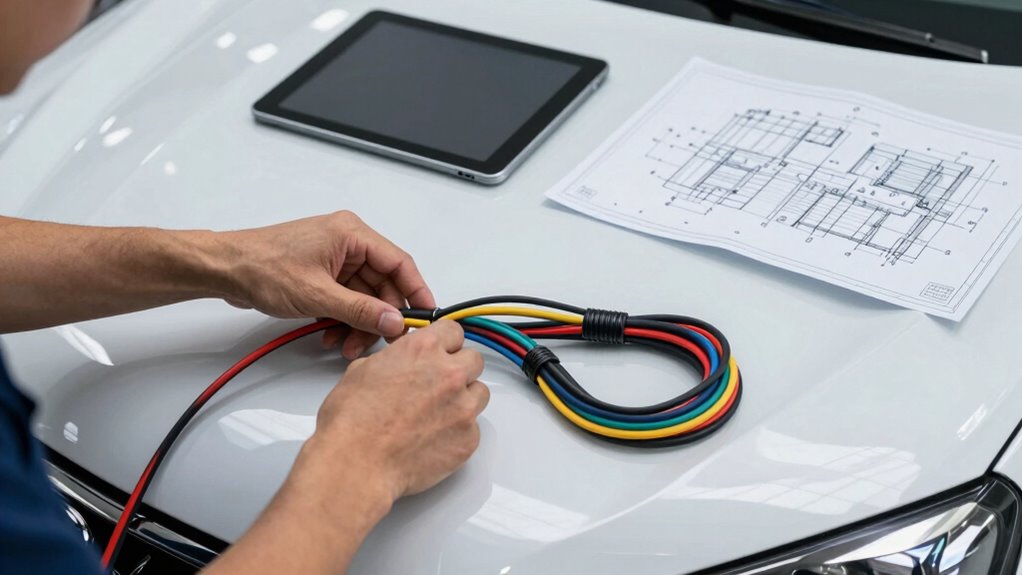

Before starting your vehicle project, plan your cable route carefully to guarantee safety and efficiency. Visualize the cable path, sketch a rough diagram, and identify secure anchor points. Use clips, zip ties, or conduit to organize cables and prevent strain or tangling. Keep cables away from heat, sharp edges, and moving parts. Protect essential areas with sleeves or conduit, and leave extra slack for adjustments. Continue exploring how to optimize your wiring to make the process smoother.
Key Takeaways
- Visualize the cable path by sketching a rough diagram to identify the most efficient route.
- Identify secure, accessible anchor points that avoid heat sources, sharp edges, and moving parts.
- Plan for extra slack in cables to accommodate future adjustments and ease of installation.
- Choose routes that allow easy access for maintenance and prevent interference with critical systems.
- Use protective sleeves or conduit in hazardous zones to ensure long-term safety and durability.

Before you start handling your car, it’s essential to plan your cable route carefully. Proper planning guarantees smooth wire management and helps avoid potential issues down the line. Think about the path your cables will take, considering the most direct route that minimizes exposure to heat, moving parts, or sharp edges. You want your cables to stay secure, protected, and out of harm’s way. Take a moment to visualize where the wires will run, and sketch a rough diagram if needed. This step helps prevent mistakes and makes the installation process more efficient.
Plan your cable route carefully to ensure secure, protected wiring and smooth installation.
Wire management plays a critical role in the success of your project. You’ll want to use clips, zip ties, or conduit to keep the cables organized and firmly attached along their route. Proper wire management doesn’t just look neater; it also reduces strain on the cables, prevents tangling, and makes future troubleshooting easier. As you plan, identify the best anchor points—these should be sturdy, accessible locations that don’t interfere with other components or moving parts. Avoid running cables across hot surfaces like exhaust systems, as heat can damage the insulation and compromise safety. Additionally, consider the importance of proper cable routing to ensure safety and durability over time. Recognizing vehicle electrical systems can help you anticipate potential challenges and ensure a safer installation.
Safety considerations should be at the forefront of your planning. Before you start, disconnect the vehicle’s battery to prevent electrical shorts or shocks. When choosing your route, steer clear of areas with high heat, moving parts, or any sharp edges that could cut or abrade the cables over time. Use protective sleeves or conduit to shield wires in hazardous zones. Also, ensure the cables won’t interfere with critical systems like brakes, steering, or airbags. Keeping the cables tucked away and secured reduces the risk of accidental disconnection or damage that could lead to malfunctions or unsafe conditions. Moreover, understanding the vehicle’s electrical system can help you avoid potential hazards and ensure a safe installation.
As you map out your route, consider accessibility for future maintenance or adjustments. It’s best to route cables where they can be easily reached without dismantling large sections of the vehicle. Pay attention to the length of your cables; having a little extra slack can make installation easier and prevent tension that might cause damage. When securing the cables, space out your fasteners evenly to avoid pinching or stressing the wires. Double-check your plan to ensure it aligns with safety standards and best practices, and always keep safety considerations in mind. Properly planned cable routing not only protects your investment but also ensures your vehicle remains safe and reliable for years to come.

XHF 120 PCS Adhesive Cable Wire Clips Black, Outdoor Christmas Light Clips, Cable Management Wire Organizer Cord Holder for Under Desk, Car, Wall, TV PC Ethernet Cable
- High-quality Material: Strong adhesive and PA66 nylon
- Versatile Usage: Suitable for USB, Ethernet, lights, and more
- Product Size: Base 5/8" x 5/8", Inner diameter 1/4" x 2/5"
As an affiliate, we earn on qualifying purchases.
As an affiliate, we earn on qualifying purchases.
Frequently Asked Questions
What Tools Are Essential for Planning My Cable Route?
You’ll need essential tools like a tape measure for accurate cable management, a marker to mark your route, and a wire cutter or stripper for prepping cables. A flashlight helps you see tight spots, and zip ties or clips keep everything organized. For power distribution, make sure you have power testers or multimeters to check connections. These tools help you plan a clean, efficient cable route and ensure proper power distribution.
How Do I Identify the Best Cable Routing Paths?
Did you know proper cable management can improve vehicle safety and performance? To identify the best cable routing paths, you should look for areas with minimal heat exposure and away from moving parts. Use routing techniques that keep cables secure and organized, avoiding sharp edges or pinch points. Follow existing channels or gaps, and test routes before fixing them permanently. This guarantees your cables stay protected and maintain ideal vehicle function.
Should I Consider Future Upgrades When Planning?
Yes, you should consider future upgrades when planning your cable route. Incorporate upgrading flexibility and future-proof planning by leaving extra slack and choosing versatile routing paths. This approach makes it easier to add new components later without rerouting everything. Think ahead about potential upgrades, and avoid tight bends or obstructions. Planning with future upgrades in mind saves time, effort, and costs, ensuring your system remains adaptable as your needs grow.
How Do I Ensure the Cable Doesn’t Interfere With Other Components?
To guarantee your cable doesn’t interfere with other components, use proper cable insulation to prevent short circuits and damage. Choose the right connector types that fit securely and won’t loosen over time. Route your cable away from moving parts or heat sources, securing it with clips or ties. Double-check clearance and flexibility, making sure it stays clear of critical systems, so everything functions smoothly without interference.
What Safety Precautions Should I Take During Planning?
You should prioritize electrical safety and fire prevention when planning your cable route. Wear insulated gloves and use proper tools to avoid electrical shocks. Always disconnect the car battery before starting to prevent sparks or shorts. Keep the workspace dry and free of flammable materials, and double-check connections for secure insulation. These precautions guarantee you work safely without risking electrical hazards or fire during your planning process.

Wire Loom 1/4", 1/2", 3/8 Inch x 50 FT, Split Wire Loom Tubing Wire Conduit, Cable Sleeves Bulk Flexible Electrical Conduit Protective kit
- Size: Inner diameter: 1/4", 1/2", 3/8",…
- High Quality Material: our wire loom is made…
- Operating Temp: the electrical conduit temperature range…
As an affiliate, we earn on qualifying purchases.
As an affiliate, we earn on qualifying purchases.
Conclusion
Now that you’ve mapped out your cable route, imagine your plan as a clear pathway through a dense forest—each branch and root carefully navigated to prevent tangles and snags. By planning ahead, you’re not just laying cables; you’re drawing a roadmap to smooth installation and reliable performance. So, take a step back, visualize your route, and then proceed confidently—because a well-planned path is your best guide to a flawless connection.

SWZHAI 60 PCS Push Mount Zip Ties, Nylon Car Mount Wire Ties Snap in Cable Zip Ties, Black Push Mount Cable Ties Automotive Zip Ties Fastener Wire Harness Clips for Wire Tying (6-Types)
- Package Quantity: 60 push pin zip ties
- Durable Material: High-quality nylon for toughness
- Temperature Resistance: -40 to 266°F
As an affiliate, we earn on qualifying purchases.
As an affiliate, we earn on qualifying purchases.
Wire Loom 1/4", 1/2", 3/8 Inch x 50 FT, Split Wire Loom Tubing Wire Conduit, Cable Sleeves Bulk Flexible Electrical Conduit Protective kit
- Size: Inner diameter: 1/4", 1/2", 3/8",…
- High Quality Material: our wire loom is made…
- Operating Temp: the electrical conduit temperature range…
As an affiliate, we earn on qualifying purchases.
As an affiliate, we earn on qualifying purchases.