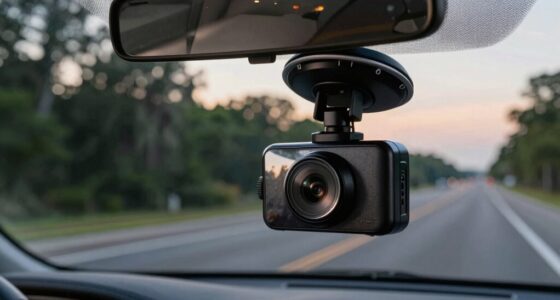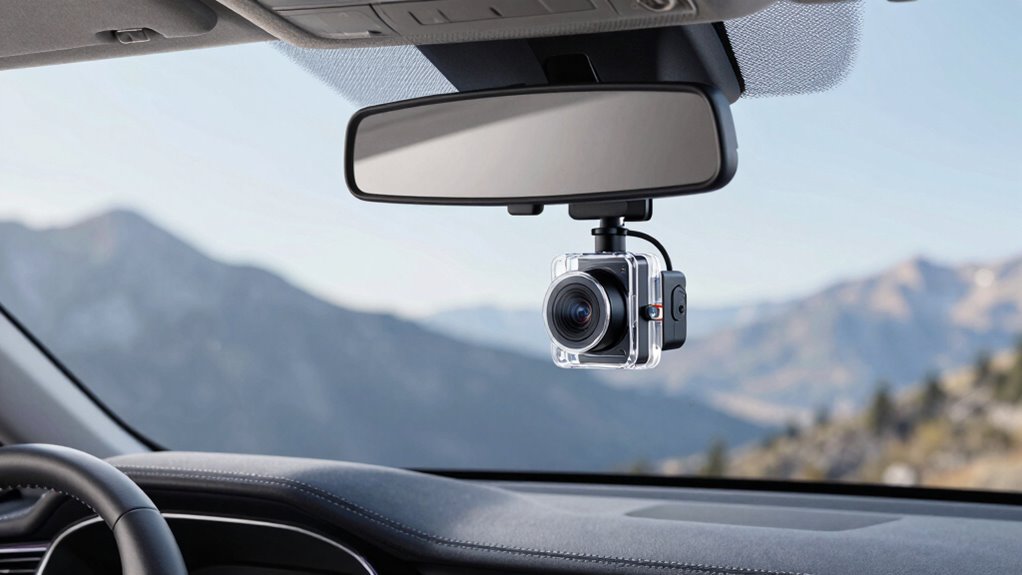

In Idaho, you must mount your dash cam where it won’t obstruct your view, typically behind or below the rearview mirror, to stay legal and safe. You can record audio, but only with your consent, as Idaho follows one-party consent laws—be cautious about private conversations. Respect privacy by limiting access to footage and securely storing data. Proper placement, legal recording practices, and privacy protection are essential; continue exploring to make certain you’re fully compliant.
Key Takeaways
- Dash cams must be mounted where they do not obstruct the driver’s view, typically behind or below the rearview mirror, per Idaho law.
- Recording conversations is legal if you’re a participant; non-participant recordings may violate privacy laws.
- Footage should be properly stored with encryption and access controls to protect privacy and ensure admissibility in court.
- Mount the camera to avoid glare, reflections, and interference with airbags, ensuring safe and legal operation.
- For footage to be court-admissible, it must be unaltered, with proper documentation of the chain of custody and metadata.

Pelsee S12 Native 4K + 2.5K Mirror Dash Cam, 64GB Card Included, GPS
- Dual 4K and 2.5K Recording: Front 4K and rear 2.5K dual footage
- Wi-Fi 6 & OTA Updates: Fast video download and automatic updates
- Starlit Color Night Vision: Clearer night footage with minimal glare
As an affiliate, we earn on qualifying purchases.
Legal Mounting Locations and Obstruction Rules
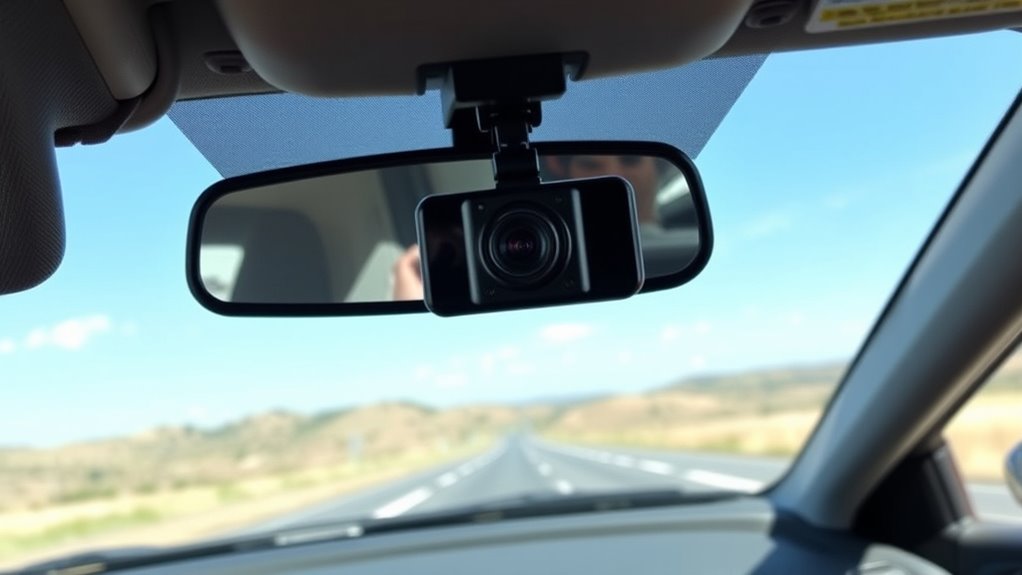
In Idaho, you must make certain your dash cam is mounted in a way that doesn’t obstruct your view of the road, as the law strictly prohibits blocking the driver’s line of sight. Dash cams are considered nontransparent material under Idaho Code 49-943(1), making windshield mounting generally illegal if they block clear highway vision. Instead, you should mount your dash cam on the dashboard or behind the rearview mirror, ensuring it doesn’t interfere with your line of sight. Discreet placement on the passenger side dashboard is often recommended to avoid obstruction. Any mounting that reduces visibility risks legal penalties and could render your footage inadmissible in court. Proper placement not only helps you adhere to Idaho law but also ensures your footage is reliable and legally admissible if needed. Additionally, mounting position plays a crucial role in maintaining your legal compliance and safety on the road. To further ensure compliance, consider dash cam regulations to stay updated on any recent legal changes. Regularly checking your camera placement can help prevent unintentional violations and ensure your dash cam functions effectively, especially since view obstruction laws are strictly enforced to promote safe driving. Being aware of obstruction rules can help you choose the safest and most legally compliant mounting location for your dash cam.

4K Rear View Mirror Camera with Carplay&Android Auto,12" Mirror Dash Cam Front and Rear with Voice Control for Cars&Trucks,Smart Touch Screen,64GB Card Included/Loop Record/Reverse Assist
- 4K Front and 1080P Rear Cameras: Sharp recordings with wide angles
- Voice Control & Touch Screen: Hands-free operation for safety
- 12-Inch IPS Split Screen: Dual view of front and rear
As an affiliate, we earn on qualifying purchases.
Recommended Placement for Safety and Compliance
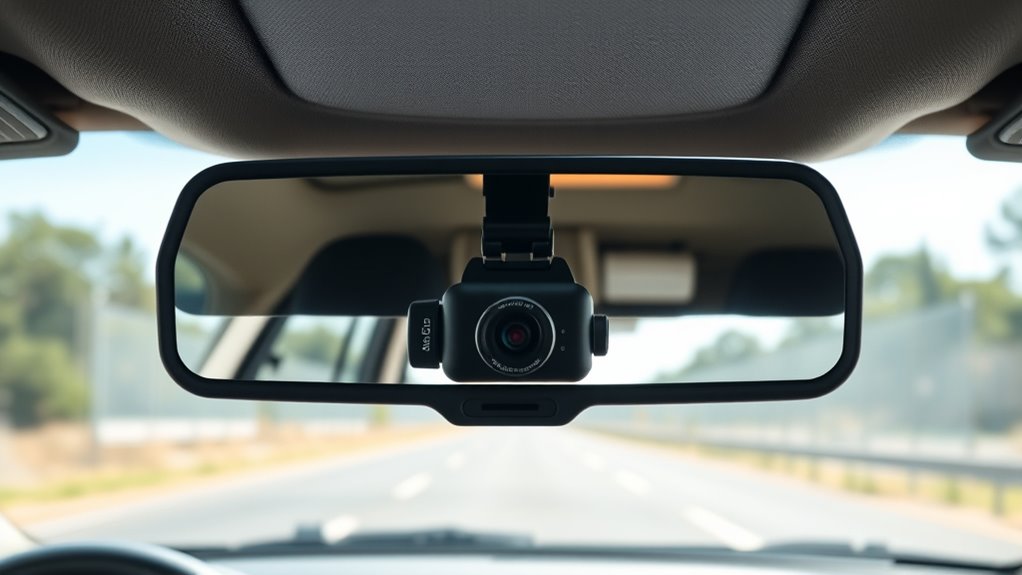
To stay safe and compliant, you should focus on mounting your dash cam in areas that provide a clear view without blocking your sightline. Positioning the camera behind the rearview mirror or in the lower corner of the windshield helps avoid distractions and meets Idaho regulations. Proper placement guarantees your dash cam captures essential footage while keeping your driving safe and legal. Mount high on the windshield, behind or below the rearview mirror, for the best balance of visibility and safety best place to mount a dash cam. Ensuring your dash cam is mounted correctly can also help with wave and wind conditions, reducing the risk of damage or obstruction during adverse weather. Additionally, understanding auditory processing can assist in designing better alert systems within your vehicle to enhance driver awareness. Proper placement also minimizes glare and reflections, which can interfere with video quality and clarity. Proper positioning also takes into account natural lighting, which can affect the quality of your recordings. Incorporating knowledge of vehicle sensor technology can further optimize the placement for comprehensive coverage.
Optimal Mounting Locations
For ideal safety and legal compliance, mounting your dash cam behind the rearview mirror is highly recommended. This placement ensures your view isn’t obstructed, meeting Idaho’s requirements, and reduces glare and distractions. It captures the best forward road view, aligning with common safe mounting practices. Alternatively, some vehicles permit dashboard mounting, provided the camera sits on a transparent surface that doesn’t violate windshield laws. Positioning the dash cam near the top center of the windshield is also advised, as it stays out of the driver’s line of sight while maintaining discreetness. For added safety, placing the camera in the bottom corner on the passenger side avoids obstructing your view. Overall, sticking close to the mirror or dashboard helps keep your dash cam legal, safe, and effective for capturing essential footage. Ensuring proper mounting location can also prevent legal issues and improve video quality in various conditions. Additionally, understanding Glycolic Acid benefits can help enhance skin health, just as proper dash cam placement ensures optimal recording performance. Proper wiring basics and regular maintenance are essential to keep your dash cam functioning reliably over time. Selecting the right mounting location can also help prevent vibration issues that might distort footage or damage the device.
Obstruction and Safety Considerations
Proper placement of your dash cam is crucial to guarantee it doesn’t obstruct your view and compromise safety. Idaho law, under Code 49-943(1), prohibits nontransparent materials on the windshield that block your line of sight. Dashcams are considered nontransparent if they cover the glass, so placing yours behind the rearview mirror on the dashboard ensures compliance. Avoid mounting it directly on the windshield to prevent obstructing your vision. Making sure your dash cam doesn’t cause glare or interfere with your ability to see the road is essential for safe driving. Improper placement not only increases accident risk but can also lead to fines and the inadmissibility of footage in court. Keep your dash cam discreetly mounted on the dashboard for safety and legal adherence. Additionally, understanding camera application techniques can help optimize footage quality while maintaining safety standards. Ensuring your dash cam is correctly mounting position can further enhance both safety and footage clarity. Selecting the appropriate camera angle is also vital to avoid blind spots and maximize coverage without impairing your view. Utilizing vetted home theatre projectors knowledge can also assist in choosing the right equipment for clear footage.

2026 4K Mirror Dash Cam 4 Channel, 12" Touch Screen Rear View Mirror Camera for Cars,4K Dashcam Front Rear Inside, IR Night Vision,WiFi,APP,GPS, Voice Control,Free 128GB SD
- 360° Full Coverage: Rotatable cameras for complete surveillance
- 4K Front Recording: High-resolution front camera footage
- Interior & Rear Recording: 1080P inside and rear cameras
As an affiliate, we earn on qualifying purchases.
Audio Recording Laws and Consent Requirements
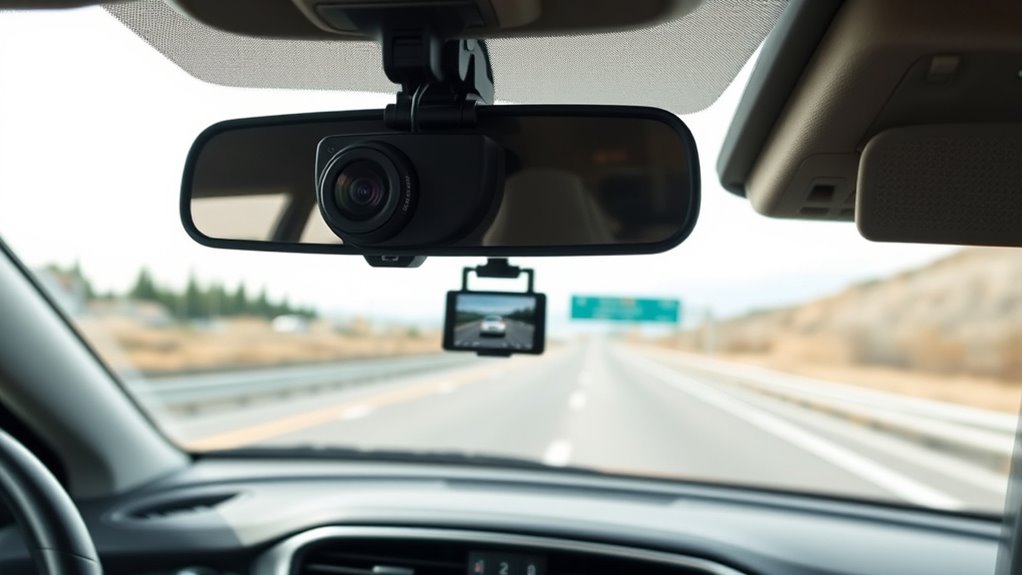
Idaho’s audio recording laws are governed by a one-party consent rule, meaning you can record conversations if you’re a participant in them. As long as you’re part of the communication, you can legally record it inside your vehicle, including conversations with passengers or during phone calls. This applies to both oral and electronic communications, but it’s important to recognize the potential privacy expectations involved. If you record private conversations without the awareness of other parties, you could face civil liabilities, especially if the conversation involves sensitive topics. Criminal penalties mainly target non‑party intercepts. To avoid legal risks, it’s best to be aware of privacy expectations and consider obtaining explicit consent when recording conversations that might be considered private or confidential. Understanding state-specific laws helps ensure your dash cam use remains compliant with Idaho regulations, especially since some jurisdictions have specific restrictions on audio recording and privacy. Being aware of privacy laws in your state can help you avoid unintentional violations. Additionally, understanding the limits of recording can help prevent accidental breaches of privacy rights. Knowing the scope of acceptable recording practices can further protect you from potential legal issues. Moreover, staying informed about regulations compliance can help you navigate the legal landscape more effectively.

AZDOME PG17 Max 4K+2.5K Mirror Dash Cam, 12" Front and Rear Camera with Night Vision AR Effects, ADAS BSD & LCA, Voice Control, 5.8GHz WiFi GPS, 24H Parking Monitor, for Cars Trucks RVs, 64GB Card
- 4K Front and 2.5K Rear Recording: High-resolution front and rear cameras for clear footage
- Voice Control: Operate camera with 10 voice commands
- Enhanced BSD & LCA: Blind spot and lane change alerts
As an affiliate, we earn on qualifying purchases.
Privacy Considerations and Data Handling
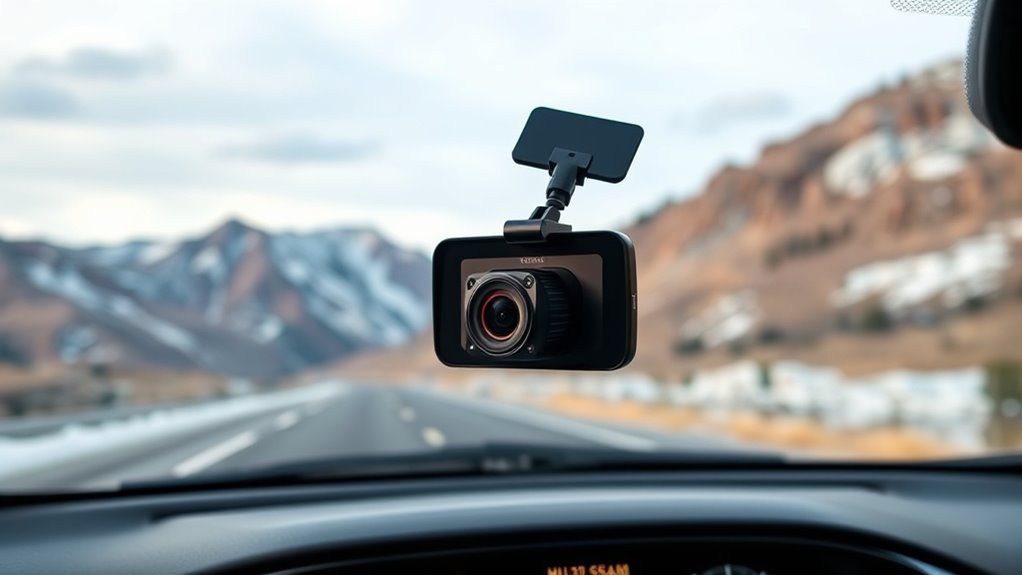
Effective data handling is essential to protect privacy when using dash cams. Most consumer devices store footage locally on microSD cards, typically retaining clips for 24 hours to 30 days unless overwritten. Cloud-enabled dash cams upload selected clips to vendor servers, with retention periods ranging from a week to permanent storage, depending on your subscription. Automatic loop recording overwrites old files unless event-locking protects critical clips, which relies on impact detection or manual locking. For fleet or rideshare operators, retention policies often specify preserving footage for 30 to 90 days and exporting relevant clips promptly. To safeguard privacy, restrict access to authorized personnel, use multi-factor authentication, and implement clear access logs. Proper data handling minimizes risks of tampering, chain-of-custody issues, and unauthorized disclosures. Implementing encryption during data transfer and storage further enhances security and privacy protections. Additionally, understanding data retention policies helps ensure compliance with privacy regulations and best practices. Employing security protocols tailored to your device can also help in customizing privacy protections effectively. Regularly updating dash cam firmware and settings can help mitigate vulnerabilities and protect sensitive footage from unauthorized access. Maintaining awareness of specific support features offered by dash cam manufacturers can also help customize privacy protections effectively.
Admissibility of Dash Cam Footage in Court
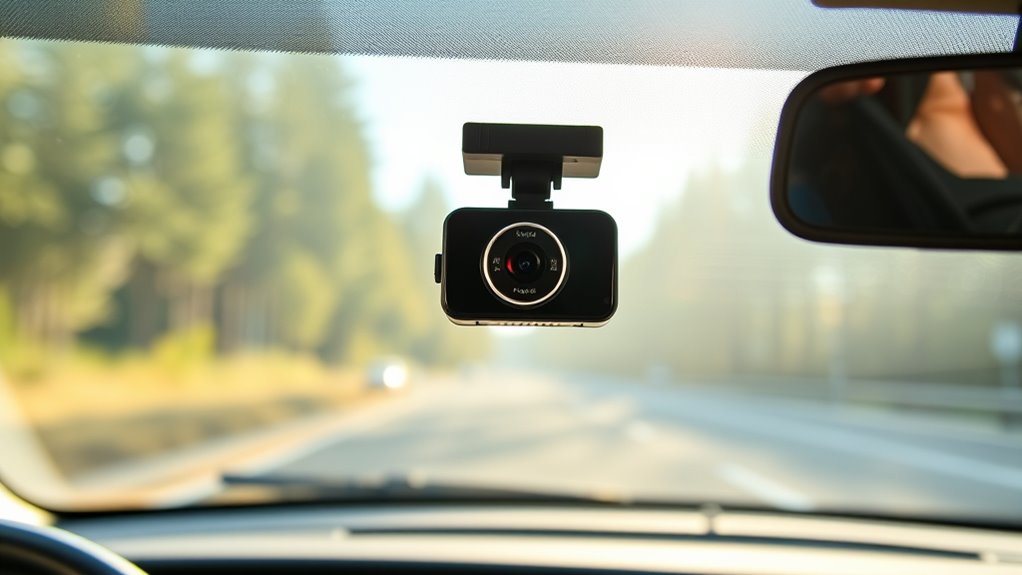
To have your dash cam footage admitted in court, it must meet Idaho’s legal standards for authenticity and reliability. You’ll need to prove the footage hasn’t been altered and provide sworn statements confirming its accuracy. Ensuring proper chain of custody and following authentication procedures is essential to strengthen your case. Additionally, it is important to be aware of the specific requirements for video evidence in Idaho courts to ensure admissibility. A thorough understanding of video integrity standards can help in understanding the importance of credibility and proper documentation of evidence. Familiarity with digital evidence verification techniques can further support the authenticity of your footage.
Legal Requirements for Admissibility
For dash cam footage to be admitted in court, it must meet specific legal requirements that establish its relevance, authenticity, and compliance with privacy laws. You need to verify your footage: 1. Shows relevant facts like events, locations, and times, supported by metadata such as timestamps and GPS. 2. Is authenticated by evidence that it’s a fair, accurate representation, with testimony from the owner or manufacturer verifying its integrity. 3. Complies with privacy laws, avoiding recordings of private conversations or areas where there’s a reasonable expectation of privacy. 4. Maintains quality and proper preservation, including clear images, accurate timestamps, and unaltered files, to support its probative value. Proper installation and careful handling of footage are crucial to prevent tampering or degradation that could compromise its admissibility. Meeting these criteria helps ensure your dash cam footage can be effectively used in court.
Authenticity and Chain of Custody
Establishing the authenticity and chain of custody is essential to ensuring your dash cam footage is admissible in court. You should create an evidence log at the time of recording, noting the date, time, collector’s identity, device ID, and a unique evidence tag. Every transfer or access must be documented with details like date, person, purpose, and transfer method (e.g., USB, upload). Preserve the original media and only analyze verified forensic copies, keeping originals secure with tamper-evident controls. Generate cryptographic hash values (MD5/SHA-256) for each copy to verify integrity. Maintain a thorough chain-of-custody packet, including transfer logs and storage records. These practices help prove the footage’s integrity and bolster its admissibility in court. Proper documentation is critical for demonstrating that the footage has not been altered or tampered with during the handling process.
Practical Tips for Lawful and Safe Dash Cam Use
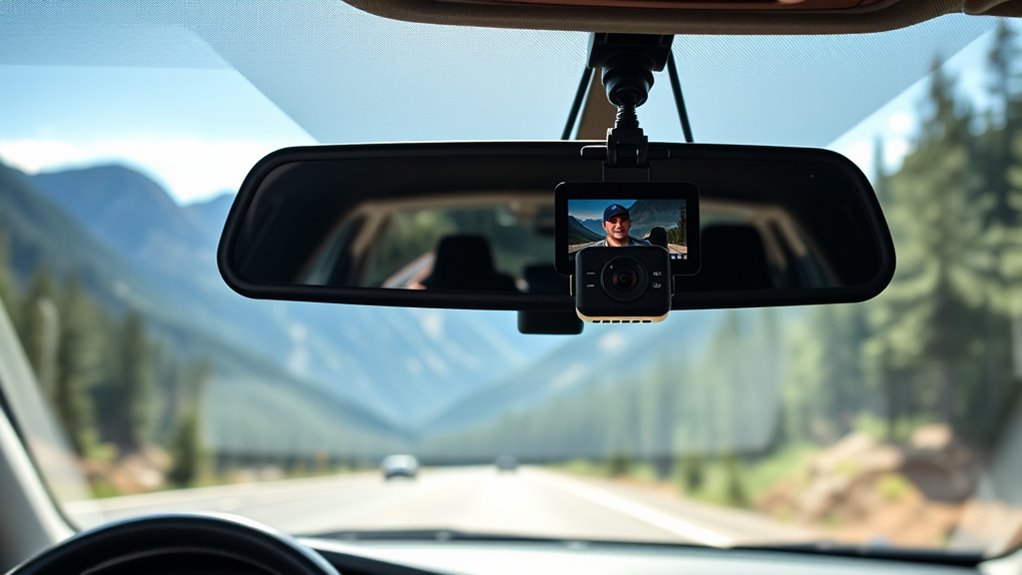
Ensuring your dash cam is both lawful and safe requires careful consideration of placement, visibility, and recording practices. To do this effectively:
- Mount your device on the dashboard or behind the rearview mirror to avoid obstructing your view and stay compliant with Idaho law.
- Keep the camera away from airbags and deployment zones to prevent safety risks.
- Choose mounts that don’t create glare, reflections, or visual obstructions that could violate “clear view” rules.
- Adjust microphone sensitivity to capture essential audio without infringing on private conversations.
- Regularly inspect your dash cam’s placement to ensure it remains in compliance with evolving state regulations and does not shift over time, which could inadvertently cause obstruction or legal issues. State regulations help guide optimal positioning for safety and legality.
These steps help prevent legal issues and guarantee your dash cam enhances safety without distracting or impairing your driving. Always verify local rules and remember that proper installation is key to lawful, effective use.
Frequently Asked Questions
Can I Legally Record My Passengers’ Conversations Without Their Consent in Idaho?
Yes, you can legally record your passengers’ conversations without their consent in Idaho because only single-party consent is required, and as the driver, you’re the one-party. However, it’s wise to inform passengers beforehand to avoid privacy issues, especially if sensitive talks happen. Disabling audio or posting notices about recording helps stay compliant. Always consider privacy concerns to prevent legal risks and ensure transparent communication with your passengers.
Are There Restrictions on Using Encrypted or Cloud-Based Dash Cam Footage Storage?
Imagine your dash cam footage as a secret message tucked safely in a vault. Using encrypted or cloud storage in Idaho isn’t forbidden, so you’re free to keep your videos there. Law enforcement needs a warrant to access it, and your privacy remains protected, much like a locked box. Just remember, preserving metadata and understanding provider policies are key to keeping your evidence reliable and secure.
What Are the Consequences for Mounting a Dash Cam in a Way That Blocks My View?
If you mount a dash cam in a way that blocks your view, you risk getting a traffic citation, which can mean fines, increased insurance premiums, and points on your license. It also raises safety concerns, like reduced visibility and potential interference with airbags or mirrors. Additionally, if your mount obstructs your view and contributes to an accident, your footage might be challenged or dismissed in court or by insurers.
Does Idaho Law Permit Audio Recording if I Have Only One-Party Consent?
Ever wonder if recording audio in your vehicle is legal without everyone’s permission? In Idaho, it’s permitted if you’re the one-party consent, meaning you can record conversations you’re part of without notifying others. As the driver, your consent covers the dash cam’s audio. Just remember, for private conversations, it’s best to inform passengers or disable audio to avoid legal issues, especially in sensitive situations.
How Long Can I Legally Retain Dash Cam Footage Before It Must Be Deleted?
You can typically retain dash cam footage for 30 to 90 days unless it’s linked to an incident or legal matter, in which case you should extend the retention period. It’s recommended to automate deletion after this period and securely store important videos with encryption and access controls. Remember to tag relevant footage for incidents and adhere to your organization’s data policies to guarantee compliance and protect privacy.
Conclusion
By understanding where to mount your dash cam, respecting audio and privacy laws, and knowing how to handle your footage, you guarantee your footage is lawful, safe, and useful. Follow the rules for placement, obtain necessary consents, and manage your data responsibly. This way, you protect your rights, enhance your safety, and strengthen your case. Stay informed, stay compliant, and keep your dash cam working for you—safely, legally, and effectively.