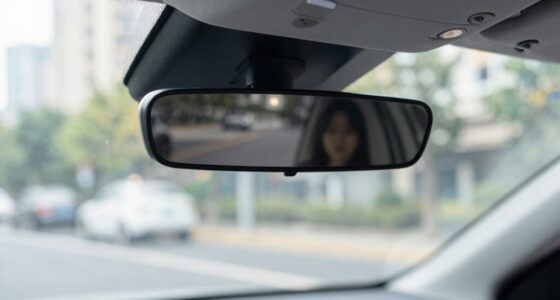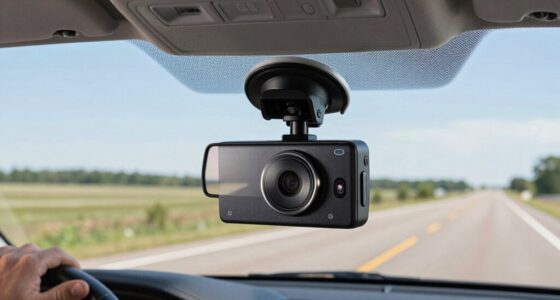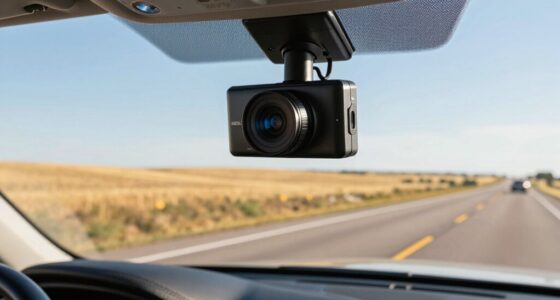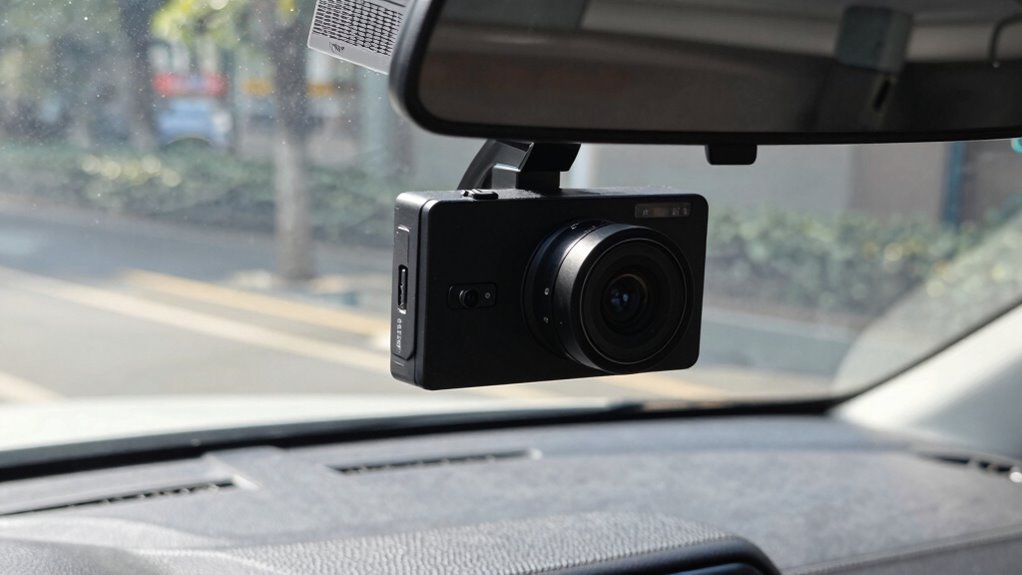
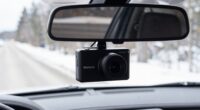
In Michigan, you should mount your dash cam behind the rearview mirror or away from the windshield’s wiper sweep to avoid obstructing your view and stay within legal limits. Keep wiring neat and secure to prevent distractions. For audio, only record with consent from at least one person involved, respecting privacy laws. Proper mount, clear placement, and understanding privacy rules help you stay compliant—if you want to know how to guarantee your device meets all regulations, keep exploring.

Get business pricing on garage and car supplies
- Business-only prices and quantity discounts
- Tax-exempt purchasing
- Multiple users, one account, clear invoices
Key Takeaways
- Dash cams must be securely mounted behind the rearview mirror, avoiding obstruction of traffic signals and road signs to comply with Michigan law.
- Mounting directly on the windshield is generally prohibited; preferred locations include behind the mirror or near the tinted strip.
- Michigan’s one-party consent law allows audio recording if at least one involved person consents; recording private conversations without consent is illegal.
- For legal admissibility, dash cam footage must be verified, unaltered, and properly documented to meet relevance and authenticity standards.
- Secure wiring, discreet placement, and respecting privacy by disabling interior audio help ensure legal compliance and data protection.
As an affiliate, we earn on qualifying purchases.
Proper Mounting Locations and Obstruction Considerations
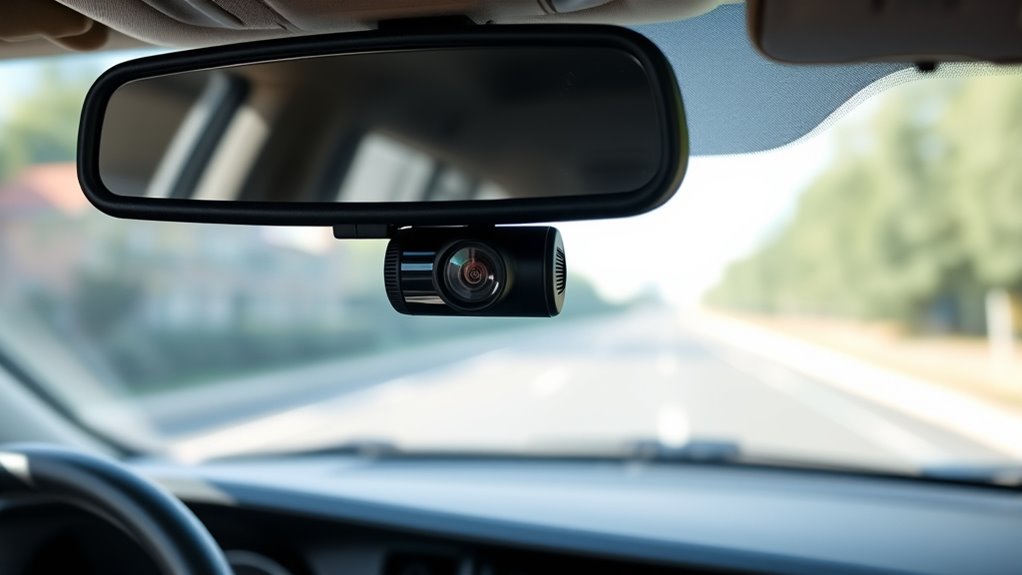
When mounting a dash cam in Michigan, choosing the right location is essential to stay within legal limits and guarantee safety. You should avoid obstructing your view of the road, especially the central field of vision and instrument cluster. Mount the device on the dashboard where it won’t block your sightline or create glare that hampers visibility. Make sure cables and wiring don’t interfere with controls, the steering wheel, or critical areas crucial for safe driving. The mount’s height and position should minimize reflections and blind spots, keeping pedestrians and traffic signals visible. If your vehicle has passenger-side restrictions, placing the camera near the center console or behind the rearview mirror helps prevent obstruction. Proper placement is also necessary to ensure the dash cam does not violate state laws regarding visibility and safety. Always prioritize maintaining clear visibility and safe access to controls while complying with Michigan’s legal guidelines. Additionally, considering vehicle safety standards can help ensure your dash cam setup aligns with overall road safety requirements. Ensuring your dash cam is compliant with local regulations can prevent potential legal issues and enhance your safety on the road. Being aware of at‑home tech options for dash cams and accessories can also help optimize your setup for both safety and legal compliance. Furthermore, periodically reviewing your installation helps maintain adherence to evolving regulatory guidelines and ensures continued safety. Staying informed about dash cam features can also help you select the most effective setup for your needs.
As an affiliate, we earn on qualifying purchases.
Regulations Governing Windshield Placement and Swept Areas

In Michigan, mounting a dash cam on the windshield is generally prohibited for passenger vehicles because it can obstruct your view of the road. The law under MCL 257.709(1)(c) aims to prevent objects from blocking the driver’s vision. Instead, dashboard mounting is preferred, positioned behind the rearview mirror or where the tinted strip ends, to minimize obstruction. The dash cam must be securely attached using adhesive or a suction cup, ensuring it remains stable during driving. Placement should avoid interfering with traffic lights, road signs, or the normal sweep of windshield wipers. There’s no specific Michigan rule on wiper sweep areas, but placement should default outside the wiper path. Wiring needs to be neat, preventing additional obstructions that could impair visibility or safety. Proper placement helps ensure legal compliance and maintain a clear view of the road. Additionally, ensuring the dash cam’s secure attachment helps prevent distractions caused by shifting equipment. Maintaining a clear windshield and unobstructed view aligns with the Leave No Trace principles, which promote responsible and safe outdoor practices.
As an affiliate, we earn on qualifying purchases.
Legal Aspects of Audio Recording and Passenger Consent

Michigan’s one-party consent law allows you to record audio if at least one person involved in the conversation agrees. This means you can legally record conversations you’re part of without informing others, but recording private conversations without consent can lead to criminal charges and civil lawsuits. When recording in your vehicle, it’s best to obtain explicit passenger consent to avoid disputes, especially in private settings. Rideshare policies might impose stricter rules, requiring passenger notice or prohibiting audio recording altogether. Remember, conversations in public or where privacy isn’t expected—like roadside chats—are less protected. Recording minors or sensitive information raises privacy concerns and potential legal issues. Always consider privacy expectations and be cautious about sharing or distributing recordings to avoid violating privacy laws. Understanding state-specific laws is essential to ensure you’re compliant and respectful of others’ privacy rights. Additionally, being aware of privacy laws can help you avoid unintended legal violations when capturing audio. Being mindful of audio recording regulations can prevent unintentional breaches of privacy or consent.
As an affiliate, we earn on qualifying purchases.
Admissibility and Evidentiary Standards for Dash Cam Footage
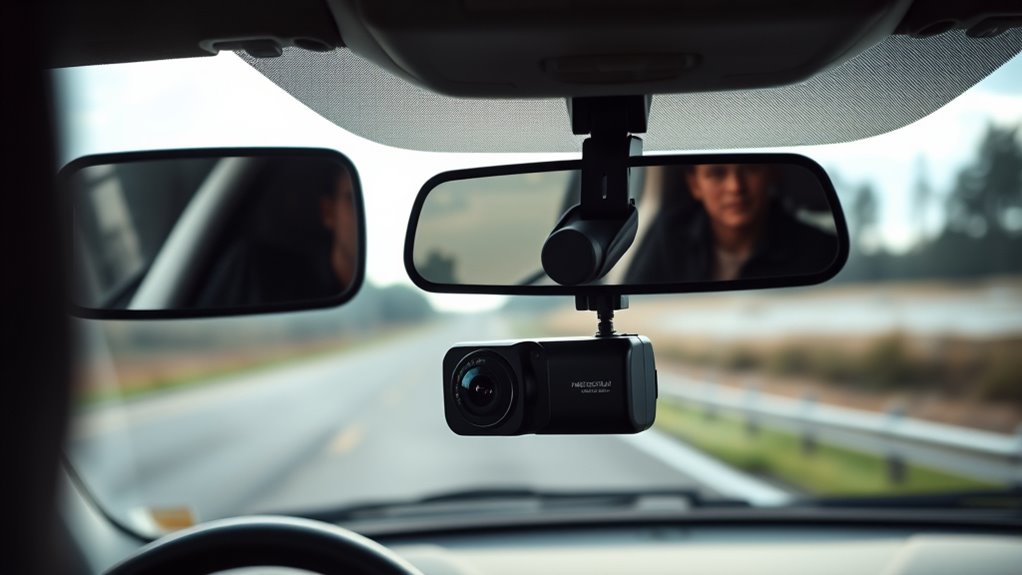
To guarantee dash cam footage is admissible in court, you must meet specific authentication and relevance standards under Michigan law. You’ll need to establish relevance to a material issue, like fault or traffic violations, and authenticate the recording’s accuracy. Methods include witness testimony identifying the footage or using the “silent witness” theory when no eyewitness is present. Preserving the original file, maintaining chain-of-custody documentation, and providing metadata or hashes help prove integrity. Expert testimony may be necessary to explain technical aspects like timestamps or file format. The court will weigh the footage’s probative value against potential prejudice or confusion under MRE 403. Portions with irrelevant or inflammatory content can be redacted, and overlays must be verified for accuracy to avoid exclusion. Additionally, courts often consider the credibility of the source and the method of recording when determining admissibility. Ensuring compliance with evidentiary standards is essential for the footage to be admitted as reliable evidence in legal proceedings. Proper handling and digital preservation of the footage help maintain its authenticity and prevent tampering. Consistent documentation and proper handling are crucial to maintaining the footage’s integrity throughout the legal process, especially considering that sound quality and clarity can influence the court’s assessment. Being aware of potential market manipulation tactics can also help in understanding the context of the footage if related to incidents involving trading activity.
Best Practices for Privacy, Civil Liability, and Device Use

Proper device placement is essential to guarantee safety, compliance, and privacy when using dash cams. Mount your camera on the dashboard or in locations specified by Michigan law to avoid obstructing your windshield and ensure you don’t block sight lines, airbags, or vehicle controls. Use manufacturer-recommended mounts and secure wiring to prevent distractions or device detachment. For interior audio recording, be aware of Michigan’s all-party consent law; avoid recording conversations without consent, or disable audio features altogether. Rely on exterior footage for legal recordings. Minimize retention of nonessential footage with automatic overwrite, encrypt stored data, and restrict access. To limit liability, avoid mounting positions that could distract you or obstruct your view, and document any passenger consent for audio recordings. Additionally, understanding luxury fashion insights can help you select high-quality dash cams that combine style with functionality, ensuring your device complements your vehicle’s interior while maintaining safety standards. Incorporating proper wiring techniques can further enhance your setup’s safety and reliability. For example, using secure wiring not only prevents accidental disconnections but also reduces potential electrical hazards. Being familiar with camera placement best practices can also help optimize footage quality and ensure compliance with local laws. Additionally, choosing dash cams with discreet designs can help maintain your vehicle’s aesthetic appeal while providing necessary security features.
Frequently Asked Questions
Are There Specific Size or Weight Restrictions for Dash Cams in Michigan?
You won’t find specific size or weight restrictions for dash cams in Michigan. The law focuses on mounting locations to avoid obstructing your view, not on device dimensions. As long as you mount your dash cam on the dashboard without blocking airbags or sensors, it’s compliant. Just verify your device doesn’t interfere with safety features, and you’re good to go. Keep it unobtrusive and within the general mounting guidelines.
Can Law Enforcement Access Dash Cam Footage Without a Warrant?
Imagine your dash cam footage as a secret diary, revealing your moments on the road. Law enforcement in Michigan generally needs a warrant to access this private record unless there’s an urgent situation like imminent danger or hot pursuit. If you refuse, they must follow proper legal channels, like obtaining a warrant or subpoena, unless an exception like exigent circumstances applies. Your privacy is protected, but legal processes still play a crucial role.
Is It Legal to Record in a Vehicle With Passengers Who Haven’t Consented?
You can record audio in your vehicle even if passengers haven’t consented because Michigan is generally a one-party consent state. However, you should notify passengers or disable audio to avoid disputes or legal issues, especially if recordings are shared or used in court. Be cautious with private conversations, and avoid surreptitious recordings, as they may violate privacy expectations or specific statutes, leading to civil or criminal liability.
How Long Can I Legally Retain Dash Cam Recordings in Michigan?
Retaining dash cam recordings in Michigan is like holding onto a snapshot of your day, but you must follow legal guidelines. Generally, you can keep footage for 30 to 90 days, unless you tag it for longer retention, especially if it’s evidence or linked to investigations. Keep files organized, secure, and delete them when no longer needed to avoid legal issues. Always stay updated on local policies, which might be stricter.
Are There Penalties for Mounting a Dash Cam in a Violation Zone?
Yes, you can face penalties if you mount your dash cam in a violation zone. Michigan law prohibits obstructing your windshield’s clear view, especially in the central field of vision. Violating these rules may lead to citations, fines up to $100 or more, community service, points on your record, and potential complications with insurance claims. To avoid penalties, mount your dash cam on the dashboard or behind the rearview mirror without obstructing your vision.
Conclusion
Think of your dash cam as a vigilant guardian watching over your journey. By respecting mounting rules, understanding audio laws, and safeguarding privacy, you keep this guardian trustworthy and effective. When you follow these guidelines, you’re painting a clear, honest portrait of your drive—one that stands strong in any courtroom or conversation. Embrace your dash cam duties wisely, and it’ll serve as a loyal protector, capturing your story with integrity and clarity.
Halloween Picks
halloween
As an affiliate, we earn on qualifying purchases.