
In Ohio, you can mount your dash cam behind or below the rearview mirror, guaranteeing it doesn’t block your view or interfere with vehicle features. You can record audio if you’re part of the conversation, thanks to one-party consent laws, but avoid recording private talks without permission. Make sure your device doesn’t obstruct your windshield or violate privacy rules. Keep these guidelines in mind, and you’ll stay compliant—more details await if you want to ensure you’re fully covered.

Get business pricing on garage and car supplies
- Business-only prices and quantity discounts
- Tax-exempt purchasing
- Multiple users, one account, clear invoices
Key Takeaways
- Dash cameras must be mounted behind or below the rearview mirror, within 8.5 inches of the windshield’s top edge, to avoid obstructing views.
- Ohio law permits audio recording if the recorder is a participant in the conversation (one-party consent).
- Windshield-mounted dash cams are legal if they do not block vision, VIN, or interfere with vehicle safety features.
- All recordings must be obtained legally, with proper chain of custody, and disclosures; unauthorized recordings can lead to legal penalties.
- Mounting devices must be low-profile and routed neatly to prevent distractions and ensure compliance with visibility regulations.
Legal Requirements for Dash Cam Placement in Ohio
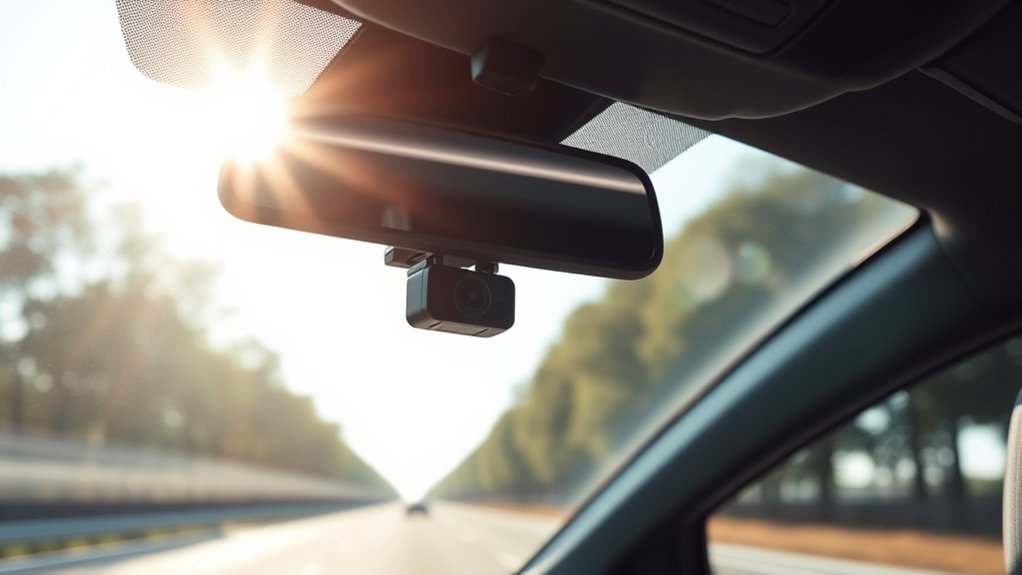
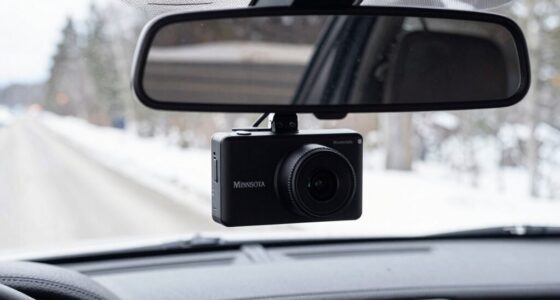
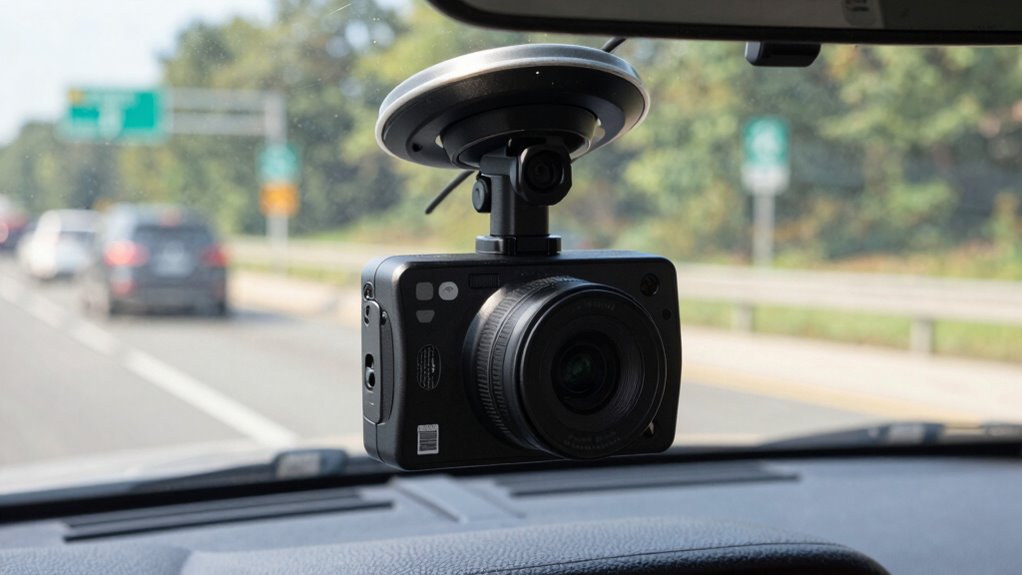
In Ohio, proper dash cam placement is vital to avoid legal issues and guarantee safety. You should mount your device so it doesn’t obstruct your sight lines or hide the vehicle identification number, per Ohio Rev. Code §4513.24(B)(2)(b). The recommended spot is behind the rearview mirror, which minimizes visibility interference. If you prefer a windshield mount, keep it no more than 8.5 inches below the top edge and avoid the wiper sweep area, complying with specific exceptions. Mounting on the passenger side dashboard low area is also permitted, as it doesn’t block your view. Be cautious to avoid placing the camera where it could restrict your vision or conceal important vehicle info. Proper placement helps you avoid citations, guarantees footage is admissible, and keeps you compliant with Ohio law. Ensuring your dash cam setup adheres to filming regulations can prevent potential legal complications. Additionally, being aware of privacy considerations is important to respect the rights of other drivers and pedestrians while recording. Maintaining awareness of these privacy rights ensures responsible use of recording devices.
Understanding Ohio Windshield Obstruction Rules
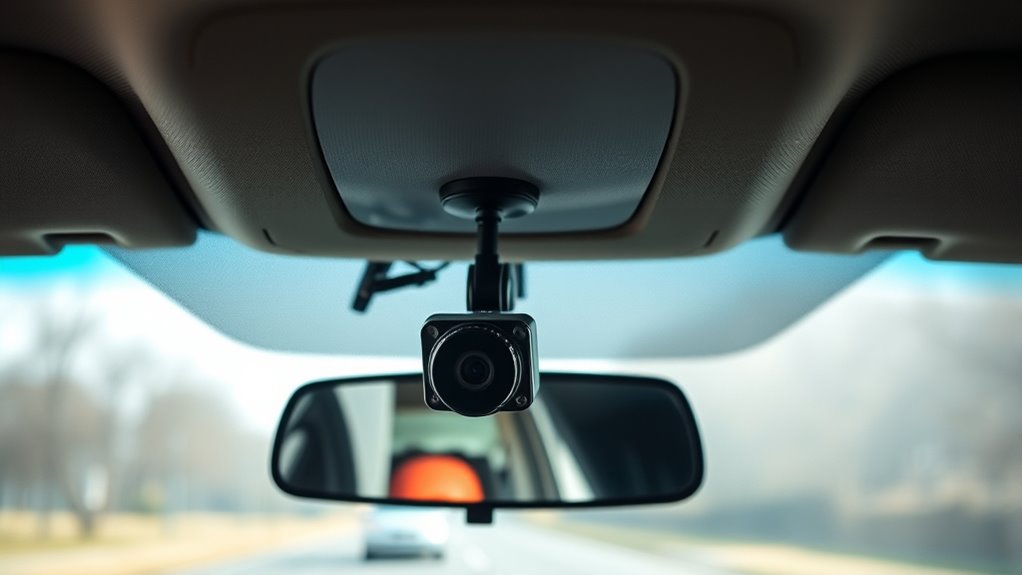
Ohio’s windshield obstruction rules strictly prohibit what can be placed on or near your vehicle’s glass to ensure safe driving. You cannot have nontransparent material on your front windshield, side wings, side, or rear windows, except for small decals (4″ x 6″) in corners. Dash cameras mounted on the windshield are generally permitted if they don’t obstruct your view or conceal the VIN, and if they meet federal safety device standards. For commercial vehicles, mounts must be within 8.5 inches below the windshield top. Any device that obstructs your sight lines or blocks the view of signs, signals, or the VIN is illegal. Violations are minor misdemeanors, often resulting in fines or citations. Enforcement depends on whether officers judge your device obstructs your view or conceals important vehicle details. Additionally, Ohio law requires that such devices do not distract the driver or impair visibility during operation. To comply fully, understanding the vehicle safety regulations and how they relate to mounting positions can help avoid violations. Properly understanding safety device standards can ensure your dash cam remains compliant with the law, especially since some devices may be classified as automotive safety devices that need specific standards to meet legal requirements. Being aware of driver distraction laws also helps in selecting the appropriate mounting location to prevent accidental violations. Recognizing the importance of Twin Flame connections may seem unrelated, but understanding how to avoid distractions aligns with safe driving practices.
Best Practices for Mounting Dash Cameras Safely and Legally

To mount your dash cam safely and legally, you need to contemplate the best placement options that don’t obstruct your view or violate Ohio laws. Make sure the camera is positioned to avoid blocking signals or creating glare, and stay within legal limits for height and location. Proper mounting also involves ensuring it doesn’t interfere with airbags or driver controls, keeping you both safe and compliant. Legality of dashcam placement in Ohio also emphasizes that dashcams cannot be mounted on the windshield, so choosing a dashboard or interior placement helps avoid legal issues. Additionally, considering the contrast ratio of your dash cam can improve visibility in various lighting conditions, ensuring clearer footage during both day and night driving. Ensuring your dash cam has good visibility and clarity can help you capture better footage in different environments. To further enhance recording quality, select a model with adjustable settings that can be tailored to different lighting scenarios. Moreover, understanding the industry standards for dash cam installation can help you stay compliant and optimize your device’s performance.
Optimal Mounting Locations
Choosing the right mounting location for your dash cam is crucial to guarantee legal compliance and safe operation. Placing it on the dashboard is permitted if it doesn’t obstruct your view, with a low placement recommended to avoid issues. This positioning also prevents violating Ohio’s windshield mounting restrictions and ensures the airbag can deploy properly. Additionally, mounting behind the rearview mirror offers a clear, non-obstructive view while maintaining visibility for safety. The top center of the windshield is acceptable if the device stays within 8.5 inches from the top edge—important for commercial vehicles—and doesn’t block your line of sight. Avoid placing the camera in areas that interfere with wipers or block essential vehicle features. Proper placement balances capturing quality footage with adhering to Ohio’s legal standards. Additionally, mounting the dash cam in a location that minimizes glare and reflections can improve video quality and help ensure clear evidence in case of an incident. It’s also advisable to consider free floating design options that prevent the camera from becoming a distraction or obstruction while driving. Using a properly secured mount will also prevent the device from shifting during drives and ensure consistent footage. Moreover, choosing a mount that allows for adjustability can help you find the optimal angle for both visibility and compliance. To further enhance the quality of footage and ensure compliance, consider the angle and positioning of the camera to avoid distortion or obstruction from vehicle features. Additionally, selecting a mount with vibration dampening features can help maintain steady footage even on rough roads.
Obstruction and Visibility
Properly mounting your dash cam is key to making certain it doesn’t obstruct your view while driving. Ohio law prohibits mounting nontransparent objects that block your sightlines, which includes dash cams if they impede your view of the road. To stay compliant, place the camera behind or below the rearview mirror, on the dashboard within the lower windshield plane, or in other low-profile spots. Use mounts that keep the device compact and route wiring neatly along trim or A-pillars. After installation, check from your seated position to confirm your view isn’t obstructed during turns or lane changes. Avoid covering vehicle identification, safety features, or airbags. Proper placement minimizes legal risks, prevents distractions, and ensures your dash cam footage remains admissible if needed. Mounting your dash cam correctly also helps ensure that footage remains admissible in legal proceedings if ever needed.
Legal Considerations
Mounting your dash camera in Ohio requires careful attention to legal guidelines to avoid fines or equipment issues. To stay compliant, consider these best practices:
- Position your device on the dashboard, preferably behind the rearview mirror or low on the dashboard, to prevent obstructing your view.
- Avoid mounting on the windshield unless it’s in the lower corners or within 8.5 inches below the top edge, and ensure it doesn’t block your sight lines or the VIN.
- For commercial vehicles, ensure the camera is positioned more than 8.5 inches below the upper windshield edge and outside the area swept by wipers.
- Proper mounting techniques can also help prevent issues with field‑of‑view and ensure your footage remains clear and legally admissible.
Following these rules helps you record legally and safely without risking fines or safety hazards.
Audio Recording Laws and One-Party Consent in Ohio

In Ohio, the law generally allows you to record audio if you are a participant in the conversation, due to the state’s one-party consent rule. This means that as long as you are involved in the call or discussion, you can record it legally. This applies to in-person conversations, phone calls, and digital communications. When your dash cam captures both video and audio, it’s lawful if you’re part of the conversation. No need to notify passengers or others, but best practice is to disable audio or get consent if privacy is a concern. Keep in mind, recordings are typically admissible in court if obtained legally, but unlawfully recording conversations where you’re not a participant can lead to legal issues. Ohio’s law explicitly permits recording when one party consents, reinforcing the importance of understanding audio recording laws before capturing conversations. Being aware of privacy considerations can help avoid potential legal complications associated with audio recordings. Additionally, understanding the mounting requirements for dash cams ensures compliance with Ohio regulations and helps prevent legal disputes. It’s also advisable to familiarize yourself with any specific state regulations that may impact recording practices to ensure full compliance. Recognizing the importance of legal boundaries can further safeguard against inadvertent violations while using a dash cam.
Risks of Recording Conversations Without Consent
Recording conversations without consent in Ohio can expose you to serious legal risks, including criminal charges and civil liability. Ohio law strictly forbids intercepting wire, oral, or electronic communications without all-party consent, making illegal recordings a fourth-degree felony. If you attempt to use unlawfully obtained recordings, you could face additional charges. Secretly recording household members’ calls is specifically prohibited. Risks increase when recording across state lines or with the intent to commit a crime, removing consent protections. Additionally, water-related activities such as hydrotherapy are not relevant to Ohio’s recording laws but highlight the importance of respecting privacy when recording in any setting. Understanding the power requirements of your recording devices and ensuring compliance can help prevent inadvertent violations in sensitive situations. Being aware of legal boundaries is essential to avoid unintentional violations and protect your rights during recordings. Proper knowledge of environmental factors that can affect recording equipment, such as humidity or temperature, is also crucial to maintaining lawful and effective recordings.
Admissibility of Dash Cam Footage in Court Proceedings
You need to understand that for dash cam footage to be admitted as evidence, it must be authentic and relevant to your case. Establishing a clear chain of custody and verifying the footage’s integrity are essential steps to prevent challenges in court. Proper preservation and documentation can make the difference between winning or losing your case. Additionally, understanding video evidence standards can help ensure your footage meets legal requirements. Knowing how to negotiate lease terms effectively can also be useful if leasing a vehicle is involved in your legal situation.
Evidence Authenticity Standards
To admit dash cam footage as evidence in Ohio court proceedings, it must first meet strict authenticity and foundation requirements. You need to demonstrate the recording is what it claims to be, following Ohio Rule of Evidence 901. Consider these key points:
- Witness Testimony: A familiar person, like the vehicle owner or custodian, must confirm the camera was working properly and the footage accurately depicts the event.
- Metadata and File Integrity: Preserved timestamp, GPS data, and export logs bolster authenticity. Any edits, splicing, or missing metadata can be challenged.
- Continuity of Original File: Showing the original digital file or SD card remains unaltered supports the footage’s integrity, making it more likely to be admitted.
Chain of Custody Importance
Establishing a clear chain of custody is essential for guaranteeing the admissibility of dash cam footage in Ohio court proceedings. You must immediately secure the original storage medium, like the SD card or internal drive, to prevent overwrite or deletion. Creating a bit-for-bit forensic image preserves data and metadata integrity. Document every step: date, time, collector’s identity, device details, file names, and physical condition. Use write-blockers during data extraction to avoid modification. Store original media securely in tamper-evident packaging and locked evidence storage. Maintain a detailed log of all transfers, access, and copies, including signatures and timestamps. Track digital backups, preservation methods, and playback conditions. Accurate documentation ensures the footage’s authenticity, supporting its admissibility in court. Proper handling and storage of digital evidence are crucial to prevent tampering or loss, which could compromise its credibility.
Privacy Expectations When Recording in Public and Private Spaces

When recording in public spaces, individuals generally have a reduced expectation of privacy, making it lawful to capture scenes on streets, sidewalks, and parking lots. You can record identifiable faces, license plates, and public conduct without much concern, except where specific laws protect certain categories. Keep in mind:
- Audio recordings are legal under Ohio’s one-party consent law, but sensitive conversations may be treated differently.
- Privacy expectations vary with location—private property, inside private businesses, or private areas have higher privacy protections.
- Recordings involving minors or victims of sexual offenses may be restricted or redacted to prevent harm or intrusion.
Always consider the setting to ensure your recordings stay within legal boundaries and respect individuals’ privacy rights.
Handling and Disclosing Dash Cam Footage for Legal Purposes

Handling and disclosing dash cam footage for legal purposes requires careful attention to Ohio’s public records laws and evidentiary standards. Law enforcement dash-cam videos are considered public records under R.C. 149.43, which means they must be promptly prepared for inspection. However, only specific investigatory work product segments can be redacted; entire videos cannot be shielded unless they contain highly sensitive investigative materials. When presenting civilian dash cam footage as evidence, confirm the video is unaltered, with correct timestamps and unbiased views, to maintain its authenticity. Agencies are obligated to disclose non-exempt footage promptly upon request, but they can redact certain parts, such as segments showing investigatory details. Proper handling involves verifying the footage’s integrity and consulting legal counsel for exempt material. Public access laws also require that law enforcement agencies balance transparency with protecting ongoing investigations.
Practical Tips for Complying With Ohio Dash Cam Regulations
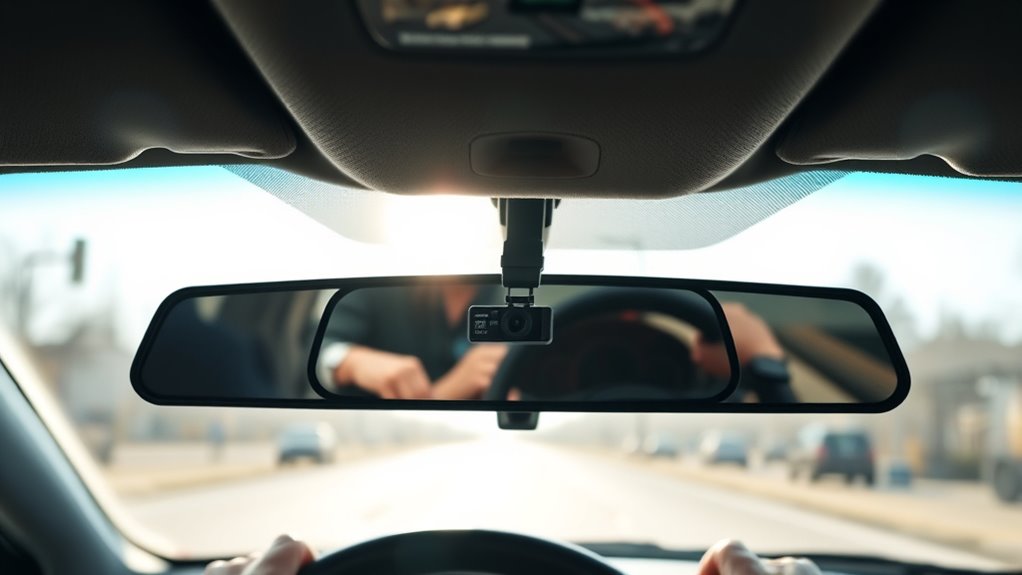
To guarantee your dash cam footage complies with Ohio regulations, proper installation and mounting are key. First, choose a location that doesn’t obstruct your view or violate mounting limits—such as behind the rearview mirror or on the dashboard. Second, avoid mounting on the middle windshield or using nontransparent materials that hide the VIN, as these break the law. Third, ensure the device doesn’t interfere with airbags or exceed height restrictions, and test the setup to confirm clear sightlines. Ohio law specifies that dash cams must not obstruct the driver’s view or interfere with vehicle safety features. Here are some practical tips:
- Mount your dash cam within 8.5 inches below the windshield top.
- Keep the camera outside the wiper sweep area.
- Regularly check for obstructions or shifts that could impair footage quality.
Considerations for Fleet Vehicles and Commercial Dash Cam Use
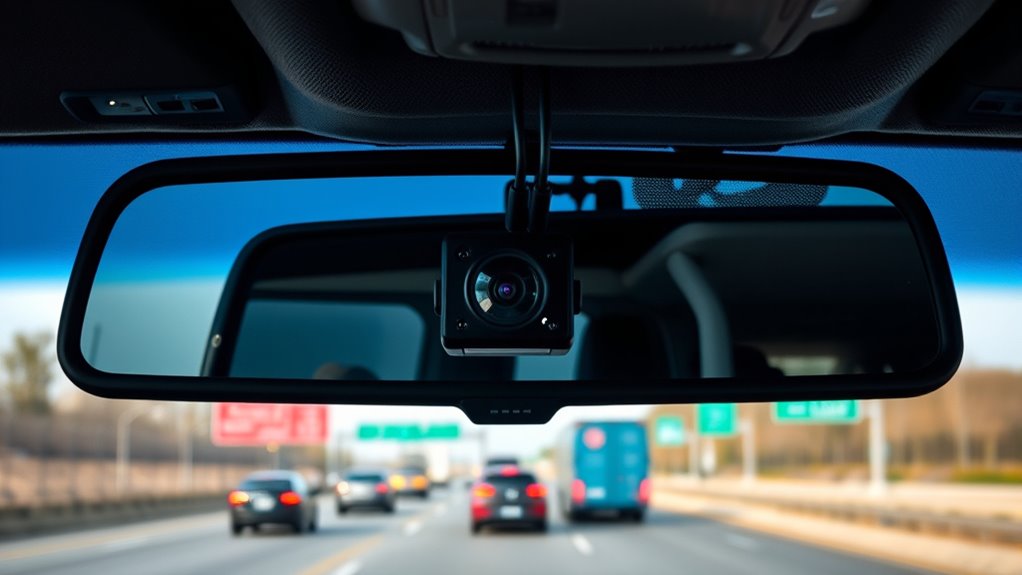
Fleet vehicles and commercial dash cam use require careful consideration of Ohio’s mounting regulations to guarantee compliance and safety. You must verify cameras are mounted on the dashboard or behind the rearview mirror to avoid obstructing the driver’s view, as Ohio Revised Code § 4513.24 prohibits windshield mounts that block visibility. Using nontransparent materials to hide VINs or block sight lines is also banned. In some cases, commercial fleets are exempt from certain restrictions if the dash cam is considered required equipment. Placement must not interfere with airbag deployment. Additionally, since Ohio’s one-party consent law applies, you can record audio inside the vehicle with driver involvement without additional notices. Proper mounting and awareness of these rules help protect your fleet’s legal compliance and safety standards. Ensuring compliance with local laws is essential to avoid fines or legal issues.
Frequently Asked Questions
Can I Record Audio in Ohio Without Notifying Passengers?
Yes, you can record audio in Ohio without notifying passengers because Ohio is a one-party consent state. This means that as long as you are a participant in the conversation, you can legally record it without informing others. You don’t need to notify passengers or other drivers, but make certain you’re not recording private conversations in situations where privacy is expected. Keep in mind that recordings might not be admissible if obtained illegally.
Are There Specific Dash Cam Models Approved for Ohio Legal Compliance?
There are no specific dash cam models approved for Ohio legal compliance. You can use any model that complies with mounting rules, doesn’t obstruct your view, and offers features like audio on/off controls for privacy. Focus on choosing a device that logs timestamps, has secure storage, and produces compatible footage formats. Ensuring your dash cam meets these criteria helps you stay within Ohio law and makes footage admissible if needed.
How Does Ohio Law Treat Dash Cam Footage Used in Insurance Claims?
In Ohio, your dash cam footage can be a real game-changer during insurance claims, provided it’s clear, authentic, and unedited. It’s like having a trustworthy witness—proofing fault or defending your case. Just remember, the footage must meet legal standards, such as proper mounting and honest recordings. If it ticks all the boxes, your dash cam becomes a powerful tool to help you navigate insurance disputes smoothly.
What Are the Penalties for Improper Dash Cam Mounting in Ohio?
If you mount your dash cam improperly in Ohio, you risk getting a citation for obstructing your view, which is treated as a minor misdemeanor. You could face fines, though the exact amount isn’t specified. Violating mounting rules may also lead to traffic stops or other legal issues, especially if your placement interferes with safe driving. To avoid penalties, mount your dash cam on the dashboard or other non-obstructive locations.
Can Law Enforcement Access Dash Cam Footage Without a Warrant in Ohio?
In Ohio, law enforcement generally needs a warrant to access private dash cam footage. However, they can seize footage without a warrant if there are exigent circumstances or if you give voluntary consent. If the footage is stored on police or government devices, public records laws usually govern disclosure. To protect your rights, consider consulting legal advice before sharing footage, especially if it’s related to ongoing investigations.
Conclusion
Understanding Ohio’s dash cam laws guarantees you stay compliant while protecting your privacy. Did you know that Ohio ranks among the top states for dash cam use, with over 60% of drivers recording their journeys? By following mounting, audio, and privacy rules, you can confidently use your dash cam without legal worries. Stay informed, respect others’ rights, and keep your footage legal and secure for any future needs.
Fall Picks
fall essentials
As an affiliate, we earn on qualifying purchases.