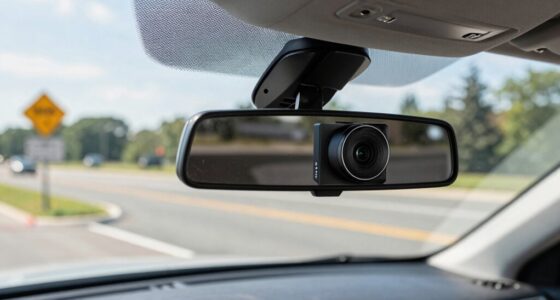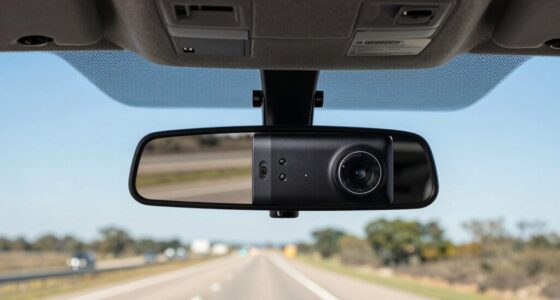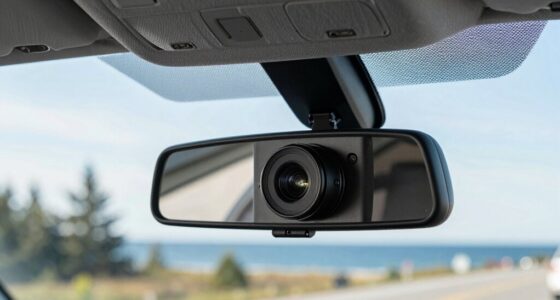
In South Carolina, you can generally use dash cams in your vehicle without strict restrictions, but you should mount them properly—on the dashboard or behind the rearview mirror, avoiding obstructing views. You’re allowed to record audio if at least one person involved is aware, thanks to one-party consent laws. Be mindful of privacy boundaries, especially inside private spaces, and use signage to notify others. To learn best practices for mounting, audio, and privacy, keep exploring the details here.
Key Takeaways
- Dash cameras are legal in South Carolina, with no specific mounting restrictions; they must not obstruct view or airbags.
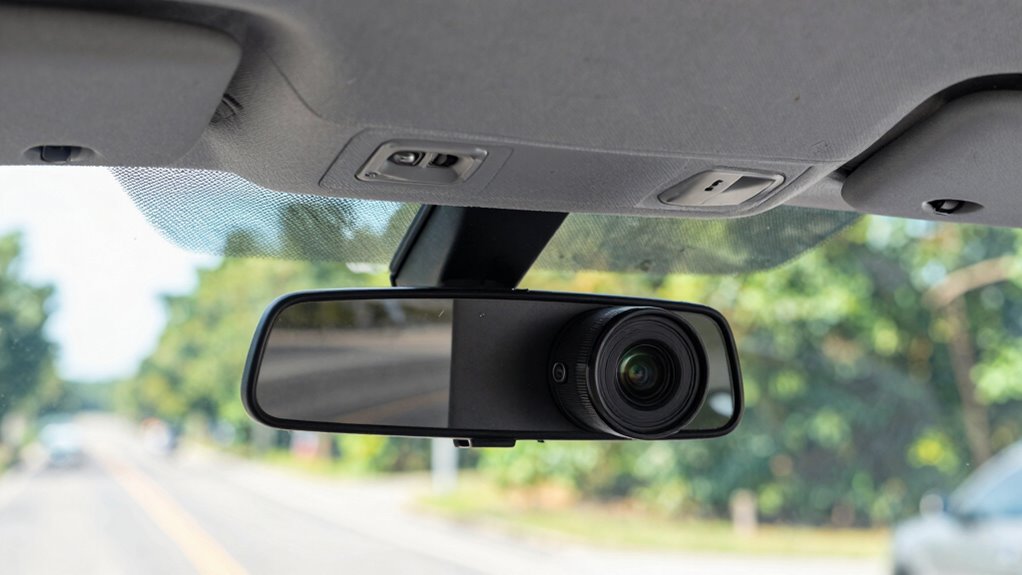
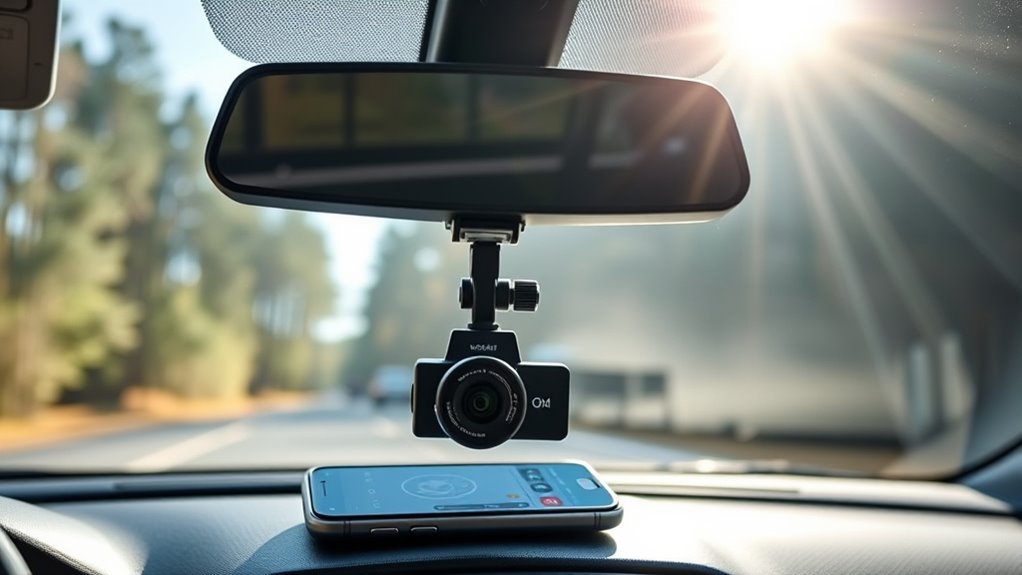
- Mount on the dashboard or behind the rearview mirror, avoiding windshield or window placement for safety and legality.
- South Carolina’s one-party consent law permits audio recording if one participant, including the recorder, is aware.
- Signage indicating recording is recommended for transparency; include clear language like “Recording in progress.”
- Recordings from dash cams are generally admissible in court if properly mounted, unaltered, and with proper documentation.
Overview of Dash Cam Usage Legality in South Carolina

In South Carolina, using dash cams in private and commercial vehicles is generally legal. The state allows dash cameras as a useful tool for recording road events and evidence. However, your dash cam’s placement must comply with state laws that prohibit obstructing your view with nontransparent materials on the windshield or side windows. Dash cam footage is usually accepted as evidence in court if you can prove its relevance, authenticity, and proper chain-of-custody. Law enforcement and private parties regularly use dash cam videos in investigations and civil cases, highlighting their accepted utility. Keep in mind that recordings may impact liability under negligence rules, potentially increasing or decreasing damages. Overall, dash cam use is permitted but must follow specific rules to stay within legal boundaries. Proper installation and maintenance are essential to ensure the footage remains admissible in legal proceedings. Additionally, understanding state-specific laws regarding audio recording and privacy is crucial to avoid unintentional violations. Maintaining compliance with privacy laws helps prevent legal issues related to recording conversations or personal data. It is also important to consider the influence of footage in legal liability, as dash cam recordings can be used to establish fault or innocence in traffic incidents. Being aware of audio recording restrictions vary by state, which can affect how you use your dash cam’s audio features. Furthermore, being aware of privacy and consent considerations can help you avoid potential legal complications when recording audio or visual data.
Proper Mounting Requirements and Placement Options

To guarantee your dash cam remains within South Carolina’s legal requirements, proper mounting on the dashboard is essential. You must avoid mounting on the windshield, as it’s prohibited by law. Instead, focus on secure dashboard placement that keeps your view unobstructed. Here are key points to consider:
- Mount your dash cam on the dashboard surface, not the windshield or windows.
- Place it in the center or edges of the dashboard to minimize visibility issues.
- Ensure the mount is secure to prevent movement during driving.
- Avoid positions that block your view or interfere with airbag deployment. Proper placement not only helps you stay compliant but also ensures your dash cam does not become a distraction while driving. Proper placement ensures compliance and maintains your field of vision, preventing traffic violations or legal issues. Always review your owner’s manual for specific mounting instructions to stay within the law. Additionally, understanding vehicle safety features can help you choose a position that does not compromise safety, especially when considering the airbag deployment zones to prevent accidental obstruction or damage. Being aware of safety regulations can further guide you in selecting an optimal and legal mounting position. Consulting with a professional or referring to manufacturer guidelines can also aid in a safe and compliant setup. Incorporating adaptive safety features can further enhance your vehicle’s safety and ensure your dash cam placement does not interfere with advanced systems.
Audio Recording Regulations and Consent Laws
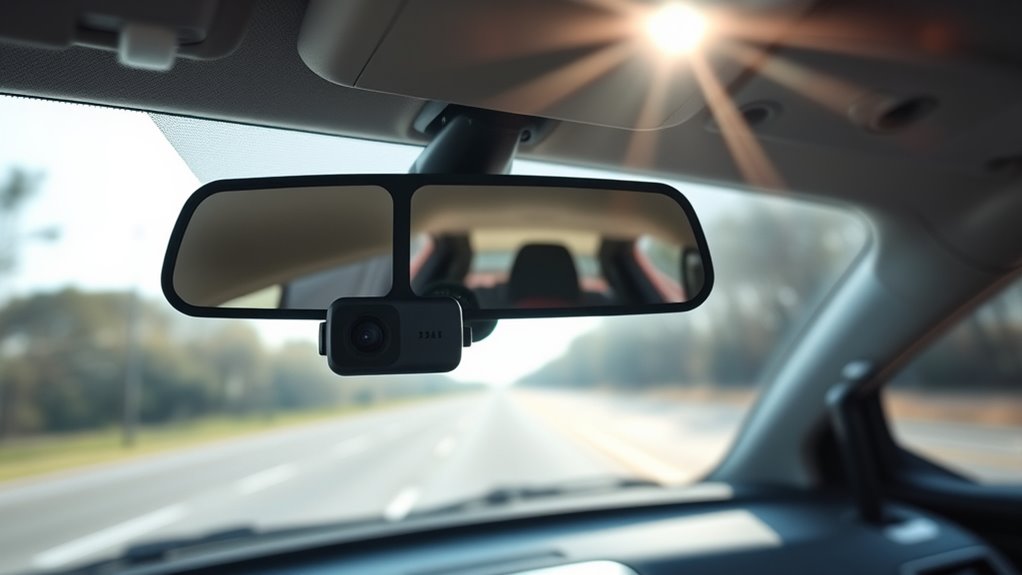
South Carolina’s one-party consent law means that as long as you’re a participant in a conversation, you can record it without notifying others. If you’re driving and talking with passengers, your consent covers the recording of in-vehicle conversations. However, this doesn’t apply to overhearing private conversations where others aren’t present, especially in private spaces like homes or private property. Law enforcement and third-party recordings follow the same rule but may face additional restrictions under other laws. Audio recordings are admissible in court if properly authenticated and unaltered, with chain-of-custody and metadata supporting credibility. Be cautious about intentionally recording private communications without consent, as doing so could lead to legal penalties or privacy violations beyond South Carolina’s one-party consent rule. It is also important to note that the recording of conversations in areas where there is a reasonable expectation of privacy, such as bathrooms or bedrooms, is generally prohibited under privacy laws. Additionally, understanding the privacy expectations in different environments is crucial to avoid inadvertent violations and legal issues. Moreover, users should be aware of the potential impact of audio recording laws on their general privacy rights and legal responsibilities when using dash cams or other recording devices. Being informed about privacy law nuances helps ensure compliance and safeguards individual rights while utilizing recording technology. Recognizing the limitations of recording laws in various contexts can help prevent unintentional breaches of privacy and legal complications. It’s also advisable to stay updated on any changes in legislation that may affect recording permissions and privacy rights.
Privacy Considerations When Using Dash Cameras
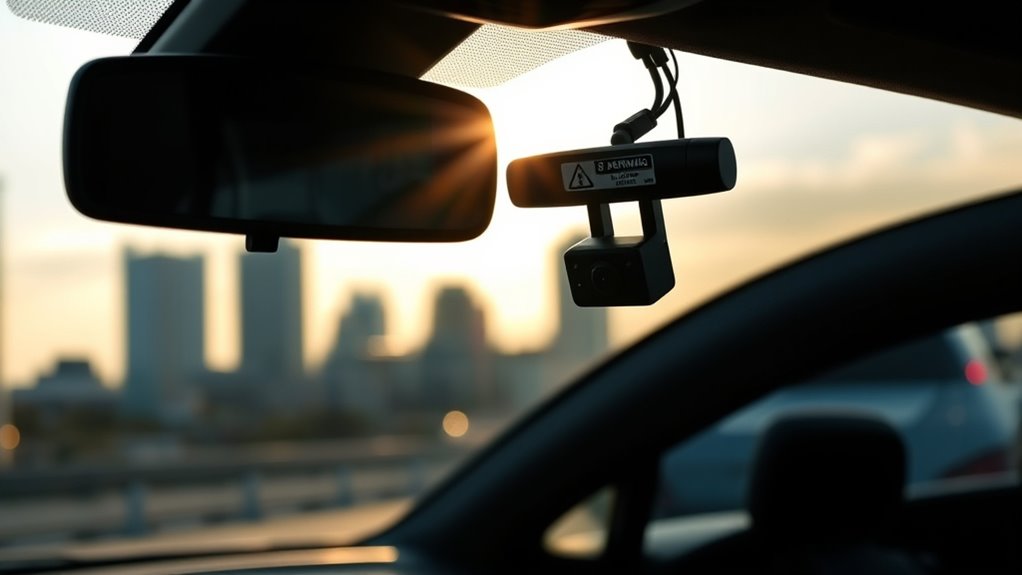
When using dash cameras, you need to be mindful of privacy boundaries, especially on public roads where recording is generally permitted. However, recording on private property or inside personal vehicles can lead to legal issues if privacy expectations are violated or passengers aren’t informed. To stay compliant, always notify passengers about recordings and avoid capturing private areas without permission. Legal considerations for recording inside a vehicle also varies by jurisdiction, so understanding local laws can help prevent potential legal complications. Additionally, understanding privacy laws related to dash cams can help ensure that your recording practices remain within legal limits. Being aware of dash cam mounting regulations can further help you avoid legal issues related to obstructing views or improper placement. Recognizing wave and wind conditions can also be important for safe installation and operation of your dash camera, preventing damage or malfunction during adverse weather. Awareness of water safety and other safety considerations is also important to prevent accidents or injuries while operating or installing dash cameras.
Public Space Recording Limits
Recording in public spaces with your dash cam is generally legal because individuals lack a reasonable expectation of privacy in these areas. You can record:
- Public streets, highways, and sidewalks without needing consent.
- Public transit spots like bus stops and train platforms, as they’re considered public.
- Public events such as parades, protests, and sports games happening in view.
- Lawful police encounters in public, which bystanders and drivers can record, and such footage may be used in court.
Additionally, understanding the privacy laws that govern public space recordings helps ensure you stay compliant with local regulations. South Carolina’s one-party consent rule applies to audio, so recording conversations where you’re a participant is lawful. Be aware that private acts or sensitive conversations in semi-private settings may still raise privacy concerns. Dash cameras are widely accepted and legal in South Carolina, making them a useful tool for documenting incidents and protecting your rights. It’s also important to be aware of public space recording limits, which can vary depending on the context and location. Moreover, familiarizing yourself with privacy considerations can help prevent potential legal issues related to recording in public. Being informed about the types of recordings that are permissible can help you avoid unintentionally infringing on someone’s privacy rights.
Private Property Restrictions
Using a dash camera on private property can raise privacy concerns, especially if you capture activities or individuals where they expect privacy. Generally, what’s visible from a public place, like a driveway or yard seen from the street, is fair game. But recording inside homes or through windows into private spaces can lead to legal issues, including invasion of privacy claims. South Carolina law recognizes civil claims if someone intrudes on another’s solitude in a highly offensive way. Also, footage obtained unlawfully may be excluded in court. Be aware that private property owners can set rules or restrictions—such as no-recording policies or mounting limitations—that, if violated, could result in civil liability or loss of access. Always respect privacy boundaries and property rights when using your dash camera. Additionally, dashcam footage captured unlawfully may be inadmissible in legal proceedings, emphasizing the importance of respecting privacy laws. It’s crucial to understand privacy laws and how they apply to your specific situation to avoid potential legal complications. Recognizing privacy considerations can help prevent unintentional violations that might lead to legal disputes. Furthermore, being aware of public vs. private space boundaries can help you navigate legal and ethical use of your dash cam more effectively. Moreover, understanding how privacy rights vary depending on location can strengthen your ability to stay compliant with local regulations.
Passenger Notification Requirements
Are you aware that South Carolina’s one-party consent law allows you to record audio as long as you’re a participant or at least one person involved knows about the recording? To stay compliant and protect privacy, consider these key points:
- Verbally inform passengers upon vehicle entry that audio and video are being recorded and how long footage will be stored.
- Post a visible sticker on the dash or windshield indicating recording is active.
- Offer passengers the option to opt out of audio recording, such as pausing or muting the dashcam, and document refusals or agreements.
- For commercial or ride-share vehicles, include recording notices in written policies and seek passenger acknowledgment when possible.
- Complying with local laws not only helps prevent legal issues but also fosters trust and transparency with passengers. Additionally, understanding privacy considerations when using dash cameras is crucial for responsible recording practices. Being aware of audio recording laws specific to your area ensures you’re fully informed about what is permissible.
Following these practices helps minimize disputes and legal risks related to passenger privacy.
Admissibility of Dash Cam Footage in Court
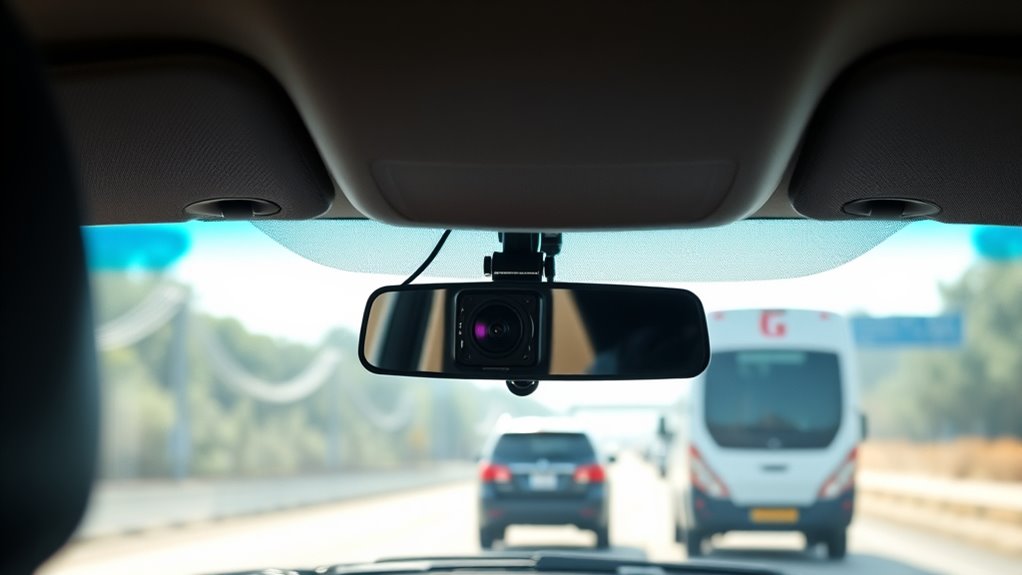
To guarantee your dash cam footage is admissible in court, you need to preserve the original recordings properly and avoid any alterations. The video must meet legal relevance standards, showing key details like speed and traffic signals, without unrelated or speculative content. Courts will assess whether the footage is authentic, unaltered, and directly related to the case before admitting it as evidence. Supporting documentation such as maintenance records or timestamps can help establish the footage’s integrity and chain of custody.
Proper Footage Preservation
Proper preservation of dash cam footage is essential to guarantee its admissibility in South Carolina courts. To do this, you should:
- Keep detailed chain-of-custody records, including who collected the footage, date, time, and transfer method.
- Retain the original device or SD card to support authenticity.
- Use forensic export methods like bit-for-bit images and verified hashes to prevent disputes.
- Document all access, copying, or playback events to rebut alteration claims and maintain an evidentiary trail.
- Implementing these procedures helps ensure the footage remains unaltered and trustworthy. Additionally, timely copying to secure, write-protected storage and creating multiple backups help prevent accidental loss or destruction. Proper documentation and secure handling safeguard your footage’s integrity in court proceedings.
Unaltered Video Requirements
Ensuring your dash cam footage remains unaltered is crucial for its acceptance in South Carolina courts. To do this, you must avoid editing or tampering with the recordings, including ensuring the date and time are accurate and unchanged. Proper chain of custody documentation proves the footage’s unaltered state, showing who possessed it, when it was acquired, and how it was stored. Experts may testify to verify the footage’s authenticity and reliability. During court proceedings, a statement under oath confirms the video meets evidentiary standards. Properly authenticated footage is often admitted with significant weight, especially in cases like traffic accidents or personal injury claims. Maintaining the integrity of your dash cam recordings is key to ensuring they are credible and admissible in legal proceedings.
Legal Relevance Standards
Understanding how dash cam footage is judged in court starts with knowing the standards for its relevance and authenticity. You need to verify your footage meets these criteria to be admissible.
- The footage must relate directly to the case, such as showing a traffic accident or road rage incident.
- It must be authenticated, proving it’s accurate, reliable, and unaltered, often through chain of custody records.
- Expert testimony may be be required to confirm the footage’s authenticity.
- Proper documentation, like chain of custody, is essential for digital evidence to meet South Carolina’s rules.
When these standards are met, courts often accept dash cam videos in cases like collisions or traffic violations, helping determine fault or dispute resolution.
Best Practices for Dash Cam Usage and Mounting

To maximize the effectiveness of your dash cam while staying compliant with South Carolina laws, you should carefully consider where and how you mount the device. Mount it on the dashboard or behind the rearview mirror, avoiding placement on the windshield or other windows. Guarantee the camera provides a clear view of the road without obstructing your rearview mirror or driver’s visibility. Use a small, discreet model to reduce theft risk and consider removable mounts for added security. Proper installation ensures your footage is admissible and unbiased, so verify placement and avoid editing recordings. Conceal the dash cam to prevent theft and remove it when parked. Always follow legal guidelines to protect your footage and avoid distractions while driving.
Signage and Notification Recommendations for Audio Recording

Although South Carolina law doesn’t require private vehicle audio recording to be visibly posted, providing clear signage can help clarify your intent and reduce privacy concerns. Proper notices can also support your case if disputes arise. Consider these recommendations:
- Use concise wording like “Audio/video recording in use” or “Recording in progress — audio and video” to clearly communicate recording.
- Place durable decals on the driver’s side window or center console, visible before anyone enters the vehicle.
- Include brief consent language, such as “By remaining in this vehicle, occupants consent to audio recording,” especially in commercial settings.
- Use reflective, weatherproof materials with large font for visibility in low light and ensure easy authentication with photos if needed.
South Carolina law allows audio recording with one-party consent, making signage an important tool to inform all occupants of ongoing recordings. Clear signage supports transparency, legal compliance, and minimizes privacy issues.
Legal References and Resources for South Carolina Dash Cam Laws
South Carolina’s laws regarding civilian dash cam use are not explicitly detailed in the state statutes. You won’t find specific laws directly regulating how or where you can mount your dash cam. Instead, references are indirect, like Code of Laws Section 56-5-3730, which addresses view obstruction, including dash cams, and general rules for dashboard placement. Court rules allow dash cam footage to be admitted if properly mounted and viewable, but issues like chain of custody can challenge its validity. Resources like the South Carolina Legislature’s search tool focus on body-worn and law enforcement cameras, not civilian devices. Law firms confirm dash cams are legal if mounted on the dashboard without obstructing views. Overall, while clear statutes are lacking, legal use is supported by case practices and general traffic laws.
Frequently Asked Questions
Are There Specific Dash Cam Brands Recommended for South Carolina Compliance?
You should choose dash cam brands like Viofo, Vantrue, or 70Mai for South Carolina compliance. These brands offer models that easily mount on your dashboard, avoiding windshield tickets, and feature secure, straightforward installation. For example, the Viofo A329S and Vantrue E1 Pro are compact, easy to set up, and meet mounting requirements. Prioritize models with clear video quality and reliable features to guarantee you’re compliant and protected on the road.
Can Dash Cam Footage Be Used in Insurance Claims Without Legal Issues?
Yes, you can use dash cam footage in insurance claims without legal issues if you follow South Carolina laws. Make sure the footage is obtained legally, is relevant, authentic, and unaltered. Preserve the chain of custody, back up the video immediately, and avoid obstructing the view. Using properly recorded footage can strengthen your claim, but be aware that it could also be used against you if it shows your fault.
What Are Penalties for Improper Dash Cam Mounting or Recording Violations?
If you improperly mount your dash cam or violate recording rules in South Carolina, you risk fines, points on your driving record, or even license suspension. Mounting devices that obstruct your view can lead to traffic tickets, with fines up to $200. Unauthorized recording of conversations may result in civil claims or criminal charges. Always follow visibility laws and obtain necessary consents to avoid penalties and legal issues.
How Long Can Dash Cam Footage Legally Be Stored Before Deletion?
You can store dash cam footage for at least four years if it’s related to investigations or evidence, and a minimum of four years for non-investigative recordings, after which it gets deleted per policy. For personal use, footage usually auto-deletes after 30–90 days unless you save it. To stay compliant, avoid deleting or altering footage prematurely, and always secure your files to prevent tampering or unauthorized access.
Are There Restrictions on Recording in Private Businesses or Residential Areas?
In private businesses, you can record where no reasonable expectation of privacy exists, like sales floors and parking lots, but avoid interior spaces with privacy expectations. In residential areas, recording outside on driveways or yards is generally permitted if activity is visible publicly, but capturing inside homes or private conversations without consent can lead to legal issues. Always guarantee your recording complies with privacy laws to avoid liability.
Conclusion
Understanding South Carolina’s dash cam laws ensures you’re compliant and protected. Did you know that nearly 75% of drivers use dash cams for safety and evidence? By following proper mounting, audio, and privacy guidelines, you can confidently record your drives without legal worries. Stay informed about regulations, use signage when necessary, and keep your footage court-ready. With these best practices, you’ll maximize your dash cam’s benefits while respecting others’ privacy on the road.