
TL;DR

Get business pricing on garage and car supplies
- Business-only prices and quantity discounts
- Tax-exempt purchasing
- Multiple users, one account, clear invoices
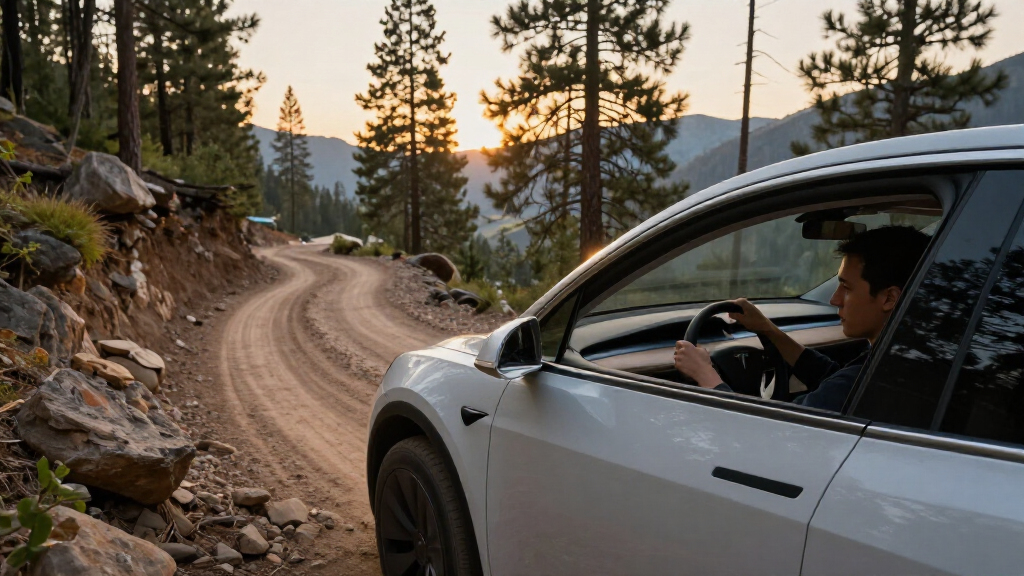
Tesla’s Full Self-Driving (FSD) system was tested on the steepest dirt road in the U.S. and successfully navigated it without human intervention. This development highlights FSD’s potential for off-road driving, but questions remain about its limits and safety.
Tesla’s Full Self-Driving (FSD) system has successfully navigated the steepest dirt road in America without human intervention, according to a recent test conducted by an independent automotive enthusiast. This marks a notable step forward in the capabilities of autonomous driving technology, especially in off-road conditions, which have traditionally been considered beyond current AI systems’ reach.
The test took place on a rugged, steep dirt trail in the southwestern United States, known for its challenging terrain and elevation gain. The vehicle, equipped with Tesla’s FSD Beta, was driven by a user who activated the system at the base of the incline. According to the user, the FSD system handled the ascent smoothly, navigating loose gravel, uneven surfaces, and steep gradients exceeding 30 degrees without requiring manual control. Tesla has not officially announced this specific test but has acknowledged ongoing improvements in FSD’s off-road capabilities through software updates and user reports. Experts note that while this is a significant achievement, it does not mean FSD is ready for all off-road conditions or that it can replace human judgment in complex terrains. Tesla’s FSD is currently approved for use on public roads with driver supervision, and off-road use remains experimental.Implications for Off-Road Autonomous Driving
This successful test demonstrates that Tesla’s FSD system can handle challenging off-road environments, potentially expanding its use cases beyond paved roads. It suggests that with further development, autonomous vehicles could one day traverse difficult terrains such as mountain trails, construction sites, or rural backroads without human input. However, it also raises questions about safety, system limitations, and regulatory approval for off-road autonomous operation, which are not yet resolved.
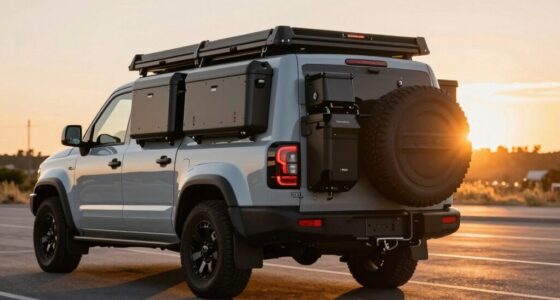
off-road autonomous vehicle accessories
As an affiliate, we earn on qualifying purchases.
As an affiliate, we earn on qualifying purchases.
Previous Developments in Tesla’s Off-Road Capabilities
Tesla has long been focused on improving FSD for highway and urban driving, with recent updates emphasizing navigation on complex city streets and highway merging. Off-road capabilities have remained largely untested publicly, though Tesla has hinted at future expansion into more diverse environments. Enthusiasts and independent testers have occasionally reported FSD handling gravel roads and light off-road conditions, but full navigation of rugged, steep terrain has not been confirmed until now. This recent test builds on Tesla’s ongoing software updates, which aim to enhance AI perception and decision-making in challenging scenarios.
“Tesla continuously improves FSD’s capabilities, and off-road testing is an important part of that process.”
— Tesla spokesperson
Tesla FSD compatible rugged off-road car mount
As an affiliate, we earn on qualifying purchases.
As an affiliate, we earn on qualifying purchases.
Unanswered Questions About FSD’s Off-Road Limits
It is not yet clear how consistently FSD can handle different types of rugged terrain, or whether it can be reliably used in all off-road conditions. Tesla has not released comprehensive data or official validation for off-road use, and the system’s safety in unpredictable environments remains unproven. Regulatory approval for autonomous off-road driving is also still pending, and Tesla emphasizes driver supervision in current use cases, limiting full autonomy in off-road scenarios.
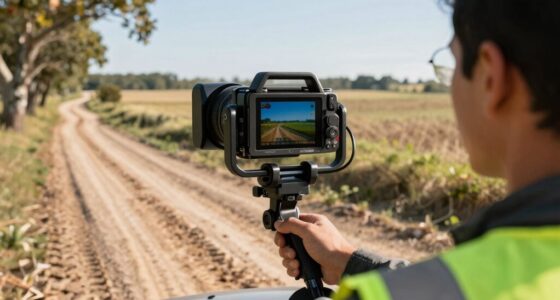
off-road driving safety camera for Tesla
As an affiliate, we earn on qualifying purchases.
As an affiliate, we earn on qualifying purchases.
Next Steps for Testing and Regulation
Tesla is likely to continue testing FSD in various off-road environments, possibly leading to formal validation or regulatory approval for broader use. Industry experts expect Tesla and other automakers to conduct more controlled trials to establish safety standards. Meanwhile, Tesla may release software updates to enhance off-road perception and decision-making, but widespread autonomous off-road driving is still in the future. Regulatory agencies will also need to evaluate safety before allowing expanded use outside public roads.
all-terrain vehicle GPS navigation system
As an affiliate, we earn on qualifying purchases.
As an affiliate, we earn on qualifying purchases.
Key Questions
Can Tesla FSD currently be used for off-road driving?
Not officially. Tesla’s FSD is approved for use on public roads with driver supervision. Off-road use remains experimental and is not officially supported or regulated.
What makes the recent dirt road test significant?
The test demonstrated that Tesla’s FSD can handle steep, rough, and loose terrain, which was previously considered beyond its capabilities, marking a potential expansion of autonomous driving into off-road environments.
Are there safety concerns with off-road autonomous driving?
Yes. Off-road environments are unpredictable and complex, and current autonomous systems have not been fully validated for safety in these conditions. Tesla advises driver supervision at all times.
Will Tesla release official off-road capabilities soon?
There is no official timeline. Tesla will likely continue testing and refining its systems, but regulatory approval and validation are required before official off-road use can be permitted.
Could this lead to autonomous vehicles used in construction or rural areas?
Potentially. If proven safe and reliable, autonomous systems like Tesla FSD could be adapted for use in construction sites, farms, or rural roads, but this is still in the experimental stage.
Source: rss
Halloween Picks
halloween
As an affiliate, we earn on qualifying purchases.