
TL;DR

Get business pricing on garage and car supplies
- Business-only prices and quantity discounts
- Tax-exempt purchasing
- Multiple users, one account, clear invoices
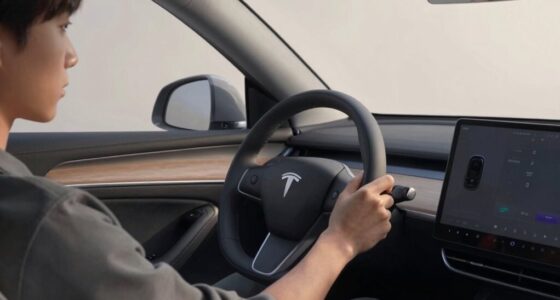
A Tesla driver has achieved a 25,000-mile streak using Tesla’s Full Self-Driving (FSD) system, which incorporates gamification elements. Critics argue this encourages overreliance on automation, raising safety concerns. The development highlights ongoing debates over Tesla’s approach to driver assistance features.
A Tesla driver has achieved a 25,000-mile streak using the company’s Full Self-Driving (FSD) system, which includes gamification features designed to motivate continued use. This milestone has drawn criticism from safety advocates concerned that such features may encourage overreliance on automation and compromise safety.
The driver, whose identity has not been publicly disclosed, has been using Tesla’s FSD system extensively over an extended period. Tesla describes FSD as an advanced driver-assistance system capable of handling many driving tasks, though it requires active supervision. Critics, including safety experts and industry observers, argue that the gamification elements—such as progress tracking, leaderboards, and rewards—may incentivize drivers to push the system beyond safe limits. Tesla has not officially commented on the specific criticism related to this streak but maintains that FSD requires driver attention at all times. The driver’s achievement has been shared on social media, drawing both admiration and concern from the public and safety advocates.Potential Safety Risks of Gamified FSD Usage
This development underscores the ongoing debate over Tesla’s approach to driver assistance features. Critics warn that gamification may encourage drivers to overtrust FSD capabilities, increasing the risk of accidents. The controversy highlights the challenge of balancing technological innovation with safety and regulatory oversight, especially as Tesla pushes for wider adoption of autonomous features. The incident could influence future regulatory decisions and Tesla’s own feature design, emphasizing the importance of clear driver engagement requirements.Tesla Full Self-Driving FSD safety features
As an affiliate, we earn on qualifying purchases.
As an affiliate, we earn on qualifying purchases.
Tesla’s FSD and Gamification: Evolving Features and Safety Concerns
Tesla’s Full Self-Driving system has been available to consumers since 2019, with continuous updates aimed at increasing automation capabilities. The company promotes FSD as a driver-assist feature that can handle complex driving scenarios, but it explicitly states that drivers must remain attentive and ready to take control. In recent years, Tesla has integrated gamification elements into the FSD experience, including progress metrics, rewards, and social sharing features, to motivate continued use. Critics have long raised concerns that such features could lead to complacency or overreliance, especially as some drivers share their milestones online. The recent streak of 25,000 miles is among the longest publicly reported uses of FSD with these features, intensifying the debate over safety and driver engagement.
“FSD requires active driver supervision at all times. We design our systems to support safe driving, but ultimate responsibility remains with the driver.”
— Tesla spokesperson, in a statement to Reuters
driver assistance system with gamification
As an affiliate, we earn on qualifying purchases.
As an affiliate, we earn on qualifying purchases.
Unclear Impact of Gamification on Driver Safety
It remains unclear how much the gamification features directly influence driver behavior or safety outcomes. While critics argue these features promote overuse, there is limited empirical data quantifying their impact on accident rates or driver attentiveness. Tesla has not released detailed data correlating gamification with safety incidents, and regulatory authorities are still evaluating the broader implications.As an affiliate, we earn on qualifying purchases.
Regulatory and Industry Response to FSD Milestones
Regulators such as the NHTSA are expected to scrutinize Tesla’s use of gamification and its potential safety implications more closely. Tesla may face increased oversight or calls for clearer driver engagement protocols. Additionally, industry observers anticipate ongoing discussions about the ethical and safety considerations of gamified automation features. Tesla and other automakers could modify or restrict such features in future updates to address safety concerns.
automotive driver monitoring system
As an affiliate, we earn on qualifying purchases.
As an affiliate, we earn on qualifying purchases.
Key Questions
Does Tesla endorse the use of FSD without driver supervision?
No. Tesla explicitly states that FSD requires active driver supervision at all times, and drivers are responsible for remaining attentive while using the system.
What are the safety concerns associated with gamification in FSD?
Critics argue that gamification can encourage drivers to overtrust the system, potentially leading to decreased vigilance and increased risk of accidents.
Has Tesla responded to criticism about its gamification features?
Tesla has maintained that FSD is a driver-assist system requiring driver oversight, but has not specifically addressed concerns about gamification influencing driver behavior.
Could this milestone influence future regulations?
Yes, regulators may consider this development when evaluating safety standards and regulations for autonomous and semi-autonomous vehicle features.
Source: rss
Fall Picks
fall essentials
As an affiliate, we earn on qualifying purchases.