TL;DR

Get business pricing on garage and car supplies
- Business-only prices and quantity discounts
- Tax-exempt purchasing
- Multiple users, one account, clear invoices
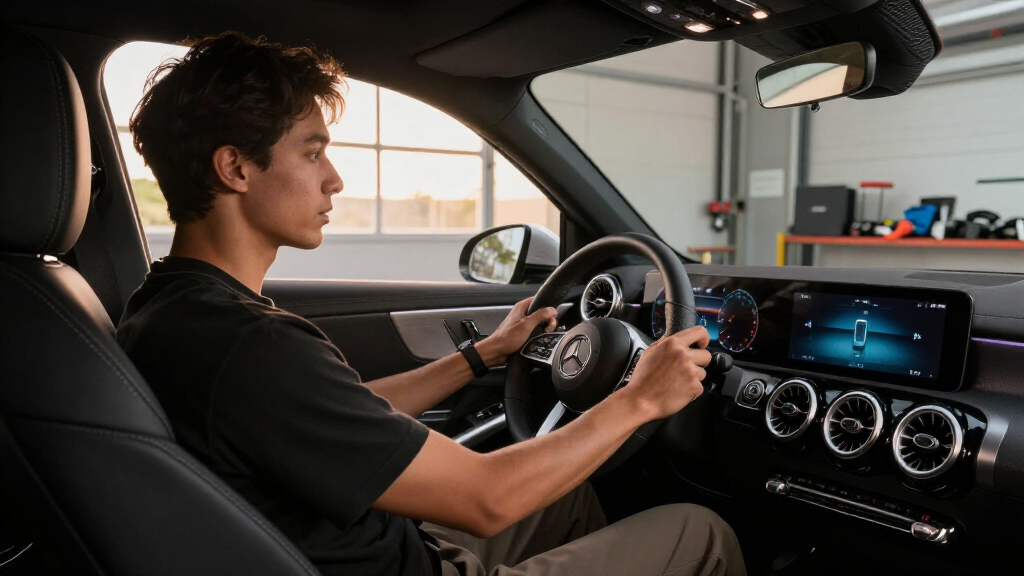
Mercedes is set to collaborate with AI startup Wayve to develop an autonomous driving system similar to Tesla’s Full Self-Driving within two years. This move signals a strategic shift for Mercedes in autonomous vehicle technology.
Mercedes-Benz is partnering with AI startup Wayve to develop a full self-driving system comparable to Tesla’s FSD within two years, according to industry sources. This collaboration represents a strategic shift for Mercedes in autonomous vehicle technology, aiming to accelerate its entry into highly autonomous driving features amid increasing competition.
The partnership between Mercedes and Wayve is confirmed through industry reports, with sources indicating that the automaker aims to integrate Wayve’s advanced AI driving technology into its vehicles within the next 24 months. The move follows Mercedes’ recent focus on expanding its autonomous driving capabilities, which has traditionally relied on in-house development and partnerships with other tech firms. The collaboration is expected to leverage Wayve’s machine learning platform, which emphasizes end-to-end learning and real-world data processing, potentially enabling Mercedes to leapfrog competitors in the autonomous driving race.While specific technical details remain undisclosed, sources suggest that the system will aim to match or surpass Tesla’s FSD in functionality, including highway driving, urban navigation, and complex scenarios. Mercedes has not yet officially announced the partnership or provided a timeline, but industry insiders indicate that the collaboration is well underway and that the system could be introduced in select models by 2025 or early 2026. The partnership aligns with Mercedes’ broader strategy to incorporate AI-driven features as standard in its luxury vehicles, responding to growing consumer demand and regulatory pressures for safer, more autonomous driving options.
Implications for Mercedes and the Autonomous Vehicle Market
This collaboration signifies a strategic pivot for Mercedes, emphasizing AI-driven autonomous systems comparable to Tesla’s FSD, which could reshape competitive dynamics among premium automakers. If successful, it positions Mercedes as a serious contender in the autonomous vehicle space, potentially influencing industry standards and consumer expectations. The move also underscores the increasing importance of specialized AI startups like Wayve in automotive innovation, as traditional automakers seek to accelerate development without extensive in-house R&D. For consumers, this could mean more accessible, advanced autonomous features in luxury vehicles within the next two years, impacting safety, convenience, and the future of mobility.Tesla FSD compatible autonomous driving system
As an affiliate, we earn on qualifying purchases.
As an affiliate, we earn on qualifying purchases.
Mercedes’ Autonomous Driving Strategy and Industry Trends
Mercedes-Benz has historically focused on incremental advancements in driver assistance systems, gradually expanding capabilities toward full autonomy. Its previous collaborations include partnerships with tech firms and internal R&D efforts aimed at Level 3 and Level 4 autonomy. Meanwhile, Tesla’s FSD has become a benchmark for consumer-facing autonomous features, though it remains under regulatory and safety review. The broader automotive industry is witnessing heightened interest in AI-based autonomous systems, with startups like Wayve gaining attention for their innovative approaches. The recent surge in coverage and search interest around this topic suggests that automakers are increasingly exploring partnerships with AI firms to accelerate their autonomous vehicle development, driven by competitive pressures and regulatory developments.Mercedes-Benz autonomous vehicle technology
As an affiliate, we earn on qualifying purchases.
As an affiliate, we earn on qualifying purchases.
Unconfirmed Details and Potential Challenges
It is not yet confirmed whether the partnership between Mercedes and Wayve has been finalized or if the timeline for deployment remains as two years. Technical specifics about the autonomous system, including safety features, regulatory approval, and integration methods, are still undisclosed. Additionally, the level of control Mercedes intends to retain versus what will be handled by Wayve’s AI platform remains unclear. Industry experts caution that developing a Tesla FSD-like system involves complex regulatory and safety hurdles, which could impact the timeline or functionality of the final product.AI-powered car driving assist system
As an affiliate, we earn on qualifying purchases.
As an affiliate, we earn on qualifying purchases.
Next Steps and Industry Impact
Mercedes is expected to formalize the partnership with Wayve in the coming months, with prototype testing and system validation likely to occur over the next year. The company may also begin pilot programs or limited releases in select markets by 2025. Industry observers will be closely watching for official announcements, technical details, and regulatory filings. The collaboration could prompt other automakers to accelerate their own autonomous development efforts, intensifying competition in the luxury autonomous vehicle segment. Regulatory agencies may also scrutinize the system more closely as it approaches deployment, influencing the pace of adoption.As an affiliate, we earn on qualifying purchases.
Key Questions
Will Mercedes’ new system be as capable as Tesla’s FSD?
Specific technical capabilities are not yet confirmed, but sources suggest Mercedes aims to develop a system that matches or exceeds Tesla’s FSD functionality, including urban and highway driving.
When can consumers expect to see this system in Mercedes vehicles?
If the partnership proceeds as planned, a limited rollout or pilot program could occur in 2025, with broader availability possibly by 2026.
What is Wayve’s approach to autonomous driving technology?
Wayve emphasizes end-to-end machine learning models that learn from real-world data, aiming to create adaptable and scalable autonomous systems.
Could this partnership influence regulatory approval for autonomous vehicles?
Potentially, as the development of a Tesla FSD-like system will require regulatory review, and successful deployment could set new standards in autonomous vehicle safety and performance.
How does this move compare to Mercedes’ previous autonomous initiatives?
This partnership represents a more aggressive push into full autonomy, contrasting with earlier incremental advances and collaborations with other tech firms.
Source: rss
Fall Picks
fall essentials
As an affiliate, we earn on qualifying purchases.