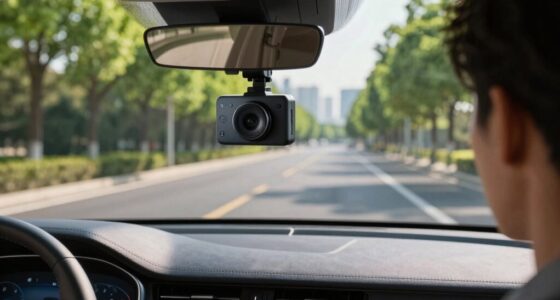
Many WDR marketing claims highlight high dB ratings or impressive specs but often exaggerate real-world performance. True WDR depends on hardware, multiple exposures, and image processing, which can be limited by scene dynamics and processing speed. Overhyped claims can mislead you into expecting perfect results in all conditions. To understand what really matters, it’s essential to look beyond specifications and explore how WDR performs in actual scenarios—there’s more to uncover if you look deeper.
Key Takeaways
- Marketing often exaggerates WDR capabilities by focusing on dB ratings without considering real-world noise and image quality.
- High dB figures do not guarantee clear images; performance depends on sensor quality, processing algorithms, and scene conditions.
- WDR effectiveness varies with scene dynamics, motion, and lighting changes, which many claims overlook or oversimplify.
- Independent testing and real-world evaluations are essential to verify WDR claims beyond manufacturer specifications.
- Overhyped marketing can mislead users into expecting perfect results in all scenarios, ignoring inherent limitations and potential artifacts.
Understanding the Core Concept of WDR

Wide Dynamic Range (WDR) is a technology that helps cameras produce clear images in scenes with both very dark and very bright areas. It describes the contrast ratio between the darkest and brightest tones captured in a single exposure. WDR enhances image quality by registering details in both shadowed and illuminated parts, balancing light and dark areas for better visibility. It’s also called high dynamic range, extended dynamic range, or expanded dynamic range. The dynamic range is measured in decibels (dB), with industry standards setting WDR at 60 dB or higher. Human eyes can perceive around 90 dB, but most cameras capture less. WDR extends this range, preventing overexposure in bright spots and underexposure in dark zones, resulting in clearer, more balanced images in challenging lighting conditions. Dynamic Range is a critical factor in image clarity, especially in environments with complex lighting. Additionally, advancements in image sensor technology have significantly improved WDR performance, enabling more accurate and reliable imaging in diverse scenarios. Improving sensor sensitivity is also essential for capturing a broader range of light levels effectively, and ongoing innovations in sensor design continue to push the boundaries of what cameras can achieve under difficult lighting conditions.
How WDR Technology Works in Practice
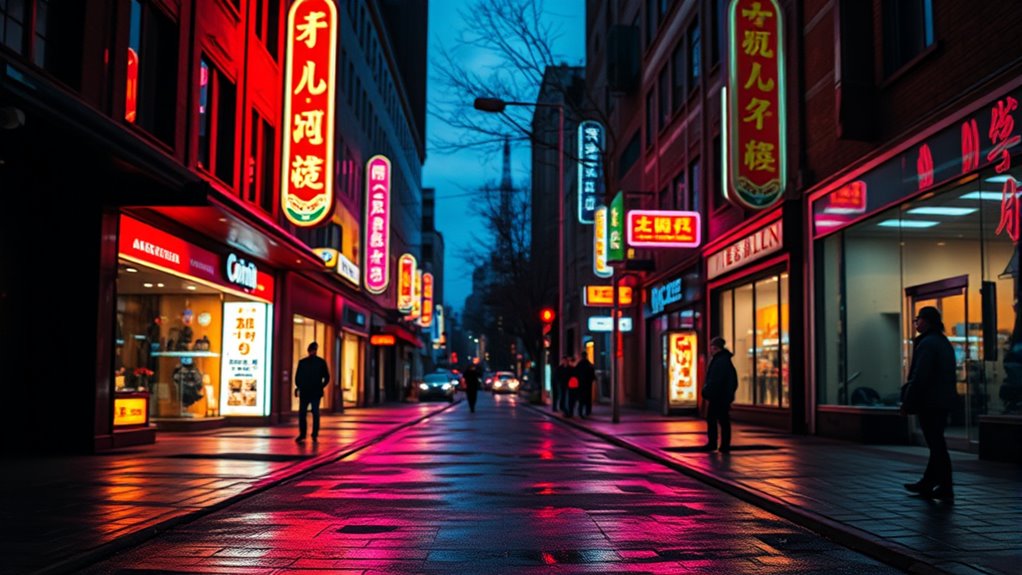
WDR technology works in practice by capturing multiple images at different exposure levels and merging them to create a balanced, high-contrast image. This process guarantees details are preserved in both bright and dark areas. For example, at entrances or parking garages, WDR prevents silhouettes and blown-out highlights, making faces and license plates visible. Additionally, understanding the dynamic range capabilities helps in selecting the appropriate system for specific environments. Incorporating smart sensor technology can further enhance the effectiveness of WDR in complex lighting conditions. Recognizing the importance of sensor sensitivity ensures optimal performance in varying lighting scenarios. Moreover, the contrast ratio plays a critical role in how well these details are rendered, especially in challenging lighting situations. A deeper understanding of sensor calibration can also improve overall image quality in WDR-enabled systems.
Differentiating WDR From HDR: What You Need to Know
Understanding the differences between WDR and HDR is key to choosing the right imaging technology for your needs. WDR handles contrast within a single exposure by using digital algorithms, often tone mapping, to brighten dark areas or tone down bright spots. It’s ideal for scenes with moderate contrast and offers sharper details. HDR, on the other hand, combines multiple frames captured at different exposures in real-time, creating a balanced image that preserves details in both shadows and highlights, especially in high-contrast scenes. While HDR typically requires powerful sensors and high processing speeds, WDR relies more on hardware-software combos and post-processing algorithms. WDR excels in dynamic videos, whereas HDR is better suited for static images. Your choice depends on scene complexity and processing capabilities.
Common Applications and Use Cases for WDR

Wide dynamic range is essential in many real-world scenarios where lighting conditions vary dramatically. Whether you’re monitoring challenging outdoor environments, driving at night, or inspecting industrial processes, WDR helps capture clear, usable images. These applications demonstrate how WDR improves visibility and detail across diverse fields. WDR preserves details in both bright and dark areas of a scene, ensuring that important visual information is not lost regardless of lighting challenges. Additionally, understanding the lighting conditions can help optimize WDR settings for specific situations. Recognizing how lighting variability affects image quality allows for better adjustment and performance of WDR technology in various environments. Moreover, selecting the appropriate WDR technology can improve image clarity in complex lighting scenarios, enhancing overall effectiveness. Being aware of the sensor capabilities can further optimize the performance of WDR in different settings. Knowing about dynamic range specifications can aid in choosing the right imaging system for particular applications.
Surveillance in Challenging Light
Surveillance in challenging lighting conditions often requires cameras capable of handling high contrast scenes to reveal critical details. WDR technology balances exposure, preventing overexposed exterior views and underexposed interiors, making facial features and license plates visible. For entranceways and lobbies, true WDR captures multiple exposures, ensuring details aren’t lost at thresholds where sunlight meets interior lighting. In retail storefronts, WDR enhances visibility of suspects or transactions through large windows, reducing blind spots and artifacts. Perimeter cameras benefit from WDR’s ability to identify vehicles and pedestrians in bright daylight or shadowed areas. WDR technology has advanced significantly, offering better performance and helping eliminate issues like dark spots and glare. You’ll experience: 1. Clear facial recognition even in backlit scenes 2. Accurate license plate details in bright or dark conditions 3. Reliable identification of moving objects without ghosting
Automotive Driving Conditions
Automotive environments present diverse lighting challenges that demand high dynamic range cameras to guarantee critical details are captured clearly. During day-to-night changes, sudden exposure changes in tunnels require over 100 dB of effective dynamic range to preserve both interior and exterior details. Sun glare and low sun angles can saturate sensors, obscuring lane markings and pedestrians. Nighttime oncoming headlights create intense highlights and flare, reducing detection accuracy for small objects. Wet or reflective surfaces increase scene contrast, masking obstacles with bright reflections. Urban shadows from tall buildings generate high local contrast, complicating single-exposure imaging. Whether for ADAS, dashcams, rearview, or in-cabin monitoring, capturing clear images across these conditions hinges on advanced WDR capabilities that balance exposure and detail in every frame. This is essential because high dynamic range technology enables cameras to adapt to rapidly changing lighting conditions, ensuring consistently reliable image quality. Additionally, wider dynamic range allows for better differentiation between objects in complex lighting scenarios, further enhancing safety and reliability.
Security and Industrial Use
In security and industrial settings, high dynamic range cameras are essential for capturing clear images amid challenging lighting conditions. These cameras excel at:
- Monitoring building entrances, ensuring facial recognition even when people move from bright sunlight into dark interiors.
- Securing warehouses and factories by managing zones with stark lighting differences, from dim storage areas to brightly lit workstations.
- Overseeing parking garages, effectively capturing vehicle details in dark or brightly lit environments.
- Utilizing WDR technology, these cameras can balance exposure across the entire frame, providing detailed images regardless of lighting extremes. Their ability to adapt to lighting variability is critical for maintaining security integrity.
Benefits of WDR in Real-World Scenarios

Wide Dynamic Range (WDR) substantially enhances image quality in real-world scenarios by capturing details that would otherwise be lost in extreme lighting conditions. This means you get clear identification of individuals near windows or entrances, even in backlit scenes. WDR improves security by balancing exposure in high-contrast environments like outdoor parking lots, tunnels, or indoor spaces with uneven lighting. It guarantees accurate monitoring by capturing footage in scenes with harsh sunlight or deep shadows. In industrial settings, WDR handles mixed lighting, revealing defects and ensuring consistent quality control. For automotive imaging, it manages sudden light shifts like tunnels or bright sunlight, providing clearer images for driver assistance. Modern sensors used in WDR cameras are capable of capturing a wider range of light intensities, making them essential for environments with challenging lighting conditions. Additionally, advancements in sensor technology have significantly improved the effectiveness of WDR systems across various applications, enabling more accurate and detailed imaging in complex lighting environments. The integration of advanced image processing algorithms further enhances the overall performance of WDR cameras, allowing for even better clarity and detail. Moreover, the ongoing development of high dynamic range sensors continues to push the capabilities of WDR technology, making it more adaptable and reliable. These technological improvements also contribute to cost efficiency, making WDR solutions more accessible for different industries. Overall, WDR delivers versatile, reliable images vital for safety, security, and operational efficiency.
Limitations and Challenges of WDR Implementation

Implementing WDR comes with processing speed constraints that can limit real-time performance and increase latency. You also risk artifacts and noise, especially in challenging scenes with motion or low light, which can undermine image quality. Additionally, variability in system design and hardware choices means WDR performance often falls short of marketing claims. Furthermore, the effectiveness of WDR can vary greatly depending on the specific camera model and environmental conditions, making it difficult to rely solely on specifications. Variations in system design and hardware components can lead to inconsistent results, further complicating reliable implementation. The hardware limitations involved in processing WDR can significantly impact overall system reliability and image clarity, highlighting the importance of understanding processing constraints in real-world applications. Moreover, sensor technology plays a crucial role in how well WDR functions across different scenarios, affecting the overall image quality. As sensor advancements continue, they can either enhance or hinder the performance of WDR depending on the compatibility and quality of the sensor components.
Processing Speed Constraints
Processing speed constraints pose a significant challenge for real-time multi-exposure WDR systems, as fusing multiple frames requires intensive computations and high data throughput. You face increased per-frame processing, handling multiple full-resolution images simultaneously. This can lead to:
- Bottlenecks in data transfer, as memory bandwidth struggles to keep up, slowing down the entire system. High-performance hardware is often necessary to mitigate these issues and maintain efficiency.
- Reduced frame rates, forcing you to compromise on resolution or skip frames to maintain real-time performance.
- Higher power and thermal loads, which demand better cooling solutions and increase device costs.
- Gold IRA markets are also subject to regulatory and market fluctuations, which can impact investment performance and planning.
- Additionally, processing speed limitations can hinder the system’s ability to adapt quickly to dynamic scenes, affecting overall image quality and usability. The hardware acceleration capabilities are critical for overcoming these challenges.
These limitations make achieving seamless, high-quality WDR in complex scenes difficult without specialized hardware. As a result, balancing processing speed with image fidelity becomes a critical challenge for manufacturers and users alike.
Artifact and Noise Risks
Despite the ability of WDR systems to enhance image detail in challenging lighting conditions, they often introduce artifacts and noise that can compromise image quality. Motion-induced ghosting and blur occur when moving objects create semi-transparent duplicates or halos due to mismatched exposures during tone mapping. Flickering lights, like fluorescent or LED PWM, cause temporal inconsistencies, resulting in flicker and banding artifacts. High-speed motion reduces the alignment of short- and long-exposure frames, increasing blur and reducing SNR. Misalignments from parallax or rolling-shutter effects lead to ghost edges and misregistration. Additionally, local tone-mapping can cause halos, contouring, and unnatural gradients. Noise amplification occurs when merging different exposures, and compression can produce ringing or mosquito noise. Sensor design flaws can also introduce moiré, banding, and temporal artifacts, further degrading image fidelity. Advanced algorithms help mitigate some of these issues but often require significant processing power and may not eliminate all artifacts.
Implementation Variability
The effectiveness of Wide Dynamic Range (WDR) technology heavily depends on the hardware and design choices made during development, which can vary widely and impact performance considerably. You face challenges like:
- Hardware constraints, including limited sensor dynamic range (~60–100 dB), pixel well capacity, and read noise, forcing trade-offs between sensitivity and saturation. Sensor limitations
- Processing limits, where real-time multi-exposure fusion demands significant computational power, increasing system complexity, cost, and thermal issues.
- Scene dynamics, such as motion, flickering light, and rapid changes, cause ghosting, artifacts, and inconsistent exposures that reduce WDR effectiveness.
These factors mean that achieving consistent, high-quality WDR across devices and scenarios remains a complex balancing act, often leading to compromises in performance and image fidelity.
Evaluating Marketing Claims and Performance Expectations

When evaluating marketing claims about wide dynamic range (WDR) technology, it’s essential to scrutinize the evidence backing those assertions. Many claims focus on dB ratings without considering real-world performance, which depends on noise reduction and image processing. Regulator standards demand truthful, non-deceptive evidence, often scrutinized through rigorous, independent tests like double-blind comparisons. Beware of surveys deemed unreliable or biased, as these can mislead your expectations.
| Aspect | Marketing Focus | Actual Performance Factors |
|---|---|---|
| Metrics | dB ratings, specs | Noise reduction, image clarity |
| Testing Standards | Short questionnaires, surveys | Rigorous, independent validation |
| Audience | Consumers, regulators, competitors | Internal teams, external legal bodies |
| Reliability | Claims substantiation | Evidence-based, withstands scrutiny |
Making Informed Decisions When Choosing WDR-Enabled Devices
Choosing the right WDR-enabled device requires understanding how different technologies and performance metrics align with your specific needs. You need to evaluate whether true WDR or digital WDR best suits your environment. Consider these critical factors:
- Sensor capabilities: Higher native dynamic range (stops or dB) means better scene coverage, but true WDR with multiple exposures offers more detail at a processing cost. High-quality sensors are essential for accurate scene capture.
- Low-light performance: A higher signal-to-noise ratio (SNR) indicates clearer images in darkness, though some devices amplify noise or introduce artifacts.
- Scene behavior: For fast-moving scenes or rapid lighting changes, motion artifacts or lag may impact clarity, so test devices in real conditions beforehand.
Prioritize matching WDR features to your environment and budget, ensuring reliable performance without surprises.
Frequently Asked Questions
How Do I Determine if a WDR Camera Suits My Specific Lighting Environment?
To determine if a WDR camera suits your lighting environment, evaluate the scene’s contrast levels. Measure the brightness difference between highlights and shadows; if it surpasses 100 dB, you need a true WDR camera with 120 dB or higher. Test the camera in your environment, capturing images with and without WDR. Check for clear details in extreme lighting, like backlit subjects or bright windows, to ensure it performs well.
What Are the Key Indicators of a High-Quality WDR System?
Think of a high-quality WDR system as a skilled painter capturing every shadow and highlight on a canvas. Look for a camera with a high native decibel (dB) range, meaning it can handle extreme contrast without losing details. Check if it uses true multi-exposure WDR rather than just digital tone mapping. Also, consider the sensor’s pixel size, optical quality, and real-world test results to guarantee it performs well in your environment.
Can WDR Technology Cause False Positives in Security Footage?
WDR technology itself doesn’t cause false positives in security footage. Instead, environmental factors like moving foliage, reflections, or lighting changes can trigger false alarms, regardless of whether your camera uses WDR. Sometimes, digital WDR’s noise or distortion might make motion detection less accurate, but WDR primarily focuses on image quality, not motion detection. To reduce false positives, optimize your camera’s setup and use advanced motion algorithms.
How Does WDR Impact the Overall Cost and Maintenance of Cameras?
Ever wonder if WDR affects your camera’s costs and upkeep? It does—WDR cameras usually come with higher initial prices due to advanced sensors and processing. They demand more bandwidth, storage, and sometimes labor for proper installation. Maintenance includes firmware updates, troubleshooting, and replacing drives sooner. But, isn’t clearer footage worth the extra investment? When environments need detailed images, the long-term benefits often justify the added expenses, making WDR a smart choice.
Is WDR Technology Compatible With All Types of Surveillance Hardware?
WDR technology isn’t compatible with all surveillance hardware. It requires specific sensors, processors, and often manufacturer support, meaning some cameras can’t use WDR features. For example, high-end models from brands like Axis or Panasonic support advanced WDR, while cheaper or older models might lack this capability. To verify compatibility, check your camera’s specifications and confirm it supports the type of WDR you need, especially for challenging lighting conditions.
Conclusion
Understanding WDR helps you make smarter choices, distinguish genuine benefits from marketing hype, and select devices that truly meet your needs. By recognizing how WDR works, its applications, benefits, and limitations, you empower yourself to evaluate claims critically, compare options confidently, and make informed decisions. Ultimately, informed choices lead to better results, clearer images, and greater satisfaction—because knowing the truth about WDR guarantees you’re investing wisely in technology that genuinely delivers.