Dash cams can realistically capture vandalism from multiple angles, especially with wide or panoramic lenses, dual-channel setups, and even 360-degree cameras. They record clear footage during the day and at night using HDR and night vision, provided environmental conditions aren’t too harsh. Features like parking mode, event locking, and GPS help document incidents for legal and insurance claims. To get the full picture, see how proper placement and technology can improve your vandalism protection.
Key Takeaways
- Dash cams can capture vandalism in well-lit conditions with clear, timestamped footage of perpetrators and damage details.
- Wide-angle lenses and multiple cameras help record vandalism from various angles, reducing blind spots.
- Night vision and HDR features improve footage quality for vandalism occurring in low-light or adverse weather conditions.
- Proper placement and regular maintenance ensure the dash cam records relevant incidents before they are overwritten.
- Recorded footage can serve as crucial evidence for police investigations and insurance claims, supporting vandalism claims effectively.
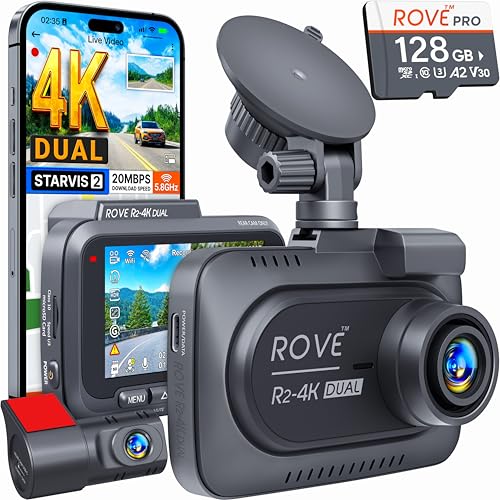
ROVE R2-4K DUAL Dash Cam Front and Rear, STARVIS 2 Sensor, FREE 128GB Card Included, 5G WiFi – up to 20MB/s Fastest Download Speed with App, 4K 2160P/FHD Dash Camera for Cars, 3" IPS, 24H Parking Mode
4K FRONT + 1080P REAR RECORDING – ROVE R2-4K DUAL dash cam offers dual-channel recording capabilities, capturing footage…
As an affiliate, we earn on qualifying purchases.
As an affiliate, we earn on qualifying purchases.
The Capabilities of Dash Cams in Vandalism Detection

Dash cams have become essential tools for detecting vandalism, thanks to their advanced features and strategic placement options. Dual-channel setups, like front plus rear or interior cameras, increase your chances of recording vandalism from different angles. External rear-facing or 360° cameras extend coverage to blind spots on your vehicle’s trunk, sides, and rear panels that single front units miss. Hardwired installations with constant power enable parking-mode recording even when your vehicle’s off, capturing vandalism in action. Low-profile mounts and concealed placements make tampering less likely, ensuring your camera stays intact. Additional auxiliary cameras, such as license-plate or mirror cams, provide close-up views for identifying perpetrators or capturing essential details. These features work together to improve vandalism detection and evidence collection. Properly positioning your dashcam and utilizing these features can significantly increase the chances of capturing vandalism incidents effectively. Incorporating advanced camera technology can further enhance your ability to record suspicious activity, especially in challenging lighting or weather conditions. Using motion detection settings can alert you promptly to suspicious movements around your vehicle, improving the likelihood of capturing vandalism. Additionally, understanding the lighting conditions at your parking location can help optimize camera settings for clearer footage. Incorporating wireless connectivity can also allow for remote monitoring and quicker response times.

IIWEY N5 4 Channel Dash Cam 360° View, 1080P Front and Rear Inside, Left Right Dash Camera for Cars, 8 IR Lamps Night Vision, 5G WiFi & APP Control, G-Sensor, Parking Mode, with a Free 128GB SD Card
❗❗❗NOTE: This product must be powered by the original cigarette lighter charger; it cannot be powered by a…
As an affiliate, we earn on qualifying purchases.
As an affiliate, we earn on qualifying purchases.
Limitations of Dash Cam Footage in Low-Light and Adverse Conditions
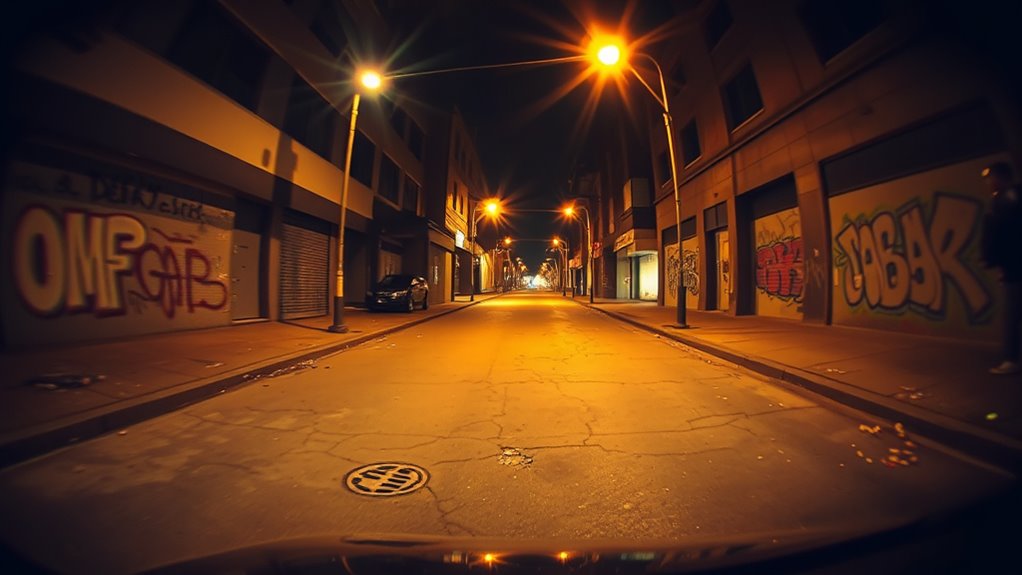
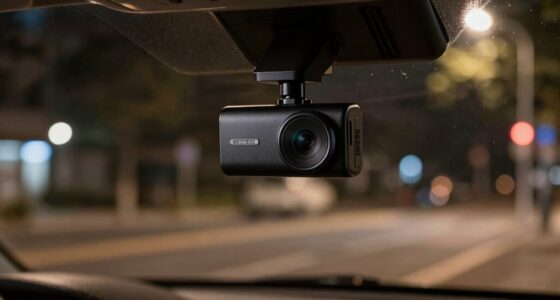
Low-light and adverse weather conditions challenge the effectiveness of dash cam footage, often resulting in grainy or unclear images. As light drops, sensors produce more noise, obscuring details like facial features or small tools used in vandalism. Smaller sensors and pixels gather less light, reducing image quality at night. Many dash cams perform adequately when properly tuned, but default settings and firmware greatly impact low-light performance. Increasing gain to brighten images also amplifies noise, making license plates or distant objects hard to read. Environmental factors like heat and weather can degrade sensor sensitivity over time. Limited aperture and exposure settings cause motion blur and reduce detail in shadowed areas. Overall, capturing clear, detailed footage during low-light or harsh conditions remains a significant challenge for dash cams.

1080P Dual Dash Camera for Car Front and Inside Dashcam Car Security Video Recorder,170°Wide Angle Vehicle Cam,WDR,G-Sensor,2’’ IPS Screen,Loop Recording,Night Vision (Dual Dash Cam Without Card)
【1080P Front and Inside Dash Cam 】Super Clear 1920*1080P pictures can be provided by the small cam. The…
As an affiliate, we earn on qualifying purchases.
As an affiliate, we earn on qualifying purchases.
How Wide-Angle Lenses Help Capture Multiple Vandalism Angles
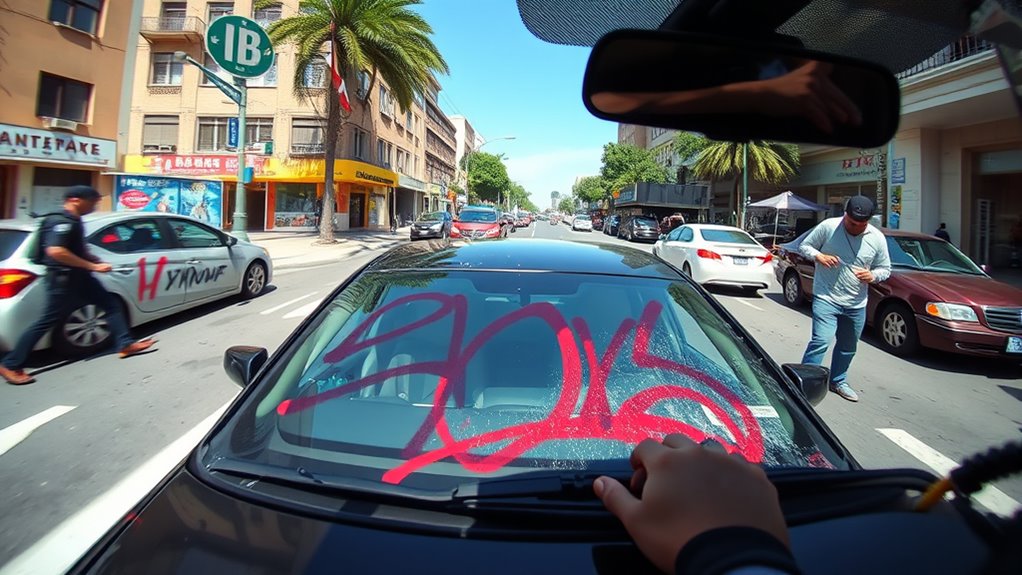
Wider-angle lenses substantially enhance a security system’s ability to capture multiple vandalism angles in a single frame. Imagine:
- Covering adjacent lanes, sidewalks, and parking spaces with a 120–180° view.
- Nearly surrounding your vehicle with an ultra-wide lens (>180°), despite some distortion.
- Encompassing a 22-34 meter width at 10 meters distance, capturing more scene details.
- Overlapping front and side cameras to minimize blind spots and provide seamless multi-angle coverage.
- Utilizing wide-angle lenses that can effectively reduce blind spots and ensure comprehensive coverage of the area, which is especially important in Free Floating environments where space is open and unpredictable.
- The integration of lens technology improves the clarity and reliability of footage, making it easier to identify vandals and their actions.
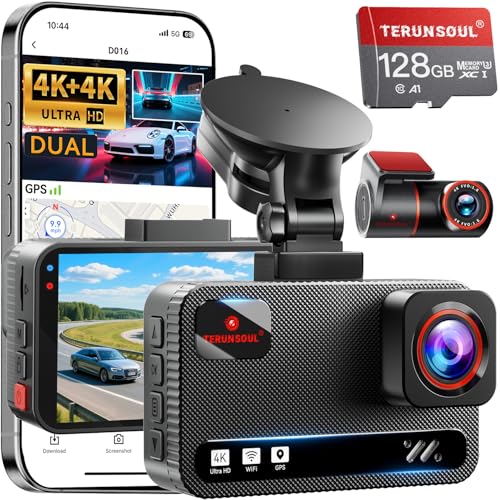
TERUNSOUl 4K+4K Dash Cam Front and Rear, Free 128GB Card Included, 5.8GHz WiFi Dash Camera for Cars, Built-in GPS, G-Sensor, 170°Wide Angle, 3" IPS Screen, 24H Parking Mode, Support 512GB Max
Ultra HD 4K Front + 4K Rear Recording: The Terunsoul dash cam supports dual-channel simultaneous recording, capturing both…
As an affiliate, we earn on qualifying purchases.
As an affiliate, we earn on qualifying purchases.
The Role of Metadata and GPS in Vandalism Evidence Collection
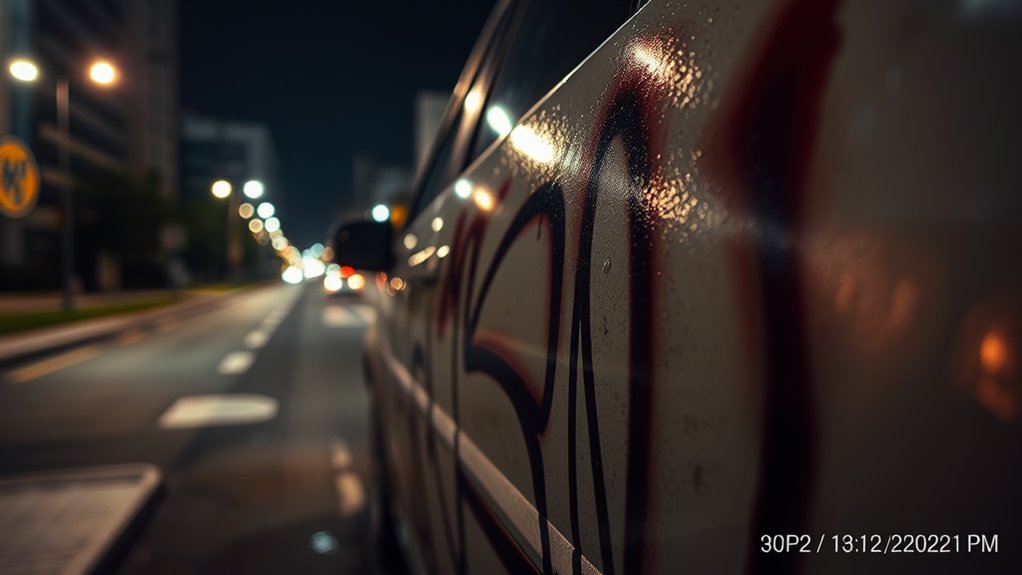
Metadata and GPS data play a crucial role in strengthening vandalism evidence collected from vehicle security systems. Timestamp data establishes when an incident occurred, helping you build a clear event timeline. GPS coordinates pinpoint your vehicle’s exact location, aiding route reconstruction and situational context. Speed readings from sensors or GPS corroborate if the vehicle was moving or speeding during vandalism. Camera settings and file attributes—like resolution, frame rate, and creation times—support authenticity and integrity assessments. Embedded timestamps and GPS data also bolster chain-of-custody, providing proof of original recording and location. Proper forensic extraction and validation ensure that this metadata remains reliable and admissible in investigations. Regularly verifying and documenting the metadata integrity is essential to prevent tampering and to maintain evidentiary value. Additionally, understanding potential GPS signal disruptions and metadata stripping during transfers can help you better protect your evidence from contamination or loss. Being aware of how cable connections and data transfer methods can impact metadata preservation is also important for maintaining evidence integrity. To further enhance reliability, employing forensic tools designed for metadata validation can help detect any alterations or inconsistencies.
Enhancing Evidence With Dual-Channel and 360-Degree Cameras
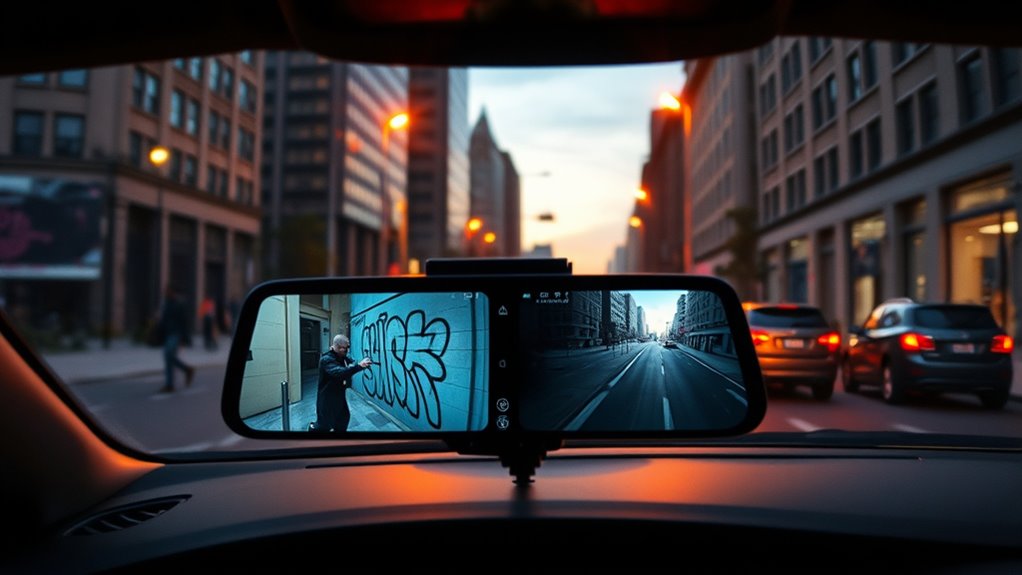
To effectively document vandalism, deploying dual-channel and 360-degree cameras substantially enhances the quality and reliability of evidence. Imagine:
Using dual-channel and 360-degree cameras greatly improves vandalism evidence quality and reliability.
- Front and rear views capturing simultaneous footage of suspects approaching from multiple angles.
- A spherical camera eliminating blind spots with a continuous panoramic view.
- Parking-mode modules activating upon impact or motion, even when the vehicle is parked.
- Night-vision and HDR sensors revealing license plates, faces, or tools in low light conditions.
These setups increase your chances of recording identifying features and understanding the sequence of events. Dual-channel systems allow you to compare perspectives for continuity, while 360-degree cameras provide all-encompassing coverage. Together, they create a detailed, dependable record essential for police reports and insurance claims. Proper maintenance ensures these advanced cameras function effectively over time, reducing the risk of missed evidence due to technical issues. Additionally, camera calibration is vital to maintain optimal image quality and accurate footage, especially after any impacts or adjustments. Regular system updates also help to keep the firmware current and improve camera performance, which is crucial for capturing clear evidence in unpredictable situations. Incorporating reliable storage solutions can prevent data loss and ensure footage remains accessible when needed.
The Importance of Continuous Recording and Event Locking Features
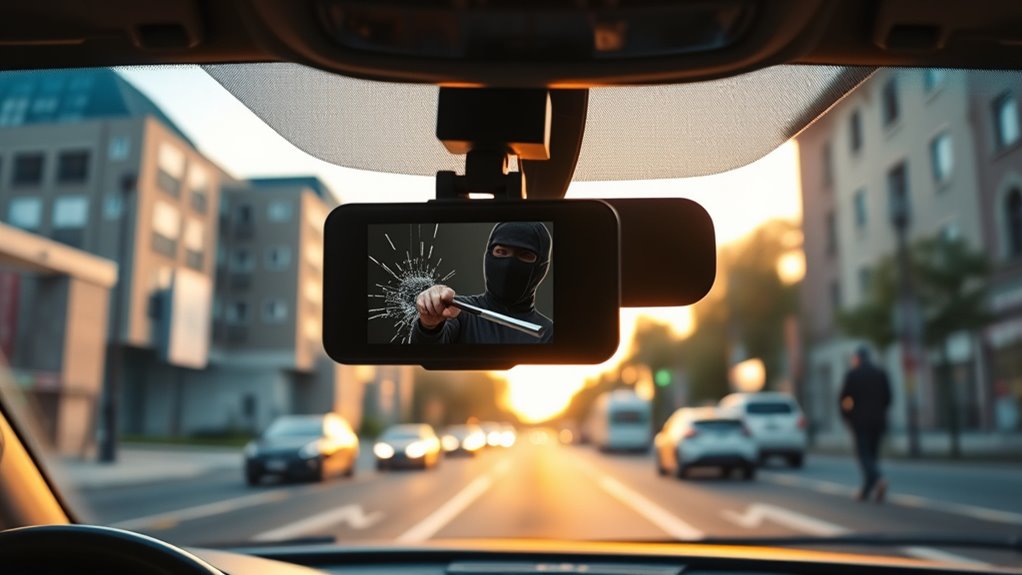
While advanced camera setups improve coverage and evidence quality, continuous recording and event locking features play a vital role in ensuring your footage remains intact when it matters most. Loop recording captures footage in small segments, overwriting the oldest files as storage fills up, which keeps recording uninterrupted. Your retention time depends on the microSD capacity, resolution, and bitrate—larger cards and lower quality settings extend recording duration. Event locking, triggered by the G-sensor, automatically preserves impactful incidents by preventing overwrite, but it’s less reliable for non-impact vandalism like keying or spray paint. Combining continuous recording with event locking increases your chances of capturing vandalism, especially during parking mode with motion detection. Loop recording ensures continuous footage without manual intervention, which is crucial for capturing vandalism that occurs unexpectedly. Additionally, understanding video file management helps you organize and retrieve footage efficiently when needed. Properly configuring storage management settings can prevent accidental loss of important evidence if the memory card becomes full or corrupt. Regularly reviewing your footage and maintaining your SD card can further prevent data corruption and ensure your system is ready when vandalism occurs. Implementing backup procedures can also safeguard critical evidence against unexpected failures. Being aware of camera placement strategies can further enhance your ability to capture vandals from optimal angles; neglecting this can result in blind spots that miss crucial details. However, if footage isn’t locked or exported before overwrite, valuable evidence can be lost.
Real-World Cases Demonstrating Dash Cam Effectiveness
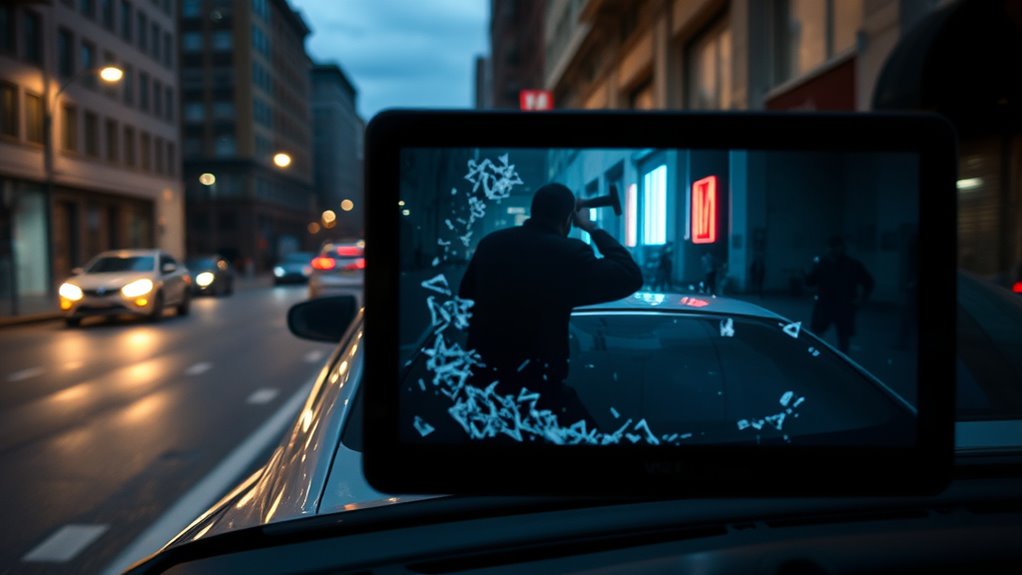
Real-world dash cam footage has played a vital role in solving vandalism cases and securing convictions. These recordings provide clear, timestamped evidence that often makes or breaks court decisions. By examining notable cases, you’ll see how dash cams influence both police investigations and legal outcomes. Research indicates that visible footage can significantly increase the likelihood of apprehending suspects and achieving justice. Additionally, the reliability of recorded evidence enhances the conviction process by offering objective proof. The presence of high-quality footage can also serve as a deterrent for potential vandals, emphasizing the importance of effective camera placement to maximize coverage. Proper camera positioning can ensure comprehensive coverage and reduce blind spots, increasing the chances of capturing critical details during vandalism incidents. Ensuring proper security measures around dash cams helps prevent tampering and maintains the integrity of the evidence.
Notable Vandalism Cases
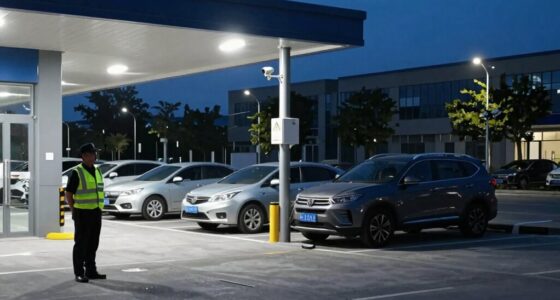
Dash cams have proven to be powerful tools in capturing vandalism in parking lots, providing clear, irrefutable evidence that helps identify perpetrators and support investigations. These cases highlight the effectiveness of dash cams in real-world scenarios: 1. You see trash thrown across a vehicle hood, and a receipt on scene helps identify the vandal through footage timestamps and litter details. 2. Repeated targeting at a workplace parking lot reveals the suspect’s vehicle make, model, and timing, aiding follow-up. 3. A passerby scattering trash and fleeing in a second vehicle is caught in 4K parking mode, allowing review for license plates or occupant clues. 4. Graffiti and door-slam damage are recorded by stationary dash cams, showing suspect routes and escape directions, assisting law enforcement. Proper installation and positioning of dash cams are essential to ensure comprehensive coverage and clear evidence collection in vandalism cases. Additionally, understanding the Gold IRA Markets can inform investors on how to safeguard their assets, much like how properly positioned dash cams secure evidence in vandalism incidents. A good understanding of camera angles can greatly improve the quality and usefulness of footage, making it more effective for identification and legal proceedings. Knowing about data privacy policies helps users know how their footage is stored and shared, ensuring responsible use of recorded evidence. Furthermore, being aware of video resolution options can enhance the clarity of captured footage, increasing its value as evidence in vandalism investigations. Employing local automation features can also assist in setting up alerts or recording triggers, capturing vandalism as it occurs in real-time.
Evidence in Court
In courtrooms across the country, dash cam footage has become an essential piece of evidence that can make or break cases. For example, the Supreme Court used police cruiser dash cam video to rule in favor of Deputy Scott, showing a high-speed pursuit that contradicted the plaintiff’s claims. The footage revealed reckless driving, swerving around cars, crossing double yellow lines, and forcing vehicles onto shoulders. Courts now rely on clear, authenticated videos to challenge or support claims, especially in civil rights cases. In California, dash cam footage is admissible if properly recorded, relevant, and unaltered, with timestamps verifying authenticity. Whether exonerating a driver or proving liability, dash cams provide unbiased, real-time evidence that influences legal outcomes considerably. Additionally, the courts emphasize that properly recorded dash cam footage is crucial for establishing factual accuracy and ensuring fair adjudication. As the use of dash cams continues to grow, their role in supporting justice becomes increasingly significant in legal proceedings.
Legal Considerations and Admissibility of Dash Cam Footage
When using dash cam footage as evidence, you need to make certain it meets admissibility standards by proving its authenticity and maintaining a clear chain of custody. You also have to be aware of privacy laws that may restrict recording in certain areas or capture private conversations, which could affect the footage’s legality. Understanding these legal considerations helps you prevent challenges that might exclude your evidence in court.
Evidence Admissibility Standards
To guarantee dash cam footage is admissible in court, it must meet strict legal standards for relevance, authenticity, clarity, and chain of custody. You should verify:
- The video directly relates to the incident, like a vandalism or traffic violation, supporting your claims.
- The footage is verified as untampered, with clear timestamps, metadata, or GPS data, and confirmed by the recorder.
- The video is sharp, well-lit, and unobstructed, clearly showing key details of the event.
- The evidence has been properly preserved, with no edits or alterations, maintaining a continuous chain from recording to presentation.
Following these standards helps prevent evidence from being dismissed and strengthens your case in court.
Privacy Law Considerations
Understanding privacy laws is essential when using dash cam footage as evidence, as these laws determine what recordings are legally permissible. In public spaces, recording is generally permitted without consent because there’s no reasonable expectation of privacy on public roads. External dash cams that capture public areas usually don’t violate privacy laws. However, recording on private property, like driveways or inside private homes, can breach privacy rules and lead to legal issues if done without permission. Audio recording laws vary by state: some require all-party consent, while others only need one-party consent. Interior cameras and passenger conversations raise higher privacy expectations. Violating these laws can render footage inadmissible and expose you to invasion of privacy lawsuits, so always ensure compliance with local regulations. Legal restrictions on audio recording also play a significant role in determining what dash cam footage can be legally used in court.
Combining Dash Cam Footage With Insurance Processes
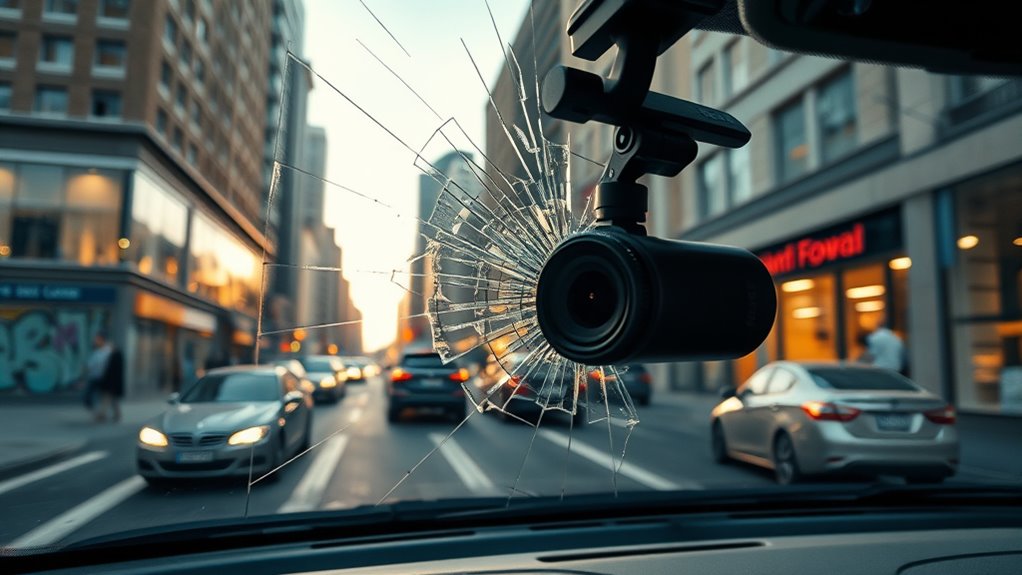
Combining dash cam footage with insurance processes can substantially streamline claims handling and improve accuracy. When you submit footage, imagine:
Integrating dash cam footage into insurance claims speeds up processing and enhances claim accuracy.
- Preserving the original file and removing the memory card to ensure authenticity.
- Including timestamps and device metadata to verify the incident’s timing and location.
- Securing relevant clips before automatic overwriting occurs, maintaining usable evidence.
- Documenting every handling step in a chain-of-custody record to strengthen admissibility.
Proper documentation is essential to ensure your evidence remains credible and legally admissible in case of disputes. You should notify your insurer early, providing short clips alongside original files, and include supporting materials like police reports or photos. Be aware of insurer requirements for file formats and submission methods. Clear, well-documented footage can speed up claims, clarify liability, and reduce disputes.
Frequently Asked Questions
Can Dash Cams Detect Vandalism Happening Inside the Vehicle?
You can’t rely on dash cams to detect vandalism happening inside your vehicle unless it has specific interior recording features. Standard models mainly monitor outside activity, and interior recording is limited. If you want to catch interior vandalism, consider a dual-channel dash cam with a driver-facing camera. These models can record inside, but effectiveness depends on proper placement, motion detection sensitivity, and whether the camera is enabled during parked mode.
How Do Weather Conditions Affect Dash Cam Vandalism Footage Clarity?
Weather conditions can substantially impact your dash cam’s vandalism footage clarity. Rain, fog, or snow create droplets, glare, and low contrast, making it harder to see details clearly. Nighttime and heavy weather reduce visibility, introduce noise, and cause glare from headlights or streetlights. To improve footage, use a dash cam with HDR, WDR, a high-quality sensor like STARVIS, and features like 60 fps, which help capture clearer images despite adverse weather.
Are There Legal Restrictions on Recording Vandalism in Public Spaces?
You can generally record vandalism in public spaces without legal issues, as there’s no reasonable expectation of privacy there. However, avoid recording in private areas or sensitive locations like restrooms or clinics. Be mindful of audio laws, since recording conversations might require consent. Also, respect property restrictions and local laws, and confirm your recordings don’t interfere with ongoing law enforcement activities, to stay within legal boundaries.
Can Dash Cams Identify Vandals’ Faces Clearly in All Lighting Conditions?
No, dash cams can’t reliably identify vandals’ faces in all lighting conditions. In bright scenes, glare and shadows blur facial details, while in low light, noise and softening hinder ID. Infrared helps in darkness but produces flat, monochrome images. Wide-angle lenses distort faces, and mounting position affects clarity. So, despite some capabilities, consistent, clear facial identification across all lighting environments remains unrealistic with standard dash cams.
How Long Can Dash Cams Store Vandalism Footage Before Overwriting?
Think of your dash cam as a vigilant guardian, guarding your memories with a finite but expandable vault. With a 32GB card, it guards about 4 hours of vandalism footage; a 64GB vault holds 8 hours, and a 128GB one stores 16 hours. Once full, it begins to erase the oldest stories, unless you protect or delete snapshots. Larger cards or cloud backups keep your witness alive longer.
Conclusion
By understanding what dash cams can realistically capture, you’re better equipped to document vandalism effectively. For instance, if someone scratches your car overnight, a dash cam with wide-angle lenses and event locking can provide essential evidence. While footage might have limitations, combining it with GPS data and continuous recording increases your chances of successful claims. Ultimately, investing in the right features helps you protect your vehicle and supports your case if vandalism occurs.