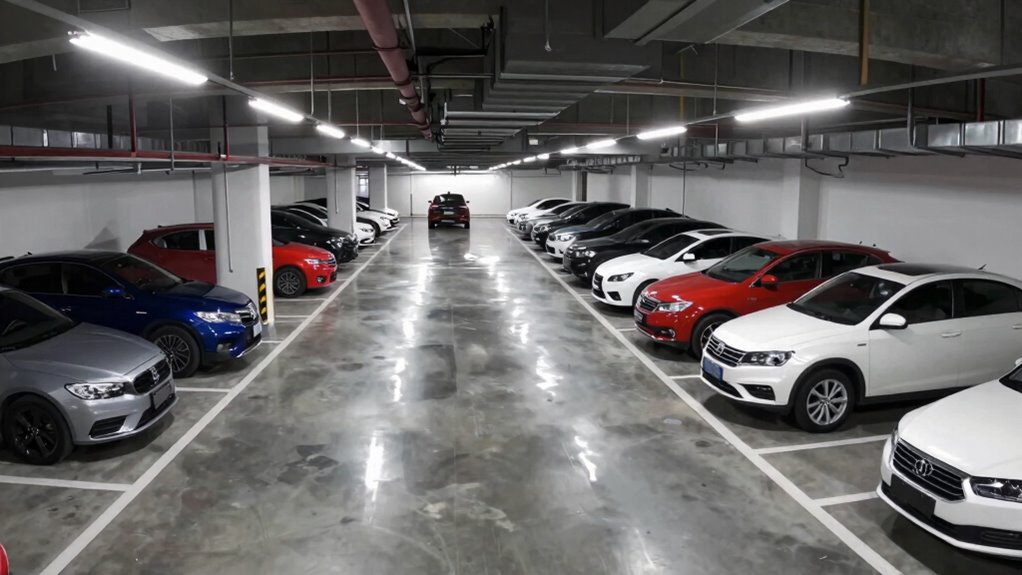
Parking garages challenge your dash cam’s effectiveness because poor lighting, structural features, and environmental factors block or distort footage. Dim or inconsistent lighting causes grainy images, making it hard to see details like license plates or faces. Columns, beams, and tight corners limit the camera’s view, creating blind spots. Dust, vibrations, and electrical issues can also affect performance. Want to find out how you can improve your dash cam setup in these conditions? Keep exploring.

Get business pricing on garage and car supplies
- Business-only prices and quantity discounts
- Tax-exempt purchasing
- Multiple users, one account, clear invoices
Key Takeaways
- Poor lighting conditions cause grainy or dark footage, reducing dash cam effectiveness in garages.
- Structural obstacles like columns and beams block camera views, creating blind spots.
- Environmental factors such as dust and vibrations impair recording quality and device reliability.
- Limited coverage due to environment layout hampers comprehensive monitoring and evidence capture.
- Security concerns and environmental challenges necessitate strategic placement, but still limit dash cam performance.
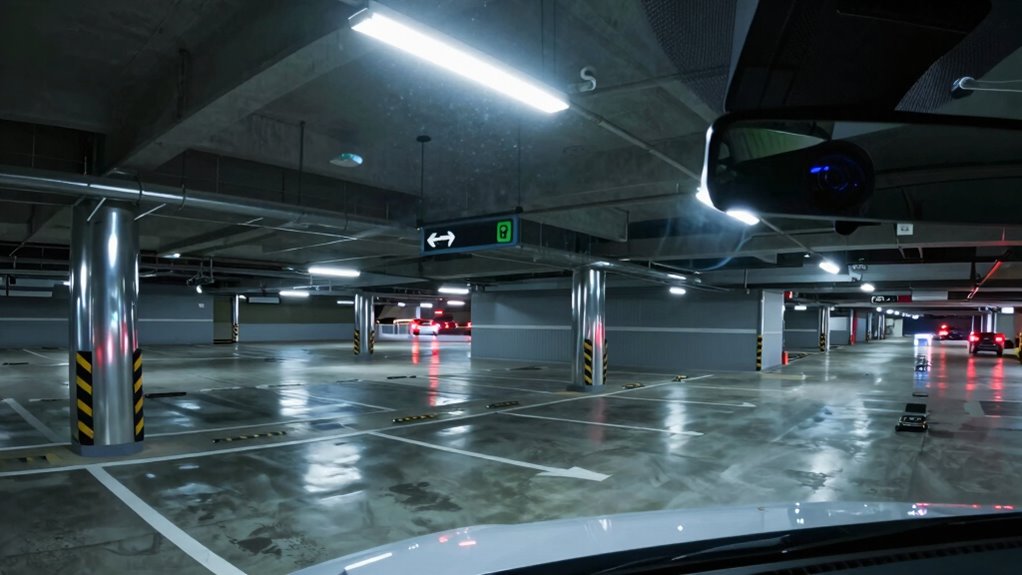
Parking garages can be tricky spaces to navigate, especially when it comes to ensuring your vehicle’s safety. You might rely on your dash cam to provide evidence in case of accidents or theft, but these environments often challenge your expectations. One of the biggest hurdles is dealing with security concerns. Parking garages can sometimes feel less secure than open lots, especially if they’re poorly maintained or seldom monitored. This can make you worry about vandalism, hit-and-runs, or theft. Your dash cam, which is supposed to act as a vigilant eye, might not always capture clear footage if the environment isn’t conducive to good video quality.
Parking garages pose security and visibility challenges that can hinder your dash cam’s effectiveness.
Lighting conditions are another major issue. Many parking garages have inconsistent or dim lighting, which severely impacts your dash cam’s ability to record details effectively. When the lights are too low, footage can become grainy or dark, making it difficult to identify license plates, faces, or other vital details. This is a common frustration because, even if your dash cam is high quality, poor lighting diminishes its effectiveness. You might find yourself questioning whether your footage will hold up in a dispute or insurance claim, especially if the recording doesn’t provide the clarity you need. Additionally, poor lighting conditions can sometimes cause your dash cam to struggle with automatic exposure adjustments, further reducing video quality. The inconsistent lighting can also lead to increased image noise, which hampers the clarity of recordings.
Furthermore, parking garages often have structural features that interfere with your dash cam’s field of view. Columns, beams, and tight corners can block the camera’s line of sight, leaving gaps in coverage that criminals or accidents could exploit. Even if your dash cam has wide-angle lenses, the environment’s layout can still limit what it captures. This means you might not get the all-encompassing recording you expected, which can be frustrating when you’re counting on those recordings for proof. The structural design of parking garages can significantly reduce the effectiveness of dash cam footage.
In addition, the environment of a parking garage can cause technical issues for your dash cam. Dust, debris, and vibrations from vehicles can impact recording quality or cause your device to malfunction. Some garages have electrical issues or power surges that could disrupt or damage your dash cam, further complicating its reliability. Environmental factors such as these can significantly affect the performance and longevity of your device. Additionally, the security environment of parking garages can vary greatly, impacting how well your dash cam can serve its purpose. All these factors combine to make parking garages less than ideal environments for your dash cam’s performance. To mitigate some of these issues, choosing parking spots near entrances or well-lit areas can help improve footage quality and security.
Frequently Asked Questions
Do Dash Cams Need Special Settings for Parking Garages?
Yes, dash cams often need special settings for parking garages. You should check if your dash cam supports sensor calibration to guarantee accurate motion detection in low-light or enclosed spaces. Additionally, waterproof features can protect your camera from moisture and dust typically found in parking garages. Adjusting these settings helps your dash cam perform at its best, capturing clear footage even in challenging environments, and ensures reliable security when your vehicle is parked.
How Do Lighting Conditions Affect Dash Cam Footage in Garages?
Lighting in garages is like a shadow puppet show, constantly shifting and unpredictable. Low ambient lighting can make your dash cam footage grainy or blurry if the camera sensitivity isn’t set correctly. To capture clear footage, you need a dash cam with adjustable sensitivity, especially in dark corners. Properly configuring these settings helps your camera adapt to changing light conditions, ensuring you get sharp, reliable footage even in dimly lit parking garages.
Can Dash Cams Record in Underground Parking Structures?
Yes, dash cams can record in underground parking structures, but you might face challenges with lighting and camera durability. To guarantee vehicle security, choose a dash cam with good low-light performance and sturdy build quality. Proper installation and a high-quality camera help capture clear footage despite dim conditions. Keep in mind, some models perform better in such environments, so selecting one suited for parking garages maximizes your security and footage reliability.
What Are the Best Dash Cam Placements in Parking Garages?
Think of your dash cam as a vigilant guardian, watching over your parking space. Place it on the windshield behind the rearview mirror for the best coverage, ensuring it’s level and unobstructed. Proper sensor calibration helps the camera adapt to low-light conditions in parking garages. Positioning the dash cam here maximizes visibility, captures license plates, and protects you from disputes, making it your trusted ally in challenging parking environments.
Do Dash Cams Have Trouble Detecting Speed in Garages?
Dash cams can struggle detecting speed in garages due to poor sensor calibration and limited camera angles. The confined, low-light environment often hampers the camera’s ability to accurately read speed signs or detect movement. If your dash cam isn’t properly calibrated or mounted at a best possible angle, it may misinterpret or miss speed data altogether. Ensuring correct calibration and adjusting camera angles can improve speed detection accuracy in parking garages.
Conclusion
Parking garages may challenge your dash cam’s expectations, but they also remind you of an old adage: “Forewarned is forearmed.” By understanding these limitations, you can take proactive steps to protect your vehicle and footage. Stay vigilant, keep your camera well-maintained, and always be prepared for the unexpected. After all, knowing the risks helps you navigate them more confidently, turning potential blind spots into opportunities for smarter, safer parking.
Fall Picks
fall essentials
As an affiliate, we earn on qualifying purchases.