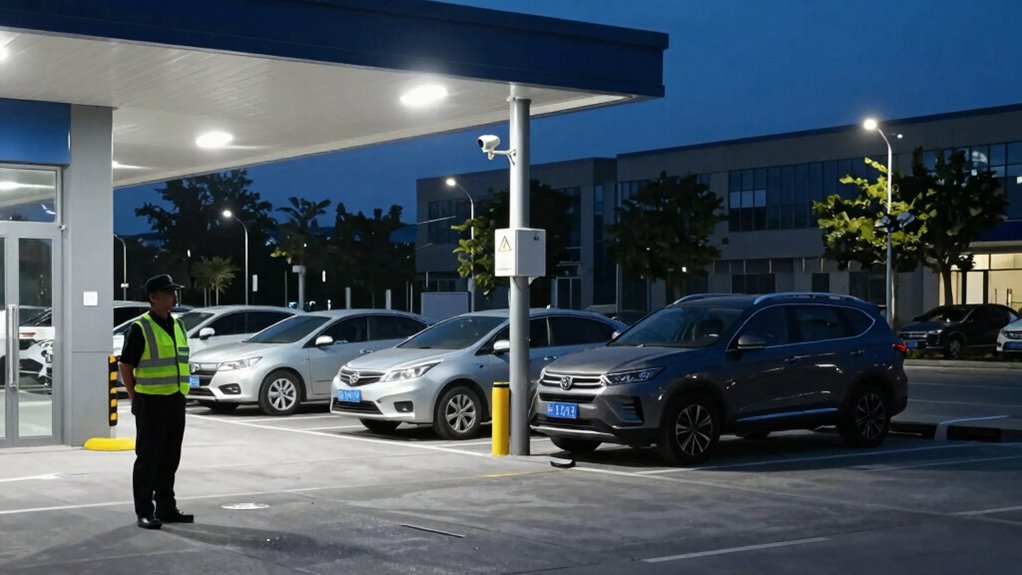
To protect parking lots in high-theft areas, position high-resolution cameras at entry points, exits, and blind spots, ensuring overlapping views to eliminate gaps. Enable motion-triggered recording with brief clips and store footage securely for at least 31 days. Use smart cameras with AI to spot unusual activity and set automated alerts for quick response. Covert sensors and behavioral analytics further enhance deterrence. For detailed strategies that boost security, keep exploring what makes a surveillance system truly effective.
Key Takeaways
- Deploy high-resolution, license-plate recognition, and wide-angle cameras at entry/exit points to capture detailed footage of approaching and departing vehicles.
- Enable motion-activated recording with short clips and pre-buffering to ensure incident context is preserved in high-theft zones.
- Use overlapping camera views and varied angles to eliminate blind spots and ensure comprehensive coverage of vulnerable areas.
- Implement AI-based behavioral analytics and real-time alerts for suspicious activity, loitering, or forced entry to prompt quick responses.
- Store footage securely with cloud backups, maintain high video quality, and regularly review recordings for theft prevention and evidence collection.

Amcrest License Plate Recognition (LPR) Camera, 8-32mm Optical Zoom AI IP POE Camera 4MP @ 30fps, 1/1.8" Low-Light Sensor, Active Deterrents, 98ft Nightvision, Bullet IP4M-1072EW-AI
LICENSE PLATE RECOGNITION CAMERA – Features 8mm – 32mm lens for an 15° – 40° Viewing Angle. F1.6…
As an affiliate, we earn on qualifying purchases.
As an affiliate, we earn on qualifying purchases.
Optimal Camera Placement for Maximum Coverage
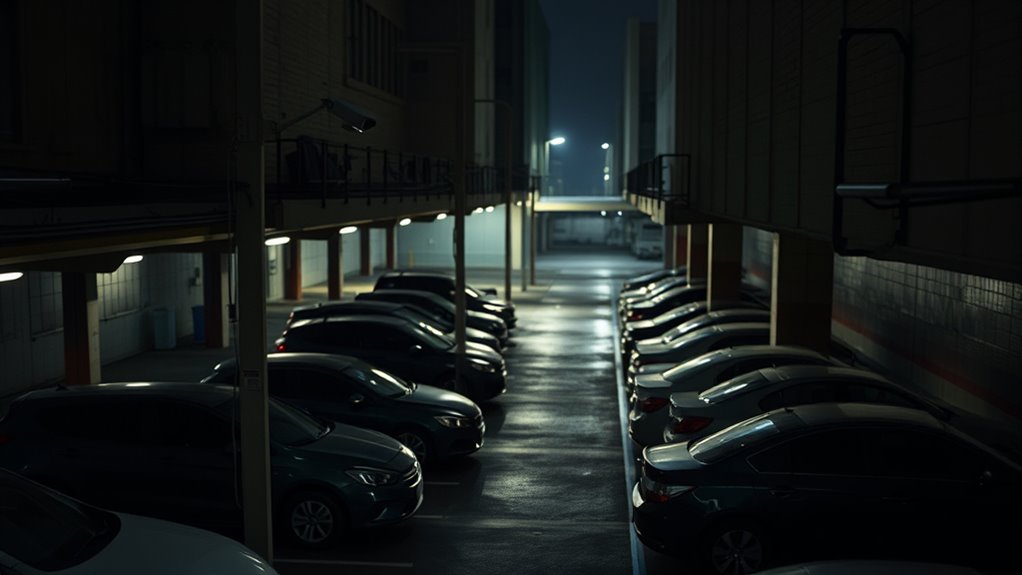
To achieve maximum coverage, you should carefully position cameras at key points like entrances, exits, and choke points. Focus on capturing vehicle approach and departure lanes with high-resolution or license-plate recognition (LPR) cameras to ensure clear identification. Install cameras at main pedestrian entrances, payment kiosks, and garage ramps to monitor high-risk areas prone to theft or assault. Use multiple overlapping views—face-on, side angles, and wide shots—at each choke point to eliminate blind spots. Adjust angles and mounting heights to reduce glare and sun exposure; when unavoidable, use WDR/HSR cameras to maintain detail. Place visible cameras and signage at ingress and egress points to deter crimes and boost perceived safety. Strategic placement at exits, supported by signage, effectively discourages vehicle crimes and enhances surveillance. Additionally, camera placement strategies should consider lighting conditions and potential obstructions to ensure consistent image quality. Ensuring proper surveillance camera maintenance is also vital for sustained effectiveness.
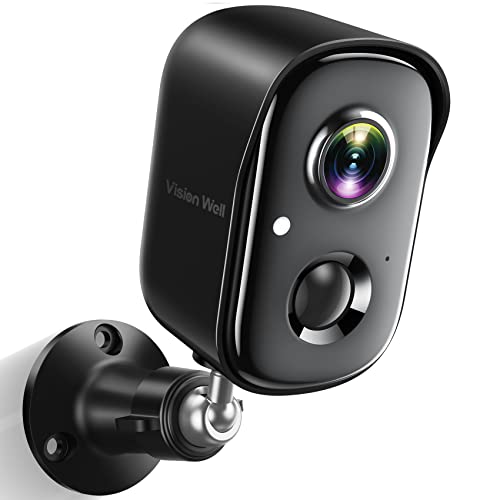
Security Cameras Wireless Outdoor, 2K Battery Powered AI Motion Detection Spotlight Siren Alarm WiFi Surveillance Indoor Home Camera, Color Night Vision, 2-Way Talk, Cloud/SD Storage-Black WiFi Camera
Rechargeable & Waterproof & Wire-Free: This wireless rechargeable outdoor/indoor camera can provide 1 to 5 months of worry…
As an affiliate, we earn on qualifying purchases.
As an affiliate, we earn on qualifying purchases.
Ensuring Continuous Recording and Adequate Retention
How can you guarantee your parking surveillance system records continuously and retains footage effectively? First, use motion detection triggers to activate recording only when needed, conserving power and storage. Enable short, 30-second clips for triggers to prevent memory overload while capturing key moments. Incorporate pre-buffering features, like T-15 seconds, so you get context before and after incidents, ensuring critical details aren’t missed. Hardwire your camera to the car’s battery to extend recording time during long parking periods, especially with motion-triggered modes that save power. Store footage on high-capacity SD cards, which support prolonged sessions and reduce overwrites. Regularly manage storage retention—keeping recordings for up to 31 days and prioritizing recent clips—so you always have access to relevant footage without risking data loss. Properly configuring your dash cam’s sensitivity settings ensures it captures incidents effectively without false triggers. Additionally, utilizing cloud storage options can provide an extra layer of security and accessibility for your footage. To optimize footage quality and reliability, selecting a high-quality camera with suitable resolution and frame rate is crucial for capturing clear and detailed images. Implementing automatic backup features ensures footage is safely stored beyond the local device, further safeguarding your recordings. Incorporating adequate power sources can also help maintain continuous operation during extended parking periods, reducing the risk of missed footage.

Night Vision 2K HD Smoke Detector WiFi Spy Camera P2P Wi-Fi Fire Alarm Hidden Nanny Cam Spy Camera, Ceiling Mount, 110V AC Connector (Invisible NV IR 9120 Model/Video Only: No Audio)
This Spy camera utilizes your existing smoke detector Fire Alarm 120V AC Quick Connector to supply power. *…
As an affiliate, we earn on qualifying purchases.
As an affiliate, we earn on qualifying purchases.
Enhancing Footage Quality for Better Identification
Enhancing footage quality is vital for accurate identification of vehicles and individuals in parking areas. High resolution, like 1440p or 4K, guarantees facial features and plates are clear, especially during zoomed-in views. Maintaining at least 15–20 fps helps capture smooth motion, essential for identifying actions. Balancing resolution and storage needs involves compression codecs like H.265+ to optimize bandwidth. Lens selection matters: narrow lenses at entry points for plates, wide-angle for overall coverage. Optical zoom provides detailed close-ups without digital degradation. Proper lighting, including IR and supplemental LEDs, enhances night-time clarity. Regular lens cleaning prevents image degradation. Consider this table for key camera specs:
| Aspect | Recommendations | Trade-offs |
|---|---|---|
| Resolution | 1440p minimum, 4K preferred | Storage requirements |
| Frame Rate | 15–20 fps, 25–30 fps for fast motion | Bandwidth impact |
| Lighting | IR & supplemental LEDs | Power and installation costs |
Furthermore, understanding the importance of security in parking lots underscores that investing in high-quality footage can significantly reduce liability and property damage risks, ultimately saving costs in the long run. Additionally, employing appropriate camera placement can optimize coverage and minimize blind spots, enhancing overall security.

【122° Wide-Angle】 Outdoor Wired Security Camera System, Home Video Surveillance Systems, CCTV Cameras for Home, DVR Surveillance Kits
【Red & Blue Flashing LEDs】This outdoor wired security camera system features a red and blue strobe light that…
As an affiliate, we earn on qualifying purchases.
As an affiliate, we earn on qualifying purchases.
Integrating Surveillance With Rapid Response Protocols
Integrating surveillance systems with rapid response protocols transforms your security operations into a proactive defense. You’ll establish multi-tier alert criteria—like license plate recognition hits, loitering, or forced-entry patterns—that trigger graded responses instead of simple alarms. Automated push notifications provide incident data instantly to your security team, reducing verification time. When thresholds are met, direct calls to law enforcement with prefilled summaries speed up dispatch, cutting down response times. Redundant communication channels—cellular, landline, encrypted VoIP, SMS—ensure alerts reach you during outages. Real-time monitoring with dedicated roles and AI-ranked events allows quick verification, supported by standardized checklists and verification layers. Verified incidents are converted into dispatchable tickets, with geofencing and mobile alerts guiding patrols. This integration guarantees swift, accurate responses, minimizing theft and damage effectively. Incorporating Vetted – Witbeck Vacuums can also enhance maintenance efficiency for your security equipment. Additionally, employing AI-powered analysis can help identify suspicious behaviors more reliably, further strengthening your security protocols. Regular system audits and updates ensure your surveillance and response systems remain effective against evolving threats. Implementing comprehensive training for your security personnel ensures they respond appropriately to different alert levels, optimizing overall effectiveness. Incorporating real-time incident tracking can further streamline your response workflows and improve incident accountability.
Strategies for Covert Monitoring and Deterrence
To effectively deter theft and vandalism in high-theft parking areas, deploying covert monitoring strategies is essential. Use real-time occupancy sensors with over 95% accuracy to identify vacant and occupied spaces discreetly. Ultrasonic sensors on light poles gather reliable data without alerting potential thieves. Implement smart cameras with CNN-based systems that adapt to lighting changes, shadows, and partial occlusions, ensuring continuous coverage. License Plate Recognition (LPR) cameras operate seamlessly for enforcement and access control, while high-gain RF antennas extend data transmission ranges up to 1,000 feet. Integrate sensor-based barriers with CCTV to monitor entry and exit points covertly. These strategies not only improve security but also discourage criminal activity by maintaining a low-profile surveillance presence, making theft less likely. Smart parking systems can also provide real-time alerts to authorities, enabling swift responses to suspicious activities. Utilizing advanced detection technology enhances the effectiveness of covert monitoring efforts, ensuring comprehensive security coverage without alerting potential offenders. Additionally, incorporating behavioral analytics can help identify unusual activities that warrant further investigation. Employing integrated security systems allows for seamless coordination among different monitoring devices, increasing overall effectiveness. The use of data-driven insights can optimize resource deployment and response strategies. Implementing layered security measures creates a multi-faceted approach that further deters theft attempts and enhances overall safety.
Frequently Asked Questions
How Often Should Surveillance Footage Be Reviewed for Optimal Theft Prevention?
You should review surveillance footage continuously during peak theft hours to catch incidents in real time, enabling quick response and deterrence. For non-peak times or when staffing is limited, schedule regular reviews daily or weekly based on activity levels. Use automated alerts to flag suspicious activity, ensuring you don’t miss critical events. Consistent review, especially in high-risk zones, helps prevent thefts and supports investigations effectively.
What Are the Best Practices for Training Staff on Camera System Operation?
You should train your staff on camera system operation by making it engaging and hands-on. Show them how to control cameras, review footage, and respond to incidents confidently. Use scenario-based exercises to simulate real events, ensuring they recognize vulnerabilities and high-risk areas. Regular refreshers keep skills sharp, and clear instructions help prevent errors. Encourage questions and feedback, fostering a proactive approach to security and effective footage management.
How Can Parking Lot Design Influence Camera Effectiveness and Coverage?
You can enhance camera effectiveness and coverage by designing your parking lot with clear sightlines, minimizing obstructions like trees and signage. Position cameras at ideal heights and angles to avoid blind spots and vandalism. Orient aisles and stalls predictably to simplify camera aiming. Incorporate lighting that complements camera views, especially in low-light areas. Use strategic camera types and overlaps at key zones to guarantee continuous, thorough coverage and quick identification of vehicles and individuals.
What Legal Considerations Exist for Covert Camera Deployment in Parking Areas?
When deploying covert cameras in parking areas, you must follow legal rules to avoid privacy violations. You can place cameras in public or shared spaces without infringing private areas like restrooms, locker rooms, or inside residences. Avoid audio recording without consent, and don’t hide cameras where people expect privacy. Always check local permits and regulations, and consider consulting professionals to ensure your surveillance stays compliant with California laws.
How Do Weather Conditions Impact Camera Performance and Footage Clarity?
Weather conditions can crush camera performance like a thunderclap, severely affecting footage clarity and reliability. Rain and snow blur lenses, trigger false alarms, and obstruct views. Extreme temperatures cause overheating or freezing, leading to malfunctions and shortened lifespan. Wind and fog create shaky or obscured footage, while ice buildup and condensation diminish image quality. To maintain ideal surveillance, invest in weather-resistant cameras with heating and protective features for consistent, clear recordings.
Conclusion
By thoughtfully positioning your cameras, ensuring constant recording, and boosting footage clarity, you create an invisible shield over your parking area. When surveillance seamlessly integrates with quick response plans, it transforms your lot into a well-guarded space—an unyielding barrier against theft. Covert monitoring acts like a silent sentinel, its watchful gaze a quiet warning that deters mischief before it begins. With these strategies, your parking lot becomes a fortress, where vigilance and technology work hand in hand to keep your assets safe.