
To reduce the risk of losing both your car and footage, regularly back up footage to cloud storage and external devices stored outside the vehicle. Lock your vehicle, park in secure areas, and avoid leaving valuables in plain sight. Keep your dashcam’s firmware updated, enable encryption, and use tamper-proof features. Maintain detailed records of footage and incidents to support claims. If you keep these tips in mind, you’ll be better prepared—and there’s more to uncover for complete protection.

Get business pricing on garage and car supplies
- Business-only prices and quantity discounts
- Tax-exempt purchasing
- Multiple users, one account, clear invoices
Key Takeaways
- Store footage in secure, encrypted cloud services with automatic uploads for redundancy.
- Keep multiple copies of footage on external drives stored in separate, safe locations.
- Park in secure, monitored areas to minimize theft risk of both vehicle and recording devices.
- Regularly update device firmware and security settings to prevent hacking or tampering.
- Maintain detailed incident records and store backups outside the vehicle for reliable recovery.
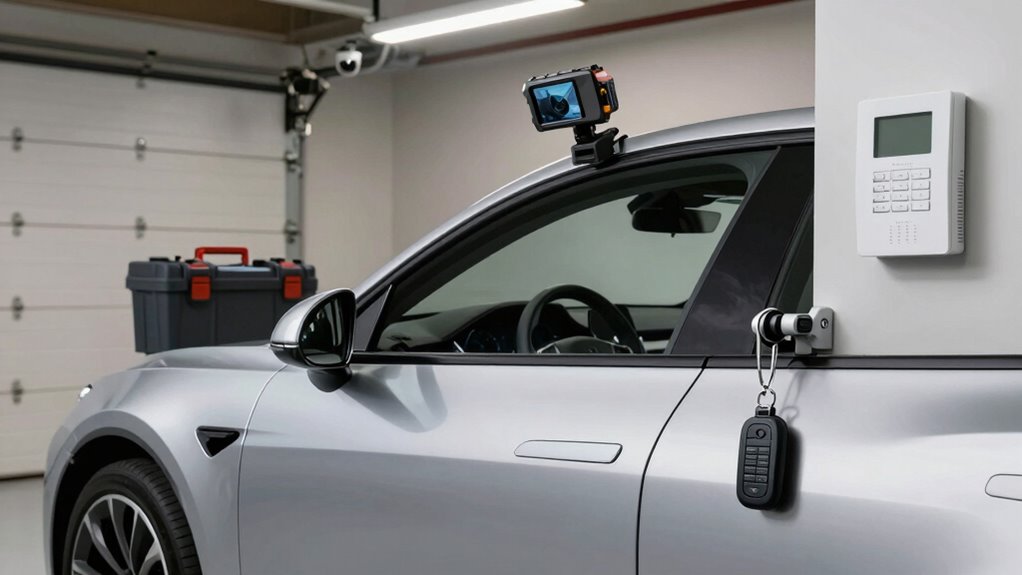
Losing both your car and its footage can be devastating, but there are practical steps you can take to minimize the risk. First, safeguarding your footage is essential, especially if it could be used for insurance claims. Many drivers overlook the importance of backup strategies for their dashcam or surveillance footage. Relying solely on the device’s internal memory leaves you vulnerable if it gets damaged or stolen. To prevent this, set up automatic uploads to a cloud storage service whenever possible. Cloud backups ensure that even if your physical device is compromised, your footage remains accessible. Regularly transferring clips to an external hard drive or computer also adds a layer of security, giving you multiple copies in different locations.
Secure your footage with cloud backups and regular transfers to protect against damage or theft.
Another vital step is choosing a reliable insurance policy that covers both your vehicle and any electronic equipment inside. When filing insurance claims, having extensive coverage can make a notable difference in recovery and repair costs. Keep detailed records of your footage, including timestamps and relevant event descriptions, to strengthen your case if you need to claim damages. Document everything before and after any incident, and store these records securely outside your vehicle, such as on your personal devices or cloud accounts. This way, if your car is stolen or damaged, you won’t lose valuable footage that could be instrumental during the claims process. Implementing security measures can further deter theft and protect your footage from being stolen along with your car.
Locking your vehicle and installing physical deterrents can also reduce the chances of theft, which in turn helps protect your footage from being stolen along with your car. Use secure parking lots or garages whenever possible, and avoid leaving valuables or recording devices in plain sight. Additionally, consider investing in a dashcam with built-in encryption and tamper-proof features. These can help prevent unauthorized access and guarantee your footage remains intact and unaltered. Regularly updating firmware and security settings for your devices is also crucial, as security updates can prevent hacking attempts or malware that might compromise your footage. Incorporating encryption technologies for your footage can provide an additional layer of protection against unauthorized access. Staying informed about emerging digital threats can help you adapt your security measures to new risks.
encrypted dashcam with tamper-proof features
As an affiliate, we earn on qualifying purchases.
As an affiliate, we earn on qualifying purchases.
Frequently Asked Questions
What Are Common Causes of Footage Loss in Accidents?
You might lose footage in accidents due to weather damage, like rain or extreme temperatures, which can corrupt or ruin your device. Hardware failure is another common cause, especially if your dashcam isn’t well-maintained or is of low quality. Sudden impacts or vibrations can also damage internal components, leading to data loss. To prevent this, use weather-resistant equipment, perform regular maintenance, and choose reliable, high-quality devices.
How Often Should I Back up My Footage?
You should back up your footage at least once a day—preferably more—because losing critical video storage data can feel like losing your entire digital life. Daily backups guarantee your footage stays safe from unexpected accidents, theft, or technical failures. Regular backup frequency keeps your videos protected, giving you peace of mind. Don’t wait until disaster strikes—make backing up a routine, so your valuable footage remains secure no matter what happens.
Are There Specific Car Models With Better Security Features?
Some car models come with advanced security systems and vehicle encryption, making them more resistant to theft and hacking. Brands like Volvo, BMW, and Mercedes-Benz often feature these protections. You should look for cars equipped with sophisticated alarm systems, GPS tracking, and encrypted communication. These features help safeguard both your vehicle and footage, reducing risks. Choosing a model with these security enhancements gives you peace of mind and better protection for your assets.
What Legal Considerations Exist for Dashcam Footage?
Imagine your dashcam footage as a delicate thread woven into your daily life. Legally, you must guarantee compliance with local laws, such as informing others if recording in public or private spaces. Privacy concerns are paramount; avoid recording sensitive conversations or private property without permission. By understanding legal requirements and respecting privacy, you safeguard both your footage and yourself—making sure your security measures stay within the bounds of the law.
Can Insurance Cover Footage Loss?
Insurance can sometimes cover footage loss if you file an insurance claim, especially if the footage is vital for your case. However, coverage varies by policy, so you should check with your provider. For valuable footage, consider data recovery services, which can often retrieve lost or corrupted files. Keep backups of important recordings to prevent losing essential evidence, and make sure your insurance policy includes coverage for data loss or damage.
external hard drive for video backups
As an affiliate, we earn on qualifying purchases.
As an affiliate, we earn on qualifying purchases.
Conclusion
Just like a careful captain navigates treacherous waters, staying vigilant and proactive keeps your car and footage safe. Regular backups, secure storage, and mindful driving shield you from unexpected storms. Remember, the key to avoiding double loss lies in foresight and preparation—think of it as your personal shield against the chaos of the road. Keep these habits close, and you’ll steer clear of disaster, ensuring your journey remains smooth and your memories intact.
cloud storage service for dashcam footage
As an affiliate, we earn on qualifying purchases.
As an affiliate, we earn on qualifying purchases.
vehicle security lock and alarm system
As an affiliate, we earn on qualifying purchases.
As an affiliate, we earn on qualifying purchases.
Halloween Picks
halloween
As an affiliate, we earn on qualifying purchases.