

For most drivers, I’d start with the Schumacher SC1280: its 15A output and maintenance function balance faster charging with routine battery care. The NOCO GENIUS5 is a better fit for lower-current charging and maintenance, while the Schumacher SC1446 adds an engine-starting function for drivers who need more than a charger. The main tradeoff is between gentle, lower-amp charging and faster charging or starting power, along with deciding whether 6V support, 24V compatibility, or a compact maintainer matters to you. I compare all 13 car battery chargers by their intended use, power, battery support, and practical tradeoffs. Read on for the full breakdown and a guide to choosing a charger that matches your vehicle and routine.

Get business pricing on garage and car supplies
- Business-only prices and quantity discounts
- Tax-exempt purchasing
- Multiple users, one account, clear invoices
Complete the kit


Key Takeaways
- Charging output separates the lineup: the NOCO GENIUS1 and GENIUS2 suit gradual charging and maintenance, while the 15A SC1280 and higher-output TowerTop and E-FAST models target quicker charging.
- Engine starting is a distinct use case: the SC1446 and wheeled SC1445 add starting capability, which may matter during a no-start situation but is not a substitute for routine battery maintenance.
- Voltage compatibility varies: many picks handle 6V and 12V batteries, while the PLXX and E-FAST 12V/24V options also address 24V systems; buyers should match the charger to the battery, not just the vehicle name.
- Small maintainers trade speed for a gentler fit: the GENIUS1, GENIUS2, and GENIUS5 offer lower-amp charging than the high-output choices, making them more suited to ongoing care than rapid recovery.
- Repair features need realistic expectations: pulse repair appears on select E-FAST and Yourheey models, but it should not be treated as a way to restore every damaged or worn-out battery.
| PLXX 12V/24V Heavy Duty Smart Battery Charger & Maintainer (0-15A) |  | Best for 12V and 24V Battery Coverage | Model: BC-603 | Output voltage: 12V and 24V | Input voltage: 120V | VIEW LATEST PRICE | See Our Full Breakdown |
| Schumacher Electric SC1280 15A 6V/12V Car Battery Charger and Maintainer |  | Best for a Multifunction 6V/12V Charger | Model: SC1280 | Voltage support: 6V and 12V | 12V charge rate: 15A | VIEW LATEST PRICE | See Our Full Breakdown |
| NOCO GENIUS1 1A Smart Battery Charger and Maintainer, 6V/12V |  | Best Compact Long-Term Maintainer | Output voltage: 12V output; compatible with 6V and 12V batteries | Charging current: 1A | Compatible battery types: Lead-acid (AGM, Gel, Flooded, Deep-cycle) and LiFePO4 | VIEW LATEST PRICE | See Our Full Breakdown |
| Schumacher SC1446 10A Battery Charger and 200A Engine Starter |  | Best for Charging and Engine Starting | Model: SC1446 | Voltage support: 6V and 12V | Charging current: 10A | VIEW LATEST PRICE | See Our Full Breakdown |
| NOCO GENIUS2 2A 6/12V Smart Battery Charger, Trickle Charger & Maintainer | 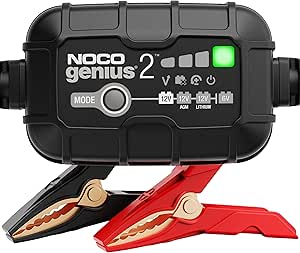 | Best Compact Smart Charger for Small Batteries | Model: GENIUS2 | Output current: 2A | Voltage compatibility: 6V and 12V | VIEW LATEST PRICE | See Our Full Breakdown |
| Schumacher Electric SC1281 6A Car Battery Charger & Maintainer (6V/12V) |  | Best for Multi-Function 6V/12V Charging | Model: SC1281 | Battery voltage: 6V / 12V | Standard charge current: 2A–6A | VIEW LATEST PRICE | See Our Full Breakdown |
| TowerTop 2/10/25 Amp 12V Smart Car Battery Charger and Maintainer |  | Best for Faster 12V Charging | Output voltage: 12V | Input voltage: 120V AC | Current settings: 2A, 10A, 25A, Auto | VIEW LATEST PRICE | See Our Full Breakdown |
| CRAFTSMAN 12A Car Battery Charger & Maintainer, 6V/12V – CMXCESM258 |  | Best for Balanced 6V/12V Charging | Model: CMXCESM258 | Battery voltage: 6V / 12V | Charge current: 12A | VIEW LATEST PRICE | See Our Full Breakdown |
| Schumacher Electric SC1445 Wheeled 6V/12V Battery Charger and 250A Engine Starter |  | Best for Garage-Based Engine Starting | Model: SC1445 | Battery voltage: 6V / 12V | Engine start: 250A | VIEW LATEST PRICE | See Our Full Breakdown |
| E-FAST 12V/24V Smart Battery Charger & Maintainer (0-20A) with Pulse Repair |  | Best for 24V Battery Versatility | Model: TK-1200 | Output voltage: 12V / 24V | Input voltage: 100–240V | VIEW LATEST PRICE | See Our Full Breakdown |
| E-FAST 25A Smart Car Battery Charger & Maintainer (12V/24V) with Booster Mode |  | Best for Fast, High-Capacity Charging | Output voltage: 12V / 24V | Input voltage: 110V | Maximum output current: 25A (12V) / 15A (24V) | VIEW LATEST PRICE | See Our Full Breakdown |
| NOCO GENIUS5 5A 6/12V Smart Battery Charger, Trickle Charger & Maintainer |  | Best Compact Maintainer | Output voltage: 6V / 12V | Maximum output current: 5A | Input voltage: 120–240V AC | VIEW LATEST PRICE | See Our Full Breakdown |
| Yourheey 12V/24V Heavy Duty Battery Charger and Maintainer with Auto Shutoff and Pulse Repair |  | Best for Cold-Weather Lead-Acid Charging | Voltage: 12V / 24V | Maximum current: 20A | Compatible battery types: Lead-acid (AGM, GEL, flooded, EFB, calcium, MF, deep-cycle) | VIEW LATEST PRICE | See Our Full Breakdown |
| car battery charger | Model | Compatible battery types |
|---|---|---|
| PLXX 12V/24V Heavy Duty Smart | BC-603 | AGM, Gel, Wet/Flooded, EFB, Calcium, MF, Deep Cycle |
| Schumacher Electric SC1280 15A | SC1280 | Standard, AGM, Gel, Deep-cycle |
| NOCO GENIUS1 1A Smart Battery | — | Lead-acid (AGM, Gel, Flooded, Deep-cycle) and LiFePO4 |
| Schumacher SC1446 10A Battery | SC1446 | Standard, AGM, Gel, Deep-cycle |
| NOCO GENIUS2 2A 6/12V Smart Ba | GENIUS2 | Lead-acid (AGM, Gel, SLA, VRLA, Flooded, Deep-cycle) and LiFePO4 |
| Schumacher Electric SC1281 6A | SC1281 | — |
| TowerTop 2/10/25 Amp 12V Smart | — | — |
| CRAFTSMAN 12A Car Battery Char | CMXCESM258 | — |
| Schumacher Electric SC1445 Whe | SC1445 | — |
| E-FAST 12V/24V Smart Battery C | TK-1200 | — |
| E-FAST 25A Smart Car Battery C | — | Lead-acid (AGM, GEL, SLA, flooded, EFB) and LiFePO4 |
| NOCO GENIUS5 5A 6/12V Smart Ba | — | Lead-acid (AGM, Gel, SLA, VRLA, flooded, deep-cycle) and LiFePO4 |
| Yourheey 12V/24V Heavy Duty Ba | — | Lead-acid (AGM, GEL, flooded, EFB, calcium, MF, deep-cycle) |
More Details on Our Top Picks
PLXX 12V/24V Heavy Duty Smart Battery Charger & Maintainer (0-15A)
The PLXX BC-603 is the lineup’s clearest choice for owners who need one charger for both 12V and 24V lead-acid batteries. Its support for batteries from 4–300Ah and a wide range of types, including AGM, flooded, EFB, and deep-cycle, gives it broader voltage and capacity coverage than the Schumacher SC1280, which handles 6V and 12V batteries instead. The seven-stage process, winter mode, and repair/desulfation functions add options for maintaining or attempting to recover aging batteries. An LCD makes charging status easier to follow than the SC1446’s analog ammeter. The tradeoff is size: at 12.8 pounds, this is less appealing for a compact roadside kit, and repair mode requires the battery to be above 3V. It is a strong fit for a garage serving mixed 12V/24V equipment, not a lightweight, grab-and-go charger.
Pros:- Supports both 12V and 24V lead-acid batteries across a broad range of battery types.
- Rated for compatible batteries from 4–300Ah.
- Seven-stage charging includes fast, trickle, repair, and desulfation functions.
- LCD monitoring, winter mode, and stated reverse-polarity, overcharge, and overheat protections.
Cons:- At 12.8 pounds, it is heavier than compact maintainers such as the NOCO GENIUS1.
- Repair mode requires the battery to be above 3V.
- The supplied description does not specify charge current by voltage or mode, making charging-speed comparisons less clear.
Best for: Garage owners who maintain both 12V vehicles and 24V equipment, including compatible lead-acid deep-cycle batteries.
Not ideal for: Drivers seeking a lightweight emergency charger or owners of batteries below 3V that they hope to recover using repair mode.
- Model:BC-603
- Output voltage:12V and 24V
- Input voltage:120V
- Compatible capacity:4–300Ah
- Compatible battery types:AGM, Gel, Wet/Flooded, EFB, Calcium, MF, Deep Cycle
- Charging process:7-stage, with fast and trickle modes
- Connections:Cable clamps
- Dimensions and weight:11.4 × 5.8 × 8.5 inches; 12.8 lb
- Warranty:3 years
Our verdict“Choose the PLXX if your garage needs one feature-rich charger for a broad range of 12V and 24V lead-acid batteries and portability is secondary.”
Schumacher Electric SC1280 15A 6V/12V Car Battery Charger and Maintainer
The Schumacher SC1280 earns its place by combining charging with maintenance, testing, and restoration in a 6V/12V unit. That makes it more versatile for a household with older 6V equipment as well as 12V vehicles than the 12V/24V PLXX, though the PLXX covers a higher voltage. The SC1280’s 15A charge rate applies to 12V batteries; its listed 6V charge mode is 2A, so buyers should not assume equal charging speed across both voltages. Microprocessor-controlled charging and automatic voltage detection reduce the need to set voltage manually, while its battery tester and desulfation mode give it more diagnostic reach than the simpler NOCO GENIUS1 maintainer. It does require AC power, and the listed 3A maintenance mode is less substantial than the 15A charging mode. I’d pick it for mixed 6V/12V home-garage use, not off-grid charging.
Pros:- Handles compatible 6V and 12V batteries, including standard, AGM, gel, and deep-cycle types.
- Combines charging, maintaining, testing, and restoration functions.
- Microprocessor-controlled charging and automatic voltage detection simplify operation.
- Includes desulfation mode and reverse-clamp protection.
Cons:- Requires AC power, limiting use away from an outlet.
- The 15A rapid charge rate is specified for 12V; the 6V charge mode is 2A.
- The 3A maintenance mode is lower-current than its 12V charging mode.
Best for: Owners of cars, motorcycles, or equipment with compatible 6V and 12V batteries who want charging, maintenance, and basic battery testing in one AC-powered unit.
Not ideal for: Drivers who need a portable charger away from an AC outlet or buyers who expect the 15A rate to apply to 6V batteries.
- Model:SC1280
- Voltage support:6V and 12V
- 12V charge rate:15A
- 12V maintenance rate:3A
- 6V charge mode:2A
- Compatible battery types:Standard, AGM, Gel, Deep-cycle
- Functions:Charging, maintenance, testing, restoration, desulfation
- Cable lengths:6 ft power cord and 6 ft booster cable
- Protection:Reverse clamp protection
Our verdict“Choose the SC1280 if you want one AC-powered unit to charge, maintain, and test compatible 6V and 12V batteries.”
NOCO GENIUS1 1A Smart Battery Charger and Maintainer, 6V/12V
The NOCO GENIUS1 is built for slow, steady charging and long-term upkeep, not for quickly replenishing a car battery. Its 1A output is far below the SC1280’s 15A 12V charge rate, so a deeply depleted full-size car battery can take considerably longer to charge. In return, this compact unit handles 6V and 12V lead-acid batteries plus LiFePO4 batteries up to 30Ah, giving it a chemistry option the SC1280 does not list. A thermal sensor adjusts charging for ambient conditions, and Force Mode can supply charge to batteries down to zero volts. Battery clamps and integrated eyelet terminals let owners choose a temporary connection or a more convenient installed lead. I’d favor it for a stored motorcycle or seasonal vehicle; buyers who regularly need a faster car-battery charge should look at the Schumacher or higher-output options.
Pros:- Supports 6V and 12V lead-acid batteries and LiFePO4 batteries up to 30Ah.
- Thermal sensor adjusts charging to ambient temperature.
- Force Mode supports batteries down to 0V.
- Includes clamps and integrated eyelet terminals for different connection setups.
Cons:- The 1A output is slow for charging larger vehicle batteries.
- LiFePO4 compatibility is limited to batteries up to 30Ah.
- The listed 10-hour charge time may not suit buyers needing a quick turnaround.
Best for: Owners maintaining a stored motorcycle, powersports vehicle, or compatible small LiFePO4 battery who value compact size and long-term connection over fast charging.
Not ideal for: Drivers who need to recharge full-size car batteries quickly or LiFePO4 owners with batteries larger than the listed 30Ah limit.
- Output voltage:12V output; compatible with 6V and 12V batteries
- Charging current:1A
- Compatible battery types:Lead-acid (AGM, Gel, Flooded, Deep-cycle) and LiFePO4
- LiFePO4 capacity limit:Up to 30Ah
- Minimum charging voltage:1V; Force Mode supports 0V
- DC cable length:110 inches
- Included connections:Battery clamps and integrated eyelet terminals
- Warranty:3 years
Our verdict“Choose the GENIUS1 for low-current maintenance of a stored vehicle or small compatible battery, not for fast charging a car battery.”
Schumacher SC1446 10A Battery Charger and 200A Engine Starter
The Schumacher SC1446 differs from the smart chargers here by pairing a 10A charger with a 200A engine starter. That added starting function makes it a better garage option for owners who want charging and starting support in one wheeled unit, while the PLXX and SC1280 offer more automatic charging and maintenance features. The SC1446 supports 6V and 12V standard, AGM, gel, and deep-cycle batteries, and its manual timer allows charging duration to be set up to 135 minutes. That control comes with a responsibility: unlike the NOCO GENIUS2, it lacks automatic shut-off, so it needs monitoring rather than unattended maintenance. Its analog ammeter is also less precise to read than a digital display. The steel case, handle, and wheels suit a workshop, but this is not the pick for compact storage or a set-and-forget charging routine.
Pros:- Combines a 10A charger with a 200A engine-start function.
- Supports compatible 6V and 12V standard, AGM, gel, and deep-cycle batteries.
- Manual timer provides control over charging periods up to 135 minutes.
- Steel case, retractable handle, and wheels suit workshop movement.
Cons:- Manual operation requires monitoring; it does not offer automatic shut-off.
- Analog ammeter is less precise to read than the digital displays on smart chargers.
- Wheeled construction is less suited to compact storage or portable roadside use.
Best for: Garage owners who want a wheeled 6V/12V charger with an engine-start function for compatible cars, trucks, or marine vehicles.
Not ideal for: Buyers who want automatic shutoff, unattended battery maintenance, or a compact charger for a vehicle emergency kit.
- Model:SC1446
- Voltage support:6V and 12V
- Charging current:10A
- Engine start current:200A
- Boost current:40A (12V); 20A (6V/12V)
- Compatible battery types:Standard, AGM, Gel, Deep-cycle
- Timer and display:Manual timer up to 135 minutes; analog ammeter
- Cable lengths:6 ft booster cable and 6 ft power cord
- Construction and mobility:Steel case, retractable handle, solid wheels
Our verdict“Choose the SC1446 if you need a workshop charger that also provides engine-start support and are willing to monitor charging manually.”
NOCO GENIUS2 2A 6/12V Smart Battery Charger, Trickle Charger & Maintainer
The NOCO GENIUS2 keeps the compact, temperature-aware approach of the GENIUS1 but doubles its output to 2A and raises the stated battery capacity limit to 40Ah. That makes it a better match for owners maintaining a wider range of small vehicle batteries, though it remains much slower than the 10A SC1446 or 15A SC1280 when charging larger batteries. It supports 6V and 12V lead-acid and LiFePO4 batteries, adds pulse desulfation, and can use Force Mode on batteries discharged to zero volts. The thermal sensor adjusts charging in changing temperatures, while smart maintenance allows long-term connection. Buyers should note that Force Mode must be selected manually for completely dead batteries, and the 40Ah ceiling rules it out for many larger car-battery needs. I’d choose it over the GENIUS1 when its extra current and capacity matter, but not as a fast garage charger.
Pros:- 2A output and a listed capacity limit of up to 40Ah exceed the GENIUS1’s 1A output and 30Ah LiFePO4 limit.
- Supports 6V and 12V lead-acid and LiFePO4 batteries.
- Thermal sensor, pulse desulfation, and smart maintenance support ongoing battery care.
- Force Mode supports batteries discharged to 0V.
Cons:- At 2A, charging is still slower than the SC1280’s 15A 12V mode or the SC1446’s 10A charger.
- The listed capacity limit of up to 40Ah excludes many larger vehicle batteries.
- Force Mode requires manual selection for completely dead batteries.
Best for: Owners of motorcycles, small cars, boats, or powersports equipment with compatible batteries up to 40Ah who want smart long-term maintenance.
Not ideal for: Drivers needing fast charging for larger car batteries or buyers who want a charger to automatically identify and charge a completely dead battery without selecting Force Mode.
- Model:GENIUS2
- Output current:2A
- Voltage compatibility:6V and 12V
- Max battery capacity:Up to 40Ah
- Compatible battery types:Lead-acid (AGM, Gel, SLA, VRLA, Flooded, Deep-cycle) and LiFePO4
- Input voltage:120–240VAC
- Charging and maintenance features:Thermal sensor, Force Mode, pulse desulfation, smart maintenance
- Cables and connections:72-inch AC cable; 80-inch DC cable with clamps and eyelet terminals
- Warranty:3 years
Our verdict“Choose the GENIUS2 if you want a compact, temperature-aware maintainer with more capacity headroom than the GENIUS1, but do not need fast charging.”
Schumacher Electric SC1281 6A Car Battery Charger & Maintainer (6V/12V)
The SC1281 suits buyers who want more than a charger: it can charge, maintain, test, restore, and provide a 100A engine start. Its 6V/12V support and compatibility with standard, AGM, deep-cycle, and LiFePO4 batteries give it broader vehicle coverage than the 12V-only TowerTop. The SC1281 also offers automatic maintenance charging for batteries kept connected between uses, while its built-in battery and alternator tests add a basic diagnostic function. The tradeoff is modest charging output: standard charging tops out at 6A, below the TowerTop’s 25A and the CRAFTSMAN’s 12A. Battery chemistry may also need manual selection or verification, so its automatic voltage detection does not remove every setup decision. I’d choose it for varied vehicles and occasional starting help, not for the fastest routine charging.
Pros:- Supports 6V and 12V batteries, including LiFePO4
- Provides a 100A engine-start function
- Smart trickle charging supports long-term battery maintenance
- Includes battery and alternator testing functions
Cons:- Standard charging output is limited to 6A
- Users may need to select or verify battery chemistry manually
Best for: Owners of cars, motorcycles, or boats with a mix of 6V and 12V batteries who want maintenance and basic diagnostics in one unit.
Not ideal for: Drivers who need fast charging for a large battery or want a charger that automatically identifies every battery chemistry without user input.
- Model:SC1281
- Battery voltage:6V / 12V
- Standard charge current:2A–6A
- Boost charge current:12A–30A
- Engine start:100A
- Battery types:Standard, AGM, deep-cycle, 12V LiFePO4
- Functions:Start, charge, maintain, test, restore
- Safety:Reverse-polarity protection, automatic shutoff
Our verdict“Choose the SC1281 if you want one 6V/12V unit for charging, maintenance, diagnostics, and emergency starting rather than maximum charging speed.”
TowerTop 2/10/25 Amp 12V Smart Car Battery Charger and Maintainer
The TowerTop is the speed-focused pick here: its selectable 25A maximum output is well above the SC1281’s 6A standard charge rate and the CRAFTSMAN’s 12A rate. That extra current can shorten charging time when a suitable 12V battery needs a substantial recharge, while the 100A engine-start function adds help for a vehicle that will not start. Its eight-stage charging, desulfation and repair modes, winter mode, and LCD make it more feature-rich than a basic maintainer. Those capabilities come with limits: it is 12V-only, heavier and bulkier than compact maintenance chargers, and its repair mode cannot revive a completely drained battery. I’d favor it for garage users who value adjustable charging speed and live with cold-weather starts, but skip it if 6V support or easy storage matters more.
Pros:- Selectable 2A, 10A, 25A, and automatic charging settings
- 100A engine-start capability
- Eight-stage charging includes desulfation and repair modes
- LCD monitoring and a dedicated winter mode
Cons:- Works with 12V batteries only
- Bulkier and heavier than small maintenance chargers
- Repair mode cannot restore a completely drained battery
Best for: 12V car and truck owners who want adjustable charging rates, faster replenishment, and an engine-start mode for garage use.
Not ideal for: Owners of 6V vehicles, people seeking a compact maintainer, or anyone expecting repair mode to recover a completely drained battery.
- Output voltage:12V
- Input voltage:120V AC
- Current settings:2A, 10A, 25A, Auto
- Maximum charging current:25A
- Engine-start current:100A
- Battery types:AGM, STD, Gel, Wet, MF, EFB, Calcium, deep-cycle
- Charging system:8-stage intelligent charging
- Dimensions and weight:7.68 × 10.04 × 4.92 in; 5 lb
Our verdict“Pick the TowerTop when faster 12V charging and starting assistance matter more than 6V compatibility or compact storage.”
CRAFTSMAN 12A Car Battery Charger & Maintainer, 6V/12V – CMXCESM258
The CRAFTSMAN CMXCESM258 lands between a slow maintainer and a high-output charger. Its 12A charging rate exceeds the SC1281’s 6A standard charge output, while 6V/12V support gives it an advantage over the 12V-only TowerTop for households with older equipment. It also handles standard, AGM, deep-cycle, and LiFePO4 batteries, with automatic voltage detection and a digital display to make routine charging more approachable. A 6-foot AC cord and 6-foot battery cables provide useful reach around a garage. Unlike the SC1281 and TowerTop, the listed functions do not include engine starting, so it is not a rescue option for a vehicle that needs a boost to crank. Clamps still require manual connection, and the display and controls may take some getting used to. I see it as a practical middle-ground charger, not a fast-starting unit.
Pros:- Supports both 6V and 12V batteries
- 12A charging is faster than the SC1281’s standard charge mode
- Compatible with standard, AGM, deep-cycle, and LiFePO4 batteries
- Six-foot cords on both sides provide 12 feet of total reach
Cons:- No engine-start function is listed
- Clamps must be connected manually
- Digital controls may require some familiarity
Best for: Owners of cars, motorcycles, ATVs, or boats who need moderate-speed charging and maintenance across both 6V and 12V batteries.
Not ideal for: Drivers who want engine-start assistance, very high charging output, or a plug-in maintenance setup without connecting clamps.
- Model:CMXCESM258
- Battery voltage:6V / 12V
- Charge current:12A
- Maintenance current:3A at 12V; 2A at 6V
- Battery types:Standard, AGM, deep-cycle, LiFePO4
- Functions:Charge, maintain, test, restore
- Cord reach:6 ft AC cord and 6 ft battery cables
- Display and warranty:Digital display with LED indicators; 2-year limited warranty
Our verdict“Choose the CRAFTSMAN for moderate-speed charging and broad 6V/12V compatibility when engine starting is not a priority.”
Schumacher Electric SC1445 Wheeled 6V/12V Battery Charger and 250A Engine Starter
The SC1445 is built around starting power and workshop mobility, not unattended smart charging. Its 250A engine-start rating is the strongest starting output among these five products, outpacing the 100A functions on the SC1281 and TowerTop. It also serves 6V and 12V batteries and offers 25A and 50A boost modes, which make it better suited to larger garage tasks than the CRAFTSMAN’s 12A charger. The distinction is its manual timer: users must supervise charge duration rather than rely on the automatic maintenance approach found in the SC1281. Its steel case, wheels, retractable handle, and analog ammeter fit a fixed garage or shop, but make storage and occasional transport less convenient than a compact charger. I’d select it for hands-on starting and boost work, not for a set-and-forget battery tender.
Pros:- 250A engine-start capability
- Supports 6V and 12V batteries
- 25A and 50A boost modes plus a 10A charge mode
- Wheels and a retractable handle aid movement around a garage
Cons:- Manual timer requires users to monitor charging
- Wheeled steel construction takes more storage space than compact chargers
- No automatic maintenance mode is listed
Best for: Home mechanics and small-shop owners who need substantial engine-start and boost capability for 6V or 12V vehicles.
Not ideal for: Drivers seeking automatic long-term maintenance, a compact charger for a small garage, or a unit that needs little supervision while charging.
- Model:SC1445
- Battery voltage:6V / 12V
- Engine start:250A
- Boost charge:25A for 6V and 12V; 50A for 12V
- Charge mode:10A
- Timer:Manual, up to 135 minutes
- Battery types:Standard, AGM, gel, deep-cycle
- Construction and mobility:Steel case, wheels, retractable handle
Our verdict“Choose the SC1445 for supervised garage work where high starting and boost output matter more than compactness or automatic maintenance.”
E-FAST 12V/24V Smart Battery Charger & Maintainer (0-20A) with Pulse Repair
The E-FAST stands apart by supporting both 12V and 24V systems, a capability none of the other four picks offers. That makes it a better fit than the SC1281 or CRAFTSMAN for buyers who maintain compatible 24V equipment alongside 12V vehicles. It also supports lead-acid types and LiFePO4, with a 20A maximum at 12V and a seven-stage automatic process that displays voltage, current, and temperature. Pulse repair may help with some aging batteries, but it cannot activate a completely dead battery or fix damaged cells. Unlike the SC1445 and the 100A-start models, this is not an engine starter; it is focused on charging and maintenance. The 24V output is limited to 10A, so I’d choose it for voltage flexibility and monitoring rather than high-current 24V charging or emergency starts.
Pros:- Supports both 12V and 24V systems
- Compatible with lead-acid battery types and LiFePO4
- Seven-stage automatic charging with pulse repair
- LCD reports voltage, current, temperature, and charging status
Cons:- Does not provide engine-start or jump-start assistance
- Maximum charging current drops to 10A for 24V batteries
- Cannot activate completely dead batteries or repair physically damaged cells
Best for: Owners of compatible 12V vehicles and 24V equipment who want one automatic charger with LiFePO4 support and live charging information.
Not ideal for: Drivers who need jump-start capability, high-current 24V charging, or a repair function that can recover dead batteries or damaged cells.
- Model:TK-1200
- Output voltage:12V / 24V
- Input voltage:100–240V
- Maximum current:20A at 12V; 10A at 24V
- Battery types:Flooded, Gel, AGM, SLA, LiFePO4
- Charging process:7-stage automatic
- Display:LCD with voltage, current, and temperature readings
- Dimensions and certification:4.9 × 7.8 × 3.7 in; UL certified
Our verdict“Pick the E-FAST if you need one monitored charger for compatible 12V and 24V batteries and can do without starting assistance.”
E-FAST 25A Smart Car Battery Charger & Maintainer (12V/24V) with Booster Mode
I’d choose the E-FAST 25A when charging speed and support for larger batteries matter more than a small footprint. Its output reaches 25A on 12V systems and 15A on 24V, giving it a stronger fast-charge role than the NOCO GENIUS5, which is capped at 5A. Five current settings provide more control, while the 200-second booster offers a brief starting assist for 12V batteries—not a replacement for a dedicated engine starter. Broad chemistry support, including LiFePO4, adds flexibility, and the aluminum shell and cooling fan suit sustained work. The tradeoffs are its bulkier build and a repair cycle that may take 16 hours; its booster also does not support 24V systems.
Pros:- Up to 25A output on 12V systems supports faster charging of large batteries.
- Works with lead-acid types and LiFePO4, including 24V systems.
- Five current settings and an eight-stage charging process provide flexibility.
- Aluminum alloy housing and active cooling fan help manage heat during operation.
Cons:- The 200-second booster mode works only with 12V batteries.
- Repair mode requires a long cycle of up to 16 hours.
- Heavier and bulkier than compact maintainers such as the NOCO GENIUS5.
Best for: Drivers, workshop owners, or equipment operators who regularly charge large 12V batteries or need one charger for both 12V and 24V lead-acid and LiFePO4 systems.
Not ideal for: Motorcycle owners and occasional users seeking a lightweight maintainer, or anyone who needs booster assistance on a 24V system.
- Output voltage:12V / 24V
- Input voltage:110V
- Maximum output current:25A (12V) / 15A (24V)
- Compatible battery types:Lead-acid (AGM, GEL, SLA, flooded, EFB) and LiFePO4
- Charging modes:Auto, manual (2A, 8A, 20A, 25A), booster, repair
- Booster duration:200 seconds; 12V only
- Dimensions:8.5 × 4.9 × 7.5 inches
- Weight:3.7 lb
- Housing:Aluminum alloy
Our verdict“Pick the E-FAST 25A for faster charging of large batteries and broad voltage support, but skip it if you want a compact maintainer or 24V booster assistance.”
NOCO GENIUS5 5A 6/12V Smart Battery Charger, Trickle Charger & Maintainer
The NOCO GENIUS5 is the more practical choice when a charger will spend most of its time maintaining a vehicle rather than rapidly charging a large battery. Its 6V and 12V support, compact format, and permission for indefinite connection suit cars, motorcycles, boats, and seasonal vehicles. It also works with lead-acid and LiFePO4 batteries, and its thermal sensor adjusts charging for temperature changes. Compared with the E-FAST 25A, it charges far more slowly, but it is easier to store and better suited to routine upkeep. Its pulse charging and Force Mode address deeply discharged batteries, though zero-volt recovery requires manual mode selection. The 120Ah capacity limit and 5A output make it a poor fit for buyers who need rapid recovery of large batteries.
Pros:- Supports both 6V and 12V lead-acid and LiFePO4 batteries.
- Compact design is easier to store than high-output chargers such as the E-FAST 25A.
- Temperature sensing adjusts charging for hot and cold conditions.
- Force Mode can support recovery of batteries down to zero volts.
Cons:- The 5A maximum output is slow for large batteries or urgent charging.
- Rated for batteries up to 120Ah.
- Zero-volt recovery requires manually selecting Force Mode.
Best for: Owners of cars, motorcycles, boats, or powersports vehicles who want a compact charger for regular maintenance and occasional recovery of a deeply discharged 6V or 12V battery.
Not ideal for: Drivers charging large-capacity batteries on a tight schedule, or owners of 24V systems who need higher output than 5A.
- Output voltage:6V / 12V
- Maximum output current:5A
- Input voltage:120–240V AC
- Compatible battery types:Lead-acid (AGM, Gel, SLA, VRLA, flooded, deep-cycle) and LiFePO4
- Maximum battery capacity:120Ah
- AC cable length:72 inches
- DC cable length:80 inches
- Warranty:3 years
Our verdict“Choose the GENIUS5 for compact 6V/12V charging and long-term maintenance, not for fast charging or 24V battery systems.”
Yourheey 12V/24V Heavy Duty Battery Charger and Maintainer with Auto Shutoff and Pulse Repair
I’d shortlist the Yourheey for owners of lead-acid vehicles who need one charger for 12V and 24V systems, particularly in cold conditions. Automatic voltage detection removes a manual selection step, and its winter mode is intended to provide stronger charging current in sub-zero temperatures. The 20A maximum output sits between the NOCO GENIUS5 and the E-FAST 25A, making it a higher-output option than the NOCO but not the fastest charger in this group. Pulse repair and automatic shutoff add recovery and maintenance functions. Its main limitation is chemistry: unlike both those alternatives, it does not support LiFePO4. At 12.5 lb, it is also a less appealing choice for buyers who want to carry a charger between vehicles.
Pros:- Supports both 12V and 24V lead-acid battery systems.
- Automatic voltage detection avoids manually choosing between 12V and 24V.
- Winter mode is designed for charging in sub-zero conditions.
- Pulse repair, automatic shutoff, and a color screen add useful charging and monitoring functions.
Cons:- Not compatible with lithium or LiFePO4 batteries, unlike the NOCO GENIUS5 and E-FAST 25A.
- At 12.5 lb, it is substantially heavier than compact chargers.
- Its 20A maximum output is lower than the E-FAST 25A’s 12V output.
Best for: Owners of 12V or 24V lead-acid vehicles, including deep-cycle applications, who need automatic voltage detection and a winter charging mode.
Not ideal for: Drivers with LiFePO4 batteries, or anyone prioritizing a lightweight charger for roadside or multi-vehicle use.
- Voltage:12V / 24V
- Maximum current:20A
- Compatible battery types:Lead-acid (AGM, GEL, flooded, EFB, calcium, MF, deep-cycle)
- Incompatible battery types:Lithium / LiFePO4
- Charging features:Pulse repair, winter mode, automatic voltage detection, automatic shutoff
- Weight:12.5 lb
- Dimensions:3.15 × 7.09 × 2.36 inches
- Warranty:3 years
- Housing:Aluminum casing with copper coils
Our verdict“Choose the Yourheey for 12V/24V lead-acid charging in cold conditions, but avoid it if you need lithium compatibility or easy portability.”

How We Picked
I compared these chargers by the jobs buyers are most likely to need: recovering a discharged battery, maintaining a vehicle that sits, supporting different battery voltages, or providing engine-start assistance. I gave weight to the relationship between charging output and intended use, the clarity of the model’s role, and practical features such as automatic maintenance, selectable charging modes, and portability. A higher amp rating can shorten charging time, but it does not automatically make a charger a better fit for long-term maintenance or a small battery.
The ranking favors versatile options that offer a useful balance of charging capability and maintenance, followed by products with a clear advantage for a narrower buyer. Models with added starting power rank well for emergency utility but are not treated as interchangeable with compact maintainers. I also distinguish 6V/12V models from 12V/24V units, and treat pulse-repair claims as a feature rather than proof that a charger can fix a failing battery. Buyers should confirm battery chemistry and manufacturer instructions before choosing any model.
| car battery charger | Compatible battery types |
|---|---|
| PLXX 12V/24V Heavy Duty Smart | AGM, Gel, Wet/Flooded, EFB, Calcium, MF, Deep Cycle |
| Schumacher Electric SC1280 15A | Standard, AGM, Gel, Deep-cycle |
| NOCO GENIUS1 1A Smart Battery | Lead-acid (AGM, Gel, Flooded, Deep-cycle) and LiFePO4 |
| Schumacher SC1446 10A Battery | Standard, AGM, Gel, Deep-cycle |
| NOCO GENIUS2 2A 6/12V Smart Ba | Lead-acid (AGM, Gel, SLA, VRLA, Flooded, Deep-cycle) and LiFePO4 |
| Schumacher Electric SC1281 6A | — |
| TowerTop 2/10/25 Amp 12V Smart | — |
| CRAFTSMAN 12A Car Battery Char | — |
| Schumacher Electric SC1445 Whe | — |
| E-FAST 12V/24V Smart Battery C | — |
| E-FAST 25A Smart Car Battery C | Lead-acid (AGM, GEL, SLA, flooded, EFB) and LiFePO4 |
| NOCO GENIUS5 5A 6/12V Smart Ba | Lead-acid (AGM, Gel, SLA, VRLA, flooded, deep-cycle) and LiFePO4 |
| Yourheey 12V/24V Heavy Duty Ba | Lead-acid (AGM, GEL, flooded, EFB, calcium, MF, deep-cycle) |
Factors to Consider When Choosing Car Battery Chargers
Choosing among car battery chargers starts with the battery and the job, not the largest amp number. I’d match voltage and battery type first, then decide how quickly a charge is needed and whether the charger will stay connected for maintenance. These broader checks can prevent an otherwise capable charger from being the wrong tool for your vehicle or routine.
Match Voltage and Battery Chemistry
Start by checking the battery label and vehicle documentation for voltage and battery chemistry. A charger that supports 6V and 12V systems does not automatically support 24V, so owners of larger or specialized equipment should verify that explicitly. Battery chemistry matters too: lead-acid types such as AGM may have different charging requirements from other chemistries. Do not assume that a smart charger’s automatic mode recognizes every battery type correctly. If the charger and battery instructions conflict, follow the battery maker’s guidance. This check is more important than choosing between two chargers with similar amp ratings.
Choose Amperage for the Job
Higher output can reduce the time needed to recharge a compatible battery, but it is not automatically the best setting for every battery. A low-amp unit may be a practical match for maintaining a vehicle that sits for weeks, while a higher-output charger is more useful when recovery time matters. Battery capacity, state of charge, and temperature also affect charging time, so an advertised maximum does not promise a fixed result. Check the battery manufacturer’s recommended charging rate before choosing a powerful model. Avoid buying solely by the largest number on the label: greater output brings little benefit if your main task is gentle upkeep. For mixed needs, look for selectable output modes.
Separate Charging, Maintenance, and Starting
A charger, a maintainer, and an engine starter solve related but different problems. Charging replenishes a battery; maintenance mode is intended to support a battery during storage; starting assistance supplies a boost for an engine-start attempt. A product that advertises engine-start output may be bulkier and serve a different purpose from a small unit left connected in a garage. If you mainly store a seasonal vehicle, prioritize suitable automatic maintenance and safe connection procedures. If no-start emergencies are your concern, confirm the exact starting function and the conditions under which it can be used. Do not expect a charger to overcome a battery that is internally damaged or at the end of its service life.
Check Whether It Fits Your Storage Routine
Think about where the charger will sit and how often you will move it. A compact, lower-output charger can be easier to keep with a stored motorcycle or car, while a larger high-output or wheeled model may suit a garage where it stays in one place. Cable reach, outlet access, and the location of the battery terminals affect daily convenience more than a long feature list. For repeated seasonal use, confirm the maker’s directions for leaving the unit connected and inspect the battery periodically. If you need to charge more than one vehicle, check whether the charger’s operating modes and connections suit each battery. A portable unit is not useful if its leads cannot comfortably reach the battery and power source.
Treat Repair Modes as a Secondary Feature
Pulse-repair or reconditioning functions may be marketed for batteries with certain charging problems, but these modes are not a guarantee of recovery. A battery with physical damage, severe wear, or a failed cell may need replacement rather than another charging cycle. Read the charger instructions to learn which battery types and conditions permit repair mode. Do not use a repair setting on a battery unless the manufacturer says it is appropriate. If the vehicle has recurring starting trouble, check for parasitic drain, a failing alternator, or poor connections instead of assuming the battery alone is at fault. I’d prioritize basic compatibility and charging needs before paying extra attention to a repair claim.
Plan for Safe Connections and Use
Even an automatic charger needs correct setup. Follow the connection order and polarity instructions, work in a ventilated area, and keep sparks or flames away from a charging battery. Inspect clamps and cables for damage before use, and place the charger where it will not be exposed to water or excessive heat unless its instructions allow that environment. Some vehicles require a particular connection point or battery-disconnection procedure, especially when electronics are involved. Check the vehicle manual before charging a battery while it remains installed. A charger’s protective features help, but they do not replace careful setup or the manufacturer’s directions.
Frequently Asked Questions
Should I buy a 1A or 2A maintainer, or a 5A charger?
Choose based on whether you mainly want slow upkeep or more flexible charging. A 1A or 2A model is suited to gradual charging and maintenance, especially when a vehicle spends long periods parked. A 5A charger can be a more versatile middle ground when you want maintenance capability but also a higher charging rate. Actual charging time depends on battery capacity, condition, and temperature, so the amp rating alone cannot predict how long a charge will take. Check the battery maker’s recommended charging rate before selecting a more powerful unit.
Can I use a 12V/24V charger on an ordinary 12V car battery?
A charger labeled for 12V and 24V systems may support a 12V car battery, but you must select the correct voltage mode and confirm the instructions for that specific model. Do not assume it will detect voltage correctly or choose the right setting automatically. Using the wrong voltage can damage a battery or create a safety hazard. Check both the charger manual and the battery label before connecting it. If you only own 12V vehicles, a 6V/12V or 12V-only charger may be simpler to operate.
Is an engine starter function worth choosing over a regular charger?
It is useful if you want a unit that can assist with starting in addition to charging, particularly for a garage where emergency starting support matters. A starting function does not make routine battery maintenance unnecessary, and it may come in a larger, less portable package than a compact maintainer. Check the product instructions for the conditions and battery requirements for starting assistance. If your main goal is keeping a stored vehicle charged, a dedicated smart charger or maintainer may fit better. If the battery repeatedly fails to start the car, investigate the battery and charging system rather than relying on booster capability alone.
Do pulse-repair modes fix a battery that will not hold a charge?
Not reliably. A repair mode may be intended to address certain forms of battery sulfation or charging difficulty, but it cannot restore every worn, damaged, or internally failed battery. Follow the charger maker’s directions to see whether the function is compatible with your battery type and condition. If the battery still loses charge after a proper charging cycle, have it tested and check the vehicle for electrical drain or charging-system problems. Treat repair mode as an optional feature, not a replacement for diagnosis or battery replacement.
Can I leave a smart charger connected while my car is stored?
Some smart chargers have a maintenance mode designed for extended connection, but the answer depends on the exact model, battery, and storage conditions. Confirm that the manufacturer permits ongoing connection and follow its setup and inspection instructions. Keep the charger and battery in an appropriate environment, with ventilation and a safe power connection. Check whether your vehicle maker has a recommended charging connection point or requires the battery to be disconnected. If the instructions do not clearly allow long-term connection, do not assume that automatic operation makes it safe to leave unattended.
Conclusion
For a balanced mix of charging output and maintenance, I’d choose the Schumacher SC1280 as the best overall pick. The Schumacher SC1281 is a sensible value-oriented option for buyers who need a 6A charger and maintainer without seeking the highest output, while the Schumacher SC1445 is the premium-style choice for drivers who want a wheeled unit with substantial engine-start capability. Beginners who prefer a compact, lower-output maintainer should look at the NOCO GENIUS2; those who need the simplest gradual-maintenance role can consider the GENIUS1. For 24V compatibility, compare the PLXX and E-FAST models against your battery requirements, and choose a TowerTop or E-FAST higher-output option only when its charging modes and output suit your use. Match voltage, battery type, and intended job before choosing by feature count.