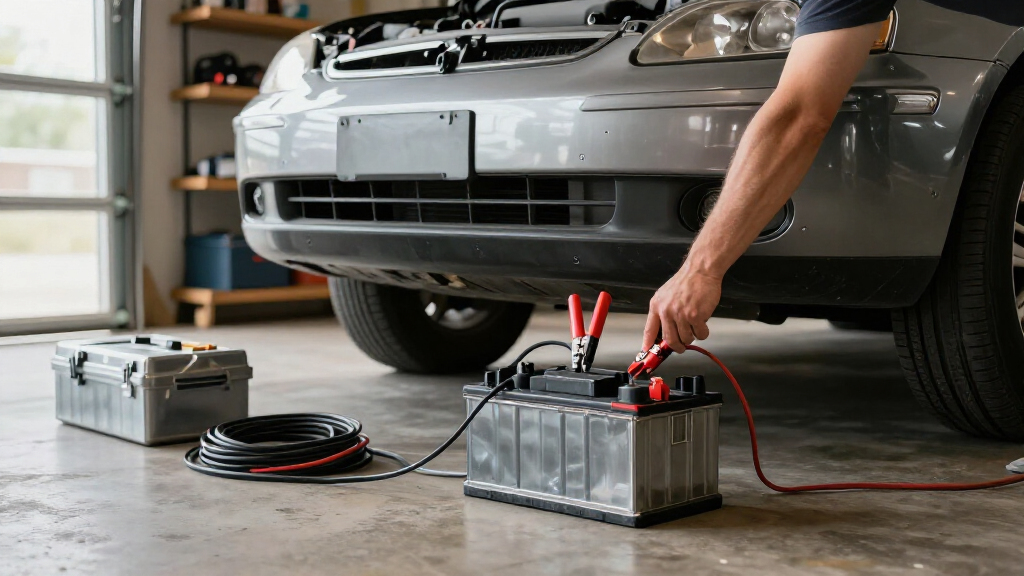
For most drivers, the Schumacher Electric SC1281 is the best car battery charger in this roundup because it pairs 6V/12V support with charging and maintenance functions. The NOCO GENIUS5 is a more compact choice for routine care, while the DEWALT DXAEC100 is better suited to drivers who need high-output charging and engine-start assistance. The main tradeoffs are charging speed, battery compatibility, portability, and whether you need a charger, a maintainer, or a jump-start aid. A higher amperage rating can shorten charging time, but a smaller smart charger may be easier to store and leave connected for upkeep. Read on for the full breakdown and advice on matching a charger to your battery and habits.

Get business pricing on garage and car supplies
- Business-only prices and quantity discounts
- Tax-exempt purchasing
- Multiple users, one account, clear invoices
Complete the kit


Key Takeaways
- The lineup splits into two clear groups: high-output units such as the DEWALT DXAEC100 and wheeled Schumacher SC1445 target faster charging or engine-start support, while NOCO’s GENIUS models prioritize compact maintenance.
- Amperage changes the job a charger suits. The GENIUS1 and GENIUS2 are better for gradual upkeep than reviving a depleted battery quickly; the 15A–30A models are more suited to faster charging.
- Voltage support is not universal compatibility. Several models cover 6V and 12V batteries, while the PLXX and E-FAST offer 12V/24V operation for buyers with equipment beyond ordinary passenger cars.
- Engine-start capability adds bulk and complexity. Schumacher’s SC1361 and SC1445 and the DEWALT DXAEC100 serve urgent starting needs, but a maintainer-first model is easier to store and use for seasonal vehicles.
- Smart charging is most useful when batteries sit unused. Automatic maintenance functions on the NOCO, CTEK, Schumacher, and other smart models can support long-term care, but buyers should still match the charger to battery chemistry and manufacturer guidance.
| Schumacher Electric SC1361 12V Battery Charger, Maintainer, and Engine Starter |  | Best for 12V Charging with Start Assistance | Model: SC1361 | Voltage: 12V | Charge rate: 2A to 6A (listed details conflict) | VIEW LATEST PRICE | See Our Full Breakdown |
| Schumacher Electric SC1281 6V/12V Battery Charger and Maintainer |  | Best for Engine Starting and Battery Checks | Model: SC1281 | Battery voltage: 6V and 12V | Charging rate: 2A to 6A (listed details conflict) | VIEW LATEST PRICE | See Our Full Breakdown |
| CRAFTSMAN CMXCESM258 12A 6V/12V Battery Charger and Maintainer |  | Best for Clear Status and All-Around Battery Care | Model: CMXCESM258 | Voltage: 6V and 12V | Maximum charging rate: 12A | VIEW LATEST PRICE | See Our Full Breakdown |
| TowerTop 12V Smart Car Battery Charger and Maintainer, 2A/10A/25A, with Engine Start and Battery Repair |  | Best for Faster 12V Charging | Output voltage: 12V | Input voltage: 120V AC | Charging current settings: 2A, 10A, 25A, and AUTO | VIEW LATEST PRICE | See Our Full Breakdown |
| Schumacher Electric SC1280 15A Car Battery Charger and Maintainer, 6V/12V |  | Best for Higher-Rate 6V/12V Charging | Model: SC1280 | Charging voltage: 6V and 12V | 12V charging current: 15A | VIEW LATEST PRICE | See Our Full Breakdown |
| Schumacher Electric SC1445 Wheeled 6/12V 250A Battery Charger and Engine Starter |  | Best for Heavy-Duty Starting | Battery voltage: 6V and 12V | Engine-start current: 250A | Boost modes: 25A and 50A | VIEW LATEST PRICE | See Our Full Breakdown |
| DEWALT DXAEC100 30A Battery Charger, 100A Engine Starter, and 3A Maintainer |  | Best for Diagnostics and Versatility | Output voltage: 12V DC | Charging current: 30A | Maintenance current: 3A | VIEW LATEST PRICE | See Our Full Breakdown |
| PLXX 12V/24V 15A Smart Car Battery Charger and Maintainer |  | Best for 12V/24V Lead-Acid Flexibility | Supported battery voltage: 12V and 24V | Input voltage: 120V | Compatible battery capacity: 4–300Ah | VIEW LATEST PRICE | See Our Full Breakdown |
| NOCO GENIUS2 2A 6V/12V Smart Battery Charger and Maintainer | 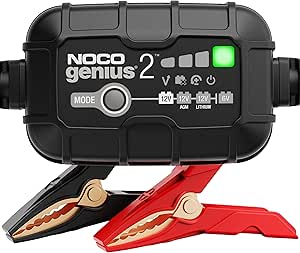 | Best Compact Long-Term Maintainer | Output voltage: 12V | Amperage: 2A | Compatible battery types: 6V and 12V lead-acid (AGM, gel, flooded, deep-cycle) and LiFePO4 | VIEW LATEST PRICE | See Our Full Breakdown |
| CTEK MXS 5.0 12V Fully Automatic Battery Charger and Maintainer |  | Best for Automatic 12V Maintenance | Output voltage: 12V | Input voltage: 120V | Charging current: 4.3A | VIEW LATEST PRICE | See Our Full Breakdown |
| NOCO GENIUS5 5A 6V/12V Smart Battery Charger and Maintainer |  | Best for All-Around Home Maintenance | Output voltage: 12 volts | Battery compatibility: 6V and 12V lead-acid and LiFePO4 | Amperage: 5 A | VIEW LATEST PRICE | See Our Full Breakdown |
| E-FAST 25A Smart 12V/24V Battery Charger and Maintainer |  | Best for 12V/24V Flexibility | Supported output voltage: 12V and 24V | Input voltage: 110V | Maximum output current: 25A for 12V; 15A for 24V | VIEW LATEST PRICE | See Our Full Breakdown |
| NOCO GENIUS1 1A 6V/12V Smart Battery Charger and Maintainer |  | Best Compact Maintainer | Output voltage: 12 volts | Battery compatibility: 6V and 12V lead-acid and LiFePO4 | Amperage: 1 A | VIEW LATEST PRICE | See Our Full Breakdown |
| NOCO GENIUS10 10A 6V/12V Smart Battery Charger and Maintainer |  | Best for Larger Batteries | Amperage: 10 A | Supported battery voltages: 6V and 12V | Battery types: Lead-acid (AGM, Gel, SLA, VRLA) and LiFePO4 | VIEW LATEST PRICE | See Our Full Breakdown |
More Details on Our Top Picks
Schumacher Electric SC1361 12V Battery Charger, Maintainer, and Engine Starter
The SC1361 suits drivers who want more than a maintainer: it combines 12V charging, float maintenance, and a 50A engine-start function. That start assistance gives it a practical advantage over the CRAFTSMAN CMXCESM258, which offers more battery-care functions and a higher stated charging rate but no engine-start mode in its listed features. The SC1361 also supports standard, AGM, and LiFePO4 batteries, while automatic charging and spark-proof clamps add useful protection for routine garage use.
The tradeoff is charging speed and some specification uncertainty. The listed charge-rate details conflict, and the stated 2A to 6A range points to slower charging than the 12A CRAFTSMAN or 15A Schumacher SC1280. I would choose this for occasional starting help and upkeep, not as my pick for quickly charging a large battery.
Pros:- Combines charging, float maintenance, and 50A engine-start assistance
- Works with standard, AGM, and 12V LiFePO4 batteries
- Automatic charging with reverse-polarity protection and spark-proof clamps
- Useful for maintaining a battery between periods of vehicle use
Cons:- Listed charging-rate details conflict, making expected charging speed unclear
- The stated 2A to 6A range is slower than the CRAFTSMAN CMXCESM258 and Schumacher SC1280
- Supports 12V batteries only
Best for: Drivers with a 12V car, motorcycle, or seasonal vehicle who want one unit for battery maintenance and occasional engine-start assistance.
Not ideal for: Owners of large batteries who prioritize faster charging, or anyone needing a 6V charging mode.
- Model:SC1361
- Voltage:12V
- Charge rate:2A to 6A (listed details conflict)
- Boost charge:10A
- Engine start:50A
- Battery compatibility:Standard, AGM, and LiFePO4 12V batteries
- Functions:Charging, maintaining, and engine starting
- Safety:Reverse-polarity protection, spark-proof clamps, and automatic shutoff
Our verdict“Choose the SC1361 if you want a 12V maintainer with engine-start assistance and can accept modest, inconsistently described charging rates.”
Schumacher Electric SC1281 6V/12V Battery Charger and Maintainer
The SC1281 is the strongest fit here for buyers who want a charger that can also assist with a no-start situation and basic battery diagnostics. Its 100A engine start is twice the SC1361’s listed 50A, and it adds battery and alternator testing alongside desulfation and maintenance. Support for 6V and 12V batteries also gives it a wider vehicle range than the 12V-only SC1361 and TowerTop charger.
That broader job list comes with a charging-speed compromise: the stated 2A to 6A charging range is modest beside the 12A CRAFTSMAN CMXCESM258 and 15A SC1280. The product details also give conflicting charging-rate ranges, so I would treat the rate as uncertain. Its 12V LiFePO4 support is a plus, but buyers focused mainly on faster everyday charging may prefer the SC1280.
Pros:- 100A engine-start function for added help during a no-start situation
- Charges and maintains both 6V and 12V batteries
- Includes battery and alternator testing plus desulfation
- Supports standard, AGM, deep-cycle, and 12V LiFePO4 batteries
Cons:- The stated 2A to 6A charging rate is slower than the CRAFTSMAN CMXCESM258 and SC1280
- Charging-rate details conflict in the product information
- The engine-start and testing features may be unnecessary for buyers seeking a simple maintainer
Best for: Drivers and home mechanics who maintain both 6V and 12V batteries and want testing, desulfation, and substantial engine-start assistance in one unit.
Not ideal for: Owners who mainly need fast charging for larger batteries, or buyers who do not need engine-start and testing functions.
- Model:SC1281
- Battery voltage:6V and 12V
- Charging rate:2A to 6A (listed details conflict)
- Boost charge:12A to 30A
- Engine start:100A
- Battery types:Standard, AGM, deep-cycle, and 12V LiFePO4
- Functions:Charging, maintaining, testing, and desulfation
- Safety:Reverse-polarity protection and automatic shutoff
Our verdict“Pick the SC1281 if 6V/12V flexibility, battery checks, and strong start assistance matter more than faster charging.”
CRAFTSMAN CMXCESM258 12A 6V/12V Battery Charger and Maintainer
The CRAFTSMAN CMXCESM258 stands out for giving battery care a more informative, flexible setup than the SC1361: it can charge, maintain, test, and restore compatible batteries, with a digital display and push-button controls to show what the charger is doing. Its automatic voltage detection helps reduce guesswork when switching between 6V and 12V batteries, while the six-foot power cord and six-foot battery cables offer useful reach around a vehicle.
Its 12A maximum rate is a step up from the SC1281’s listed 6A charging rate, but it falls short of the SC1280’s 15A 12V output and the TowerTop’s 25A setting. Maintenance is gentler, at 3A for 12V and 2A for 6V. Unlike the SC1361 and SC1281, it has no listed engine-start function, so I would choose it for controlled battery care rather than getting a vehicle running quickly.
Pros:- Charges, maintains, tests, and restores compatible batteries
- Digital display, LED indicators, and push-button controls make status easier to follow
- Automatically detects battery voltage and supports 6V and 12V batteries
- Six-foot power cord and six-foot battery cables provide 12 feet of stated reach
Cons:- 12A maximum output is below the SC1280’s 15A and TowerTop’s 25A settings
- 12V maintenance is limited to 3A, with 2A for 6V maintenance
- 12V lithium compatibility is limited to LiFePO4, and no engine-start function is listed
Best for: Owners of mixed 6V and 12V vehicles who want a display, automatic voltage detection, and charging, testing, and restoration modes.
Not ideal for: Drivers seeking engine-start assistance or the quickest charging available among these picks.
- Model:CMXCESM258
- Voltage:6V and 12V
- Maximum charging rate:12A
- 12V charge/maintain mode:3A
- 6V charge/maintain mode:2A
- Battery types:Standard, AGM, deep-cycle, and 12V LiFePO4
- Functions:Charging, maintaining, testing, and restoring
- Controls and protection:Digital display, LED indicators, push-button controls, and reverse hook-up protection
- Cord and cable length:6-foot power cord and 6-foot battery cables
Our verdict“Choose the CRAFTSMAN for visible, versatile 6V/12V battery care, but look to the SC1280 or TowerTop for higher charging output.”
TowerTop 12V Smart Car Battery Charger and Maintainer, 2A/10A/25A, with Engine Start and Battery Repair
For buyers who value charging speed, the TowerTop has the highest stated charging output in this group: selectable 2A, 10A, and 25A settings, plus AUTO mode. That makes it a more direct choice for charging a drained 12V lead-acid battery than the CRAFTSMAN CMXCESM258 or Schumacher SC1280, whose maximum rates are 12A and 15A respectively. It also adds 100A engine-start assistance, an LCD display, and repair and winter modes, giving it a broader role than a basic charger.
The range of supported battery chemistries is wide for lead-acid types, including AGM, GEL, EFB, and deep-cycle, but it does not list 6V or LiFePO4 support. Its repair function has a firm limit: the product cannot repair a completely drained battery, and engine-start assistance is limited to 100 seconds. I would favor it for 12V lead-acid charging speed, not broad battery compatibility.
Pros:- 25A maximum charging current exceeds the listed rates of the CRAFTSMAN CMXCESM258 and SC1280
- Selectable 2A, 10A, 25A, and AUTO charging settings
- Supports several 12V lead-acid types, including AGM, GEL, EFB, and deep-cycle
- Adds LCD status, repair and winter modes, and 100A engine-start assistance
Cons:- Supports 12V batteries only and does not list LiFePO4 compatibility
- Repair mode cannot address completely drained batteries
- Engine-start assistance is limited to 100 seconds
Best for: Owners of 12V lead-acid cars, trucks, or deep-cycle batteries who want selectable charging rates, status information, and occasional start assistance.
Not ideal for: People maintaining 6V or LiFePO4 batteries, or anyone expecting repair mode to recover a completely drained battery.
- Output voltage:12V
- Input voltage:120V AC
- Charging current settings:2A, 10A, 25A, and AUTO
- Maximum charging current:25A
- Engine-start current:100A
- Battery types:STD, AGM, GEL, Wet, MF, EFB, calcium, and deep-cycle lead-acid
- Charging stages:8
- Display and modes:LCD display, repair mode, and winter mode
- Dimensions and weight:7.68 × 10.04 × 4.92 inches; 5 pounds
Our verdict“Choose the TowerTop for higher-output 12V lead-acid charging and start assistance, provided you do not need 6V or LiFePO4 support.”
Schumacher Electric SC1280 15A Car Battery Charger and Maintainer, 6V/12V
The SC1280 is a practical middle ground for drivers who need faster 12V charging without giving up 6V support. Its 15A 12V charging current is higher than the CRAFTSMAN CMXCESM258’s 12A maximum and well above the SC1281’s stated 2A to 6A range. It also charges, maintains, tests, and restores batteries, while automatic multi-stage charging and desulfation make it more capable than a charger focused only on keeping a battery topped up.
The TowerTop reaches 25A and adds engine-start assistance, so it is the stronger fit for buyers prioritizing output or starting help. The SC1280 counters with 6V/12V coverage and support for standard, AGM, gel, and deep-cycle batteries. Its 6V charging mode is only 2A, though, and it needs an AC outlet. I would pick it for regular home-garage charging across different battery voltages, not for roadside use.
Pros:- 15A 12V charging rate exceeds the CRAFTSMAN CMXCESM258’s 12A maximum
- Supports both 6V and 12V batteries
- Charges, maintains, tests, and restores, with desulfation and multi-stage charging
- Includes reverse clamp protection and six-foot power and booster cables
Cons:- 6V charging is limited to 2A
- Requires an AC outlet for operation
- Does not list an engine-start function, unlike the TowerTop and SC1281
Best for: Home-garage owners who maintain 6V and 12V standard, AGM, gel, or deep-cycle batteries and want more 12V charging output than the SC1281 provides.
Not ideal for: Drivers who need engine-start assistance, outlet-free charging, or high-rate charging for 6V batteries.
- Model:SC1280
- Charging voltage:6V and 12V
- 12V charging current:15A
- 12V maintenance current:3A
- 6V charging current:2A
- Battery types:Standard, AGM, gel, and deep-cycle
- Functions:Charging, maintaining, testing, and restoring
- Safety:Reverse clamp protection
- Cord and cable length:6-foot power cord and 6-foot booster cable
Our verdict“Choose the SC1280 if you want a capable 6V/12V garage charger with a 15A 12V rate, but skip it if you need engine-start assistance.”
Schumacher Electric SC1445 Wheeled 6/12V 250A Battery Charger and Engine Starter
The SC1445 is the strongest fit here for drivers who want a substantial engine-start boost alongside everyday charging. Its 250A start mode and 25A and 50A boost settings give it a different job from the lighter DEWALT DXAEC100, which offers 100A starting assistance and more electronic diagnostics. The SC1445 also supports 6V and 12V batteries, making it useful for some older vehicles as well as modern cars.
The tradeoff is a more hands-on charging routine: its manual timer and analog ammeter require the user to monitor and manage the session rather than relying on a fully automatic process. Wheels and a retractable handle help move the steel-cased unit, but the product data does not give its weight or dimensions, so storage needs are harder to judge. Choose it for starting power and control, not set-and-forget convenience.
Pros:- Combines 10A charging with 25A and 50A boost modes and 250A engine-start assistance.
- Supports both 6V and 12V batteries.
- Analog ammeter and manual timer give users direct control over charging.
- Wheels and a retractable handle aid movement around a garage.
Cons:- Manual timer means charging requires user monitoring.
- Weight and dimensions are not provided, making storage and handling harder to assess.
Best for: Owners of older 6V vehicles or 12V cars who want high engine-start assistance and a wheeled charger for garage use.
Not ideal for: Drivers seeking unattended automatic charging or a compact unit for tight storage; the manual timer calls for user oversight, and the steel-cased wheeled design is less suited to small spaces.
- Battery voltage:6V and 12V
- Engine-start current:250A
- Boost modes:25A and 50A
- Charge mode:10A
- Timer:Manual, up to 135 minutes
- Compatible battery types:Standard, AGM, gel, and deep-cycle
- Display:Analog ammeter
- Construction:Heavy-duty steel case; wheeled with retractable handle
Our verdict“Choose the SC1445 if high starting output and 6V/12V flexibility matter more than automatic charging or compact storage.”
DEWALT DXAEC100 30A Battery Charger, 100A Engine Starter, and 3A Maintainer
The DEWALT DXAEC100 suits buyers who want one 12V unit for charging, maintenance, emergency starting, and basic electrical checks. Its 30A charge rate is more substantial than the NOCO GENIUS2’s 2A output, while the 100A start mode adds roadside or garage backup that the NOCO lacks. An LCD display, alternator diagnostics, and automatic reconditioning make its feature set more informative than the SC1445’s analog, manually controlled approach.
That added capability comes with limits: it works with 12V WET, GEL, and AGM lead-acid batteries only, unlike the GENIUS2, which also supports LiFePO4 and 6V batteries. The listed 12.5-hour charge time also means high output does not make every charging session quick. At four pounds and with a 100A starting function, it is a capable garage tool, but not a universal battery solution.
Pros:- Combines 30A charging, 3A maintenance, and 100A engine-start assistance.
- LCD status display and alternator diagnostics provide useful system information.
- Automatic reconditioning may help address some battery issues.
- Reverse-polarity protection helps guard against incorrect clamp connections.
Cons:- Limited to compatible 12V WET, GEL, and AGM lead-acid batteries.
- The listed battery charge time is 12.5 hours.
- One cable-clamp connection means it does not offer multiple charging ports.
Best for: 12V vehicle owners who want a higher-output charger with engine-start assistance, battery reconditioning, and alternator diagnostics.
Not ideal for: Owners of 6V or LiFePO4 batteries, or buyers who need a charger specified for multiple voltage systems.
- Output voltage:12V DC
- Charging current:30A
- Maintenance current:3A
- Engine-start current:100A
- Compatible batteries:12V WET, GEL, and AGM lead-acid
- Display and functions:LCD; automatic reconditioning and alternator diagnostics
- Dimensions:11 × 8.75 × 4 in
- Weight:4 lb
- Certification:ETL
Our verdict“Pick the DXAEC100 for a feature-rich 12V garage charger with starting help and diagnostics, but skip it if you need 6V or lithium support.”
PLXX 12V/24V 15A Smart Car Battery Charger and Maintainer
The PLXX stands out for its stated support of 12V and 24V lead-acid batteries, a useful distinction from the 12V-only CTEK MXS 5.0 and DEWALT DXAEC100. Its compatibility list spans AGM, gel, wet, EFB, calcium, MF, and deep-cycle batteries, while the 7-stage automatic process, trickle mode, and winter setting are aimed at varied battery conditions and storage routines. Repair and desulfation functions add options for users trying to address a weak battery.
It is a broader-fit choice, not a universal one: lithium batteries are not supported, unlike the NOCO GENIUS2. The listed two-hour charge time can vary with battery size and condition, so I would not treat it as a fixed expectation across its 4–300Ah capacity range. At 12.8 pounds, it is also less convenient to move than the compact NOCO or CTEK maintainers. Its appeal is voltage and lead-acid variety rather than portability.
Pros:- Supports stated 12V and 24V lead-acid use across a broad range of battery types.
- 7-stage charging includes fast and trickle modes, winter mode, and automatic shutoff.
- Repair and desulfation functions provide additional options for weak batteries.
- Built-in protections cover reverse polarity, short circuit, overheating, and overcharging.
Cons:- Does not support lithium battery types.
- The listed two-hour charge time may vary with battery size and condition.
- At 12.8 lb, it is heavier than compact maintainers such as the NOCO GENIUS2.
Best for: Owners of mixed 12V and 24V lead-acid equipment, such as cars, boats, RVs, and lawn machinery, who want automatic charging modes.
Not ideal for: Drivers with LiFePO4 batteries or anyone who prioritizes a lightweight maintainer for frequent transport.
- Supported battery voltage:12V and 24V
- Input voltage:120V
- Compatible battery capacity:4–300Ah
- Charging modes:7-stage smart charging; fast and trickle
- Battery types:AGM, gel, wet/flooded, EFB, calcium, MF, and deep-cycle lead-acid
- Dimensions:11.4 × 5.8 × 8.5 in
- Weight:12.8 lb
- Warranty:3 years
Our verdict“Choose the PLXX if you need broad lead-acid compatibility and stated 12V/24V flexibility, but not for lithium batteries or lightweight portability.”
NOCO GENIUS2 2A 6V/12V Smart Battery Charger and Maintainer
The NOCO GENIUS2 is a maintenance-first pick for owners who leave a vehicle, motorcycle, or seasonal machine parked for long stretches. Its 2A output is modest beside the CTEK MXS 5.0’s 4.3A and far below the DEWALT DXAEC100’s 30A, so it is better for gradual charging and upkeep than for replenishing a large battery quickly. In return, it supports 6V and 12V lead-acid batteries plus LiFePO4, giving it broader chemistry and voltage coverage than the CTEK.
Temperature-adjusted charging helps adapt output to ambient conditions, and indefinite maintenance suits stored vehicles. Force Mode can attempt to charge batteries down to zero volts, but it requires manual activation. The 2A rate can also mean long waits on larger batteries, and the listed maximum LiFePO4 capacity is 40Ah. This is a focused maintainer, not a substitute for a high-output charger or engine starter.
Pros:- Works with 6V and 12V lead-acid batteries as well as LiFePO4.
- Temperature-adjusted charging helps adapt charging to ambient conditions.
- Force Mode can attempt recovery of batteries discharged to zero volts.
- Includes clamps, eyelet terminals, and mounting hardware for different connection needs.
Cons:- 2A output can charge larger batteries slowly.
- Force Mode requires manual operation.
- Maximum stated LiFePO4 capacity is 40Ah.
Best for: Owners of motorcycles, seasonal vehicles, and smaller batteries who want a 6V/12V maintainer that also supports LiFePO4.
Not ideal for: Drivers who need fast charging, engine-start assistance, or routine charging of larger LiFePO4 batteries above the listed 40Ah capacity.
- Output voltage:12V
- Amperage:2A
- Compatible battery types:6V and 12V lead-acid (AGM, gel, flooded, deep-cycle) and LiFePO4
- Maximum LiFePO4 capacity:40Ah
- Battery charge time:10 hours
- AC cable length:72 in
- DC cable length:80 in
- Warranty:3 years
Our verdict“Choose the GENIUS2 for long-term maintenance of smaller 6V/12V or LiFePO4 batteries, not for fast charging or starting a vehicle.”
CTEK MXS 5.0 12V Fully Automatic Battery Charger and Maintainer
The CTEK MXS 5.0 is aimed at buyers who want an automatic routine for a 12V lead-acid or AGM battery, rather than the manual control of the Schumacher SC1445 or the starting power of the DEWALT DXAEC100. Its 8-step charging process handles charging and maintenance, while reconditioning and float/pulse modes give it a clear role for vehicles that spend time in storage. At 1.3 pounds, it is far easier to tuck away than the wheeled SC1445.
Its limits are just as clear: this is a 12V lead-acid and AGM-only charger, with no stated 6V, lithium, or engine-start capability. The listed 50-hour charge time is a major warning against choosing it for quick recovery of a depleted battery. Its IP65 rating and protection features suit garage and vehicle-adjacent use, but the MXS 5.0 makes most sense as a careful charger and maintainer, not an all-purpose power tool.
Pros:- Automatic 8-step charging manages charging and maintenance without a manual timer.
- Float and pulse charging support long-term battery upkeep.
- Reconditioning mode may help with some underperforming batteries.
- IP65 rating and listed splash, dust, spark, and shock protection suit garage use.
Cons:- Compatible only with 12V lead-acid and AGM batteries.
- No engine-start function is listed.
- Listed battery charge time is 50 hours.
Best for: Owners of 12V lead-acid or AGM cars, motorcycles, boats, and tractors who want automatic charging and long-term maintenance.
Not ideal for: People with 6V or lithium batteries, or drivers who need engine-start assistance or a charger intended for quick battery recovery.
- Output voltage:12V
- Input voltage:120V
- Charging current:4.3A
- Compatible batteries:12V lead-acid and AGM
- Charging process:Automatic 8-step charging
- Connector type:Alligator clamps
- Dimensions:5.91 × 11.02 × 2.36 in
- Weight:1.3 lb
- Ingress protection:IP65
Our verdict“Pick the MXS 5.0 for automatic upkeep of a 12V lead-acid or AGM battery, but choose a higher-output model if speed or starting assistance matters.”
NOCO GENIUS5 5A 6V/12V Smart Battery Charger and Maintainer
The GENIUS5 is a sensible middle ground for drivers who want more charging pace than a trickle charger without stepping up to a much higher-output unit. Its 5A output supports 6V and 12V lead-acid and LiFePO4 batteries, while temperature-adjusted charging and long-term maintenance make it useful for vehicles that sit between drives. It can also work with deeply discharged batteries, including through Force Mode, a wider recovery option than the GENIUS1’s stated ability to charge batteries as low as 1V.
Compared with the NOCO GENIUS10, this model gives up charging speed and support for batteries up to 230Ah; the GENIUS5 is rated for up to 120Ah. That lower ceiling suits ordinary cars and smaller vehicles, but it is less compelling for large-capacity batteries or buyers in a hurry. Its 8-hour listed charge time is also a reminder that this is a managed charger, not a high-output jump-start unit.
Pros:- Supports both lead-acid and LiFePO4 batteries in 6V and 12V systems
- Temperature-adjusted charging helps adapt charging to ambient conditions
- Can charge deeply discharged batteries, with Force Mode for zero-volt batteries
- Includes clamps, eyelet terminals, mounting hardware, and a three-year warranty
Cons:- 5A output is slower than the GENIUS10 and higher-current chargers
- Listed maximum battery capacity is 120Ah, below the GENIUS10’s 230Ah
- The listed charge time is 8 hours
Best for: Car and motorcycle owners who want one charger for routine charging and long-term maintenance of 6V or 12V lead-acid or LiFePO4 batteries up to 120Ah.
Not ideal for: Owners of batteries above 120Ah or drivers who need the faster charging capacity of the GENIUS10 or a dedicated engine-start function.
- Output voltage:12 volts
- Battery compatibility:6V and 12V lead-acid and LiFePO4
- Amperage:5 A
- Maximum battery capacity:120 amp-hours
- Listed battery charge time:8 hours
- AC cable length:72 inches
- DC cable length:80 inches
- Warranty:3 years
Our verdict“Choose the GENIUS5 for versatile, ongoing care of typical vehicle batteries; choose the GENIUS10 if you need more output or capacity headroom.”
E-FAST 25A Smart 12V/24V Battery Charger and Maintainer
The E-FAST stands apart from the NOCO GENIUS models here by supporting both 12V and 24V batteries and offering substantially higher current for 12V charging. Its five settings, from 2A through 25A plus Auto, let owners match output to the battery and situation; the 24V ceiling is lower at 15A. An eight-stage process, repair mode, and seasonal temperature adjustment add functions for owners managing different battery types rather than just maintaining one car.
The tradeoff is that its most headline-grabbing features are conditional: 25A applies to 12V, and the 200-second booster works only on 12V batteries. Compared with the simpler GENIUS5, E-FAST offers more voltage and current flexibility, but it has more settings and modes to understand. Its 3.7-pound aluminum body and cooling fan suit a garage setup, though this is not the compact, low-output choice for someone who only wants a small maintainer.
Pros:- Supports 12V and 24V batteries across lead-acid types and LiFePO4
- Offers selectable current settings up to 25A for 12V batteries
- Includes an eight-stage process, repair mode, and seasonal charging adjustment
- Aluminum housing, cooling fan, and multiple listed safety protections
Cons:- Maximum output drops to 15A for 24V batteries
- The 200-second booster mode is limited to 12V batteries
- Its range of settings and modes is less straightforward than the GENIUS5
Best for: Owners of vehicles or equipment with 12V and 24V lead-acid or LiFePO4 batteries who want selectable charging current and a higher-output 12V option.
Not ideal for: Drivers seeking a simple, compact maintainer for one car, or 24V users expecting the full 25A output or access to booster mode.
- Supported output voltage:12V and 24V
- Input voltage:110V
- Maximum output current:25A for 12V; 15A for 24V
- Current settings:2A, 8A, 20A, 25A, and Auto
- Compatible battery types:Lead-acid (AGM, GEL, SLA, flooded, EFB) and LiFePO4
- Charging process:8-stage
- Booster mode:Up to 200 seconds; 12V batteries only
- Dimensions and weight:8.5 × 4.9 × 7.5 inches; 3.7 lb
- Safety protections:Reverse polarity, sparks, short circuit, and overcharging
Our verdict“Pick the E-FAST if you need 12V/24V compatibility and adjustable high-current charging, but skip it for simple maintenance of a single car battery.”
NOCO GENIUS1 1A 6V/12V Smart Battery Charger and Maintainer
The GENIUS1 is built for upkeep, not fast recovery: its 1A output suits small batteries and vehicles that spend long stretches parked. It handles 6V and 12V lead-acid and LiFePO4 batteries, adjusts charging for ambient temperature, and includes both clamps and integrated eyelet terminals. The 110-inch DC cable gives more reach than the GENIUS5’s listed 80-inch cable, which can help when the battery is awkwardly placed.
Capacity is the dividing line. The GENIUS1 is rated for batteries up to 30Ah, making it a narrower choice than the GENIUS5’s 120Ah limit or GENIUS10’s 230Ah limit. It can charge batteries as low as 1V, but its low current means larger batteries will take longer; the listed charge time is 10 hours. I’d choose this over the GENIUS5 only when modest capacity and slow, ongoing maintenance matter more than quicker charging.
Pros:- Works with 6V and 12V lead-acid and LiFePO4 batteries
- Temperature-adjusted charging supports maintenance as ambient conditions change
- Can charge batteries as low as 1V, with Force Mode for completely dead batteries
- Includes clamps, integrated eyelet terminals, and a three-year warranty
Cons:- 1A output can make charging larger batteries slow
- Listed battery capacity is limited to 30Ah
- Less suited to recovery charging than the higher-output GENIUS5 and GENIUS10
Best for: Owners of motorcycles, small vehicles, or seasonal equipment with batteries up to 30Ah who want a low-output charger for routine maintenance.
Not ideal for: Car owners with larger batteries who need faster charging or more capacity headroom than the GENIUS1’s 30Ah limit.
- Output voltage:12 volts
- Battery compatibility:6V and 12V lead-acid and LiFePO4
- Amperage:1 A
- Battery capacity:Up to 30 amp-hours
- Listed battery charge time:10 hours
- DC cable length:110 inches
- Input voltage:120 volts
- Warranty:3 years
Our verdict“Choose the GENIUS1 for small batteries that need gentle, ongoing maintenance, not for quick charging of a typical large car battery.”
NOCO GENIUS10 10A 6V/12V Smart Battery Charger and Maintainer
With 10A output and support for batteries up to 230Ah, the GENIUS10 is the strongest fit among these three NOCO chargers for owners of larger-capacity batteries who still want a single unit for charging and maintenance. Like the GENIUS5 and GENIUS1, it supports 6V and 12V lead-acid and LiFePO4 batteries, adjusts charging for ambient temperature, and uses pulse charging to help reverse sulfation. It can also charge deeply discharged batteries, including with Force Mode.
That extra capacity separates it from the GENIUS5, which is rated up to 120Ah, and the GENIUS1, which is limited to 30Ah. The cost of that headroom is a higher-output unit that may be more charger than a small-battery owner needs. Its multiple operating modes also call for reading the manual before use, so beginners who want the simplest setup may prefer the GENIUS5. It supports ongoing maintenance, but it is not an engine starter.
Pros:- 10A output and support for batteries up to 230Ah
- Compatible with 6V and 12V lead-acid and LiFePO4 batteries
- Temperature-adjusted charging and pulse charging support ongoing battery care
- Can charge deeply discharged batteries and includes cables, clamps, eyelet terminals, and mounting hardware
Cons:- More output and capacity than many small-battery owners need
- The manual should be read to use its modes correctly
- Does not provide an engine-start function
Best for: Owners of cars, trucks, or other vehicles with batteries up to 230Ah who want a higher-output 6V/12V charger that also supports long-term maintenance.
Not ideal for: Owners of small batteries who value a lower-output, simpler maintainer, or drivers who need a charger with an engine-start function.
- Amperage:10 A
- Supported battery voltages:6V and 12V
- Battery types:Lead-acid (AGM, Gel, SLA, VRLA) and LiFePO4
- Maximum battery capacity:230 Ah
- Input power:120–240 VAC
- Listed battery charge time:10 hours
- Included cable lengths:72-inch AC cable and 80-inch DC cable
- Warranty:3 years
Our verdict“Choose the GENIUS10 if your batteries exceed the GENIUS5’s 120Ah range or you want more output, and skip it if you only need a basic small-battery maintainer.”
How We Picked
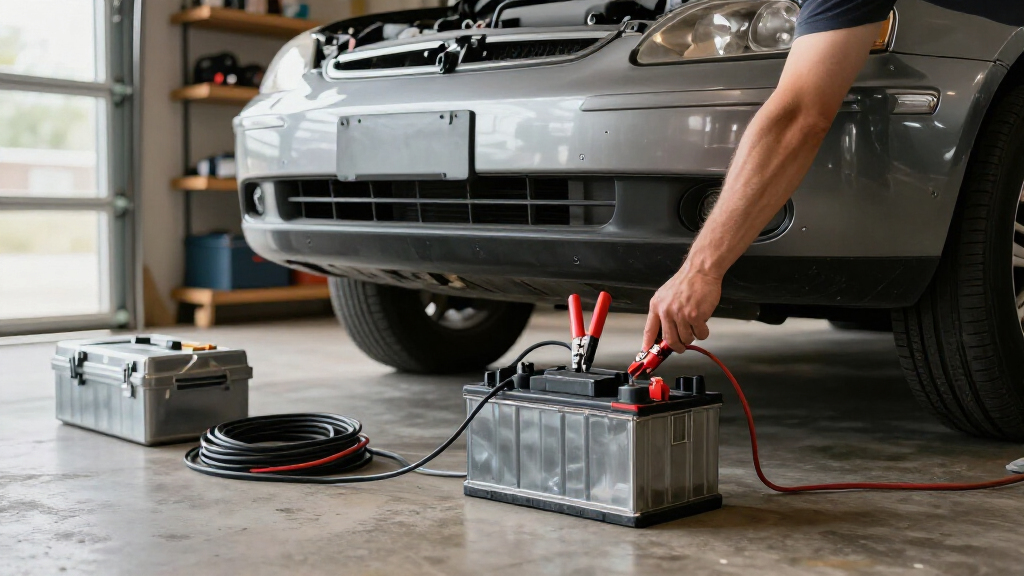
I compared these chargers by the jobs car owners are most likely to need: recharging a low battery, maintaining a vehicle in storage, supporting a difficult start, and handling more than one battery voltage. I gave weight to charging output, supported voltage, automatic charging and maintenance functions, connection and control simplicity, portability, and the usefulness of any repair or engine-start modes. I also considered whether the design fits occasional home use or a broader garage setup.
The ranking favors versatility and a useful balance of charging capability, maintenance, and usability. That puts the Schumacher SC1281 first as a broad-use option, while the DEWALT DXAEC100 and Schumacher SC1445 stand out for higher-output or starting needs. Smaller NOCO units rank better for compact maintenance than for fast recovery, and 12V/24V models make sense mainly for buyers who will use that extra voltage support. No single charger is best for every battery: confirm battery type, voltage, and the vehicle maker’s charging guidance before choosing.
Factors to Consider When Choosing Best Car Battery Chargers
I’d start by identifying the battery and the job, rather than choosing the charger with the largest number on its label. The differences that matter most are charging output, battery voltage and chemistry, how long a vehicle sits, and whether you need emergency starting support. These checks can prevent buying a charger that is either too limited for your use or needlessly bulky.
Match charger output to how you use the vehicle
Charging amperage affects how quickly a charger can return energy to a battery, but it does not tell the whole story. A low-output model such as the NOCO GENIUS1 or GENIUS2 is a better fit for slow maintenance than for quickly recovering a deeply discharged battery. Higher-output models can save time when you regularly charge larger batteries, though charging speed also depends on battery capacity and condition. For a car that sits in a garage, steady upkeep may matter more than rapid charging. Avoid choosing a high-amperage unit simply because it sounds more capable; check the battery maker’s recommended charging limits. If you need both routine care and occasional faster charging, compare the charger’s different operating modes rather than its maximum output alone.
Check voltage and battery chemistry before buying
A 6V/12V charger can support more than a typical modern passenger car, but that does not mean it handles every battery chemistry. Some vehicles use AGM or other battery types that call for a compatible charging mode, so verify support in the charger’s manual and the vehicle documentation. The PLXX and E-FAST add 24V capability, which is useful for compatible equipment but unnecessary for a single 12V car. A voltage mismatch can prevent useful charging or create a safety risk. Do not assume that a charger’s “smart” label means it automatically identifies every battery type or condition. Confirm voltage selection and chemistry settings before connecting it.
Decide whether you need a maintainer or a starting aid
A maintainer is designed to support a charged battery during long periods of inactivity; it is not a substitute for a jump starter or a high-output charger. Engine-start modes on options such as the Schumacher SC1361, SC1445, and DEWALT DXAEC100 address a different problem: helping a vehicle start when its battery is weak. These larger units can be more useful in a working garage, but their size and power demands may make them less convenient for occasional home storage. If your main issue is a classic car, motorcycle, or seasonal vehicle sitting unused, a compact maintainer may fit better. If a no-start situation is common, check the start-assist specifications and follow the manufacturer’s operating instructions. Keep in mind that a charger’s engine-start mode is not the same as a portable jump pack.
Plan for storage, connection, and safe use
Think about where the charger will live and how often you will connect it. Compact units like the NOCO GENIUS models are easier to store in a small garage, while wheeled or larger units suit a dedicated workspace. Cable reach and clamp access matter when a battery is installed in a cramped engine bay, so check the supplied leads and the vehicle’s approved connection points. Use the charger in a dry, ventilated area and follow its instructions for connection order and charging location. A maintainer can reduce repeated manual charging, but it should only be left connected if its manual permits that use. For outdoor or shared spaces, cable protection and a secure power outlet deserve as much attention as the charger’s feature list.
Pay for extra features only when they solve a real problem
Repair modes, engine-start assistance, multiple voltage settings, and higher output can broaden a charger’s role, but each feature adds controls or bulk. A 12V-only car owner may gain little from 24V support, while a household with compatible 6V vehicles may benefit from a dual-voltage model. Repair modes cannot restore every damaged or worn-out battery, so treat them as a possible aid rather than a guaranteed fix. Likewise, an engine-start setting does not remove the need for a healthy battery and correct operating procedure. If your needs are limited to keeping one car’s battery charged during storage, a simpler automatic maintainer may be easier to use. Spend more attention on verified compatibility and clear instructions than on a long list of modes.
Frequently Asked Questions
Can a 1A or 2A charger recharge a car battery, or is it only for maintenance?
Both can recharge a suitable 12V car battery, but their low output makes the process slow, especially when the battery is deeply discharged or has a large capacity. The NOCO GENIUS1 and GENIUS2 make more sense for gradual charging and ongoing care than for getting a vehicle ready quickly. Check the charger manual for its supported battery capacity and minimum operating conditions. If you need regular recovery from low charge, a higher-output model may be more practical. A battery that will not accept a charge may be damaged rather than simply in need of more time.
Should I buy a charger with an engine-start mode instead of a separate jump starter?
That depends on whether you want a stationary garage tool or a portable emergency device. The Schumacher SC1361, SC1445, and DEWALT DXAEC100 combine charging with engine-start assistance, which can suit a home workshop where a power outlet is nearby. A separate jump starter is generally more useful when you need help away from an outlet or want to keep emergency gear in the car. Read the product instructions for the engine-start mode’s limits and required connection procedure. Neither option repairs a failing battery, so repeated starting trouble calls for a battery and charging-system check.
Is a 12V/24V charger worth choosing for a car owner?
For a household that only charges standard 12V passenger-car batteries, 24V support is unlikely to add much value. It can make the PLXX or E-FAST a better fit for buyers who also own compatible 24V equipment, but extra voltage capability does not automatically mean better performance on a 12V car. Confirm the actual voltage of every battery you plan to charge and select the correct mode before connecting it. If you have no foreseeable 24V use, a simpler 6V/12V or 12V model may be easier to operate. Battery chemistry and charging limits still need to match, regardless of voltage range.
Can I leave a smart charger connected to my car for months?
Some automatic chargers and maintainers are designed for long-term connection, but permission depends on the specific model and its instructions. Check whether the manual explicitly describes maintenance or storage operation and follow its guidance on battery type, ventilation, and connection points. A smart charger does not remove the need to inspect cables and connections or to use a safe power source. If the vehicle is stored outdoors or in an area with moisture, confirm the charger’s permitted environment before leaving it in place. When the manual is unclear, disconnect the unit and ask the manufacturer rather than assuming continuous use is safe.
What should I do if a charger says the battery is full but the car still will not start?
A full-charge indication does not prove that a battery can deliver enough current to start an engine. The battery may be worn, connections may be loose or corroded, or the vehicle may have a charging-system or electrical fault. Check the battery terminals and follow the vehicle manual’s safe troubleshooting steps, then consider having the battery and alternator tested. Repeating a charging or repair mode may not fix an internal battery fault. If the car starts with assistance but goes flat again, treat that as a diagnostic problem rather than a reason to keep buying more charging time.
Conclusion
For the broadest mix of charging, maintenance, and voltage flexibility, I’d choose the Schumacher Electric SC1281 as the best overall. Buyers who want a compact everyday maintainer should look at the NOCO GENIUS5; it offers a stronger middle ground than the GENIUS1 or GENIUS2 when charging speed matters. For a value-focused home setup, the CRAFTSMAN CMXCESM258 is worth comparing if its 12A output and 6V/12V support match your needs. The NOCO GENIUS2 is my beginner-friendly pick for straightforward low-output maintenance, while the DEWALT DXAEC100 is the premium choice for buyers who need high output and engine-start assistance. Choose the PLXX or E-FAST only if 24V support will serve equipment you actually own; otherwise, a simpler charger is the more focused fit.