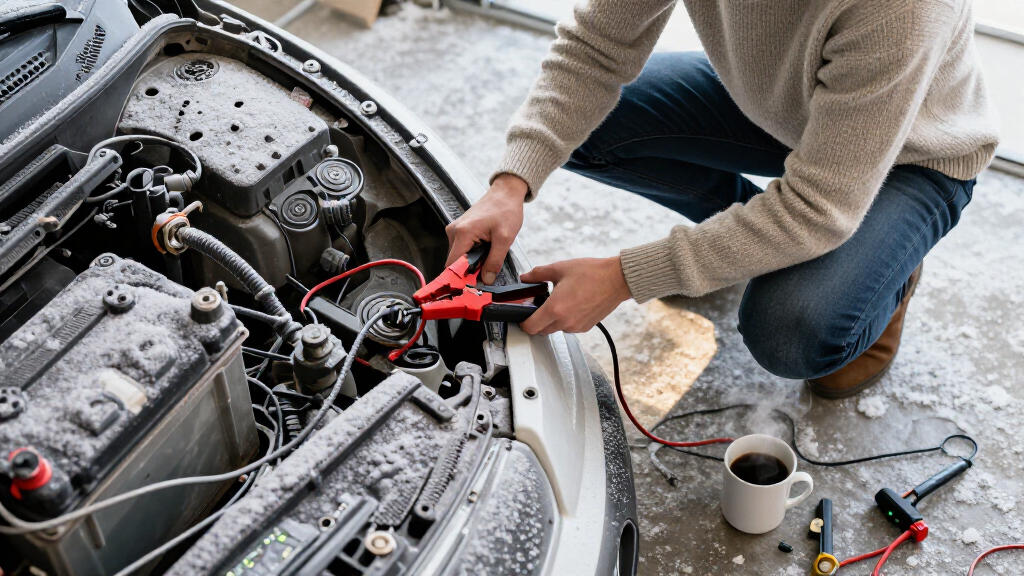

When temperatures drop, a weak battery is often the first thing to leave you stranded, which is why choosing among car battery chargers for winter comes down to charging speed versus long-term maintenance. The Schumacher SC1280 stands out as the best overall pick because its 15A output recovers a cold-soaked battery fast while still functioning as a safe overnight maintainer. If you want set-and-forget protection all season, the NOCO GENIUS2D onboard unit keeps a battery topped up without ever opening the hood, and the Yourheey 20A covers 24V trucks and adds a repair mode for batteries damaged by deep winter discharge. The main tradeoff in this category is that small trickle chargers are gentle but slow, while heavy-duty fast chargers recover batteries quickly but cost more and can be overkill for a daily driver. Read on for the full breakdown of all 15 models.

Get business pricing on garage and car supplies
- Business-only prices and quantity discounts
- Tax-exempt purchasing
- Multiple users, one account, clear invoices
Complete the kit



Key Takeaways
- Amperage was the single biggest differentiator in this lineup: 1.25A units like the Battery Tender Plus are maintainers, not recovery chargers, while 15A–60A models like the Schumacher SC1280 and the 60A fast charger can bring a dead winter battery back in hours rather than days.
- Only four models in the roundup (Yourheey, 12A Smart, PLXX, PCHH) support 24V systems, so truck, diesel, and commercial-vehicle owners have a much narrower shortlist than passenger-car buyers.
- Onboard mounting is a meaningful winter advantage: the NOCO GENIUS2D lives under the hood permanently, eliminating the biggest cold-weather failure point — forgetting to plug in the charger before a freeze.
- Repair/desulfation modes appeared on several mid-range picks (Yourheey, MOTOPOWER, NOONE), which matters in winter because deeply discharged batteries sulfate quickly in cold temperatures.
- Engine-start assistance was rare in this lineup — only the TowerTop and the 60A fast charger offer it — making them the practical fallback when a battery needs to start the car immediately rather than charge overnight.
| Schumacher Electric SC1355 1.5A 6V/12V Car Battery Charger & Maintainer |  | Best Set-and-Forget Winter Maintainer | Charging Current: 1.5A | Voltage Compatibility: 6V/12V automatic | Battery Types: Standard, AGM, deep-cycle | VIEW LATEST PRICE | See Our Full Breakdown |
| 12V 10A Automatic Smart Car Battery Charger & Trickle Maintainer |  | Best Seasonal Smart Charging | Voltage: 12V | Charging Current: 10A | Input Voltage: 110–240V, 50–60Hz | VIEW LATEST PRICE | See Our Full Breakdown |
| NOONE 6V/12V Smart Battery Charger and Maintainer, 5A/10A |  | Best for Rescuing Dead Batteries | Voltage: 6V and 12V | Charging Current: 5A and 10A | Battery Compatibility: Lead-acid (AGM, GEL, SLA, VRLA, wet, deep-cycle, marine, powersport) and LiFePO4 | VIEW LATEST PRICE | See Our Full Breakdown |
| 6A 12V Car Battery Charger and Maintainer with Digital Display |  | Best Compact Value Pick | Output: 12V, 6A | Battery Types: Lead-acid, AGM, LiFePO4, maintenance-free | Motorcycle Charging Current: Maximum 2A | VIEW LATEST PRICE | See Our Full Breakdown |
| Yourheey 12V/24V 20A Heavy Duty Battery Charger and Maintainer |  | Best Heavy-Duty Winter Workhorse | Output: 12V/24V auto-sensing, 20A max | Compatible Batteries: AGM, GEL, Flooded, EFB, Calcium, MF, deep-cycle (lead-acid only) | Charging Modes: 10 modes including Winter Mode and pulse repair | VIEW LATEST PRICE | See Our Full Breakdown |
| NOCO GENIUS2D 2A 12V Onboard Battery Charger, Trickle Charger & Maintainer |  | Best Permanent Winter Maintainer | Output: 2A | Voltage: 12V | Battery Types: Lead-acid (AGM, Gel, SLA, VRLA), flooded, maintenance-free, deep-cycle, marine, RV | VIEW LATEST PRICE | See Our Full Breakdown |
| Battery Tender Plus 12V 1.25A Battery Charger and Maintainer |  | Best Warranty and Long-Term Trust | Voltage: 12V | Charging Current: 1.25A | Charging Program: 4-step adaptive | VIEW LATEST PRICE | See Our Full Breakdown |
| 12V 15A Smart Automatic Car Battery Charger |  | Best for Winter Mode on a Budget | Voltage: 12V | Charging Current: 15A | Battery Compatibility: Lead-acid (AGM, GEL, SLA, VRLA) and LiFePO4 | VIEW LATEST PRICE | See Our Full Breakdown |
| 12A Smart Car Battery Charger, 12V/24V Battery Maintainer (Black) |  | Best for Dual-Voltage Garages | Output Current: 12A (12V) / 6A (24V) | Supported Voltages: 12V / 24V | Battery Types: LiFePO4 lithium, AGM, GEL, SLA, Flooded, EFB | VIEW LATEST PRICE | See Our Full Breakdown |
| PLXX 12V/24V Heavy Duty 0-15A Automatic Smart Car Battery Charger and Maintainer |  | Best Heavy-Duty Workhorse | Output Voltage: 12V/24V | Max Current: 15A (0–15A adjustable) | Battery Compatibility: 4–300Ah lead-acid: AGM, Gel, Wet, EFB, Calcium, MF, deep cycle | VIEW LATEST PRICE | See Our Full Breakdown |
| MOTOPOWER MP00205A 12V 800mA Automatic Battery Charger, Maintainer, Trickle Charger and Desulfator |  | Best Compact Winter Maintainer | Output Voltage: 12V DC | Charging Current: 800 mA | Battery Types: Lead-acid, flooded, AGM, gel cell | VIEW LATEST PRICE | See Our Full Breakdown |
| PCHH 12V/24V Heavy Duty Car Battery Charger (0-15A), Automatic Smart Trickle Charger & Maintainer |  | Best for Cold-Weather Diagnostics | Output Voltage: 12V / 24V (auto-detect) | Charging Current: 0-15A adjustable | Battery Types: AGM, GEL, Wet/Flooded, EFB, Calcium, MF, Deep-Cycle | VIEW LATEST PRICE | See Our Full Breakdown |
| Schumacher Electric SC1280 15A 6V/12V Car Battery Charger and Maintainer |  | Best Versatile All-Rounder | Model: SC1280 | Charging Current: 15A | Battery Voltage: 6V and 12V | VIEW LATEST PRICE | See Our Full Breakdown |
| 12V/24V Car Battery Charger and Maintainer, 60A Fast Charging |  | Best Heavy-Duty Recovery Option | Output Voltage: 12V / 24V | Max Charging Current: 60A | Engine Start Current: 300A | VIEW LATEST PRICE | See Our Full Breakdown |
| TowerTop 12V Smart Car Battery Charger and Maintainer with Engine Start |  | Best Balance of Power and Control | Output Voltage: 12V | Charging Current: 2A / 10A / 25A / AUTO | Engine Start Current: 100A | VIEW LATEST PRICE | See Our Full Breakdown |
| car battery chargers for winter | Battery Types | Charging Current |
|---|---|---|
| Schumacher Electric SC1355 1.5 | Standard, AGM, deep-cycle | 1.5A |
| 12V 10A Automatic Smart Car Ba | Lead-acid (AGM, GEL, SLA, VRLA), LiFePO4 | 10A |
| NOONE 6V/12V Smart Battery Cha | — | 5A and 10A |
| 6A 12V Car Battery Charger and | Lead-acid, AGM, LiFePO4, maintenance-free | — |
| Yourheey 12V/24V 20A Heavy Dut | — | — |
| NOCO GENIUS2D 2A 12V Onboard B | Lead-acid (AGM, Gel, SLA, VRLA), flooded, maintenance-free, deep-cycle, marine, RV | — |
| Battery Tender Plus 12V 1.25A | — | 1.25A |
| 12V 15A Smart Automatic Car Ba | — | 15A |
| 12A Smart Car Battery Charger | LiFePO4 lithium, AGM, GEL, SLA, Flooded, EFB | — |
| PLXX 12V/24V Heavy Duty 0-15A | — | — |
| MOTOPOWER MP00205A 12V 800mA A | Lead-acid, flooded, AGM, gel cell | 800 mA |
| PCHH 12V/24V Heavy Duty Car Ba | AGM, GEL, Wet/Flooded, EFB, Calcium, MF, Deep-Cycle | 0-15A adjustable |
| Schumacher Electric SC1280 15A | Standard, AGM, gel, deep-cycle | 15A |
| 12V/24V Car Battery Charger an | AGM, GEL, wet/flooded, EFB, calcium, MF, deep cycle | — |
| TowerTop 12V Smart Car Battery | STD, AGM, GEL, Wet, MF, EFB, calcium, deep-cycle | 2A / 10A / 25A / AUTO |
More Details on Our Top Picks
Schumacher Electric SC1355 1.5A 6V/12V Car Battery Charger & Maintainer
This option stands out for the buyer who wants a season-long trickle maintainer rather than a rescue charger. Its 1.5A output is slow by design: it keeps a stored car, motorcycle, or ATV battery topped up over months without the risk of overcharging, thanks to multi-stage charging and automatic 6V/12V detection. Compared with the NOONE 5A/10A charger, it trades speed for simplicity — there’s no display or modes to fiddle with, just hook up and walk away. It also covers 6V batteries, which the 10A smart chargers in this lineup ignore entirely. The tradeoff is real, though: a deeply drained battery could take a full day or more to recover, and unlike the TowerTop or Schumacher SC1280, it can’t deliver an engine-start boost. This pick makes sense for winter storage maintenance, not emergencies.
Pros:- 3-in-1 charging, maintaining, and desulfation in one unit
- Automatic 6V/12V detection with multi-stage charging prevents overcharging
- Handles standard, AGM, and deep-cycle batteries plus 6V applications
- Both quick-connect clamps and ring connectors included for permanent installation
Cons:- 1.5A output is too slow for large or deeply discharged batteries
- No quick-boost or engine-start capability for a dead battery on a cold morning
Best for: Owners of stored cars, motorcycles, ATVs, or boats who need a battery kept healthy all winter with zero supervision
Not ideal for: Anyone with a fully drained battery needing a fast recovery or boost — 1.5A is too slow, and it cannot jump-start
- Charging Current:1.5A
- Voltage Compatibility:6V/12V automatic
- Battery Types:Standard, AGM, deep-cycle
- Functions:Charge, maintain, desulfate
- Safety Features:Reverse hook-up protection, overcharge protection
- Included:Battery clamps, ring connectors, user manual
Our verdict“Buy this if your goal is keeping a stored vehicle’s battery alive from November to March, not reviving one that’s already flat.”
12V 10A Automatic Smart Car Battery Charger & Trickle Maintainer
The standout feature here is genuinely useful for this roundup’s purpose: automatic Winter/Summer modes that adjust charging voltage based on ambient temperature. Cold batteries accept charge differently, and a fixed-voltage charger will undercharge in January — this one compensates without input from you. At 10A, it sits in the sweet spot between the slow 6A compact charger and the 20A Yourheey, recovering a moderately drained car battery overnight rather than over a weekend. The backlit LCD showing voltage, current, temperature, and charge level also gives more visibility than the Schumacher SC1355’s status-light approach. Two caveats temper the recommendation: the 60cm output cable is short for reaching an engine bay from a wall outlet, and the manual advises against leaving it unattended beyond 12 hours, which limits its usefulness as an all-winter maintainer.
Pros:- Automatic Winter/Summer modes adjust voltage for cold-weather charging
- 10A output recovers drained batteries far faster than 1.5A–6A maintainers
- Works with all 12V lead-acid types plus LiFePO4 lithium batteries
- Backlit LCD shows voltage, current, temperature, and battery level at a glance
Cons:- Should not be left operating unattended for more than 12 hours
- 60cm output cable limits where the charger can sit relative to the vehicle
Best for: Drivers in cold climates who want temperature-aware charging and a mid-speed overnight recovery of a 12V car or LiFePO4 battery
Not ideal for: Anyone wanting a leave-it-all-winter maintainer — the 12-hour unattended limit and short output cable work against unmonitored use
- Voltage:12V
- Charging Current:10A
- Input Voltage:110–240V, 50–60Hz
- Battery Types:Lead-acid (AGM, GEL, SLA, VRLA), LiFePO4
- Modes:5 selectable modes plus Winter/Summer seasonal modes
- Display:Backlit LCD
- Safety:8-in-1 protection including reverse connection, short circuit, overheating
- Cable Lengths:102 cm input, 60 cm output
Our verdict“The strongest choice for temperature-adaptive overnight winter charging, as long as you don’t need unsupervised long-term maintenance.”
NOONE 6V/12V Smart Battery Charger and Maintainer, 5A/10A
Most chargers in this lineup refuse to touch a battery that’s been drained below detectable voltage — which is exactly what happens when a car sits through a hard freeze. The NOONE’s Repair Mode supports batteries down to 0V, making it the recovery specialist here. Compared with the Yourheey 20A (which only recovers down to 3V), it handles the truly flat cases, and its 5A/10A dual rate plus winter and quick-charge modes covers both gentle maintenance and faster top-ups. The 6V support also matches the Schumacher SC1355 for vintage-vehicle and motorcycle owners. The tradeoffs are procedural: recovering a 0V battery requires a manual button press on Repair Mode rather than full automation, and users need to verify clamp polarity and battery compatibility themselves. It’s a tool for someone willing to read the instructions.
Pros:- Repair Mode can recover deeply discharged batteries, including 0V units
- Broad 6V/12V compatibility across lead-acid types and LiFePO4
- Dedicated Winter Mode plus quick-charge and maintainer modes
- Temperature-responsive current control with automatic fan cooling and ETL certification
Cons:- Repair Mode for 0V batteries requires a manual button press rather than full automation
- User must verify clamp polarity and battery compatibility before each use
Best for: Owners of vehicles that sit unused in freezing weather and may return to a completely flat battery needing revival
Not ideal for: Set-and-forget buyers who want zero interaction — 0V recovery needs a manual mode press and pre-checks of polarity and battery type
- Voltage:6V and 12V
- Charging Current:5A and 10A
- Battery Compatibility:Lead-acid (AGM, GEL, SLA, VRLA, wet, deep-cycle, marine, powersport) and LiFePO4
- Modes:Auto, Quick, Li-Iron, Maintainer, Winter, Repair
- Minimum Battery Voltage:1V detected; 0V supported via Repair Mode
- Display:LCD showing mode, current, voltage, capacity, fault alerts
- Certification & Warranty:ETL certified; 2-year service
Our verdict“The pick for bringing genuinely dead winter batteries back from the dead — if you’re willing to engage with its modes manually.”
6A 12V Car Battery Charger and Maintainer with Digital Display
For the most common winter scenario — a car that cranks slowly after a cold night and needs a solid top-up — this 6A unit covers the basics at a sensible size and complexity level. The digital display showing percentage, voltage, and current beats the light-only feedback on cheaper maintainers like the Schumacher SC1355, so you can actually see progress. At 6A it’s faster than trickle maintainers for overnight recovery of a passenger-car battery, though the NOONE 10A and Yourheey 20A will finish the same job sooner. Buyers should know its limits up front: it requires an AC outlet and is not a jump starter, its pulse repair can’t be used on lithium batteries, and — oddly — AGM batteries don’t receive a float charge, so AGM owners needing long-term maintenance should look elsewhere. For standard lead-acid and LiFePO4 charging, it does the job cleanly.
Pros:- Digital display shows charge percentage, voltage, and current clearly
- 6A output charges a car battery overnight, faster than trickle maintainers
- Multi-layer protection against reverse connection, shorts, overheating, and overcharging
- Pulse repair helps recover mildly sulfated lead-acid batteries
Cons:- Requires AC wall power and cannot jump-start a vehicle
- No float charge for AGM batteries limits long-term maintenance use
Best for: Budget-minded drivers with standard 12V lead-acid or LiFePO4 batteries who want clear charging feedback without extra modes
Not ideal for: AGM battery owners needing float maintenance, or anyone expecting jump-start capability — neither is supported
- Output:12V, 6A
- Battery Types:Lead-acid, AGM, LiFePO4, maintenance-free
- Motorcycle Charging Current:Maximum 2A
- Input Voltage:100–240V AC
- Operating Temperature:-10°C to +45°C
- Display:Digital status, percentage, voltage, current
- Functions:Charging, maintenance, lead-acid pulse repair
Our verdict“A straightforward, display-equipped choice for routine winter top-ups of standard batteries — just don’t ask it to jump-start or babysit an AGM.”
Yourheey 12V/24V 20A Heavy Duty Battery Charger and Maintainer
When the vehicle is a truck, tractor, or boat with a big battery, the small chargers in this roundup stop making sense. The Yourheey’s 20A output and auto-sensing 12V/24V detection let it push a serious charge without manual switching, and its Winter Mode works down to -4°F with stronger current delivery — the most explicit cold-weather commitment of any charger here. The dual-frequency pulse repair recovers batteries as low as 3V, though the NOONE goes further to 0V for truly dead units. Build quality is the other differentiator: pure copper coils and an aluminum alloy casing feel like shop equipment, not a gadget, and a 3-year warranty backs it. The costs are weight and chemistry: at 12.5 lbs it’s a bench tool rather than a glovebox item, and lithium/LiFePO4 batteries are not supported, unlike the 10A smart charger.
Pros:- Auto-sensing 12V/24V operation with 20A output for large batteries
- Winter Mode delivers stronger current effective down to -4°F
- Dual-frequency pulse repair recovers batteries as low as 3V
- Durable pure-copper coil and aluminum alloy construction with 3-year warranty
Cons:- Not compatible with lithium or LiFePO4 batteries
- Heavy at 12.5 lbs — far less portable than compact maintainers
Best for: Truck, fleet, marine, and equipment owners with large lead-acid batteries who need fast, cold-capable charging all winter
Not ideal for: Lithium (LiFePO4) battery owners and anyone wanting a portable charger to stash in the car — it’s heavy and lithium-incompatible
- Output:12V/24V auto-sensing, 20A max
- Compatible Batteries:AGM, GEL, Flooded, EFB, Calcium, MF, deep-cycle (lead-acid only)
- Charging Modes:10 modes including Winter Mode and pulse repair
- Recovery Threshold:Batteries as low as 3V
- Operating Temperature:Down to -4°F (-20°C)
- Weight & Dimensions:12.5 lbs; 3.15D x 7.09W x 2.36H inches
- Warranty:36 months
Our verdict“The garage-workhorse pick for big lead-acid batteries in genuinely frigid conditions, provided you don’t need lithium support or portability.”
NOCO GENIUS2D 2A 12V Onboard Battery Charger, Trickle Charger & Maintainer
The GENIUS2D earns its spot by solving a specific winter problem: the vehicle that sits unused for months. Unlike the PLXX heavy-duty charger, which is built for occasional bench sessions, this unit mounts permanently under the hood and stays connected all season. Its integrated thermal sensor matters most in cold weather, because a charger without temperature compensation can push the wrong voltage and quietly cook or underfeed a frozen battery. Force Mode can recover batteries down to 0 volts, something the 12A smart charger in this lineup cannot do. The tradeoff is real, though: 2A output means a full charge on a drained battery takes a day or more, so this is a maintainer first and a charger second.
Pros:- Revives batteries as low as 0 volts via Force Mode
- Thermal sensor adjusts charging voltage for freezing temperatures
- Safe for indefinite connection without monitoring
- Pulse charging reverses sulfation on neglected batteries
Cons:- 2A output makes full charges on large batteries very slow
- Requires permanent mounting near the battery, so it isn’t shareable between vehicles
Best for: Owners of stored cars, boats, or RVs who want a fit-and-forget maintainer wired directly to the battery all winter
Not ideal for: Anyone who needs to charge a dead battery quickly before driving — the 2A output is too slow for recovery duty
- Output:2A
- Voltage:12V
- Battery Types:Lead-acid (AGM, Gel, SLA, VRLA), flooded, maintenance-free, deep-cycle, marine, RV
- Minimum Charge Voltage:1 volt (0 volts with Force Mode)
- Mounting:Direct-mount with snap-fit bracket and truss-head screws
- Cable Lengths:24-inch AC cable, 24-inch DC cable with eyelets
- Warranty:3 years
Our verdict“Buy this if you have one vehicle that sits all winter and want a permanently wired, temperature-aware maintainer; skip it if you rotate one charger between cars.”
Battery Tender Plus 12V 1.25A Battery Charger and Maintainer
What separates the Battery Tender Plus from flashier options like the 15A smart charger with LCD display is patience — both its charging philosophy and its backing. The four-step adaptive program shifts from bulk charge to float maintenance automatically, so a motorcycle or lawn tractor battery doesn’t get stressed over a long winter in the garage. Its 10-year warranty and lifetime support are unmatched in this lineup; the NOCO GENIUS2D covers three years for comparison. The included fused ring-terminal and clip harness with quick disconnect makes swapping between vehicles easy. The honest downside: 1.25A is a trickle, not a rescue. A car battery drained flat will take well over a day, and there’s no lithium support or repair mode for a battery that has already sulfated.
Pros:- 10-year warranty with lifetime customer support
- Adaptive 4-step charging protects battery health over long storage
- Two connection styles included with a quick disconnect harness
- Simple two-color LED status indication with no menus to learn
Cons:- 1.25A output is too slow for recharging drained car batteries
- No lithium battery support or desulfation repair mode
Best for: Motorcycle, lawn mower, and classic-car owners who park equipment for the season and value a charger that will outlast the battery
Not ideal for: Drivers with lithium LiFePO4 batteries or anyone wanting fast recovery of a deeply discharged battery
- Voltage:12V
- Charging Current:1.25A
- Charging Program:4-step adaptive
- Included Accessories:Fused ring terminal and alligator clip cables
- Connection:Quick disconnect harness
- Charge Indicator:Two-color LED
- Warranty:10 years
Our verdict“This pick makes the most sense for small-battery storage duty where a decade-long warranty matters more than charging speed.”
12V 15A Smart Automatic Car Battery Charger
This charger’s strongest winter credential is its seasonal charging modes — the unit adjusts its profile for cold versus warm ambient temperatures, which many cheap chargers ignore entirely. At 15A it has enough muscle to genuinely recharge a drained 12V car battery in hours rather than days, putting it well ahead of the Battery Tender Plus for recovery work. The LCD showing voltage, current, battery level, and temperature gives more visibility than the NOCO GENIUS2D’s simple indicator lights. Add LiFePO4 support plus a pulse repair mode, and the feature set is unusually broad. The catch is supervision: the instructions advise against leaving it running unattended beyond 12 hours, so it isn’t a leave-it-all-winter maintainer like the onboard NOCO — it’s a charger you attend to, then unplug.
Pros:- Dedicated winter and summer charging modes adjust for cold weather
- 15A output charges drained batteries quickly
- LCD shows live voltage, current, temperature, and battery level
- Supports both lead-acid and LiFePO4 lithium batteries
Cons:- Not rated for unattended operation beyond 12 hours
- Requires AC outlet access, so it can’t help with a roadside emergency
Best for: Budget-minded drivers who want a fast, informative charger with a true cold-weather mode but can supervise it while it works
Not ideal for: Anyone wanting an unattended season-long maintainer — the 12-hour unattended limit rules that out
- Voltage:12V
- Charging Current:15A
- Battery Compatibility:Lead-acid (AGM, GEL, SLA, VRLA) and LiFePO4
- Input Voltage:110–240V, 50–60Hz
- Cable Lengths:102 cm input, 60 cm output
- Display:LCD with voltage, current, battery level, temperature, seasonal mode
- Modes:Charging, maintenance, trickle, pulse repair
Our verdict“A sensible choice for garage-based winter charging where the cold-weather mode and display earn their keep, provided you check on it.”
12A Smart Car Battery Charger, 12V/24V Battery Maintainer (Black)
The reason to pick this model over the similar 15A smart charger is its 12V/24V dual capability: if your garage holds a truck plus a tractor or truck with a 24V system, one unit covers both. At 12A on a 12V battery it charges roughly twice as fast as a standard trickle unit, so a half-dead battery can be road-ready in an afternoon. Compatibility is broad — LiFePO4, AGM, GEL, EFB, flooded — with temperature compensation that shifts between winter and summer profiles. Compared with the PLXX, it’s lighter and easier to move between vehicles, though the two share a similar weakness: neither will wake a battery that has fallen below a low voltage threshold. Its listed floor is 0.3V, but a truly flat or damaged cell is beyond its reach.
Pros:- Charges both 12V (12A) and 24V (6A) batteries with one unit
- Broad chemistry support from LiFePO4 lithium through every major lead-acid type
- Pulse repair mode tackles sulfation on aging batteries
- Temperature compensation with winter/summer modes and full safety shutoffs
Cons:- Cannot charge batteries below 0.3V or damaged cells
- Needs a wall outlet, so it offers no portable or roadside utility
Best for: Owners with both 12V cars and 24V equipment who want one fast, capable charger for a mixed garage
Not ideal for: Anyone nursing a deeply flat battery — it refuses to charge batteries below 0.3V or with internal damage
- Output Current:12A (12V) / 6A (24V)
- Supported Voltages:12V / 24V
- Battery Types:LiFePO4 lithium, AGM, GEL, SLA, Flooded, EFB
- Display:LCD (voltage, current, temperature, battery percentage)
- Features:Pulse repair, temperature compensation, reverse polarity, short circuit, over-current, over-voltage, over-heat protection
- Color:Black
Our verdict“The pick that makes the most sense for a mixed 12V/24V garage where versatility beats raw amperage.”
PLXX 12V/24V Heavy Duty 0-15A Automatic Smart Car Battery Charger and Maintainer
When the job is a big battery in a cold shop — a diesel truck, a deep-cycle bank, farm equipment — the PLXX out-muscles everything else in this batch with an adjustable 0–15A output and 4–300Ah coverage. The Yourheey 20A charger in the wider roundup is the only unit with more punch, but PLXX counters with a dedicated 7-stage program, repair mode, winter mode, and a 12V power supply function, making it more of a shop tool than a simple charger. Its desulfation cycle can genuinely revive a battery that sat through one bad winter. The tradeoffs are size and weight: at 12.8 pounds, this is not something you toss in a glovebox like the Battery Tender Plus, and it can’t recover anything below 3V — weaker on that front than the NOCO GENIUS2D’s 0-volt Force Mode.
Pros:- Handles 12V/24V batteries from 4 to 300Ah across six lead-acid chemistries
- Adjustable 0–15A output with fast and slow rates for big or small batteries
- Dedicated winter mode plus repair and desulfation cycles
- Doubles as a 12V power supply for shop use
Cons:- Cannot revive batteries that have fallen below 3V
- Heavy and bulky at 12.8 pounds compared with compact maintainers
Best for: Truck owners, farmers, and workshop users charging large or multiple lead-acid batteries up to 300Ah through the winter
Not ideal for: Apartment dwellers or occasional users — its bulk, weight, and shop-tool design are overkill for a single small car
- Output Voltage:12V/24V
- Max Current:15A (0–15A adjustable)
- Battery Compatibility:4–300Ah lead-acid: AGM, Gel, Wet, EFB, Calcium, MF, deep cycle
- Charging Stages:7-stage automatic
- Functions:Charger, maintainer, desulfator/repair, 12V power supply
- Weight:12.8 lbs
- Input Voltage:120V
- Warranty:3 years
Our verdict“The right call if you run heavy vehicles or deep-cycle banks and need a shop-grade charger that adapts to nearly any lead-acid battery.”
MOTOPOWER MP00205A 12V 800mA Automatic Battery Charger, Maintainer, Trickle Charger and Desulfator
When the goal is simply keeping a battery alive through a cold stretch rather than rescuing a dead one, this MOTOPOWER stands out for its plug-in-and-forget simplicity. Its 800 mA output is modest compared with the Schumacher SC1280’s 15 amps, but that’s the point: at this amperage the unit behaves more like a smart maintainer with built-in desulfation, pulsing away at sulfate crystals that build up on batteries that sit idle in freezing garages. The 24-hour timer adds a layer of safety for unattended operation. Where the TowerTop asks you to pick modes and read a display, this model asks nothing — which makes it better suited to seasonal storage than emergency recovery. The tradeoff is real, though: a deeply discharged battery could take a full day or more to bring back.
Pros:- Fully automatic operation with no modes or settings to configure
- Built-in pulse desulfation extends battery life during long storage
- Spark-proof connections with reverse polarity and overcharge protection
- Extremely compact and lightweight for permanent garage storage
- Zero output in standby mode keeps energy costs negligible
Cons:- 800 mA output is far too slow for charging large or deeply drained batteries
- Limited to 12V lead-acid chemistry — no 6V or lithium support
Best for: Owners of motorcycles, ATVs, or seasonal cars who need a set-and-forget maintainer for winter storage
Not ideal for: Anyone with a deeply discharged battery — 800 mA is too slow for real recovery work
- Output Voltage:12V DC
- Charging Current:800 mA
- Battery Types:Lead-acid, flooded, AGM, gel cell
- Safety Features:Spark-proof, overcharge, short circuit, reverse polarity protection
- Dimensions:2″D x 4.1″W x 1.5″H
- Weight:300 g
- Certifications:CE, FCC, ETL, RoHS, UL
Our verdict“A maintenance-first pick for stored vehicles, not a rescue tool for batteries already left too long in the cold.”
PCHH 12V/24V Heavy Duty Car Battery Charger (0-15A), Automatic Smart Trickle Charger & Maintainer
What separates this PCHH from cheaper automatic chargers like the 12V 15A Smart Automatic model is visibility: its LCD screen shows charge percentage, current, and voltage in real time, so you can actually watch a struggling winter battery recover instead of guessing. The dedicated winter mode adjusts charging behavior for cold temperatures, and the repair mode can bring back batteries sitting above 3V — a useful middle ground for batteries that are drained but not destroyed. Compared with the MOTOPOWER above, it trades portability for capability: at 12.4 pounds with a metal-and-ABS build, this is a workshop tool, not something you toss in a glovebox. It also handles 24V systems, which opens the door to trucks and marine batteries most consumer chargers ignore.
Pros:- Dedicated winter mode tailors charging to cold-weather conditions
- LCD display shows charge percentage, current, and voltage live
- Repair mode revives drained batteries above 3V
- Auto-detects 12V and 24V systems across all major lead-acid types
Cons:- At 12.4 lbs it’s one of the least portable options in this lineup
- Cannot recover batteries discharged below 3V
Best for: Truck, RV, and boat owners who want a readout of battery health plus a dedicated winter charging mode
Not ideal for: Apartment dwellers or occasional users — the 12.4 lb build and garage-scale design are overkill for a single commuter car
- Output Voltage:12V / 24V (auto-detect)
- Charging Current:0-15A adjustable
- Battery Types:AGM, GEL, Wet/Flooded, EFB, Calcium, MF, Deep-Cycle
- Special Modes:Fast charge, trickle, winter mode, repair mode
- Display:LCD showing percentage, current, voltage
- Weight:12.4 lbs
- Warranty:3 years
Our verdict“The pick for owners of larger vehicles who want to monitor recovery rather than trust a blinking light.”
Schumacher Electric SC1280 15A 6V/12V Car Battery Charger and Maintainer
This Schumacher earns its spot by doing four jobs in one box: it charges, maintains, tests, and restores batteries, which is more functionality than the MOTOPOWER or PCHH offer individually. The 15A output sits in a sweet spot — fast enough to bring a cold-soaked car battery back in hours rather than days, yet gentle enough for long-term maintenance via multi-stage charging. The built-in battery testing function is the standout winter feature: before you commit to a charge, you can check whether that no-start is a flat battery or a failing one that needs replacing, saving you from charging a dead cell all weekend. One omission compared with rivals: there’s no engine-start assist like the TowerTop offers, so if the battery is fully flat, you’ll still need patience or a jump.
Pros:- Four functions in one unit: charge, maintain, test, and restore
- Automatic 6V/12V voltage detection with multi-stage charging
- 15A output recovers cold batteries quickly
- Desulfation mode reverses winter storage damage
Cons:- No engine-start assist for fully flat batteries
- No winter-specific charging mode like some rivals offer
Best for: Households with mixed vehicles — cars, motorcycles, and an ATV — who want one charger that also diagnoses
Not ideal for: Owners of 24V truck or marine systems, since this unit tops out at 12V
- Model:SC1280
- Charging Current:15A
- Battery Voltage:6V and 12V
- Battery Types:Standard, AGM, gel, deep-cycle
- Functions:Charging, maintaining, testing, restoring
- Charging Stages:Multi-stage automatic
Our verdict“The best single-box solution for a mixed garage, especially if you value knowing whether a battery is worth saving.”
12V/24V Car Battery Charger and Maintainer, 60A Fast Charging
If your winter problem is a truck that won’t turn over at 6 a.m., this is the most aggressive option in the batch. With 60A fast charging and a 300A engine-start assist, it outmuscles everything here — the TowerTop’s 100A start function and the PCHH’s 15A ceiling both look modest by comparison. The recovery mode works down to 1V, a lower floor than the PCHH’s 3V limit, meaning it can coax back batteries other chargers would reject outright. The copper coil and flame-retardant housing with active cooling are built for sustained high-output work. Those capabilities come with real costs: it’s a 9-pound workshop unit rather than a portable maintainer, and its one-year warranty is shorter than the PCHH’s three years, which tempers confidence for hard daily use.
Pros:- 60A fast charging recovers large batteries in a fraction of the time
- 300A engine start assist gets frozen vehicles moving without jumper cables
- Recovery mode works on batteries drained as low as 1V
- Copper coil construction with cooling fan and flame-retardant housing
Cons:- Heavy 9-pound build is meant for the workshop, not the trunk
- Only a 1-year warranty despite the premium positioning
Best for: Truck fleet owners and anyone who needs both rapid charging and jump-start capability from one unit
Not ideal for: Casual users with one commuter car — the power is wasted and the bulk is a hassle to store
- Output Voltage:12V / 24V
- Max Charging Current:60A
- Engine Start Current:300A
- Charge Rates:12V: 8A/15A/60A; 24V: 4A/7.5A/30A; 5A/2A maintenance
- Battery Types:AGM, GEL, wet/flooded, EFB, calcium, MF, deep cycle
- Weight:9 lbs
- Certifications:CE, FCC, RoHS, UL
Our verdict“The most powerful recovery tool here — buy it for trucks and hard starts, not trickle duty.”
TowerTop 12V Smart Car Battery Charger and Maintainer with Engine Start
The TowerTop lands in a useful middle ground: 25A of adjustable charging power plus a 100A engine-start function — more flexibility than the Schumacher SC1280, far less bulk than the 60A heavy-duty unit. The selectable 2A, 10A, and 25A modes let you trickle a motorcycle battery gently one weekend and blast a cold-soaked car battery the next, while the automatic mode handles everything in between. Its 8-stage charging curve with winter mode is more granular than most rivals’ three- or four-stage approaches, which matters for AGM batteries that dislike crude charging profiles. The repair mode is welcome but has limits — it won’t resurrect a fully drained battery, so it’s a maintenance tool rather than a resurrection device. For most single-household buyers, this hits the capability-to-size sweet spot.
Pros:- Adjustable 2A/10A/25A modes suit everything from motorcycles to SUVs
- 8-stage charging with dedicated winter mode protects sensitive AGM batteries
- 100A engine-start function covers cold-morning no-starts
- Combined charging, repair, and maintenance modes in one unit
Cons:- Repair mode cannot recover completely drained batteries
- 12V-only output excludes trucks and boats with 24V systems
Best for: Owners who want one charger to handle both gentle maintenance and the occasional cold-morning jump
Not ideal for: Anyone with 24V truck or marine batteries, as this unit is 12V only
- Output Voltage:12V
- Charging Current:2A / 10A / 25A / AUTO
- Engine Start Current:100A
- Charging Stages:8-stage
- Battery Types:STD, AGM, GEL, Wet, MF, EFB, calcium, deep-cycle
- Special Modes:Winter mode, repair mode, maintenance mode
- Dimensions:7.68 x 10.04 x 4.92 inches
Our verdict“The smart middle choice — nearly the power of the heavy hitters with far more everyday usability.”

How We Picked
My ranking logic for this roundup starts with a simple winter reality: cold weather both drains batteries faster and makes them harder to recharge. That means I weighted charging amperage heavily, because a 1.5A maintainer that works fine in summer may take days to recover a freezing, deeply discharged battery. I also prioritized voltage flexibility (6V/12V/24V coverage), automatic shutoff and float maintenance so a charger can stay connected for weeks without overcharging, and repair or desulfation modes, which address the specific damage pattern of winter deep discharges.
Beyond raw specs, I compared usability factors that matter when you’re standing in a cold garage: clamp quality, cable length, display readability, and whether error states are obvious. Build quality and safety certifications separated chargers I’d trust unattended overnight from budget units with thinner wiring and vague instructions. Finally, I considered fit — an onboard charger, a pocket-sized maintainer, and a 60A workshop charger all serve different winter scenarios, so the ranking rewards models that excel at their intended job rather than jack-of-all-trades compromises.
Factors to Consider When Choosing Car Battery Chargers For Winter
Before picking a charger from the list above, it helps to understand what winter actually does to a battery and how charger design responds to it. These are the factors that shaped my ranking and the ones most buyers get wrong.Match Amperage to Your Winter Routine
The most common mistake I see is buying a maintainer when you need a recovery charger. A 1A–2A unit is designed to offset parasitic drain on a battery that’s already healthy — perfect for a garage-kept weekend car, hopeless for reviving a battery that sat dead through a cold snap. As a rough rule, a fully discharged mid-size battery needs at least 10A–15A for an overnight recovery, while anything under 3A is a long-term maintenance tool. Also be aware that cold batteries accept charge more slowly, so real-world winter charging takes noticeably longer than the label suggests. If your car lives outside and you only plug in occasionally, err toward the higher-amp end of what you’re considering.
Don’t Buy 24V Capability You Don’t Need — or Skip It If You Do
Voltage support splits this category into two buyer groups, and paying for the wrong one is wasted money. Standard passenger cars, motorcycles, and lawn equipment run 12V (or 6V for classics), and a 12V-only charger is usually cheaper and simpler. 24V support matters for diesel trucks, agricultural equipment, buses, and some military surplus vehicles — if that’s your vehicle, your shortlist shrinks dramatically because most consumer chargers won’t work at all. A 12V/24V dual-voltage charger won’t harm a 12V battery, but you take on extra complexity in mode selection, and misselecting voltage on cheaper units can be genuinely dangerous. Be honest about what’s actually parked in your driveway before paying for dual-voltage flexibility.
Automatic Shutoff and Float Mode Are Non-Negotiable in Winter
Winter charging often means leaving a charger connected for days or weeks, which makes manual chargers a liability. A quality automatic charger transitions to float/maintenance mode once the battery is full, holding it at a safe voltage indefinitely without boiling off electrolyte. Older-style manual units require you to monitor and disconnect them, and forgetting one connected to a frozen battery for a week can permanently damage it. Look specifically for multi-stage charging (bulk, absorption, float) rather than a simple on/off circuit. This is also where safety certifications earn their keep — an unattended charger is a fire risk if the electronics are cheap, so brand track record matters more here than on any other spec.
Repair Mode: Insurance Against Winter Sulfation
When a battery discharges deeply in cold weather, lead sulfate crystals harden on the plates — a condition called sulfation that quietly kills otherwise recoverable batteries. Several chargers in this lineup include a pulse desulfation or repair mode that breaks down those crystals over a multi-hour cycle. The tradeoff is that repair mode isn’t magic: it works best on batteries sulfated for weeks, not months, and it can’t fix a battery with a shorted cell or physical damage. Still, having the feature means one charger handles both routine maintenance and recovery attempts, rather than forcing you to buy a replacement battery at the first sign of weakness. If your vehicle sits for long stretches, I’d treat repair mode as a must-have rather than a bonus.
Consider Where the Charger Will Actually Live
Form factor affects winter usability more than most buyers expect. An onboard charger mounted permanently under the hood means you just run an extension cord to the car — no opening the hood in a snowstorm, no storing clamps. Portable bench chargers, by contrast, offer flexibility across multiple vehicles but require setup every time. Cable length is another quiet differentiator: a charger that can’t reach from the outlet to the battery bay forces you to move the car or use extension cords in combination, which is both annoying and, with cheap cords, a safety issue. If your outlet situation is awkward, measure the distance before buying rather than assuming the included cables will reach.
When Engine Start Functionality Is Worth Paying For
Some chargers double as booster sources, delivering high current for a few seconds to help a weak battery crank the engine. This sounds appealing, but be realistic about ratings: a charger’s boost output is far lower than a dedicated jump starter’s, and it typically requires the charger to be plugged into mains power while boosting. Where it genuinely helps is the borderline winter morning — a battery too weak to crank but recoverable after ten minutes on boost-assisted charge. If you already carry a lithium jump pack, engine-start functionality is redundant. If you don’t, choosing a charger with boost capability consolidates two winter tools into one garage device.
Frequently Asked Questions
Can I leave a battery charger connected to my car all winter?
Yes, provided the charger is a fully automatic multi-stage model with float maintenance — every pick in this roundup with automatic shutoff qualifies. The charger brings the battery to full, then holds it at a low maintenance voltage that offsets natural self-discharge without overcharging. That said, you should still check on it every few weeks: look for corroded clamps, a swollen battery case, or error indicators on the charger display. A battery that was already weak going into winter can develop an internal short even while on a maintainer, and no charger can safely compensate for that. If your storage area is unheated, confirm the charger is rated for cold-weather operation, since cheaper electronics can behave unpredictably below freezing.
Is a trickle charger enough to revive a battery that died in the cold?
Usually not, and this is where many winter buyers go wrong. A battery that has been deeply discharged needs a bulk charging phase at meaningful amperage — realistically 10A or more — to come back within a day. A 1A–2A trickle unit can technically do it, but you’re looking at multiple days of charging during which the battery may sulfate further, especially if it’s cold. The better workflow is a fast recovery charge first, then switch to maintenance mode or a dedicated maintainer. If a battery refuses to accept a charge even at high amperage, or gets hot while charging, it likely has a dead cell and replacement is the only real fix.
Do I need a 24V charger for my diesel truck?
It depends on how your truck’s electrical system is wired. Most consumer diesel pickups actually run a 12V system, so a standard 12V charger works fine. True 24V systems — common in heavy commercial trucks, agricultural machinery, and vehicles with two batteries wired in series — require a charger explicitly rated for 24V, and using a 12V charger on them will accomplish nothing or trip the charger’s protection circuit. Check your owner’s manual or count your batteries before assuming. If you do need 24V, the dual-voltage models in this lineup (Yourheey, the 12A Smart, PLXX, and PCHH) handle both, which makes them sensible if you also own 12V vehicles.
Are onboard chargers like the NOCO GENIUS2D better than portable ones for winter?
For a vehicle that sits unused all winter, an onboard charger is arguably the most convenient option because it eliminates the setup step entirely — you run an extension cord to the car and walk away. That matters in winter specifically, since the times you most need to charge are also the times you least want to fuss with clamps in a cold garage or driveway. The tradeoffs are real, though: an onboard unit is dedicated to one vehicle, occupies space in the engine bay, and typically tops out at low amperage, so it maintains rather than recovers. If you have several vehicles or need fast recovery capability, a portable charger offers far more flexibility. Many owners end up with one onboard maintainer for the seasonal vehicle and a portable charger for everything else.
What does a repair or desulfation mode actually do, and does it work?
Repair mode sends controlled high-frequency pulses through the battery to break down hardened lead sulfate crystals on the plates — the buildup that forms when a battery sits discharged, which cold weather accelerates. It works well on lightly to moderately sulfated batteries, often restoring meaningful cranking power over a multi-hour cycle. The honest limitation is that it cannot reverse physical damage: a shorted cell, a cracked plate, or a battery that’s been dead for a year is beyond any charger’s help. If a battery won’t hold voltage after a full repair cycle, replacement is the answer. Think of repair mode as a chance to rescue a marginal battery before spending money, not a guarantee — which is why I rate it as a valuable feature on winter chargers but never the sole reason to buy one.
Conclusion
Matching the right charger to your situation matters more than any single spec on the box. For most drivers, the Schumacher SC1280 is the best overall pick — its 15A output handles genuine winter recovery while its automatic maintenance mode makes it safe to leave connected, and the 6V/12V flexibility covers everything from the daily driver to the classic in the garage. The MOTOPOWER MP00205A is the best value for anyone whose battery is healthy and simply needs a season-long maintainer at minimal cost, while the Yourheey 20A is the best premium choice, pairing 12V/24V coverage, repair mode, and a color display for truck owners and serious garages.
For beginners, the NOCO GENIUS2D is the easiest possible entry into winter battery care — mount it once and there’s nothing to remember. Specific needs round out the list: choose the 60A fast charger if you need vehicles running quickly rather than maintained, the TowerTop with engine start if you want charging and boost capability in one box, and the Battery Tender Plus if you’re maintaining a motorcycle, ATV, or seasonal car that just needs gentle, continuous care. Whatever you pick, the winter-specific lesson from this comparison is simple: buy for the worst cold morning you’ll face, not the average one.
Halloween Picks
halloween
As an affiliate, we earn on qualifying purchases.