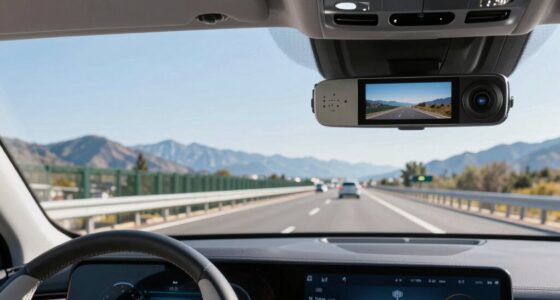

The best dash cams balance clear evidence, useful camera coverage, and manageable setup. My best overall pick is the VIOFO A229 Pro, which pairs front-and-rear 4K recording with dual STARVIS 2 sensors and HDR. For cabin and multi-angle coverage, the Vantrue N4S and IIWEY N5 stand out, while several REDTIGER and ROVE options offer a simpler front-and-rear format. The main tradeoffs are resolution versus the number of cameras, installation complexity, and how much storage your recording habits require. Read on for the full comparison and help matching a dash cam to your car and driving needs.

Get business pricing on garage and car supplies
- Business-only prices and quantity discounts
- Tax-exempt purchasing
- Multiple users, one account, clear invoices
Complete the kit


Key Takeaways
- VIOFO A229 Pro stands apart in this group for combining front-and-rear 4K recording with dual STARVIS 2 sensors and HDR, making it the strongest fit for buyers prioritizing image detail.
- The lineup splits into two clear camps: conventional front-and-rear systems are simpler to place, while three- and four-channel cameras record more of the cabin and sides but take more effort to install and position.
- Vantrue N4S and IIWEY N5 address cabin coverage differently: the N4S offers 2.7K three-channel recording, while the N5 uses a four-channel, 360-degree format with 2K front video.
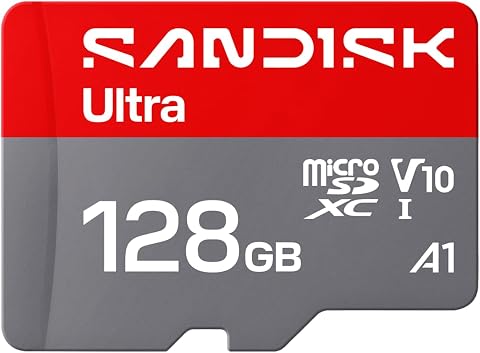
- Included memory varies from the Galphi 4K Mini Dashcam’s 32GB card to several models supplied with 128GB, so the bundled card can affect how often footage gets overwritten.
- Wi-Fi, GPS, and screen size recur across the list, but these features do not replace checking camera resolution, channel layout, card capacity, and whether the installation suits your vehicle.
| Affver 4K+2.5K Dual Dash Cam with Built-in 5G WiFi, GPS, Night Vision, 3.59-Inch Screen |  | Best for High-Resolution Dual Coverage | Video resolution: 4K front at 30 fps; 2.5K rear at 25 fps | Field of view: 160° front; 155° rear | Screen: 3.59-inch IPS | VIEW LATEST PRICE | See Our Full Breakdown |
| REDTIGER F7NP 4K Dash Cam Front Rear, STARVIS 2 Sensor, Free Card Included |  | Best for Heat-Resilient Everyday Recording | Video resolution: 4K front; 1080p rear | Lens angles: 170° front; 140° rear | Sensor: STARVIS 2 CMOS | VIEW LATEST PRICE | See Our Full Breakdown |
| Vantrue N4S 2.7K 3-Channel Dash Cam with Night Vision and 360° Rear Camera |  | Best for Rideshare and Cabin Coverage | Video resolution: 2.7K front; 1440p interior; 1440p rear | Field of view: 158° front; 165° interior; 160° rear | Night vision: STARVIS 2 | VIEW LATEST PRICE | See Our Full Breakdown |
| 4K+4K Dash Cam with 128GB Card, WiFi6, GPS, Night Vision, 3-Inch Screen |  | Best for Matching 4K Front and Rear Recording | Video resolution: 4K front; 4K rear | Frame rate: 25 fps | Field of view: 170° | VIEW LATEST PRICE | See Our Full Breakdown |
| REDTIGER 4K STARVIS 2 Dashcam Front and Rear with WiFi and 128GB Card |  | Best for Touchscreen and Voice Controls | Video resolution: 4K UHD front; 1080p rear | Field of view: 170° front; 140° rear | Sensor: STARVIS 2 CMOS | VIEW LATEST PRICE | See Our Full Breakdown |
| 4K 360° Dash Cam with 128GB Card, 4-Channel Dash Camera for Cars |  | Best for Full-Cabin Coverage | Camera resolution: 4K front, 1080P other channels | Camera coverage: 360° with four adjustable cameras | Included storage: 128GB memory card | VIEW LATEST PRICE | See Our Full Breakdown |
| VIOFO A229 Pro 4K HDR Dash Cam Front and Rear, Dual STARVIS 2 Sensors |  | Best for High-Detail Front-and-Rear Footage | Resolution: 4K front, 2K rear | Image sensors: Dual STARVIS 2 (IMX678 front and IMX675 rear) | Night recording: HDR with STARVIS 2 sensors | VIEW LATEST PRICE | See Our Full Breakdown |
| IIWEY N5 4 Channel Dash Cam for Cars, 360° View, 2K Front, 1080P Rear & Interior |  | Best Four-Channel Pick with Included Storage | Camera resolution: 2K front, 1080P rear and interior | Camera angles: 170° front and rear; 150° side cameras | Display: 3-inch IPS screen | VIEW LATEST PRICE | See Our Full Breakdown |
| 360 View 4 Channel Dash Cam with GPS, Night Vision, WiFi, and 128GB Card |  | Best for Straightforward 360° Recording | Camera resolution: 1080p | Number of cameras: Four | Field of view: 160 degrees | VIEW LATEST PRICE | See Our Full Breakdown |
| Icesky 4K Dash Cam Front and Rear with GPS, WiFi 6, 128GB SD Card Included |  | Best for Fast Wireless Clip Transfers | Video resolution: 4K front, 1080P rear and side cameras | Camera coverage: 360° front, rear, left, and right | Display: 0.3 inches | VIEW LATEST PRICE | See Our Full Breakdown |
| ROVE R2-4K Dual Dash Cam Front and Rear with 128GB Card |  | Best for Low-Light Front-and-Rear Recording | Video resolution: Upscaled 4K front, 1080P rear | Sensor: Sony STARVIS 2 IMX675 | Night recording: Super Night Vision low-light capture | VIEW LATEST PRICE | See Our Full Breakdown |
| Galphi 4K Dash Cam Front, 5GHz WiFi, 32GB Card Included, Mini Dashcam |  | Best Compact Front-Only Pick | Resolution: 2160p (4K UHD) | Field of view: 160 degrees | Frame rate: 30 fps | VIEW LATEST PRICE | See Our Full Breakdown |
| 4K+4K Dual Dash Cam Front and Rear with 128GB Card and Night Vision |  | Best for Matching Front-and-Rear Detail | Resolution: 3840x2160P front and rear | Field of view: 170 degrees front, 150 degrees rear | Lens aperture: f/1.5 | VIEW LATEST PRICE | See Our Full Breakdown |
| COOAUDual 4K Dash Cam with GPS & WiFi, 2.5K+1080P Front & Inside | 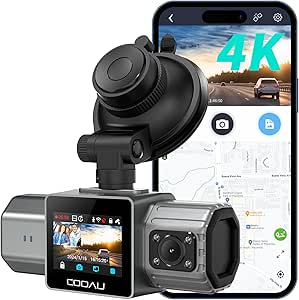 | Best for Cabin Monitoring | Camera resolution: 4K front, 2.5K inside | Viewing angles: 170 degrees front, 150 degrees inside | Night recording: IR night vision with four IR lights | VIEW LATEST PRICE | See Our Full Breakdown |
| 4K+4K+1080P 3 Channel Dash Cam with 128GB Card and Night Vision |  | Best for Three-Way Coverage | Video resolution: 4K front, 4K rear, 1080P cabin | Viewing angles: 170 degrees front, 150 degrees rear, 150 degrees cabin | Night recording: AProX HD Night Vision with IR lights | VIEW LATEST PRICE | See Our Full Breakdown |
| dash cam | Included storage | Display | Video resolution | Wi-Fi |
|---|---|---|---|---|
| Affver 4K+2.5K Dual Dash Cam w | 64GB microSD card | — | 4K front at 30 fps; 2.5K rear at 25 fps | — |
| REDTIGER F7NP 4K Dash Cam Fron | 128GB | 3.16-inch LCD | 4K front; 1080p rear | — |
| Vantrue N4S 2.7K 3-Channel Das | — | — | 2.7K front; 1440p interior; 1440p rear | — |
| 4K+4K Dash Cam with 128GB Card | 128GB card | — | 4K front; 4K rear | — |
| REDTIGER 4K STARVIS 2 Dashcam | 128GB microSD card | 3.18-inch LCD touchscreen | 4K UHD front; 1080p rear | — |
| 4K 360° Dash Cam with 128GB Ca | 128GB memory card | — | — | 5.8GHz |
| VIOFO A229 Pro 4K HDR Dash Cam | — | — | — | 5GHz with app control |
| IIWEY N5 4 Channel Dash Cam fo | 128GB SD card | 3-inch IPS screen | — | 5GHz with app control |
| 360 View 4 Channel Dash Cam wi | 128GB microSD card | 3-inch LCD | — | 5GHz |
| Icesky 4K Dash Cam Front and R | 128GB microSD card | 0.3 inches | 4K front, 1080P rear and side cameras | Wi-Fi 6 at 5.8GHz |
| ROVE R2-4K Dual Dash Cam Front | 128GB microSD card | 3-inch IPS screen | Upscaled 4K front, 1080P rear | Dual-band 5.8GHz and 2.4GHz |
| Galphi 4K Dash Cam Front | — | None | — | 5GHz |
| 4K+4K Dual Dash Cam Front and | 128GB | 3-inch IPS screen | — | Dual-band 5GHz and 2.4GHz |
| COOAUDual 4K Dash Cam with GPS | — | 1.5-inch mini display | — | — |
| 4K+4K+1080P 3 Channel Dash Cam | — | — | 4K front, 4K rear, 1080P cabin | — |
More Details on Our Top Picks
Affver 4K+2.5K Dual Dash Cam with Built-in 5G WiFi, GPS, Night Vision, 3.59-Inch Screen
The Affver suits drivers who want detailed footage from both ends of the car without stepping up to a three-camera setup. Its 4K front and 2.5K rear recording give the rear camera an advantage over the REDTIGER F7NP and F7N TOUCH, both of which record rear video at 1080p. Wide views and an F1.5 aperture with WDR are intended to help capture more of the scene in mixed or low light, while the 3.59-inch screen makes on-device checking easier than on either REDTIGER model. Built-in GPS and Wi-Fi 6 add route information and wireless transfer, and a 64GB card is included to get started. The tradeoff is a lower included storage capacity and a 256GB card ceiling; its feature-rich interface may also take more time to learn.
Pros:- Records 4K front and 2.5K rear, giving the rear view more detail than the REDTIGER F7NP and F7N TOUCH.
- Wi-Fi 6 and built-in GPS support wireless video transfer and route tracking.
- F1.5 aperture and WDR are designed to improve visibility in challenging light.
- Includes a 64GB microSD card and has a 3.59-inch IPS screen.
Cons:- Included storage is smaller than the 128GB cards supplied with the REDTIGER F7NP and F7N TOUCH.
- Supports microSD cards only up to 256GB, limiting expansion compared with the REDTIGER F7NP.
- The number of features may make the interface less straightforward for first-time dash cam owners.
Best for: Drivers who want sharper-than-1080p rear footage, an onboard screen, and GPS without adding an interior camera.
Not ideal for: Drivers who record long trips or want more storage headroom; the included card is 64GB and support tops out at 256GB.
- Video resolution:4K front at 30 fps; 2.5K rear at 25 fps
- Field of view:160° front; 155° rear
- Screen:3.59-inch IPS
- Connectivity:Wi-Fi 6; GPS
- Included storage:64GB microSD card
- Maximum storage:256GB microSD
- Night recording:F1.5 aperture with WDR
- Recording features:Loop recording; G-sensor
- Warranty:24 months
Our verdict“Choose the Affver if detailed rear footage and a large built-in screen matter more to you than maximum storage capacity.”
REDTIGER F7NP 4K Dash Cam Front Rear, STARVIS 2 Sensor, Free Card Included
The REDTIGER F7NP is a practical choice for drivers who prioritize a durable power design and generous included storage over matching front and rear resolution. It records 4K in front and 1080p behind, so the rear view has less detail than the Affver’s 2.5K rear footage, but its supplied 128GB card holds more than the Affver’s 64GB card. A STARVIS 2 sensor, f/1.5 aperture, and wide front lens are aimed at keeping useful detail in view after dark. The supercapacitor is another point of difference: it is designed to handle heat better than a conventional battery. Wi-Fi helps manage clips, while parking mode requires a separately purchased hardwire kit. The 3.16-inch display is smaller than the Affver’s, and setup or app navigation may take patience.
Pros:- 4K front recording paired with a STARVIS 2 sensor and f/1.5 aperture.
- Includes a 128GB card, double the supplied capacity of the Affver.
- Supercapacitor power design is intended for reliable operation in heat.
- Supports microSD cards up to 512GB.
Cons:- Rear recording is 1080p, below the Affver’s 2.5K rear resolution.
- Parking mode requires a separately purchased hardwire kit.
- The 3.16-inch screen is smaller than the Affver’s 3.59-inch display, and app setup may feel involved.
Best for: Commuters and road-trip drivers who want 4K front footage, a heat-tolerant power design, and a roomy included card.
Not ideal for: Drivers who need high-resolution rear footage or want parking monitoring without installing a hardwire kit.
- Video resolution:4K front; 1080p rear
- Lens angles:170° front; 140° rear
- Sensor:STARVIS 2 CMOS
- Aperture:f/1.5
- Display:3.16-inch LCD
- Included storage:128GB
- Maximum storage:512GB microSD
- Power source:Supercapacitor
- Warranty:18 months
Our verdict“Pick the F7NP if a heat-resilient design and included 128GB card matter more than higher-resolution rear video.”
Vantrue N4S 2.7K 3-Channel Dash Cam with Night Vision and 360° Rear Camera
For rideshare drivers, a forward-facing camera alone may leave the most relevant part of an incident undocumented. The Vantrue N4S records front, interior, and rear views, giving it a different purpose from the dual-camera Affver, REDTIGER F7NP, and REDTIGER F7N TOUCH. Its 2.7K front resolution is lower than those models’ 4K front capture, but the extra interior channel records what happens inside the vehicle, while the rear camera rotates 360° to suit different mounting positions. STARVIS 2 night vision, GPS, and 5GHz Wi-Fi round out the setup. A magnetic, tool-free mount helps simplify camera placement, and support for cards up to 1TB gives frequent drivers more room for footage. The costs of broader coverage are a more involved rear-wire installation and a feature set that may be more than a typical commuter needs.
Pros:- Three-channel recording captures the front, cabin, and rear.
- Rotating rear camera allows flexible positioning.
- STARVIS 2 night vision, GPS, and 5GHz Wi-Fi support low-light recording and clip access.
- Supports microSD cards up to 1TB, more than the 512GB ceiling of the REDTIGER F7NP.
Cons:- Front resolution is 2.7K, lower than the 4K front recording on both REDTIGER models in this lineup.
- A microSD card must be purchased separately.
- Rear wiring can be complex, and the additional camera and settings may be unnecessary for ordinary commuting.
Best for: Rideshare drivers and people who need recorded views of the road, passenger cabin, and rear of the vehicle.
Not ideal for: Drivers who only need front-and-rear recording or want the highest front resolution; its front camera is 2.7K rather than 4K.
- Video resolution:2.7K front; 1440p interior; 1440p rear
- Field of view:158° front; 165° interior; 160° rear
- Night vision:STARVIS 2
- Wireless connectivity:5GHz Wi-Fi
- GPS:Quad-mode GPS and BeiDou
- Maximum storage:1TB microSD
- Power source:Supercapacitor
- Temperature range:-4°F to 140°F
- Mounting:Magnetic mount; tool-free setup
Our verdict“Choose the Vantrue N4S when recording the cabin is as important as capturing the road and rear of the car.”
4K+4K Dash Cam with 128GB Card, WiFi6, GPS, Night Vision, 3-Inch Screen
This dual-camera system is the lineup’s clearest pick for drivers who want the same headline resolution from both ends of the car: 4K front and 4K rear. That gives the rear view a resolution advantage over the Affver’s 2.5K rear camera and the 1080p rear cameras on the REDTIGER F7NP and F7N TOUCH. It also arrives with a 128GB card, while the Affver includes 64GB and the Vantrue N4S requires a separate card. Wi-Fi 6 and built-in GPS add wireless clip access and location data, and its 170° field of view covers a broad scene. The tradeoff is that listed recording runs at 25 fps, and the 3-inch display is smaller than the Affver’s. Parking monitoring also requires a hardwire kit, so this is less convenient for buyers seeking plug-in parking surveillance.
Pros:- Records 4K from both front and rear cameras, exceeding the rear resolution of the other dual-camera models here.
- Includes a 128GB card and supports expansion up to 512GB.
- Wi-Fi 6 and built-in GPS support wireless access and location tracking.
- 170° field of view and F1.5 front aperture are designed for broad scene coverage and low-light capture.
Cons:- Parking monitoring requires a separately purchased hardwire kit.
- Listed frame rate is 25 fps, lower than the Affver’s 30 fps front recording.
- The 3-inch screen is smaller than the 3.59-inch display on the Affver.
Best for: Drivers who want matching 4K resolution front and rear, plus an included memory card and GPS.
Not ideal for: Drivers who need parking monitoring without hardwiring or prefer a larger screen and higher listed frame rate.
- Video resolution:4K front; 4K rear
- Frame rate:25 fps
- Field of view:170°
- Screen:3 inches
- Included storage:128GB card
- Maximum storage:512GB
- Connectivity:Wi-Fi 6; Bluetooth
- GPS:Built-in
- Aperture:F1.5 front; F1.8 rear
Our verdict“Choose this model if equal 4K resolution front and rear is your priority and you are comfortable hardwiring it for parking monitoring.”
REDTIGER 4K STARVIS 2 Dashcam Front and Rear with WiFi and 128GB Card
The REDTIGER F7N TOUCH is aimed at drivers who want familiar, direct controls rather than relying entirely on a phone app. Its 3.18-inch touchscreen and voice control offer an alternative to the Affver’s larger 3.59-inch screen, while the included 128GB card provides more starting capacity than the Affver’s 64GB. Like the REDTIGER F7NP, it records 4K front and 1080p rear, so it falls short of the Affver’s 2.5K rear detail and the 4K rear recording of the dual-4K model in this lineup. STARVIS 2, WDR, and HDR are intended to support night footage, with GPS and 5GHz Wi-Fi for location data and wireless access. Parking monitoring is available, but only with a separately purchased hardwire kit; screen glare may also make touch controls harder to use in bright conditions.
Pros:- Touchscreen and voice control provide alternatives to app-based operation.
- 4K front recording uses a STARVIS 2 sensor with WDR and HDR.
- Includes a 128GB microSD card and built-in GPS.
- 5GHz Wi-Fi supports wireless clip access.
Cons:- Rear camera records at 1080p, below the Affver’s 2.5K rear resolution and the 4K+4K model’s rear resolution.
- Parking monitoring requires a separately purchased hardwire kit.
- Touchscreen glare may make the display harder to use in bright conditions.
Best for: Drivers who prefer touchscreen or voice controls, want an included 128GB card, and mainly need high-resolution front footage.
Not ideal for: Drivers who need high-detail rear video or rely on the dash cam screen in bright sunlight.
- Video resolution:4K UHD front; 1080p rear
- Field of view:170° front; 140° rear
- Sensor:STARVIS 2 CMOS
- Display:3.18-inch LCD touchscreen
- Included storage:128GB microSD card
- Connectivity:5GHz Wi-Fi
- Controls:Touchscreen; voice control
- Recording features:Loop recording; G-sensor
- Parking monitoring:Available with separately purchased hardwire kit
Our verdict“Pick the F7N TOUCH if hands-on or voice control matters more to you than higher-resolution rear footage.”
4K 360° Dash Cam with 128GB Card, 4-Channel Dash Camera for Cars
I’d choose this four-camera setup when recording the cabin and both sides matters as much as the road ahead. Its front camera records in 4K, while the other channels capture 1080P, giving it broader coverage than the VIOFO A229 Pro, which prioritizes high-resolution front and rear footage instead of a four-sided view. GPS logs speed, time, and location, and the included 128GB card gets recording started without a separate storage purchase. Night vision and impact-detection or time-lapse parking modes add useful monitoring options. The tradeoff is installation: parking mode requires hardwiring, and four adjustable cameras take more setup than a conventional front-and-rear pair. Some functions may also depend on app or firmware updates, so this is better for buyers comfortable with a more involved system.
Pros:- Four adjustable cameras record front, rear, side, and cabin views at once.
- 4K front recording captures more detail than an all-1080P system.
- Includes a 128GB memory card.
- GPS logging records speed, time, and location.
Cons:- Parking-mode recording requires a separately arranged hardwire installation.
- Four cameras make placement and setup more involved than the VIOFO A229 Pro’s two-camera layout.
- Some features may require app or firmware updates, and the recommended power supply may not suit every vehicle.
Best for: Rideshare drivers and owners who want simultaneous road, side, rear, and cabin footage with GPS logging.
Not ideal for: Drivers who want a quick, simple front-and-rear installation or do not want to hardwire the vehicle for parking mode.
- Camera resolution:4K front, 1080P other channels
- Camera coverage:360° with four adjustable cameras
- Included storage:128GB memory card
- Night vision:Super Night Vision 2.0 with infrared lights
- GPS:Speed, time, and location logging
- Wi-Fi:5.8GHz
- Parking mode:Impact detection and time-lapse
- Recommended power:5V/2A
Our verdict“Choose this model if cabin and side coverage are priorities and you are prepared for a more complex, hardwired installation.”
VIOFO A229 Pro 4K HDR Dash Cam Front and Rear, Dual STARVIS 2 Sensors
The VIOFO A229 Pro is my pick for drivers who value image detail over all-around camera coverage. Its 4K front and 2K rear recordings use dual STARVIS 2 sensors, while HDR is designed to retain useful detail in challenging light. That makes it a stronger fit for documenting what happens ahead and behind than the four-channel IIWEY N5, whose appeal is its cabin and side views rather than matching this model’s front-and-rear resolution. Voice control, GPS logging, and several parking modes add practical protection, and the included CPL filter can help reduce windshield reflections. The main compromises are the missing memory card and hardwire kit; parking features also mean planning for additional installation gear. Its two-camera setup is simpler than a 360° system, but it cannot record the cabin or sides.
Pros:- Records 4K front and 2K rear using dual STARVIS 2 sensors.
- HDR night recording is designed for better detail in difficult lighting.
- Voice control, GPS logging, and app connectivity offer flexible operation.
- Includes a CPL filter and supports several parking modes.
Cons:- A microSD card must be purchased separately.
- The hardwire kit needed for parking-mode installation is not included.
- Does not provide the cabin and side coverage available from four-channel models such as the IIWEY N5.
Best for: Drivers who want detailed front-and-rear evidence, strong low-light recording, and multiple parking-mode choices.
Not ideal for: Rideshare drivers needing cabin footage, or buyers who expect a memory card and parking-mode hardwire kit in the box.
- Resolution:4K front, 2K rear
- Image sensors:Dual STARVIS 2 (IMX678 front and IMX675 rear)
- Night recording:HDR with STARVIS 2 sensors
- Parking modes:Auto event detection, low bitrate, and time-lapse
- Wi-Fi:5GHz with app control
- GPS:Quad-mode GPS with location, speed, and timestamp
- Included accessories:CPL filter and 6-meter rear cable
- Storage support:MicroSD cards up to 512GB; high-endurance card recommended
Our verdict“Pick the A229 Pro for detailed front-and-rear recording if you are willing to source storage and parking-mode accessories separately.”
IIWEY N5 4 Channel Dash Cam for Cars, 360° View, 2K Front, 1080P Rear & Interior
The IIWEY N5 suits drivers who want four-camera coverage without moving up to a 4K front-channel system. It records a 2K front view alongside 1080P rear and interior footage, with side cameras filling out the picture. That gives it a cabin-monitoring advantage over the VIOFO A229 Pro, which records at higher resolution front and rear but has no interior or side channels. A 128GB card is included, and the 3-inch screen provides a direct way to check the view without relying entirely on an app. Its supercapacitor is a useful durability feature, but the power connection is unusually restrictive: it requires the supplied cigarette-lighter charger rather than USB or Type-C. GPS is absent, and 24-hour parking monitoring calls for a separate hardwire kit, so this isn’t the best match for buyers who want route logs or plug-and-play parking protection.
Pros:- Four-camera layout records front, rear, side, and interior views.
- Includes a 128GB SD card and a 3-inch IPS display.
- 5GHz Wi-Fi supports app control.
- Supercapacitor design and adjustable camera mounting support a flexible installation.
Cons:- No GPS for recording route, speed, or location data.
- Requires its original cigarette-lighter charger and does not support USB or Type-C power.
- 24-hour parking mode requires a separately purchased hardwire kit.
Best for: Rideshare and family drivers who need cabin, side, rear, and front recording, plus an included memory card.
Not ideal for: Drivers who need GPS evidence, USB or Type-C power compatibility, or parking monitoring without a separate hardwire kit.
- Camera resolution:2K front, 1080P rear and interior
- Camera angles:170° front and rear; 150° side cameras
- Display:3-inch IPS screen
- Included storage:128GB SD card
- Maximum storage:256GB
- Wi-Fi:5GHz with app control
- Power:Original cigarette-lighter charger; USB and Type-C not supported
- Parking mode:24-hour parking monitoring with separately sold hardwire kit
Our verdict“Choose the N5 for included-storage four-channel coverage if GPS and flexible power options are not requirements.”
360 View 4 Channel Dash Cam with GPS, Night Vision, WiFi, and 128GB Card
This model offers four-direction coverage with a clear accessory tradeoff: it includes a 128GB card, but GPS tracking and hardwired parking operation require separate purchases. All four cameras record at 1080p, making it a practical coverage-first alternative to the 4K 360° Dash Cam with 128GB Card, which records the front channel at higher resolution and includes GPS logging. Night vision, WDR, and a 160° field of view are aimed at capturing a broad scene in varied lighting; Wi-Fi and app sharing make it easier to retrieve clips. The built-in supercapacitor and incident detection add useful recording safeguards. Buyers should not mistake its GPS support for built-in GPS, though: the logger is optional equipment. Installation also involves positioning four cameras, so this is less suitable for anyone seeking a minimal setup.
Pros:- Four cameras provide front, rear, left, and right coverage.
- Includes a 128GB microSD card and supports storage up to 256GB.
- Night vision and WDR support recording in varied lighting.
- Wi-Fi, app controls, and incident detection simplify clip access and event recording.
Cons:- All cameras record at 1080p, below the front-channel resolution of the 4K 360° Dash Cam.
- GPS requires a separately purchased logger.
- Parking mode requires a separate hardwire kit, and four-camera installation can take more work.
Best for: Drivers seeking four-camera 1080p coverage with an included memory card and app-based clip sharing.
Not ideal for: Buyers who need built-in GPS logging, included hardwired parking support, or 4K front footage.
- Camera resolution:1080p
- Number of cameras:Four
- Field of view:160 degrees
- Display:3-inch LCD
- Included storage:128GB microSD card
- Maximum storage:256GB
- Wi-Fi:5GHz
- Frame rate and format:30 FPS, MP4
Our verdict“Choose this camera if broad 1080p coverage and included storage matter more than built-in GPS or 4K detail.”
Icesky 4K Dash Cam Front and Rear with GPS, WiFi 6, 128GB SD Card Included
Icesky combines four-way coverage, built-in GPS, and Wi-Fi 6, making it a distinctive option for drivers who expect to review or share footage through an app. The front camera records in 4K while the rear and side cameras record in 1080P; that gives it more coverage than the two-camera VIOFO A229 Pro, though the VIOFO records its rear view at a higher 2K resolution. Built-in GPS logs route information without the optional logger required by the 360 View model, and the included 128GB card can be expanded up to 512GB. Its small 0.3-inch display means setup and review lean heavily on the app or buttons. As with other multi-camera systems, installation takes planning, and parking mode needs a separate hardwire kit. Night-vision results may also vary in very dark conditions.
Pros:- Records 4K front footage alongside 1080P rear and side views.
- Built-in GPS logs route information without an optional logger.
- Wi-Fi 6 supports wireless app connectivity and video transfer.
- Includes a 128GB card and supports cards up to 512GB.
Cons:- The 0.3-inch display is small for direct viewing and setup.
- Parking mode requires a separately purchased hardwire kit.
- Four-camera installation is more involved, and night vision may be limited in extremely dark conditions.
Best for: Drivers wanting 4K front recording, four-way coverage, built-in GPS, and wireless app access to footage.
Not ideal for: Drivers who want a large built-in screen, simple two-camera installation, or parking mode without extra wiring.
- Video resolution:4K front, 1080P rear and side cameras
- Camera coverage:360° front, rear, left, and right
- Display:0.3 inches
- Wi-Fi:Wi-Fi 6 at 5.8GHz
- GPS:Built-in route tracking
- Included storage:128GB microSD card
- Maximum storage:512GB
- Night vision:Infrared lights; performance may vary in very low light
Our verdict“Pick Icesky if you want four-camera coverage with built-in GPS and app-friendly transfers, and can accept a tiny display and separate parking wiring.”
ROVE R2-4K Dual Dash Cam Front and Rear with 128GB Card
The ROVE R2-4K is a strong choice for drivers who want front-and-rear coverage and a useful equipment bundle without stepping up to a three-camera system. Its Sony STARVIS 2 sensor and low-light mode are aimed at improving footage when street lighting is sparse, while built-in GPS adds speed and route data that can help put a clip in context. The included 128GB card also means recording can start without a separate memory-card purchase.
Compared with the Galphi 4K Dash Cam, the ROVE adds rear coverage, a display, and GPS, but its front resolution is upscaled 4K, not native 4K. The 3-inch screen is handy for quick checks, though managing more advanced options may take some app familiarity. Parking monitoring also needs a separate hardwire kit, so this is better for driving coverage than a ready-to-go parked-car setup.
Pros:- Sony STARVIS 2 sensor and low-light recording features target clearer footage in darker conditions.
- Rear camera covers traffic behind the vehicle, unlike the front-only Galphi 4K.
- Built-in GPS records speed and compass information.
- Includes a 128GB microSD card and supports cards up to 1TB.
Cons:- Front footage is upscaled to 4K rather than native 4K.
- Parking mode requires a separately purchased hardwire kit.
- Some settings and footage management may take time to learn through the app.
Best for: Drivers who want a front-and-rear camera, low-light features, GPS, and a memory card included in one package.
Not ideal for: Buyers who require native 4K front footage or want parking surveillance without a separate hardwire kit.
- Video resolution:Upscaled 4K front, 1080P rear
- Sensor:Sony STARVIS 2 IMX675
- Night recording:Super Night Vision low-light capture
- Wi-Fi:Dual-band 5.8GHz and 2.4GHz
- GPS:Built-in, with live speed and compass
- Included storage:128GB microSD card
- Maximum supported storage:Up to 1TB
- Display:3-inch IPS screen
Our verdict“Choose the ROVE if you want low-light-focused front-and-rear coverage with GPS and a card included, but skip it if native 4K is a must.”
Galphi 4K Dash Cam Front, 5GHz WiFi, 32GB Card Included, Mini Dashcam
The Galphi suits drivers who want a small, screen-free camera focused on recording the road ahead. Its native 2160p resolution and 160-degree view provide a broad front-facing record, while the 5GHz Wi-Fi connection is intended to speed up transfers to the app. With no display on the unit, it can keep the dashboard visually simple; the tradeoff is that checking framing or footage depends on a phone rather than a quick look at the camera.
Compared with the ROVE R2-4K, the Galphi is more discreet and lists native 4K, but it lacks rear coverage and built-in GPS. Its 32GB included card is smaller than the ROVE’s 128GB card, and the single-camera setup leaves incidents behind the car unrecorded. Parking mode is listed, but a hardwire kit is not included, so buyers should account for extra installation needs before relying on it while parked.
Pros:- Native 2160p recording captures the road ahead in 4K UHD.
- 160-degree field of view covers a broad forward scene.
- Screen-free design keeps the camera visually minimal.
- 5GHz Wi-Fi and included 32GB card support app-based access and recording.
Cons:- Records only from the front, with no rear or cabin camera.
- No built-in display, so setup and playback rely on the app.
- Parking mode requires a separate hardwire kit, and the included card is only 32GB.
Best for: Drivers seeking a discreet, app-controlled front camera with native 4K recording and a simple windshield installation.
Not ideal for: Drivers who need rear footage, a built-in display, GPS route data, or a larger included memory card.
- Resolution:2160p (4K UHD)
- Field of view:160 degrees
- Frame rate:30 fps
- Wi-Fi:5GHz
- Included memory card:32GB
- Maximum memory card support:256GB
- Display:None
- Lens aperture:f/1.6
Our verdict“Pick the Galphi for discreet native-4K front recording, but choose a dual-camera option such as the ROVE if rear coverage matters.”
4K+4K Dual Dash Cam Front and Rear with 128GB Card and Night Vision
This dual-channel model stands out for drivers who want 4K recording from both ends of the vehicle rather than a higher-resolution front camera paired with a lower-resolution rear unit. Its 170-degree front and 150-degree rear views give broad coverage, and the included 128GB card provides room to begin recording without shopping for storage first. The 3-inch IPS display is also useful for checking the system directly, while dual-band Wi-Fi and GPS add phone access and trip context.
Compared with the ROVE R2-4K, this camera lists native 4K at both cameras, but the ROVE specifies a Sony STARVIS 2 sensor and supports cards up to 1TB; this model supports up to 512GB. Its stated 25fps frame rate is another tradeoff for buyers who prioritize motion smoothness. Parking mode needs separate hardwiring, and the interface may feel less straightforward than the screen-free Galphi’s app-led setup.
Pros:- Lists 4K recording for both front and rear cameras.
- Wide 170-degree front and 150-degree rear fields of view.
- Includes a 128GB card and supports expansion up to 512GB.
- Built-in GPS, dual-band Wi-Fi, and a 3-inch display offer several ways to review footage.
Cons:- Listed video frame rate is 25fps.
- Parking mode requires a separately purchased hardwire kit.
- The interface and app-based features may be less approachable for first-time dash-cam owners.
Best for: Drivers who want the same stated 4K resolution at the front and rear, plus an onboard screen and GPS.
Not ideal for: Buyers who need a simpler setup, a higher stated frame rate, or documented sensor details for low-light comparison.
- Resolution:3840x2160P front and rear
- Field of view:170 degrees front, 150 degrees rear
- Lens aperture:f/1.5
- Frame rate:25fps
- Wi-Fi:Dual-band 5GHz and 2.4GHz
- Included storage:128GB
- Maximum supported storage:512GB
- Display:3-inch IPS screen
Our verdict“Choose this model if matching 4K front-and-rear resolution is your priority, and accept its 25fps recording and more involved setup.”
COOAUDual 4K Dash Cam with GPS & WiFi, 2.5K+1080P Front & Inside
The COOAU is aimed at drivers who need to record the cabin as well as the road, making it a better fit for rideshare work or keeping an eye on passengers than a conventional front-and-rear system. It pairs a 4K front camera with a 2.5K interior camera, and its infrared lights are designed to help capture the cabin in low light. Built-in GPS and Wi-Fi add trip information and app access, while dual supercapacitors and a stated operating range from -4°F to 158°F suit vehicles exposed to varied temperatures.
Unlike the 4K+4K dual model, the COOAU’s second camera faces inside rather than behind the car, so it does not provide equivalent rear-road coverage. It also ships without an SD card, unlike the ROVE R2-4K, and its 1.5-inch display is mainly for basic checks. Parking features are listed, but a hardwire kit is not included.
Pros:- Combines 4K front recording with a 2.5K interior camera.
- Four IR lights support cabin recording in low light.
- GPS and Wi-Fi enable trip data and app-based access.
- Dual supercapacitors and a stated -4°F to 158°F operating range support varied vehicle conditions.
Cons:- The interior camera does not replace a dedicated rear-facing road camera.
- SD card is not included; supported capacity is up to 256GB.
- Parking modes require a separate hardwire kit, and the display is only 1.5 inches.
Best for: Rideshare drivers and vehicle owners who want front-road footage plus an infrared view of the cabin.
Not ideal for: Drivers who need a dedicated rear-road camera, a memory card in the box, or a larger onboard screen.
- Camera resolution:4K front, 2.5K inside
- Viewing angles:170 degrees front, 150 degrees inside
- Night recording:IR night vision with four IR lights
- Connectivity:Wi-Fi and GPS
- Display:1.5-inch mini display
- Storage support:Up to 256GB SD card; card not included
- Parking modes:Collision detection, motion detection, and time-lapse
- Operating temperature:-4°F to 158°F
Our verdict“Choose the COOAU for cabin footage and rideshare monitoring, but select a rear-camera system if recording traffic behind you is the goal.”
4K+4K+1080P 3 Channel Dash Cam with 128GB Card and Night Vision
For drivers who want footage from the road ahead, behind, and inside the vehicle, this three-channel system offers the broadest coverage in this group. Its front and rear cameras are listed at 4K, while the cabin camera records at 1080P and uses IR lights for darker interiors. That layout makes it more suited to rideshare, family, or fleet use than the front-and-rear-only ROVE R2-4K. Built-in GPS, Wi-Fi 6, and an included 128GB card add trip data, app access, and storage straight out of the box.
The extra channel comes with practical costs: three-camera installation can be more involved, and the listed dashboard mounting and larger 3.18-inch screen make it less discreet than the screen-free Galphi. Its 128GB card is useful, though storage is capped at 512GB. As with several multi-camera options, parking monitoring needs a hardwire kit, and setup may challenge buyers looking for a simple plug-in camera.
Pros:- Records front, rear, and cabin views at once.
- Lists 4K resolution for both road-facing cameras and 1080P for the cabin camera.
- IR lights support night recording inside the vehicle.
- Includes a 128GB card, GPS, and Wi-Fi 6.
Cons:- Three-camera installation and app setup may be more involved than a single-camera system.
- Parking monitoring requires a separate hardwire kit.
- The larger screen and multi-camera setup are less discreet than the Galphi’s screen-free design.
Best for: Rideshare drivers, families, and fleet owners who want simultaneous road-ahead, rear-road, and cabin recording.
Not ideal for: Drivers seeking a discreet, simple front camera or those unwilling to handle a more involved three-camera installation.
- Video resolution:4K front, 4K rear, 1080P cabin
- Viewing angles:170 degrees front, 150 degrees rear, 150 degrees cabin
- Night recording:AProX HD Night Vision with IR lights
- Connectivity:Wi-Fi 6, dual-band
- GPS:Built-in speed and location tracking
- Included memory card:128GB
- Maximum supported storage:512GB microSD
- Screen:3.18 inches
Our verdict“Pick this system when recording the cabin matters alongside front and rear footage, and choose a simpler dual-camera model if you do not need three views.”

How We Picked
I ranked these 15 dash cams around the job buyers need them to do: capture useful footage without creating unnecessary setup or storage hassles. The main criteria were stated recording resolution and camera count, sensor and HDR details where provided, included memory, and practical features such as GPS, Wi-Fi, and an onboard screen. I gave more weight to features that can improve evidence or coverage than to headline resolution alone; a four-channel system may record more angles, but it also has different installation demands than a front-and-rear camera.
The order reflects the balance of coverage, stated image capabilities, and day-to-day usability, not a claim that every model has been independently tested. Models with clearly specified front-and-rear 4K recording and stronger sensor details rank ahead of options whose titles provide less detail. Multi-channel models earn places for buyers who need cabin or wider coverage, while bundled cards and compact designs help distinguish convenience-focused picks. Where product names omit details such as parking mode behavior or exact rear-camera resolution, I treat that as an information gap rather than assume a feature.
Factors to Consider When Choosing Best Dash Cams
Before choosing a dash cam, match the recording setup to the events you want captured and the time you are willing to spend installing and maintaining it. These broader decisions can matter more than a single resolution label.
Choose camera coverage around the evidence you need
A front camera may suit drivers who mainly want a record of what happens ahead, while a front-and-rear system adds context for rear impacts and following traffic. Cabin-facing and multi-channel models can help rideshare drivers or people who want interior footage, but extra cameras do not automatically provide a complete view around the vehicle. Check where each lens points and whether the camera count includes a cabin or rear-facing view. Wide coverage can leave less room for detail per view, so decide whether seeing more directions or resolving road signs and plates matters more to you. A common mistake is buying a 360-degree label without checking the actual channel layout. Map the intended camera positions before committing, especially if your car has a steep rear window or limited cabin mounting space.
Treat resolution as one part of image quality
Resolution describes image dimensions, not how readable footage will be in every condition. Sensor details, HDR, lens placement, glare, motion, and lighting all affect whether a recording captures useful evidence. A higher-resolution front camera paired with a lower-resolution rear or interior camera will not provide equal detail from every angle. Night vision claims also vary, so look for specifics about the cameras and recording modes rather than assuming the label guarantees clear nighttime footage. Think about the scenes you most need to document: a bright commute, dark roads, or a cabin at night may call for different strengths. Avoid paying attention to a single 4K figure while overlooking the resolution and sensor details of the other cameras.
Plan storage for your driving and recording habits
Dash cams typically record in loops, replacing older footage as a card fills unless a clip is protected. More cameras and higher-resolution recording create more data, so a card that works for a short daily commute may be limiting for long shifts or frequent travel. The included card capacities in this roundup range from 32GB to 128GB, but a bundle does not tell you how many hours of footage it will hold in your chosen setup. Check the camera’s supported card capacity and card requirements before buying a replacement. If you regularly need to preserve clips, plan a routine for transferring and backing them up. Do not assume an included card removes storage maintenance from the ownership process.
Account for installation before choosing multiple cameras
A front-only unit usually requires less routing than a rear or multi-channel setup, where cables may need to pass along trim and around the cabin. Extra cameras add useful angles but also mean more mounting decisions, cable management, and possible obstruction concerns. Check whether the screen and camera positions will interfere with visibility or existing sensors. A compact unit can be easier to place discreetly, while a built-in screen can make framing and playback more convenient. If you are uncomfortable routing cables, compare the installation needs before choosing a feature-rich system. A camera you can position securely and keep powered is more useful than one with extra channels left uninstalled.
Separate driving recording from parked-car monitoring
GPS, Wi-Fi, and parking surveillance serve different purposes, and one does not imply the others. GPS can attach location or speed data to recordings, while Wi-Fi can simplify access to clips; neither feature alone means a camera will record while the car is parked. Parking recording may require a compatible hardwire kit, a suitable power arrangement, or a supported recording mode. Check the exact package contents and the manufacturer’s requirements before expecting unattended monitoring. Consider your vehicle’s battery and how long it is parked, since continuous recording can draw power. If your priority is evidence from parked incidents, verify that function explicitly rather than choosing a model based only on GPS or Wi-Fi in its title.
Pay for features that solve a real problem
Spending more on extra cameras makes sense when you need cabin or rear coverage, but those angles may add little for a driver who only wants a straightforward front recording. Likewise, Wi-Fi can save time retrieving a clip, while an onboard screen may help with setup but is not required for recording. Compare what is included—especially the memory card and any mounting or power accessories—with what you will need to buy separately. For a first dash cam, fewer cameras and clear controls can be easier to live with than a complex system. For rideshare, fleet, or frequent night driving, the right specialized feature may matter more than a simpler setup. Choose by the problem you need to solve, not by the longest feature list.
Frequently Asked Questions
Should I choose a dual-channel dash cam or a four-channel model?
Choose a dual-channel camera if you mainly need footage ahead and behind the vehicle and want a more manageable installation. A four-channel setup makes more sense when recording the cabin or additional directions is part of the job, such as rideshare work or frequent passenger transport. Extra views can mean more cables, more mounting points, and less detail per view than a focused camera. Compare the resolution assigned to each camera rather than relying on the total channel count. If you do not have a clear use for the extra angles, a simpler system may be easier to maintain.
Is a 4K front camera worth choosing over a multi-camera system?
It depends on whether your priority is detail in one direction or coverage across several areas. A 4K front camera can provide more image detail for scenes ahead, but it cannot record an event behind or inside the car by itself. A multi-camera system may capture more context while assigning lower resolution to some views. Look at each camera’s resolution and sensor information, not just the most prominent number in the product name. For incidents involving passengers, rear impacts, or multiple sides of the vehicle, broader coverage may matter more than maximizing front-camera resolution.
Do I need to buy a larger memory card than the one included?
Not always, but the included capacity should match your recording length and how often you can save clips elsewhere. Multi-channel and higher-resolution recording can fill a card faster, and loop recording will eventually replace older footage. Check the camera’s supported card capacity and recommended card type before upgrading. If you drive long shifts or want to keep recordings for several days, more capacity may reduce how often you need to manage files. Do not rely on an included card as a permanent archive; back up important footage promptly.
Will GPS or Wi-Fi let a dash cam record while my car is parked?
No. GPS generally adds location or speed information, and Wi-Fi helps connect the camera to a phone or other device; neither feature by itself provides parked-car recording. Parking surveillance depends on the camera’s supported mode and how it receives power when the ignition is off. Some setups may need a separate hardwire kit, which may not be included. Check the product’s exact parking-mode details and power requirements before buying for this purpose. Also consider your vehicle’s battery and expected parking duration.
Which kind of dash cam is easiest for a first-time owner to set up?
A front-only or front-and-rear model is usually simpler to position and wire than a three- or four-channel system. A built-in screen can help with framing, while Wi-Fi may make clip access easier after setup. Before choosing, check whether the rear camera needs a long cable run and whether the package includes the memory card and power accessories you expect. Keep the camera’s view clear of the driver’s sightline and follow the mounting guidance for your vehicle. If you want cabin recording, plan for the extra installation work instead of assuming all cameras fit as easily as a front unit.
Conclusion
For the broadest balance of stated image capability and front-and-rear coverage, I recommend the VIOFO A229 Pro as the best overall pick. The REDTIGER F7NP is a practical value-minded alternative for buyers who want front-and-rear 4K and an included card, while the Vantrue N4S is my premium-style choice for drivers who need three-channel recording and cabin coverage. Beginners who prefer a simpler compact setup should look at the Galphi 4K Mini Dashcam, keeping its included 32GB card in mind. For rideshare or broader in-car coverage, compare the IIWEY N5 and other four-channel options; for a more conventional front-and-rear arrangement, the ROVE R2-4K Dual is another straightforward candidate. Choose based on the views you need, the installation you can manage, and the storage you are ready to maintain.