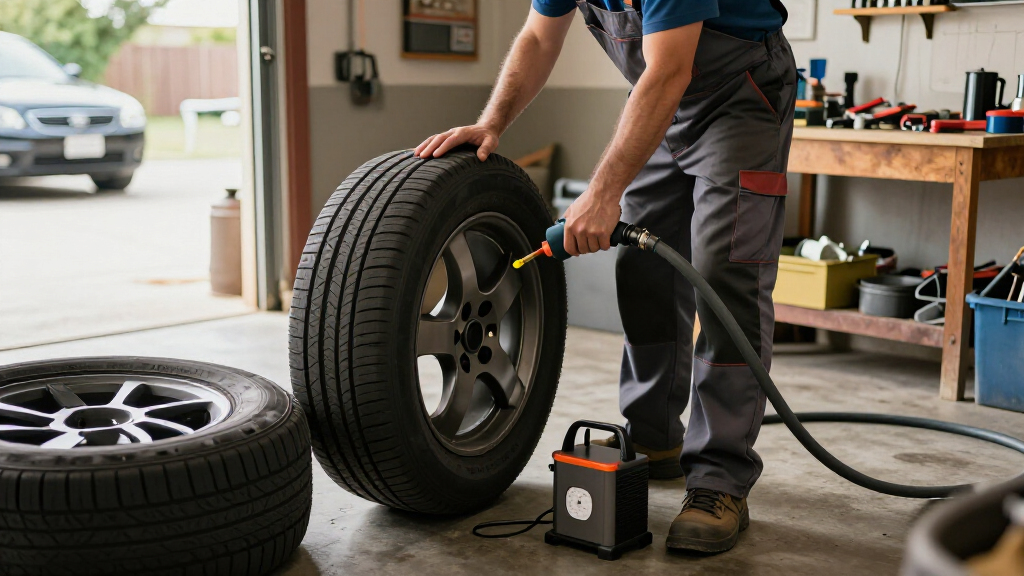

The best electric pump overall in this roundup is the AstroAI L7, a cordless 150 PSI inflator suited to tires and other higher-pressure jobs. For paddle-board owners, the OutdoorMaster Shark 3 offers a dedicated rechargeable SUP setup, while the Intex QuickFill is a practical pick for air mattresses and other large inflatables. The main tradeoff is choosing between high pressure and precise control for tires or boards, and higher-volume airflow for beds, toys, and boats. Portability, power source, and whether the pump can deflate also separate these options. Read on for the full breakdown and help matching a pump to what you actually inflate.

Get business pricing on garage and car supplies
- Business-only prices and quantity discounts
- Tax-exempt purchasing
- Multiple users, one account, clear invoices
Complete the kit


Key Takeaways
- Pump type matters more than a high PSI number: the Intex QuickFill is aimed at high-volume inflatables, while bike and tire pumps target smaller items that need greater pressure.
- SUP pumps are a distinct group: several picks include auto-off or dual-stage inflation, features suited to reaching board pressure without constant monitoring.
- Cordless convenience comes with a charging tradeoff: rechargeable options such as the ETENWOLF AIR 3 and portable SUP pumps avoid outlet dependence but require battery planning.
- Bike pumps split between capability and carry weight: the Bosch EasyPump and AstroAI L7 list 150 PSI, while the 90 g CYCPLUS AS2Ultra prioritizes minimal bulk.
- Specialized pumps are not universal substitutes: ball pumps, SUP compressors, and low-pressure inflatable pumps use different pressure ranges or fittings, so check compatibility before choosing.


| electric pump | Maximum pressure | Power source | Weight | Material |
|---|---|---|---|---|
| Intex QuickFill Electric Air P | — | Corded electric | 1.1 pounds | Plastic |
| Electric Ball Pump for Sports | 12 psi | Battery powered | 8.8 ounces | — |
| Bosch EasyPump Electric Bike & | 150 PSI | — | 0.43 kg | — |
| ETENWOLF AIR 3 Air Pump for In | 4.5 kPa | Battery powered | 145 g | — |
| Pumteck MY01 Electric Ball Pum | 15 psi | Electric | 0.37 kg | Metal |
| AstroAI L7 Tire Inflator Porta | 150 psi | — | — | ABS plastic |
| KOSMEGAL Electric Portable Pad | 20 psi | — | — | — |
| CYCPLUS Tiny Electric Bike Pum | 120 psi | Battery powered | 90 g | Aluminum |
| Electric Air Pump for Inflatab | — | Corded electric | — | Plastic |
| 50 PSI Paddle Board Electric P | 50 PSI | Rechargeable battery and 12V DC | — | Plastic |
| Portable Rechargeable Electric | 20 PSI | Battery | 2.86 lbs | Acrylonitrile Butadiene Styrene |
| 50 PSI Portable Electric Paddl | 50 PSI | Rechargeable battery | 2.9 lbs | — |
| AIRBANK Electric Paddle Board | 20 PSI | Battery powered | 1.26 kg | Plastic |
| Fanttik X11 Ace Mini Electric | 150 PSI | Battery powered | — | Plastic |
| OutdoorMaster Shark 3 Electric | 20 PSI | — | 3.64 kg | — |
More Details on Our Top Picks
Intex QuickFill Electric Air Pump: Inflates and Deflates Air Mattresses, Kayaks, Boats, Toys
The Intex QuickFill is the best fit here for quickly moving air through large, low-pressure inflatables such as air mattresses and pool toys. Its 650 L/min airflow and included nozzle options prioritize volume over the precise pressure control offered by the Bosch EasyPump or the digital ball pumps. That makes it useful for filling a mattress at home, while its deflation function can also speed up packing away. The tradeoff is mobility: this is a corded, indoor-use pump, so it needs an outlet and is less suited to campsites or docks without power. It is also not the right choice for vehicle tires or sports balls, where pressure-focused pumps are a better match. A thermal protector adds a safety measure during operation.
Pros:- High airflow helps fill large inflatables quickly
- Inflates and deflates, aiding both setup and pack-down
- Multiple nozzles support different inflatable valves
- Thermal protector provides added protection during use
Cons:- Requires an AC outlet, limiting use away from powered indoor spaces
- Not designed for high-pressure tires or accurate sports-ball inflation
Best for: Households that regularly inflate or deflate air mattresses, pool toys, and other large, low-pressure items near an outlet
Not ideal for: Campers needing cordless operation, or cyclists and drivers who need controlled tire inflation
- Power source:Corded electric
- Airflow capacity:650 liters per minute
- Voltage:120 volts
- Operation mode:Automatic
- Connector:AC power plug
- Weight:1.1 pounds
- Dimensions:6 × 5 × 9 inches
- Material:Plastic
Our verdict“Choose the Intex QuickFill for fast, outlet-powered inflation and deflation of large, low-pressure inflatables.”
Electric Ball Pump for Sports Balls with Gauge and LCD
For players who want a compact pump dedicated to sports balls, this model pairs a digital LCD gauge with pressure detection in a body small enough to carry in a bag. Its rechargeable battery makes it more practical at a court or field than the corded Intex QuickFill, which is built for bulky, low-pressure inflatables rather than ball valves. The listed airflow is modest at 4 liters per minute, but the product data says a ball can take about one to two minutes to inflate; its pressure readout is the more useful distinction when avoiding guesswork. The compromises are its narrow purpose and finite charge: it is listed for up to 30 balls per charge, and preset PSI may take some setup. I’d skip it for tires or mattresses.
Pros:- LCD pressure gauge and pressure detection support more controlled inflation
- Rechargeable battery avoids dependence on a wall outlet
- Compact 8.8-ounce body is easy to pack
- Designed to inflate a ball in roughly one to two minutes, according to the product data
Cons:- Specialized for sports balls rather than large inflatables or tires
- Listed capacity is up to 30 balls per charge, which may not suit extended team use
- Setting a target PSI may require some initial setup
Best for: Players and coaches who carry a few sports balls to practices or games and want portable, gauge-guided inflation
Not ideal for: Buyers who need a general-purpose inflator for tires, air mattresses, or large outdoor inflatables
- Power source:Battery powered
- Battery type:Lithium-ion
- Airflow capacity:4 liters per minute
- Maximum pressure:12 psi
- Inflation PSI listed:15 PSI
- Connector:USB
- Weight:8.8 ounces
- Dimensions:1.57 × 1.57 × 6.29 inches
Our verdict“Pick this compact model when portable, gauge-guided sports-ball inflation matters more than broad compatibility.”
Bosch EasyPump Electric Bike & Air Pump with Autostop, LED Light, USB-C Recharge, 150 PSI
The Bosch EasyPump is the strongest match in this group for buyers who need one portable tool for bike tires and other pressure-focused jobs. Its digital display and autostop function let you set a target up to 150 PSI, reducing the chance of overshooting; that is a different task from the Intex QuickFill’s fast, high-volume work on mattresses and toys. A rechargeable USB-C battery, LED light, and 24 cm hose make roadside or dim-workshop use more manageable. The tradeoffs show up during heavier jobs: airflow is listed at 10 L/min, battery capacity may call for frequent recharging with sustained use, and the hose may feel short depending on the valve’s position. Compared with the ball-specific Pumteck MY01, the Bosch is broader in use but lacks dedicated ball presets.
Pros:- Autostop helps prevent inflation beyond the selected target
- Digital display makes pressure readings easier to monitor
- 150 PSI maximum pressure supports tire-inflation tasks
- USB-C charging and an LED light suit portable use
Cons:- Battery may need frequent recharging during heavy use
- 24 cm hose may be short for some valve positions
- Less suited to large, high-volume inflatables than the Intex QuickFill
Best for: Cyclists and occasional drivers who want a rechargeable inflator with target-pressure shutoff for tires and small equipment
Not ideal for: People inflating large mattresses or many tires in one session, or buyers who want specialized sports-ball presets
- Battery voltage:3.6 V
- Battery capacity:3.0 Ah
- Maximum pressure:150 PSI
- Airflow rate:10 L/min
- Weight:0.43 kg
- Hose length:24 cm
- Charging port:USB-C
Our verdict“Choose the Bosch EasyPump for portable, pressure-controlled tire inflation rather than fast filling of bulky inflatables.”
ETENWOLF AIR 3 Air Pump for Inflatables with 2600mAh Battery & Camping Light
The ETENWOLF AIR 3 brings cordless convenience to campsite gear: it weighs just 145 g, charges over USB-C, and can inflate and deflate air mattresses, pool floats, and similar low-pressure items. Its listed 13 cfm airflow favors moving a lot of air, while the built-in 600-lumen camping light gives it a second use around camp. That makes it easier to pack than the outlet-dependent Intex QuickFill, though the Intex’s stated airflow is measured in different units and should not be compared directly without conversion. The AIR 3 is deliberately limited: it is not intended for bike or vehicle tires, sports balls, SUPs, or balloons. Its button operation also requires holding buttons, which can be less convenient than a simple switch. Choose it for compact camping inflatables, not as an all-purpose pump.
Pros:- Compact 145 g design packs easily for trips
- Inflates and deflates compatible low-pressure inflatables
- Built-in 600-lumen light adds campsite utility
- USB-C charging supports portable recharging
Cons:- Not suitable for SUPs, sports balls, bicycles, or vehicle tires
- Button operation requires holding buttons during use
- Its specialized low-pressure design limits use beyond inflatables
Best for: Campers and travelers who want a small rechargeable pump for air mattresses and pool floats, plus a built-in camp light
Not ideal for: SUP owners, cyclists, drivers, or anyone who needs a pump for sports balls or other high-pressure items
- Power source:Battery powered
- Battery capacity:2600 mAh
- Airflow capacity:13 cfm
- Maximum pressure:4.5 kPa
- Weight:145 g
- Charging connector:USB-C
- Camping light:600 lumens
- Included components:Pump, nozzles, charging cable, storage bag, and user manual
Our verdict“Pick the AIR 3 for compact, cordless campsite inflation and lighting, but skip it if you need tire or SUP pressure.”
Pumteck MY01 Electric Ball Pump for Basketball, Football, Soccer, Volleyball
The Pumteck MY01 is aimed at players and coaches who want less pressure guesswork across several ball types. Its four preset modes, digital LCD, and automatic inflation and deflation make it more tailored to a sports kit than the Bosch EasyPump, whose broader tire focus comes with no dedicated ball presets. USB-C charging and a portable design suit trips between practice and home, though at 0.37 kg it is heavier than the 8.8-ounce Electric Ball Pump with LCD. Its 15 PSI ceiling covers many sports-ball needs, but the stated minimum limitation matters: it is not suitable for balls requiring less than 2 PSI. It also cannot replace a high-volume inflatable pump like the Intex QuickFill. I’d choose it for repeat ball inflation across sports, not for general household or vehicle use.
Pros:- Four presets tailor inflation to different sports-ball types
- Automatic inflation and deflation simplify repeat use
- Digital pressure display supports more controlled inflation
- USB-C charging and portable construction suit use on the go
Cons:- Not suitable for balls requiring pressure below 2 PSI
- 15 PSI maximum limits use with higher-pressure applications
- Heavier than the 8.8-ounce Electric Ball Pump with LCD
Best for: Coaches, teams, and multi-sport households that inflate basketballs, footballs, soccer balls, or volleyballs regularly
Not ideal for: Buyers needing tire inflation, large-inflatable filling, or inflation for balls requiring less than 2 PSI
- Power source:Electric
- Maximum pressure:15 psi
- Minimum pressure limitation:Not suitable below 2 PSI
- Operation mode:Automatic
- Battery type:Lithium-ion/lithium-polymer
- Charging connector:USB-C
- Weight:0.37 kg
- Material:Metal
Our verdict“Choose the Pumteck MY01 if you regularly inflate several kinds of sports balls and value presets over lighter weight.”
AstroAI L7 Tire Inflator Portable Air Compressor, 150 PSI Cordless Bike Pump
The AstroAI L7 is the most car-focused choice in this group: its cordless battery, preset modes, and TrueGauge pressure readings suit drivers who want to check and top up a tire without relying on a 12V socket. The display and auto shut-off also make it easier to stop at a selected pressure than with the basic AC inflator, which is intended for mattresses and pool floats rather than tires. Its compact 15.36-ounce body is convenient to keep in a vehicle, but this is not a heavy-duty compressor: it is unsuitable for truck tires and can trigger overheat protection during extended use. Compared with the tiny CYCPLUS AS2Ultra, the AstroAI handles a broader mix of car and bike needs, while giving up that pump’s exceptionally low weight.
Pros:- Cordless rechargeable design is handy for roadside top-ups without a nearby outlet.
- TrueGauge sensor and digital display support more precise pressure checks.
- Preset modes and selectable pressure units make it adaptable to several small tire types.
- Compact build and LED light suit storage in a vehicle or bike kit.
Cons:- Not suitable for truck tires or tires larger than 25 inches.
- Overheat protection may interrupt prolonged inflation sessions.
- Its use is limited to tires and smaller inflatables rather than large air beds or paddleboards.
Best for: Drivers and cyclists who want a portable cordless pump for routine car tires, bike tires, motorcycles, and balls.
Not ideal for: Truck owners or anyone who needs to inflate large tires or run the pump continuously for extended periods.
- Maximum pressure:150 psi
- Voltage:12 volts
- Capacity:35 liters
- Item weight:15.36 ounces
- Material:ABS plastic
- Power:Built-in rechargeable battery
- Features:Auto shut-off, digital display, LED light
Our verdict“Choose the AstroAI L7 if you want a compact cordless pump for everyday vehicle and bike tire top-ups, not heavy-duty inflation.”
KOSMEGAL Electric Portable Paddle Board Pump with Auto-Off and Deflation, 20 PSI Air Compressor for Inflatables
The KOSMEGAL paddle board pump is a focused option for paddlers who inflate at the launch site and have a vehicle close by. It reaches 20 PSI, has multiple nozzles, and includes auto shut-off, so users can set a target instead of monitoring the display throughout inflation. The backlit LCD and flashlight also make setup easier when daylight is fading. Its key compromise is power: unlike the rechargeable 50 PSI Paddle Board Electric Pump, this model must be connected to a 12V car outlet, and its lower pressure ceiling makes it less flexible for higher-pressure jobs. Deflation is manual, too, so it is less convenient when packing away than a pump with a dedicated powered deflate mode. I’d pick it for car-based SUP sessions, not remote trips without vehicle access.
Pros:- 20 PSI capacity suits many paddleboards and other high-volume inflatables.
- Auto shut-off helps prevent overinflation once the chosen pressure is reached.
- Multiple nozzles offer compatibility with different inflatable valves.
- Backlit LCD, flashlight, and carry bag support use and transport at launch sites.
Cons:- Requires a 12V car connector and cannot run as a standalone rechargeable pump.
- 20 PSI maximum pressure is below the 50 PSI ceiling of the rechargeable paddleboard pump in this lineup.
- Deflation is manual rather than powered.
Best for: Paddleboard and kayak owners who inflate beside a car and want preset pressure control plus a range of nozzle options.
Not ideal for: Paddlers launching far from a vehicle, or buyers who want a rechargeable pump or powered deflation.
- Maximum pressure:20 psi
- Connector:12V DC car connector
- Item weight:1.44 kg
- Color:Lake Blue
- Display:Backlit LCD
- Inflation control:Automatic shut-off
- Included features:Multiple nozzles, flashlight, carry bag
Our verdict“Pick the KOSMEGAL if you inflate up to 20 PSI near your car and value simple pressure control over cordless freedom.”
CYCPLUS Tiny Electric Bike Pump AS2Ultra, 90g, Magnesium Alloy Shell, Black
At just 90 g, the CYCPLUS AS2Ultra is the clear portability pick for riders who want electric assistance without carrying a full-size compressor. Its 120 PSI ceiling, pressure gauge, and auto shut-off cover common road and mountain bike inflation needs, while Schrader and Presta compatibility avoids making valve type a buying obstacle. Against the AstroAI L7, this pump is much lighter and more bike-specific, but it does not offer the same stated range across car tires and other small inflatables. It also cannot replace a high-volume paddleboard pump or the AC-powered inflator for air beds. Battery life can vary with repeated use, so riders on long trips should plan for charging rather than treat it as an unlimited backup. The aluminum construction keeps the compact package practical for a riding kit.
Pros:- 90 g weight and small dimensions make it easy to carry on rides.
- 120 PSI maximum supports high-pressure bicycle tires.
- Auto shut-off and pressure gauge help control inflation.
- Schrader and Presta compatibility suits a broad range of bicycles.
Cons:- Designed for bicycle tires rather than car tires or larger inflatables.
- Battery life may be limiting with frequent inflation or multiple tires.
- Requires a USB-C charging cable and access to charging between extended rides.
Best for: Road, mountain, and e-bike riders who want a very light rechargeable pump for portable tire inflation.
Not ideal for: Drivers, campers, and paddleboard owners who need one pump for larger tires or high-volume inflatables.
- Weight:90 g
- Dimensions:2.55 x 1.10 x 1.87 inches
- Maximum pressure:120 psi
- Battery:USB-C rechargeable
- Material:Aluminum
- Power source:Battery powered
- Valve compatibility:Schrader and Presta
Our verdict“Choose the CYCPLUS AS2Ultra if carrying weight matters more than versatility beyond bicycle tires.”
Electric Air Pump for Inflatables with 3 Nozzles, 110-120V Portable Quick-Fill Inflator & Deflator for Camping, Air Mattress, Boats, Pool Floats
This AC-powered inflatable pump is the straightforward pick for air mattresses, pool floats, and similar high-volume items when an outlet is available. Its three locking nozzles cover different valve openings, and it can both inflate and deflate, which helps with packing away bulky gear. Compared with the cordless AstroAI L7, this model is better suited to air beds and boats but cannot help with a car tire. It also differs from the KOSMEGAL SUP pump: the KOSMEGAL is built for pressure up to 20 PSI and runs from a vehicle’s 12V outlet, while this one uses 110–120V AC and is not for high-pressure items. The compact 4.8-inch footprint is easy to store, but its reliance on an outlet limits where it can operate.
Pros:- Inflates and deflates, making bulky air beds and floats easier to pack away.
- Three nozzles accommodate a range of inflatable valves.
- Compact dimensions make storage and transport straightforward.
- Three-year warranty is included.
Cons:- Requires a constant 110–120V AC connection and is not rechargeable.
- Not designed for high-pressure items such as tires.
- Limited to locations with compatible mains power.
Best for: Campers and households inflating air mattresses, boats, and pool floats near an indoor or campsite AC outlet.
Not ideal for: Roadside users or anyone inflating tires, high-pressure gear, or inflatables far from 110–120V power.
- Power source:Corded electric
- Operating voltage:110–120V AC
- Operation:Automatic
- Dimensions:4.8 x 4.3 x 4.3 inches
- Material:Plastic
- Included components:Electric air pump, 3 nozzles, user manual
- Warranty:3 years
Our verdict“Choose this pump for air beds and recreational inflatables near an AC outlet, but skip it for tire or remote-use needs.”
50 PSI Paddle Board Electric Pump with Rechargeable Battery and Auto-Off
For buyers who want one portable pump to cover paddleboards and smaller tire jobs, this model offers the broadest pressure range among the inflatable-focused choices here: up to 50 PSI, with inflate, deflate, and tire modes. Its 10,000mAh rechargeable battery frees it from the car outlet required by the KOSMEGAL, and the digital pressure monitor with auto-off helps avoid overshooting a target. The tradeoff is endurance: the listed battery capacity supports about four paddleboards per charge, so a group outing or repeated sessions may call for recharging or 12V power. It also needs the right accessories for some inflatables. Compared with the CYCPLUS AS2Ultra, it is far more capable for boards and deflation but much less focused on minimal weight and bicycle carry.
Pros:- 50 PSI maximum pressure covers demanding paddleboard inflation and other compatible uses.
- Rechargeable 10,000mAh battery allows cordless operation away from a car.
- Inflate, deflate, and tire modes provide more flexibility than the car-powered KOSMEGAL.
- Digital pressure monitoring and auto-off help control the target pressure.
Cons:- Battery is listed for about four paddleboards per charge, limiting extended group use.
- A full recharge takes 3.5–4.5 hours.
- Additional accessories may be needed to connect to some inflatables.
Best for: Paddleboard owners who want cordless inflation, powered deflation, and occasional tire inflation from one pump.
Not ideal for: Riders seeking an ultralight bike pump or paddlers who regularly inflate more than four boards between charging opportunities.
- Maximum pressure:50 PSI
- Power source:Rechargeable battery and 12V DC
- Battery capacity:10,000 mAh
- Charging time:3.5–4.5 hours
- Modes:Inflate, deflate, tire
- Connector:Type-C
- Material:Plastic
- Color:Orange
Our verdict“Choose this model if you need a cordless, higher-pressure pump for paddleboards and occasional tire use, and can work within its per-charge capacity.”
Portable Rechargeable Electric SUP Pump with Dual-Stage Inflation and Auto-Off
The 13,500mAh battery and dual-stage inflation make this a sensible choice for paddlers who need to prepare more than one inflatable without relying on a car outlet. It reaches up to 20 PSI, with a stated inflation time of 7–9 minutes for 12–15 PSI, while the LCD pressure display and auto-off reduce guesswork near the target pressure. Compared with the OutdoorMaster Shark 3, this pump is lighter at 2.86 pounds, though the Shark 3 lists a 74Wh battery and multiple charging inputs. The tradeoff here is a 4–5-hour charging time and a 20 PSI ceiling, which rules it out for users whose equipment needs higher pressure. I’d choose it for board-and-kayak trips where portability and battery capacity matter more than higher-pressure capability.
Pros:- 13,500mAh battery is suited to inflating multiple boards on a charge.
- Dual-stage inflation and automatic shut-off simplify reaching a set pressure.
- LCD display provides a clear pressure reading during inflation.
- Weighs 2.86 pounds and has a compact body for outdoor packing.
Cons:- Maximum pressure of 20 PSI excludes equipment with higher pressure requirements.
- A 4–5-hour charging time makes last-minute recharging inconvenient.
- Battery needs attention during long-term storage.
Best for: Paddlers and campers who want a rechargeable pump for several inflatables and value a lighter carry weight.
Not ideal for: Owners of boards requiring more than 20 PSI or travelers who need a quick battery recharge between outings.
- Power source:Battery
- Battery capacity:13,500mAh
- Maximum pressure:20 PSI
- Inflation speed:7–9 minutes for 12–15 PSI
- Weight:2.86 lbs
- Dimensions:6.69 x 5.9 x 3.07 inches
- Material:Acrylonitrile Butadiene Styrene
- Connectors:USB Type-C and DC power plug
Our verdict“Choose this for multi-inflatable outings when battery capacity and a lighter pack matter more than fast recharging or pressure above 20 PSI.”
50 PSI Portable Electric Paddle Board Pump with Rechargeable Battery
Among the paddle-board pumps here, this one has the widest stated pressure range: its 50 PSI maximum goes well beyond the 20 PSI ceiling of the AIRBANK Puffer Pro. That extra headroom can suit buyers with equipment that calls for more pressure, while the stated 420 liters-per-minute airflow and three-stage inflation point to a pump designed to move through inflation efficiently. It also handles deflation and is described for use with tires, kayaks, and boats, making it more versatile than a board-only choice. The costs of that flexibility are practical: the battery is listed for up to four paddleboards per charge, and the product data gives no weather-resistance claim. I’d favor it when pressure range matters more than a very light setup or confidence in wet-weather protection.
Pros:- 50 PSI maximum pressure exceeds the 20 PSI limit of several SUP pumps.
- Three-stage inflation and 420 liters-per-minute airflow support faster inflation.
- Inflates and deflates a range of items, including boards, kayaks, boats, and tires.
- LED display and built-in light help with operation in low light.
Cons:- Battery capacity is stated to cover up to four paddleboards per charge.
- No waterproof or weather-resistant rating is provided.
- DC power jack connection may be less convenient for buyers seeking USB-C charging.
Best for: Paddle-board owners with higher-pressure inflatables who also want one battery pump for kayaks, boats, or tires.
Not ideal for: Paddlers who need to inflate more than four boards per charge, or who expect to use a pump in wet conditions and require stated weather protection.
- Power source:Rechargeable battery
- Airflow capacity:420 liters per minute
- Maximum pressure:50 PSI
- Inflation stages:Three-stage
- Weight:2.9 lbs
- Dimensions:6.88 x 6.88 x 3.54 inches
- Connector:DC power jack
- Color:Orange and black
Our verdict“Pick this when a 50 PSI ceiling and use across several kinds of inflatables matter more than a higher stated board count per charge or weather protection.”
AIRBANK Electric Paddle Board Pump 20 PSI The Puffer Pro
At 1.26 kg, the AIRBANK Puffer Pro is the lightest clearly specified option among these SUP pumps, making it a compelling fit for paddlers who carry gear away from the car. Its dual-stage inflation, digital pressure display, and automatic shut-off offer useful control without a complicated setup, while multiple nozzles extend its use beyond paddle boards. The two-year warranty is another point of distinction against the rechargeable pump listings that do not specify a warranty. The limitation is its 20 PSI maximum: the 50 PSI Portable Electric Paddle Board Pump has more pressure headroom, and this AIRBANK listing does not state battery capacity or runtime. I’d put it ahead of heavier options when pack weight is the deciding factor, but not for buyers who need a known multi-board runtime or higher pressure.
Pros:- Lightweight 1.26 kg design is easier to pack and carry than the 3.64 kg OutdoorMaster Shark 3.
- Dual-stage inflation and auto-off provide control over the fill process.
- Digital pressure display includes lighting for low-light use.
- Multiple nozzles and a two-year warranty are included in the product details.
Cons:- 20 PSI maximum pressure is below the 50 PSI ceiling of the 50 PSI Portable Electric Paddle Board Pump.
- Battery capacity and runtime are not specified.
- Battery-powered use requires recharging, with no charging time listed.
Best for: Paddlers who carry their pump to a launch and prioritize a compact, light unit with pressure control.
Not ideal for: Owners of higher-pressure inflatables or groups that need a clearly specified battery runtime for repeated board inflation.
- Power source:Battery powered
- Airflow capacity:400 liters per minute
- Maximum pressure:20 PSI
- Weight:1.26 kg
- Dimensions:6.5 x 3.4 x 7.5 inches
- Material:Plastic
- Warranty:2 years
- Features:Dual-stage inflation, auto-off, digital display, and multiple nozzles
Our verdict“Choose the Puffer Pro if low carry weight and simple pressure control outweigh the need for higher pressure or a documented battery runtime.”
Fanttik X11 Ace Mini Electric Bike Pump, 150 PSI
The Fanttik X11 Ace is the lineup’s clear pick for cyclists, not paddle-board owners: its 150 PSI capacity and Presta/Schrader compatibility address bicycle tires, while the SUP-focused pumps top out at 20 or 50 PSI. The product states that it can raise a 700×23C tire from 80 to 100 PSI in 21 seconds, and its auto-stop with 1 PSI accuracy is useful for setting a target without watching the gauge throughout inflation. A large 4.5-inch LED screen also makes readings easier to see than on a compact display. That specialization is its main tradeoff: it is not the choice for boards, kayaks, or general high-volume inflatables. Plastic construction and unspecified battery capacity also leave durability and heavy-use runtime less certain than the headline speed suggests.
Pros:- 150 PSI maximum pressure suits bicycle tire inflation.
- Stated 21-second inflation from 80 to 100 PSI for a 700×23C tire.
- Auto-stop and 1 PSI accuracy help prevent overshooting the target.
- 4.5-inch LED screen is designed for easy reading.
Cons:- Bike-focused valve compatibility and use make it a poor fit for SUP inflation.
- Battery capacity is not specified, limiting confidence about repeated heavy use.
- Plastic construction may be less reassuring for buyers prioritizing a rugged shell.
Best for: Road cyclists who want a portable battery pump for topping up Presta or Schrader tires with a set pressure.
Not ideal for: Paddle-board owners or buyers needing a high-volume pump for boats, tents, or other large inflatables.
- Power source:Battery powered
- Maximum pressure:150 PSI
- Battery type:Lithium-ion
- Connector:USB
- Valve compatibility:Presta and Schrader
- Pressure accuracy:1 PSI
- Display:4.5-inch LED screen
- Material:Plastic
Our verdict“Choose the Fanttik for fast, target-controlled bicycle tire inflation, but pick a SUP pump for boards and other large inflatables.”
OutdoorMaster Shark 3 Electric Paddle Board Pump
The OutdoorMaster Shark 3 makes sense for paddlers who want a rechargeable pump with a backup way to draw power: it supports Type-C and 12V car input, unlike the battery-only arrangements described for several alternatives. Its display and auto shut-off help set a target up to 20 PSI, while eight included nozzles broaden its usefulness across inflatables. The product states a 3-minute-50-second inflation time for a 10.6-foot board and up to four boards per charge, though the battery limit means larger groups may need another power source. Compared with the lighter AIRBANK Puffer Pro, this pump weighs 3.64 kg and is a less appealing carry for longer walks to the water. It can also reach 88 dB during high-pressure inflation, so this is better suited to car-side setup than quiet, lightweight travel.
Pros:- Type-C and 12V car input offer two power options.
- Auto shut-off and digital pressure monitoring help control inflation up to 20 PSI.
- Eight included nozzles support a range of inflatables.
- Stated inflation time is 3 minutes 50 seconds for a 10.6-foot board.
Cons:- At 3.64 kg, it is substantially heavier than the 1.26 kg AIRBANK Puffer Pro.
- Battery is specified for up to four board inflations per charge.
- Noise can reach 88 dB during high-pressure inflation.
Best for: Paddlers who inflate at the vehicle and want rechargeable operation plus a 12V car-power fallback.
Not ideal for: Walk-in paddlers who need a lightweight pump, or groups requiring more than four board inflations without access to recharging.
- Maximum pressure:20 PSI
- Voltage:12 volts
- Battery type:Lithium-ion
- Battery energy:74 Wh
- Weight:3.64 kg
- Included nozzles:8
- Charging and power inputs:Type-C and 12V car power
- Stated inflation time:3 minutes 50 seconds for a 10.6-foot paddle board
Our verdict“Pick the Shark 3 for car-side SUP setup when its alternate power inputs and nozzle range outweigh its weight, noise, and four-board battery limit.”
How We Picked
I compared the 15 pumps by intended use, pressure range, airflow, and compatibility, giving priority to whether each design suits its named job rather than whether it advertises the biggest number. For tires and bikes, I looked at pressure capability and practical features such as auto-stop, lighting, charging, and portability. For paddle boards, I gave weight to pressure suitability, automatic shutoff, staged inflation, deflation, and battery-powered convenience; for beds and toys, volume, included nozzles, and the ability to deflate mattered more.
The ranking reflects versatility within each pump’s proper category, useful controls, and the tradeoffs buyers are likely to face. The AstroAI L7 takes the overall spot because its cordless, 150 PSI format covers a broad set of tire-inflation needs, while category-specific picks rank higher for their dedicated jobs. I did not treat PSI as a universal measure of performance: a high-pressure bike pump is not automatically a better choice for an air mattress or a paddle board.
| electric pump | Power source | Material |
|---|---|---|
| Intex QuickFill Electric Air P | Corded electric | Plastic |
| Electric Ball Pump for Sports | Battery powered | — |
| Bosch EasyPump Electric Bike & | — | — |
| ETENWOLF AIR 3 Air Pump for In | Battery powered | — |
| Pumteck MY01 Electric Ball Pum | Electric | Metal |
| AstroAI L7 Tire Inflator Porta | — | ABS plastic |
| KOSMEGAL Electric Portable Pad | — | — |
| CYCPLUS Tiny Electric Bike Pum | Battery powered | Aluminum |
| Electric Air Pump for Inflatab | Corded electric | Plastic |
| 50 PSI Paddle Board Electric P | Rechargeable battery and 12V DC | Plastic |
| Portable Rechargeable Electric | Battery | Acrylonitrile Butadiene Styrene |
| 50 PSI Portable Electric Paddl | Rechargeable battery | — |
| AIRBANK Electric Paddle Board | Battery powered | Plastic |
| Fanttik X11 Ace Mini Electric | Battery powered | Plastic |
| OutdoorMaster Shark 3 Electric | — | — |
Factors to Consider When Choosing Best Electric Pumps
Before choosing among these best electric pumps, start with the object you inflate most often. A pump’s pressure range, airflow, nozzle fit, and power source determine whether it is useful or frustrating for that job. These broader checks can help avoid buying a capable pump that is mismatched to your gear.
Match pressure and airflow to the item
Pressure and airflow solve different problems, and a single headline specification does not tell the whole story. Tires, bike components, sports balls, and SUP boards need a controlled pressure target; large air mattresses and pool floats need enough air volume to fill quickly. Check the recommended pressure on the item you plan to inflate, then compare it with the pump’s stated range and intended category. Avoid assuming a pump listed at 150 PSI will be the fastest or safest choice for every inflatable. A high-pressure compressor may suit a tire but be a poor match for a low-pressure bed. For mixed household use, confirm that the pump supports both the pressure range and the airflow needs of your most common item.
Check fittings and valve compatibility
Compatibility can matter more than raw power when a pump has to connect securely to your gear. Look for the valve type on your mattress, board, ball, or bike equipment and confirm that the included nozzle or adapter matches it. A set of several nozzles is useful for varied inflatables, but it does not guarantee a proper fit for every valve. Sports-ball pumps also have a different connection and use case from general-purpose air pumps, so do not assume an inflatable nozzle will work for balls. Consider whether adapters are included, sold separately, or easy to misplace. If you plan to share one pump among different items, make a short list of their valve types before buying.
Choose a power source for where you inflate
A wall-powered inflator makes sense when most jobs happen near an outlet, while a rechargeable model is more convenient at a launch site, campsite, or roadside stop. Cordless designs remove the need to find a socket, but their usefulness depends on battery capacity, charging access, and how many items you need to inflate in one outing. Think about whether you need to top up one tire or inflate several boards, since those are different workloads. USB-C charging can simplify charging if your other gear already uses that cable, but it does not replace checking runtime. For a car emergency kit, consider how the pump is charged and whether it can be ready after sitting unused. Match the power source to the location and frequency of use, not just portability claims.
Treat auto-stop and gauges as safeguards, not guarantees
A preset pressure target and automatic shutoff can reduce guesswork, especially when inflating tires or boards to a specified pressure. A built-in gauge also helps track progress, but its reading should not override the equipment maker’s recommended pressure. Verify whether the pump lets you select units and set a target, and learn how its controls behave before relying on it during a time-sensitive setup. For items with strict limits, stop and check the pressure with a trusted gauge if the pump’s reading seems inconsistent. Manual oversight still matters: auto-stop cannot correct a wrong target or a poor valve connection. These features are most useful when they reduce routine monitoring without encouraging you to inflate past the item’s rating.
Plan around noise, heat, and duty cycle
Electric pumps can be loud and may heat up during longer inflation jobs, particularly when they are working against higher pressure. A small portable pump is convenient to carry, but compact size does not mean it can run continuously for every task. Check the manufacturer’s instructions for rest periods and limits, especially if you expect to inflate multiple tires or boards in one session. If you often set up early or near other people, noise may affect where and when you use the pump. Allow time for cooling rather than treating a pump as a continuous-duty appliance. For repeated jobs, the stated operating guidance may be more useful than a fast-inflation claim.
Pay for features that solve your actual problem
Extras such as lights, displays, USB charging, and deflation can be genuinely useful, but only if they support how you use the pump. A camping light can help at a dark campsite; it adds little value if the pump stays in a garage. Deflation is useful for packing away some large inflatables, while a sports-ball pump has no need for that feature. A lighter pump may be worth prioritizing for bike rides, whereas a dedicated SUP pump may be a better fit for repeated board setup. Paying for a more specialized design can make sense when it saves setup effort or handles a specific pressure range better. Skip features that do not match your routine, and spend attention on fit, power, and operating limits instead.
Frequently Asked Questions
Can one electric pump handle tires, paddle boards, and air mattresses?
Sometimes, but the three jobs have different pressure and airflow needs. Tire and bike pumps are built for higher pressure, while mattresses need high-volume airflow and SUP boards need a pump designed to reach their specified pressure. Check the pump’s pressure range, airflow purpose, and included fittings against each item rather than relying on a broad claim that it works with inflatables. A general-purpose model may cover a few tasks but take longer or lack the right valve adapter for others. If you regularly inflate both a board and a bed, two purpose-built pumps may be less frustrating than one compromise.
Is a higher PSI rating always better?
No. PSI indicates the pressure a pump can provide, not how quickly it fills every item or whether it suits a particular valve. A high-pressure tire inflator can be a poor match for a large low-pressure inflatable, while an air-mattress pump may not reach the pressure a board or tire requires. Use the equipment maker’s pressure recommendation as your target and choose a pump that covers it. Also check whether the model has a gauge or preset shutoff if accurate pressure control matters. Buying more PSI than you need can add bulk or complexity without improving the job.
Should I choose a cordless pump or one that plugs into an outlet?
Choose based on where you will inflate and how much work you expect per session. Cordless pumps are convenient away from outlets, but you need to charge them and consider whether the battery can support your planned workload. A plug-in model suits regular use near a home outlet and avoids depending on a charged battery. For roadside or outdoor use, check charging options and how long the pump can operate before needing a break. If you inflate several items at once, battery capacity and duty-cycle guidance deserve more attention than a compact design alone.
Do I need a pump with automatic shutoff?
Auto-stop is useful when an item has a clear pressure target, such as a tire or paddle board, because it reduces the need to watch the gauge continuously. It cannot choose the correct target for you, so you still need to know the pressure recommended for your gear. Check that the pump’s controls let you set that value and that the gauge displays a unit you understand. For low-pressure inflatables, an auto-stop feature may be less useful than airflow and a compatible nozzle. Treat it as a convenience and safeguard, not a substitute for checking the item’s limits.
What should I check before using an electric pump on a paddle board?
Confirm the board’s valve type and its stated pressure range, then check that the pump is specifically suited to SUP inflation and includes a matching connection. A pump with auto-off or staged inflation can reduce manual monitoring, but set the target to the board maker’s instructions. For outings away from power, check the battery’s readiness and plan for the number of boards you need to inflate. If you want to pack the board down quickly, verify that the pump supports deflation rather than assuming it does. Follow the pump’s operating limits and allow cooling breaks if its instructions call for them.
Conclusion
For the broadest tire-inflation use, I would start with the AstroAI L7 as best overall; it combines cordless operation with a 150 PSI rating. The Intex QuickFill is my best value-style pick for large inflatables, while the OutdoorMaster Shark 3 is my premium-style choice for dedicated SUP use and rechargeable convenience. Beginners who mainly need to inflate beds, toys, or similar items can start with the straightforward Intex QuickFill; those inflating a board should choose a SUP-specific option with clear pressure controls instead. For bike riders prioritizing minimal carry weight, the 90 g CYCPLUS AS2Ultra stands apart, and sports players should choose a dedicated ball pump such as the Electric Ball Pump with Gauge and LCD or Pumteck MY01. Match the pick to the item you inflate most, since no single pump in this lineup is the right tool for every job.
Fall Picks
fall essentials
As an affiliate, we earn on qualifying purchases.