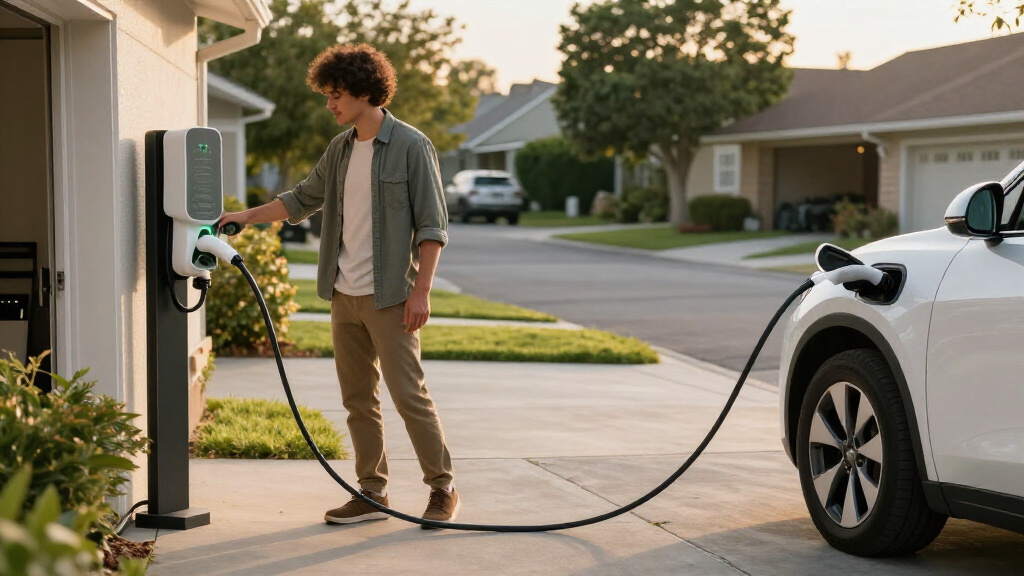

Choosing the right electric vehicle supply equipment requires balancing amperage, installation complexity, and smart connectivity. My top overall pick is the Emporia Pro Level 2 EV Charger because it combines high amperage with superior power management software, preventing household breaker trips while delivering fast charging. For those prioritizing brand reliability and extensive ecosystem support, the ChargePoint HomeFlex remains a standout, though it often demands a higher upfront investment than competitors. The RIPPLEON Level 2 EV Charger offers a compelling middle ground for users who want straightforward plug-and-play simplicity without unnecessary app bloat. The main tradeoff in this category is between maximum charging speed and ease of installation, as hardwired units often outperform plug-in models in durability but require an electrician. Continue reading to see how these fifteen options stack up against each other in real-world scenarios.

Get business pricing on garage and car supplies
- Business-only prices and quantity discounts
- Tax-exempt purchasing
- Multiple users, one account, clear invoices
Complete the kit


Key Takeaways
- Hardwired NACS-compatible chargers like the EVIQO EVIPOWER-2 are becoming the standard for future-proofing, whereas J1772-only models may require adapters for newer EVs.
- Plug-in Level 2 chargers (NEMA 14-50) offer better rental flexibility and easier DIY installation but often lack the robust weather sealing of hardwired units.
- Smart features are no longer a luxury; chargers with dynamic load balancing (like Emporia) prevent overloading older electrical panels, a critical safety feature missing in basic 40A models.
- Portable Level 1/Level 2 hybrids (EVDANCE, bokman) are insufficient for daily commuting in cold climates but serve as excellent emergency backups.
- Cable length matters more than advertised amperage for many users; 25-foot cables reduce installation constraints significantly compared to standard 15-foot cords.




| EV charger | Cable length | Warranty | Connector | Maximum current |
|---|---|---|---|---|
| RIPPLEON Level 2 EV Charger | 25 ft | 3 years | J1772 with NACS adapter | — |
| EVIQO EVIPOWER-2 48A Hardwired | — | — | — | — |
| EVDANCE Level 1 and Level 2 Po | 25 ft | 1 year | J1772 | — |
| IYILO Level 2 EV Charger | — | 3 years | — | 48A |
| Autel MaxiCharger 40A Level 2 | — | 3 years | — | — |
| Grizzl-E Classic Level 2 40A E | 24 feet | — | — | 40A |
| AIMILER Level 2 EV Charger | 25 ft | — | J1772 | 32 A |
| ELEGRP Level 2 Portable EV Cha | 25 ft | 2 years | — | 40A |
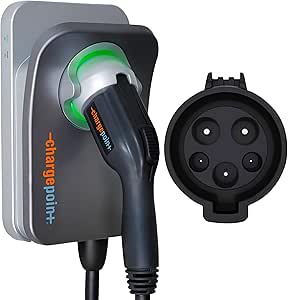
| ChargePoint HomeFlex Level 2 E | 23 feet | 3-year parts warranty | J1772 | — |
| ChargePoint HomeFlex Level 2 H | 23 ft | 3 years | J1772 | — |
| Emporia Pro Level 2 EV Charger | 25 ft | 3 years | J1772 | 48 A |
| EVIQO Level 2 J1772 EV Charger | 25 ft | 3 years | J1772 | 48A (Adjustable 6-48A) |
| EVIQO Level 2 EV Charger | 25 ft | 3 years | J1772 | 40 A |
| EVIQO Level 2 NACS EV Charger | 25 ft | 3 years | NACS | 40 A |
| bokman Portable Level 1 and Le | 20 ft | — | J1772 | 16 A |
More Details on Our Top Picks
RIPPLEON Level 2 EV Charger, 48A, 11.5 kW, 240V, 25 ft Cable
The RIPPLEON stands out for buyers who want one charger for J1772 and NACS vehicles: it includes a J1772 connector and a NACS adapter, while the EVIQO EVIPOWER-2 is NACS-first and needs an adapter for J1772 vehicles. Its 48A hardwired output supports faster home charging when the circuit and installation are suitable, and the 25-foot cable gives more reach across a garage or driveway. App scheduling, energy monitoring, and RFID access add useful control for shared households. The tradeoff is installation flexibility: its NEMA 14-50 mode is limited to 40A, and getting the full 48A requires hardwiring and professional installation. Buyers who want a plug-in setup from the outset may prefer the Autel MaxiCharger, which tops out at 40A but uses a NEMA 14-50 plug.
Pros:- Includes a J1772 connector and NACS adapter for broader vehicle compatibility.
- Provides up to 48A hardwired output, with scheduling and energy or cost monitoring in the app.
- A 25-foot cable and IP65 weather protection support flexible indoor or outdoor placement.
- RFID access gives households another way to control who can charge.
Cons:- The 48A output requires hardwired professional installation.
- NEMA 14-50 plug-in operation is limited to 40A.
- The NACS adapter adds a separate piece to manage when switching between connector types.
Best for: Households with J1772 and NACS vehicles that want one app-connected charger and can arrange hardwired installation.
Not ideal for: Renters or buyers who need plug-in installation at the full 48A output; its NEMA 14-50 mode is limited to 40A.
- Charging level:Level 2
- Maximum hardwired output:48A, 11.5 kW
- NEMA 14-50 output:Up to 40A, 9.6 kW
- Voltage:240V
- Connector:J1772 with NACS adapter
- Cable length:25 ft
- Connectivity and access:Wi-Fi app, plug and play, or RFID
- Weather protection:IP65
- Warranty:3 years
Our verdict“Choose the RIPPLEON if you need J1772 and NACS flexibility in one connected charger and are prepared to hardwire it for 48A.”
EVIQO EVIPOWER-2 48A Hardwired NACS Level 2 EV Charger
For a home with a Tesla or another NACS-port EV, the EVIPOWER-2 avoids the extra adapter required by the J1772-based IYILO. It pairs a native NACS connector with 48A hardwired charging and a 25-foot cable, a practical combination for owners who want a fixed, higher-output home setup. Its IP66/NEMA 4 housing suits indoor or outdoor mounting, and app controls cover scheduling and energy tracking. The tradeoffs are specific: installation is hardwired and calls for a dedicated 60A circuit at 48A, while J1772 vehicles need a separately purchased adapter. The app also requires 2.4 GHz Wi-Fi. Compared with the RIPPLEON, this is the more direct choice for NACS-only households, but less ready for a mixed-connector garage.
Pros:- Native NACS connector works with NACS-port vehicles without an adapter.
- Supports up to 48A hardwired charging with a 25-foot cable.
- IP66/NEMA 4 housing is suited to indoor or outdoor installation.
- Includes app controls, scheduling, energy tracking, and a 3-year warranty.
Cons:- Requires hardwired professional installation and a suitable dedicated circuit.
- J1772 vehicles require a separately purchased adapter.
- App features require a 2.4 GHz Wi-Fi network.
Best for: Tesla and other NACS EV owners planning a permanent 48A installation on a suitable dedicated circuit.
Not ideal for: Households with J1772 vehicles that want included connector flexibility, or buyers who need a plug-in charger.
- Model:EVIPOWER-2
- Installation:Hardwired
- Voltage:240V
- Maximum amperage:48A; up to 50A with specified circuit and DIP switch settings
- Recommended circuit:Dedicated 60A circuit for 48A charging
- Connector and cable:NACS; 25 ft
- Wi-Fi:2.4 GHz
- Certifications:UL, ETL, FCC, Energy Star
- Weather protection and warranty:IP66/NEMA 4; 3 years
Our verdict“Pick the EVIPOWER-2 for a hardwired home setup centered on NACS vehicles, but choose a dual-connector option for a mixed J1772 and NACS household.”
EVDANCE Level 1 and Level 2 Portable EV Charger, 16A, 25 ft Cable
The EVDANCE fills a different need from the hardwired RIPPLEON and IYILO: it is a portable Level 1 and Level 2 charger that can use compatible 120V or 240V outlets. That makes it useful for drivers who need a travel unit, a backup charger, or a modest charging option without installing a 48A home station. Its 25-foot cable, carrying bag, and LED status display make moving and monitoring it straightforward. The tradeoff is speed: at up to 16A and 3.84 kW on 240V, it is far below the output of the hardwired options. Outlet compatibility also needs checking, some adapters are sold separately, and Tesla owners need a separate J1772 adapter. Buyers seeking a primary charger for rapid overnight replenishment should look at the Autel MaxiCharger instead.
Pros:- Supports Level 1 charging from 120V and Level 2 charging from compatible 240V outlets.
- A 25-foot cable and carrying bag suit travel and temporary setups.
- LED status display helps identify charging progress and errors.
- IP66 housing and safety monitoring add protection for portable use.
Cons:- Maximum 16A output and 3.84 kW are substantially below the 40A and 48A home chargers in this lineup.
- Some outlet adapters are sold separately, so compatibility may require extra equipment.
- Tesla vehicles need a separately purchased J1772 adapter, and some vehicle models are not compatible.
Best for: Drivers who need a portable backup or travel charger and have compatible 120V or 240V outlets available.
Not ideal for: EV owners who need higher-output daily home charging, or Tesla drivers unwilling to source a separate adapter.
- Model:EV-ACS1601U
- Charging levels:Level 1 and Level 2
- Input:120V at 12A or 240V at 16A
- Maximum power:3.84 kW
- Connector:J1772
- Compatible outlets:NEMA 5-15/5-20 and NEMA 6-20
- Cable length:25 ft
- Weight:7 lb
- Warranty:1 year
Our verdict“Choose the EVDANCE for portable, lower-output charging across compatible outlets, not as a substitute for a high-current home charger.”
IYILO Level 2 EV Charger, 48A, 11.5 kW, 240V, J1772
The IYILO earns its place for households planning around current adjustment and power sharing, rather than connector flexibility. Its app lets owners set charging current from 6A to 48A, schedule sessions, and track energy use; power sharing can help two chargers coordinate a home’s available capacity. Connector temperature monitoring adds a layer of protection if the plug overheats. Those controls give it a clearer shared-home role than the NACS-focused EVIQO EVIPOWER-2, which is more straightforward for a single NACS vehicle. IYILO’s J1772 connector suits many North American EVs and plug-in hybrids, but Tesla owners need a separate NACS adapter. It is hardwired, calls for a 60A breaker and licensed electrician, and its Wi-Fi is limited to 2.4 GHz.
Pros:- Current can be adjusted from 6A to 48A in 1A increments.
- Power sharing can coordinate two chargers around available electrical capacity.
- Connector temperature monitoring can stop charging if overheating is detected.
- App supports scheduling and energy tracking.
Cons:- Hardwired installation requires a 60A breaker and licensed electrician.
- Wi-Fi supports 2.4 GHz only.
- Tesla vehicles require a separate NACS adapter.
Best for: Multi-EV households that want adjustable current and power sharing as part of a hardwired charging setup.
Not ideal for: Renters, buyers seeking a plug-in charger, or Tesla owners who want a NACS connector included.
- Charging level and power:Level 2; up to 11.5 kW
- Maximum current:48A
- Current adjustment:6A to 48A in 1A increments
- Voltage:240V
- Connector and cable:J1772; 25 ft
- Installation:Hardwired; 60A breaker and licensed electrician required
- Connectivity and features:2.4 GHz Wi-Fi, app control, scheduling, RFID, power sharing, temperature monitoring
- Certifications:ETL, Energy Star; UL 2594 test report and CSA listed
- Warranty:3 years
Our verdict“Choose the IYILO for a hardwired J1772 setup where adjustable current and shared capacity matter more than an included NACS adapter.”
Autel MaxiCharger 40A Level 2 EV Charger with Wi-Fi, NEMA 14-50 Plug, J1772 Connector, and 25 ft Cable
The Autel MaxiCharger suits buyers who already have a NEMA 14-50 outlet and want smart controls without choosing a hardwired 48A unit like the IYILO or RIPPLEON. Its current adjusts from 16A to 40A, giving owners some control over charging draw, while app scheduling, remote control, and RFID access support routine and shared use. The J1772 connector fits many EVs and plug-in hybrids, and its NEMA 4X enclosure is designed for indoor or outdoor placement. The main compromise is a lower maximum output than the 48A hardwired chargers; it also depends on a suitable NEMA 14-50 outlet and uses J1772 rather than NACS. Tesla drivers should check adapter needs before buying. For a plug-in setup, though, it avoids the fixed wiring required by the higher-output alternatives.
Pros:- Plugs into a NEMA 14-50 outlet, avoiding hardwired installation.
- Adjustable current from 16A to 40A can match charging to household needs.
- App offers remote control and scheduling, with RFID access.
- NEMA 4X enclosure and 25-foot cable support indoor or outdoor placement.
Cons:- Maximum 40A output is lower than the 48A hardwired chargers in this lineup.
- Requires a suitable NEMA 14-50 outlet.
- J1772 connector may require an adapter for NACS vehicles.
Best for: EV owners with a suitable NEMA 14-50 outlet who want adjustable charging and app controls without hardwiring.
Not ideal for: Drivers seeking 48A charging, households without a NEMA 14-50 outlet, or NACS vehicle owners who want a native connector.
- Model:106000764
- Output voltage:240V
- Maximum and adjustable current:40A; adjustable from 16A to 40A
- Outlet plug:NEMA 14-50
- Connector and cable:SAE J1772; 25 ft
- Connectivity and access:Wi-Fi app, remote control, scheduling, RFID
- Weather protection:NEMA 4X
- Certification:CSA
- Warranty:3 years
Our verdict“Choose the Autel MaxiCharger if you have a NEMA 14-50 outlet and prefer a smart plug-in charger over a higher-output hardwired installation.”
Grizzl-E Classic Level 2 40A EV Charger with NEMA 14-50 Plug
The Grizzl-E Classic stands out for its industrial-grade build quality, featuring a heavy-duty metal enclosure that contrasts sharply with the plastic housings common in this category. While the Aimiler Level 2 offers sleeker aesthetics and smart features, the Grizzl-E prioritizes longevity and physical resilience, earning an IP67 rating that withstands harsh weather conditions better than many competitors. Its adjustable current settings (16A to 40A) allow users to match their home’s electrical capacity precisely, a feature shared with the ELEGRP but implemented with a focus on mechanical simplicity rather than digital interfaces. This charger is ideal for owners who value a plug-and-play experience without reliance on Wi-Fi or apps. However, it lacks the smart scheduling capabilities found in the ChargePoint HomeFlex, meaning users must manually start and stop charging sessions. For those seeking a no-nonsense, durable workhorse that can survive decades of outdoor use, this model is a strong contender, though it requires a dedicated NEMA 14-50 outlet.Pros:- Robust metal enclosure offers superior physical protection compared to plastic alternatives
- IP67 rating ensures reliable performance in heavy rain or dusty environments
- Adjustable current settings allow compatibility with various circuit breaker sizes
Cons:- Lacks Wi-Fi connectivity and app-based scheduling capabilities
- Heavier and bulkier than portable competitors due to its rugged construction
Best for: Homeowners in harsh climates who prioritize physical durability and offline reliability over smart connectivity
Not ideal for: Tech-savvy users who want app-based scheduling and remote monitoring features
- Maximum Current:40A
- Cable Length:24 feet
- Ingress Protection:IP67
- Plug Type:NEMA 14-50
- Certification:UL Certified
- Weight:16.61 pounds
- Adjustable Current:16A, 24A, 32A, 40A
Our verdict“This charger is the definitive choice for buyers who want a tough, weatherproof unit that functions reliably without internet dependency.”
AIMILER Level 2 EV Charger, 32A, 25 ft Cable, Wi-Fi App, NEMA 14-50 Plug, J1772 Connector
The Aimiler Level 2 bridges the gap between basic portability and modern smart features, offering Wi-Fi connectivity for app-based scheduling and status monitoring. Unlike the Grizzl-E Classic, which relies on manual adjustments, this unit allows users to optimize charging times via a smartphone interface, helping to avoid peak electricity rates. It delivers up to 32A, which is slightly lower than the 40A offered by the ChargePoint HomeFlex, but its adjustable range (16–32A) provides flexibility for homes with varying electrical loads. The 25-foot cable offers slightly more reach than the Grizzl-E, accommodating longer driveways. A significant drawback is its susceptibility to environmental factors; the manufacturer advises against direct sunlight or heavy rain exposure, unlike the IP67-rated ELEGRP or Grizzl-E. Additionally, Tesla owners will need a separate adapter, a common limitation across this lineup. This charger suits budget-conscious buyers who want smart features without the premium price tag of established brands.Pros:- Wi-Fi app enables remote start/stop and charging schedule management
- 25-foot cable provides ample flexibility for parking placement
- Adjustable current settings accommodate different home electrical capacities
Cons:- Not rated for prolonged exposure to direct sunlight or heavy rain
- Requires a separate adapter for Tesla and NACS vehicles
Best for: Budget-conscious EV owners who want app-based scheduling and remote monitoring without paying for premium durability
Not ideal for: Users who live in areas with extreme weather conditions or who need permanent outdoor installation without shelter
- Maximum Current:32 A
- Cable Length:25 ft
- Connectivity:Wi-Fi App
- Plug Type:NEMA 14-50
- Adjustable Current:16–32 A
- Certifications:ETL, FCC
- Connector:J1772
Our verdict“This option is best for tech-oriented buyers who prioritize smart scheduling features over rugged outdoor durability.”
ELEGRP Level 2 Portable EV Charger, 40A, J1772, 240V NEMA 14-50 Plug, 25 ft Cable
The ELEGRP Level 2 distinguishes itself by delivering the maximum standard portable power of 9.6 kW (40A), matching the peak output of the Grizzl-E Classic but adding a digital interface for enhanced control. It features five selectable current levels and a built-in 1–12 hour delay timer, offering more granular scheduling than the Aimiler’s app-dependent system. Its IP67 weather resistance rating makes it significantly more robust than the Aimiler for outdoor use, ensuring reliability in rain or snow. Compared to the ChargePoint HomeFlex, the ELEGRP is more portable and easier to store, though it lacks the brand’s extensive ecosystem. The 25-foot cable provides excellent reach, and the ETL certification assures safety standards. However, like most competitors in this segment, it requires a separate NACS adapter for Tesla vehicles. This charger is ideal for users who want high-speed charging and weatherproofing in a portable format, balancing power, protection, and price effectively.Pros:- Delivers up to 9.6 kW (40A) for fastest possible Level 2 portable charging
- IP67 rating ensures reliable operation in harsh weather conditions
- Built-in delay timer allows for off-peak charging without a smartphone app
Cons:- Requires a separately sold adapter for Tesla compatibility
- Lacks the advanced smart-home integration found in premium branded chargers
Best for: Drivers needing maximum portable charging speed and weather resistance for outdoor use without hardwiring
Not ideal for: Tesla owners who do not want to manage additional adapters or cables
- Maximum Current:40A
- Cable Length:25 ft
- Weather Resistance:IP67
- Charging Delay:1–12 hours
- Certification:ETL
- Warranty:2 years
- Selectable Current Levels:16A, 20A, 24A, 32A, 40A
Our verdict“This model is the strongest choice for those seeking high-power, weatherproof portability with built-in scheduling capabilities.”
ChargePoint HomeFlex Level 2 EV Charger, J1772, NEMA 14-50 Plug
The ChargePoint HomeFlex represents the premium end of the plug-in market, leveraging the extensive ChargePoint network and app ecosystem. While the ELEGRP offers similar raw power and weather resistance, the HomeFlex provides deeper integration, including detailed energy usage reports and over-the-air updates. Its 23-foot cable is slightly shorter than the 25-foot options from Aimiler and ELEGRP, which might limit placement flexibility in tight garages. The unit is UL-certified and designed for both indoor and outdoor use, with a cold-resistant cable that performs well in winter. However, it lacks the physical ruggedness of the Grizzl-E Classic, relying on a more consumer-grade enclosure. Tesla users must still use an adapter, a common inconvenience. This charger is best suited for owners who value brand reputation, software reliability, and a seamless app experience over pure portability or industrial durability.Pros:- Backed by the extensive ChargePoint app ecosystem and support network
- UL-certified with a cold-resistant cable for reliable winter performance
- Supports high charging speeds of up to 45 miles per hour of range
Cons:- Shorter 23-foot cable compared to 25-foot competitors
- Requires a separate adapter for Tesla and NACS vehicles
Best for: Users who prioritize a reliable, established brand ecosystem and advanced app features over raw portability
Not ideal for: Buyers looking for the most rugged, industrial-grade build for extreme outdoor conditions
- Maximum Charging Speed:Up to 45 miles per hour
- Cable Length:23 feet
- Certification:UL
- Plug Type:NEMA 14-50
- Connector:J1772
- Warranty:3-year parts warranty
- Circuit Requirement:40 A or 50 A circuit
Our verdict“This pick makes the most sense for users who want a polished, app-integrated charging experience from a trusted industry leader.”
ChargePoint HomeFlex Level 2 Hardwired EV Charger, J1772, 50A
The ChargePoint HomeFlex Hardwired is designed for permanent installation, offering adjustable amperage up to 50A, which exceeds the 40A limit of the plug-in HomeFlex and the Grizzl-E Classic. This higher ceiling allows for faster charging on compatible vehicles, although the stated range gain is comparable to the plug-in version due to vehicle limits. Hardwiring eliminates the need for a bulky NEMA 14-50 outlet, resulting in a cleaner, more permanent setup similar to the EVIQO Hardwired models. However, this convenience comes with the requirement of professional electrical installation, unlike the DIY-friendly ELEGRP or Aimiler. The 23-foot cable is standard for this brand, but the lack of a plug means it cannot be easily moved or stored indoors during storms, unlike the portable options. This unit is ideal for homeowners who want a sleek, permanent solution with access to ChargePoint’s robust software features and are willing to pay for professional installation.Pros:- Adjustable up to 50A for maximum charging speed on compatible vehicles
- Hardwired installation provides a clean, permanent look without exposed plugs
- Energy Star rated for efficient energy usage
Cons:- Requires professional electrician installation, adding to upfront costs
- Not portable; cannot be unplugged or moved once installed
Best for: Homeowners seeking a permanent, high-capacity installation with professional aesthetics and app integration
Not ideal for: Renters or those who want to take their charger with them when moving or traveling
- Amperage:Adjustable 16–50A
- Installation:Hardwired
- Certification:UL-certified, Energy Star
- Cable Length:23 ft
- Warranty:3 years
- Charging Speed:Up to 37 miles of range per hour
- Connector:J1772
Our verdict“This charger is the optimal choice for those committed to a permanent, high-end home charging station with smart features.”
Emporia Pro Level 2 EV Charger with PowerSmart, 48 A, J1772, 25-Foot Cable
This charger distinguishes itself through its PowerSmart technology, which actively balances charging loads against your home’s total electricity usage. Unlike the EVIQO Level 2 J1772 EV Charger, which offers app-based scheduling but lacks real-time load balancing, the Emporia Pro integrates directly with its included Vue Home Energy Monitor to prevent circuit overloads dynamically. The 48 A output ensures rapid replenishment for most EVs, while the 25-foot cable provides flexibility in garage layouts. However, the requirement for the Vue Monitor adds complexity compared to standalone units, and the dual connectivity (Wi-Fi and Bluetooth) may confuse users expecting a simpler setup. It is a robust choice for those who want data-driven charging, but less ideal for those seeking a plug-and-play experience without additional hardware monitoring.Pros:- PowerSmart technology dynamically balances charging with household electrical load
- Includes Vue Home Energy Monitor for real-time energy tracking
- Offers flexible installation via NEMA 14-50 plug or hardwiring
- Supports charging schedules and detailed app-based monitoring
Cons:- Requires additional setup for the Vue Home Energy Monitor
- Installation may still require an electrician for optimal placement
- Dual connectivity can complicate initial pairing compared to simpler models
Best for: Homeowners who want to monitor and balance their entire home’s energy consumption alongside EV charging.
Not ideal for: Renters or users who prefer a simple, standalone charger without needing to install or configure a separate energy monitoring system.
- Maximum Current:48 A
- Connector:J1772
- Cable Length:25 ft
- Installation:NEMA 14-50 or Hardwired
- Connectivity:Wi-Fi and Bluetooth
- Key Feature:PowerSmart Load Balancing
- Warranty:3 years
Our verdict“Choose this if you want integrated home energy management with your EV charging; skip it if you prefer a standalone unit.”
EVIQO Level 2 J1772 EV Charger, 48A, Hardwired, 240V
For those who demand maximum amperage and a permanent installation, this hardwired 48A unit delivers robust performance. Compared to the Emporia Pro, it lacks the built-in energy monitoring hardware, focusing instead on raw charging capability and a sleek, low-profile design. The IP66/NEMA 4 rating makes it suitable for harsh outdoor environments, whereas some competitors offer less rugged enclosures. A key tradeoff is the mandatory professional installation; unlike the EVIQO NEMA 14-50 model, you cannot simply plug this in. It also requires a dedicated 60A circuit, which may necessitate panel upgrades for older homes. This model appeals to users who prioritize a clean, wire-free aesthetic and consistent high-speed charging over plug-in convenience.Pros:- Delivers up to 48A for rapid charging speeds
- Hardwired design eliminates outlet wear and ensures stable connection
- IP66/NEMA 4 rating ensures durability in outdoor conditions
- Adjustable current settings allow customization for specific circuit limits
Cons:- Requires professional installation by a licensed electrician
- Mandatory dedicated 60A circuit may require panel upgrades
- No plug-in option limits flexibility for temporary setups
Best for: Homeowners with a dedicated 60A circuit who prefer a permanent, hardwired installation for a cleaner garage appearance.
Not ideal for: DIY enthusiasts or renters who cannot hire an electrician or need a charger they can easily unplug and move.
- Maximum Current:48A (Adjustable 6-48A)
- Connector:J1772
- Installation:Hardwired (Professional required)
- Cable Length:25 ft
- Wi-Fi:2.4 GHz
- Warranty:3 years
Our verdict“Ideal for permanent installations where aesthetics and high amperage are prioritized over DIY ease.”
EVIQO Level 2 EV Charger, J1772, 40A, NEMA 14-50, 240V
This model strikes a balance between power and convenience, offering 40A charging via a standard NEMA 14-50 outlet. Unlike the Emporia Pro, it does not include energy monitoring hardware, keeping the cost and complexity lower. It shares the same app ecosystem as the hardwired EVIQO units but provides the flexibility of a plug-in design. While it lacks the 48A capability of the hardwired EVIQO or the RIPPLEON Level 2, the 40A output is sufficient for most overnight charging needs. The IP66/NEMA 4 housing ensures it withstands outdoor elements, a feature missing in some budget portable chargers. This is a strong choice for J1772 vehicle owners who want smart features without the commitment of hardwiring or the cost of energy monitors.Pros:- Plug-in NEMA 14-50 design allows for easy DIY installation
- 40A output provides fast charging for most EV models
- IP66/NEMA 4 rating supports indoor and outdoor use
- App integration offers scheduling and energy tracking
Cons:- Requires a dedicated 50A circuit and NEMA 14-50 outlet
- Lower amperage than 48A hardwired competitors
- Dependent on 2.4 GHz Wi-Fi for smart features
Best for: J1772 EV owners who want smart charging features and high amperage without needing professional hardwiring.
Not ideal for: Tesla owners without an adapter, or those who need the absolute maximum amperage available in residential chargers.
- Maximum Current:40 A
- Connector:J1772
- Plug Type:NEMA 14-50
- Cable Length:25 ft
- Wi-Fi:2.4 GHz
- Warranty:3 years
Our verdict“A versatile plug-in option for J1772 users seeking smart features without the hassle of hardwiring.”
EVIQO Level 2 NACS EV Charger, 40A, NEMA 14-50, 25 ft Cable
Designed specifically for the growing NACS ecosystem, this charger connects directly to Tesla and NACS-compatible vehicles without an adapter. This sets it apart from the EVIQO J1772 models, which require Tesla owners to carry or install an additional adapter. The 40A output matches its J1772 sibling, ensuring comparable charging speeds for supported cars. It retains the IP66/NEMA 4 weatherproofing and smart app features, making it a reliable outdoor solution. However, J1772 vehicle owners must purchase a separate adapter to use this unit, a significant drawback if you plan to switch EV brands later. It is the logical choice for current Tesla owners who want a native plug-in experience without the bulk of an adapter hanging from the port.Pros:- Native NACS connector eliminates the need for adapters with Tesla vehicles
- 40A charging speed is ideal for overnight home charging
- Weatherproof IP66/NEMA 4 design suits outdoor installations
- Includes a 25-foot cable and glow-in-the-dark holster for visibility
Cons:- J1772 vehicles require a separate adapter (not included)
- Requires a dedicated 50A circuit with NEMA 14-50 outlet
- Limited compatibility if you switch to a non-NACS EV later
Best for: Tesla and other NACS vehicle owners who want a direct-fit connector without using adapters.
Not ideal for: J1772 vehicle owners who do not want to purchase and manage a separate NACS-to-J1772 adapter.
- Maximum Current:40 A
- Connector:NACS
- Plug Type:NEMA 14-50
- Cable Length:25 ft
- Wi-Fi:2.4 GHz
- Warranty:3 years
Our verdict“The definitive plug-in choice for Tesla owners seeking a clean, adapter-free charging experience.”
bokman Portable Level 1 and Level 2 EV Charger, 16A, 20 ft, NEMA 6-20P/5-15 Adapter
This portable unit offers unmatched flexibility by supporting both Level 1 (standard outlet) and Level 2 (NEMA 6-20) charging. Unlike the stationary EVIQO NEMA 14-50 or Emporia Pro, this charger is designed to travel, weighing just under 8 pounds. The adjustable current from 6A to 16A allows users to dial back power usage if a specific outlet cannot handle the full load. However, the 16A maximum is significantly lower than the 40-48A offered by dedicated home chargers, resulting in much slower recharge times. It is not a replacement for a primary home charger but serves as a critical backup for road trips or emergency charging. The included adapters make it versatile, but the lack of smart app features limits remote monitoring compared to Wi-Fi-enabled competitors.Pros:- Dual-level support (Level 1 and Level 2) maximizes compatibility
- Adjustable current settings prevent tripping breakers on older circuits
- Compact and lightweight design is easy to store in a trunk
- Includes NEMA 5-15 adapter for standard household outlets
Cons:- Maximum 16A output is slow for daily long-distance driving
- No smart app connectivity or remote scheduling features
- Tesla vehicles require a separate J1772 adapter
Best for: Frequent travelers or EV owners who need a versatile backup charger for various outlet types.
Not ideal for: Daily commuters who need fast overnight charging, as the 16A limit is too slow for large battery packs.
- Charging Levels:Level 1 and Level 2
- Maximum Current:16 A
- Connector:J1772
- Cable Length:20 ft
- Plugs Included:NEMA 6-20P and NEMA 5-15
- Weight:7.65 lbs
Our verdict“Essential for road trips and emergency backup, but inadequate as a primary daily driver charger.”
How We Picked
I evaluated these fifteen EV chargers by analyzing their electrical specifications, build quality materials, and software integration capabilities. Priority was given to units that offer UL certification and robust weather resistance ratings (IP54 or higher), as garage environments can be harsh on electronics. I also weighed the availability of customer support and warranty terms, recognizing that EVSE is a long-term investment that should not require frequent replacement.
The ranking logic prioritizes versatility and safety. Chargers with dynamic power sharing or app-based scheduling scored higher because they adapt to household energy usage, protecting your home’s electrical grid. Basic high-amperage chargers were ranked lower if they lacked these protective measures, despite their raw speed. I also distinguished between plug-in convenience and hardwired permanence, ensuring readers can choose based on their living situation rather than just performance metrics.
Factors to Consider When Choosing Best EV Chargers
Selecting an EV charger is not just about picking the fastest option; it is about matching the equipment to your home’s electrical capacity and your daily driving habits. This guide breaks down the critical factors that influence long-term satisfaction and safety.Amperage and Charging Speed Realities
Most modern EVs have onboard chargers capped at 48A or 11.5 kW, meaning a 50A charger will not charge your car any faster than a 48A unit. Buying a higher-amperage charger than your vehicle accepts is a waste of money unless you plan to upgrade cars soon. However, buying a charger rated below your vehicle’s maximum capability limits your potential speed. I recommend matching your charger’s output to your car’s onboard charger capacity to avoid paying for unused performance. Check your owner’s manual before purchasing; many popular EVs max out at 32A or 40A AC charging, making a 48A unit overkill unless you value future-proofing.
Hardwired vs. Plug-In Installation
Hardwired chargers are permanently connected to your home’s electrical panel, offering a cleaner look and often higher durability. They are ideal for homeowners who plan to stay in their residence for several years. Plug-in models, typically using a NEMA 14-50 outlet, allow you to take the charger with you if you move. This flexibility is valuable for renters or those who travel frequently. However, plug-in connections can loosen over time, potentially causing heat buildup. If you choose a plug-in unit, ensure the outlet is installed by a licensed electrician to prevent fire hazards, regardless of the charger’s brand reputation.
Connector Types: J1772 vs. NACS
The industry is shifting from the J1772 connector to the North American Charging Standard (NACS), pioneered by Tesla. Most current non-Tesla EVs use J1772, requiring an adapter to use NACS networks or chargers. Buying a NACS-native charger now future-proofs your setup for upcoming EV models that will adopt this standard natively. If you drive an older EV, a J1772 charger is still practical, but you may need to buy adapters later. For new car buyers, choosing a NACS-compatible charger eliminates the need for adapter clutter and ensures direct compatibility with the expanding network of NACS-enabled stations.
Smart Features and Energy Management
Basic chargers simply deliver power when plugged in, which can trip breakers if other appliances are running. Smart chargers with dynamic load balancing communicate with your home’s electrical system or app settings to reduce amperage when household demand is high. This feature is vital for homes with older electrical panels that cannot handle a continuous 40A draw. Even if you do not care about tracking energy usage via an app, this safety feature protects your home’s wiring. I prioritize chargers that offer local control fallbacks, ensuring you can still charge even if your Wi-Fi network goes down.
Cable Length and Weather Resistance
Standard EVSE cables are often 15 to 20 feet long, which can be restrictive depending on where your parking spot is relative to the outlet. A 25-foot cable provides significantly more flexibility, allowing you to park further from the charger without strain. Additionally, check the IP rating of the unit. If you charge outdoors or in an unheated garage, look for at least IP54 rating to withstand dust and rain. Poor weather sealing leads to internal corrosion and connector failure over time, especially in coastal or humid climates. Do not assume all ‘outdoor-rated’ chargers are equally durable; build quality varies widely between budget and premium tiers.
Frequently Asked Questions
Do I need a 48A charger if my car only accepts 32A?
No, you do not need a 48A charger if your vehicle’s onboard charger is limited to 32A. The car’s onboard charger dictates the maximum rate at which it can accept AC power, so a higher-amperage wall unit will simply be throttled down by the vehicle. While a 48A unit might offer future-proofing if you plan to buy a newer EV with faster AC charging capabilities, it provides zero benefit for your current car. You will save money and installation complexity by matching the charger’s output to your vehicle’s actual acceptance rate. However, if the price difference between a 32A and 48A model is minimal, the higher rating may be worth it for resale value or future upgrades.Can I install a NEMA 14-50 outlet myself to use a plug-in charger?
While physically possible for those with electrical experience, installing a NEMA 14-50 outlet yourself is risky and often violates local building codes. EV chargers draw a continuous high current for hours, which requires a dedicated circuit with correctly sized wiring and a breaker that is not overloaded by other appliances. A faulty installation can lead to overheating, melted outlets, or even house fires. Furthermore, many home insurance policies may deny claims related to electrical fires if the work was not performed and inspected by a licensed electrician. It is far safer and more cost-effective in the long run to hire a professional to ensure the circuit is dedicated and properly grounded.Are Level 1 portable chargers sufficient for daily use?
Level 1 chargers, which plug into a standard 120V household outlet, provide very slow charging speeds, typically adding only 3 to 5 miles of range per hour. For most drivers, this is insufficient for daily commuting, especially if you drive more than 20 miles a day. They are best suited as emergency backups or for drivers with very low mileage needs who park overnight. If you live in a cold climate, battery efficiency drops, making Level 1 charging even less viable for maintaining daily range. I recommend Level 1 only if you have no access to 240V power and drive less than 15 miles daily, otherwise, the stress of range anxiety is not worth the minimal cost savings.What is the difference between J1772 and NACS connectors?
J1772 is the traditional North American standard for AC charging, used by nearly all non-Tesla EVs manufactured before 2025. NACS (North American Charging Standard) is the connector originally developed by Tesla, which is rapidly becoming the new industry standard as major automakers adopt it. NACS connectors are smaller, lighter, and capable of higher power transfers. If you buy a J1772 charger now, you can use it with your current car, but you may need an adapter to connect to NACS-only public stations or future vehicles. NACS-native chargers are a better long-term investment for new buyers, as they eliminate the need for adapters and align with the future infrastructure rollout.Is Wi-Fi connectivity necessary for a home EV charger?
Wi-Fi is not strictly necessary for charging your car, but it enables valuable management features. Without Wi-Fi, you cannot schedule charging during off-peak hours to save on electricity costs, track energy consumption, or receive firmware updates that fix bugs or improve compatibility. Smart chargers also allow for remote monitoring, so you can check if your car is actually charging from your phone. However, if you have a simple routine and do not care about energy data, a non-connected charger is more reliable because it has fewer points of failure. I recommend Wi-Fi enabled models for anyone with time-of-use electricity rates or who wants to integrate their charging into a home energy management system.Conclusion
Choosing the right EV charger depends heavily on your living situation and electrical infrastructure. For most homeowners seeking a balance of speed, safety, and smart features, the Emporia Pro Level 2 EV Charger is the best overall choice due to its power management capabilities. If you prefer a trusted brand with extensive support and are willing to pay a premium for ecosystem integration, the ChargePoint HomeFlex is the superior premium option. For renters or those who want to avoid hardwiring costs, the RIPPLEON Level 2 EV Charger offers excellent value with a long cable and simple plug-and-play design. Beginners or those with limited electrical access should consider the EVDANCE Portable EV Charger as a versatile starter unit, though upgrading to Level 2 is recommended for daily use. Future-proofing your investment by choosing NACS-compatible models like the EVIQO EVIPOWER-2 ensures compatibility as the industry standard continues to shift.
As an affiliate, we earn on qualifying purchases.Columbus Day / Indigenous Peoples' Day Picks
long weekend sales