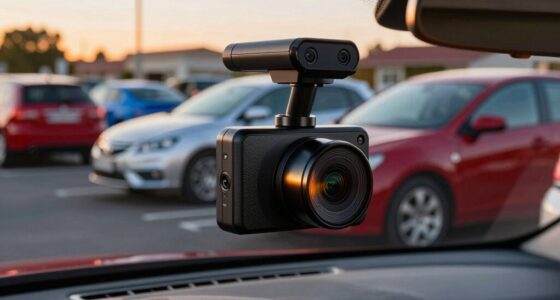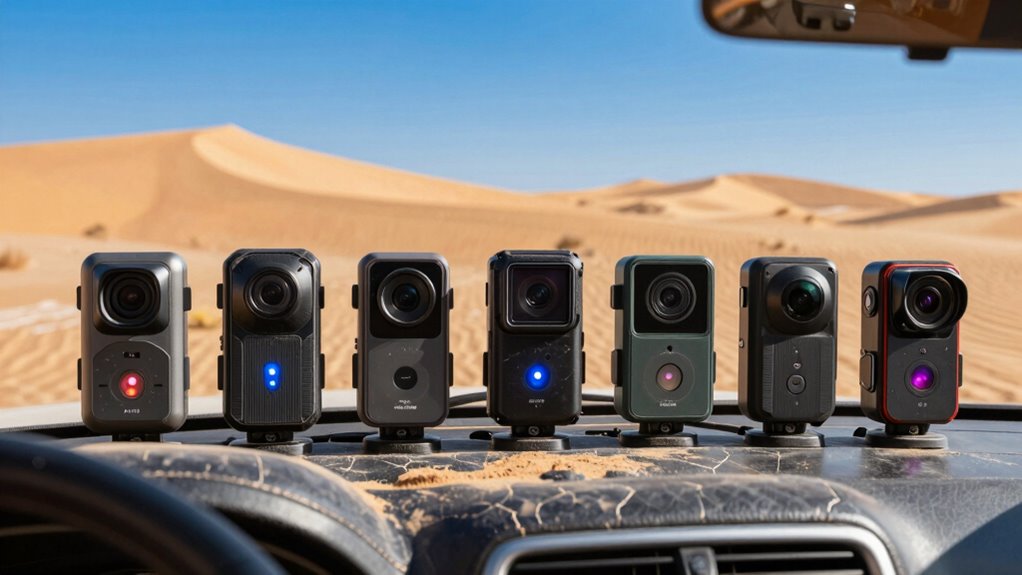

For a dash cam for desert heat, I’d start with the REDTIGER F7NP as the best overall balance of front-and-rear coverage and STARVIS 2 imaging, while the REDTIGER F17 stands out for drivers who want three-camera coverage. The Galphi 4K is a simpler front-camera choice for buyers who prefer a less involved setup. Heat tolerance depends on the camera’s published operating and storage limits, installation, and how it is powered—not resolution alone. More cameras and parking features add coverage but can increase wiring, storage use, and setup demands. Read on for the full comparison and the buying details that matter in hot, sun-exposed cars.

Get business pricing on garage and car supplies
- Business-only prices and quantity discounts
- Tax-exempt purchasing
- Multiple users, one account, clear invoices
Complete the kit


Key Takeaways
- The REDTIGER F7NP is the most balanced pick in this lineup: front-and-rear recording with STARVIS 2, without the extra camera and setup of the three-channel models.
- The REDTIGER F17 and the 4K+4K+1080P model offer broader cabin coverage, but buyers should weigh that against more installation work and greater storage demand.
- The Galphi 4K is the simplest option here because it records from the front only; it gives up rear evidence and GPS features listed on some competing models.
- The 70mai A810 Lite and ROVE R2-4K Dual add different convenience strengths: Wi-Fi 6 and voice control on the 70mai, versus a straightforward front-and-rear setup from ROVE.
- No listed feature proves desert-ready heat endurance; check the exact operating-temperature specification and power requirements before leaving any camera in a parked vehicle.
| REDTIGER F17 4K 3-Channel Dash Cam with STARVIS 2 Sensor, HDR, 64GB Card, 5.8GHz WiFi |  | Best for Full-Cabin Coverage | Front video: 4K | Inside and rear video: 1080p each | Image sensor: STARVIS 2 IMX675 | VIEW ON AMAZON | See Our Full Breakdown |
| 70mai A810 Lite 4K Dash Cam Front and Rear with Wi-Fi 6, GPS, Night Vision, Parking Mode, Voice Control |  | Best for Feature-Rich Front-and-Rear Recording | Video resolution: 4K front, 1080p rear | Field of view: 140° | Wi-Fi: 5GHz Wi-Fi 6 | VIEW ON AMAZON | See Our Full Breakdown |
| ROVE R2-4K Dual Dash Cam with Front and Rear Cameras |  | Best Included Storage | Front video: 2.5K capture, upscaled to 4K (2160p) | Rear video: 1080p Full HD | Front image sensor: Sony STARVIS 2 IMX675, 5MP | VIEW ON AMAZON | See Our Full Breakdown |
| REDTIGER F7NP 4K Front and 1080P Rear Dash Cam with STARVIS 2 Sensor |  | Best Overall for Desert-Heat Fit | Front video: 4K (2160p) | Rear video: 1080p | Front field of view: 170° | VIEW ON AMAZON | See Our Full Breakdown |
| Galphi 4K Front Dash Cam with 5GHz Wi-Fi and 32GB Card |  | Best Compact, Screen-Free Pick | Resolution: 4K UHD (2160p) | Field of view: 160° | Aperture: F/1.6 | VIEW ON AMAZON | See Our Full Breakdown |
| 4K+4K+1080P 3-Channel Dash Cam with 128GB Card and Night Vision |  | Best for All-Around Coverage | Camera channels: 3 | Front resolution: 4K UHD | Rear resolution: 4K | VIEW ON AMAZON | See Our Full Breakdown |
| dash cam for desert heat | Included storage | Wi-Fi | Maximum storage | Display |
|---|---|---|---|---|
| REDTIGER F17 4K 3-Channel Dash | 64GB card | 5GHz and 2.4GHz | — | — |
| 70mai A810 Lite 4K Dash Cam Fr | 64GB card | 5GHz Wi-Fi 6 | 512GB microSD | — |
| ROVE R2-4K Dual Dash Cam with | 128GB microSD | Dual-band 5.8GHz and 2.4GHz | 1TB microSD | 3-inch IPS |
| REDTIGER F7NP 4K Front and 108 | 128GB card | — | 512GB | 3.16-inch LCD |
| Galphi 4K Front Dash Cam with | 32GB card | 5GHz | 256GB microSD | Screen-free design |
| 4K+4K+1080P 3-Channel Dash Cam | — | — | — | 3.18-inch full-laminated display |
More Details on Our Top Picks
REDTIGER F17 4K 3-Channel Dash Cam with STARVIS 2 Sensor, HDR, 64GB Card, 5.8GHz WiFi
For desert driving where cabin and rear incidents matter as much as the road ahead, the REDTIGER F17 is the most complete view in this group: it records 4K front plus 1080p inside and rear. Its listed supercapacitor is a better fit for high cabin temperatures than a conventional battery-based power design, though no camera should be left in extreme heat without checking its operating-temperature guidance. The STARVIS 2 sensor and HDR address contrast and low-light detail, while dual-band Wi-Fi helps with file access. Compared with the two-camera 70mai A810 Lite, the F17 adds interior coverage but offers less included storage and a more involved setup. The tradeoff is a feature-heavy system that may be excessive for drivers who only need forward and rear evidence.
Pros:- Three-channel recording captures front, cabin, and rear views
- Supercapacitor power design is suited to hot-vehicle use
- STARVIS 2 sensor and HDR support difficult lighting
- Dual-band Wi-Fi includes 5GHz for file transfers
Cons:- More complex to install and configure than a two-camera setup
- Included 64GB card offers less capacity than the 70mai A810 Lite and ROVE R2-4K Dual
- Three-camera coverage may be unnecessary for drivers who only need road evidence
Best for: Rideshare drivers and desert travelers who want interior, front, and rear footage in one system.
Not ideal for: Drivers seeking a simple front-and-rear install or long recording intervals without managing storage; setup is more involved and the included card is only 64GB.
- Front video:4K
- Inside and rear video:1080p each
- Image sensor:STARVIS 2 IMX675
- Field of view:150° front, 160° inside, 155° rear
- Wi-Fi:5GHz and 2.4GHz
- Included storage:64GB card
- Parking modes:Time lapse and collision detection
- Power supply:Supercapacitor
Our verdict“Choose the F17 if cabin coverage and a supercapacitor matter more to you than simpler installation or larger included storage.”
70mai A810 Lite 4K Dash Cam Front and Rear with Wi-Fi 6, GPS, Night Vision, Parking Mode, Voice Control
The 70mai A810 Lite pairs 4K front recording with a 1080p rear camera and a supercapacitor, making it a capable daily setup for a car that bakes in desert sun. Its HDR and F1.55 aperture are aimed at preserving useful detail across harsh light and darker scenes; they do not replace sensible placement or heat-safe parking practices. Compared with the REDTIGER F17, it gives up interior recording but adds Wi-Fi 6, voice control, and support for cards up to 512GB, a stronger fit for drivers who want longer storage capacity. Parking mode needs a hardwire kit, and the advertised 4G LTE support requires additional support. Those extras and installation needs make it less straightforward than the screen-free Galphi.
Pros:- 4K front and 1080p rear recording cover both directions
- Supercapacitor power design is a practical match for hot cabins
- Supports microSD cards up to 512GB, more than the included capacity
- Voice control and Wi-Fi 6 offer convenient operation and file access
Cons:- Parking mode requires a separately obtained hardwire kit
- 4G LTE use requires additional support
- Installation may be difficult for first-time dash-cam owners
Best for: Daily drivers who want front-and-rear coverage, voice controls, GPS data, and room to expand storage.
Not ideal for: Buyers who want interior recording or a plug-in parking setup; parking mode needs a hardwire kit, and some connectivity features require additional support.
- Video resolution:4K front, 1080p rear
- Field of view:140°
- Wi-Fi:5GHz Wi-Fi 6
- Night recording:HDR with F1.55 aperture
- GPS:GPS, GLONASS, and BDS
- Parking mode:24-hour mode with G-sensor and loop recording; hardwire kit required
- Included storage:64GB card
- Maximum storage:512GB microSD
- Power supply:Supercapacitor
Our verdict“Pick the A810 Lite if you want an expandable front-and-rear system with voice control and can handle the hardwire installation for parking mode.”
ROVE R2-4K Dual Dash Cam with Front and Rear Cameras
The ROVE R2-4K Dual stands out for pairing front-and-rear recording with a 128GB card in the box, twice the included capacity of the 70mai A810 Lite and four times the Galphi’s. That helps when long desert drives create plenty of footage, though capacity alone does not establish how well the camera tolerates parked-vehicle heat. Its STARVIS 2 sensor and HDR support low-light recording, and built-in GPS logs route and speed data. The main image-quality caveat is meaningful: the front sensor captures 2.5K and upscales it to 4K, rather than recording native 4K like the REDTIGER F7NP. Parking modes also require a separately purchased hardwire kit. I’d choose it for storage value, not for buyers who prioritize native 4K or a ready-to-use parking setup.
Pros:- Includes a 128GB microSD card
- Front and rear cameras record simultaneously
- STARVIS 2 sensor and HDR support low-light capture
- Built-in GPS records route and speed data
Cons:- Front video is captured at 2.5K and upscaled to 4K
- Parking mode requires a hardwire kit that is not included
- The supplied information does not specify a supercapacitor for hot-cabin operation
Best for: Road-trippers who want front-and-rear footage, built-in GPS, and a larger included card for extended recording.
Not ideal for: Drivers who specifically want native 4K front capture or parking surveillance without buying and installing a hardwire kit.
- Front video:2.5K capture, upscaled to 4K (2160p)
- Rear video:1080p Full HD
- Front image sensor:Sony STARVIS 2 IMX675, 5MP
- Display:3-inch IPS
- Wi-Fi:Dual-band 5.8GHz and 2.4GHz
- GPS:Built-in
- Included storage:128GB microSD
- Maximum storage:1TB microSD
- Parking modes:Time-lapse, motion detection, and collision detection; hardwire kit required
Our verdict“Choose the ROVE if larger included storage and dual-camera coverage matter more than native 4K front footage or easy parking-mode setup.”
REDTIGER F7NP 4K Front and 1080P Rear Dash Cam with STARVIS 2 Sensor
Among these picks, the REDTIGER F7NP makes the clearest case for desert-heat use because its product data specifies a supercapacitor, paired with native 4K front and 1080p rear recording. Its STARVIS 2 sensor, WDR, and HDR target scenes with sharp shifts between glaring sun and shade. The 170° front field of view also captures a broad stretch of road, while the included 128GB card gives more breathing room than the F17’s 64GB. Unlike the three-channel F17, it does not record the cabin; unlike the Galphi, it adds a rear camera, GPS, and a display. A hardwire kit is needed for parking mode, and the listed maximum frame rate of 1 FPS is a major limitation to check before buying, since it may not suit ordinary motion recording.
Pros:- Native 4K front and 1080p rear recording
- Supercapacitor power design is suited to hot-vehicle conditions
- Includes a 128GB card, GPS, and app control
- STARVIS 2 with WDR and HDR addresses difficult lighting
Cons:- Parking mode needs a separately purchased hardwire kit
- Listed maximum frame rate is only 1 FPS, which warrants checking before purchase
- No interior camera, unlike the REDTIGER F17
Best for: Drivers who want native 4K front footage, rear coverage, and a supercapacitor-based camera for a hot vehicle.
Not ideal for: Buyers who need cabin recording, a simple parking-mode installation, or a clearly documented full-motion frame rate; the listing specifies a maximum of 1 FPS.
- Front video:4K (2160p)
- Rear video:1080p
- Front field of view:170°
- Rear field of view:140°
- Image sensor:STARVIS 2
- Display:3.16-inch LCD
- Included storage:128GB card
- Maximum storage:512GB
- Power component:Supercapacitor
Our verdict“The F7NP is the strongest fit here for hot-car front-and-rear recording if its listed 1 FPS maximum frame rate is acceptable for your needs.”
Galphi 4K Front Dash Cam with 5GHz Wi-Fi and 32GB Card
The Galphi 4K is the simplest, least obtrusive choice here: its screen-free design keeps the windshield setup compact, while 5GHz Wi-Fi provides a way to retrieve clips without a built-in display. The 160° lens covers a broad forward view, and the F/1.6 aperture and WDR are intended to help with changing light. But this is a front-only camera, so it cannot match the rear evidence from the REDTIGER F7NP or the three-view coverage of the F17. Its 32GB included card is also the smallest in this lineup, and the product data does not list a supercapacitor—an important distinction for a camera marketed for use in a hot vehicle. Parking mode needs a separate Type-C hardwire kit. I’d treat it as a compact basic recorder, not the most heat-specific option.
Pros:- Compact screen-free design minimizes windshield distraction
- 4K UHD recording with a 160° field of view
- 5GHz Wi-Fi supports file access
- Supports microSD cards up to 256GB
Cons:- Front-only recording provides no rear or cabin coverage
- Included 32GB card is smaller than every other included card in this group
- Parking mode requires a separately purchased Type-C hardwire kit, and no supercapacitor is listed
Best for: Drivers who want a small, screen-free forward recorder and are comfortable using an app to access footage.
Not ideal for: Desert drivers who need rear or cabin footage, larger included storage, or a specifically documented supercapacitor design.
- Resolution:4K UHD (2160p)
- Field of view:160°
- Aperture:F/1.6
- Wi-Fi:5GHz
- Included storage:32GB card
- Maximum storage:256GB microSD
- Parking mode:24-hour time-lapse; Type-C hardwire kit required
- Recording features:Loop recording and G-sensor impact detection
- Display:Screen-free design
Our verdict“Choose the Galphi if a compact forward-only camera matters most, but look to the F7NP or F17 for broader coverage and a stated supercapacitor.”
4K+4K+1080P 3-Channel Dash Cam with 128GB Card and Night Vision
For desert drivers who want evidence from more than the road ahead, this model records front and rear in 4K plus the cabin in 1080P. That third view can help document passenger activity or what happened inside the vehicle, while its four infrared cabin lights support recording in darkness. Compared with the two-channel 70mai A810 Lite, it captures the cabin too; the tradeoff is another camera view to manage rather than a simpler front-and-rear setup. It also includes a 128GB card, GPS, and dual-band Wi-Fi 6. Those features add convenience, but the product details do not specify heat-rated components or operating-temperature limits, so I would not treat its resolution or feature list as proof of desert-heat durability. Parking monitoring also needs a separately obtained hardwire kit.
Pros:- Records front and rear in 4K UHD and the cabin in 1080P for three-direction coverage.
- Includes a 128GB memory card and supports storage up to 512GB.
- Built-in GPS and dual-band Wi-Fi 6 support location tracking and app-based video access.
- Four cabin infrared lights support interior recording in darkness.
Cons:- No operating-temperature range or heat-rated components are specified, leaving desert-heat resilience unverified.
- Parking monitoring requires a hardwire kit that is not listed as included.
- The three-camera setup may be more involved than a simpler two-channel system such as the 70mai A810 Lite.
Best for: Drivers in hot, sunny regions who want front, rear, and cabin footage in one system and value included storage and GPS.
Not ideal for: Drivers prioritizing documented high-temperature tolerance, or anyone wanting parking monitoring without purchasing and installing a separate hardwire kit.
- Camera channels:3
- Front resolution:4K UHD
- Rear resolution:4K
- Cabin resolution:1080P
- Viewing angles:170° front, 150° rear, 150° cabin
- Display:3.18-inch full-laminated display
- Night vision:HD night vision with WDR and four cabin IR lights
- Wireless connectivity:Dual-band Wi-Fi 6, 5.8GHz and 2.4GHz; transfer speeds up to 20MB/s
- Storage and parking monitoring:128GB card included; supports up to 512GB; time-lapse and collision detection require a hardwire kit
Our verdict“Choose this model for three-direction recording and generous included storage, but look elsewhere if verified heat tolerance or ready-to-use parking monitoring is your priority.”

How We Picked
I ranked these six options around what desert drivers need beyond sharp footage: published heat limits, useful camera coverage, installation demands, power needs, and storage flexibility. A high-resolution label does not tell me whether a camera can tolerate a hot parked cabin, so I treat thermal specifications as a separate check buyers must confirm for the exact model and configuration. I also weighed features that affect daily use, such as GPS, Wi-Fi, voice control, included memory, and parking mode.
The order favors models with a practical mix of coverage and imaging, then separates simpler or more specialized choices from feature-heavy systems. Front-and-rear cameras rank ahead of front-only coverage for drivers who want evidence from both directions, while three-channel systems suit buyers who need cabin footage and accept extra setup. Since the supplied product details do not establish comparative temperature ratings, I do not claim any model is proven to withstand desert heat; buyers should verify manufacturer limits and avoid treating advertised resolution as a durability guarantee.
Factors to Consider When Choosing Dash Cam For Desert Heat
Choosing a desert-ready dash cam means planning for the conditions around the camera, not just the image it records. I’d check the specifications and installation constraints before deciding how many cameras or connected features I need.
Verify Temperature Limits for the Exact Model
Find the manufacturer’s stated operating and storage temperature ranges for the exact camera, rear unit, and any included accessories. Those figures answer different questions: a device may record within one range but tolerate storage within another. A car cabin can get much hotter than the air outside, especially when parked in direct sun, so outdoor weather reports are not a substitute for the camera’s limits. Do not infer heat resistance from 4K recording, sensor branding, or a product’s general “night vision” claims. If the manufacturer does not publish clear limits, ask support before relying on the unit for long periods in a parked vehicle. Keep the answer in mind when deciding where to mount the camera and whether to remove it during extreme heat.
Treat Power and Parking Mode as One Decision
Parking mode can record incidents while the car is unattended, but it also changes how the camera is powered and how long it may remain active. Check whether the feature needs a hardwire kit, an accessory socket that stays powered, or a separate battery solution; the product name alone may not spell this out. A hardwire installation can add low-voltage protection, but it also brings wiring work and compatibility questions. In a hot climate, do not assume a power accessory or battery pack shares the camera’s temperature limits. Decide whether you need recording while parked at all before paying for a setup that adds standby power draw and installation complexity. If you mostly want footage during drives, a simpler power arrangement may suit you better.
Choose Camera Coverage for the Evidence You Need
Front-only recording is simpler, while a rear camera can capture impacts or traffic behind you that a forward lens misses. Three-channel systems add cabin coverage, which may matter for rideshare drivers or people who want a record inside the vehicle. Each additional camera creates more mounting and cable-routing decisions, and cabin footage can raise privacy concerns for passengers. Rear-camera placement also varies by vehicle: a hatchback, truck, or heavily tinted window may affect the practical view. Decide which directions matter for your driving and parking patterns rather than assuming more lenses are automatically better. For many commuters, front-and-rear coverage is a useful middle ground between a single camera and a more involved three-channel setup.
Plan Storage Around Resolution and Camera Count
Higher resolution and multiple video streams can fill a memory card faster, especially when the camera records continuously or saves parking events. An included card is a starting point, not proof that the capacity will meet your routine. Check the camera’s supported card capacity, required card type, and whether the supplied card is included in the package version you are buying. Loop recording overwrites older footage, so a small card may leave a shorter window to retrieve an incident. If you want front, rear, and cabin footage, budget for more frequent file review or a larger compatible card. Back up important clips promptly rather than treating the dash cam as long-term storage.
Match Connectivity to Your Patience and Workflow
Wi-Fi and phone apps can make clips easier to review, but they do not replace checking how footage transfers and how the app behaves with your phone. GPS can attach location or speed data to recordings; decide whether that information is useful to you and review privacy settings before sharing clips. Voice control may reduce button handling while driving, but it is a convenience feature rather than a substitute for clear manual controls. Higher-band Wi-Fi labels can sound decisive, yet transfer speed also depends on the camera, phone, file size, and connection conditions. Before choosing a connected model, ask whether you expect to download clips often or mainly retrieve them after an incident. A simpler interface may be the better fit if you rarely use companion apps.
Mount for a Clear View Without Trapping Heat
A mount that sits high behind the mirror can keep the camera unobtrusive, but it must still leave the lens a clear view through the windshield. Check the windshield’s tint band, sensor housings, and any heat-reflective coating before choosing a position. Keep vents and buttons accessible, and route cables so they do not obstruct controls or airbags. A removable mount can make it easier to take the camera out of a parked car, though frequent removal may be inconvenient. Avoid placing the unit where it blocks the driver’s sightline or receives direct sun unnecessarily. Installation quality affects usable footage as much as the camera’s headline resolution.
Frequently Asked Questions
Can I leave any of these dash cams in a parked car during extreme desert heat?
I would not assume that any model is safe to leave in a hot parked car based on its resolution or sensor name. Check the manufacturer’s operating and storage limits for the camera and every powered accessory in the setup. A device may have separate limits for recording and being stored while switched off. If the cabin is likely to exceed those limits, removing the camera or parking in shade can reduce exposure, though neither replaces the manufacturer’s guidance. The supplied product details do not establish which of these six has the highest heat rating.
Does a 4K dash cam handle desert heat better than a lower-resolution model?
No: 4K describes video resolution, not the temperature range the camera can tolerate. Heat handling depends on the device’s components, design, and stated environmental limits, which must be checked separately. Higher resolution can also use more storage, particularly when several cameras record at once. For desert use, compare temperature specifications first, then choose the image detail and camera coverage that fit your needs. Do not pay for a resolution label as a stand-in for heat certification.
Should I choose a three-channel camera or a front-and-rear model?
Choose three channels if cabin footage has a clear purpose, such as rideshare work or recording activity inside the vehicle. The REDTIGER F17 and the 4K+4K+1080P model add that interior view, but a third camera also means more mounting, wiring, and storage to manage. For most drivers who mainly want evidence of road incidents, front-and-rear coverage is a less involved choice. The REDTIGER F7NP and ROVE R2-4K Dual fit that two-direction approach. Think about passenger privacy and your willingness to handle extra setup before adding cabin recording.
Is the included memory card enough for continuous recording in a hot climate?
Included capacity does not determine heat suitability, and it may not provide as much recording history as you expect. Continuous recording and multiple camera feeds can consume space quickly, while loop recording replaces older files when the card fills. Check the camera’s maximum supported capacity and recommended card type before upgrading. The REDTIGER F17 and 4K+4K+1080P model list larger included cards than the Galphi 4K, but actual retention still depends on recording settings and the number of active cameras. Save important clips elsewhere rather than relying on the card as an archive.
Is parking mode worth adding if I mostly drive between shaded parking areas?
Parking mode makes the most sense when unattended impacts or vandalism are a recurring concern and your installation can support the feature. It may require hardwiring or another power source, which adds cost, wiring, and battery-management questions even if you often park in shade. Shade can reduce direct sun exposure but does not guarantee a cool cabin. If you mainly need footage while driving, prioritize reliable recording and a straightforward power setup instead. Confirm the exact parking-mode behavior and power requirements before choosing a model on that feature alone.
Conclusion
For the best overall balance, I’d choose the REDTIGER F7NP for front-and-rear coverage with STARVIS 2. The best value in features is the ROVE R2-4K Dual for buyers who want two-camera recording without stepping up to a three-channel system; the included specifications do not establish a price comparison. For a premium, feature-rich setup, the REDTIGER F17 suits drivers who need cabin footage as well as road coverage, while the 70mai A810 Lite is a strong fit for buyers who value Wi-Fi 6, GPS, and voice control. The Galphi 4K is the most approachable choice for beginners who want front-only recording, and the 4K+4K+1080P model suits buyers who want high-resolution front and rear feeds plus a cabin view. Before choosing any of them for desert conditions, verify the exact heat limits and power requirements; this lineup’s listed features alone cannot confirm long-term tolerance of a hot parked car.