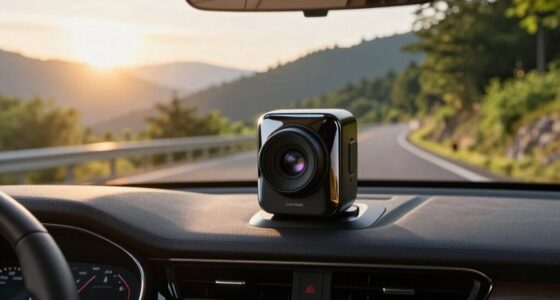
A dual-channel dash cam with buffered parking mode records the road ahead and behind, while capturing footage from just before a parking incident—not only after impact. My best overall pick is the VIOFO A229 Plus, a strong choice for buyers who prioritize clear two-camera coverage and useful parking protection. The VIOFO A129 Pro Duo stands out for drivers who favor 4K front recording, while the WANLIPO A13 and Affver A4 offer high-resolution front-and-rear specifications with included storage. The main tradeoffs are parking-mode implementation, wiring and power needs, and whether to favor higher front resolution or balanced coverage. Read on for the full breakdown of how these seven options differ and which fits your car and priorities.

Get business pricing on garage and car supplies
- Business-only prices and quantity discounts
- Tax-exempt purchasing
- Multiple users, one account, clear invoices
Complete the kit


Key Takeaways
- Buffered parking mode is the defining feature, but the product names and supplied details do not confirm the exact pre-event recording behavior or power requirements for every model; verify both before buying.
- VIOFO A229 Plus is the roundup’s overall pick for buyers prioritizing a balanced front-and-rear setup over a front-camera resolution race.
- VIOFO A129 Pro Duo and ROVE R2-4K are the alternatives to compare when front-camera 4K recording is a leading priority, though resolution alone does not establish rear-camera quality or parking capability.
- WANLIPO A13 and Affver A4 list 4K front and 2.5K rear recording; Affver specifies WiFi 6, while the WANLIPO listing includes a 64GB card and 5GHz WiFi.
- The two WANLIPO A13 listings appear closely related, so check the exact package and specifications rather than assuming they are distinct models with different parking features.
| WANLIPO A13 Front and Rear Dual Channel Dash Cam – 4K Front, 2.5K Rear, 5GHz WiFi, GPS, 64GB Card, 2.0″ IPS Screen, G‑Sensor, Loop Recording, 170° Wide Angle, Night Vision, Parking Mode |  | Best for Ready-to-Use Setup | Front resolution: 4K (3840×2160) | Rear resolution: 2.5K | Field of view: 170° front; 120° rear | VIEW ON AMAZON | See Our Full Breakdown |
| ROVE R2-4K Dual Dash Cam Front and Rear |  | Best for Low-Light Recording | Front resolution: Upscaled 4K; native 2.5K QHD | Rear resolution: 1080P Full HD | Image sensor: Sony STARVIS 2 IMX675 | VIEW ON AMAZON | See Our Full Breakdown |
| 4K Dual Channel Dash Cam Front and Rear with Starlight Night Vision |  | Best for 4K Front-and-Rear Detail | Front and rear resolution: 4K (3840×2160) each | Field of view: 170° front; 150° rear | Aperture: f/1.5 | VIEW ON AMAZON | See Our Full Breakdown |
| VIOFO A229 Plus 2K Front and Rear Dash Cam |  | Best for Buffered Parking Mode | Front and rear resolution: 1440P (2K) each | Image sensors: Two Sony STARVIS 2 IMX675 sensors | HDR: Front and rear HDR | VIEW ON AMAZON | See Our Full Breakdown |
| Affver A4 Dual Dash Cam (4K Front / 2.5K Rear) with WiFi 6, GPS, and 64GB Card |  | Best for a Large Built-In Display | Front resolution: 4K UHD (2160P) | Rear resolution: 2.5K | Field of view: 160° front; 155° rear | VIEW ON AMAZON | See Our Full Breakdown |
| VIOFO A129 Pro Duo 4K Dual Dash Cam |  | Best for Front-Camera Detail | Front resolution: 4K (3840 x 2160) at 30fps or 2K at 60fps | Rear resolution: 1080p | Front sensor: 8MP Sony IMX317 | VIEW ON AMAZON | See Our Full Breakdown |
| WANLIPO A13 4K Dual Channel Dash Cam (Front & Rear) |  | Best for Included Storage | Front resolution: 4K (3840 x 2160) | Rear resolution: 1080p | Field of view: 170° front, 120° rear | VIEW ON AMAZON | See Our Full Breakdown |
| dual channel dash cam with buffered parking mode | Front resolution | Rear resolution | Field of view | Included storage |
|---|---|---|---|---|
| WANLIPO A13 Front and Rear Dua | 4K (3840×2160) | 2.5K | 170° front; 120° rear | 64GB microSD card |
| ROVE R2-4K Dual Dash Cam Front | Upscaled 4K; native 2.5K QHD | 1080P Full HD | 150° front; 140° rear | 128GB microSD card; supports up to 1TB |
| 4K Dual Channel Dash Cam Front | — | — | 170° front; 150° rear | 128GB microSD card |
| VIOFO A229 Plus 2K Front and R | — | — | — | — |
| Affver A4 Dual Dash Cam | 4K UHD (2160P) | 2.5K | 160° front; 155° rear | 64GB card |
| VIOFO A129 Pro Duo 4K Dual Das | 4K (3840 x 2160) at 30fps or 2K at 60fps | 1080p | — | — |
| WANLIPO A13 4K Dual Channel Da | 4K (3840 x 2160) | 1080p | 170° front, 120° rear | — |
More Details on Our Top Picks
WANLIPO A13 Front and Rear Dual Channel Dash Cam – 4K Front, 2.5K Rear, 5GHz WiFi, GPS, 64GB Card, 2.0″ IPS Screen, G‑Sensor, Loop Recording, 170° Wide Angle, Night Vision, Parking Mode
The WANLIPO A13 is a practical pick if I want 4K front and 2.5K rear recording without sourcing a memory card separately: a 64GB microSD card is included, and loop recording handles ongoing capture. Its built-in GPS adds route and speed data, while 5GHz Wi-Fi can transfer clips at up to 8MB/s. Compared with the Affver A4, the WANLIPO has a smaller 2.0-inch screen and narrower rear coverage, but its included card and broad 170-degree front view make setup straightforward. The title lists parking mode, yet a separate hardwire kit is required, so it is not ready for buffered, always-on parking surveillance from the box. The rear camera also records at a lower resolution than the front, and some app features require a paid membership.
Pros:- Records 4K front and 2.5K rear video.
- Includes a 64GB microSD card and loop recording.
- Built-in GPS logs route, speed, and location.
- 5GHz Wi-Fi supports downloads up to 8MB/s.
Cons:- Parking mode requires a separately purchased hardwire kit.
- The rear camera’s 2.5K resolution is lower than the front’s 4K.
- Some advanced app features require a paid membership.
Best for: Drivers who want high-resolution front and rear recording, GPS, and an included memory card for a simpler initial setup.
Not ideal for: Drivers prioritizing buffered parking protection without buying extra hardware, or those wanting a large display and matching front-rear resolution.
- Front resolution:4K (3840×2160)
- Rear resolution:2.5K
- Field of view:170° front; 120° rear
- Screen:2.0-inch IPS
- Wi-Fi:5GHz / 2.4GHz; up to 8MB/s download speed on 5GHz
- GPS:Built-in
- Frame rate:30 FPS
- Included storage:64GB microSD card
Our verdict“I’d choose the WANLIPO A13 for high-resolution recording and an included card, but not if buffered parking coverage without extra wiring is the priority.”
ROVE R2-4K Dual Dash Cam Front and Rear
The ROVE R2-4K is the stronger fit for drivers who put nighttime image capture ahead of matching resolution across both cameras. Its Sony STARVIS 2 IMX675 sensor, F1.5 front aperture, and F1.8 rear aperture are aimed at preserving detail in dim conditions, and the 128GB card gives it more included storage than the WANLIPO A13 or Affver A4. One distinction matters: the front image is upscaled 4K from native 2.5K, while the rear records at 1080P. That makes it less suited to buyers seeking true 4K front footage or a detailed rear view, such as the dual-4K option in this lineup. Parking recording also needs a separate hardwire kit, so the included card makes setup easier but does not provide buffered parking coverage by itself.
Pros:- Sony STARVIS 2 sensor is designed for improved low-light capture.
- Includes a 128GB microSD card.
- Built-in GPS records speed and location data.
- 5.8GHz Wi-Fi supports quick app-based video transfers.
Cons:- Front 4K footage is upscaled from native 2.5K.
- Rear camera records at 1080P, below the resolution of several alternatives.
- A separate hardwire kit is required for 24/7 parking mode.
Best for: Drivers who regularly travel at night and want a larger included memory card with GPS and dual-camera recording.
Not ideal for: Buyers who want native 4K front footage, higher-resolution rear recording, or buffered parking mode without a separate hardwire kit.
- Front resolution:Upscaled 4K; native 2.5K QHD
- Rear resolution:1080P Full HD
- Image sensor:Sony STARVIS 2 IMX675
- Aperture:F1.5 front; F1.8 rear
- Field of view:150° front; 140° rear
- Display:3-inch IPS
- Wi-Fi:Dual-band 5.8GHz / 2.4GHz
- Included storage:128GB microSD card; supports up to 1TB
Our verdict“I’d pick the ROVE for its low-light focus and included 128GB card, provided its upscaled front resolution and 1080P rear view meet my needs.”
4K Dual Channel Dash Cam Front and Rear with Starlight Night Vision
This model’s defining advantage is 4K recording on both channels, a clear step up in rear-camera resolution from the ROVE R2-4K and a different approach from the front-focused resolution split on the WANLIPO A13. A 170° front view and 150° rear view capture broad areas around the vehicle, while the f/1.5 aperture and starlight sensor target low-light footage. It also includes a 128GB card and built-in GPS. For this roundup, though, resolution alone does not settle the parking question: 24/7 parking mode needs a separate hardwiring kit, and the supplied information does not specify a buffered pre-event recording interval. At 25fps, it also records at a lower frame rate than the WANLIPO A13’s stated 30fps. Storage support is described inconsistently as 512GB and 1TB.
Pros:- Records 4K video from both front and rear cameras.
- Wide 170° front and 150° rear fields of view.
- f/1.5 aperture and starlight sensor target low-light recording.
- Includes a 128GB microSD card and built-in GPS.
Cons:- A separate hardwiring kit is required for 24/7 parking mode.
- The listed 25fps frame rate is lower than the WANLIPO A13’s 30fps.
- Maximum supported storage is stated inconsistently as 512GB and 1TB.
Best for: Drivers who want 4K detail from both front and rear cameras and are willing to add hardwiring for parking use.
Not ideal for: Drivers who need a confirmed buffered pre-event parking feature, higher frame rates, or unambiguous maximum storage specifications.
- Front and rear resolution:4K (3840×2160) each
- Field of view:170° front; 150° rear
- Aperture:f/1.5
- Frame rate:25fps
- Display:3-inch IPS
- Connectivity:Dual-band Wi-Fi (2.4GHz / 5.8GHz), USB
- Included storage:128GB microSD card
- Parking power:Hardwiring kit required; sold separately
Our verdict“I’d choose this model for 4K detail from both cameras, but I’d confirm its buffered parking behavior and storage limit before buying.”
VIOFO A229 Plus 2K Front and Rear Dash Cam
The VIOFO A229 Plus is the most directly suited to this roundup’s parking-mode focus: it lists buffered event recording with 15 seconds before and 30 seconds after an event. That pre-event footage can show what led to an impact, rather than recording only what followed. Its three parking modes also give more choice than the WANLIPO A13 and ROVE R2-4K, whose parking functions require separate hardwiring and lack a stated buffered interval in the supplied details. The tradeoff is resolution: both VIOFO channels record at 1440P, below the 4K options here. Dual STARVIS 2 sensors and front-and-rear HDR are aimed at useful detail in difficult light, but 60fps front recording is unavailable with HDR enabled. The HK4 cable and microSD card are sold separately.
Pros:- Buffered parking events include 15 seconds before and 30 seconds after detection.
- Offers auto event detection, time-lapse, and low-bitrate parking modes.
- Dual Sony STARVIS 2 sensors and front-and-rear HDR.
- Voice control and GPS support across four satellite systems.
Cons:- Both cameras record at 1440P rather than 4K.
- HK4 hardwire cable is required for parking modes and sold separately.
- MicroSD card is not included, and HDR disables 60fps front recording.
Best for: Drivers who prioritize documented pre-event parking footage and want multiple parking modes for a hardwired installation.
Not ideal for: Buyers who want 4K recording or a ready-to-use package with the memory card and parking hardwire cable included.
- Front and rear resolution:1440P (2K) each
- Image sensors:Two Sony STARVIS 2 IMX675 sensors
- HDR:Front and rear HDR
- Parking modes:Auto event detection with buffered recording, time-lapse, and low bitrate
- Buffered event recording:15 seconds before and 30 seconds after an event
- GPS:GPS, BeiDou, Galileo, and GLONASS
- Wi-Fi:5GHz
- Required parking accessory:HK4 hardwire cable, sold separately
Our verdict“I’d choose the VIOFO A229 Plus when confirmed buffered parking footage matters more than 4K resolution or an all-in-one package.”
Affver A4 Dual Dash Cam (4K Front / 2.5K Rear) with WiFi 6, GPS, and 64GB Card
The Affver A4 suits drivers who want to review footage on the camera itself: its 3.59-inch IPS screen is substantially larger than the WANLIPO A13’s 2.0-inch display. It pairs 4K front and 2.5K rear video with a 160° front and 155° rear view, built-in GPS, and a 64GB card. Wi-Fi 6 and the included car charger with an extra USB port add convenience for transfers and installation. Against the VIOFO A229 Plus, the Affver offers higher stated recording resolution, but the VIOFO is the clearer parking-focused choice because it specifies a 15-second pre-event buffer and three parking modes. The Affver’s details do not confirm buffered parking recording or specify the hardwire requirements, so I would not select it solely for that feature. GPS playback also needs the app or PC player.
Pros:- Records 4K front and 2.5K rear video.
- Large 3.59-inch IPS display makes on-device viewing easier than on the WANLIPO A13.
- Includes a 64GB card and a car charger with an extra USB port.
- Wi-Fi 6 and F1.5 aperture support fast transfers and low-light capture.
Cons:- Product details do not specify buffered parking recording or its power requirements.
- Full GPS playback features require a smartphone app or PC player.
- Installation may require careful wiring management.
Best for: Drivers who prefer a larger on-camera screen, high-resolution front and rear video, and an included memory card.
Not ideal for: Buyers choosing primarily for buffered parking mode, or those who want to use GPS playback without an app or computer player.
- Front resolution:4K UHD (2160P)
- Rear resolution:2.5K
- Field of view:160° front; 155° rear
- Display:3.59-inch IPS
- Connectivity:5GHz Wi-Fi 6
- Aperture:F1.5
- Included storage:64GB card
- Warranty:24 months
Our verdict“I’d choose the Affver A4 for its large display and high-resolution recording, but the VIOFO A229 Plus is the safer pick for documented buffered parking mode.”
VIOFO A129 Pro Duo 4K Dual Dash Cam
The VIOFO A129 Pro Duo is the clearest fit for drivers who want buffered parking footage without giving up high detail on the road: its front camera records 4K at 30fps, while the rear captures 1080p. Buffered parking mode records before and after a detected event, giving a parked-car incident more context than a clip that starts only after impact. Compared with the WANLIPO A13, VIOFO specifies its front and rear sensors and offers 2K front recording at 60fps as an alternative, but WANLIPO includes a 64GB card while this VIOFO requires a separate microSD card. Parking use also needs a separately purchased hardwire kit, and the optional Bluetooth remote adds another accessory. Its detail-first approach suits drivers who will supply the power and storage setup; buyers seeking a ready-to-run kit should look elsewhere.
Pros:- Front camera records true 4K at 30fps, with a 2K at 60fps option.
- Buffered parking mode captures footage before and after a detected event.
- F1.8 front lens and WDR support low-light recording.
- Dual-band Wi-Fi supports 2.4GHz and 5GHz connections.
Cons:- A separate hardwire kit is required to use parking mode.
- MicroSD card is not included.
- Bluetooth remote control is an optional accessory.
Best for: Drivers who prioritize detailed front-camera evidence and are willing to add a microSD card and hardwire kit for buffered parking recording.
Not ideal for: Buyers who want parking mode and recording storage ready to use from the box, since the hardwire kit and microSD card are separate.
- Front resolution:4K (3840 x 2160) at 30fps or 2K at 60fps
- Rear resolution:1080p
- Front sensor:8MP Sony IMX317
- Rear sensor:Sony IMX291
- Lens aperture:F1.8
- Connectivity:Dual-band Wi-Fi, 2.4GHz and 5GHz
- Parking and recording features:Buffered parking mode, G-sensor, motion detection, WDR, loop recording
- Storage:MicroSD card required; not included
Our verdict“Choose the VIOFO A129 Pro Duo if front-camera detail and buffered parking capture matter more to you than included storage and accessories.”
WANLIPO A13 4K Dual Channel Dash Cam (Front & Rear)
The WANLIPO A13 makes a more accessible starting point for dual-channel recording: it includes a 64GB SD card, a 2-inch IPS screen, and 5GHz Wi-Fi, so basic recording and app access do not depend on buying storage separately. Its 4K front and 1080p rear cameras pair with wide stated fields of view—170° front and 120° rear—to cover a broad area, while the G-sensor locks collision footage against loop-recording overwrite. Compared with the VIOFO A129 Pro Duo, the A13 is easier to set up for everyday recording, but its description lists 24-hour parking monitoring rather than explicitly describing buffered pre-event capture. That distinction matters for this roundup: confirm the parking mode’s trigger behavior before choosing it for incident evidence. A hardwire kit is also separate, and some app features require a paid membership.
Pros:- Includes a 64GB SD card for recording without a separate initial storage purchase.
- Records 4K front and 1080p rear, with stated 170° and 120° fields of view.
- 5GHz Wi-Fi supports app control through Viidure.
- G-sensor locks footage when a collision is detected.
Cons:- Parking monitoring requires a separately purchased hardwire kit.
- The supplied description does not confirm buffered pre-event recording.
- Some advanced app features require a paid VIP membership.
Best for: Drivers who want a 4K-front, 1080p-rear system with included storage, an onboard screen, and straightforward app access for everyday driving.
Not ideal for: Buyers specifically seeking confirmed buffered pre-event parking clips, or those who want parking power hardware included.
- Front resolution:4K (3840 x 2160)
- Rear resolution:1080p
- Field of view:170° front, 120° rear
- Connectivity and app:5GHz Wi-Fi; Viidure app for iOS and Android
- Display:2.0-inch IPS screen
- Lens:F1.6 aperture, 6-layer optical lens
- Storage:64GB SD card included
- Recording features:Loop recording, G-sensor, WDR, night vision, parking mode
- Warranty:1 year
Our verdict“Choose the WANLIPO A13 for included storage and convenient daily recording, but pick a model with clearly specified buffered capture if pre-event parking footage is your priority.”

How We Picked
I ranked these cameras around the actual search need: two-camera coverage with useful buffered parking recording. I weighed whether the available product information clearly identifies parking-mode behavior, then compared stated front and rear resolutions, connectivity, included storage, and setup-relevant features. A high resolution can help capture detail, but it cannot substitute for confirmed pre-event recording or suitable power wiring when a vehicle is parked.
The VIOFO A229 Plus leads as the balanced overall choice, while the A129 Pro Duo and ROVE R2-4K suit buyers who put more weight on 4K front recording. WANLIPO A13 and Affver A4 rank as specification-rich alternatives, but their listed features alone do not prove buffered parking performance. The remaining listings offer less detail in the supplied names, so I place them lower rather than treating missing information as evidence of weaker performance. Before purchase, confirm each exact model’s buffer duration, trigger modes, hardwire requirements, and included accessories.
Factors to Consider When Choosing Dual Channel Dash Cam With Buffered Parking Mode
Choosing among these cameras takes more than comparing resolution figures. I would first confirm that a model’s parking mode captures footage before an event, then check how the camera gets power while the car is off and whether its two channels suit the way you drive.
Confirm What Buffered Parking Mode Actually Records
The phrase buffered parking mode should mean the camera retains footage from before a trigger, but product listings can use parking terminology without explaining the recording sequence. Look for explicit details about how many seconds are saved before and after motion or an impact. Ask whether buffered recording works on both front and rear channels, or only one. Do not assume that a basic impact-triggered clip includes pre-event footage. If the listing does not spell this out, check the manual or contact the seller before choosing the camera.
Plan for Power While the Car Is Parked
Parking recording usually needs a power source after the ignition is off, which can mean a compatible hardwire kit or an external battery. Check whether the kit is included, sold separately, or not specified, and confirm it supports the camera’s parking modes. A low-voltage cutoff can help protect the car battery, but it does not replace checking compatibility or setting a sensible cutoff level. Drivers who park for long periods may need to weigh battery drain against shorter recording windows. Include installation effort in your decision, not just the camera’s headline features.
Balance Front Resolution Against Rear Coverage
Front resolution is only one part of useful evidence; rear-camera clarity, exposure, and the ability to read detail in changing light matter too. A 4K front camera paired with a lower-resolution rear unit may suit drivers who mainly need forward footage, while balanced channels can make more sense for frequent highway or city driving. Compare the stated resolution of both cameras rather than relying on a product name that emphasizes only the front. Night performance also depends on sensor and image processing details that a resolution label cannot show. Prioritize the channel most likely to document the incidents you are concerned about, without ignoring the other view.
Check Storage, Loop Recording, and Clip Retention
Buffered events and two-camera recording can fill a memory card faster than a single front camera. Check the supported card capacity, whether a card is included, and whether the camera requires a specific card type or speed. Loop recording overwrites older footage when storage fills, so important clips may need to be saved or transferred promptly. An included 64GB card is convenient, but it may not provide as much history as a driver expects when recording continuously. If parked clips matter most, ask how the camera protects triggered files from routine overwrite.
Treat Connectivity as a Convenience, Not a Substitute for Footage
WiFi and a companion app can make it easier to review or transfer clips without removing the card, but connection speed and app support vary. Features such as 5GHz WiFi or WiFi 6 may help with transfers on compatible devices; they do not improve the recorded image by themselves. GPS can add location and speed data when enabled, which may help with incident records but may not suit every driver’s privacy preferences. Check whether a phone connection interrupts recording or requires the car to be nearby. Choose connectivity around how you actually retrieve footage, rather than treating a newer wireless label as proof of better parking protection.
Frequently Asked Questions
How can I tell whether a dash cam really has buffered parking mode?
Look for a clear description of pre-event recording, including what triggers a clip and how much footage is saved before the trigger. A listing that only says “parking mode” may refer to impact detection or time-lapse recording without a buffer. Check whether the feature works on both cameras and whether it needs a hardwire kit or another accessory. If those details are missing, consult the model’s manual or ask the seller before purchase. For this roundup, the supplied names do not confirm buffer behavior for every model, so verification matters.
Can buffered parking recording drain my car battery?
It can draw power while the vehicle is off, with the amount depending on the camera, recording mode, and how long it stays active. A compatible hardwire kit with a low-voltage cutoff can stop recording when the vehicle battery reaches a set level, but you should confirm that the kit works with your car and camera. Drivers who leave a car parked for extended periods may prefer an external dash-cam battery, though that adds equipment and charging considerations. Check the camera’s standby behavior and cutoff settings before relying on overnight coverage. If you rarely need parked recording, switch the feature off when it is not useful.
Is a 4K front camera more useful than higher rear-camera resolution?
That depends on where you most need detail: a 4K front camera may help capture information ahead, while a clearer rear channel can matter for tailgating, rear-end collisions, or incidents in parking lots. Resolution labels do not tell the whole story, since lighting, sensor quality, lens angle, and compression also affect footage. Compare both channel specifications and seek sample clips from day and night conditions when available. In this lineup, the WANLIPO A13 and Affver A4 list 4K front and 2.5K rear, while other models emphasize different configurations. Choose based on likely incidents rather than the largest number on the box.
Do I need a hardwire kit to use parking mode?
Many cameras need a continuing power source to record after the ignition is off, and a hardwire kit is a common way to provide it. Some systems may support other power options, but compatibility and parking features vary by model. Confirm whether the kit is included, what wiring the installation needs, and whether it has a low-voltage cutoff. If you do not want to wire the car, ask whether an external battery or another supported power source can run the required mode. The camera’s parking-mode label alone does not confirm that it will record once the car is switched off.
Should I choose the WANLIPO A13 or the Affver A4 if both list 4K front and 2.5K rear?
Compare the exact package details and parking-mode documentation, not just the shared resolution figures. The Affver A4 listing specifies WiFi 6, while the WANLIPO A13 listing includes a 64GB card and 5GHz WiFi; those details may influence setup and clip transfer convenience. Neither set of listed features confirms buffer duration, hardwire-kit inclusion, or how parking triggers work. The roundup also includes two WANLIPO A13 names that appear closely related, so verify the precise model and included accessories. If buffered parking performance is your main reason for buying, select the option with the clearest written support for that feature.
Conclusion
For most buyers seeking a dual-channel camera with buffered parking protection, I would start with the VIOFO A229 Plus as the best overall choice, while confirming its exact parking-mode and power requirements before ordering. For a front-resolution priority, compare the VIOFO A129 Pro Duo and ROVE R2-4K; for value-oriented shoppers, the WANLIPO A13 or Affver A4 bring specified high-resolution channels and useful listed extras, though value depends on the final package and verified parking support. Beginners may prefer the option whose instructions, wiring needs, and included accessories are clearest, rather than the one with the longest feature list. The Affver A4 fits buyers interested in WiFi 6, while WANLIPO’s included card may appeal to those who want storage in the box. I would reserve a premium recommendation for the model that best matches your need for footage quality and has clearly documented buffered recording; no supplied listing details alone establish that distinction. Before choosing, verify buffer behavior, two-channel support, and off-ignition power compatibility for the exact model.
Halloween Picks
halloween
As an affiliate, we earn on qualifying purchases.