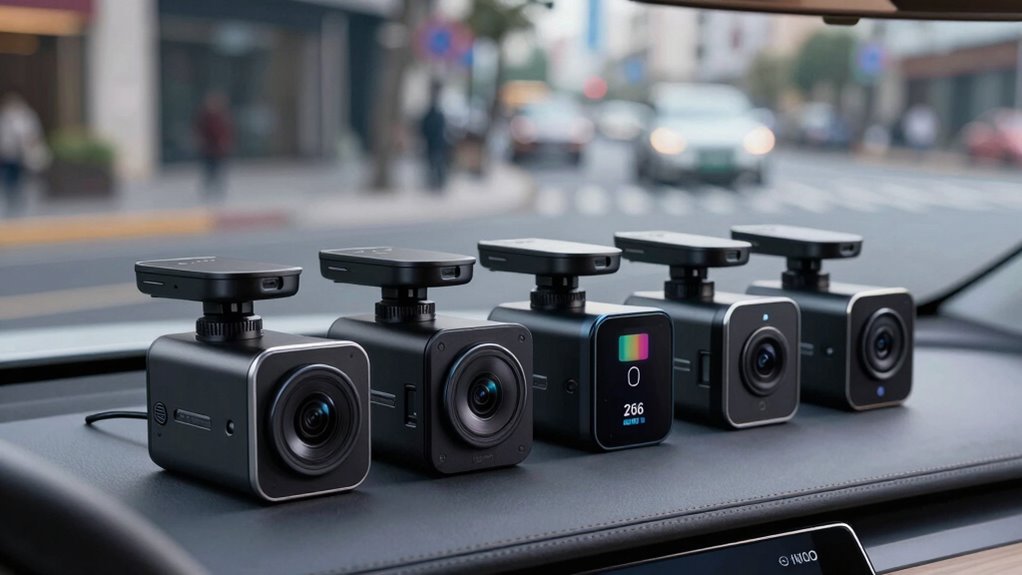
A flagship dash cam for evidence needs more than a high resolution: reliable detail, useful camera coverage, and footage that is easy to save and retrieve all matter. My best overall pick is the VIOFO A329S, which pairs 4K front recording with additional camera coverage, STARVIS 2 HDR, and Wi-Fi 6. The Vantrue N4 Pro S stands out for drivers who need cabin footage, while the BlackVue DR770X II is a strong option for a conventional front-and-rear setup. The main tradeoffs are coverage versus simplicity, extra cameras versus installation effort, and headline resolution versus dependable evidence handling. Read on for the full comparison and advice on matching a camera to the incidents you need to document.

Get business pricing on garage and car supplies
- Business-only prices and quantity discounts
- Tax-exempt purchasing
- Multiple users, one account, clear invoices
Complete the kit


Key Takeaways
- VIOFO A329S leads this lineup for buyers seeking high-resolution front and additional coverage, with STARVIS 2 HDR and Wi-Fi 6 adding useful tools for reviewing footage.
- The Vantrue N4 Pro S is the clearest fit for rideshare and other cabin-recording needs because its three-channel design captures inside the vehicle as well as the road.
- Four-channel models such as the ICESKY S03 and the 360 View system trade easier installation for broader coverage around the car.
- A 4K label alone does not settle evidence quality: night capture, camera placement, exposure handling, and a dependable way to save files all affect what a clip can show.
- The lineup spans feature-heavy systems and simpler front-and-rear cameras, so buyers should match channel count and installation complexity to the incidents they need to record.
| BlackVue DR770X II Dual Channel Dash Cam (Front & Rear) |  | Best for Cloud-Connected Parking Evidence | Video resolution: 1080p front and rear | Frame rate: 60fps front; 30fps rear | Image sensor: Sony STARVIS | VIEW ON AMAZON | See Our Full Breakdown |
| 360° Dash Cam Front and Inside 4K+2.5K, Dual Channel Car Dashcam |  | Best for Rideshare Cabin Evidence | Video resolution: 4K front; 2.5K cabin | Lens angles: 146 degrees front; 185 degrees cabin | Night vision: Infrared with WDR | VIEW ON AMAZON | See Our Full Breakdown |
| ICESKY S03 4K 4-Channel Dash Cam with GPS, WiFi 6, and 360° Coverage |  | Best for All-Sides Incident Coverage | Video resolution: 4K front; 1080p rear, left, and right | Channels: Four | Display: Listed as 3 inches; product data also contains a conflicting display-size entry | VIEW ON AMAZON | See Our Full Breakdown |
| Galphi 4K Dash Cam Front, 5GHz WiFi, 32GB Card Included, Mini Dashcam |  | Best Compact Front-Only Pick | Video resolution: 2160p 4K UHD | Frame rate: 30fps | Field of view: 160 degrees | VIEW ON AMAZON | See Our Full Breakdown |
| Vantrue S1 Pro Max 4K+4K Dash Cam with Dual STARVIS 2 Night Vision |  | Best Premium Front-and-Rear Detail | Video resolution: 4K front and 4K rear at 30fps | Image sensors: Dual STARVIS 2 IMX678 | Field of view: 155 degrees front; 160 degrees rear | VIEW ON AMAZON | See Our Full Breakdown |
| 360 View 4-Channel Dash Cam with Front, Rear, Left, and Right Cameras |  | Best for Side-Impact Coverage | Channels: 4 | Resolution: Full HD 1080P | Camera views: Front, rear, left, and right | VIEW ON AMAZON | See Our Full Breakdown |
| Dash Shield Pro 4K + 2K Dual Dash Cam Front & Rear |  | Best for High-Detail Front Evidence | Front resolution: 3840 × 2160 (4K) | Rear resolution: 2560 × 1440 (2K) | Frame rate: 30 FPS | VIEW ON AMAZON | See Our Full Breakdown |
| REDTIGER F7N TOUCH 4K Dash Cam Front and Rear |  | Best for Easy On-Device Operation | Front resolution: 4K UHD | Front sensor: STARVIS 2 | Front field of view: 170 degrees | VIEW ON AMAZON | See Our Full Breakdown |
| ROVE R2-4K Dual Dash Cam Front and Rear with Starvis 2 Sensor and Free 128GB Card |  | Best for GPS-Tagged Footage and Storage Flexibility | Front resolution: 2.5K upscaled to 4K (2160P) | Rear resolution: 1080P | Sensor: Sony STARVIS 2 IMX675, 5MP | VIEW ON AMAZON | See Our Full Breakdown |
| 4K Dash Cam Front and Rear, Full HD 3 Channel Dashcam, Free 128GB Card |  | Best for Cabin-Recording Work and Family Vehicles | Channels: 3 | Video resolution: 4K front, 1080P rear and cabin | Field of view: 170 degrees front; 165 degrees rear and cabin | VIEW ON AMAZON | See Our Full Breakdown |
| VIOFO A329S 4K+2K+2K Dash Cam with STARVIS 2 HDR, Wi-Fi 6, GPS, CPL Filter |  | Best for Multi-Angle Evidence | Video resolution: 4K front, 2K interior, 2K rear | Lens angle: 210° fisheye | Sensors: STARVIS 2 IMX678 front; IMX675 rear and cabin | VIEW ON AMAZON | See Our Full Breakdown |
| 70mai A810 Lite 4K Dash Cam Front and Rear, Wi-Fi 6, GPS, Night Vision, Parking Mode, Voice Control |  | Best for Straightforward Daily Coverage | Resolution: 4K front and 1080P rear | Wi-Fi: Wi-Fi 6, 5GHz | Night vision: HDR with F1.55 aperture | VIEW ON AMAZON | See Our Full Breakdown |
| 4K+4K Dual Dash Cam Front and Rear, Free 128GB Card, Starlight Night Vision |  | Best for Matched Front-and-Rear Resolution | Video resolution: 4K front and 4K rear | Frame rate: 25fps | Field of view: 170° front; rear listed as 150° and 160° in supplied details | VIEW ON AMAZON | See Our Full Breakdown |
| Vantrue S1 Pro Max 4K+2.5K Dash Cam Front and Rear |  | Best for High-Detail Two-Camera Evidence | Resolution: 4K front and 2.5K rear | Frame rate: 30fps | Field of view: 155° | VIEW ON AMAZON | See Our Full Breakdown |
| Vantrue N4 Pro S 4K 3-Channel Dash Cam with Triple STARVIS 2 Sensors |  | Best for Three-Channel Night Evidence | Video resolution: 4K front, 2.5K interior, and 1080P rear at 30fps | Field of view: 155° front, 160° interior, and 165° rear | Sensors: Triple STARVIS 2 IMX678 | VIEW ON AMAZON | See Our Full Breakdown |
| flagship dash cam for evidence | Connectivity | Video resolution | Field of view | Storage |
|---|---|---|---|---|
| BlackVue DR770X II Dual Channe | Wi-Fi, USB-C, cloud connectivity | 1080p front and rear | 120 degrees | 64GB microSD card included; supports up to 1TB |
| 360° Dash Cam Front and Inside | Wi-Fi | 4K front; 2.5K cabin | — | 32GB included; supports up to 512GB |
| ICESKY S03 4K 4-Channel Dash C | Wi-Fi 6 at 5.8GHz; USB | 4K front; 1080p rear, left, and right | — | 128GB microSDXC included; supports up to 512GB |
| Galphi 4K Dash Cam Front | 5GHz Wi-Fi; app control | 2160p 4K UHD | 160 degrees | 32GB card included; supports up to 256GB |
| Vantrue S1 Pro Max 4K+4K Dash | 5G Wi-Fi, USB, GPS | 4K front and 4K rear at 30fps | 155 degrees front; 160 degrees rear | Supports up to 1TB microSD; card sold separately |
| 360 View 4-Channel Dash Cam wi | 5GHz Wi-Fi | — | — | — |
| Dash Shield Pro 4K + 2K Dual D | Wi-Fi and GPS | — | 100 degrees (real angle) | — |
| REDTIGER F7N TOUCH 4K Dash Cam | 5.8GHz Wi-Fi and GPS | — | — | — |
| ROVE R2-4K Dual Dash Cam Front | — | — | — | — |
| 4K Dash Cam Front and Rear | Wi-Fi and Bluetooth | 4K front, 1080P rear and cabin | 170 degrees front; 165 degrees rear and cabin | — |
| VIOFO A329S 4K+2K+2K Dash Cam | Wi-Fi 6 and Type-C | 4K front, 2K interior, 2K rear | — | Up to 4TB SSD and 512GB microSD |
| 70mai A810 Lite 4K Dash Cam Fr | — | — | — | — |
| 4K+4K Dual Dash Cam Front and | Dual-band Wi-Fi, 5GHz and 2.4GHz | 4K front and 4K rear | 170° front; rear listed as 150° and 160° in supplied details | — |
| Vantrue S1 Pro Max 4K+2.5K Das | — | — | 155° | Up to 1TB microSDXC |
| Vantrue N4 Pro S 4K 3-Channel | 5GHz Wi-Fi, USB, and GPS | 4K front, 2.5K interior, and 1080P rear at 30fps | 155° front, 160° interior, and 165° rear | Up to 1TB microSD |
More Details on Our Top Picks
BlackVue DR770X II Dual Channel Dash Cam (Front & Rear)
The BlackVue DR770X II is the best fit here for drivers who want front-and-rear coverage paired with remote access, rather than the highest resolution. Its 1080p front recording at 60fps captures motion smoothly, while the rear camera records at 30fps; Sony STARVIS sensors and parking surveillance support evidence gathering when the car is parked. Wi-Fi makes local playback easier, and cloud features add remote access, though live cloud uploading requires a separate LTE module. Compared with the Vantrue S1 Pro Max, this BlackVue gives up 4K detail at both ends but offers a more cloud-oriented parking setup. The tradeoff is additional investment in a hardwiring kit for full parking mode, plus larger storage if you want to use its 1TB capacity. I’d choose it for connected surveillance, not maximum plate detail.
Pros:- Sony STARVIS sensors support low-light recording at the front and rear.
- Front 60fps capture can render moving events more smoothly than 30fps footage.
- Wi-Fi and cloud connectivity simplify access to recorded clips.
- Parking surveillance includes time-lapse and motion detection.
Cons:- An LTE module is needed for real-time cloud uploads and is sold separately.
- A hardwiring kit is required for full 24/7 parking mode.
- The included 64GB card is smaller than the camera’s 1TB supported capacity.
Best for: Drivers who park in shared or exposed areas and want front-and-rear monitoring with Wi-Fi and optional remote cloud access.
Not ideal for: Buyers prioritizing 4K front-and-rear detail or out-of-the-box live cloud uploads; the camera records at 1080p and the LTE module and hardwiring kit are separate.
- Video resolution:1080p front and rear
- Frame rate:60fps front; 30fps rear
- Image sensor:Sony STARVIS
- Field of view:120 degrees
- Storage:64GB microSD card included; supports up to 1TB
- Connectivity:Wi-Fi, USB-C, cloud connectivity
- Evidence features:GPS, G-sensor, parking mode
- Dimensions:2.4 × 5.2 × 1.9 inches
Our verdict“Choose the DR770X II if connected front-and-rear parking surveillance matters more to you than 4K resolution.”
360° Dash Cam Front and Inside 4K+2.5K, Dual Channel Car Dashcam
For rideshare drivers, a clear account of what happened inside the cabin can matter as much as the road view. This camera records 4K in front and 2.5K inside, with a 185-degree cabin lens and infrared night vision aimed at capturing passenger activity in low light. Built-in GPS adds trip context, while Wi-Fi provides a way to access footage without relying solely on the camera itself. Compared with the ICESKY S03, it offers higher-resolution interior footage but covers the cabin rather than adding separate left and right exterior views. That makes it a more focused choice for passenger disputes, not full perimeter evidence. The 32GB included card is a starting point, and storage is capped at 512GB. Setup may also take more effort than a simple single-camera installation, though the supercapacitor suits temperature extremes.
Pros:- 4K front and 2.5K interior footage provide strong detail across both recording views.
- A 185-degree cabin lens captures a broad area of the passenger compartment.
- Infrared night vision with WDR supports cabin recording in low light.
- GPS, Wi-Fi, and a supercapacitor add trip context, easier access, and temperature resilience.
Cons:- The included 32GB card may fill quickly during frequent or long shifts.
- Storage support tops out at 512GB, below the 1TB capacity of the BlackVue DR770X II and Vantrue S1 Pro Max.
- Setup may be more involved for buyers seeking a simple plug-and-record installation.
Best for: Rideshare and taxi drivers who need detailed front-road and passenger-cabin footage, including at night.
Not ideal for: Drivers seeking rear-window or side-camera coverage; this dual-channel system records the front and cabin, not all sides of the vehicle.
- Video resolution:4K front; 2.5K cabin
- Lens angles:146 degrees front; 185 degrees cabin
- Night vision:Infrared with WDR
- Connectivity:Wi-Fi
- GPS:Built in
- Storage:32GB included; supports up to 512GB
- Power design:Supercapacitor
- Operating temperature:-22°F to 158°F
Our verdict“Pick this model if documenting passenger activity is a priority and you don’t need rear or side exterior cameras.”
ICESKY S03 4K 4-Channel Dash Cam with GPS, WiFi 6, and 360° Coverage
The ICESKY S03 prioritizes coverage breadth: it records 4K at the front and 1080p at the rear, left, and right, giving an incident record beyond the forward view. That makes it a stronger match than the 360° Dash Cam Front and Inside for drivers concerned about side impacts or activity around the vehicle; the 360° model instead gives the cabin a high-resolution view. The S03’s Wi-Fi 6 is rated for fast app downloads, and its included 128GB card gives buyers more room to start than the 32GB card bundled with the 360° camera. Side-camera IR lights are aimed at improving night coverage. The compromise is a more involved four-camera installation, and the hardwire kit for 24-hour parking mode is separate. The listing also conflicts on display size, so I would verify that detail before buying.
Pros:- Four simultaneous camera feeds record the front, rear, left, and right sides.
- 4K front recording is paired with 1080p coverage for the other three views.
- Wi-Fi 6 supports fast app-based clip downloads.
- A 128GB card is included, with support for up to 512GB.
Cons:- The hardwire kit needed for 24-hour parking mode is sold separately.
- The rear and side cameras record at 1080p rather than 4K.
- The listed display size is inconsistent, so buyers should confirm the specification.
Best for: Drivers who want a documented view of the road, rear, and both sides, including people who regularly park in busy areas.
Not ideal for: Buyers who want a straightforward two-camera install, higher-than-1080p rear and side footage, or confirmed display specifications.
- Video resolution:4K front; 1080p rear, left, and right
- Channels:Four
- Display:Listed as 3 inches; product data also contains a conflicting display-size entry
- Connectivity:Wi-Fi 6 at 5.8GHz; USB
- Storage:128GB microSDXC included; supports up to 512GB
- Night vision:Eight IR lights for side cameras
- GPS:Built in
- Parking mode:24-hour mode; hardwire kit sold separately
Our verdict“Choose the S03 when all-side coverage matters more than a simpler install or 4K recording from every camera.”
Galphi 4K Dash Cam Front, 5GHz WiFi, 32GB Card Included, Mini Dashcam
The Galphi 4K suits buyers who want a discreet forward-facing camera and don’t need footage from the cabin or rear window. Its 4K recording, 160-degree lens, and f/1.6 aperture are geared toward capturing road events, while 5GHz Wi-Fi lets drivers retrieve clips through an app. With no built-in screen, it keeps the windshield setup visually simple, but controls and playback depend on a phone. Compared with the BlackVue DR770X II, the Galphi offers higher front resolution in a compact, screen-free format, while the BlackVue adds a rear camera and more developed cloud-oriented features. The Galphi’s 32GB card is modest for continuous evidence recording, and parking mode requires a separate hardwire kit. Its single forward view is the main limit: side collisions and activity behind the vehicle may not be documented.
Pros:- 4K UHD front recording captures more detail than the BlackVue DR770X II’s 1080p front camera.
- A 160-degree field of view covers a broad area ahead of the vehicle.
- 5GHz Wi-Fi supports app-based video access and transfers.
- Screen-free design keeps the camera visually discreet.
Cons:- Records only the front, leaving rear, cabin, and side incidents uncovered.
- The 32GB included card may require frequent clip management; support tops out at 256GB.
- No built-in display means settings and playback rely on the app.
- A hardwire kit is not included for parking mode.
Best for: Drivers seeking a discreet front-only camera with 4K recording and app-based clip access.
Not ideal for: Buyers who need rear, cabin, or all-side evidence, or who want on-device controls and playback.
- Video resolution:2160p 4K UHD
- Frame rate:30fps
- Field of view:160 degrees
- Aperture:f/1.6
- Connectivity:5GHz Wi-Fi; app control
- Storage:32GB card included; supports up to 256GB
- Parking features:Parking mode, G-sensor, loop recording
- Mounting:Adhesive windshield mount
Our verdict“Choose the Galphi if you want a compact 4K forward view and can accept phone-only control and no rear coverage.”
Vantrue S1 Pro Max 4K+4K Dash Cam with Dual STARVIS 2 Night Vision
For buyers who want the strongest stated image detail at both ends of the car, the Vantrue S1 Pro Max stands out with 4K front and rear recording, Dual STARVIS 2 sensors, and PlatePix technology aimed at night-time plate clarity. Its 15-second buffered event recording can preserve footage from before an impact, giving an incident clip useful context rather than only the aftermath. Compared with the BlackVue DR770X II, it trades the BlackVue’s cloud-oriented parking approach for 4K rear footage and a larger 1TB storage ceiling. A supercapacitor also suits heat-prone vehicles, but this premium-detail setup has practical costs: neither the microSD card nor hardwire kit is included, and installation may take beginners up to two hours. I’d choose it for evidence quality, not the quickest or least involved setup.
Pros:- 4K recording at both front and rear offers more detail than the BlackVue DR770X II’s 1080p system.
- Dual STARVIS 2 sensors and PlatePix technology target improved low-light and license plate capture.
- Buffered event recording saves footage from 15 seconds before an incident.
- Supercapacitor power and support for up to 1TB of storage suit demanding use.
Cons:- The microSD card and hardwire kit are sold separately.
- Installation may take beginners up to two hours.
- Two-camera coverage does not document the cabin or vehicle sides.
Best for: Drivers who want high-resolution front-and-rear footage, with night detail and pre-event recording, and are prepared to install additional hardware.
Not ideal for: Buyers who need cabin or side-camera coverage, want included storage, or prefer a simple installation without a separate hardwire kit.
- Video resolution:4K front and 4K rear at 30fps
- Image sensors:Dual STARVIS 2 IMX678
- Field of view:155 degrees front; 160 degrees rear
- Aperture:f/1.8
- Connectivity:5G Wi-Fi, USB, GPS
- Power design:Supercapacitor; no battery
- Storage:Supports up to 1TB microSD; card sold separately
- Event recording:15-second buffered recording
- Screen and warranty:2-inch screen; 18-month warranty
Our verdict“Pick the S1 Pro Max if front-and-rear image detail and buffered incident footage outweigh the added installation and accessory work.”
360 View 4-Channel Dash Cam with Front, Rear, Left, and Right Cameras
For evidence that may involve more than the road ahead, this system records front, rear, left, and right views at once. That makes it a stronger fit for documenting side impacts or activity beside a parked vehicle than the forward-and-rear coverage of the Dash Shield Pro 4K + 2K. The tradeoff is resolution: all four feeds are 1080P, rather than a higher-resolution front view that may show more detail in a distant plate. Night vision and WDR support low-light recording, while the included 128GB card gives you room to start without an immediate storage purchase. Fast 5GHz Wi-Fi can make clips easier to retrieve, but GPS and parking mode need separate accessories; continuous parking coverage also requires the optional hardwire kit.
Pros:- Four simultaneous camera views cover front, rear, left, and right.
- WDR and night vision support recording in challenging light.
- Includes a 128GB memory card.
- 5GHz Wi-Fi supports wireless clip transfers.
Cons:- All four cameras record at 1080P, limiting detail compared with the 4K front cameras in the Dash Shield Pro and REDTIGER F7N TOUCH.
- GPS is optional rather than built in.
- Parking mode requires a separately purchased ACC hardwire kit.
Best for: Drivers who want evidence from both sides of the vehicle as well as the front and rear, especially those concerned about side impacts or incidents in tight parking areas.
Not ideal for: Drivers prioritizing maximum front-camera detail, built-in GPS, or ready-to-use parking surveillance, since the cameras record at 1080P and GPS and hardwire parking mode require separate accessories.
- Channels:4
- Resolution:Full HD 1080P
- Camera views:Front, rear, left, and right
- Connectivity:5GHz Wi-Fi
- Included storage:128GB card
- Power source:Supercapacitor
- Recording features:Night vision, WDR, loop recording, incident lock, and time-lapse
- Parking mode:Requires optional ACC hardwire kit
- Warranty:24 months
Our verdict“Choose this system if side-view evidence matters more to you than the higher front-camera resolution offered by dual-channel alternatives.”
Dash Shield Pro 4K + 2K Dual Dash Cam Front & Rear
The Dash Shield Pro puts its evidence case on 4K front and 2K rear recording, making it a better match for drivers who want detail from both directions than the 1080P rear cameras on the ROVE R2-4K Dual and REDTIGER F7N TOUCH. Built-in GPS and Wi-Fi also help attach location data to footage and access clips without removing the card. Its attorney-designed positioning is aimed at evidence use, though the supplied specs—not that positioning—are what buyers can compare directly. The included card is only 32GB, so frequent drivers may need more storage sooner than with the 128GB cards bundled with several alternatives. Parking protection is listed, but the product details do not specify whether a hardwire kit is included; the adhesive mount also calls for careful placement.
Pros:- 4K front and 2K rear recording provide higher stated resolution at both ends than 1080P-rear alternatives.
- Built-in GPS can add speed and location context to recordings.
- Wi-Fi allows smartphone access without removing the memory card.
- Includes a 3-inch IPS screen and supports MP4, MOV, and JPG formats.
Cons:- The included 32GB card provides less starting storage than the 128GB cards supplied with the ROVE and REDTIGER.
- Adhesive mounting takes careful positioning and may be less convenient to remove than a suction mount.
- Dual-channel coverage leaves side and cabin views undocumented.
Best for: Drivers who want high-resolution footage at both ends of the vehicle, built-in GPS, and app access for reviewing or sharing incident clips.
Not ideal for: Drivers who want a large included memory card or a four-sided view; the 32GB card is modest, and this dual-camera setup does not record the cabin or sides.
- Front resolution:3840 × 2160 (4K)
- Rear resolution:2560 × 1440 (2K)
- Frame rate:30 FPS
- Field of view:100 degrees (real angle)
- Display:3.0-inch IPS
- Connectivity:Wi-Fi and GPS
- Included storage:32GB
- Mounting:Adhesive mount; optional suction mount
- Power:12V car charger
Our verdict“Pick the Dash Shield Pro if detailed front-and-rear footage and built-in GPS matter more than extra camera angles or generous included storage.”
REDTIGER F7N TOUCH 4K Dash Cam Front and Rear
The F7N TOUCH gives drivers several ways to control recording and retrieve evidence: a touchscreen, voice commands, physical buttons, and 5.8GHz Wi-Fi. That is a more hands-on, accessible setup than the listed ROVE R2-4K Dual, whose feature set emphasizes app and voice guidance rather than a touchscreen. Its STARVIS 2 front sensor and 4K UHD recording target useful detail in front-facing clips, while the rear camera records at 1080P. A 128GB card is included, avoiding the small starting capacity of the Dash Shield Pro. The gap between front and rear resolution is the main evidence tradeoff, and 24-hour parking monitoring requires a separately purchased hardwire kit. GPS is built in for recorded context.
Pros:- 4K UHD front recording with a STARVIS 2 sensor.
- Touchscreen, voice control, and physical buttons provide flexible operation.
- Built-in GPS and 5.8GHz Wi-Fi support location context and wireless transfers.
- Includes a 128GB card.
Cons:- Rear camera records at 1080P, below the Dash Shield Pro’s stated 2K rear resolution.
- 24-hour parking monitoring needs a separate hardwire kit.
- Front and rear footage cover fewer directions than the four-channel 360 View system.
Best for: Drivers who want to review footage on the camera itself and value multiple control methods, 4K front recording, and built-in GPS.
Not ideal for: Drivers who need higher-resolution rear evidence, four-sided coverage, or parking surveillance without purchasing additional hardware.
- Front resolution:4K UHD
- Front sensor:STARVIS 2
- Front field of view:170 degrees
- Rear resolution:1080P FHD
- Rear field of view:140 degrees
- Connectivity:5.8GHz Wi-Fi and GPS
- Included storage:128GB card
- Controls:Touchscreen, voice control, and physical buttons
- Parking mode:G-sensor and time-lapse; requires separate hardwire kit
Our verdict“Choose the F7N TOUCH if simple on-device access and strong front-camera detail matter more than high-resolution rear footage or included parking hardware.”
ROVE R2-4K Dual Dash Cam Front and Rear with Starvis 2 Sensor and Free 128GB Card
The ROVE R2-4K Dual is a practical evidence pick for drivers who want location and speed data alongside front-and-rear footage. Built-in GPS adds those details to recordings, while the included 128GB card and support for cards up to 1TB give it more storage flexibility than the Dash Shield Pro’s 32GB starting card. Its front video is described as 2.5K upscaled to 4K, not native 4K, so buyers focused on native front resolution may prefer the Dash Shield Pro’s stated 4K capture. Rear video is 1080P, similar to the REDTIGER F7N TOUCH. Dual-band Wi-Fi supports transfers, and the feature set includes emergency video lock. Parking modes are available, but the required hardwire kit is sold separately, and setup may take more attention than a simpler camera.
Pros:- Built-in GPS can record speed, location, and compass information.
- Includes a 128GB microSD card and supports cards up to 1TB.
- Dual-band Wi-Fi supports wireless transfers up to 20 MB/s.
- Emergency video lock, G-sensor, and loop recording support incident clip retention.
Cons:- Front 4K output is upscaled from 2.5K rather than native 4K capture.
- Rear recording is 1080P, below the Dash Shield Pro’s 2K rear resolution.
- Parking mode requires a separately sold hardwire kit, and the feature set may take time to configure.
Best for: Drivers who want GPS-tagged clips, a generous included card, and the option to expand storage for frequent recording.
Not ideal for: Buyers who require native 4K front recording, higher-resolution rear footage, or parking mode without a separate hardwire-kit purchase.
- Front resolution:2.5K upscaled to 4K (2160P)
- Rear resolution:1080P
- Sensor:Sony STARVIS 2 IMX675, 5MP
- Aperture:F1.5 front / F1.8 rear
- Wi-Fi:Dual-band 5.8GHz and 2.4GHz
- GPS:Built-in; speed, location, and compass
- Included storage:128GB microSD
- Supported storage:Up to 1TB microSD
- Parking modes:Time-lapse, motion detection, and collision detection; hardwire kit required
Our verdict“Pick the ROVE if GPS context and expandable storage are higher priorities than native 4K capture or a sharper rear feed.”
4K Dash Cam Front and Rear, Full HD 3 Channel Dashcam, Free 128GB Card
This three-channel model adds a cabin camera to front and rear coverage, making it more suitable for documenting passengers or activity inside a vehicle than the dual-channel ROVE R2-4K. That added angle can matter to rideshare drivers and families, while 4K front recording keeps the forward view at higher resolution than the 1080P four-camera feeds of the 360 View system. The rear and cabin cameras record at 1080P, so the detail is not equal across all views. Built-in GPS records route, speed, location, and timestamp, and a 128GB card is included. The supplied description lists Wi-Fi and Bluetooth, but does not give transfer speeds. Setup may be less straightforward, parking mode needs a separate hardwire kit, and storage support tops out at 512GB.
Pros:- Three-channel recording captures front, rear, and cabin views.
- 4K front recording provides more stated resolution than the 1080P cameras in the 360 View system.
- Built-in GPS records route, speed, location, and timestamp.
- Includes a pre-installed 128GB card and supports storage up to 512GB.
Cons:- Rear and cabin video are 1080P rather than 4K.
- Parking mode requires a separately purchased hardwire kit.
- Setup may be more involved, and storage expansion is limited to 512GB.
Best for: Rideshare drivers, families, and commercial vehicle operators who need cabin footage alongside front and rear incident records.
Not ideal for: Drivers who only need road-facing evidence, want a simpler setup, or need storage expansion beyond 512GB.
- Channels:3
- Video resolution:4K front, 1080P rear and cabin
- Field of view:170 degrees front; 165 degrees rear and cabin
- Display:3.16 inches
- Included storage:Pre-installed 128GB card
- Supported storage:Up to 512GB
- Connectivity:Wi-Fi and Bluetooth
- GPS:Built-in; route, speed, location, and timestamp
- Night recording:Starlight-grade lens and HDR
Our verdict“Choose this three-channel camera if cabin evidence is part of your needs; skip it if you only want front-and-rear recording with a simpler setup.”
VIOFO A329S 4K+2K+2K Dash Cam with STARVIS 2 HDR, Wi-Fi 6, GPS, CPL Filter
I’d choose the VIOFO A329S when evidence needs to cover more than the road ahead: it records 4K front, 2K cabin, and 2K rear, giving it a broader set of views than the two-camera Vantrue S1 Pro Max. Its 210° fisheye cabin lens is especially useful for rideshare drivers who need passenger-area coverage, though that wide view is not the same as a dedicated side camera. STARVIS 2 sensors, a CPL filter, and GPS add useful support for low-light clips, glare reduction, and location context. Wi-Fi 6 helps move footage to a phone, while support for an SSD up to 4TB suits drivers who keep longer archives. The tradeoff is a more involved setup: storage and the parking-mode hardwire kit are separate, and the multiple connections may challenge first-time installers.
Pros:- Records front, cabin, and rear views at 4K, 2K, and 2K resolutions.
- STARVIS 2 sensors and a CPL filter support clearer low-light footage and reduced windshield glare.
- Wi-Fi 6, GPS, voice control, and impact detection add practical evidence-management features.
- Supports up to 4TB SSD storage for extended recording capacity.
Cons:- MicroSD card and SSD storage are not included.
- Parking mode requires a separately purchased hardwire kit.
- Three-camera wiring and feature setup can take more effort than a basic dual-channel system.
Best for: Rideshare drivers and frequent travelers who want front, cabin, and rear footage plus room for long recordings.
Not ideal for: Drivers who want a simple plug-in dual-camera kit or a ready-to-record package with storage and parking wiring included.
- Video resolution:4K front, 2K interior, 2K rear
- Lens angle:210° fisheye
- Sensors:STARVIS 2 IMX678 front; IMX675 rear and cabin
- Storage:Up to 4TB SSD and 512GB microSD
- Connectivity:Wi-Fi 6 and Type-C
- Evidence features:GPS, voice control, impact detection, and parking mode
- Glare control:CPL filter
Our verdict“Choose the A329S if you need detailed front, cabin, and rear records and are comfortable arranging storage and installation separately.”
70mai A810 Lite 4K Dash Cam Front and Rear, Wi-Fi 6, GPS, Night Vision, Parking Mode, Voice Control
The 70mai A810 Lite is the simpler front-and-rear choice here: its 4K front and 1080P rear recording prioritizes readable detail ahead without adding a cabin camera or a more involved three-channel setup. Compared with the VIOFO A329S, it gives up interior footage and higher rear resolution, but its compact design and supercapacitor power suit everyday drivers who want a less elaborate system. HDR night vision with an F1.55 aperture is intended to retain useful detail in dim conditions, while GPS and Wi-Fi 6 help connect clips to a route and transfer them to a phone. Its 24-hour parking mode needs a hardwire kit, and the supplied details note that setup can be complex despite the compact form. I’d skip it if evidence from inside the vehicle matters.
Pros:- 4K front recording captures more road detail than a front-and-rear setup limited to lower front resolution.
- HDR night vision and an F1.55 aperture are designed for low-light recording.
- Wi-Fi 6 and GPS support quick video access and route context.
- Supercapacitor power and a compact design suit a discreet daily installation.
Cons:- Rear recording is 1080P, below the 2K rear footage offered by the VIOFO A329S.
- Parking mode requires a separately purchased hardwire kit.
- Setup may be more involved than the compact design suggests.
Best for: Commuters seeking front-and-rear recording, GPS route context, and phone transfers without cabin-camera coverage.
Not ideal for: Rideshare drivers or owners who need interior footage, or buyers who want parking surveillance without separate hardwiring.
- Resolution:4K front and 1080P rear
- Wi-Fi:Wi-Fi 6, 5GHz
- Night vision:HDR with F1.55 aperture
- GPS:GPS, GLONASS, and BDS
- Parking mode:24-hour mode with G-sensor and time-lapse
- Power:Supercapacitor
- Warranty:18 months
Our verdict“Pick the A810 Lite for straightforward daily front-and-rear evidence, but choose a three-channel model if cabin footage matters.”
4K+4K Dual Dash Cam Front and Rear, Free 128GB Card, Starlight Night Vision
This dual camera’s defining evidence advantage is 4K recording at both ends; unlike the 70mai A810 Lite, it does not step down to 1080P at the rear. That can help preserve detail in rear-facing footage, though the listing specifies a 25fps frame rate, so the resolution is not the only factor when judging motion clarity. A 128GB card is included, which makes it more ready to record than the VIOFO A329S, whose storage is sold separately. The starlight sensor, F1.5 aperture, and WDR are intended to help in mixed or low light, while GPS and emergency video lock support evidence review. It lacks a cabin channel, and its 24-hour parking mode needs a separate hardwiring kit. I’d also verify the stated rear viewing angle: the supplied details list both 150° and 160°.
Pros:- Records 4K video from both the front and rear cameras.
- Includes a 128GB memory card, unlike the VIOFO A329S package described here.
- Starlight sensor, F1.5 aperture, and WDR support low-light and mixed-exposure recording.
- GPS, emergency video lock, and app access help with locating and saving clips.
Cons:- The listed 25fps rate is lower than the 30fps specified for the Vantrue S1 Pro Max.
- Parking mode requires a separately purchased hardwire kit.
- No interior camera is included, and the supplied rear-angle details conflict.
Best for: Drivers who want equal 4K resolution from front and rear cameras and prefer a memory card included in the package.
Not ideal for: Rideshare drivers needing cabin footage or owners who expect parking mode to work without separate hardwiring.
- Video resolution:4K front and 4K rear
- Frame rate:25fps
- Field of view:170° front; rear listed as 150° and 160° in supplied details
- Low-light features:Starlight-level sensor, F1.5 aperture, and WDR
- Connectivity:Dual-band Wi-Fi, 5GHz and 2.4GHz
- GPS:Built-in GPS route tracking and speed display
- Included storage:128GB memory card
- Parking mode:Time-lapse recording with collision-triggered locked clip; hardwire kit required
Our verdict“Choose this model if matched 4K front-and-rear footage and an included memory card matter more than cabin coverage or a higher listed frame rate.”
Vantrue S1 Pro Max 4K+2.5K Dash Cam Front and Rear
The Vantrue S1 Pro Max is a strong fit for buyers who want a sharper rear record than the 70mai A810 Lite provides without moving to a cabin-focused three-channel design. It records 4K front and 2.5K rear at 30fps, pairing useful detail at both ends with a 155° field of view. STARVIS 2 HDR night vision is aimed at preserving evidence in low light, while GPS, Wi-Fi, and voice control add route information and easier clip handling. Compared with the VIOFO A329S, this is a more focused two-camera option, but it cannot document the cabin and supports less storage. The 2-inch display keeps on-device viewing available, though it is small for reviewing fine details. No memory card is included, and the feature set plus parking modes may call for more setup than a basic recorder.
Pros:- Records 4K front and 2.5K rear footage at 30fps.
- STARVIS 2 HDR night vision supports low-light recording.
- GPS, Wi-Fi, voice control, and app or remote controls aid evidence access.
- Supercapacitor and multiple parking modes support a feature-rich installation.
Cons:- MicroSD card is not included.
- Maximum listed storage is 1TB, below the VIOFO A329S’s SSD capacity.
- The 2-inch display is small for checking fine details on the device.
Best for: Drivers who want high-resolution front and rear evidence, low-light support, and GPS without an interior camera.
Not ideal for: Rideshare drivers needing cabin footage or buyers who want included storage and a minimal setup.
- Resolution:4K front and 2.5K rear
- Frame rate:30fps
- Field of view:155°
- Night vision:STARVIS 2 HDR
- Storage:Up to 1TB microSDXC
- Display:2-inch LCD
- Connectivity and controls:Wi-Fi, USB, app, remote, and voice control
- Power and warranty:Supercapacitor; 18 months
Our verdict“Choose the S1 Pro Max for detailed front-and-rear footage with night-vision features, and look elsewhere if you need a cabin channel.”
Vantrue N4 Pro S 4K 3-Channel Dash Cam with Triple STARVIS 2 Sensors
For drivers who need a record from the road, cabin, and rear window, the Vantrue N4 Pro S offers a clear coverage advantage over the dual-channel Vantrue S1 Pro Max. Its 4K front, 2.5K interior, and 1080P rear streams use triple STARVIS 2 sensors, and the listed 360° rotating rear camera gives more flexibility in aiming that view. Night Vision 4.0 and the claimed license-plate recognition capability are aimed at difficult nighttime evidence; those claims do not remove the limits of distance, motion, or lighting. Buffered parking mode can capture activity around an event, but a separate hardwire kit is required. Triple-channel 4K-class recording also consumes storage quickly, and no memory card is included. I’d choose it for broad evidence coverage, not for a low-effort or low-storage setup.
Pros:- Captures front, interior, and rear views simultaneously.
- Triple STARVIS 2 sensors and Night Vision 4.0 target low-light detail.
- Buffered parking mode can preserve footage around detected events.
- Supercapacitor, GPS, voice control, and 5GHz Wi-Fi add useful operating and clip-management features.
Cons:- No memory card is included, and the three-channel footage creates high storage demands.
- Parking mode requires a separately purchased hardwire kit.
- The 1080P rear channel has lower resolution than the 2.5K interior and 4K front channels.
Best for: Rideshare operators and vehicle owners who need simultaneous road, cabin, and rear footage, including for parked-vehicle monitoring.
Not ideal for: Drivers who only need front-and-rear recording, want included storage, or prefer a simple installation with modest storage demands.
- Video resolution:4K front, 2.5K interior, and 1080P rear at 30fps
- Field of view:155° front, 160° interior, and 165° rear
- Sensors:Triple STARVIS 2 IMX678
- Storage:Up to 1TB microSD
- Connectivity:5GHz Wi-Fi, USB, and GPS
- Parking feature:Buffered parking mode
- Power:Supercapacitor
- Warranty:18 months
Our verdict“Pick the N4 Pro S when documenting the cabin and rear as well as the road is worth the extra storage and installation work.”

How We Picked
I ranked these cameras around how well their stated features support usable incident records: recording detail, front/rear/interior or side coverage, low-light features, GPS and connectivity tools, and the practicality of installation and file access. A camera may record at a high resolution, but that matters less if the view misses the relevant angle or the footage is awkward to locate and preserve. I also weighed included storage and controls where listed, since a dash cam is only useful as evidence when it is recording and its files can be retrieved.
The order reflects the balance between evidence coverage and everyday manageability, not resolution alone. The VIOFO A329S ranks first for its combination of 4K-plus multi-camera coverage and evidence-oriented imaging features; the Vantrue N4 Pro S and four-channel options suit more specialized coverage needs but call for more involved setups. Conventional dual-camera picks remain strong for drivers who want road coverage without adding cabin or side cameras. Product names and specifications are based on the supplied descriptions, so I do not treat unlisted performance details as established facts.
Factors to Consider When Choosing Flagship Dash Cam For Evidence
Choosing a dash cam for evidence starts with the events you need it to capture, then moves to how you will retrieve and preserve the recording. Use these broader checks to avoid paying for cameras you will not position or maintain well.
Match Camera Coverage to the Incident
Start by listing the angles that could matter: the road ahead, what happens behind the car, activity inside the cabin, or impacts along the sides. A front-and-rear system covers more than a front-only camera, while three- and four-channel setups add views at the cost of extra hardware and installation work. More cameras do not automatically mean a more useful record; poorly placed lenses can capture little of the relevant event. Check how each camera mounts and whether the placement will be obstructed by headrests, tint, or vehicle trim. If your main concern is a forward collision, a well-positioned dual setup may be more practical than a multi-camera system. Choose broader coverage when the added views address a specific risk, such as rideshare disputes or side impacts.
Treat Resolution as One Part of Evidence Quality
High resolution can preserve finer detail, but it does not guarantee that a plate or road sign will be legible in every clip. Motion, glare, darkness, lens angle, and exposure all shape the image that gets recorded. Features such as HDR and low-light sensors can help manage difficult lighting, but specifications alone cannot promise a clear result in every scene. Think about the conditions where you drive most: a bright daytime commute presents different challenges from unlit roads or underground parking. Compare resolution across all active channels, not just the front camera, since rear or interior footage may have different specifications. Prioritize a balanced system rather than choosing solely by the largest resolution number.
Plan for Storage and Fast File Retrieval
Evidence is only useful if the relevant clip has not been overwritten and can be accessed when needed. Check whether storage is included, what recording capacity the system supports, and how its loop recording behaves; an included card is convenient but may not be enough for every recording pattern. Wi-Fi can make phone access easier, while GPS can attach location and speed data when that information is useful to your account of an event. Decide how you will export and back up an important clip before you need to do it under pressure. Avoid leaving the only copy on the camera or card. A simple, repeatable file-saving routine can matter more than an extra feature you rarely use.
Account for Parking Recording and Power
Parking mode can record events while the vehicle is unattended, but it depends on the camera’s supported mode and a suitable power arrangement. Do not assume a dash cam can run indefinitely from the vehicle’s regular power outlet after the engine is off. Check whether hardwiring or another power accessory is required, and consider battery protection so recording does not leave the car unable to start. Installation quality matters too: loose cables and poorly aimed cameras can undermine coverage. If your priority is evidence from incidents while parked, confirm how the system detects an event and how it stores those files. If you mainly need driving footage, you may prefer a simpler setup and avoid added wiring.
Balance More Channels Against Setup Complexity
Each extra camera adds a view, but it can also add cables, mounting decisions, and more footage to review. A four-channel system makes sense when side coverage is a clear priority, while a dual-camera system is easier to place and manage for routine road recording. Before buying, consider the vehicle’s cabin layout, rear-window shape, and how difficult it will be to route wires cleanly. Touch controls, voice commands, or phone connectivity can simplify operation, but they do not replace checking that recording is active. If this is your first dash cam, a straightforward front-and-rear kit may be easier to install and maintain. Move to a more involved system only when its additional views solve a real coverage gap.
Choose Features That Support Your Record-Keeping Routine
GPS, wireless transfer, and voice controls can make a system easier to operate, but their value depends on how you handle footage. GPS data may help establish where and when a recording occurred, while wireless access can speed up reviewing a clip at the roadside. Neither feature replaces exporting and keeping an unedited copy of important footage. Check whether you can operate the camera without relying on an app, especially if phone access is inconvenient or connectivity is unreliable. Set a regular check for recording status, storage condition, and camera alignment. A modest feature set that you maintain consistently can serve an evidence-focused driver better than a more elaborate system left unchecked.
Frequently Asked Questions
Is a 4K front camera enough if I need evidence from both directions?
No. A 4K front camera records detail ahead, but it cannot document what happens behind the vehicle unless the system has a rear camera. For a rear impact or a dispute involving another car approaching from behind, a front-and-rear setup is a more suitable starting point. Check the resolution and placement of the rear camera rather than assuming it matches the front. If cabin or side incidents matter too, consider a three- or four-channel model and weigh the added installation work.
Should I choose a four-channel camera instead of a front-and-rear model?
Choose four channels when side views are likely to answer questions that front-and-rear cameras cannot, such as an incident beside the car or activity around a parked vehicle. The additional angles bring more cameras, wiring, placement decisions, and footage to review. A dual-channel system is often a cleaner fit when your main need is documenting the road ahead and impacts from behind. Think through the incidents you want recorded before paying in complexity for coverage you may not use. Confirm that your vehicle can accommodate the camera positions without blocked views.
What should I do immediately after a collision to preserve dash-cam footage?
Once it is safe, stop the recording from being overwritten by using the camera’s file-lock function if available, or by turning off the device when appropriate. Export the relevant clip to a phone or computer and keep a separate backup of the original file. Avoid editing or trimming the only copy, since an unaltered recording is easier to preserve as a record. Note the date, time, location, and any context that may help identify the clip later. Follow any instructions from your insurer or local authorities about submitting footage.
Do I need hardwiring for a dash cam to record while parked?
Often, parking recording needs a power source that remains available after the engine is off, and a hardwire kit may be required for that setup. The exact requirement depends on the camera’s parking features and the vehicle’s power outlets. Before relying on parking mode, check whether the camera supports event-triggered recording and how it manages the vehicle battery. If you do not want additional wiring, a standard driving-only setup may be simpler. Have an installation professional handle wiring if you are unsure about connecting equipment to the vehicle’s electrical system.
Does Wi-Fi or GPS make dash-cam footage more useful as evidence?
Both can help with handling footage, but neither makes a recording conclusive on its own. Wi-Fi may make it quicker to review or transfer a clip, while GPS can add location and speed information when supported and enabled. Video clarity, the camera’s angle, and whether the recording captures the full event still matter. Learn how to save a clip outside the camera before an incident occurs, and keep the original file intact. Check local rules and any relevant privacy requirements before recording or sharing footage.
Conclusion
For the best overall balance in this lineup, I recommend the VIOFO A329S to drivers who want 4K-plus multi-camera coverage and evidence-oriented imaging features. The ROVE R2-4K Dual is a practical value choice for buyers seeking a front-and-rear system with an included 128GB card, while the Vantrue S1 Pro Max 4K+4K is the premium-leaning pick for those prioritizing high-resolution front and rear recording. Beginners who want a familiar two-camera setup can start with the REDTIGER F7N TOUCH; its front-and-rear format is less involved than a cabin or four-channel system. For rideshare and cabin disputes, choose the Vantrue N4 Pro S; for side coverage, compare the four-channel ICESKY S03 and 360 View model. My final choice depends on the angles you need recorded and whether you are ready to install, power, and manage a multi-camera setup.
Halloween Picks
halloween
As an affiliate, we earn on qualifying purchases.