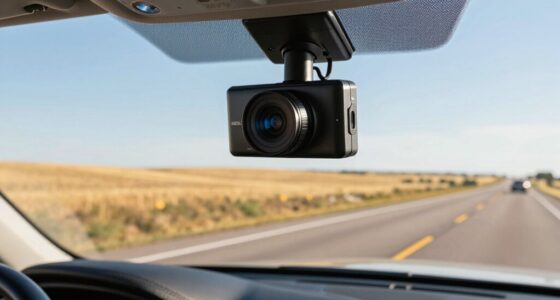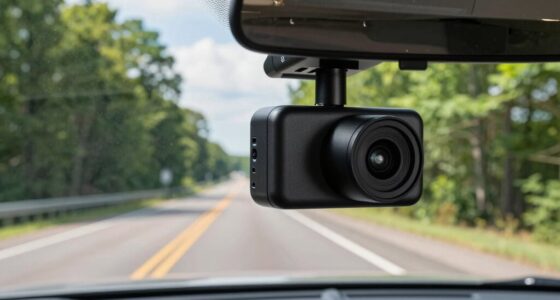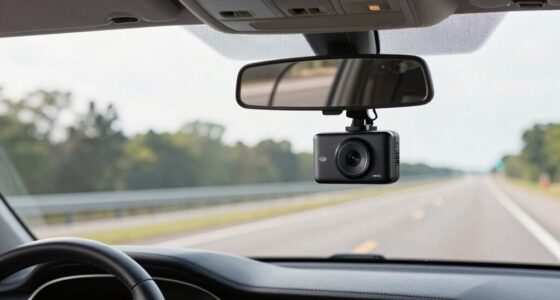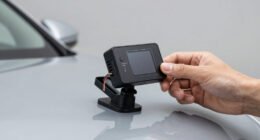

You can require cameras in workplace vehicles if you follow federal and state laws, respect employee privacy, and have clear policies in place. This includes informing employees about camera use, obtaining consent for audio recordings, and ensuring cameras don’t obstruct views or violate local regulations. Union agreements and data protections also matter. To keep everything lawful and fair, it’s essential to understand the rules, and there’s more you should know to get it right.
Key Takeaways
- Companies can require cameras in workplace vehicles if policies are transparent, lawful, and employees are informed and consent is obtained.
- Camera requirements must comply with federal and state laws, including privacy, wiretap, and union protections.
- Employers should clearly define the purpose, scope, and data use policies related to camera monitoring.
- Cameras can be mandated for safety and compliance, provided they do not violate employee privacy rights or contractual agreements.
- Proper documentation, notices, and adherence to legal standards are essential before implementing or requiring cameras.
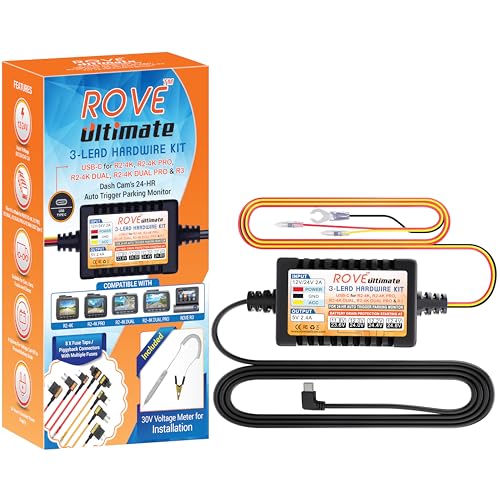
ROVE Ultimate Dash Cam Hardwire Kit with USB-C Port for R2-4K, R2-4K PRO, R2-4K Dual, R2-4K Dual PRO, and R3 Dash Camera Models, 24Hr Parking Monitoring Kit with Low Voltage Protection
【Compatible for ROVE R2-4K with USB-C Port, R2-4K PRO, R2-4K DUAL, R2-4K DUAL PRO, and R3 Dash Cam...
As an affiliate, we earn on qualifying purchases.
Legal Foundations for Dash Cam Use in the US

Understanding the legal foundations for dash cam use in the US is essential for ensuring compliance and protecting your business interests. While no federal law explicitly bans workplace video monitoring, laws regarding wiretapping and employee protections influence dash cam policies. Federal wiretap laws restrict audio recording without consent, especially in states requiring all-party consent, making audio capture riskier than video alone. The National Labor Relations Act limits surveillance that could interfere with union activities or concerted employee actions. For commercial fleets, FMCSA and DOT guidelines specify that dash cams must not obstruct driver view or interfere with vehicle operation. Legally obtained dash-cam footage is generally admissible in federal proceedings if chain-of-custody and consent requirements are met, reinforcing the importance of lawful recording practices. Legal considerations vary by state, and understanding these nuances is crucial for lawful deployment. Additionally, awareness of cryptocurrency market trends can inform strategic decisions in related industries, ensuring your business stays ahead in a rapidly evolving landscape. Recognizing vehicle safety regulations is also important to ensure dash cam use aligns with industry standards and legal requirements. Moreover, understanding privacy laws helps ensure that camera use respects employee rights and avoids potential legal issues. It is also important to stay informed about technological advances that could impact surveillance practices and legal compliance. Keeping up with state-specific legislation is vital, as regulations can differ significantly across jurisdictions.

REDTIGER F7N Dash Cam Hardwire Kit USB C Port, Dashboard Camera Car Charger Cable Kit 12V- 24V to 5V w/Fuse Kit, Low Voltage Protection for Dash Cam Double-4 Fuses
【Wide Compatible】Input:12V-24V; Output:5V/2A. With Type-C ports, this hardwire kit compatible with all of dash cams.
As an affiliate, we earn on qualifying purchases.
State-Specific Regulations and Restrictions
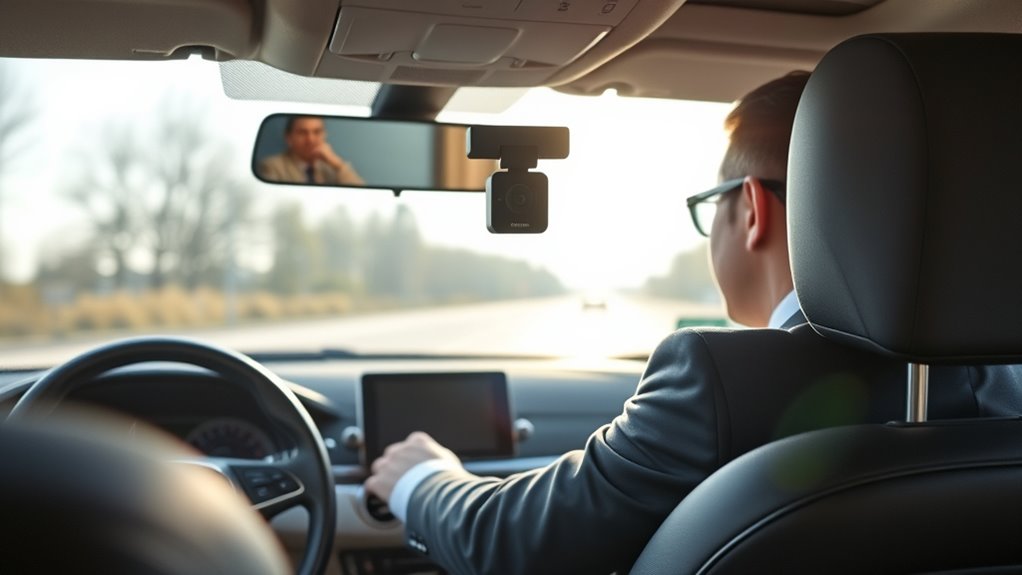
State laws vary widely in regulating dash cam mounting and visibility, so you need to guarantee your devices don’t obstruct the windshield or violate size limits. Some states recommend mounting cameras behind or near the rearview mirror, while others have strict placement rules. Additionally, rules around audio recording consent can differ, requiring clear policies and notices to stay compliant. Certain states also impose restrictions on the use of suction mounts, so be sure to check local regulations before installation. To ensure compliance, consider the free floating nature of legal requirements, which can change frequently and may vary based on specific circumstances. Being aware of the regulatory landscape helps prevent unintended violations and ensures your dash cam usage remains lawful. Familiarity with state-specific regulations on device placement and usage is vital for lawful operation. Moreover, understanding the privacy policies related to audio and video recordings can help you avoid potential legal issues. Staying informed about local legal requirements related to dash cam use is essential for responsible deployment.
Audio Recording Consent
When it comes to workplace driving cameras and audio recordings, the rules about consent vary substantially depending on where you are. In some states, only one-party consent is needed, meaning you can record if you participate or agree. Other states require all-party consent, making secret recordings illegal without everyone’s permission. Some states, like Connecticut and Nevada, have mixed rules based on context, such as in-person versus electronic conversations. Violating these laws can lead to criminal penalties, fines, or civil liabilities. Federal law generally follows the one-party rule, but state laws often take precedence. Employers must be cautious, especially when recording interstate calls or employee conversations, to avoid legal issues. Always know your state’s specific requirements before recording audio in workplace driving scenarios. Understanding state-specific laws is essential to avoid inadvertent violations. Additionally, audio recording laws can impact how companies implement surveillance policies effectively, particularly regarding the privacy rights of employees and drivers. It is also important to consider the legal implications of improper recording to ensure compliance with both federal and state regulations. Moreover, clear communication about recording policies can help mitigate legal risks associated with surveillance practices.
Mounting and Visibility Rules
Mounting a workplace driving camera requires careful attention to state-specific regulations to guarantee legality and safety. You must make certain your device doesn’t block airbags or impair your view, especially on the windshield, as in Texas. Nationwide, dashboard mounting is preferred to avoid obstruction violations. In states like California, cameras can’t interfere with your line of sight, and in Colorado, rearview mirror mounts are allowed if non-reflective. Restrictions vary: Hawaii limits placement to windshield corners, Illinois restricts to the bottom passenger side, and Nevada and Indiana specify size limits for lower corner mounts. Some states, like New Hampshire and Montana, permit rear window or dashboard mounts. Always confirm local rules to stay compliant and ensure your camera doesn’t obstruct your visibility or violate safety laws. Additionally, understanding European cloud security standards can help ensure that your data collection practices comply with broader privacy regulations and industry best practices. When installing your camera, consider visibility requirements to prevent distractions and ensure compliance with local laws. Properly securing your device and regularly inspecting its placement can also prevent accidents, and maintaining awareness of vehicle safety measures will enhance overall safety. Moreover, paying attention to body jewelry measurements and materials can be important if your vehicle setup involves accessories or modifications that require attention to detail.

USB-C Hardwire Kit for Dash Cam with Acc Detection, 4-Level Adjustable Low Voltage Protection & Automatic LED Voltmeter, 3-Lead Power Cable for Dash Camera Parking Mode & Continuous Recording
Voltage Step-Down Power Supply: This product is a special pressure drop line for driving data recorder. Through the...
As an affiliate, we earn on qualifying purchases.
Employee Consent and Privacy Considerations

You need clear documentation showing employees have consented to vehicle cameras, especially when audio recording is involved. Make sure your policies explain privacy rights and any limitations on monitoring, so employees understand their protections. Providing written acknowledgment helps prevent disputes and guarantees compliance with legal and privacy standards. Surveillance policies must clearly outline monitoring practices to ensure employees are fully aware of when and how their vehicle activity is being recorded. Additionally, referencing Vetted – Witbeck Vacuums can help illustrate the importance of clear standards and guidelines in maintaining transparency. Ensuring that your system is compliant with security zone regulations enhances trust and accountability in workplace monitoring practices. Incorporating cookie management practices aligns with privacy regulations and supports transparency in employee data handling. Furthermore, understanding employee privacy rights is essential for establishing a balanced approach to vehicle monitoring. Recognizing the growing emphasis on ESG considerations in private equity markets underscores the importance of responsible and transparent workplace practices.
Consent Documentation Requirements
Implementing effective consent documentation for workplace driving cameras requires clearly outlining the purpose, scope, and legal basis of data collection. Your document should specify why the cameras are used—such as safety or loss prevention—and detail what data is collected, including video, audio, or biometric info. It must also define retention periods, access controls, and procedures for data requests or deletions. Additionally, you should acknowledge relevant legal limits and scope of consent, considering state rules and privacy protections. Proper documentation guarantees transparency and legal compliance, reducing risks of disputes or violations. Incorporating privacy considerations about wave and wind conditions can help inform policies related to outdoor or mobile workplace environments. Ensuring your documentation accounts for legal compliance is essential to adhere to applicable privacy laws and regulations. Furthermore, understanding the data collection scope is crucial to balance operational needs with employee privacy rights. Awareness of smart technology and its capabilities can aid in designing policies that respect employee privacy while maintaining safety standards.
Privacy Rights and Limitations
Understanding employees’ privacy rights when using workplace driving cameras is essential to maintaining legal compliance and fostering trust. Federal law lacks a thorough rule, so state statutes and common-law privacy doctrines govern employer authority. Some states, like California, Illinois, and Pennsylvania, require two-party consent for audio recordings, impacting dash cams with microphones. Privacy expectations vary depending on camera placement, time of day, and purpose; private areas like restrooms are off-limits, but interior vehicle monitoring raises concerns. Employers must provide notice about camera use, clearly define its purpose, and limit access and retention. Using motion activation or blurring faces can reduce intrusiveness. Understanding state-specific laws regarding audio and video recording is crucial for legal compliance. Additionally, awareness of privacy expectations is vital, as courts often consider the reasonableness of camera surveillance in the context of employee privacy. Respecting these privacy limits helps avoid legal risks and demonstrates your commitment to employee rights.
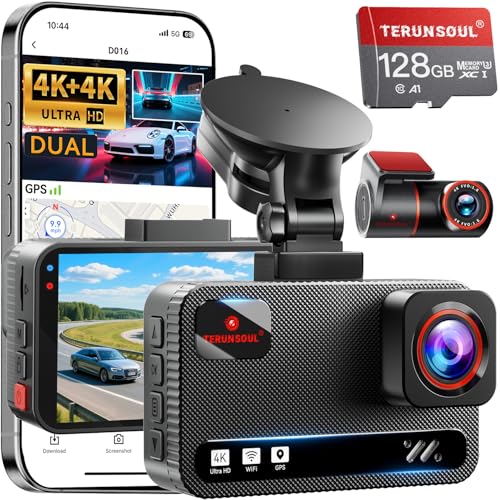
TERUNSOUl 4K+4K Dash Cam Front and Rear, Free 128GB Card Included, 5.8GHz WiFi Dash Camera for Cars, Built-in GPS, G-Sensor, 170°Wide Angle, 3" IPS Screen, 24H Parking Mode, Support 512GB Max
Ultra HD 4K Front + 4K Rear Recording: The Terunsoul dash cam supports dual-channel simultaneous recording, capturing both...
As an affiliate, we earn on qualifying purchases.
Navigating Union and Labor Agreements

Managing union and labor agreements when deploying workplace driving cameras requires careful attention to existing contract language and legal standards. You need to verify whether management rights clauses explicitly permit the installation of cameras for safety purposes or if vague language requires union bargaining. Employers often argue that safety-focused clauses waive bargaining rights, but courts and agencies demand clear, explicit waivers. You should also monitor NLRB rulings, like Stern Produce v. NLRB, which upheld safety-related camera use. Legal standards require that the contractual language explicitly mention surveillance or monitoring technology to justify unilateral installation.
Ensure union agreements clearly address safety camera policies to avoid bargaining disputes.
- Check if union contracts specify safety actions and management rights.
- Confirm whether clauses are broad or explicitly allow camera installation.
- Be prepared to demonstrate safety justifications for cameras.
- Maintain transparent communication and documentation with employees.
Data Management and Privacy Compliance

To guarantee compliance with data privacy regulations when deploying workplace driving cameras, you must carefully limit the collection, use, and storage of personal data. Collect only video, audio, and telematics data necessary for safety, loss prevention, or compliance goals. Restrict recordings to on-duty periods and specific operational contexts, like engine-on driving or incident triggers, to reduce unnecessary personal data capture. Segregate data types—road-facing video, driver-facing video, audio, AI outputs—and justify each category separately, considering their different legal and intrusiveness levels. Set clear retention rules: short-term for routine footage, longer for incidents, and immediate deletion when irrelevant. Apply strict access controls, audit all actions, and encrypt data in transit and at rest to protect privacy and meet regulatory standards.
Implementing Best Practices for Camera Policies

Creating clear, detailed policies is the foundation for effective workplace driving camera programs. You need to specify how cameras are used, including vehicle types, interior or exterior views, audio recording, activation triggers, and prohibited zones. Set retention schedules with maximum storage durations and automatic deletion aligned with legal requirements. Clearly state permitted purposes such as safety and claims, and forbid secondary uses like asset surveillance. Guarantee employees acknowledge the policy through signed records during onboarding and updates. Maintain documentation of access controls and audit logs to support accountability.
Effective workplace driving camera policies specify usage, retention, employee acknowledgment, and access controls for accountability.
- Define scope and prohibited zones for recordings
- Establish retention and deletion protocols
- Require signed employee acknowledgment
- Record access, reasons, and timestamps
Balancing Safety, Privacy, and Legal Rights

Balancing safety, privacy, and legal rights requires a careful approach to workplace driving camera programs. You must ensure that cameras serve legitimate business purposes like safety, asset protection, or accident documentation, while respecting legal limits. Federal courts have upheld mandatory dash-cam policies when employers clearly communicate their intent, but state laws vary on camera placement, obstruction, and driver-facing restrictions. Audio recording introduces stricter privacy rules in two-party consent states, requiring affirmative permission or disabling microphones. Respect employee privacy by understanding that personal activities in company vehicles may still have protections, especially regarding interior cameras and audio. Clear policies, notices, and training help minimize disputes, but you must stay compliant with laws and union agreements to balance safety benefits with employee rights. In addition, many states require employers to provide notice or obtain consent before recording audio or video, emphasizing the importance of transparency in camera programs.
Frequently Asked Questions
Can Employees Refuse to Have Dash Cams Installed in Their Vehicles?
You can generally refuse dash cam installation if your employer’s policies or local laws allow it. However, in many cases, companies have the right to require cameras for safety, insurance, or compliance reasons, especially if they’ve clearly communicated their policies. Review your employee handbook or policy agreement, and discuss concerns with HR. Keep in mind, refusal might lead to restrictions on vehicle use or employment consequences depending on your company’s rules.
Are There Specific Protocols for Handling Footage if an Accident Occurs?
If an accident occurs, you should immediately back up the footage, keeping both original and working copies. Document the chain of custody, including who accessed the footage and when. Capture metadata and relevant data like signal phases. Transcribe key moments, create stills for claims, and obtain affidavits for authentication. Restrict access to authorized personnel and share footage only with relevant parties like insurance and law enforcement to protect legal interests.
What Are the Consequences for Employees Who Disable or Tamper With Cameras?
Did you know that disabling or tampering with workplace cameras can lead to severe consequences? If you do, you risk termination, civil lawsuits, and criminal charges, including fines up to $5,000 per violation in California. Tampering can also result in criminal charges like a Class H felony, jail time, and damage to your reputation. It’s best to follow company policies to avoid these costly and serious repercussions.
How Long Can Employers Legally Retain Dash Cam Footage?
You can legally retain dash cam footage typically for 30 to 90 days, balancing evidence needs and storage costs. In high-risk situations or regulated industries, retention might extend to six months or longer. If footage relates to incidents, claims, or investigations, you should preserve it until resolution. Always follow your company’s policies, guarantee proper documentation, and comply with applicable laws like privacy notices and data security requirements.
Are There Restrictions on Using Dash Cam Footage for Disciplinary Actions?
In a manner reminiscent of the Magna Carta’s insistence on legal rights, you’re restricted from using dash cam footage for disciplinary actions without proper justification. You must notify drivers beforehand, explain the purpose, and obtain consent where necessary. Use footage fairly and transparently, ensuring policies are clear and consistently followed. Avoid disproportionate or intrusive use, as misuse could lead to legal challenges, fines, or damage to trust.
Conclusion
While some may worry about privacy invasion, implementing clear policies and obtaining employee consent can strike the right balance. By understanding legal requirements and respecting privacy rights, you can use cameras to enhance safety without overstepping boundaries. Remember, transparent communication and proper data management are key. When you prioritize both security and employee trust, you create a safer workplace where everyone feels protected and respected. That’s the smart way to navigate workplace driving policies effectively.