To label and save multi-car pileup clips without confusion, start by using standardized tags that include incident details like date, location, weather, and severity. Organize footage into folders or digital tags reflecting scene evidence, impact sequence, and vehicle roles. Use consistent naming conventions and detailed metadata such as timestamps and GPS coordinates. Incorporate hierarchy and multi-labeling for clarity. Following these best practices helps guarantee easy retrieval and accurate analysis—look further to master even more effective strategies.

Get business pricing on garage and car supplies
- Business-only prices and quantity discounts
- Tax-exempt purchasing
- Multiple users, one account, clear invoices
Key Takeaways
- Use standardized, descriptive labels with incident details, location, date, and environmental factors for quick identification.
- Implement hierarchical and multi-label tagging to distinguish damage types, severity, and context within clips.
- Organize clips into categorized folders or digital tags based on scene evidence, impact sequence, or involved vehicles.
- Maintain consistent naming conventions, timestamps, GPS data, and metadata to prevent confusion during retrieval.
- Preserve original footage securely with version control, and use clear role tags (e.g., primary impact, secondary) to clarify clip purpose.
Understanding Multi-Car Pileups and Their Impact
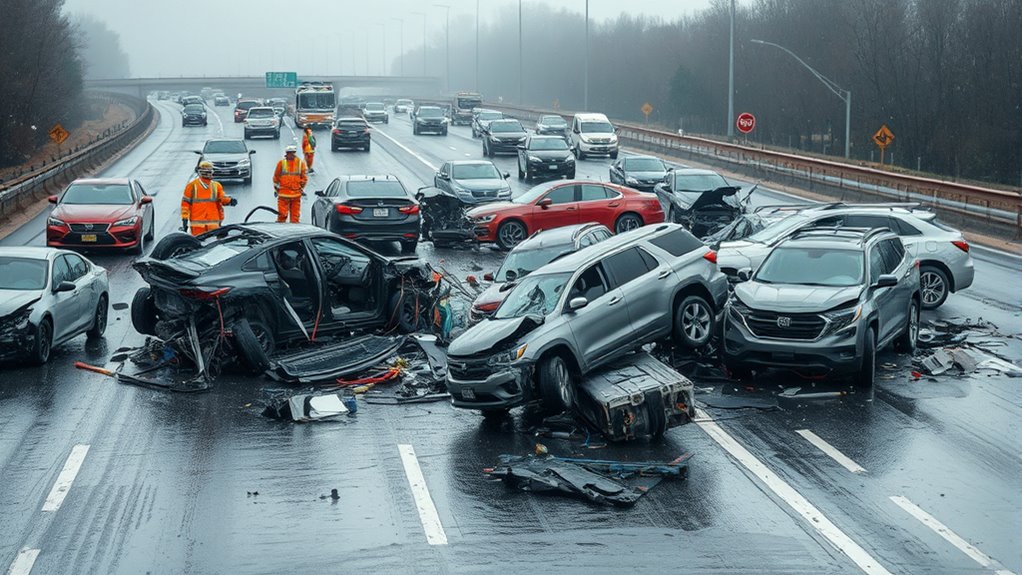
Multi-car pileups often start when environmental conditions or driver actions reduce visibility and increase stopping distances. Adverse weather like snow, fog, heavy rain, or ice plays a significant role, making it harder to see and stopping becomes more difficult. Sudden braking or sharp speed changes in dense traffic can trigger chain reactions, quickly involving multiple vehicles. High traffic volume and congestion further raise the chance that a single impact will escalate into a large pileup. Distracted drivers using phones or handling in-vehicle tasks delay reactions, worsening the situation. Low-visibility events such as sun glare or dust storms have also caused some of the largest pileups. These factors, especially during peak hours on high-speed roads or in cold months, dramatically increase the severity and danger of multi-vehicle crashes. Additionally, high refresh rates in vehicle sensors and driver assistance systems can help detect hazards more quickly, potentially preventing some pileups. Implementing advanced sensor technology can further enhance early hazard detection, reducing the likelihood of multi-car pileups. Recognizing the role of sensor capabilities in these systems can be key to improving overall safety and response times.
The Importance of Effective Video Labeling for Pileup Incidents

Effective video labeling is crucial for accurately analyzing pileup incidents, as it guarantees that footage is organized, searchable, and meaningful. Using standardized naming conventions—incorporating incident type, date, location code, and camera ID—ensures quick retrieval and chronological sorting. Appending unique sequence numbers or timestamps prevents duplicates, while embedding review status tags clarifies processing stages. Consistent vocabulary and short codebooks help both automated tools and humans interpret labels uniformly. Precise metadata, including timestamps, camera details, weather, lighting, and location, support synchronization and spatial analysis. Tagging clips with event details, participant roles, and quality attributes accelerates investigation and training. Additionally, applying privacy controls and retention policies safeguards sensitive data. Clear, consistent labeling streamlines incident review, supports analysis, and guarantees compliance throughout the investigation process. Accurate labeling also enhances the effectiveness of machine learning models used to detect and predict pileup scenarios.
Key Elements to Include When Tagging Multi-Vehicle Collisions

When tagging multi-vehicle collisions, it’s crucial to include precise identifiers that enable clear reconstruction and analysis of the incident. Use unique vehicle IDs with license plates and fleet info to prevent duplicates. Assign role tags—lead, striking, struck, secondary contact—to clarify impact sequences. Include occupant status flags, such as driver presence, injuries, or ejection, to prioritize responses. Mark special vehicles like commercial trucks or emergency units, as their damage patterns differ. Record driver identity evidence, including IDs or telematics, for attribution. Add exact timestamps, GPS coordinates, and relative positions to map the scene accurately. Note environmental conditions like weather and lighting, along with speed estimates and braking signs. Accurate data collection can also aid in insurance claims and legal proceedings, ensuring all relevant details are properly documented. These key elements ensure thorough, consistent tagging crucial for effective incident analysis.
Organizing Your Clips for Easy Retrieval and Analysis

Organizing your clips for easy retrieval and analysis is essential to streamline incident review and guarantee accurate reconstruction. Proper arrangement helps you quickly locate critical footage, witness statements, and scene evidence. Use clear labels that include date, time, location, and incident type. Implement a consistent system with folders or digital tags for different collision aspects. To visualize, consider this setup:
| Category | Subcategory | Storage Method |
|---|---|---|
| Scene Evidence | Photos and videos | Digital folders |
| Witness Statements | Contact info & notes | Labelled documents |
| Environmental Factors | Speed lights, weather | Annotated files |
| Collision Details | Skid marks, positions | Organized clips |
| Incident Timeline | Sequence of events | Chronological order |
This structure ensures fast access, reduces confusion, and improves analysis accuracy. Additionally, maintaining a standardized labeling system across all categories further enhances efficiency and minimizes errors during review. Consistent naming conventions help prevent misplacement and make searches more intuitive.
Best Practices for Consistent and Clear Labeling
Maintaining consistent and clear labeling is essential for accurate incident analysis and efficient collaboration. Follow the full list of label classes from your annotation guidelines, ensuring definitions and examples are understood. Use the specified rules for edge cases and tricky situations to prevent confusion. Adhere to standardized class names like “car,” “person,” or “forklift,” and incorporate visual descriptions such as “red fire extinguisher” for clarity. Avoid overlapping classes by using organized workflows and auto-labeling for initial tagging, followed by manual review. Regularly check quality metrics like label accuracy and class agreement to maintain consistency. Incorporate automated checks for missing labels or duplicates. Properly organized labels facilitate easier model training and improve detection performance. Clear, precise labels streamline analysis and minimize misinterpretation throughout your project, especially when managing complex multi-car pileups. Implementing label consistency checks can further enhance the reliability of your annotation process. Ensuring label accuracy is maintained throughout the process helps prevent errors that could compromise the entire dataset. Additionally, fostering a thorough understanding of quality assurance principles among team members ensures ongoing improvement in labeling accuracy and consistency. Moreover, applying annotation standards derived from established guidelines can significantly reduce discrepancies and improve overall data quality.
Tools and Software to Assist in Clip Management

Effective clip management relies on specialized tools and software that streamline the process of capturing, storing, and analyzing video evidence. These platforms help you organize footage, identify key moments, and guarantee accurate documentation. For example, Oculux® cameras offer high-quality footage with simple cloud uploads for incident severity ratings. ZenduCAM supports multiple cameras with live streaming and GPS triggers, while Motive AI Dashcam detects collisions and uploads clips instantly. Webfleet integrates AI to identify risky behaviors and automatically uploads relevant footage. Incorporating video analytics can further enhance your ability to review footage efficiently and accurately.
Common Mistakes to Avoid When Saving Pileup Footage
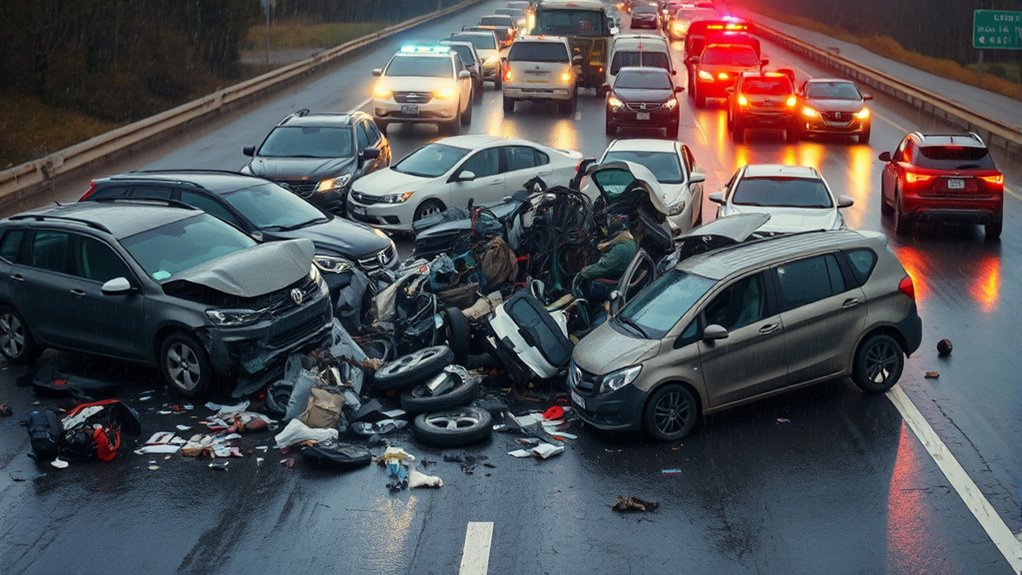
When saving pileup footage, it’s crucial to capture the entire scene clearly and all-encompassing. Avoid focusing only on vehicle damage; include wide shots showing traffic lights, signage, roadway conditions, and skid marks to provide context. Don’t forget to document license plates, impact areas from multiple angles, and nearby traffic signals to help identify vehicles and the scene’s environment. Make sure your footage is sharp, stable, and properly timed, with timestamps and geolocation enabled. Never delay backups or overwrite critical files—preserve original recordings immediately. Be mindful of privacy laws—avoid recording faces or voices without consent—and don’t share footage publicly before legal review. Avoid recording incomplete clips or poorly angled shots that miss vital details, as these weaken your evidence and complicate investigations. Properly labeling and organizing your video files is essential to prevent confusion during legal proceedings or insurance claims. Additionally, understanding the video quality standards can help ensure your footage meets the necessary criteria for effective evidence.
Tips for Sharing and Collaborating on Multi-Vehicle Accident Clips
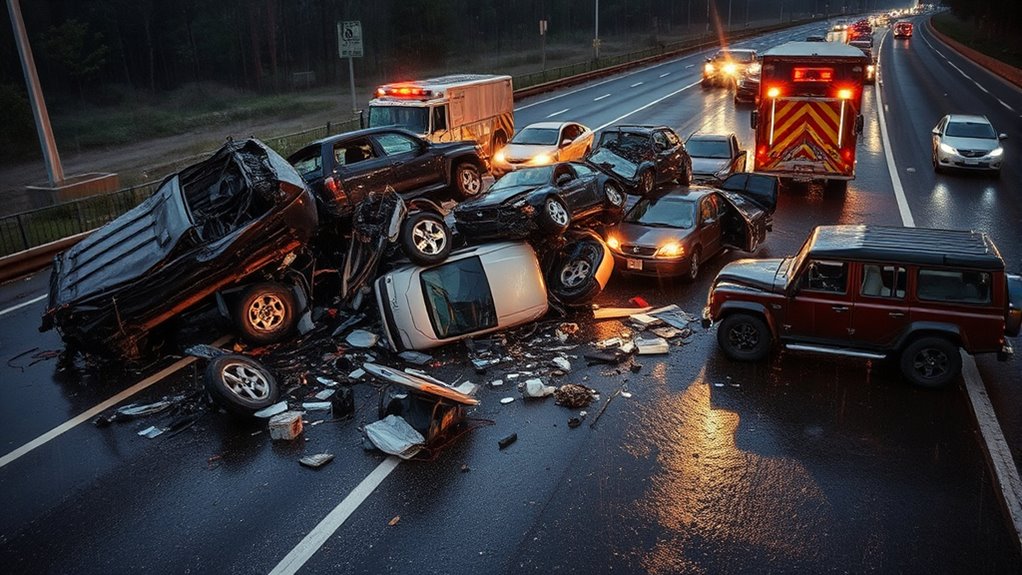
When sharing multi-vehicle accident clips, clear labeling and organized management are essential to keep track of footage and prevent confusion. Use consistent naming conventions and store clips securely to protect sensitive information. By following secure sharing practices, you can guarantee the footage stays protected while facilitating effective collaboration. Proper organization also helps in quickly locating specific clips during legal proceedings or investigations, saving valuable time and reducing stress. Having accurate records of all footage ensures that every piece of evidence is accounted for and easily accessible when needed. Additionally, understanding the security of adhesive products can help in maintaining the integrity of mounted clips or labels, ensuring they remain in place over time. Incorporating privacy policies into your workflow can further safeguard sensitive data associated with the footage, reinforcing compliance and trust. Being aware of water safety measures can also be crucial when dealing with footage involving aquatic environments or water-related incidents, ensuring safety protocols are followed during documentation. Moreover, implementing digital encryption adds an extra layer of security to prevent unauthorized access to sensitive footage, which is vital in legal and insurance contexts.
Clear Labeling Strategies
Clear labeling strategies are essential for successful collaboration and sharing of multi-vehicle accident clips, especially in complex scenes like multi-car pileups. To guarantee clarity, use consistent, standardized labels that include environmental factors, accident severity, and object categories. Hierarchical classifications help distinguish damage types and severity levels, making annotations more precise. Incorporate multi-labeling to capture contextual details like road type or weather, which enhances model accuracy. Regular supervisor checks and feedback maintain label consistency across teams. Utilize collaboration tools that support region selection, shared access, and real-time updates. Consider annotating keyframes and interpolating labels to save time. Clear, detailed labels prevent confusion, streamline teamwork, and improve data quality in complex accident scenarios. Emphasizing the importance of standardized labeling protocols ensures uniformity across teams and reduces miscommunication.
Organized Clip Management
Effective organization of multi-vehicle accident clips hinges on implementing standardized metadata and systematic workflows. Consistently use ISO 8601 timestamps, GPS coordinates, and vehicle identifiers as discrete metadata fields, not just filenames. Record camera details—device ID, orientation, mounting position, resolution, and frame rate—to support frame-by-frame analysis and chain-of-custody integrity. Tag clips with roles like primary impact or bystander footage using controlled vocabularies for quick filtering. Define clip segments with precise event markers, maintaining immutable originals and creating versioned derivatives with clear metadata links. Develop an incident-level index with thumbnails and key times for rapid scene reconstruction. Employ searchable metadata—vehicle IDs, weather, roadway markers—and cross-reference external evidence for comprehensive case management. This approach streamlines collaboration and reduces confusion. Additionally, adherence to standardized data formats ensures interoperability across various platforms and facilitates efficient sharing among multiple agencies. Implementing metadata best practices enhances searchability and data consistency, further supporting effective evidence management.
Secure Sharing Practices
Sharing multi-vehicle accident clips securely is essential to maintain data integrity and protect sensitive information. You need to implement strict controls to ensure clips are shared only with authorized personnel and remain unaltered. Use encrypted cloud storage with end-to-end encryption to prevent unauthorized access. Maintain at least two geographically separate backups, like cloud storage and external SSDs, to safeguard against device failure. Apply role-based access controls, so only designated investigators or legal teams can view raw footage. Enable multi-factor authentication on sharing accounts, and log all access events for audit trails. When sharing clips, redact personally identifiable information and use watermarked or lower-resolution previews for public distribution. Follow chain-of-custody protocols to verify file integrity and prevent tampering during transfer. Providing clear evidence ensures that the footage remains trustworthy and admissible in legal proceedings. Additionally, regularly reviewing and updating security protocols helps adapt to emerging threats and maintain data security compliance. Incorporating comprehensive security measures further enhances the protection of sensitive footage against evolving cyber threats. Implementing strict access controls minimizes the risk of unauthorized viewing and potential data leaks. Ensuring proper privacy policies are followed will reinforce the legal and ethical handling of sensitive footage.
Frequently Asked Questions
How Can I Differentiate Between Similar Multi-Vehicle Incidents?
You can differentiate similar multi-vehicle incidents by using unique incident IDs that combine date, time, and location details. Apply visual labels with specific prefixes and color codes to indicate collision types and sequence positions. Incorporate bounding metadata for key features, timestamped snapshot keyframes, and confidence scores from machine vision. Group related clips by incident ID and sequence, and fuse data from multiple sources like telematics and CCTV to clarify incident distinctions.
What Metadata Should I Include for Comprehensive Clip Labeling?
You should include core identifiers like a unique clip ID, device source, and capture timestamp in ISO 8601 format. Add GPS coordinates, weather, lighting, roadway details, traffic signals, and surface conditions for scene context. Include vehicle descriptions, occupant roles, safety features, injuries, and cargo info for participant details. Finally, document chain-of-custody, redactions, source links, and analysis tags to ensure thorough, traceable labeling that minimizes confusion and supports legal and investigative use.
How Do I Handle Ambiguous or Unclear Footage During Labeling?
A picture is worth a thousand words, so trust your judgment. When you encounter ambiguous footage, label it as “uncertain” or “ambiguous” for later review. Use conservative labeling, focusing on clearly visible elements, and apply contextual inference when needed. Always document your reasoning, and leverage AI tools to assist, but remember that human oversight is key to maintaining consistency and accuracy in tricky scenes.
What Are the Best Practices for Archiving Large Volumes of Clips?
To archive large volumes of clips effectively, you should establish a consistent naming convention and organized folder structure. Tag files with relevant metadata, including subjects and locations, and document this system clearly. Make multiple copies on different media, following the 3-2-1 rule, and store them securely in separate locations. Regularly check file readability and update media every few years to guarantee long-term access and data integrity.
How Can I Ensure My Labeling System Is Scalable for Future Incidents?
To make your labeling system scalable, you should implement a hierarchical taxonomy with unique, immutable IDs, allowing seamless expansion. Use multi-labels for attributes, and adopt consistent clip segmentation and naming conventions that support backward compatibility. Incorporate version control, audit logs, and metadata databases to track changes. Automate annotation workflows with active learning and role-based queues, ensuring that as incidents grow, your system remains organized, adaptable, and easy to update.
Conclusion
Mastering the art of labeling multi-car pileups ensures your clips tell a clear story, just like a well-organized file cabinet. While the chaos of a multi-vehicle crash can be overwhelming, your structured approach brings order out of chaos. Don’t let confusion slow you down—use effective tags and tools to streamline your process. In the end, clarity in your clips makes all the difference, turning chaos into valuable insight and swift action.
Fall Picks
fall essentials
As an affiliate, we earn on qualifying purchases.