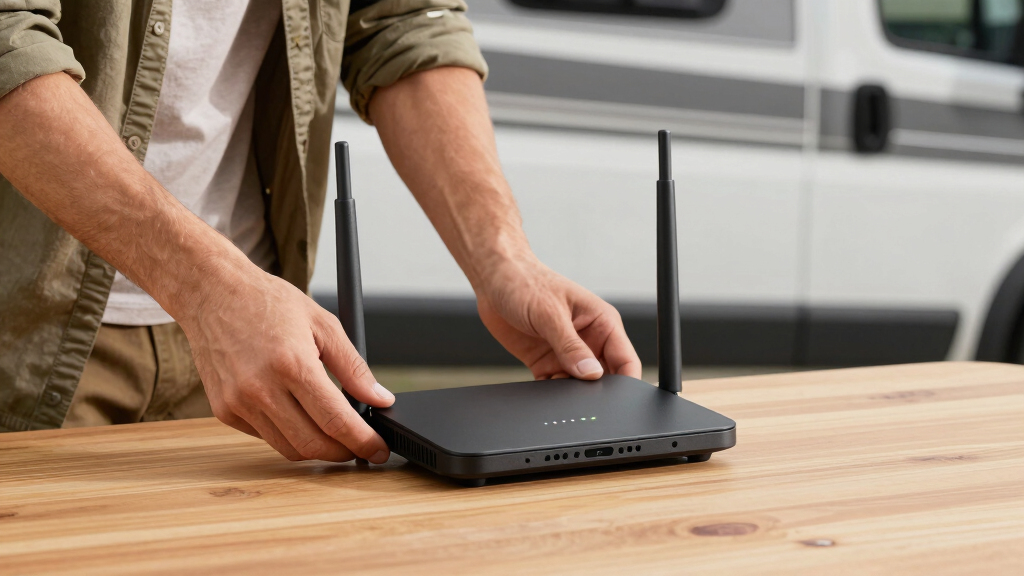

If you’re seeking the best mobile router for RV travel, you’re likely after reliable internet on the go. The best overall pick is the TP-Link Roam 7 BE3600, thanks to its fast Wi-Fi 7, versatile multi-mode capabilities, and robust security features. The GL.iNet GL-BE3600 stands out for its touchscreen and VPN support, making it a great choice for tech-savvy travelers, while the GL.iNet GL-AXT1800 offers a solid balance of speed and portability. Each option involves tradeoffs—such as cost versus features or complexity versus simplicity—that impact suitability based on your specific travel needs. Keep reading for a detailed breakdown of each product to find the best fit for your RV adventures.

Get garage and car supplies delivered free — and shop member deals
- Fast, free delivery on millions of items
- Access to Prime Big Deal Days deals on October 6–7
- Prime Video, Amazon Music and more included
Key Takeaways
- Wi-Fi 7 support is becoming a key feature for future-proof connectivity in RV routers.
- VPN compatibility and security features are vital for travelers who prioritize privacy on the road.
- Portability often comes with a tradeoff in advanced features—lighter models may lack multi-mode support.
- Dual-band Wi-Fi is standard, but tri-band routers provide better performance in signal-heavy environments.
- Ease of setup and management varies, making user-friendly interfaces a significant factor for less tech-savvy users.
| GL.iNet GL-BE3600 (Slate 7) Portable Travel Router with Wi-Fi 7, Dual-Band, VPN, Touchscreen |  | Best Overall for Secure, High-Speed RV Internet | Wireless Speed: 688Mbps (2.4G) + 2882Mbps (5G) | Ethernet Ports: 2.5G WAN and LAN | USB Port: USB 3.0 | VIEW LATEST PRICE | See Our Full Breakdown |
| GL.iNet GL-AXT1800 (Slate AX) Portable Travel Router |  | Best for Speed and Device Capacity in Compact Form | Wi-Fi Standard: Wi-Fi 6 | Dual-band Speed: 1800 Mbps (600 Mbps 2.4GHz, 1200 Mbps 5GHz) | Device Capacity: Up to 120 devices | VIEW LATEST PRICE | See Our Full Breakdown |
| GL.iNet GL-MT3600BE Beryl 7 Portable Travel Router with Wi-Fi 7, VPN, and Dual Band |  | Best for High-Speed, Secure Connectivity with Ease of Use | Wireless Speed: 688Mbps (2.4G) + 2882Mbps (5G) | VPN Speed: up to 1100 Mbps (WireGuard), 1000 Mbps (OpenVPN-DCO) | Wi-Fi Standard: Wi-Fi 7 | VIEW LATEST PRICE | See Our Full Breakdown |
| GL.iNet GL-MT3000 (Beryl AX) Portable Travel Router, Wi-Fi 6, VPN, Dual Band |  | Best for Tech-Savvy Travelers Needing Customization | Wireless Speed: 574Mbps (2.4G) + 2402Mbps (5G) | Wi-Fi Standard: Wi-Fi 6 | WAN Port: 2.5G Multi-gigabit | VIEW LATEST PRICE | See Our Full Breakdown |
| TP-Link Roam 7 BE3600 Wi-Fi 7 Portable Travel Router | Dual-Band, 2.5G Port, USB 3.0 | Multi-Modes | OpenVPN, WireGuard® | Public WiFi Sharing for Hotel, Cruise, RV, Plane |  | Best for High-Speed, Multi-Device RV Use with Versatile Modes | Wi-Fi Standard: Wi-Fi 7 | Bands: Dual-Band (5 GHz and 2.4 GHz) | Maximum Speed: 2882 Mbps on 5 GHz | VIEW LATEST PRICE | See Our Full Breakdown |
More Details on Our Top Picks
GL.iNet GL-BE3600 (Slate 7) Portable Travel Router with Wi-Fi 7, Dual-Band, VPN, Touchscreen
The GL.iNet GL-BE3600 stands out for supporting Wi-Fi 7 speeds up to 2882Mbps, making it a future-proof choice for RV travelers who demand fast, reliable internet. Its touchscreen interface simplifies network management, a feature not present in the older GL.iNet GL-AXT1800, which makes setup and monitoring more intuitive. The built-in VPN support with OpenVPN and WireGuard adds a layer of security, critical when connecting to various public or private networks on the road. Compared with alternatives lacking such robust security features, this model offers peace of mind but requires a VPN subscription for full functionality, adding ongoing costs. Tradeoffs include complexity for less technical users and dependence on network environment for speed. This router is best suited for tech-savvy RVers who prioritize both speed and security.
Pros:- Supports Wi-Fi 7 with high-speed dual-band connectivity
- User-friendly touchscreen for quick control
- Built-in VPN for secure browsing and remote access
- Supports WPA3 and DNS encryption for added security
Cons:- Requires active VPN subscription for full use
- Setup can be complex for non-technical users
- Speed may vary based on network conditions
Best for: Tech-savvy travelers seeking secure, high-speed internet with easy management.
Not ideal for: Users who prefer plug-and-play solutions without ongoing subscriptions or setup complexity.
- Wireless Speed:688Mbps (2.4G) + 2882Mbps (5G)
- Ethernet Ports:2.5G WAN and LAN
- USB Port:USB 3.0
- Firmware:OpenWrt 23.05
- VPN Support:OpenVPN, WireGuard
- Security Protocols:WPA3, DNS over HTTPS/TLS, IPv6
Bottom line: This router is ideal for security-conscious RVers who value cutting-edge Wi-Fi technology and easy device management.
GL.iNet GL-AXT1800 (Slate AX) Portable Travel Router
The GL.iNet GL-AXT1800 delivers strong Wi-Fi 6 performance with speeds up to 1800 Mbps, making it suitable for multiple devices and high-bandwidth activities during RV trips. Its support for VPN protocols like OpenVPN and WireGuard provides privacy on public networks, and its ability to connect up to 120 devices makes it a good choice for larger groups or families. Compared to Wi-Fi 7 options like the GL-BE3600 or GL-MT3600, this model offers excellent speed and device capacity but lacks the latest Wi-Fi 7 features, which could matter as networks evolve. Setup may require some familiarity with OpenWrt, but its customizable OS offers flexibility. Tradeoffs include slightly lower maximum speeds than Wi-Fi 7 routers and potential complexity in configuration. This pick makes the most sense for those prioritizing speed, device support, and security in a compact package.
Pros:- Fast Wi-Fi 6 with up to 1800 Mbps speeds
- Supports multiple VPN protocols for privacy
- Connects up to 120 devices simultaneously
- Customizable with OpenWrt OS
Cons:- Requires some technical setup, especially for VPN
- Does not support Wi-Fi 7 speeds
- Setup complexity for non-technical users
Best for: Families or groups needing high-speed Wi-Fi supporting many devices in an RV environment.
Not ideal for: Travelers seeking the absolute latest Wi-Fi standard or minimal setup effort.
- Wi-Fi Standard:Wi-Fi 6
- Dual-band Speed:1800 Mbps (600 Mbps 2.4GHz, 1200 Mbps 5GHz)
- Device Capacity:Up to 120 devices
- VPN Support:OpenVPN, WireGuard
- OS:OpenWrt 21.02
- Features:Repeater mode, VPN toggle switch
Bottom line: This router suits users who need high-speed, large-capacity Wi-Fi without the latest Wi-Fi 7 features.
GL.iNet GL-MT3600BE Beryl 7 Portable Travel Router with Wi-Fi 7, VPN, and Dual Band
The GL.iNet Beryl 7 leverages Wi-Fi 7 technology to deliver dual-band speeds up to 2882Mbps, matching the GL-BE3600 in raw speed but with a more compact design. Its ease of use is enhanced by built-in VPN server and client support, making secure browsing straightforward. While setup may involve some initial configuration—similar to the GL-AXT1800—its smaller size and integrated VPN capabilities make it attractive for travelers who want speed and security without sacrificing portability. The router supports multiple devices simultaneously and includes features like WPA3 and DNS encryption, important for secure mobile use. The main tradeoff is that full VPN features require active subscriptions, and real-world speeds depend on network conditions. It’s best for those who want the latest Wi-Fi 7 tech in a travel-friendly form.
Pros:- High-speed Wi-Fi 7 dual-band support
- Built-in VPN server and client for security
- Compact, travel-friendly design
- Supports multiple devices simultaneously
Cons:- Requires active VPN subscription for full features
- Setup can be complex for non-technical users
- Speed may vary with network conditions
Best for: Travelers who need high-speed, secure Wi-Fi with a compact footprint.
Not ideal for: Users who prefer plug-and-play simplicity without setup effort or ongoing subscriptions.
- Wireless Speed:688Mbps (2.4G) + 2882Mbps (5G)
- VPN Speed:up to 1100 Mbps (WireGuard), 1000 Mbps (OpenVPN-DCO)
- Wi-Fi Standard:Wi-Fi 7
- Ports:2.5G Ethernet (WAN & LAN), USB 3.0
- Storage:512MB
- Firmware:OpenWrt 21.02
- Security:WPA3, DNS over HTTPS/TLS, IPv6
Bottom line: This router is ideal for tech-savvy travelers demanding high-speed, secure Wi-Fi in a portable package.
GL.iNet GL-MT3000 (Beryl AX) Portable Travel Router, Wi-Fi 6, VPN, Dual Band
The GL.iNet GL-MT3000 (Beryl AX) stands out for supporting Wi-Fi 6, which delivers faster and more efficient wireless performance compared to older standards. It includes multiple ports like 2.5G WAN and USB 3.0, making it versatile for connecting various devices or modems — a step up from simpler routers like the TP-Link Roam 7. Its pre-installed VPN client and server capabilities provide added security on the road, but this also means setup can be complex for users unfamiliar with network configuration. While its open-source firmware offers customization, this might be overwhelming for casual users who prefer plug-and-play solutions. Compared to the TP-Link, it’s more flexible but less user-friendly for non-technical travelers.
Pros:- Supports Wi-Fi 6 for faster speeds
- Multiple ports including 2.5G WAN and USB 3.0
- Pre-installed VPN for enhanced security
- Supports OpenWrt for customization
Cons:- Setup may be complex for non-technical users
- Requires active VPN subscription for full feature access
Best for: Tech-oriented RV travelers who want customizable security features and fast wireless speeds.
Not ideal for: Casual users or those seeking a straightforward, easy-to-use device without the need for complex setup.
- Wireless Speed:574Mbps (2.4G) + 2402Mbps (5G)
- Wi-Fi Standard:Wi-Fi 6
- WAN Port:2.5G Multi-gigabit
- LAN Port:1G gigabit
- USB Port:USB 3.0
- Firmware:OpenWrt 21.02
Bottom line: Ideal for experienced users seeking a highly customizable, fast, and secure travel router, but less suitable for beginners.
TP-Link Roam 7 BE3600 Wi-Fi 7 Portable Travel Router | Dual-Band, 2.5G Port, USB 3.0 | Multi-Modes | OpenVPN, WireGuard® | Public WiFi Sharing for Hotel, Cruise, RV, Plane
The TP-Link Roam 7 BE3600 excels with Wi-Fi 7 support, offering blazing speeds up to 2882 Mbps on the 5 GHz band, making it a strong choice for RV travelers who need to connect many devices simultaneously. Its multi-mode functionality — including router, hotspot, and access point modes — provides flexibility beyond what the GL.iNet Beryl AX offers, especially for those who want to share public Wi-Fi securely. Its support for VPNs like OpenVPN and WireGuard adds security, but the device’s complexity and need for compatible power sources can be barriers for less tech-savvy users. While it doesn’t support the 6 GHz band, its high device capacity and advanced security make it a compelling choice for demanding RV setups.
Pros:- Supports Wi-Fi 7 for ultra-fast speeds
- Handles up to 90 devices simultaneously
- Multiple operation modes for flexibility
- Supports VPN encryption for security
Cons:- Does not support 6 GHz Wi-Fi band
- Requires compatible power source for USB-C charging
Best for: Remote workers or large families needing fast, secure internet for multiple devices in an RV setting.
Not ideal for: Travelers who prefer simpler, less feature-rich solutions or those with limited power options, since it requires compatible USB-C power sources.
- Wi-Fi Standard:Wi-Fi 7
- Bands:Dual-Band (5 GHz and 2.4 GHz)
- Maximum Speed:2882 Mbps on 5 GHz
- Ports:1x 2.5 Gbps WAN, 1x 1 Gbps LAN, USB 3.0
- Supported Modes:Router, Hotspot, AP/RE/Client
- Device Capacity:Up to 90 devices
Bottom line: This router is best suited for tech-savvy users needing high-speed, multi-device connectivity with advanced security features on the road.

How We Picked
The products in this roundup were selected based on performance, usability, build quality, and value specifically for RV travel. We prioritized routers with reliable Wi-Fi standards, strong security options, and versatile connectivity modes to suit mobile lifestyles. Durability and ease of setup were also key, along with features like VPN support and multiple frequency bands to handle varied network environments. The ranking reflects a balance between cutting-edge capabilities and practical usability for RV travelers, ensuring each product offers a clear advantage for certain user needs while acknowledging potential limitations.Factors to Consider When Choosing Best Mobile Router For RV Travel
Choosing the best mobile router for RV travel involves considering several factors that impact connectivity, ease of use, and overall value. Beyond basic features, understanding how a router handles different network environments, security, and portability can significantly influence your experience on the road. It’s important to weigh the tradeoffs between advanced features and simplicity, especially if you’re less familiar with networking technology or prefer a set-it-and-forget-it device.Connectivity Standards and Speed
Look for routers supporting the latest Wi-Fi standards, such as Wi-Fi 6 or Wi-Fi 7, for faster speeds and better device handling. Faster standards improve streaming, downloads, and multiple device connections simultaneously—crucial for busy RV households. However, keep in mind that the actual internet speed also depends on your mobile data plan and network coverage. Higher speeds generally come with a higher price point, so consider your actual needs and budget when selecting a model.
Portability and Design
Since you’ll be traveling and setting up in different locations, a lightweight, compact router is preferable. Look for models with sturdy build quality that can withstand travel conditions. Some routers include built-in batteries or power options suited for mobile use, while others rely on external power sources. Consider how easy it is to carry, set up, and connect the device in various environments, from campsites to parking lots.
Security Features and VPN Support
Security is paramount when connecting to public or unfamiliar networks. Routers with built-in VPN support or compatibility with third-party VPN services help protect your data and privacy. Features like firewall protection, automatic updates, and password management add layers of security without complicating setup. Balancing security with usability is key—overly complex systems might deter regular use.
Multi-Mode and Network Compatibility
Many routers offer multi-mode functionality, allowing them to connect to cellular networks, act as Wi-Fi extenders, or serve as a wired access point. For RV users, dual or tri-mode support enhances versatility, especially when relying on different network sources like LTE, 5G, or public Wi-Fi. Compatibility with various carriers and network bands ensures consistent performance across locations, but more features can increase complexity and cost.
Price and Value
Prices range from budget-friendly options to premium units with the latest technology. While paying more often yields better speed, security, and durability, budget models can suffice for casual use. Consider the value of features you need versus what you’re willing to spend. Sometimes, investing in a higher-end model pays off in longevity, security, and overall performance, especially if you travel frequently.
Frequently Asked Questions
Do I really need Wi-Fi 7 in my RV router?
Wi-Fi 7 offers faster speeds and improved performance, which can be beneficial if you have multiple devices or plan to stream high-quality content. However, since most internet connections in RVs rely on cellular data, the real-world benefits of Wi-Fi 7 may be limited unless your data plan supports very high speeds. For many users, Wi-Fi 6 or lower standards still provide ample performance, making Wi-Fi 7 a consideration for future-proofing rather than an immediate necessity.
Is VPN support worth paying extra for in a mobile router?
VPN support adds an important layer of security, especially when connecting to public Wi-Fi or shared networks. For RV travelers who value privacy or need secure remote access, investing in a router with VPN capabilities can be well worth it. Keep in mind that VPN setup can be complex for some models, so choosing one with user-friendly management is advisable—particularly if you’re not highly technical.
Should I prioritize portability over advanced features?
Portability is essential for ease of setup and travel convenience, but it often means sacrificing some advanced features like multi-mode support or multiple frequency bands. If you’re frequently on the move and need quick, simple connectivity, a smaller, lightweight model makes sense. Conversely, if you often stay in one place and require robust, multi-network support, a slightly larger device with more features might be preferable despite its bulk.
How important is dual-band versus tri-band Wi-Fi?
Dual-band routers support both 2.4 GHz and 5 GHz frequencies, which are sufficient for most RV use cases. Tri-band routers add an additional 5 GHz band, improving performance in environments with many devices or interference. For heavy streaming, gaming, or multiple device connectivity, tri-band models can reduce congestion and latency, but they also come at a higher cost. Evaluate your typical usage to decide if the extra performance justifies the investment.
Can I rely on public Wi-Fi for my RV internet needs?
Public Wi-Fi can fill gaps when cellular data isn’t available, but it often comes with security risks. Using a mobile router with good security features, like VPN support and firewalls, can help mitigate these risks. It’s also wise to avoid sensitive transactions over public networks or use additional security measures. A dual-mode router that can connect seamlessly to both cellular and public Wi-Fi offers flexibility but requires proper configuration to stay secure.
Conclusion
For most RV travelers, the TP-Link Roam 7 BE3600 emerges as the best overall choice thanks to its speed, multi-mode support, and security features. If you’re seeking a solid balance of performance and budget, the GL.iNet GL-MT3600BE Beryl 7 offers great value with Wi-Fi 7 support and VPN capabilities. Beginners or less tech-savvy users will appreciate the simplicity of the GL.iNet GL-MT3000 (Beryl AX), while those prioritizing maximum speed and future-proofing should consider the GL.iNet GL-AXT1800. For travelers who want the best in premium features, the TP-Link Roam 7 BE3600 fits the bill. Ultimately, your choice should reflect your connectivity needs, budget, and comfort with tech setup. As an affiliate, we earn on qualifying purchases.Halloween Picks
halloween