
If you’ve been rear-ended, gathering strong evidence quickly is key. Take clear photos and videos of the scene, showing vehicle positions and damage from multiple angles. Collect eyewitness contact details and statements. Obtain the police report for an official account of the incident. Save dashcam footage and GPS logs that show your speed and location. Having all these details on hand can make proving your case much easier—keep exploring to learn how to secure this essential evidence fast.
Key Takeaways
- Photographs of vehicle damage, scene layout, and debris clearly document the impact and collision point.
- Dashcam footage before and after the crash shows vehicle positions, speeds, and timing evidence.
- Witness statements provide firsthand accounts confirming the rear-end collision details.
- Police reports offer an objective record of the incident, including location, weather, and witness info.
- Electronic data from GPS and event recorders verify vehicle speed, braking, and impact timing.
Photographs of the Scene and Damage
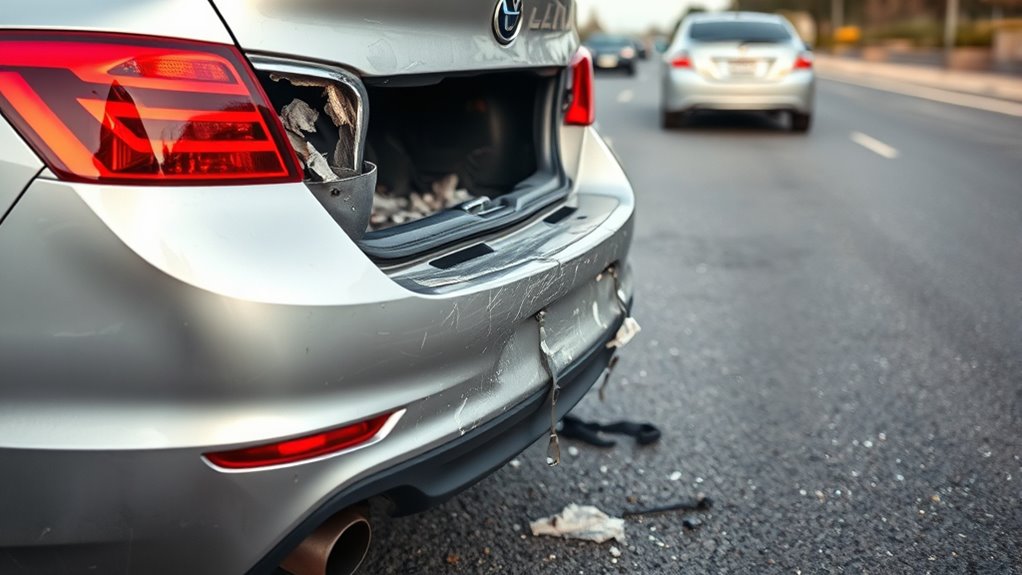
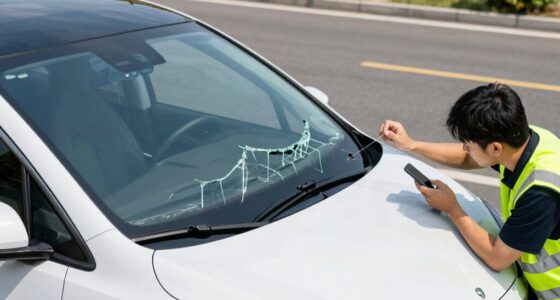
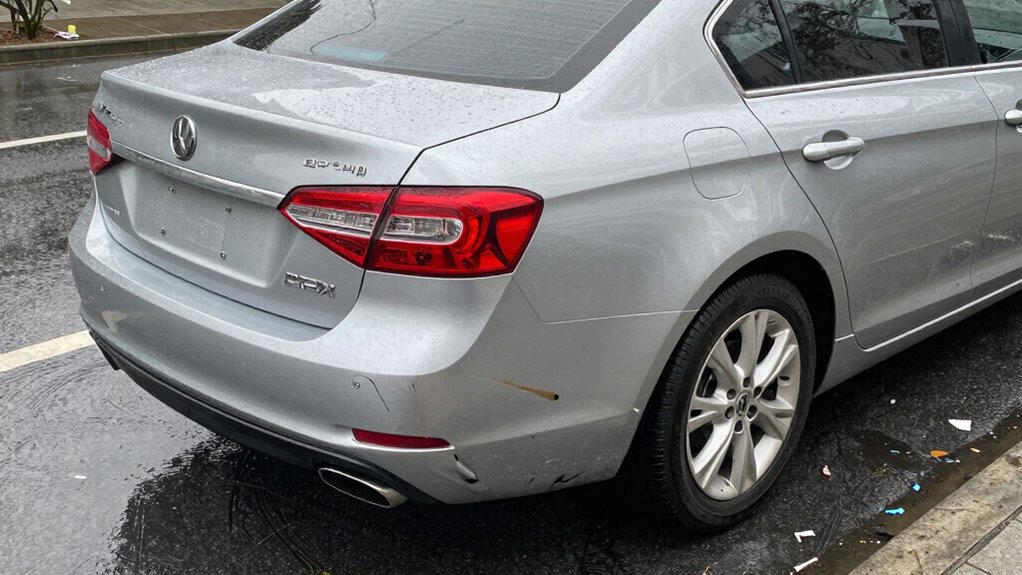
Photographs of the scene and damage are essential pieces of evidence in a rear-ended collision. As soon as it’s safe, take clear photos of the entire scene, capturing scene debris like shattered glass, broken parts, and skid marks. Focus on the position of vehicles to show their alignment before they were moved. Document the damage to your vehicle from multiple angles, emphasizing critical areas like the rear bumper, trunk, and taillights. Include close-ups of any dents, scratches, or fluid leaks. These images can clearly illustrate the extent of impact and help establish fault. Make sure your photos are well-lit, in focus, and timestamped if possible. Precise visual evidence like this can be invaluable when filing insurance claims or legal disputes. Properly documenting vehicle damage can also support repair estimates and liability assessments. Additionally, capturing scene details such as road conditions and nearby traffic signs can provide context for the circumstances of the crash. Taking photos of photographic evidence immediately after the incident ensures that details remain unaltered and accurate. Using detailed photographs can also help in insurance claims, providing a clear record of the incident’s specifics.
Video Footage From Nearby Cameras
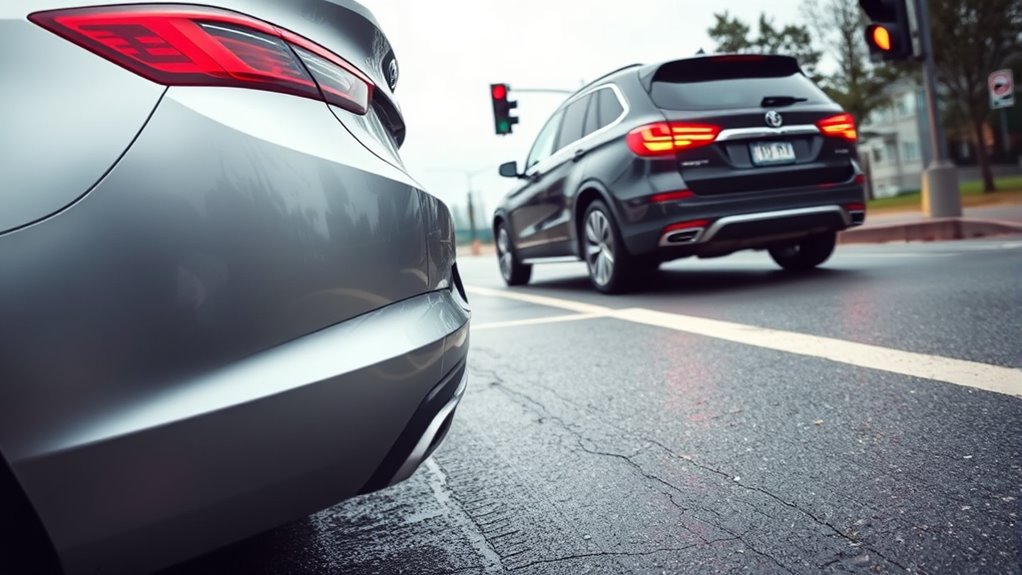
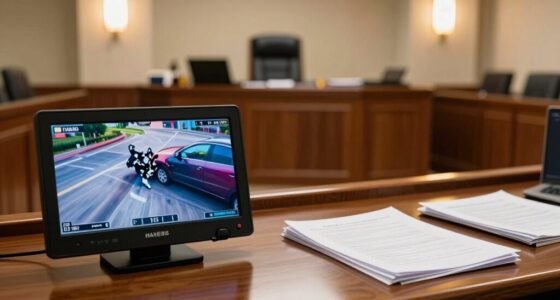
Video footage from nearby cameras can provide essential, unbiased evidence of a rear-ended collision. Dashcam footage you recorded yourself can clearly show the moments leading up to and after the crash, capturing details that might be missed otherwise. Additionally, traffic cameras installed along roads often record every vehicle passing through, offering an objective perspective. These recordings can confirm the position of vehicles, speed, and timing, helping establish fault quickly. When your accident is caught on a traffic camera or captured by a dashcam, it becomes a powerful piece of evidence that can support your claim. Always request access to this footage early, as it can be crucial in proving your case and speeding up the insurance process. Understanding home‑care techniques can also help you maintain your vehicle’s safety features, potentially preventing accidents.
Witness Statements and Contact Information
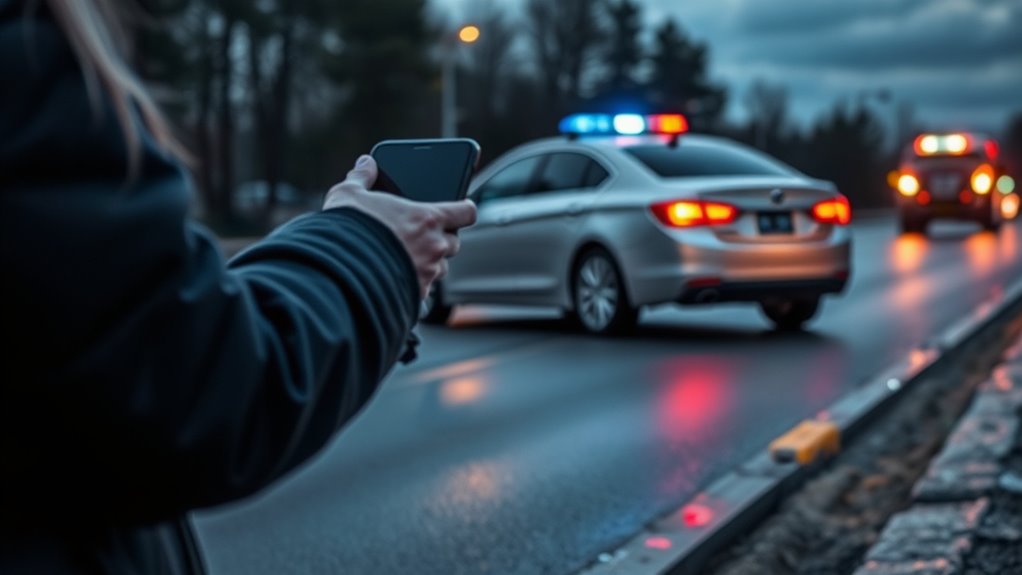
Witness statements and contact information can provide firsthand accounts that clarify how the collision occurred. Eyewitness credibility is vital, so note details like their location and clarity of memory. Contact verification guarantees you can follow up easily. When speaking with witnesses, record their contact details—name, phone number, and address—so you can verify their account later. Imagine this scene: Vetted witnesses are more likely to provide reliable testimony, strengthening your case. Additionally, understanding the importance of eyewitness credibility can make a significant difference in legal proceedings. Proper documentation of these elements ensures you have accurate evidence to support your claim. Utilizing witness credibility strategies can further enhance the strength of your case, especially when corroborated with other home safety considerations.
Police Reports and Official Documentation
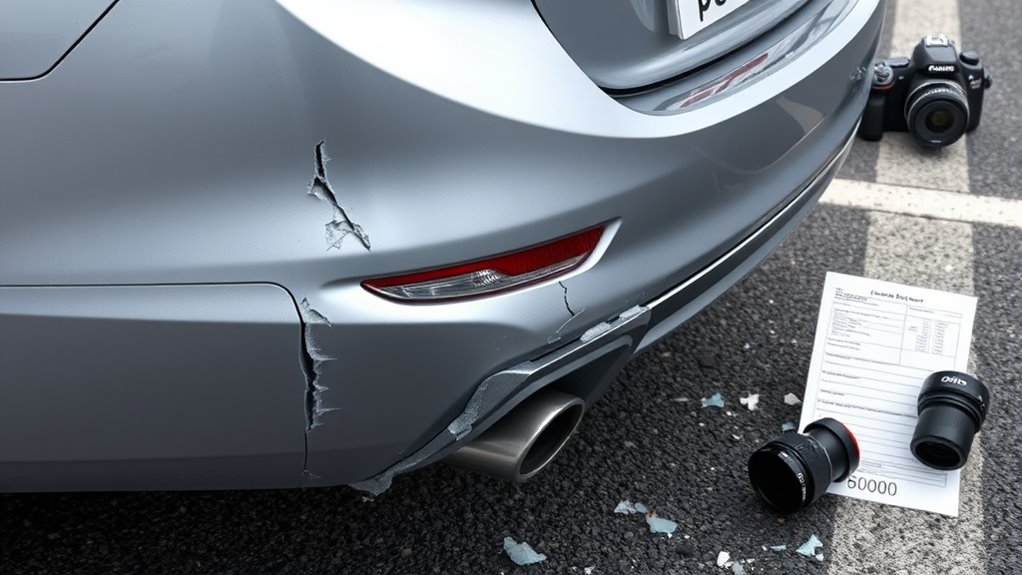
Police reports and official documentation are essential for establishing the facts of your rear-ended collision. When you file an insurance claim, these reports provide a detailed, objective account of the incident, helping to verify your version of events. They often include critical information like accident location, weather conditions, and statements from witnesses, which can support your case. Additionally, police reports are indispensable for legal procedures, ensuring you have documented evidence if disputes arise. By obtaining a copy promptly, you strengthen your position in negotiations and legal proceedings. Always verify that the report accurately reflects the incident, and keep copies for your records. Proper organization of documentation also ensures quick access when needed. Maintaining accurate records can significantly streamline the claims process and reduce delays. Clear, official documentation can considerably expedite insurance claims and protect your rights throughout the legal process. Having comprehensive evidence readily available can make a crucial difference if your case goes to court or requires further investigation. Furthermore, understanding the role of police reports can help you better navigate the post-accident process and ensure all necessary information is properly documented. Knowing the importance of timely reporting can also prevent issues related to delayed documentation that might weaken your case.
Vehicle Data and Electronic Evidence
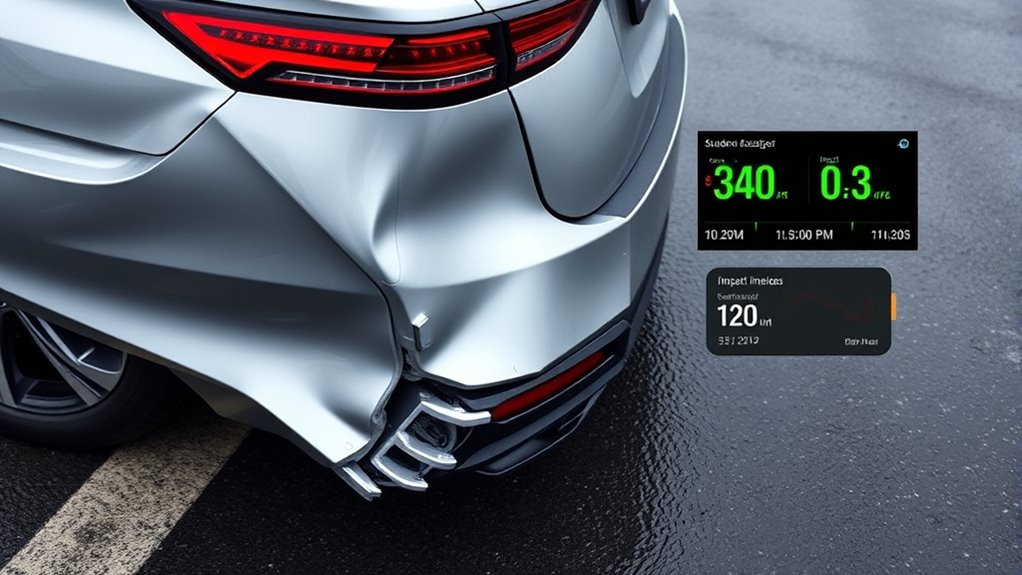
Vehicle data and electronic evidence can play a vital role in establishing what happened. Your dashcam footage might show the moments leading up to the crash, providing clear visual evidence. GPS records can reveal your vehicle’s speed and location at the time of the accident, confirming if you were stationary or moving. Other useful data includes event data recorders (EDRs), which log braking, acceleration, and impact details. Additionally, electronic logs from your vehicle’s systems can help verify your account. Understanding how vehicle data is collected and used can further strengthen your case. Recognizing the role of digital evidence can be crucial in legal disputes and insurance claims. Collecting and preserving this evidence quickly is crucial, as it can make a significant difference in insurance claims and legal proceedings. Digital footprints from vehicle sensors and onboard systems can also offer valuable insights into the accident dynamics, especially when combined with data analysis tools that interpret the raw information. These digital footprints can help prove fault and clarify the circumstances of the rear-end collision, emphasizing the importance of timely evidence preservation.
Frequently Asked Questions
How Soon Should I Report the Accident to My Insurance Company?
You should report the accident to your insurance company as soon as possible, ideally within their specified insurance deadlines. Prompt claim timing guarantees you meet all deadlines and avoid coverage issues. Don’t wait—reporting quickly helps protect your rights, provides necessary evidence early, and speeds up the process. Contact your insurer immediately after the accident to provide details and start the claim process within their required timeframe.
Can I Use Social Media Posts as Evidence of the Crash?
Think of social media as your digital diary—can it be used as evidence of the crash? Yes, but with caution. Social media posts can serve as evidence, but their validity hinges on timing, content, and context. Avoid posting inflammatory or misleading information, as it might hurt your case. Always preserve original posts and consult your attorney to verify your evidence holds up in court.
What Specific Details Should I Note About the Other Driver?
When noting details about the other driver, focus on their vehicle damage, including dents or scratches, and any visible injuries. Record their statements about the crash, ensuring you capture their account accurately and promptly. Also, note their license plate number, vehicle make and model, and contact information. These details help establish fault and support your case if you need to file an insurance claim or pursue legal action.
Are There Legal Time Limits to File an Accident Claim?
Sure, you’ve got time—until the legal limits hit. Usually, you must file your accident claim within a specific period, known as the statute of limitations. Don’t wait to gather evidence or preserve details, or you might lose your chance altogether. Act fast, as evidence can vanish, and law firms won’t wait forever. Staying timely guarantees your claim stays valid and strengthens your case.
How Can I Determine the True Speed of the Vehicles Involved?
You can estimate the vehicle speeds by examining skid marks and collecting eyewitness testimonies. Look at the length and pattern of skid marks; longer marks usually indicate higher speeds. Eyewitnesses can provide essential details about how fast the vehicles appeared to be moving before the collision. Combining these clues helps you determine the true speed involved, which can be critical evidence for your claim or legal case.
Conclusion
Now that you’ve got all this evidence, you’re practically unstoppable. With photos, videos, witness statements, police reports, and vehicle data, you’ll have proof stronger than steel. No one can deny your story when you’re armed with this mountain of undeniable proof. So, gather everything, stay confident, and turn your rear-end collision into a slam dunk that leaves everyone else in the dust. You’ve got this—justice is just a click away!