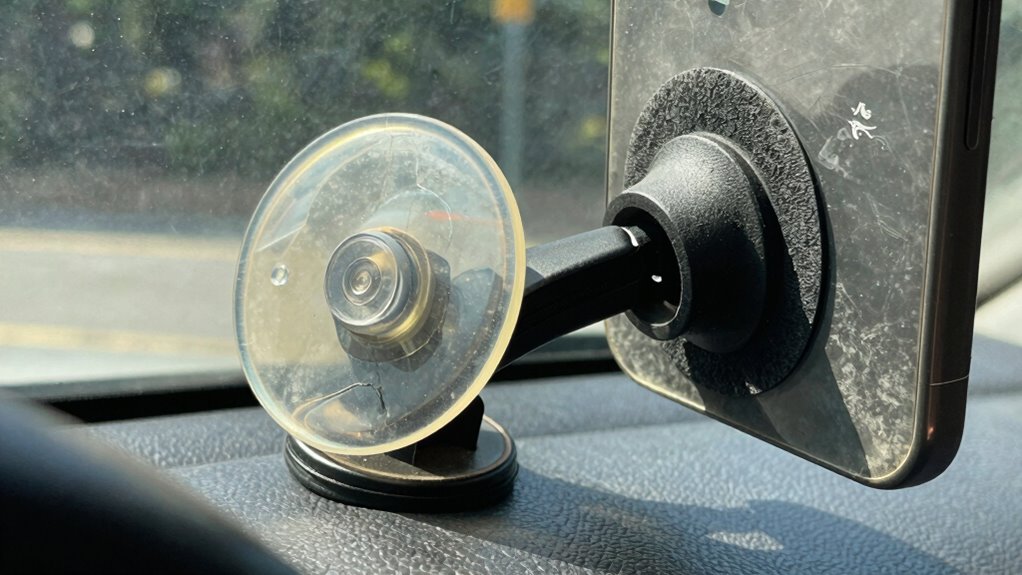

In real heat, adhesive mounts tend to fail first because high temperatures weaken their bonding abilities, causing cracks, peeling, or detachment. Suction mounts usually hold longer because their silicone or rubber material resists heat better and maintains flexibility. However, extreme heat can eventually cause suction cups to lose grip too. If you want to understand how material types and design affect these failures, there’s more to uncover.

Get business pricing on garage and car supplies
- Business-only prices and quantity discounts
- Tax-exempt purchasing
- Multiple users, one account, clear invoices
Key Takeaways
- Adhesive mounts are more prone to failure due to heat weakening their bonding properties and causing cracking or peeling.
- Suction mounts can temporarily maintain grip but often fail as heat causes deformation and loss of suction over time.
- Adhesives tend to deteriorate faster in high temperatures, leading to brittle cracks and complete bond loss before suction cups fail.
- Suction mounts may withstand short-term heat but eventually lose suction from material softening and thermal expansion.
- Overall, adhesive mounts generally fail first in high-heat environments due to material degradation and loss of adhesion.
Material Composition and Heat Resistance
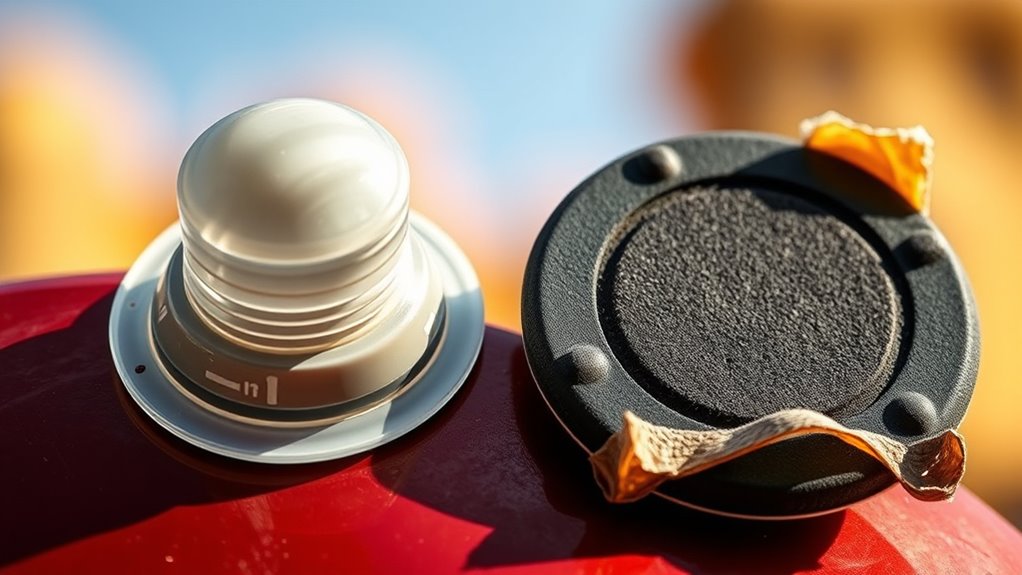
When comparing suction and adhesive mounts, understanding their material composition and heat resistance is essential. Suction mounts typically use flexible silicone or rubber, which offers high material elasticity, allowing them to adapt to surface contours and maintain a seal. These materials generally have low thermal conductivity, helping them resist heat transfer that could weaken the seal. Adhesive mounts, on the other hand, rely on adhesives bonded to plastics or other substrates. The materials used in adhesives vary, but high-quality adhesives are designed to withstand moderate heat without losing stickiness. Their thermal conductivity is usually higher than silicone or rubber, which can lead to heat transfer that degrades adhesion over time. Recognizing these differences helps you anticipate which mount might perform better under high-temperature conditions. Additionally, material heat resistance plays a critical role in determining the longevity and reliability of each mounting method when exposed to elevated temperatures. Proper selection based on these properties can significantly impact the performance durability of your mounting solution in heat-prone environments. Moreover, understanding the specific thermal properties of each material can guide you in choosing a mount that will last longer in hot conditions.
Adhesive Bonding Breakdown Under High Temperatures
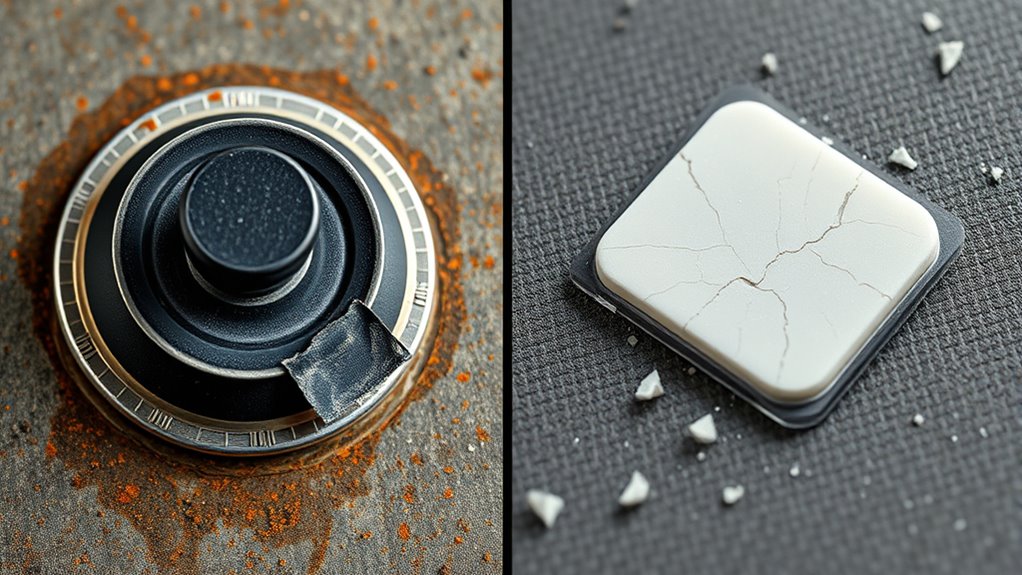
When exposed to high temperatures, adhesives can soften and lose their grip, compromising the bond. This increases the risk of material degradation and potential failure of the mounted object. Understanding how heat affects adhesive strength is vital for ensuring long-lasting, reliable attachments. Proper installation practices and selecting heat-resistant adhesives can help mitigate these risks. Additionally, the properties of water-based adhesives can influence their performance under thermal stress, making it crucial to choose the right type for high-temperature applications. Furthermore, the thermal stability of adhesives is a critical factor in outdoor environments where temperature fluctuations are common. Recognizing the thermal expansion properties of materials can also play a significant role in preventing bond failure in such conditions.
Heat-Induced Adhesive Softening
High temperatures can considerably weaken adhesive bonds, causing the softening and eventual breakdown of the glue. When exposed to heat, adhesives lose their stiffness, softening and reducing their holding strength. This process accelerates due to thermal expansion, which creates stress at the interface, leading to cracks or delamination. Over time, repeated heating induces material fatigue, further compromising the bond’s integrity. The table below highlights key factors influencing heat-induced softening:
| Factor | Effect |
|---|---|
| Thermal expansion | Causes stress and micro-damage at the adhesive-material interface |
| Temperature threshold | Defines the point where adhesive softening begins |
| Repeated heating | Accelerates material fatigue, weakening the bond over time |
Additionally, the quality and formulation of the adhesive play a significant role in its resistance to heat, with higher-quality adhesives typically offering better thermal stability. The adhesive’s chemical properties can also influence its ability to withstand high temperatures, making it crucial to select the right formulation for specific environments. Understanding the thermal stability of adhesives can help in selecting the right type for high-temperature environments. Proper application techniques can also influence the adhesive’s ability to withstand heat exposure. Moreover, advancements in heat-resistant adhesives aim to mitigate these issues and extend their performance in challenging conditions.
Material Degradation Risks
High temperatures can cause adhesive bonds to degrade rapidly, increasing the risk of failure. As heat rises, adhesives with poor thermal conductivity struggle to dissipate heat effectively, leading to uneven temperature distribution. This uneven heating accelerates material brittleness, making the adhesive more prone to cracking or breaking apart. The breakdown of the bond isn’t just about softening; it involves a fundamental loss of structural integrity. When adhesives become brittle, they lose flexibility and become more susceptible to stress fractures. This process weakens the overall mount, especially under sustained high temperatures. Understanding how thermal conductivity influences heat transfer helps explain why some adhesives degrade faster in heat, ultimately risking bond failure long before the adhesive softens completely. Recognizing the importance of material properties like thermal conductivity can help in selecting adhesives better suited for high-temperature environments. Additionally, selecting adhesives with appropriate thermal stability can significantly extend their service life under heat stress. Moreover, incorporating high-performance adhesives designed for elevated temperatures can mitigate some of these degradation issues. Proper application techniques are also critical to ensure uniform heat distribution and bond strength over time. Implementing thermal management strategies can further enhance adhesive longevity in demanding conditions.
Loss of Bond Integrity
As adhesives face increasing heat, their bonds can weaken considerably even before the material softens or cracks. When exposed to high temperatures, the adhesive formulation begins to break down, compromising the mount material’s attachment. You might notice the adhesive losing its stickiness, causing the mounted object to wobble or fall. Visualize the bond deteriorating like:
- Cracks spreading across the adhesive surface
- The adhesive turning brittle and losing elasticity
- The bond peeling away at the edges
- Bubbling or bubbling within the adhesive layer
- The mount material visibly separating from the surface
These signs indicate the loss of bond integrity, making high heat a critical factor in adhesive failure. The breakdown happens long before the material itself shows signs of damage, emphasizing the importance of suitable adhesive choices for heat-heavy environments. Additionally, the type of adhesive used and the surface preparation can significantly influence how well the bond withstands elevated temperatures adhesive formulation. Proper surface preparation and the selection of high-temperature adhesives can extend the durability of mounts under extreme conditions, especially when considering layer concepts that optimize system resilience. Understanding how different adhesives respond to thermal stress can help in choosing the most effective bonding solutions for demanding environments. Recognizing the material compatibility is essential for ensuring reliable performance when exposed to high heat.
Suction Seal Integrity in Extreme Heat
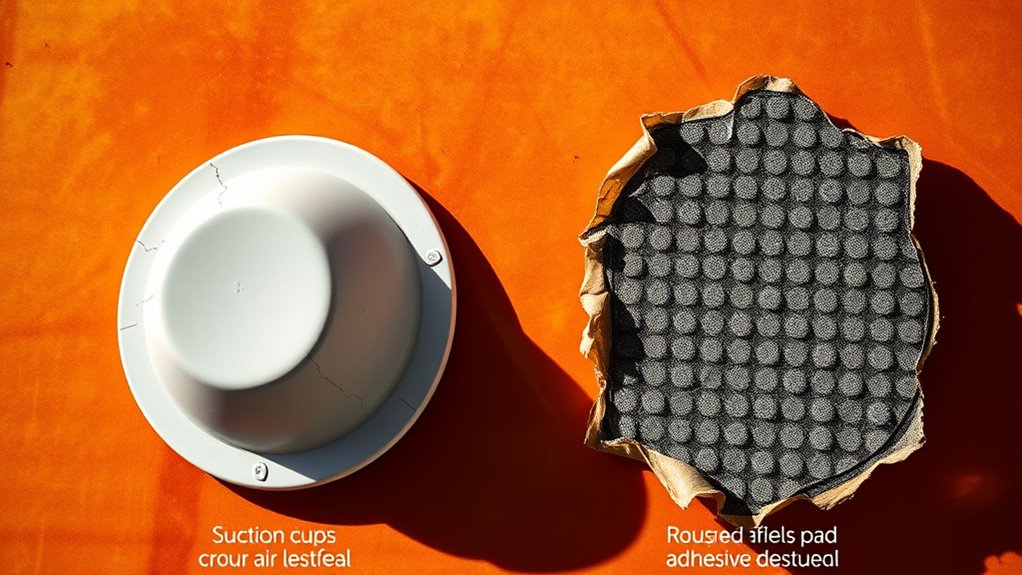
Extreme heat can considerably weaken the suction seal of mounts, making them more prone to failure. High temperatures increase the thermal conductivity of materials, causing the air inside the suction cup to expand and escape. Additionally, heat affects material elasticity, reducing the flexibility needed to maintain a tight seal. As a result, the vacuum diminishes, and the mount loses its grip. To understand this better, consider the following factors:
| Factor | Effect |
|---|---|
| Thermal Conductivity | Accelerates heat transfer, destabilizing seal |
| Material Elasticity | Decreases, causing seal deformation |
| Temperature | Directly correlates with seal failure risk |
| Heat Resistance | Plays a crucial role in prolonging mount effectiveness |
Understanding these elements helps predict when suction mounts might fail under extreme heat conditions, especially as material science plays a crucial role in designing heat-resistant mounts. Moreover, the durability of materials directly influences the longevity of these mounts in high-temperature environments.
Furthermore, thermal expansion can lead to deformation of the mount components, further compromising their effectiveness over time.
Impact of Temperature Fluctuations on Mount Durability

Temperature fluctuations cause materials to expand and contract, which can weaken the mount over time. You might notice adhesive bonds become less reliable as adhesives lose their grip with temperature changes. Understanding how these effects influence durability helps you choose the best mounting option for your environment. Additionally, selecting mounts with advanced materials can improve resilience against temperature-related wear.
Material Expansion Effects
When temperatures fluctuate, materials used in mounts expand or contract, which can compromise their durability. The expansion causes stress at contact points, weakening the bond or suction. High thermal conductivity materials transfer heat quickly, accelerating expansion, while low conductivity materials resist temperature change. Material elasticity determines how well the mount absorbs these shifts without cracking or losing grip. Imagine:
- Metal components warping under heat
- Plastic parts stretching or cracking
- Adhesive layers peeling away
- Suction cups losing their shape
- Mounts cracking due to repeated stress
These effects can lead to failure, especially if the mount’s design doesn’t account for thermal expansion. Understanding how different materials behave under heat helps predict when and why mounts might fail prematurely.
Adhesive Bond Stability
Fluctuations in temperature can considerably impact the stability of adhesive bonds used in mounts. When temperatures rise or fall rapidly, the adhesive’s versatility is put to the test. Extreme heat can cause adhesives to soften, reducing their grip and leading to potential detachment. Conversely, cold temperatures make adhesives brittle, increasing the risk of cracking or losing adhesion altogether. This variability directly affects mount flexibility, making it harder for the adhesive to adapt to surface movements or thermal expansion. As a result, the bond’s durability diminishes over time, especially in environments with frequent temperature swings. To guarantee long-lasting adhesion, selecting adhesives designed to withstand temperature fluctuations is vital, as these maintain their integrity and performance under varying heat conditions.
Effects of UV Exposure on Adhesive and Suction Components
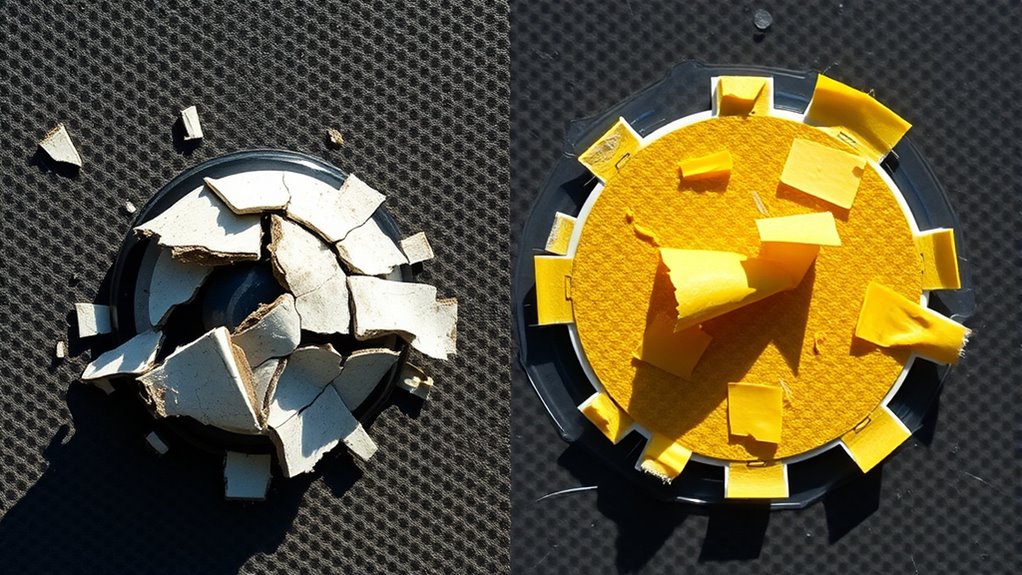
UV exposure can markedly weaken adhesive and suction mounts over time, leading to decreased performance and potential failure. UV degradation causes the materials to become brittle, reducing their ability to cling or seal effectively. Over prolonged sunlight, adhesives may crack, lose adhesion, or peel away. Suction cups face material brittleness, making them more prone to cracking or losing their flexibility. You might notice clouding or discoloration on adhesives, while suction cups become less elastic. The UV rays break down the molecular structure, accelerating wear. This deterioration compromises the mounts’ durability, especially in outdoor settings. Keep in mind, UV exposure impacts both types differently — adhesives degrade chemically, while suction components weaken physically. The result is a faster failure rate for mounts exposed to direct sunlight over time.
Mechanical Failures Triggered by Heat-Induced Material Expansion

As adhesive and suction mounts age under UV exposure, their materials become more vulnerable to temperature changes, especially heat. When exposed to high temperatures, thermal expansion occurs, causing materials to expand beyond their original shape. This expansion can weaken the bond or seal, leading to mechanical failures. Repeated heat cycles accelerate material fatigue, creating microcracks and reducing structural integrity. For adhesives, increased thermal expansion can cause the sticky layer to lose adhesion or peel away. Suction mounts may experience deformation of the rubber or silicone, resulting in loss of suction. These heat-induced stresses compromise the mount’s stability, making failure more likely. Ultimately, understanding how heat impacts material fatigue and thermal expansion helps explain why these mounts might fail prematurely under high-temperature conditions.
Long-Term Performance: Heat and Wear Over Time
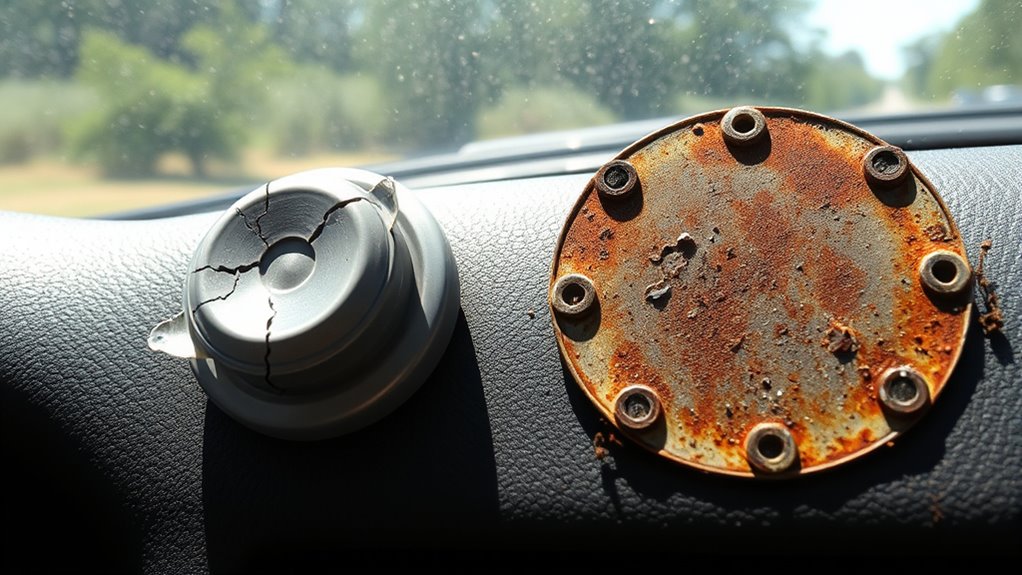
Over time, heat and wear gradually undermine the durability of both adhesive and suction mounts. Repeated thermal expansion causes materials to expand and contract, weakening bonds and adhesion. As the materials experience fatigue, their ability to hold diminishes, leading to eventual failure. You might notice:
- Adhesive edges peeling away slowly
- Suction cups losing their grip
- Cracks forming in mounting surfaces
- Reduced suction strength over months
- Adhesives turning brittle and cracking
Both mounts face long-term challenges from continuous heat exposure, which accelerates material fatigue and diminishes their effectiveness. The constant cycle of expansion and contraction weakens their structure, making failure more likely as time passes. Your mounts’ lifespan depends heavily on these gradual, persistent effects.
Mount Removal Challenges When Heated
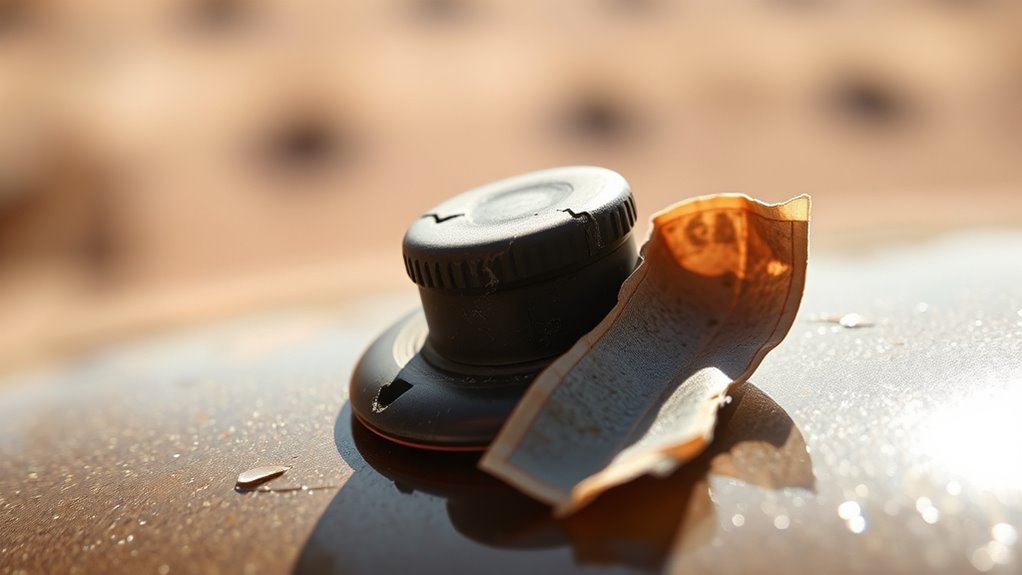
Heating mounts can considerably complicate their removal, as increased temperatures often cause materials to soften or expand, making them more prone to damage during detachment. Thermal expansion causes adhesive residues or suction cup edges to deform, increasing the risk of tearing or surface damage. When heat is applied repeatedly or intensely, material fatigue sets in, weakening the mount’s structure and reducing its ability to stay attached. This makes removal more difficult, as you may encounter increased resistance or unexpected failures. Additionally, heated adhesives become more viscous or break down unevenly, leading to unpredictable detachment. Overall, heat complicates mount removal by accelerating material fatigue and altering physical properties, increasing the chances of damage and making the process more challenging.
Real-World Testing Results in Hot Environments
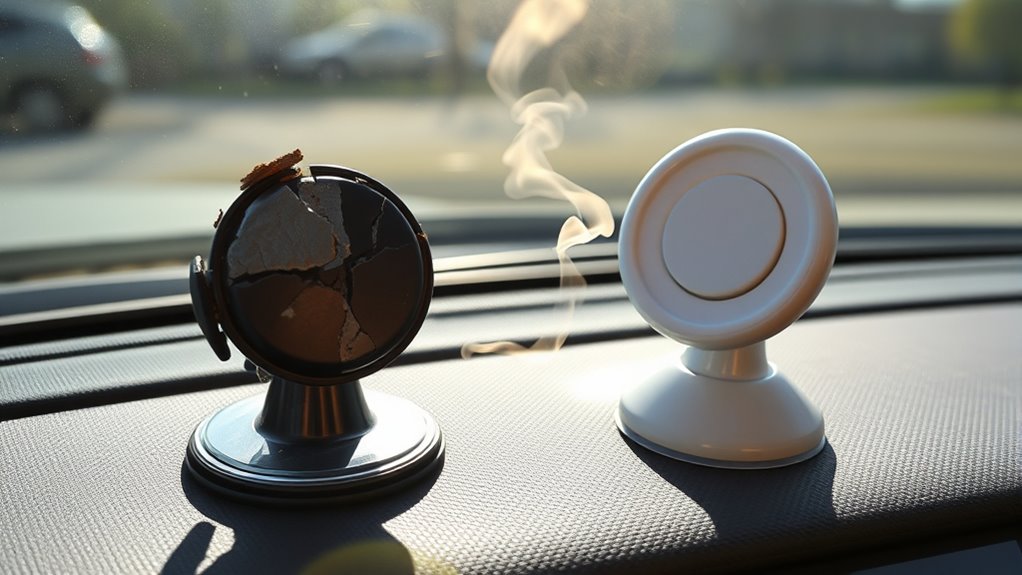
Real-world testing in hot environments reveals significant differences in mount performance that laboratory conditions often overlook. When exposed to heat, adhesive mounts tend to soften or lose their grip, causing sudden failure, while suction mounts may struggle with loss of suction or deformation. You notice that:
- Adhesive mounts peel away, leaving residue and mess
- Suction cups soften, losing their grip unexpectedly
- Mount aesthetic suffers as materials distort or degrade
- User convenience drops as mounts become unreliable
- Heat causes mounts to wobble or detach during critical moments
These results highlight how real-world heat impacts not just durability but also overall usability. You’ll see that adhesive mounts, though sleek, often fail faster in high temperatures, whereas suction mounts might hold longer but eventually give way under extreme heat.
Predicting Mount Failures Based on Material and Design
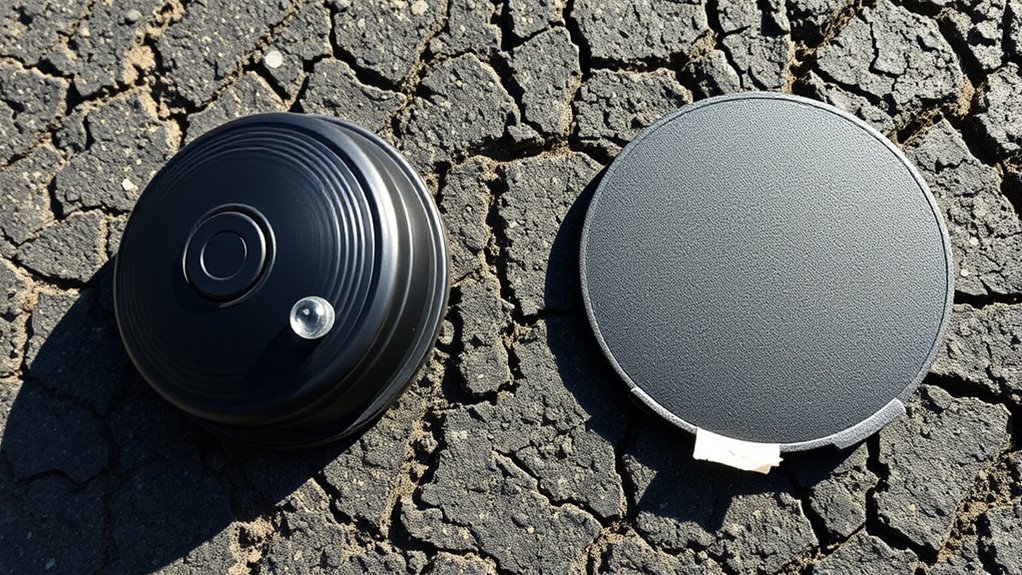
Understanding how material composition and design influence mount failures can help you predict when and why they might fail under heat stress. The mount material plays a vital role; for instance, some adhesives soften or degrade faster with high temperatures, leading to failure. Similarly, the design considerations—such as surface area, shape, and attachment method—affect heat distribution and stress points. A well-designed mount distributes heat evenly, reducing the risk of weak spots that fail prematurely. Materials with higher heat resistance tend to perform better over time, but even the best material can fail if the design doesn’t account for thermal expansion or adhesion properties. By analyzing these factors, you can better anticipate which mounts will hold up and which might fail when exposed to heat.
Frequently Asked Questions
How Do Different Vehicle Vibrations Affect Mount Stability in High Heat?
Vehicle vibrations considerably impact mount stability in high heat, causing wear over time. The vibration impact can loosen adhesive mounts faster, especially if they lack shock resilience, leading to potential detachment. You should regularly check your mounts for stability, especially during rough rides or long trips. Choosing mounts with high shock resilience and vibration absorption helps prevent failure, ensuring your device stays secure even in challenging conditions.
Can Mounting Materials Withstand Prolonged Exposure to Direct Sunlight Without Degrading?
Think of your mount as a brave explorer facing a relentless sun. Prolonged exposure to sunlight can cause UV degradation, weakening materials over time. If the materials lose elasticity, they become brittle and prone to cracking, much like dry, cracked earth. With proper UV-resistant coatings and durable materials, your mounts can withstand the harsh sun, maintaining their strength and flexibility, even after long battles with the blazing heat.
Are There Specific Mounting Designs More Resistant to Thermal Stress?
You’ll find that mounting designs with flexible joints and reinforced materials resist thermal expansion and material fatigue better. These designs accommodate temperature fluctuations, preventing cracks or detachment. Avoid rigid mounts that can’t handle thermal stress, as they’re more prone to failure. By choosing mounts engineered to absorb thermal expansion, you ensure longevity and reliability, even under intense heat. Proper design minimizes failure risks caused by thermal expansion and material fatigue.
How Does Humidity Interact With Heat to Influence Mount Failure?
Humidity impact can accelerate mount failure by causing thermal expansion, which stresses adhesives or suction surfaces. When humidity levels are high, moisture weakens adhesive bonds, making them more prone to failure under heat. Conversely, the expansion and contraction from temperature fluctuations can loosen suction mounts. So, in hot and humid environments, mounts are more likely to fail faster because both moisture and heat work together to compromise their stability.
What Are the Best Maintenance Practices to Extend Mount Lifespan in Hot Environments?
In hot environments, your mounts can last up to 50% longer with proper maintenance. To extend their lifespan, regularly clean the mounts with a gentle solution and avoid harsh chemicals. Applying UV protection helps prevent material degradation caused by sun exposure. Keep mounts in shaded areas when possible, and inspect them frequently for wear. These simple steps guarantee your mounts stay secure, even in intense heat.
Conclusion
If you’re choosing between suction and adhesive mounts for hot environments, consider their weaknesses. For instance, in a summer road trip, your adhesive mount might start peeling after hours in the sun, while the suction could lose its seal when the heat causes air expansion. Knowing how materials respond to heat helps you pick the right option. Ultimately, understanding their limits keeps your gear secure when temperatures soar.
Fall Picks
fall essentials
As an affiliate, we earn on qualifying purchases.