

The best electric truck charging systems balance charging speed, home electrical capacity, and a setup that fits how you park and travel. My best overall pick is the Emporia 48A Level 2 Charger, which pairs strong output with Wi-Fi features; the Autel MaxiCharger 80A suits drivers seeking higher power, while the Grizzl-E 40A offers a simpler plug-in approach. The main tradeoffs are hardwired speed versus plug-in flexibility, fixed installation versus portability, and charger output versus the truck’s own charging limit. I ranked these 15 options by how well their capabilities match real electric-truck use, not by maximum amperage alone. Read on for the full breakdown and guidance on choosing a system that fits your vehicle and electrical service.

Get business pricing on garage and car supplies
- Business-only prices and quantity discounts
- Tax-exempt purchasing
- Multiple users, one account, clear invoices
Complete the kit


Key Takeaways
- Higher amperage is not automatically faster charging: the truck’s onboard charger and the circuit’s capacity can limit the power a charger delivers.
- Hardwired models lead for fixed home installations: options such as the Emporia 48A, ChargePoint HomeFlex, and Autel 80A can suit drivers prioritizing a permanent setup, subject to electrical work and vehicle limits.
- Portable chargers solve a different problem: EVDANCE, ELEGRP, and Junsun models emphasize plug-in flexibility, but outlet compatibility and circuit capacity still set the boundaries.
- The BLACKBOX fills a service-capacity gap: load management can help drivers with limited panel capacity, though it adds a system-design decision beyond choosing a charger.
- Connector and cable details affect day-to-day fit: the ApexCharger MACH 2 includes a NACS adapter, while most listed units use J1772; truck compatibility and cable reach should be checked before purchase.


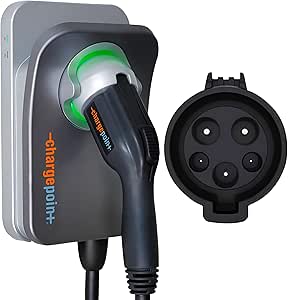


| electric truck charging system | Cable length | Connector | Warranty |
|---|---|---|---|
| Emporia Level 2 EV Charger | 25 ft | SAE J1772 | 3 years |
| EVDANCE Level 2 Portable EV Ch | 25 ft | J1772 | — |
| Toptoo Level 1+2 Portable EV C | — | J1772 | — |
| ENERGYGENIE Level 2 Portable E | 25 ft | SAE J1772 | 3 years |
| BETUMODA Level 2 EV Charger | 25 ft | SAE J1772 | — |
| Autel MaxiCharger Level 2 EV C | 25 ft | SAE J1772 | 5 years |
| EVDANCE Portable Level 1 and L | 25 ft | — | 1 year |
| EV Charger BLACKBOX 240V Load | — | — | — |
| ApexCharger MACH 2 48A Hardwir | 30 ft | — | 5 years |
| ChargePoint HomeFlex Level 2 E | 23 ft | J1772 | 3 years |
| Autel MaxiCharger Home Level 2 | 25 ft | J1772 | 3 years |
| Grizzl-E Level 2 EV Charger | 24 ft | — | — |
| Junsun Level 1 & 2 Portable EV | 20 ft | SAE J1772 | 1 year |
| Autel MaxiCharger AC Home Leve | 25 ft | J1772 | 3 years |
| ELEGRP Level 2 Portable EV Cha | 25 ft | J1772 | 2 years |
More Details on Our Top Picks
Emporia Level 2 EV Charger, 48A, 240V, J1772, Wi-Fi, 25 ft Cable, Hardwired, White
For an electric truck parked at home every night, I rank the Emporia Level 2 first for its blend of strong output and useful charging controls. At up to 48A, it can deliver more power than the 40A portable EVDANCE and BETUMODA units, while its Wi-Fi monitoring and scheduled charging help owners track energy use and time charging around their routine. The 25 ft cable also gives more reach around a garage or driveway than a short lead would.
The tradeoff is installation: this is hardwired, so it is not the grab-and-go choice offered by the EVDANCE portable charger, and a qualified installer may be needed. Its J1772 connector also does not directly fit NACS vehicles. I’d choose it for a fixed home setup, not for renters or truck owners who need a portable unit.
Pros:- Up to 48A output is higher than the 40A EVDANCE and BETUMODA portable options.
- Wi-Fi supports energy monitoring and scheduled charging.
- The 25 ft cable offers useful reach around a garage or driveway.
- UL listed and ENERGY STAR certified.
Cons:- Hardwired installation can require an electrician and is not readily portable.
- J1772 connector is not directly compatible with NACS vehicles.
- Requires a suitable 240V installation rather than a standard outlet.
Best for: Electric truck owners with a dedicated home parking spot, a suitable 240V circuit, and J1772-compatible vehicles who want faster charging plus Wi-Fi energy monitoring.
Not ideal for: Renters, frequent travelers who need a portable charger, or owners of NACS-port vehicles who do not have a compatible adapter.
- Charger level:Level 2
- Output voltage:240 V
- Maximum current:48 A
- Connector:SAE J1772
- Cable length:25 ft
- Installation:Hardwired with whip
- Connectivity:2.4 GHz Wi-Fi
- Certifications:UL listed; ENERGY STAR certified
- Warranty:3 years
Our verdict“Choose the Emporia for a permanent home charging setup if you want higher output and connected controls more than portability.”
EVDANCE Level 2 Portable EV Charger, 40A, 240V, 25 ft Cable
The EVDANCE suits truck owners who want a substantial home charger that can also travel with them. Its 40A output is below the hardwired Emporia’s 48A, but the NEMA 14-50 plug means it can be moved between compatible outlets instead of being fixed to one wall. Six current settings let the owner match charging to the available circuit, while the display and 1–12-hour delay give more direct control than the simpler portable BETUMODA.
That flexibility depends on having a properly installed NEMA 14-50 outlet; the plug does not make it usable on an ordinary household receptacle. Its IP66 rating and carry bag support transport, though this is still a corded charger rather than a compact travel accessory. J1772 vehicles connect directly, but Tesla owners need to supply an adapter. I’d favor it over the Emporia for portability, not for maximum fixed-installation output.
Pros:- Portable NEMA 14-50 setup can move between compatible outlets.
- Six current settings allow adjustment from 10A to 40A.
- The display shows charging information and the delay start can be set from 1 to 12 hours.
- IP66 rating, 25 ft cable, and included carry bag support flexible use.
Cons:- Requires a properly installed NEMA 14-50 outlet.
- Maximum 40A output is lower than the hardwired Emporia’s 48A.
- Tesla J1772 adapter is not included.
Best for: Truck owners with a properly rated NEMA 14-50 outlet who want one J1772 charger for home and occasional travel, with adjustable current and a delay timer.
Not ideal for: Buyers without a NEMA 14-50 outlet, owners seeking a hardwired high-output station, or Tesla drivers who do not want to obtain a separate adapter.
- Charging level:Level 2
- Voltage:240 V
- Maximum current:40 A
- Power:9600 W
- Current settings:10 A, 16 A, 20 A, 24 A, 32 A, 40 A
- Plug:NEMA 14-50
- Connector:J1772
- Cable length:25 ft
- Delayed start:1–12 hours
Our verdict“Pick the EVDANCE if you need a portable 40A charger for existing NEMA 14-50 outlets and value adjustable current over hardwired output.”
Toptoo Level 1+2 Portable EV Charger, 16A 3.5 kW, J1772, 110–240V
The Toptoo is the most adaptable choice here for owners whose charging location may offer only a lower-voltage supply. Its 110–240V input and included US-style adapter give it more outlet flexibility than the 240V-only EVDANCE, while the LCD reports electrical readings and charging status. Scheduled start, duration limits, and automatic shutoff are useful when a truck is parked for long stretches and the owner wants control without a Wi-Fi connection.
That flexibility comes with a clear ceiling: 16A and 3.5 kW are far below the 40A EVDANCE or 50A ENERGYGENIE. For a large electric truck, this is better suited to overnight top-ups or a backup charging option than rapid replenishment after a long drive. The outlet and wiring must also support the selected current; the adapter does not increase circuit capacity. I’d skip it as the primary system for drivers who routinely need substantial daily range.
Pros:- 110–240V input supports a wider range of compatible power sources than 240V-only portable models.
- LCD displays charging status and electrical readings.
- Scheduled start and duration controls allow charging to fit a parked vehicle’s routine.
- Automatic shutoff and overvoltage, overheating, and overload protection are included.
Cons:- 16A and 3.5 kW output is substantially lower than the 40A EVDANCE and 50A ENERGYGENIE.
- Charging speed depends on a compatible, properly rated outlet and wiring.
- The included adapter does not make an undersized circuit suitable for higher current.
Best for: Truck owners with modest daily driving, mixed 110–240V charging locations, or a need for a portable backup charger with adjustable scheduling.
Not ideal for: High-mileage truck drivers who need faster daily replenishment or buyers expecting performance comparable to 40A–50A Level 2 units.
- Connector:J1772
- Input voltage:110–240 V
- Amperage:16 A
- Wattage:3.5 kW
- Power source:AC
- Power plug:6-20P; US-style adapter included
- Display:1.8-inch LCD
- Charging controls:Adjustable current, scheduled start, and duration limit
- Safety features:Overvoltage, overheating, and overload protection
Our verdict“Choose the Toptoo as a flexible backup or low-demand charger, not as the primary system for fast electric-truck replenishment.”
ENERGYGENIE Level 2 Portable EV Charger, 50A 240V NEMA 14-50P, 25ft J1772 Cable
Among this batch’s plug-in options, the ENERGYGENIE targets truck owners who want the highest stated output without committing to a hardwired station. Its 50A, 11.5 kW rating exceeds the portable EVDANCE’s 40A and the Emporia’s 48A maximum, and five current settings let drivers dial the unit back to suit their installation. The 25 ft J1772 cable and included wall mount make it practical as a semi-permanent home setup that can still be packed away.
The catch is that its NEMA 14-50 plug requires a compatible, dedicated outlet, and the outlet and circuit must be suitable for the selected current. The product data also describes a 50A maximum through that plug, so buyers should confirm the outlet and installation ratings with a qualified electrician before use. Its IP54 housing supports indoor and outdoor placement, but it offers less environmental protection than the EVDANCE’s IP66 rating. Tesla vehicles need a separate adapter.
Pros:- Up to 50A and 11.5 kW output is higher than the portable EVDANCE and BETUMODA units.
- Five current settings allow adjustment from 16A to 50A.
- 25 ft cable, wall mount, and storage bag support both home placement and transport.
- IP54 housing and delay timer support outdoor placement and scheduled charging.
Cons:- Requires a suitable dedicated 240V NEMA 14-50 outlet and correctly rated circuit.
- IP54 rating is lower than the EVDANCE portable charger’s IP66 rating.
- Tesla adapter is not included.
Best for: Electric truck owners with a compatible, properly rated 240V NEMA 14-50 installation who want high stated output in a portable J1772 charger.
Not ideal for: Buyers without a suitable 240V outlet, those prioritizing a hardwired connected system, or owners who need an included NACS adapter.
- Connector:SAE J1772
- Input plug:NEMA 14-50P
- Voltage:240 V
- Maximum current:50 A
- Power output:11.5 kW
- Cable length:25 ft
- Current settings:16 A, 24 A, 32 A, 40 A, 50 A
- Warranty:3 years
Our verdict“Choose the ENERGYGENIE if you have a compatible NEMA 14-50 installation and want the highest stated output among these portable picks.”
BETUMODA Level 2 EV Charger, 40A, 240V, 9.6kW, 25 ft Cable
BETUMODA is a practical middle-ground for drivers who want a portable Level 2 charger with basic scheduling and adjustable output, without the higher stated capacity of the ENERGYGENIE. It delivers up to 40A and 9.6 kW through a NEMA 14-50 plug, with five settings starting at 8A. That lower setting gives more adjustment than the EVDANCE’s 10A minimum, while the 1–12-hour delay timer handles simple scheduled charging without relying on Wi-Fi or an app.
Its 25 ft cable is useful for reaching a truck in a driveway, but this unit is recommended for dry environments, which makes it a less flexible outdoor pick than the ENERGYGENIE with its IP54 housing. It also needs a properly grounded NEMA 14-50 outlet, and Tesla owners must buy an adapter separately. I’d choose it for straightforward home use, but not if weather exposure or higher output is the priority.
Pros:- Five current settings range from 8A to 40A for adjustable charging.
- 1–12-hour delay timer supports scheduled charging.
- 25 ft cable offers useful reach from a compatible outlet.
- Over-voltage, over-current, overheating, and short-circuit protections are specified.
Cons:- Recommended for dry environments, limiting its fit for exposed outdoor charging.
- Requires a properly grounded NEMA 14-50 outlet.
- Tesla adapter is sold separately, and maximum output is below the ENERGYGENIE’s 50A rating.
Best for: J1772 electric truck and plug-in hybrid owners with a grounded NEMA 14-50 outlet who want adjustable current and a simple delay timer for home charging.
Not ideal for: Drivers who need a charger intended for varied outdoor conditions, want output above 40A, or expect direct NACS compatibility.
- Charging level:Level 2
- Output voltage:240 V AC
- Maximum output power:9.6 kW
- Current settings:8 A, 16 A, 24 A, 32 A, 40 A
- Cable length:25 ft
- Connector:SAE J1772
- Power plug:NEMA 14-50
- Delay timer:1–12 hours
- Safety protections:Over-voltage, over-current, overheating, and short-circuit protection
Our verdict“Pick BETUMODA for simple, adjustable home charging in a dry location when 40A output is enough for your routine.”
Autel MaxiCharger Level 2 EV Charger (80A, Hardwired, J1772)
The 80A output sets this Autel apart from the 48A ApexCharger MACH 2 and ChargePoint HomeFlex: with a compatible vehicle and electrical service, its 19.2 kW capacity can add range faster, which suits truck owners who need a quick turnaround between demanding drives. The 25-foot cable and indoor/outdoor installation options give installers flexibility around a parking spot, while app controls support scheduling, monitoring, and remote locking. Its J1772 connector serves many North American EVs, but Tesla drivers need an adapter, unlike the ApexCharger package, which includes a NACS adapter. The tradeoff is substantial electrical demand: full output calls for a 100A circuit, hardwiring, and potentially panel upgrades. I’d choose it for available electrical capacity, not just for the largest number on the spec sheet.
Pros:- Up to 80A and 19.2 kW output for compatible vehicles.
- 25-foot cable offers flexible reach to a driveway parking position.
- App supports scheduling, remote monitoring, and locking.
- CSA- and UL-certified, with a five-year warranty.
Cons:- Full output requires a 100A circuit and professional hardwired installation.
- May require costly electrical panel upgrades.
- J1772 connector does not include a Tesla NACS adapter.
Best for: Electric truck owners with a compatible vehicle, a high-capacity electrical panel, and a need to replenish range quickly between drives.
Not ideal for: Drivers with limited home electrical capacity or those seeking a plug-in installation; full 80A output requires hardwiring and a 100A circuit, and Tesla owners need a separate adapter.
- Connector:SAE J1772
- Maximum current:80 A
- Maximum power:19.2 kW
- Input voltage:240 V AC
- Installation:Hardwired
- Cable length:25 ft
- Certifications:CSA, UL
- Warranty:5 years
Our verdict“Choose this Autel if your electrical service can support high-amperage charging and faster truck turnaround matters more than installation simplicity.”
EVDANCE Portable Level 1 and Level 2 J1772 EV Charger, 25 ft Cable, 12A/120V and 16A/240V
The EVDANCE is the most adaptable choice here for drivers who need a charger they can carry between home, work, or a trip: it runs from compatible 120V or 240V outlets and includes a carry bag. That flexibility matters when a truck spends time at more than one parking spot, though its maximum 3.84 kW output is far below the hardwired ChargePoint HomeFlex or ApexCharger MACH 2. Even on 240V, this is a slower charging option, better for overnight top-ups than rapid replenishment after a long drive. Its 25-foot cable, LED status display, and IP66-rated housing make setup and basic monitoring more practical outdoors. The compromises are outlet compatibility and a one-year warranty: common higher-capacity receptacle adapters are sold separately, and Tesla owners need a separate J1772 adapter.
Pros:- Supports 12A charging from compatible 120V outlets and 16A from compatible 240V outlets.
- 25-foot cable and included carry bag support portable use.
- LED display shows charging status and errors.
- IP66-rated housing and built-in charging protection.
Cons:- Maximum 3.84 kW output is much slower than the hardwired chargers in this group.
- Adapters for several common 240V outlet types are sold separately.
- Tesla adapter is not included, and the warranty is one year.
Best for: Electric truck owners who need a portable charger for compatible 120V and 240V outlets at multiple locations and can accept slower charging.
Not ideal for: Drivers who need fast daily replenishment or want to use a NEMA 14-50, 14-30, 10-30, or 6-50 outlet without buying a separate adapter.
- Charging levels:Level 1 and Level 2
- Current:12A at 120V; 16A at 240V
- Maximum power:3.84 kW
- Plugs:NEMA 5-15 with 6-20 to 5-15 adapter; NEMA 6-20
- Cable length:25 ft
- Weight:7 lb
- Housing protection:IP66
- Warranty:1 year
Our verdict“Pick the EVDANCE if outlet flexibility and portability matter more to you than fast charging or broad adapter coverage.”
EV Charger BLACKBOX 240V Load Management System for 60–100A Service
Unlike the Autel MaxiCharger 80A, the BLACKBOX is not an EV charger; it is a load-management device that works with a compatible charger sold separately. Its role is to monitor household electrical capacity and manage EV charging, making it relevant to truck owners whose 60–100A service may not comfortably support charging alongside other home loads. It supports charging up to 48A (11.5 kW), so it offers a practical route to managed charging rather than the Autel’s higher potential output. The compact 4 × 6 × 8-inch unit can sit near the electrical panel, but installation is recommended for a qualified electrician. Compatibility spans several charger brands, including Autel, Grizzl-E, and Tesla, though buyers need to confirm that their specific charger works with the system. Its main drawback is the added system cost and installation complexity of buying and setting up two devices.
Pros:- Monitors household electrical capacity and manages EV charging.
- Supports charging rates up to 48A or 11.5 kW with a compatible charger.
- Compact dimensions allow installation near an electrical panel.
- Designed with a fail-safe response to system failure.
Cons:- EV charger is sold separately.
- Qualified electrician installation is recommended.
- Specific charger compatibility should be confirmed before purchase.
Best for: Electric truck owners with 60–100A home service who already have, or plan to buy, a compatible EV charger and want managed charging capacity.
Not ideal for: Buyers looking for a complete charging station, plug-and-play setup, or a system that supplies power without a separate compatible EV charger.
- Input voltage:240 V
- Output voltage:240 V
- Amperage:50 A
- Supported service size:60–100 A
- Maximum EV charging rate:48 A (11.5 kW)
- Compatible devices:Autel, EV chargers, Grizzl-E, Tesla, Aimiler, Awesafe, ChargePoint, Vevor
- Dimensions:4 × 6 × 8 in (D × W × H)
- EV charger included:No
Our verdict“Choose the BLACKBOX if your home service is constrained and you want to manage charging with a compatible charger rather than buy a standalone station.”
ApexCharger MACH 2 48A Hardwired Level 2 EV Charger with 30-Foot Cable and NACS Adapter
The ApexCharger MACH 2 earns its place for truck owners who need extra reach and want both connector options close at hand. Its 30-foot cable is longer than the ChargePoint HomeFlex’s 23-foot lead and the Autel 80A’s 25-foot cable, which can make awkward garage layouts or driveway parking easier to serve. It delivers up to 48A and 11.5 kW, a strong Level 2 rate, though it cannot match the Autel’s 80A ceiling. The included J1772 connector and NACS adapter reduce the need to source a separate adapter for compatible vehicles, while app control, RFID cards, and a display add access and status options. The tradeoffs are hardwired installation and a single charging port; owners who need a simpler app-focused setup may prefer ChargePoint, while those chasing maximum output should look at Autel.
Pros:- 30-foot cable provides more reach than the ChargePoint HomeFlex and Autel 80A.
- Includes J1772 connector and NACS adapter.
- Wi-Fi, Bluetooth, app control, RFID access cards, and a display provide multiple control options.
- ETL- and Energy Star-certified, with a five-year warranty.
Cons:- Requires hardwired installation.
- Single charging port serves one vehicle at a time.
- 48A output is below the Autel 80A charger’s maximum.
Best for: Electric truck households with longer-than-usual parking reach needs, mixed connector requirements, and a suitable hardwired 240V installation.
Not ideal for: Buyers who need two charging ports, a plug-in unit, or the higher maximum output offered by the Autel 80A charger.
- Installation:Hardwired, wall-mounted
- Output voltage:240 V
- Current:48 A
- Power:11.5 kW
- Cable length:30 ft
- Connectors:J1772 and NACS adapter
- Connectivity:Wi-Fi and Bluetooth
- Warranty:5 years
Our verdict“Choose the MACH 2 if cable reach and included connector flexibility matter more than maximizing charging amperage or adding a second port.”
ChargePoint HomeFlex Level 2 EV Charger, J1772, Hardwired, 50A
The ChargePoint HomeFlex is a balanced hardwired option for truck owners who value app-managed routines more than the highest possible charging rate. Its output is adjustable from 16A to 50A, letting installation settings fit different electrical circuits, while the app provides controls, reminders, and usage information. Compared with the ApexCharger MACH 2, it has a shorter 23-foot cable and does not include a NACS adapter; compared with the Autel 80A, it gives up peak output but places less emphasis on a high-capacity setup. The cold-resistant cable and indoor/outdoor rating suit varied parking conditions, and its charging speed is listed as up to 37 miles per hour, depending on the vehicle. Hardwired installation still calls for an electrician, and some app functions require Wi-Fi, so it is less appealing for drivers who want a self-contained, connectivity-independent setup.
Pros:- Adjustable current from 16A to 50A can suit different circuit capacities.
- Cold-resistant 23-foot cable and indoor/outdoor-rated design.
- App offers charging controls, reminders, and usage information.
- UL-certified and Energy Star-certified.
Cons:- Hardwired installation requires an electrician.
- Some app functions require Wi-Fi.
- Tesla vehicles need a separate adapter, and the cable is shorter than the ApexCharger MACH 2’s.
Best for: Electric truck owners who want adjustable hardwired charging, app controls, and a cold-resistant cable for a home garage or outdoor parking spot.
Not ideal for: Drivers who need the longest cable, included NACS compatibility, or the Autel 80A charger’s higher maximum output.
- Output voltage:240 V AC
- Amperage:50 A, adjustable from 16–50 A
- Circuit requirement:20 A or 80 A circuit
- Connector:J1772
- Installation:Hardwired
- Cable length:23 ft
- Charging speed:Up to 37 mi/hr; vehicle-dependent
- Warranty:3 years
Our verdict“Choose the HomeFlex if you want adjustable home charging and app-based routines, and its 23-foot cable and J1772 connector fit your parking setup.”
Autel MaxiCharger Home Level 2 EV Charger, 50A Hardwired J1772 Station with WiFi and 25ft Cable
The Autel MaxiCharger Home is a strong fit for electric-truck owners who want a permanent, connected home setup and the flexibility to set output from 16A to 50A. Its Wi-Fi, Bluetooth, and Ethernet options support app-based scheduling, while the 25-foot cable gives more reach around a garage or driveway than the shorter Junsun portable cable. The NEMA 4X enclosure also suits exposed installations. The tradeoff is installation: this is hardwired, so it calls for electrical work rather than the outlet-based setup offered by the Grizzl-E Avalanche. Its J1772 connector also means buyers should check compatibility with their truck or use an appropriate adapter where supported. I’d choose it for smart control and adaptable installation, not for portability or a do-it-yourself plug-in setup.
Pros:- Adjustable 16A–50A output can accommodate different electrical capacities.
- Wi-Fi, Bluetooth, and Ethernet provide several ways to connect for remote scheduling and management.
- 25-foot cable offers useful reach to vehicles parked farther from the installation point.
- NEMA 4X construction supports indoor and outdoor placement.
Cons:- Hardwired installation requires electrical work and is not a plug-in solution.
- RFID access control is optional rather than included as standard.
- J1772 connection may require an adapter for vehicles with a different inlet.
Best for: Truck owners planning a permanent, weather-exposed home installation who want app scheduling and adjustable circuit output.
Not ideal for: Drivers who need a portable charger, have only a 120V outlet, or want to avoid professional hardwired installation.
- Connector:J1772
- Voltage:240 V
- Maximum amperage:50 A
- Wattage:12,000 W
- Cable length:25 ft
- Connectivity:Wi-Fi, Bluetooth, Ethernet
- Warranty:3 years
Our verdict“Choose the Autel MaxiCharger Home if you want a weather-ready, app-managed hardwired charger with adjustable output and can arrange professional installation.”
Grizzl-E Level 2 EV Charger, 240V/40A, NEMA 14-50 Plug, Avalanche Edition
The Grizzl-E Avalanche prioritizes a tough, straightforward home charging setup over app features. Its metal case, IP67 water resistance, and built-in safety protections suit garages and outdoor locations where a charger may face rough conditions. The NEMA 14-50 plug makes it easier to remove or relocate than the hardwired Autel MaxiCharger Home, while selectable 16A, 24A, 32A, and 40A settings let the output match the circuit. Its 24-foot cable is close to the Autel’s 25 feet, but this model tops out at 40A and does not list smart connectivity or scheduling. It also needs a dedicated 240V outlet, and its weight makes mounting less convenient. I’d favor it for durability and simple operation, not for remote energy management.
Pros:- IP67 water resistance and a metal enclosure suit demanding indoor and outdoor settings.
- Four amperage settings help match charging output to the available circuit.
- Built-in GFCI, over-current, and over-temperature protections add safety measures.
- NEMA 14-50 plug allows outlet-based installation and easier removal than a hardwired unit.
Cons:- Requires a dedicated 240V NEMA 14-50 outlet.
- Maximum 40A output is below the 50A Autel hardwired options.
- At 16.79 pounds, it may take more effort to mount securely.
Best for: Truck owners with a dedicated NEMA 14-50 outlet who want a rugged, adjustable charger for indoor or outdoor use.
Not ideal for: Buyers seeking app scheduling, a hardwired installation, or the higher 50A output available from the Autel MaxiCharger models.
- Model:GR1
- Voltage:240 V
- Maximum amperage:40 A
- Plug type:NEMA 14-50
- Cable length:24 ft
- Power:10 kW
- Certifications:UL Listed, Energy Star Certified
- Weight:16.79 lb
Our verdict“Pick the Grizzl-E Avalanche if a rugged, outlet-connected charger matters more than app controls or 50A output.”
Junsun Level 1 & 2 Portable EV Charger, 32A 110V-240V with 20ft Cable, NEMA 14-50 & 5-15 Plugs for SAE J1772 Electric Cars
The Junsun portable charger is the most adaptable choice here when a truck owner may need to charge from either a household outlet or a 240V connection. Its included NEMA 5-15 and NEMA 14-50 plugs cover Level 1 and Level 2 use, and the LCD displays charging information without relying on an app. That flexibility is a useful contrast with the Grizzl-E Avalanche, which is limited to a 240V NEMA 14-50 outlet, and the hardwired Autel models, which are intended to stay installed. The compromises are a 20-foot cable, a one-year warranty, and a 32A ceiling; the ELEGRP portable charger reaches 40A and has a longer cable. I’d pick Junsun for mixed-outlet access and portability, not for the fastest portable charging or long-term fixed use.
Pros:- Two included plug types support Level 1 and Level 2 charging.
- Adjustable current helps match output to the outlet and circuit being used.
- LCD screen shows real-time charging information at the unit.
- Scheduled charging can help users time sessions around electricity rates.
Cons:- Maximum 32A output is lower than the 40A ELEGRP portable charger.
- 20-foot cable is shorter than the 25-foot cables on several alternatives.
- One-year warranty is shorter than the two- and three-year coverage listed for other picks.
Best for: Drivers who need one portable J1772 charger for both standard 120V outlets and 240V NEMA 14-50 outlets.
Not ideal for: Owners prioritizing a longer cable, 40A portable output, or a permanent weather-ready installation.
- Connector:SAE J1772
- Input voltage:110–240 V
- Maximum amperage:32 A
- Maximum wattage:7 kW
- Plug types:NEMA 14-50, NEMA 5-15
- Cable length:20 ft
- Display:LCD screen
- Warranty:1 year
Our verdict“Choose Junsun if you need a portable charger that can use both household and 240V outlets and value its built-in display over higher output.”
Autel MaxiCharger AC Home Level 2 EV Charger, 50A Hardwired J1772, Wi-Fi/Bluetooth, 25ft Cable
This Autel MaxiCharger AC Home makes the most sense for a fixed installation where cold-weather cable handling is a priority. It pairs 50A, 12 kW output with a 25-foot cable rated to remain flexible down to -40°C, a practical benefit when a truck is parked outdoors in winter. Like the B0DGT26RXJ Autel, it offers Wi-Fi, Bluetooth, Ethernet, and app-based management, so the choice between the two depends less on connectivity than on the listed enclosure and model details: this version specifies NEMA Type 4 and CSA certification, while the other lists NEMA 4X. Compared with the plug-in Grizzl-E, this unit calls for hardwiring and professional installation. Its J1772 connector also narrows direct compatibility to vehicles using that standard.
Pros:- Up to 50A and 12 kW output supports fast home Level 2 charging.
- 25-foot cable is specified to remain flexible at temperatures down to -40°C.
- Wi-Fi, Bluetooth, and Ethernet support app control and updates.
- NEMA Type 4 weatherproofing and CSA certification are specified.
Cons:- Hardwired installation requires professional electrical work.
- J1772 connector limits direct fit to vehicles using that inlet standard.
- Compared with a plug-in option such as the Grizzl-E, it is less practical to relocate.
Best for: Truck owners in cold climates who want a hardwired 50A charger with a long, cold-rated cable and app connectivity.
Not ideal for: Drivers who need portability, a plug-in installation, or a connector that directly matches a non-J1772 vehicle inlet.
- Model:Maxi US AC W12-H
- Connector:J1772
- Output voltage:240 V AC
- Power output:12 kW
- Cable length:25 ft
- Connectivity:Wi-Fi, Bluetooth, Ethernet
- Warranty:3 years
Our verdict“Choose this Autel if your truck is parked in cold conditions and you want a high-output hardwired charger with a cable built for low temperatures.”
ELEGRP Level 2 Portable EV Charger, 40A, J1772, 240V NEMA 14-50, 25 ft Cable
The ELEGRP portable charger is the strongest match for truck owners who want a higher-output 240V unit without committing to a hardwired installation. It reaches 40A and 9.6 kW, offers five current settings, and includes a 25-foot cable—more output and reach than the Junsun portable model. Its IP67 rating and ETL certification also make it a practical option for varied home settings. The tradeoff is that it depends on a NEMA 14-50 outlet; unlike Junsun, it does not include a household 120V plug for Level 1 charging. It also lacks the Autel units’ listed app connectivity, and Tesla owners need a separately sold NACS adapter. I’d choose it for flexible, high-output charging from an existing 240V outlet, not for dual-voltage travel use.
Pros:- Up to 40A and 9.6 kW gives it more output than the 32A Junsun portable charger.
- Five current settings let users adapt charging to the available circuit.
- 25-foot cable offers reach comparable to the Autel hardwired models.
- IP67 weather resistance and ETL certification support outdoor use.
Cons:- Requires a 240V NEMA 14-50 outlet.
- No included 120V plug for Level 1 charging, unlike the Junsun.
- Tesla vehicles need a separately sold NACS adapter.
Best for: Owners with a NEMA 14-50 outlet who want portable 40A charging, a long cable, and adjustable current settings.
Not ideal for: Drivers who need Level 1 household-outlet charging, app-based remote management, or a direct NACS connection without an adapter.
- Model:ECP24-40A0-01
- Connector:J1772
- Voltage:240 V
- Maximum power:9.6 kW
- Current settings:16 A, 20 A, 24 A, 32 A, 40 A
- Plug type:NEMA 14-50
- Cable length:25 ft
- Weather resistance and certification:IP67, ETL
- Warranty:2 years
Our verdict“Pick ELEGRP if you have a NEMA 14-50 outlet and want a portable 40A charger with a long cable rather than dual-voltage flexibility.”

How We Picked
I compared the 15 systems on the factors that shape electric-truck charging at home: stated amperage and voltage, hardwired or plug-in installation, connector type, cable length, portability, and available connectivity or load management. I gave more weight to a useful match between output and installation than to a high amperage figure on its own, since a truck’s onboard charging limit and the home circuit can cap delivered power. A long cable, familiar plug, or dual-voltage capability can matter more to some owners than app features.
The ranking favors systems with a clear use case and a practical balance of capability and setup demands. The Emporia leads as a strong all-around fixed charger, while Autel’s 80A unit targets owners with greater electrical capacity and a compatible vehicle. Portable options rank for flexibility rather than maximum performance, and the BLACKBOX is evaluated as a load-management system—not as a direct substitute for a charging station. Product details and installation requirements should be confirmed with the manufacturer and a qualified electrician before purchase.
| electric truck charging system | Connector |
|---|---|
| Emporia Level 2 EV Charger | SAE J1772 |
| EVDANCE Level 2 Portable EV Ch | J1772 |
| Toptoo Level 1+2 Portable EV C | J1772 |
| ENERGYGENIE Level 2 Portable E | SAE J1772 |
| BETUMODA Level 2 EV Charger | SAE J1772 |
| Autel MaxiCharger Level 2 EV C | SAE J1772 |
| EVDANCE Portable Level 1 and L | — |
| EV Charger BLACKBOX 240V Load | — |
| ApexCharger MACH 2 48A Hardwir | — |
| ChargePoint HomeFlex Level 2 E | J1772 |
| Autel MaxiCharger Home Level 2 | J1772 |
| Grizzl-E Level 2 EV Charger | — |
| Junsun Level 1 & 2 Portable EV | SAE J1772 |
| Autel MaxiCharger AC Home Leve | J1772 |
| ELEGRP Level 2 Portable EV Cha | J1772 |
Factors to Consider When Choosing Best Electric Truck Charging Systems
Choosing a truck charger starts with the whole charging setup, not just the device. I would match the truck, circuit, parking layout, and likely charging routine before deciding whether a higher-output hardwired unit or a portable plug-in system makes more sense.
Match Charger Output to the Truck and Circuit
A charger’s advertised amperage describes its potential, not a guarantee of the power your truck will accept. Check the vehicle’s onboard AC charging limit and the circuit rating, then compare those figures with the charger’s output requirements. A high-output unit may leave capacity unused if the truck cannot accept that rate. The circuit must also be sized for continuous charging, which is why installation decisions belong with a qualified electrician. Paying for more amperage makes sense when both the vehicle and electrical service can use it; otherwise, prioritize fit and usability.
Choose Hardwired or Plug-In Around Your Parking Routine
Hardwired equipment is suited to a dedicated home location and can support installations designed for higher output, but it requires fixed wiring and professional installation. A NEMA 14-50 plug-in unit can be easier to move or replace, yet it depends on having a properly installed, suitable receptacle. Do not treat an existing dryer or shop outlet as automatically compatible: circuit rating, wiring condition, and outlet quality matter. Portable models are most useful when you have approved outlets at more than one location, not simply because the charger can travel. Decide where the truck usually parks before choosing the connection style.
Check Connector Fit and Future Vehicle Plans
Many systems in this roundup use J1772, while the ApexCharger MACH 2 listing includes a NACS adapter. Confirm the connector your truck accepts and whether any adapter is appropriate for your vehicle and charging scenario. An adapter can add flexibility, but it does not raise the charger’s power or bypass vehicle limits. If you expect to change vehicles, check connector compatibility for both the current truck and the likely replacement. Also verify that the cable can reach the charge port from the planned mounting point without creating a trip hazard.
Treat Cable Reach as Part of Installation Planning
A 25-foot cable is common among these options, but the right length depends on where the truck’s charge port sits and how you park. Measure the route from the proposed charger location to the port, including the path around the vehicle rather than a straight line. A longer cable can make daily connection easier, though it may need more careful storage and routing. Shorter reach can force awkward parking or relocation of the charger after installation. Check the cable’s handling and storage plan before committing to a wall position.
Understand Load Management Before Upgrading Electrical Service
When a home’s electrical service has limited spare capacity, adding a charger may require load management or an electrical-service upgrade. A load-management system monitors or controls demand so charging can fit within the service’s available capacity. The BLACKBOX is relevant to this problem, but it is not a charging station by itself; it belongs in a system planned around a compatible charger and site wiring. Ask an electrician to assess the panel and expected household loads rather than assuming a charger’s lower setting solves every capacity issue. This can prevent choosing equipment that cannot operate as intended at your home.
Choose Features You Will Actually Use
Wi-Fi and app controls can help schedule charging or check status, while a straightforward portable unit may be a better fit for drivers who want fewer setup steps. Connectivity depends on a usable network where the charger is installed, so app features may matter less in a detached garage with poor signal. Think about whether charging schedules, remote status, or shared household access solve a real problem for you. Extra features add little value if you will rarely use them or if your home setup does not support them. Favor dependable fit, clear controls, and suitable installation over a long feature list.
Frequently Asked Questions
Will a 48A or 80A charger make my electric truck charge faster?
Only if the truck’s onboard AC charger can accept the added power and the home circuit supports the charger’s requirements. The vehicle and electrical installation each set a ceiling, so the highest listed amperage may not produce a faster session for every owner. Compare the truck’s charging specifications with the charger and circuit before paying for a higher-output model. If those limits are lower, cable reach, installation style, and useful controls may be better reasons to choose one unit over another.
Can I plug a portable charger into any NEMA 14-50 outlet?
No outlet should be assumed suitable just because its shape matches the charger plug. The receptacle, wiring, circuit rating, condition, and installation all need to support the intended continuous charging load. A qualified electrician can confirm whether an existing outlet is appropriate and whether the charger’s settings must be limited. This is especially relevant when an outlet was installed for another appliance or has seen heavy use. A compatible plug is only one part of a safe, workable setup.
Should I buy a hardwired charger or a plug-in system for a truck I may replace?
Choose based on how you expect to use the equipment as well as which connector your next vehicle may have. A plug-in system can be easier to remove or relocate if the outlet remains suitable, while hardwired equipment can make more sense for a dedicated long-term charging spot. Connector changes may be handled with an approved adapter in some situations, but adapters do not change charging limits or guarantee compatibility. Check the likely replacement vehicle’s charging connector and the charger maker’s guidance before relying on an adapter. If you expect frequent vehicle changes, prioritize flexible installation and clear compatibility information.
Is a load-management system a substitute for upgrading my electrical panel?
Not automatically. Load management can coordinate charging with other household electrical demand, but whether it avoids an upgrade depends on the home’s service, wiring, equipment compatibility, and charging needs. The BLACKBOX in this roundup is a load-management product rather than a standalone EV charger, so it must fit into a complete system. Have an electrician assess the service and determine whether this approach is permitted and suitable for the installation. Do not buy it on the assumption that it can resolve every capacity limit.
How should I choose between a 40A portable charger and a 48A hardwired charger?
Start with the truck’s charging limit and the available electrical connection, then decide whether you need portability or a fixed installation. A 40A portable unit can suit an owner with a compatible outlet who values moving or storing the charger. A 48A hardwired model is better aligned with a permanent setup where the circuit and vehicle can use its output. The difference may not matter much if the truck or circuit limits charging below either unit’s full capability. Cable placement and installation cost can also outweigh a modest difference in rated amperage.
Conclusion
For most owners installing a dedicated home system, I would start with the Emporia 48A as the best overall balance of output and connected features. The Grizzl-E 40A is my value-oriented pick for drivers who prefer a simpler plug-in setup, while the Autel MaxiCharger 80A is the premium choice only when the truck and electrical service can make use of its higher capacity. Beginners may find a portable J1772 unit such as the EVDANCE 40A easier to approach if they already have a suitable outlet and want to avoid a fixed hardwired installation. For limited service capacity, investigate the BLACKBOX with an electrician; for connector flexibility, examine the ApexCharger MACH 2 and confirm adapter fit. The best choice is the one your truck can use, your home can support, and your parking routine makes easy to connect.