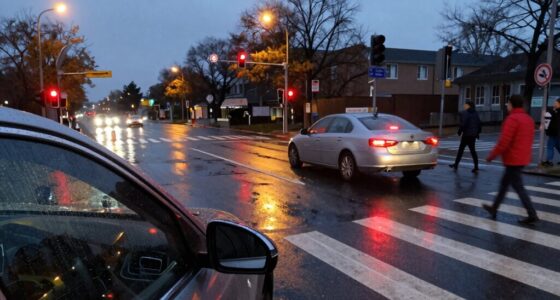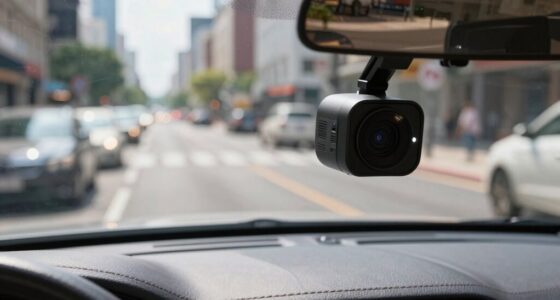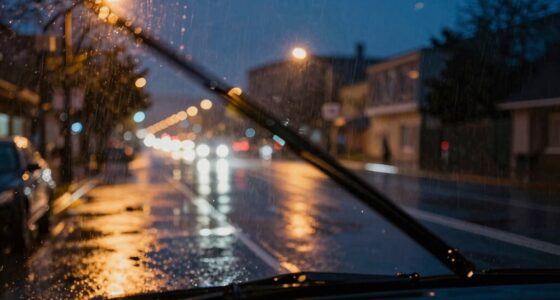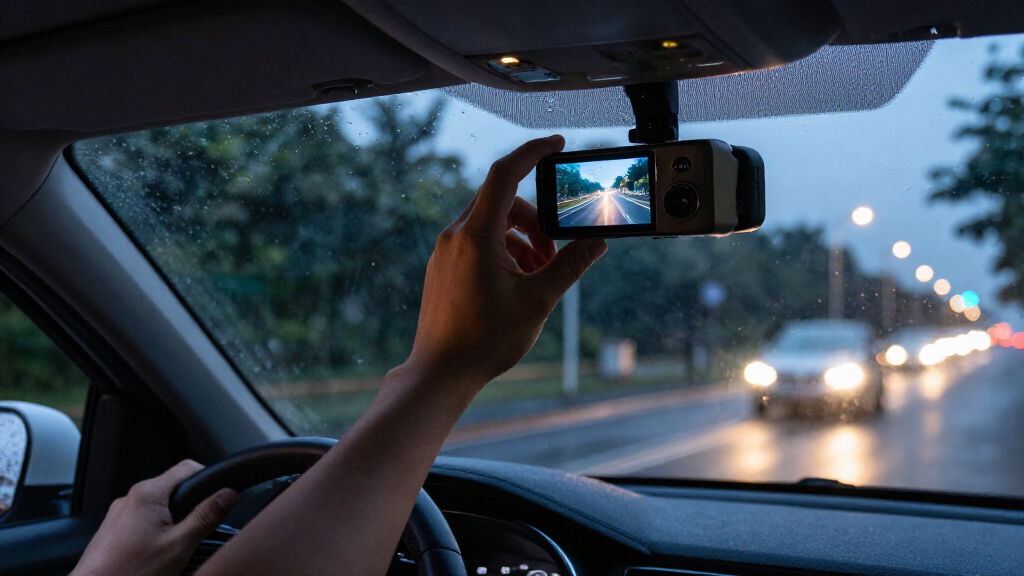
Drivers comparing car dash cams with night vision are often choosing between two different jobs: documenting the road after dark or recording what happens inside the car when the cabin lights are off. Infrared dash cams use infrared LEDs to illuminate a dark cabin, while cameras built around Sony Starvis sensors are designed to make better use of streetlights, headlights, and other available light. The distinction matters because a camera that produces a bright monochrome cabin image may not capture useful color detail on an unlit road, and a strong road camera may show little inside a dark vehicle. Choose infrared when nighttime cabin coverage is the priority; choose Starvis when readable road footage is the goal.

Get business pricing on garage and car supplies
- Business-only prices and quantity discounts
- Tax-exempt purchasing
- Multiple users, one account, clear invoices

IIWEY N6 4-Channel 360° Dash Cam with 128GB Card
- ✔ Channels: 4
- ✔ Resolution: 1440p front; 1080p rear and sides
- ✔ Field of view: 170° front/rear; 150° sides

Four-Channel 1080p Dash Cam with 128GB Card
- ✔ Channels: 4
- ✔ Resolution: 1080p
- ✔ Field of view: 360° coverage; 160° stated real angle of view

Galphi 4K Front Dash Cam with 5GHz Wi-Fi and 32GB Card
- ✔ Resolution: 4K (2160p)
- ✔ Field of view: 160°
- ✔ Night features: F/1.6 aperture and WDR
“Night vision” is a marketing label, not a guarantee that a camera can identify a plate or face in every dark scene. Results depend on the lens, exposure settings, windshield reflections, motion, installation angle, and how much light is present. The comparison below focuses on the usual strengths of each type; individual models can vary, and some combine both approaches.
At a Glance
| Criteria | Infrared dash cams | Sony Starvis low-light dash cams | Winner |
|---|---|---|---|
| Dark-cabin recording | Infrared LEDs illuminate the cabin, usually in monochrome | Records the cabin only if there is enough visible light or a separate infrared camera | A |
| Road detail in available light | Depends on the camera sensor and lens; infrared cabin LEDs do not light the road | Starvis sensors can preserve more detail under streetlights and headlights | B |
| Color footage | Usually monochrome in infrared mode | Usually more natural color when sufficient visible light is available | B |
| Very dark road performance | Limited if the road itself has little ambient light | Can still lose detail in near-total darkness or with fast motion | Depends |
| Best installation fit | Interior-facing or dual-channel systems | Front-facing road cameras and many front/rear systems | Depends |
| Price and value | Often worthwhile for rideshare and fleet cabin recording | Often the stronger everyday value for road-focused drivers | Depends |
IIWEY N6 4-Channel 360° Dash Cam with 128GB Card
For drivers who want to record more than the road ahead after dark, the IIWEY N6 makes the strongest all-round case in this group. Four cameras cover the front, rear, and sides, and its eight infrared LEDs are a more direct night-vision feature than the aperture and WDR approach used by Galphi. The front camera records at 1440p while the rear and side cameras record at 1080p, giving us a sharper stated resolution up front than the Four-Channel 1080p model without sacrificing its wider coverage.The included 128GB card gives us more room to retain footage than Galphi’s 32GB card, and GPS can log routes without buying a separate logger. Dual-band Wi-Fi supports wireless video access, while loop recording and impact detection help manage and protect clips. The tradeoff is a more involved setup than a compact single camera: the system needs vehicle power, has no built-in battery, and needs a separately sold hardwire kit for parking surveillance. Buyers should also keep the storage ceiling in mind: it supports cards up to 256GB. This is our best fit when broad low-light coverage matters more than a simple installation.
Pros:
- Four cameras record the front, rear, and sides, with adjustable side cameras.
- Eight infrared LEDs and Vision Enhance technology are specified for low-light recording.
- Includes a 128GB card and supports loop recording and impact-triggered clip locking.
- Built-in GPS and dual-band Wi-Fi support route logging and wireless access to footage.
Cons:
- Requires vehicle power and has no built-in battery.
- Parking surveillance requires a separately sold hardwire kit.
- Maximum supported card capacity is 256GB.
Best for: Drivers who want front, rear, and side footage with dedicated infrared lighting, built-in GPS, and a 128GB card.
Not ideal for: Drivers seeking a screen-free, minimal front camera or anyone unwilling to arrange a separate hardwire kit for parking surveillance.
Bottom line: We recommend the IIWEY N6 for drivers who want the strongest mix of stated infrared capability and four-sided coverage in this comparison.
“We recommend the IIWEY N6 for drivers who want the strongest mix of stated infrared capability and four-sided coverage in this comparison.”
Four-Channel 1080p Dash Cam with 128GB Card
If we want cameras pointed in four directions but do not need the IIWEY’s higher front resolution or built-in GPS, this Four-Channel 1080p is the more straightforward alternative. It records the front, rear, left, and right at 1080p, with night vision, eight infrared lights, and WDR listed for difficult lighting. That combination gives it broader stated coverage than the Galphi 4K, which only faces forward, while its Full HD resolution is consistent across the four views.The 3-inch LCD lets us check the system on the device, and the included 128GB card matches the IIWEY’s starting storage. Loop recording and incident locking help preserve important clips; time-lapse recording is also supported. Its main compromise is the resolution ceiling: compared with the IIWEY’s 1440p front view, it offers 1080p across every channel. GPS tracking is another add-on, requiring a separate logger, and parking mode needs an optional ACC hardwire kit. Choose this model when all-around coverage and stated night features matter more than higher front resolution, built-in route logging, or a screen-free design.
Pros:
- Four cameras record the front, rear, left, and right simultaneously.
- Night vision, eight infrared lights, and WDR are specified for low-light and changing conditions.
- Includes a 128GB card and supports cards up to 256GB.
- Loop recording and incident locking help manage footage and preserve event clips.
Cons:
- All four cameras record at 1080p, below the IIWEY’s stated 1440p front resolution.
- GPS tracking requires a separately sold logger.
- Parking mode requires an optional ACC hardwire kit.
Best for: Drivers who want four-direction Full HD recording, a device screen, night vision, and an included 128GB card.
Not ideal for: Drivers who need built-in GPS, higher-than-1080p front recording, or parking surveillance without separately sourced hardware.
Bottom line: We would choose this model for four-sided night recording when Full HD is sufficient and built-in GPS is not a priority.
“We would choose this model for four-sided night recording when Full HD is sufficient and built-in GPS is not a priority.”
Galphi 4K Front Dash Cam with 5GHz Wi-Fi and 32GB Card
The Galphi 4K takes a narrower approach to night driving: rather than covering the sides and rear, it concentrates on the view ahead. Its 4K recording, F/1.6 aperture, and WDR give it a useful feature set for capturing forward scenes in changing or limited light. Compared with the two four-channel models, it trades all-around incident coverage for higher stated front resolution and a small, screen-free camera that keeps the windshield area visually simple.App control over 5GHz Wi-Fi keeps settings and downloads on a phone, while G-sensor event locking can protect footage when the camera detects sudden movement or a collision. The included card is only 32GB, however, so it offers less room for ongoing recording and saved clips than the 128GB cards supplied with both four-camera alternatives. It supports cards up to 256GB, which provides an expansion path. Its 24-hour time-lapse parking mode also depends on a separately purchased Type-C hardwire kit. We would pick Galphi when a compact front camera and 4K detail are more valuable to us than infrared LEDs or a view of what happens beside and behind the car.
Pros:
- Records front footage at 4K through a 160° lens.
- F/1.6 aperture and WDR are specified for night and variable-light recording.
- Compact, screen-free design reduces visual distraction.
- G-sensor locking, 5GHz Wi-Fi, and support for cards up to 256GB are included.
Cons:
- Records only the front view, unlike the two four-channel alternatives.
- Included 32GB card provides less storage than the 128GB cards supplied with the other picks.
- 24-hour parking mode requires a separately purchased Type-C hardwire kit.
Best for: Drivers who want a compact, screen-free 4K front camera with a wide aperture and WDR for low-light recording.
Not ideal for: Drivers who need rear or side coverage, dedicated infrared LEDs, or more included storage from the outset.
Bottom line: We recommend Galphi when front-facing 4K detail and a discreet form matter more than four-sided or infrared-equipped coverage.
“We recommend Galphi when front-facing 4K detail and a discreet form matter more than four-sided or infrared-equipped coverage.”
As an Amazon Associate we earn from qualifying purchases.
Key Differences
The biggest difference is where the camera’s light comes from. Infrared models add near-infrared illumination, which is useful for recording passengers or activity inside a dark vehicle. That illumination generally produces monochrome footage and does not make distant road signs, vehicles, or license plates clearer. A Starvis camera instead improves sensitivity to visible light, helping it use the illumination already present on roads and from vehicle lamps. For a forward-facing camera, that usually makes Starvis the more relevant feature.
Neither approach promises readable evidence in every nighttime scene. Starvis footage can smear moving objects when exposure is long, and bright headlights can wash out details. Infrared cabin footage can be sharp nearby but is limited by camera placement, reflections, and the reach of its LEDs. If both road and cabin evidence matter, a dual-channel system that pairs a capable road camera with an infrared interior camera is often the better fit, though it costs more and adds installation and storage needs.
For most drivers who want a single dash cam for everyday protection, a well-reviewed Starvis road camera is the practical starting point. Pay extra for infrared when you have a clear cabin-recording need, such as rideshare work, fleet monitoring, or transporting passengers at night. Check sample footage from the exact model and confirm that recording rules in your location allow the intended use.
Detailed Comparison
Dark-cabin recording (Infrared dash cams wins — major)
Infrared wins by a major margin when the cabin is dark. Its LEDs illuminate nearby passengers without relying on dome lights, so it can capture activity that a road-focused Starvis camera may miss. The tradeoff is that infrared footage is generally monochrome and focused on the interior. Starvis can record a cabin when enough visible light reaches the sensor, but it is not a substitute for dedicated infrared illumination in a blacked-out vehicle. Choose A for consistent nighttime cabin coverage.
Road detail in available light (Sony Starvis low-light dash cams wins — major)
Starvis wins by a moderate to major margin for road-facing footage. Its low-light sensitivity helps preserve detail from streetlights, lit intersections, and headlights, which is more useful for documenting traffic and road incidents. Infrared cabin LEDs are not designed to illuminate the road ahead; an infrared model only matches this performance if it also has a capable visible-light road camera. For typical driving, B is the better fit.
Color and scene recognition (Sony Starvis low-light dash cams wins — moderate)
Starvis wins by a moderate margin when there is enough visible light. Color can help distinguish a vehicle, signal, clothing, or road feature, though it does not guarantee identification. Infrared images are usually monochrome, which can still show shapes and movement but removes color cues. In very dark scenes, a color sensor may also produce noise or lose useful detail, so buyers should inspect sample footage rather than assume color alone means clarity.
Performance on unlit roads (moderate difference)
There is no universal winner. Starvis may outperform a basic sensor, but it still needs some light and can struggle with fast-moving subjects, glare, or near-total darkness. Infrared can show the cabin clearly in darkness, yet its cabin LEDs do not provide useful illumination far down the road. The winner depends on where the camera points and the specific model’s sensor, lens, and exposure behavior. Treat both claims cautiously and compare night samples.
Installation and system design (moderate difference)
The winner depends on the intended coverage. Infrared systems make the most sense when an interior camera is part of the setup; placement must include passengers while avoiding distracting reflections. A Starvis camera is usually simpler for drivers who only need front or front-and-rear road footage. Dual-channel systems can cover both jobs, but add wiring, camera placement decisions, and storage demands. Match the layout to the evidence you need.
Price and value (moderate difference)
Neither category automatically offers better value. A Starvis model is usually the more practical spend for a private driver seeking nighttime road evidence, because infrared cabin lighting adds little to that job. Infrared earns its extra cost for rideshare drivers, fleet operators, or anyone who needs a view of the cabin after dark. If both views matter, paying for a combined system can be justified; otherwise, avoid paying for a feature you will not use.
Infrared dash cams: Pros and Cons
Pros:
- Records a dark cabin without needing visible interior lights.
- Useful for rideshare, fleet, and passenger-safety documentation.
- Can capture nearby movement and faces when the camera is well placed.
Cons:
- Interior footage is usually monochrome.
- Infrared cabin LEDs do not illuminate the road effectively.
- Reflections, distance, and camera angle can limit usable detail.
Sony Starvis low-light dash cams: Pros and Cons
Pros:
- Uses streetlights and vehicle lighting effectively for road footage.
- More likely to retain natural color in moderately lit scenes.
- A sensible choice for everyday front-facing night recording.
Cons:
- Cannot reliably see a dark cabin without added infrared hardware.
- Low light, glare, motion, and exposure can still obscure details.
- A sensor name alone does not guarantee good footage; lens and tuning matter.
Who Should Choose What
Choose Infrared dash cams if:
- You drive rideshare or carry passengers at night and need cabin footage.
- You manage vehicles and need a record of activity inside the vehicle.
- You are choosing an interior camera and can accept monochrome recording.
Choose Sony Starvis low-light dash cams if:
- Your main goal is documenting the road during nighttime driving.
- You want a front or front-and-rear dash cam that performs well under streetlights.
- You prefer to spend on road-image quality rather than cabin illumination.
Skip both if: Neither feature is useful without reliable recording, sensible mounting, and adequate storage. If you need clear evidence in near-total darkness or dependable plate capture at speed, compare exact-model sample footage and consider a system with separate road and infrared cabin cameras.
Value for Money
For a typical private driver, paying extra for infrared is usually not worth it unless cabin recording is part of the requirement. A Starvis-equipped road camera directs the budget toward the view most drivers need: the road ahead in available light. For rideshare drivers and fleets, infrared can be worth the premium because it records passengers and cabin activity without turning on visible lights. Drivers who need both views should compare the total cost of a dual-channel system, including memory card capacity and installation, rather than judging the camera by sensor branding alone.
Value also depends on footage quality beyond night mode. Check resolution, frame rate, dynamic range, reliable loop recording, parking mode, and whether the rear or interior camera matches the main camera’s quality. A cheaper camera with poor exposure control may produce less useful evidence than a better-tuned model with a less prominent sensor label.
Final Verdict
For most drivers shopping for a night-capable dash cam, choose a well-tuned Sony Starvis road camera. It is the clearer match for recording traffic and incidents under streetlights and headlights, and infrared cabin lighting does not solve the road-visibility problem. Choose an infrared model when recording the dark interior is the primary need, especially for rideshare or fleet use. If both road and cabin footage matter, choose a dual-channel system with a visible-light road camera and a dedicated infrared interior camera. The deciding factor is camera direction: buy for the scene you need documented, then verify the exact model’s night footage.
Frequently Asked Questions
Does infrared night vision make road footage clearer?
Usually not by itself. Infrared LEDs on many dash cams are meant to illuminate the nearby cabin. They do not light the road far ahead, so road footage depends on the camera’s visible-light sensor, lens, and available ambient light.
Is a Starvis dash cam useful on a road without streetlights?
It can perform better than a less sensitive camera, but no sensor can guarantee clear footage in near-total darkness. Headlights provide some illumination, while motion, glare, exposure, and lens quality affect the result. Review samples from the exact model in similar conditions.
Can one dash cam record both the road and a dark cabin?
Yes, some dual-channel systems pair a forward-facing camera with an infrared interior camera. Check whether both channels record at the same time, how much storage they use, and whether the interior camera’s position covers the cabin you need.
Should I pay more for infrared if I drive a personal car?
Only if you need nighttime cabin footage, such as when regularly carrying passengers and documenting activity inside the vehicle. If your main concern is road incidents, put the extra budget toward a capable road camera, reliable storage, and parking features you will use.