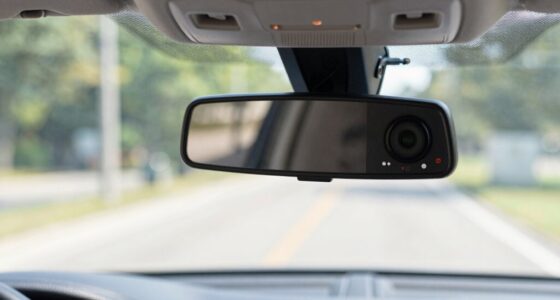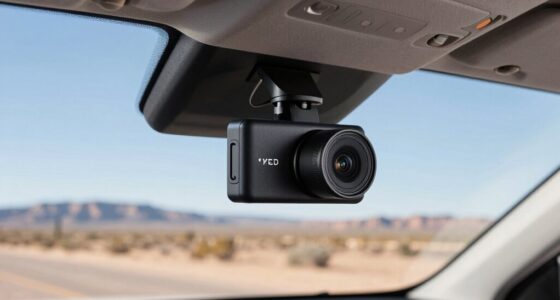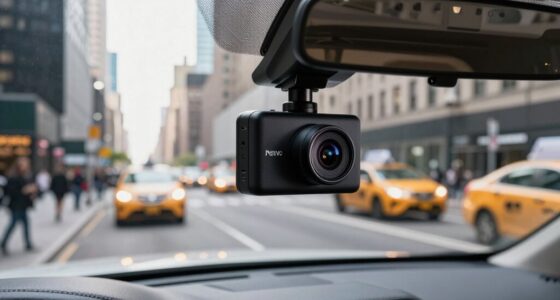
In New Hampshire, you must mount your dash cam on the dashboard or behind the rearview mirror to avoid obstructing your view. Audio recordings require all-party consent, meaning everyone involved must agree before recording. Video footage captured in public places is generally allowed, but privacy laws restrict filming private spaces and sensitive areas. Ensuring proper installation, understanding consent rules, and respecting privacy helps keep you compliant—continue to discover how to stay within legal boundaries.
Key Takeaways
- Dash cameras must be mounted on the dashboard; windshield mounting with nontransparent materials is prohibited in NH.
- Interior and rear-facing cameras are allowed if positioned to avoid obstructing driver views or safety features.
- Audio recording requires all-party consent under NH law; disable audio unless all parties agree.
- Recordings must be relevant, authentic, and preserved with proper chain-of-custody for legal admissibility.
- Privacy laws restrict recording private conversations and areas like restrooms; public recording is generally permitted.

Dashboard Pad Mounting Disk for Suction Cup Phone Mount & GPS & Dashboard Camera 3.25" L Heat-Resistant Suitable for Curved Surface Textures and Flat Surfaces,2-Piece Set
Advanced 5-Layer Composite Structure: Features built-in thin stainless steel with superior flexibility, high heat resistance, and damage resistance…
As an affiliate, we earn on qualifying purchases.
As an affiliate, we earn on qualifying purchases.
Mounting Regulations for Dash Cameras in New Hampshire
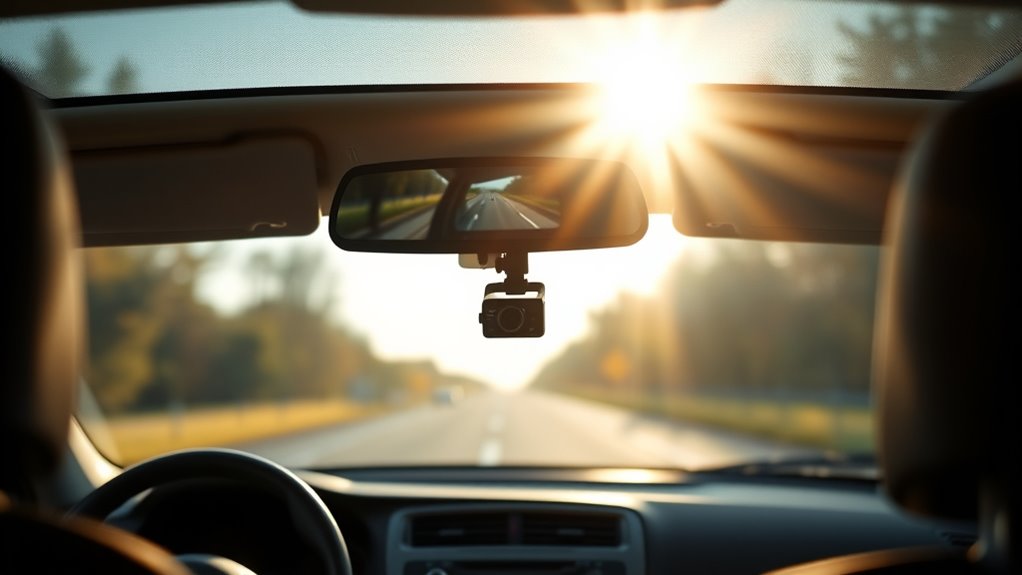
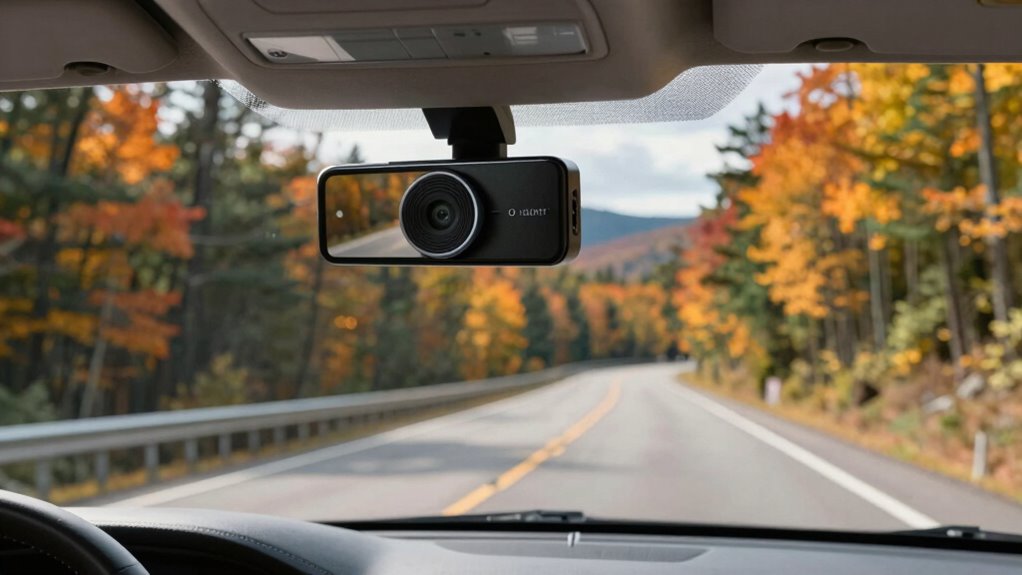
In New Hampshire, mounting a dash camera requires careful attention to state laws that prioritize safety and visibility. You cannot mount your camera on the front windshield, as laws prohibit obstructing the driver’s clear view with nontransparent materials. This restriction applies to all nontransparent mounts, with no exceptions for front-facing cameras on the glass. Instead, the dashboard is the safest and most legally accepted location. You should use a low-profile mount that secures the camera firmly without interfering with your controls or obstructing your vision. Placing your dash cam on the dashboard helps you stay compliant and avoid citations. Rear cameras are explicitly permitted and can be added alongside interior cameras, supporting rear-side monitoring without restrictions on the back window. Dashcam placement laws in New Hampshire emphasize maintaining an unobstructed view for safe driving. Additionally, selecting a secure mounting method ensures your camera remains stable during driving. Proper installation techniques contribute to both safety and compliance, helping you avoid legal issues and ensuring optimal footage quality. Incorporating energy-efficient mounting options aligns with sustainable practices and reduces your vehicle’s power consumption while maintaining reliable footage. Moreover, understanding the psychology of recurring dreams can help drivers better interpret their subconscious messages related to safety and alertness on the road.

WOLFBOX G840S 12" 4K Mirror Dash Cam Backup Camera, 5.8GHz WiFi Smart Rearview Mirror for Cars & Trucks, Front and Rear View Dual Cameras, Night Vision, Parking Assistance, Included 32GB Card & GPS
UPGRADED 4K UHD CLARITY – Experience stunning detail with the front camera's upgrade to 4K UHD (2160p) resolution,…
As an affiliate, we earn on qualifying purchases.
As an affiliate, we earn on qualifying purchases.
Legal Considerations for Dash Cam Usage
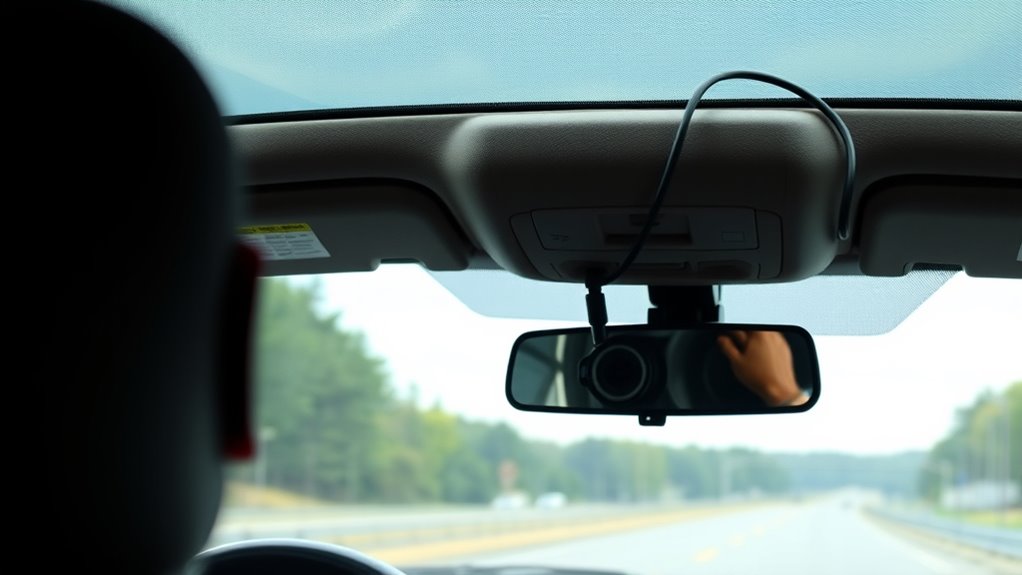
Understanding the legal landscape for dash cam use in New Hampshire is essential to avoid violations and protect your rights. You can record in public spaces without consent, but recording on private property or areas of reasonable privacy, like restrooms, is prohibited. Surveillance videos are stored for up to 24 days, with exceptions for DOT dash cams, which hold footage for only three days. Lawful recordings can be kept for up to 18 months. Evidence is admissible if obtained legally, without privacy violations. Proper placement, such as dashboard or rear mounts, is vital for court use. Be aware that obstructing your view with nontransparent materials or mounting on the windshield can lead to fines. Violations may result in fines or misdemeanor charges for illegal surveillance or wiretapping. Additionally, understanding privacy laws is crucial to ensure compliance and avoid potential legal issues. It is also important to be aware of filtration and maintenance practices for your dash cam equipment to ensure clear footage and reliable operation. Regularly cleaning your camera lens and updating software can help maintain video quality and prevent technical issues that could compromise evidence. Staying informed about mounting regulations can help you avoid accidental violations and ensure your dash cam remains compliant with state laws.

Dash Cam Front and Rear, 4K+2K Recording Dash Camera for Cars, Night Vision with WDR, 170° Wide Angle, 5.8G/2.4G Dual Wi-Fi, 64GB Card, Built-in GPS, G-Sensor Emergency Lock, 24H Parking Monitor
HIGH-DEFINITION 4K+2K DUAL RECORDING: Adopting an F1.8 ultra-large aperture and advanced optics, the dash cam captures ultra-crisp footage…
As an affiliate, we earn on qualifying purchases.
As an affiliate, we earn on qualifying purchases.
Audio Recording Laws and Consent Requirements
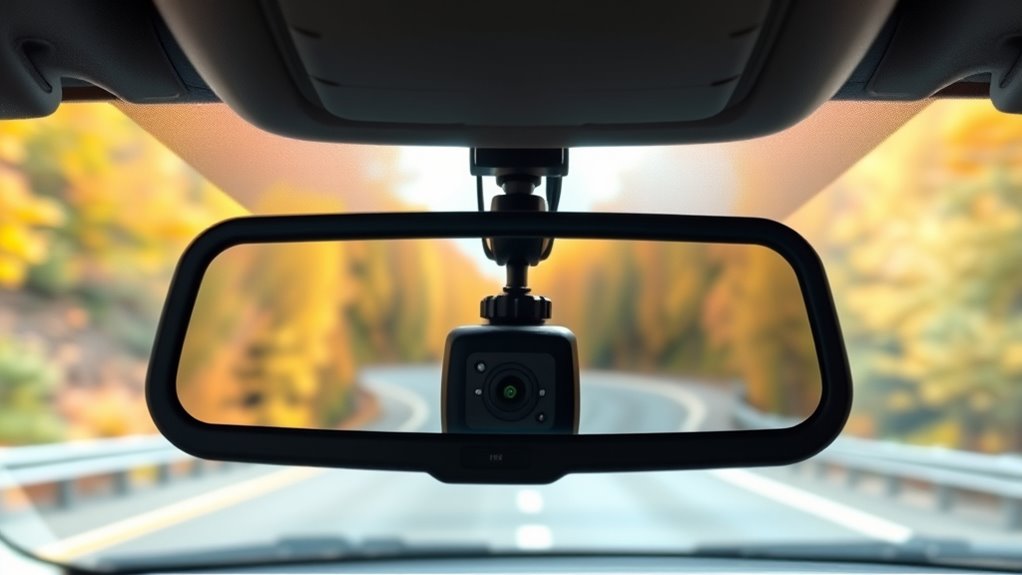
When using a dash cam in New Hampshire, it’s important to recognize that recording audio alongside video involves additional legal considerations. The state treats in-vehicle conversations as all-party consent, meaning everyone involved must agree to the recording. If you record audio without consent, you risk criminal penalties and civil liability under state wiretapping laws. Consent can be explicit, such as a verbal agreement or written permission, or implied if passengers are informed and continue participating. To stay compliant, disable audio recordings unless all parties have consented. Posting notices and obtaining clear consent at the start of each trip can help. Additionally, understanding that technological advancements like AI-driven smart grids improve energy management can remind you that staying informed about legal updates is equally important. Failing to follow these rules may lead to audio being excluded as evidence or facing legal repercussions. Failure to obtain proper consent can also result in your footage being deemed inadmissible in court. Always keep in mind that audio recording laws vary by state, and staying updated ensures you remain compliant with local regulations. Moreover, consulting with legal professionals familiar with state-specific wiretapping statutes can provide further guidance to ensure full compliance. Staying aware of privacy considerations related to recording can help prevent unintentional violations.

StickerTalk Notice Audio and Video Recording Vinyl Sticker, 10 inches by 3 inches
High quality vinyl stickers. Professionally made in the USA.
As an affiliate, we earn on qualifying purchases.
As an affiliate, we earn on qualifying purchases.
Privacy Protections and Restrictions
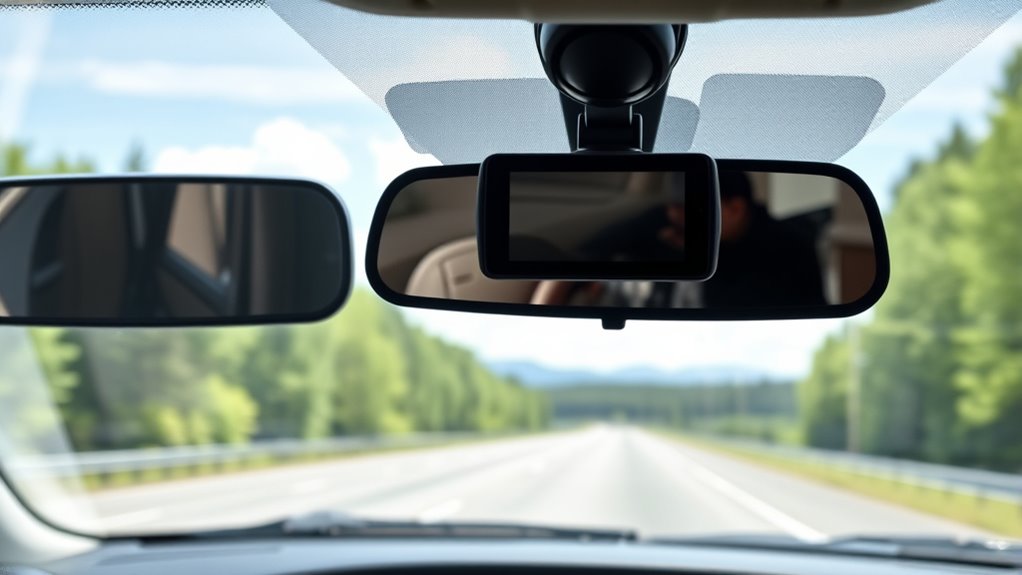
While using a dash cam in New Hampshire, respecting privacy protections is essential to avoid legal issues. You must obtain consent before recording private conversations, especially for audio, to comply with wiretapping laws. In public areas, video recording is generally allowed without consent, but recording in private spaces like restrooms or private property is prohibited. Be aware that surveillance of public roads is restricted, except for specific purposes like DOT safety cameras. Storage limits apply: state videos are retained for no more than 24 days, with longer periods for legal purposes, while DOT dash cam footage lasts only three business days. Clear signage and notices are recommended, especially for passenger carriers, to inform individuals about recordings and reduce privacy risks. Respecting these restrictions helps maintain legal compliance and passenger trust. Proper signage and notices are also important for compliance and transparency. Additionally, understanding privacy laws surrounding surveillance can help prevent inadvertent violations. It is also beneficial to familiarize yourself with dash cam regulations that specify permissible mounting locations and usage practices. Furthermore, reviewing state-specific regulations can help ensure your dash cam practices remain within legal boundaries and protect your rights. It’s also advisable to familiarize yourself with wiretapping laws to ensure audio recordings are made legally and ethically. Being aware of recording restrictions can help you avoid unintentional violations and protect your privacy rights.
Permitted Camera Installations and Exceptions
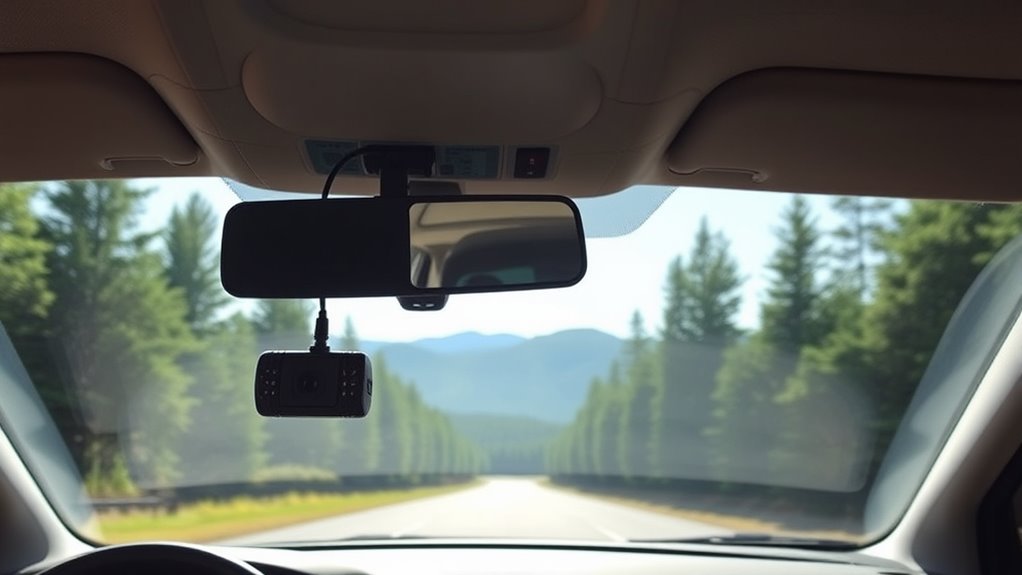
You can install interior and rear-facing cameras on your vehicle, but they must be positioned carefully to stay within legal bounds. Law enforcement vehicles often have exemptions that allow specialized camera setups, which aren’t available to private drivers. Understanding these distinctions helps make certain your camera installation complies with New Hampshire’s rules and avoids penalties. Additionally, some restrictions on camera placement are designed to ensure they do not obstruct the driver’s view or interfere with vehicle safety features, which aligns with vehicle safety standards aimed at protecting all road users. Proper adherence to these regulations also helps maintain compliance with state laws governing vehicle modifications, including camera placement. Being aware of regulatory guidelines regarding camera installation can further assist in avoiding inadvertent violations.
Interior and Rear Cameras
Interior and rear cameras in New Hampshire are generally allowed if they are installed properly to avoid obstructing the driver’s view or vehicle controls. You can mount front-facing interior cameras on surfaces like the dashboard or rear parcel shelf, as long as they don’t block your sightlines or airbags. Rear-facing interior cameras aimed at passengers or cargo are permitted if positioned so they don’t interfere with rearview visibility. External rear cameras—like those on bumpers or license plates—are also allowed, provided they don’t obscure lights or sensors. Here’s what you should keep in mind: Mount interior cameras away from windshield to avoid obstruction laws. Ensure rear interior cameras don’t block rearview visibility. Use exterior rear cameras without covering lights, plates, or sensors. Proper installation helps prevent legal issues and maintains safe driving conditions. Additionally, understanding free floating backyard transformation essentials can inspire creative ways to enhance your outdoor space.]
Exemptions for Law Enforcement
In New Hampshire, law enforcement agencies have specific allowances and restrictions regarding camera installations that differ from civilian use. Officers must inform individuals when recording during law enforcement activities, but they aren’t required to deactivate cameras during warrants or judicial exceptions. Certain situations, like exigent circumstances, permit immediate activation, while deactivation is allowed if a citizen declines after notification. Agencies issue body cameras and control data, with officers trained through approved programs. Recordings related to force, arrests, or firearm discharges must be disclosed, but privacy concerns can exempt recordings from public release. Equipment standards restrict camera types and usage, especially for license plate readers. Here’s a quick overview:
| Allowed Camera Use | Restrictions/Exceptions |
|---|---|
| Body cameras | Must inform individuals; no mandatory deactivation during warrants. Proper usage protocols are essential for maintaining legal compliance. |
| In-vehicle cameras | Restricted from photographing occupants; regulated by federal exemptions. |
| Data management | Owned by agencies; officers trained; privacy protections apply. |
| Public access | Discretionary; courts decide on openness; privacy overrides. |
Additionally, the privacy protections in place help ensure that sensitive recordings are not improperly disclosed or misused. Proper training programs for officers emphasize the importance of understanding these regulations to prevent legal issues. Understanding these regulations is crucial for both law enforcement and civilians to ensure rights are protected while maintaining safety.
Rules for Video Evidence and Admissibility
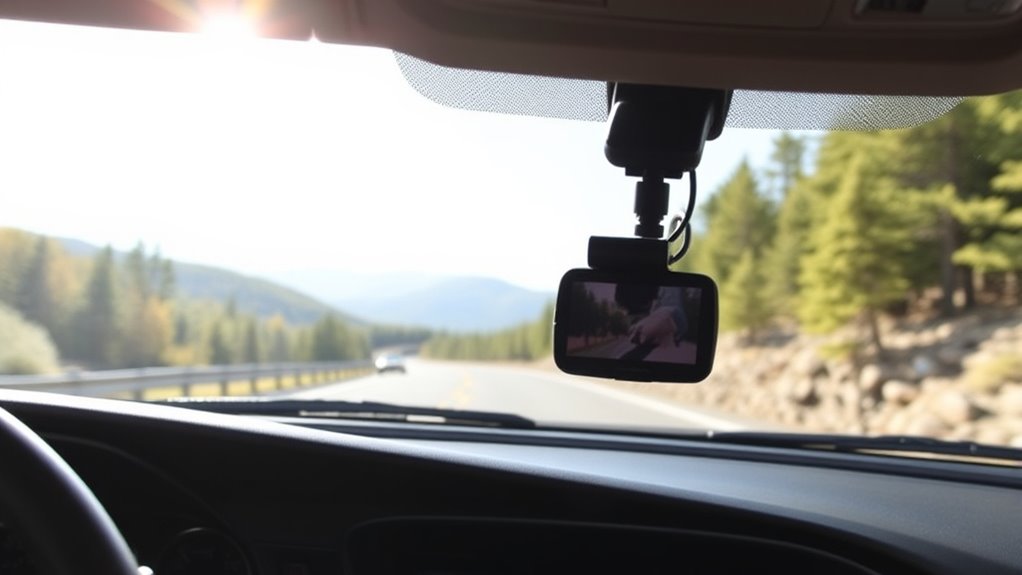
Dash cam footage in New Hampshire courts must meet specific standards to be considered admissible as evidence. First, the footage must be relevant, authenticated, and unaltered, following civil litigation rules. You’ll need to provide foundation testimony or metadata—like timestamps, GPS data, or device info—to link the footage to the incident. Second, chain-of-custody procedures are essential; any unexplained gaps, edits, or transfers may lead to exclusion or diminished credibility. Third, courts evaluate technical aspects such as resolution, metadata, and potential tampering signs. They’ll consider whether the footage’s probative value outweighs any unfair prejudice. Surveillance footage held by third parties can be obtained via subpoenas or discovery, but the evidence must meet these standards for court acceptance. Properly preserved footage that adheres to these guidelines is more likely to be admitted and given weight in legal proceedings. Additionally, courts may assess the integrity of footage, examining whether the video has been tampered with or edited in any way to ensure authenticity.
Staying Compliant: Tips for Dash Cam Owners

To stay compliant with New Hampshire laws, you need to focus on proper mounting techniques that avoid obstructing your view, like mounting on the dashboard or behind the rearview mirror. Be aware of privacy and storage rules, such as limiting video retention and understanding privacy expectations, especially when recording audio. Additionally, always verify your dash cam has the necessary consents and adheres to regulations regarding audio recording and data privacy. Understanding privacy policies is also crucial to ensure your data handling aligns with legal standards. Regularly reviewing state-specific regulations can help you stay informed about any changes that might affect your compliance. Finally, it is important to regularly review state-specific updates to ensure ongoing compliance with evolving regulations.
Proper Mounting Techniques
Proper mounting is essential to stay compliant with New Hampshire laws and guarantee your dash cam functions effectively. To do this, follow these tips:
- Use dashboard mounts or adhesive pads designed for dash surfaces, avoiding windshield placement unless legally justified. Keep the device within size limits and document your placement if using exceptions.
- Position your dash cam to avoid obstructing your sightlines, staying behind or below the rearview mirror, and steering clear of glare or reflections that could distract you.
- Route cables neatly along trim or under the dash, using professional installation if necessary, to prevent loose wires that block views or interfere with airbags. Keep documentation of installation for proof if needed.
These steps help ensure your dash cam remains legal and effective.
Audio Recording Consent
Because New Hampshire requires all-party consent for recording private conversations, you must be careful when recording audio with your dash cam. Recording audio without everyone’s agreement can be illegal and expose you to criminal or civil liability. Remember, the law distinguishes between private conversations, which require consent from all parties, and public ones, which generally don’t. If you’re unsure whether passengers or pedestrians are part of private conversations, it’s safest to disable audio recording altogether. To stay compliant, post clear notices inside your vehicle indicating that recording is active, and consider verbal announcements or written consent forms if recording commercial or ride-share trips. Always configure your device to keep audio off by default and document any consent obtained to protect yourself legally.
Privacy and Storage Rules
Staying compliant with privacy and storage rules requires dash cam owners to be mindful of how long footage is retained and where recordings are made. To stay within legal limits, consider these points:
- Public recordings in public spaces like roads and parking lots usually have low privacy expectations and are lawful, but avoid capturing private areas such as homes or bathrooms.
- For private property, respect signage and property rules, and avoid filming interior views or sensitive areas to prevent privacy violations.
- Secure your footage with encryption, implement access controls, and set automatic deletion schedules aligned with retention limits, such as 24 days for public surveillance or shorter for specific fleet footage. Keep backup copies for evidence and prevent tampering.
- Understanding local laws about recording length and storage duration can help prevent accidental violations.
Frequently Asked Questions
Can I Use a Dash Cam With a Built-In GPS in New Hampshire?
Yes, you can use a dash cam with built-in GPS in New Hampshire. Just make sure you mount it on the dashboard or rearview mirror to avoid obstructing your view, and keep it low-profile. Be cautious with audio recording, as state laws require all-party consent for in-person conversations. Also, handle GPS data responsibly, knowing it’s legal to record and store, but avoid disclosing private information without proper notice or consent.
Are There Specific Size Restrictions for Dash Cam Devices?
You don’t have strict size restrictions for dash cam devices in New Hampshire, but they shouldn’t obstruct your view. For dashboard mounting, keep devices small—around two inches by two inches—to avoid any issues. Larger devices, like three-inch squares, could be considered obstructions. Always make certain your dash cam is mounted properly, doesn’t block your vision, and complies with the law by staying within a safe size and placement.
Do I Need a Permit to Install a Dash Cam on My Vehicle?
You don’t need a permit to install a dash cam in your vehicle in New Hampshire. Think of it as adding a trusty watchdog—your dash cam just needs to be mounted properly, usually on the dashboard, avoiding the windshield’s clear view zone. Just make certain it doesn’t obstruct your vision or violate state rules. For audio recording, remember all-party consent laws apply, so get everyone’s agreement before capturing interior conversations.
How Long Can I Legally Retain Dash Cam Footage in New Hampshire?
In New Hampshire, you can generally keep dash cam footage for 30 to 90 days, unless you have an active legal case, in which case, police may retain it longer. After that period, footage is typically auto-deleted unless you tag or preserve it for legal reasons. Always check specific department policies if law enforcement is involved, and verify proper chain of custody if using footage in court.
Are There Restrictions on Using Dash Cams in Commercial Vehicles?
Imagine your commercial vehicle as a fortress on wheels, with a dash cam acting as the vigilant guard. You’re allowed to use dash cams in commercial vehicles, but keep the screen visible to the driver and mount it on the dashboard. No sneaky windshield placements or hidden cameras permitted. Just confirm your setup doesn’t block the driver’s view, and you’re good to go—security without the sneer.
Conclusion
By understanding New Hampshire’s dash cam laws, you can stay on the right side of the rules and avoid legal potholes. Think of these regulations as the guardrails guiding your drive—keeping you safe, legal, and respectful of others’ privacy. Stay informed, mount your camera properly, and respect audio and privacy laws. With the right knowledge, your dash cam becomes a trustworthy co-pilot, helping you navigate the road legally and confidently.