
Choosing a car head unit with DSP and EQ means deciding how much sound control you need, not just which stereo has the longest feature list. My strongest picks serve different goals: the Deaf Bonce DB-530DSP gives installers the deepest system-level tuning, the double-DIN touchscreen stereo pairs a 32-band EQ and DSP with wireless phone integration, and the JVC KD-SX27BT offers a simpler single-DIN upgrade with a 13-band EQ and useful daily connectivity.

Get garage and car supplies delivered free — and shop member deals
- Fast, free delivery on millions of items
- Access to Prime Big Deal Days deals on October 6–7
- Prime Video, Amazon Music and more included
The tradeoff is straightforward: deeper DSP tools can take more setup, while approachable EQ receivers provide less control over speaker timing and crossovers. Screen size, dash fit, amplifier plans, and the reliability of the listed specifications also separate these five options. I ranked them by how directly their audio controls support a buyer seeking DSP and EQ, then weighed connectivity, installation flexibility, and the compromises each unit brings.
Complete the kit



Key Takeaways
- Deaf Bonce DB-530DSP is the most purpose-built choice for multi-channel tuning, with time alignment, crossovers, phase controls, and eight RCA outputs.
- The 7-inch double-DIN touchscreen offers the most extensive listed graphic EQ, at 32 bands, plus DSP and wireless Apple CarPlay and Android Auto.
- JVC KD-SX27BT is the approachable single-DIN pick, but its listed tuning centers on a 13-band EQ rather than dedicated DSP controls.
- Pyle’s 25-band EQ sounds flexible on paper, but conflicting fit and power details make verification important before purchase.
- Kenwood KMM-BT270U suits a basic, compact media upgrade; its 13-band EQ is useful, but the supplied details do not list time alignment or crossover tuning.
| Deaf Bonce DB-530DSP 1-DIN Car Stereo Head Unit |  | Best Overall for Dedicated DSP Tuning | Form factor: 1-DIN | EQ and DSP: 31-band EQ, time alignment, crossovers, delay, phase | RCA outputs: 8 | VIEW ON AMAZON | See Our Full Breakdown |
| Double-DIN Car Stereo with Wireless Apple CarPlay and Android Auto |  | Best Touchscreen and Phone Integration | Fit: Standard double-DIN | Screen: 7-inch capacitive IPS, 1024 × 600 | Audio processor: Sunplus 2900 chipset with DSP | VIEW ON AMAZON | See Our Full Breakdown |
| JVC KD-SX27BT Car Stereo with Bluetooth, 100W Digital Media Receiver |  | Best Straightforward Single-DIN Upgrade | Fit: Single DIN | Power: 100W total; 50W per channel listed | Equalizer: 13-band | VIEW ON AMAZON | See Our Full Breakdown |
| Kenwood KMM-BT270U Bluetooth Digital Media Car Stereo Receiver |  | Best Simple Media Receiver | Model: KMM-BT270U | Installation size: Single DIN | Connectivity: Bluetooth, USB, AUX | VIEW ON AMAZON | See Our Full Breakdown |
| Pyle Double-DIN Bluetooth Car Stereo Receiver with 25-Band EQ |  | Best Feature-Heavy EQ on Paper | Equalizer: 25-band | Bluetooth: Version 4.2 | Media inputs: USB, microSD, 3.5 mm AUX | VIEW ON AMAZON | See Our Full Breakdown |
| car head unit with dsp and eq | Equalizer | Bluetooth |
|---|---|---|
| Deaf Bonce DB-530DSP 1-DIN Car | — | — |
| Double-DIN Car Stereo with Wir | 32-band graphic EQ | Bluetooth 5.3 |
| JVC KD-SX27BT Car Stereo with | 13-band | Dual-phone connection; up to five devices listed |
| Kenwood KMM-BT270U Bluetooth D | 13-band | — |
| Pyle Double-DIN Bluetooth Car | 25-band | Version 4.2 |
More Details on Our Top Picks
Deaf Bonce DB-530DSP 1-DIN Car Stereo Head Unit
The DB-530DSP is the clearest match for a buyer who means DSP as more than a graphic equalizer. Its app-controlled feature set includes a 31-band EQ, time alignment, crossovers, delay, and phase adjustment. Those controls make it the most suitable option here for shaping a system with separate speakers, subwoofers, or external amplification. Its eight RCA outputs reinforce that role: compared with the Kenwood and JVC, it offers more obvious room to build a multi-channel signal chain.
It is not the easiest recommendation for someone who just wants a quick radio replacement. The full tuning process runs through a smartphone app, and the supplied details do not describe a touchscreen interface for adjusting those settings. The 4×25W RMS built-in amplifier can drive speakers directly, but its output is modest compared with the less carefully specified peak-power claims on some other listings. I would treat this unit as a control hub for a planned audio system, not as a promise of high volume from factory speakers alone.
Compared with the touchscreen pick, the Deaf Bonce trades wireless CarPlay and a large display for more clearly itemized system-tuning tools and abundant RCA outputs. It also needs a 1-DIN opening, so buyers with a double-DIN dash should look elsewhere or confirm their installation options. For DSP-focused builds, its functions are the strongest and most explicit in this group.
Pros:- 31-band EQ plus time alignment, crossover, delay, and phase controls
- Eight RCA outputs support more elaborate amplifier and speaker layouts
- 4×25W RMS built-in amplifier can run speakers without an external amp
- Bluetooth and USB playback with FLAC, WAV, and MP3 support
Cons:- Requires a compatible single-DIN dash opening
- Full DSP setup is managed through a smartphone app
- No large touchscreen or wireless CarPlay and Android Auto are listed
Best for: Drivers building or refining a multi-channel audio system who want app-based tuning, time alignment, crossovers, and plentiful RCA connections.
Not ideal for: Buyers who want wireless phone projection, a large screen, or simple EQ adjustments without learning an app-based DSP interface.
- Form factor:1-DIN
- EQ and DSP:31-band EQ, time alignment, crossovers, delay, phase
- RCA outputs:8
- Built-in amplifier:4×25W RMS
- Connectivity:Bluetooth, USB
- Supported formats:FLAC, WAV, MP3
- Display:VA display
- Warranty:1 year
Our verdict“I rank the DB-530DSP first for buyers who want genuine system-level tuning rather than EQ alone.”
Double-DIN Car Stereo with Wireless Apple CarPlay and Android Auto
This double-DIN receiver combines the lineup’s largest documented EQ range, a 32-band graphic EQ, with DSP and a 7-inch capacitive screen. It is the best fit for buyers who want audio adjustment alongside a modern interface: wireless Apple CarPlay, Android Auto, AirPlay, and MirrorLink are listed, so the unit can serve as a phone-centered dashboard as well as a stereo. Compared with the Deaf Bonce, it gives more emphasis to screen-based convenience and less detail about installer-oriented tuning functions.
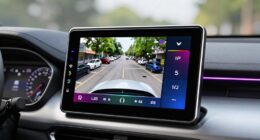
The audio specification names a Sunplus 2900 chipset with DSP, but does not spell out time alignment, crossover controls, or phase adjustment as the DB-530DSP does. That makes the touchscreen’s 32-band EQ useful for tonal shaping, while the Deaf Bonce remains the better-documented option for system configuration. The package also includes a waterproof backup camera with night-vision LEDs, a practical extra, although camera inclusion does not resolve vehicle wiring or compatibility questions.
Installation is the main caution. Buyers should confirm double-DIN fit, harness needs, and steering-wheel control compatibility for their vehicle; the listing does not specify warranty coverage. It is also a less compact dashboard choice than the Kenwood or JVC. I place it second because it serves more everyday needs than a tuning-focused deck, while the details provided do not show DSP controls as extensive as the DB-530DSP’s.
Pros:- 32-band graphic EQ paired with a named DSP audio processor
- Wireless Apple CarPlay and Android Auto
- 7-inch IPS touchscreen with 1024 × 600 resolution
- Includes an IP67 backup camera with night-vision LEDs
Cons:- Advanced DSP functions beyond EQ are not itemized in the supplied details
- Vehicle harness and steering-wheel-control compatibility need checking
- Warranty coverage is not specified
Best for: Drivers with a double-DIN dash who want wireless phone projection, a touchscreen, backup-camera support, and a wide graphic EQ.
Not ideal for: DSP builders who need clearly specified time alignment, crossovers, phase controls, or extensive RCA outputs.
- Fit:Standard double-DIN
- Screen:7-inch capacitive IPS, 1024 × 600
- Audio processor:Sunplus 2900 chipset with DSP
- Equalizer:32-band graphic EQ
- Wireless features:Apple CarPlay, Android Auto, AirPlay, MirrorLink
- Bluetooth:Bluetooth 5.3
- Ports:USB-A, 3.5 mm AUX, RCA
- Backup camera:IP67 waterproof, 12 LEDs, up to 30 ft visibility
Our verdict“I recommend this double-DIN model when wireless phone features and a large EQ matter more than fully documented installer controls.”
JVC KD-SX27BT Car Stereo with Bluetooth, 100W Digital Media Receiver
The JVC KD-SX27BT makes sense for a buyer who wants a well-rounded single-DIN receiver with useful EQ, not a dedicated DSP command center. Its 13-band equalizer gives more adjustment than a basic bass-and-treble interface, and the receiver supports a wide set of listed formats, including FLAC. Dual-phone Bluetooth is a practical advantage for shared cars: two phones can stay connected, and the listing says up to five devices can be supported simultaneously.
Its central limitation is the distinction between EQ and DSP. The JVC’s supplied details describe a 13-band EQ and K2 technology, but do not list time alignment, crossovers, or delay controls. The Deaf Bonce is the stronger choice if those capabilities are the reason for shopping; the JVC is easier to recommend for someone replacing an older factory stereo and wanting adjustable sound without committing to a complex tuning routine.
The 1.5A USB port can charge a compatible phone while playing media, and the JVC Remote app gives another control option. Its stated 100W total output should not be confused with the Deaf Bonce’s RMS amplifier specification, since the supplied figures are not presented on the same basis. As with any single-DIN unit, dash fit may require a vehicle-specific kit. I place it above Kenwood for broader format support and dual-phone features, but below the DSP-focused options for tuning depth.
Pros:- 13-band EQ offers practical tonal adjustment
- Dual-phone Bluetooth connection and support for multiple paired devices
- USB port provides listed 1.5A charging
- Supports MP3, WMA, WAV, AAC, and FLAC
Cons:- No time alignment or crossover controls are listed
- Single-DIN size may need a custom installation kit
- Listed 100W output is not specified as RMS
Best for: Drivers replacing a single-DIN stereo who want a 13-band EQ, dual-phone Bluetooth, radio, and straightforward app control.
Not ideal for: Buyers who require listed time alignment, crossovers, multi-channel RCA outputs, or wireless CarPlay.
- Fit:Single DIN
- Power:100W total; 50W per channel listed
- Equalizer:13-band
- Bluetooth:Dual-phone connection; up to five devices listed
- USB:1.5A charging
- Radio:AM/FM
- Audio formats:MP3, WMA, WAV, AAC, FLAC
- App control:JVC Remote app for iOS and Android
Our verdict“I favor the JVC for an uncomplicated single-DIN upgrade, but not for buyers whose priority is advanced DSP.”
Kenwood KMM-BT270U Bluetooth Digital Media Car Stereo Receiver
The Kenwood KMM-BT270U is a compact, single-DIN media receiver for buyers who want Bluetooth and a straightforward way to adjust sound. Its 13-band EQ offers useful control over frequency balance, while USB and AUX provide alternatives to wireless playback. The detachable faceplate is another practical feature for owners who prefer a removable front panel. This is a sensible everyday upgrade, but its supplied features are less ambitious than the DSP controls on the Deaf Bonce or the larger EQ range on the touchscreen unit.
For this roundup’s specific search, the important limitation is that no dedicated DSP functions are listed. The Kenwood description does not mention time alignment, crossovers, or speaker delay, so I would not choose it as the foundation for a carefully timed multi-speaker system. Compared with the JVC, it has similar 13-band EQ and Bluetooth basics, but the JVC lists dual-phone connection, app control, AM/FM, and wider format support. The Kenwood’s appeal is a direct, uncomplicated media setup rather than a richer feature set.
The receiver supports WAV and WMA according to the supplied specs, and its 200-watt maximum-output figure should not be treated as equivalent to a continuous RMS rating. No CD player is listed, so it is not for drivers who need disc playback. Check the dash opening and wiring before ordering; the product details specifically advise checking dimensions and fit. I rank it fourth because it handles basic EQ well, but gives buyers less documented flexibility than the JVC.
Pros:- 13-band equalizer for adjusting sound balance
- Bluetooth supports audio streaming and hands-free calling
- USB and AUX provide wired playback options
- Detachable faceplate and high-contrast LCD
Cons:- No time alignment or crossover features are listed
- No CD player is listed
- Fit and dimensions should be checked before installation
Best for: Drivers who want a basic single-DIN Bluetooth media receiver with a 13-band EQ, USB, AUX, and detachable faceplate.
Not ideal for: Buyers seeking advanced DSP tuning, CD playback, wireless phone projection, or broader listed format support.
- Model:KMM-BT270U
- Installation size:Single DIN
- Connectivity:Bluetooth, USB, AUX
- Maximum output:200 watts
- Channels:4
- Equalizer:13-band
- Supported formats:WAV, WMA
- Faceplate:Detachable
Our verdict“I see the Kenwood as a capable basic EQ receiver, not a substitute for a head unit with dedicated DSP controls.”
Pyle Double-DIN Bluetooth Car Stereo Receiver with 25-Band EQ
The Pyle receiver offers a 25-band EQ, Bluetooth calling and streaming, radio, and several ways to play local media: USB, microSD, and AUX. Its RCA line outputs and two subwoofer outputs may appeal to owners planning to connect external components. Compared with the Kenwood and JVC, its EQ provides more frequency bands for tonal adjustments; compared with the Deaf Bonce, though, the supplied description does not list time alignment, crossovers, delay, or phase. It is a multiband EQ option, not a clearly documented full DSP package.
I place it fifth because the available product information raises fit and power questions that matter before a buyer commits. The listing calls it double-DIN, yet the supplied details conflict on whether the unit is single- or double-DIN. Its stated 4×75W peak output is also inconsistent in the product information and is a peak figure, not an RMS specification. Those uncertainties are more consequential than an ordinary missing convenience feature: buyers need confidence that the chassis fits and that power claims match their installation plan.
Steering-wheel control connectivity, 30 station presets, and two subwoofer outputs add useful flexibility if the listing is confirmed for the buyer’s vehicle and system. Still, the Pyle is a riskier pick than the JVC for a simple replacement and a weaker DSP choice than either leading model. I would verify the exact chassis dimensions and wiring support with the seller before ordering, especially if the dash opening or amplifier plan leaves little room for error.
Pros:- 25-band EQ provides more tonal adjustment bands than the Kenwood or JVC
- Bluetooth supports music streaming and hands-free calls
- USB, microSD, and AUX cover several playback sources
- Includes RCA line outputs, two subwoofer outputs, and steering-wheel control connectivity
Cons:- Product details conflict about single- versus double-DIN fit
- Power-output information is inconsistent and lists peak power
- No dedicated time alignment or crossover functions are specified
Best for: Buyers who want many media inputs, steering-wheel control connectivity, subwoofer outputs, and a broad EQ, provided fit details are verified.
Not ideal for: Anyone who needs dependable published fit dimensions, clear RMS power data, or documented time alignment and crossover DSP.
- Equalizer:25-band
- Bluetooth:Version 4.2
- Media inputs:USB, microSD, 3.5 mm AUX
- Radio presets:30
- Outputs:RCA line outputs and 2 subwoofer outputs
- Listed peak power:4×75W; product details report inconsistent figures
- Power supply:DC 12 V
- Dimensions:4.5 × 7.1 × 1.97 inches
Our verdict“I would consider the Pyle only after confirming its exact fit and power details; its EQ alone does not resolve those uncertainties.”

How We Picked
I ranked these receivers around the promise in the search: a head unit with DSP and EQ. I gave the most weight to clearly described audio-processing controls, distinguishing a multiband graphic EQ from broader DSP functions such as time alignment, crossovers, delay, and phase. That matters because an EQ changes tonal balance, while DSP tools can help coordinate speakers and signal paths in a more involved system.
I also compared the practical parts of ownership: single- or double-DIN fit, built-in amplifier details, RCA output provisions, phone connectivity, and everyday media inputs. A head unit with extensive outputs may suit an amplifier-based build better than a receiver intended to power speakers directly. A touchscreen may add convenient navigation and phone features, but it does not automatically make installation or sound tuning easier.
Where the supplied information is incomplete or inconsistent, I treat that as a buying risk rather than filling in gaps. The Pyle listing, for example, conflicts about its DIN size and gives inconsistent power claims. The Kenwood and JVC descriptions specify EQ but do not list the more advanced DSP functions found on the Deaf Bonce. I have not treated advertised peak or maximum power figures as equivalent to RMS output. This ordering favors clearly documented tuning capability first, then balances ease of use and fit.
| car head unit with dsp and eq | Bluetooth |
|---|---|
| Deaf Bonce DB-530DSP 1-DIN Car | — |
| Double-DIN Car Stereo with Wir | Bluetooth 5.3 |
| JVC KD-SX27BT Car Stereo with | Dual-phone connection; up to five devices listed |
| Kenwood KMM-BT270U Bluetooth D | — |
| Pyle Double-DIN Bluetooth Car | Version 4.2 |
Factors to Consider When Choosing Car Head Unit With Dsp And Eq
I recommend choosing by the audio system you intend to run, then checking dash fit and phone features. A larger EQ number can mean more detailed tonal adjustment, but it does not prove that a receiver has the DSP tools needed to coordinate speakers or route signals.
EQ Is Not the Whole DSP Story
A graphic EQ adjusts the level of frequency ranges, which helps tailor a system’s tonal balance. A DSP feature set can go further: time alignment adjusts when sound from different speakers reaches the listening position, while crossovers direct frequency ranges to suitable speakers or subwoofers. Delay and phase controls offer further adjustment for a system with multiple drivers. In this lineup, the Deaf Bonce explicitly lists these controls; the touchscreen receiver names DSP and a 32-band EQ but does not itemize the same functions. The Kenwood and JVC list EQ without dedicated DSP tools in the supplied details.
Match the Receiver to Your System
If you plan to use external amplifiers and multiple channels, check the number and type of RCA outputs alongside the processor controls. The DB-530DSP lists eight RCA outputs, while the touchscreen stereo and Pyle list RCA connectivity without the same level of detail about a complete DSP routing feature set. For a straightforward factory-speaker replacement, a built-in amplifier and a usable EQ may be enough. Read power claims carefully: a maximum or peak figure is not interchangeable with an RMS rating, and the supplied listings do not present every output figure on the same basis.
Check Single-DIN and Double-DIN Fit
Confirm the opening in your dashboard and the wiring needed for the vehicle before choosing a receiver. The Kenwood, JVC, and Deaf Bonce are listed as single-DIN; the touchscreen model is standard double-DIN. Some vehicles require a mounting kit, harness adapter, or other installation parts, and steering-wheel controls may need a compatible interface. The Pyle listing has conflicting DIN-size information, so ask for confirmation of its exact chassis dimensions rather than relying on the product title alone.
Decide How Much Screen and Phone Integration You Need
The touchscreen stereo stands apart for wireless CarPlay and Android Auto alongside its 7-inch display. The JVC offers app control and dual-phone Bluetooth, while the Kenwood and Pyle focus on simpler media receiver functions. If phone projection and a screen are central to your daily use, the touchscreen is the natural fit. If you would rather keep a compact dash layout and mainly need Bluetooth plus sound adjustment, a single-DIN receiver may suit you better.
Treat Conflicting Listings as a Purchase Check
Before ordering, confirm the exact model, dimensions, included accessories, warranty terms, and connections you need. In this group, the Pyle has inconsistent fit and power information, and the touchscreen model’s warranty coverage is not specified in the supplied description. The Kenwood’s listing does not include CD playback, while the Deaf Bonce depends on app-based control for its full DSP setup. These points do not automatically rule out a product, but they should shape your decision before installation.
Frequently Asked Questions
What is the difference between a car stereo EQ and DSP?
An EQ adjusts the level of selected frequency bands to shape tonal balance. DSP can include EQ, but it may also provide tools such as time alignment, crossovers, delay, and phase adjustment. In this comparison, the Deaf Bonce explicitly lists those additional controls, while the Kenwood and JVC list a 13-band EQ without dedicated DSP functions in the supplied specifications.
Which head unit in this group has the most explicit DSP controls?
The Deaf Bonce DB-530DSP has the most clearly itemized DSP tools here: a 31-band EQ, time alignment, crossovers, delay, and phase controls. The double-DIN touchscreen unit also lists DSP and a 32-band EQ, but its supplied details do not spell out those same system-tuning functions. Buyers who need a specific control should confirm it is supported before purchase.
Is a 32-band EQ automatically better than a 13-band EQ?
Not automatically. More bands can allow finer tonal adjustments, but they do not guarantee better sound or replace features such as time alignment and crossovers. The touchscreen stereo’s 32-band EQ offers more listed adjustment bands than the JVC or Kenwood, while the Deaf Bonce’s value for system tuning also comes from its additional DSP controls. Speaker quality, installation, and setup remain important.
Do these head units fit any car?
No. Fit depends on the vehicle’s dash opening, mounting arrangement, wiring, and any adapters needed for steering-wheel controls or factory features. The Kenwood, JVC, and Deaf Bonce are single-DIN models; the touchscreen is double-DIN. The Pyle listing conflicts about its size, so I would verify exact dimensions and compatibility for that receiver before ordering.
Can I use these receivers with an external amplifier or subwoofer?
Several listings describe RCA or subwoofer connections, but their output details differ. The Deaf Bonce lists eight RCA outputs, and the Pyle lists RCA line outputs plus two subwoofer outputs; the touchscreen description also lists RCA connectivity without specifying a full channel layout. Check the exact preamp outputs and voltage, amplifier inputs, and crossover needs for your system rather than assuming every unit supports the same configuration.
Conclusion
My pick depends on what you want the receiver to do. Choose the Deaf Bonce DB-530DSP for a system built around time alignment, crossovers, phase adjustment, and multiple RCA connections. Choose the double-DIN touchscreen stereo if wireless CarPlay and Android Auto, a large display, and a 32-band EQ matter more than fully itemized installer controls. For a straightforward single-DIN replacement, the JVC KD-SX27BT offers the strongest mix of everyday features and 13-band EQ; the Kenwood KMM-BT270U is a more basic media-focused alternative.
I would reserve the Pyle for a buyer willing to confirm the exact fit and power specifications before purchase. Across all five, the most useful first step is to match the receiver’s DIN size and audio connections to your car and planned system. If advanced DSP is the main reason for upgrading, prioritize documented timing and crossover controls over EQ band count alone.
Halloween Picks
halloween
As an affiliate, we earn on qualifying purchases.